
Scalability Solutions for DApps: Addressing the Mass Adoption Challenge


Welcome to Blockchain Trends, your go-to source for understanding the real-world impact of blockchain technology. Beyond the buzzwords, we delve into the innovations shaping our future. Are Decentralized Applications (DApps) truly poised for mass adoption? Dive into our latest analysis on blockchain scalability solutions and uncover the critical advancements paving the way for a truly decentralized future. Discover the challenges and the ingenious solutions being developed to unlock the full potential of DApps and their widespread use.
- Blockchain Scalability Solutions: Paving the Way for Mass DApp Adoption
-
Layer-1 Scalability Solutions for DApps
- Optimizing the Blockchain Protocol: Segregated Witness (SegWit)
- Enhancing Consensus Mechanisms for DApp Scalability: Delegated Proof of Stake (DPoS)
- Sharding for Increased DApp Throughput: Ethereum 2.0 Sharding
- State Channels: Enabling Off-Chain DApp Interactions
- Plasma Chains: Scalable Child Chains for DApps
- Rollups: A Comprehensive Approach to DApp Scalability
- Sidechains: A Complementary Scalability Solution for DApps
- Database Scalability Solutions for DApps
- Hybrid Scalability Approaches for DApps
- The Future of DApp Scalability: Trends and Innovations
- Choosing the Right Scalability Solution for Your DApp: Key Considerations
- Case Studies: Successful DApp Scalability Implementations
- Overcoming the Scalability Hurdle: A Path to Mainstream DApp Adoption
-
Frequently Asked Questions
- How is blockchain scalability affecting DApps adoption?
- What are some common blockchain scalability solutions being implemented for DApps?
- How do layer-2 solutions contribute to DApps scalability?
- What impact does regulation have on the implementation of blockchain scalability solutions for DApps?
- What future developments can we expect in blockchain scalability and its impact on DApps?
- Final Reflection: Embracing Scalable Decentralization
- Ignite Your DApp's Potential: Scale Up & Reach the Masses!
Blockchain Scalability Solutions: Paving the Way for Mass DApp Adoption
The DApp Adoption Bottleneck: Why Scalability Matters
Decentralized applications (DApps) hold immense promise for transforming industries, offering transparency, security, and censorship resistance. However, the widespread adoption of DApps has been significantly hindered by a fundamental technical challenge: scalability. Early blockchain networks, designed primarily for peer-to-peer value transfer, were not built to handle the high transaction volumes and complex computations required by sophisticated applications like decentralized finance (DeFi) protocols, gaming platforms, or supply chain management systems.
As user activity increases, these networks become congested, leading to painfully slow transaction speeds and exorbitant transaction fees, often referred to as 'gas fees'. This poor user experience is a major barrier, preventing DApps from competing effectively with their centralized counterparts.
For DApps to move beyond niche use cases and achieve mass adoption, they must be capable of processing thousands, if not millions, of transactions per second at minimal cost. Consider the Ethereum network, the leading platform for DApps. Its current capacity is limited to roughly 15-30 transactions per second (TPS). In contrast, centralized payment systems like Visa can process tens of thousands of transactions per second.
When popular DApps experience surges in activity, such as during the DeFi boom or NFT craze, the network quickly becomes saturated. This drives gas fees to unsustainable levels, sometimes hundreds of dollars per transaction, effectively pricing out most users and use cases. Addressing this scalability bottleneck is paramount for unlocking the full potential of Blockchain scalability solutions DApps adoption.
Understanding the Scalability Challenges Facing Decentralized Applications
The core scalability challenge in blockchain stems from the decentralized nature itself. To maintain security and trust without a central authority, every node in the network typically processes and validates every transaction. This redundancy, while crucial for security and censorship resistance, creates a bottleneck. As the number of transactions grows, the computational and storage burden on each node increases, limiting the overall throughput of the network. This is often referred to as the "blockchain trilemma," suggesting that a decentralized system can only simultaneously achieve two of the three properties: decentralization, security, and scalability.
Furthermore, DApps often involve more complex interactions than simple token transfers. Smart contract executions, which power DApps, consume significant computational resources. A single complex DApp interaction might require multiple internal transactions and state changes, further exacerbating the scalability issue on a base layer blockchain. The state bloat – the ever-increasing size of the blockchain's historical data – also poses challenges for new nodes joining the network and for maintaining network health over time. Therefore, effective Blockchain scalability solutions for DApps adoption must address not only transaction throughput but also computational efficiency and state management.
Layer-1 Scalability Solutions for DApps
Layer-1 scalability solutions focus on improving the performance of the base blockchain protocol itself. These modifications aim to increase the network's capacity without relying on off-chain mechanisms.
Optimizing the Blockchain Protocol: Segregated Witness (SegWit)
Segregated Witness (SegWit) is a prominent example of a Layer-1 optimization, first implemented on the Bitcoin network and later adopted by other chains. While primarily known for fixing transaction malleability, SegWit also offers a significant scalability benefit. It works by separating the transaction signature (witness data) from the transaction data itself. By moving the witness data to a separate structure, more transactions can fit within a single block.
On Bitcoin, SegWit effectively increased the block size limit from 1MB to approximately 1.8MB to 2.2MB, depending on the transaction mix. This seemingly modest increase translates to roughly 30-50% more transactions per block, enhancing the network's overall transaction throughput. For DApps built on chains that implement similar witness segregation techniques, this means slightly lower transaction fees and faster confirmation times during periods of moderate congestion, providing a foundational level of improved Blockchain scalability solutions for DApps adoption.
Enhancing Consensus Mechanisms for DApp Scalability: Delegated Proof of Stake (DPoS)
Consensus mechanisms are fundamental to how blockchains validate transactions and maintain security. While Proof of Work (PoW), used by Bitcoin and historically by Ethereum, is robustly secure, it is inherently slow and energy-intensive. Delegated Proof of Stake (DPoS) is an alternative consensus mechanism designed for higher performance. In DPoS, token holders elect a smaller, fixed number of validators (often called delegates or witnesses) who are responsible for creating and validating blocks.
This smaller set of validators can reach consensus much faster than a large, open set of miners or validators found in PoW or pure PoS systems. Networks utilizing DPoS, such as EOS and TRON, have claimed theoretical transaction speeds ranging from hundreds to thousands of TPS, significantly higher than PoW chains. This makes DPoS an attractive Layer-1 option for DApps requiring high throughput, though it introduces a degree of centralization compared to more distributed consensus models, a trade-off often considered for enhanced Blockchain scalability solutions DApps adoption.
Sharding is a database scaling technique adapted for blockchains. It involves splitting the blockchain into smaller, more manageable segments called "shards." Each shard can process transactions and smart contracts independently and in parallel. Instead of every node processing every transaction, nodes are assigned to specific shards and only process transactions within those shards. This significantly increases the overall transaction processing capacity of the network.
Ethereum 2.0 (now the Beacon Chain coordinating execution shards) is implementing sharding as a core scalability solution. The initial plan involves 64 shards, each potentially capable of processing a similar number of transactions as the original Ethereum chain. While the full implementation is complex and phased, the long-term goal is to increase Ethereum's throughput dramatically, potentially to tens of thousands of TPS or more. This parallel processing capability is seen as a critical step towards providing the necessary Blockchain scalability solutions for DApps adoption on a massive scale.
Layer-2 solutions are built on top of the base blockchain (Layer-1) and handle transactions off-chain, only using the Layer-1 chain for final settlement or dispute resolution. This reduces the load on the main chain, enabling higher throughput and lower costs for DApps.
State Channels: Enabling Off-Chain DApp Interactions
State channels allow participants to conduct multiple transactions or state updates off-chain, within a secure channel, without broadcasting each interaction to the entire network. Only the opening and closing of the channel, or the resolution of a dispute, is recorded on the Layer-1 blockchain. This is particularly useful for DApps involving frequent, repeated interactions between a fixed set of participants, like payment channels or certain types of gaming applications.
The most well-known example is the Lightning Network for Bitcoin, which enables rapid, low-cost micropayments off-chain. For DApps, state channels can facilitate fast state changes in applications like interactive games or real-time bidding platforms. While effective for specific use cases, they require participants to lock funds and maintain a constant online presence, and are best suited for direct interactions rather than open, network-wide DApp usage.
Plasma Chains: Scalable Child Chains for DApps
Plasma is a framework proposed for creating 'child' blockchains anchored to the main Layer-1 chain. These child chains operate independently but periodically commit a hash of their state to the main chain. Transactions and smart contract executions occur on the Plasma chain, offering much higher throughput and lower fees than the main chain. A key feature of Plasma is its 'exit game' mechanism, which allows users to safely withdraw their assets back to the main chain, even if the Plasma chain operator is malicious or goes offline.
While theoretically powerful, Plasma implementations proved complex, particularly the exit game mechanisms for general-purpose smart contracts. Projects like OMG Network (formerly OmiseGO) explored Plasma implementations. Despite challenges, the concept demonstrated the power of using anchored child chains for scalable DApp operations, contributing to the evolution of Layer-2 Blockchain scalability solutions for DApps adoption.
Rollups: A Comprehensive Approach to DApp Scalability
Rollups are currently among the most promising and widely adopted Layer-2 scaling solutions for DApps, particularly on Ethereum. They execute transactions off-chain but post transaction data back to the Layer-1 chain. This data posting is crucial because it allows anyone to reconstruct the state of the rollup from the Layer-1 data, inheriting the security of the base chain. Rollups achieve scalability by compressing transaction data and processing computation off-chain, significantly reducing the data footprint on Layer-1.
Optimistic Rollups for DApps: Arbitrum and Optimism
Optimistic Rollups assume that all transactions processed off-chain are valid by default ("optimistic"). They allow DApp transactions to be executed quickly on the Layer-2 network. To ensure security, there is a challenge period during which anyone can submit a 'fraud proof' if they suspect an invalid state transition occurred. If a fraud proof is successful, the transaction is re-executed on Layer-1, and the operator who included the invalid transaction is penalized.
Prominent optimistic rollup implementations for DApps include Arbitrum and Optimism. These networks have demonstrated the ability to process thousands of TPS and reduce transaction costs dramatically compared to Layer-1 Ethereum, often by 50-100x or even more. However, the need for a challenge period means that withdrawing funds from an optimistic rollup back to Layer-1 can take up to several days (typically 7 days), which is a user experience trade-off for enhanced Blockchain scalability solutions for DApps adoption.
ZK-Rollups for DApps: StarkWare and zkSync
ZK-Rollups (Zero-Knowledge Rollups) use complex cryptographic proofs called Zero-Knowledge Succinct Non-Interactive Arguments of Knowledge (zk-SNARKs) or Scalable Transparent Arguments of Knowledge (zk-STARKs). Instead of posting all transaction data to Layer-1, ZK-Rollups generate a cryptographic proof that verifies the validity of all transactions processed off-chain. Only this proof and a small amount of compressed data are posted to the Layer-1 chain.
Because the validity is cryptographically proven on Layer-1, there is no need for a challenge period. Withdrawals from ZK-Rollups to Layer-1 are much faster, typically taking minutes to hours. Projects like StarkWare (StarkNet, dYdX) and zkSync are leading the development of ZK-Rollups for general-purpose DApps. While generating ZK proofs is computationally intensive and currently more complex to implement for arbitrary smart contracts than optimistic rollups, ZK-Rollups offer superior security and withdrawal times, representing a powerful avenue for achieving significant Blockchain scalability solutions DApps adoption.
Sidechains: A Complementary Scalability Solution for DApps
Sidechains are independent blockchains that run parallel to a main blockchain and are connected to it via a two-way peg. This peg allows assets to be transferred between the main chain and the sidechain. Sidechains have their own consensus mechanisms and network participants, distinct from the main chain.
How Sidechains Enhance DApp Performance
Because sidechains operate independently, they can be designed with different parameters optimized for scalability, such as faster block times, different consensus algorithms (like Proof of Stake), and higher transaction limits. DApps can be deployed and run on a sidechain, benefiting from its increased transaction throughput and lower fees, while still leveraging the security and liquidity of assets pegged from the main chain. For example, the Polygon (formerly Matic Network) sidechain, compatible with Ethereum's Virtual Machine (EVM), offers significantly lower transaction costs (often fractions of a cent) and faster confirmations (2-3 seconds) compared to Ethereum Layer-1, processing thousands of TPS.
This makes sidechains attractive for DApps that require frequent, low-value transactions or complex interactions that would be prohibitively expensive on a congested mainnet. By offloading DApp activity to a sidechain, the main chain's resources are freed up, and users benefit from a smoother, more cost-effective experience, contributing to the broader goal of Blockchain scalability solutions DApps adoption.
Security Considerations for DApps Using Sidechains
While sidechains offer scalability benefits, their security model is different from Layer-1 or Rollups. Sidechains have their own set of validators, and their security depends on the robustness of their consensus mechanism and the integrity of these validators. Unlike Rollups, which inherit the full security of the Layer-1 chain because data or validity proofs are posted on-chain, a sidechain's security is independent.
If a sidechain's validator set is compromised or colludes, assets on the sidechain could potentially be at risk. The security of the two-way peg mechanism is also critical. Users and DApp developers must carefully evaluate the security assumptions and decentralization level of a sidechain before deploying or using DApps on it. While powerful for scaling, sidechains represent a different security trade-off compared to Layer-2 solutions anchored more directly to the Layer-1's security.
Database Scalability Solutions for DApps
Beyond transaction processing, DApps often require storing and accessing significant amounts of data. Traditional blockchain storage is expensive and inefficient for large datasets. Scalability solutions are also needed for the data layer of DApps.
Decentralized Storage Solutions for DApps: IPFS and Arweave
Storing large files or application data directly on a blockchain is impractical due to cost and storage limitations. Decentralized storage networks provide a scalable alternative. InterPlanetary File System (IPFS) is a peer-to-peer network for storing and sharing data in a distributed file system. Data is addressed by its content hash, ensuring data integrity. DApps can store large assets (like images, videos, or even application frontends) on IPFS and store only the content hash on the blockchain, significantly reducing on-chain storage requirements.
Arweave is another decentralized storage solution that offers permanent data storage. Users pay a one-time fee to store data indefinitely. Similar to IPFS, DApps can use Arweave to store historical data, application code, or large files, referencing them via unique identifiers stored on-chain. By decoupling data storage from the blockchain itself, these solutions provide crucial data scalability for DApps, enabling more complex and data-intensive applications to be built and used efficiently.
Optimizing Data Access Patterns for DApps
Even with data stored off-chain, efficiently accessing and querying this data for DApp frontends or smart contracts remains a challenge. Directly querying decentralized storage networks or reconstructing complex application states from raw blockchain data can be slow and resource-intensive. Solutions for optimizing data access include indexing protocols and decentralized databases.
Protocols like The Graph create decentralized indices of blockchain data, allowing DApps to query historical and real-time data efficiently using standard APIs (like GraphQL). Decentralized databases, such as BigchainDB or Ceramic Network, offer database-like functionalities with blockchain characteristics, providing structured storage and querying capabilities for DApp data that doesn't need to reside on the main chain but requires more structure than simple file storage. These data-layer optimizations are essential for building responsive and usable DApps, complementing transaction-level Blockchain scalability solutions for DApps adoption.
Hybrid Scalability Approaches for DApps
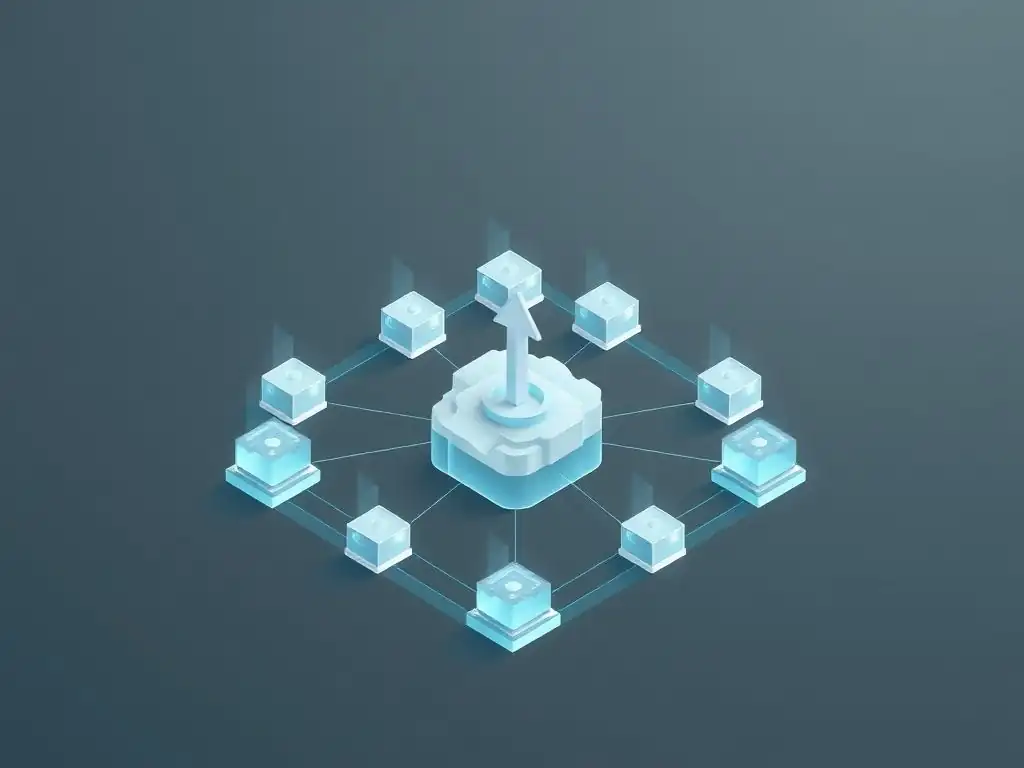
The most effective strategy for achieving mass DApp adoption likely involves combining multiple scalability techniques. Hybrid approaches leverage the strengths of different Layer-1, Layer-2, and sidechain solutions tailored to specific parts of a DApp's functionality.
Combining Layer-1 and Layer-2 Solutions for Optimal DApp Performance
A common hybrid approach involves using a robust, secure Layer-1 blockchain as the settlement layer and relying on Layer-2 solutions for high-frequency interactions. For instance, an Ethereum-based DeFi DApp might hold user funds and critical smart contract logic on Layer-1 for maximum security and decentralization. However, trading, lending, or yield farming operations could occur on a Layer-2 rollup (like Arbitrum or Optimism) to benefit from faster transactions and lower fees.
This allows the DApp to offer a scalable user experience for frequent actions while retaining the strong security guarantees of the base chain for high-value operations. Users deposit funds onto the Layer-2 from Layer-1 and withdraw back to Layer-1 when needed. This layered architecture is becoming a standard pattern for building scalable DApps, demonstrating effective Blockchain scalability solutions DApps adoption through strategic combination.
Leveraging Off-Chain Computation with On-Chain Verification for DApps
Another hybrid model involves performing complex computations off-chain and using the blockchain only for verifying the correctness of the results. This is the principle behind technologies like optimistic or zero-knowledge proofs used in rollups, but the concept can be applied more broadly. For example, complex simulations, machine learning model execution, or large-scale data processing required by a DApp could be performed by off-chain computing services.
The results of these computations are then summarized and verified on-chain using cryptographic proofs or other verification mechanisms. This significantly reduces the computational load on the blockchain, enabling DApps to incorporate functionalities that would be impossible or prohibitively expensive to execute entirely on-chain. This separation of concerns between computation and verification is a powerful hybrid strategy for achieving Blockchain scalability solutions DApps adoption for computationally intensive applications.
The Future of DApp Scalability: Trends and Innovations
The quest for DApp scalability is an ongoing process, with continuous research and development pushing the boundaries of what's possible.
Emerging Scalability Technologies for Blockchain Applications
Beyond the established Layer-1, Layer-2, and sidechain approaches, new technologies are emerging. Danksharding, a proposed future upgrade for Ethereum, aims to further improve sharding by separating block proposing and building and introducing 'data blobs' for Layer-2 data, potentially reducing Layer-2 costs significantly. Volition is a hybrid approach that allows users to choose between a ZK-rollup (data on-chain) and a validium (data off-chain, validity proven on-chain) based on their security and cost preferences.
Other areas of research include state expiry and stateless clients, aiming to reduce the burden of storing the entire blockchain state on every node. Furthermore, advancements in cryptography, such as recursive proofs (proofs that verify other proofs), promise to make ZK-Rollups even more efficient and scalable. These innovations are crucial for delivering the next generation of Blockchain scalability solutions for DApps adoption.
Impact of Scalability Solutions on DApp User Experience
Ultimately, the success of Blockchain scalability solutions for DApps adoption hinges on their impact on the end-user experience. Scalability solutions aim to make DApps faster, cheaper, and easier to use, comparable to or even surpassing centralized applications. Reduced transaction fees make microtransactions viable, opening up new business models for gaming, social media, and content creation DApps. Faster transaction confirmations eliminate frustrating waiting times.
Moreover, improved scalability allows DApps to handle more users and more complex interactions simultaneously without degrading performance. This enables developers to build more sophisticated and engaging applications. As these solutions mature and become more integrated, the technical complexities of the underlying blockchain can be abstracted away, presenting users with a seamless and intuitive interface, driving mainstream DApp adoption.
Choosing the Right Scalability Solution for Your DApp: Key Considerations
Selecting the appropriate scalability solution is a critical decision for any DApp developer. It involves weighing various factors based on the specific needs and goals of the application.
DApp Complexity and Transaction Volume
The nature of the DApp and its expected usage patterns are primary considerations. A simple DApp for token transfers will have different needs than a complex DeFi protocol or a massively multiplayer online game. High-throughput applications with many small, frequent transactions (like games or social media) might favor Layer-2 rollups or sidechains. DApps with fewer, high-value transactions might prioritize Layer-1 security or less complex Layer-2 solutions like state channels for specific interactions.
Consider the types of operations your DApp performs: simple transfers, complex smart contract interactions, or frequent state updates. Estimate the potential transaction volume during peak usage. These factors will strongly influence which Blockchain scalability solutions best fit your DApp's requirements.
Security Requirements and Decentralization Trade-offs
Different scalability solutions offer varying degrees of security and decentralization. Layer-1 solutions generally offer the highest level of decentralization and security but are the least scalable. Rollups inherit the security of the Layer-1 but introduce operators. Sidechains have their own security models, which may be less decentralized or secure than the main chain.
- Evaluate the security needs of your DApp: Are you handling high-value assets where maximum Layer-1 security is paramount? Or is it a game where slightly lower security is acceptable for much higher performance?
- Consider the decentralization tolerance: Is a validator set of 21 (like some DPoS chains or sidechains) acceptable, or is a more distributed set required?
- Understand the trust assumptions: Do users need to trust a set of operators (optimistic rollups, sidechains) or is validity guaranteed cryptographically (ZK-Rollups)?
These trade-offs are fundamental when choosing among available Blockchain scalability solutions for DApps adoption.
Development Costs and Implementation Complexity
Implementing scalability solutions adds complexity to DApp development. Layer-1 changes require protocol-level expertise. Layer-2 solutions, while often offering SDKs and developer tools, still require adapting DApp architecture. ZK-Rollups, in particular, currently involve significant cryptographic expertise and development effort compared to optimistic rollups or sidechains.
Consider the resources available to your development team.
- What is the learning curve for integrating with a specific Layer-2 or sidechain?
- Are there existing tools, documentation, and developer communities?
- What are the ongoing operational costs (e.g., running a sequencer for a rollup)?
Balancing the performance benefits with the development effort and cost is crucial for successful implementation of Blockchain scalability solutions for DApps adoption.
Case Studies: Successful DApp Scalability Implementations
Examining real-world examples provides valuable insights into how DApps are successfully leveraging scalability solutions.
Uniswap V3: A Case Study in Layer-2 Scaling
Uniswap, the leading decentralized exchange (DEX) on Ethereum, faced significant challenges with high gas fees on Layer-1, particularly impacting smaller trades and liquidity providers. With the launch of Uniswap V3, the protocol expanded its deployment to Layer-2 networks, including Optimism and Arbitrum.
By deploying on these optimistic rollups, Uniswap V3 enabled users to perform swaps and manage liquidity positions at a fraction of the cost of Layer-1 transactions. For example, a simple swap that might cost $50-$100+ on a congested Ethereum mainnet could cost less than a dollar on Optimism or Arbitrum. This move significantly improved the user experience, attracting more users and increasing trading volume on the Layer-2 deployments, demonstrating the effectiveness of Layer-2 Blockchain scalability solutions for DApps adoption in DeFi.
Axie Infinity: A Case Study in Sidechain Scaling
Axie Infinity, a popular blockchain-based game, experienced explosive growth in 2021, leading to severe congestion and high fees on the Ethereum mainnet, where its assets (Axies, land) were initially based. To address this, Sky Mavis, the game's developer, launched Ronin, an Ethereum-linked sidechain specifically designed for Axie Infinity.
Ronin allowed players to breed Axies, trade items, and execute game-related transactions with near-instant confirmations and minimal transaction fees (often zero for users). Assets could be bridged between Ethereum and Ronin using the Ronin Bridge. This move was critical to the game's continued success and player base growth, proving that a tailored sidechain can provide the necessary Blockchain scalability solutions for DApps adoption, especially for high-volume applications like blockchain gaming. While the Ronin bridge later faced a significant security breach, highlighting sidechain security risks, the case study remains a prime example of using a sidechain for application-specific scaling.
Overcoming the Scalability Hurdle: A Path to Mainstream DApp Adoption
The journey towards mainstream DApp adoption is inextricably linked to the progress in overcoming scalability limitations. The ongoing advancements in Blockchain scalability solutions are not just technical improvements; they are fundamental enablers for the next wave of decentralized applications.
The Role of Scalability in the Evolution of Decentralized Applications
Scalability moves DApps from being interesting but impractical experiments to viable alternatives to centralized services. It allows developers to build more complex, feature-rich applications that can handle millions of users. Imagine decentralized social networks with real-time feeds, open virtual worlds with persistent state, or global supply chains tracked on a blockchain – these require levels of transaction throughput and data handling far beyond the capabilities of early blockchain designs.
Scalability also fosters innovation by reducing the cost of experimentation. Lower transaction fees mean developers can deploy and test smart contracts more frequently, and users can interact with DApps without prohibitive costs. This accelerates the development cycle and encourages the creation of novel decentralized applications across various sectors, solidifying the importance of Blockchain scalability solutions for DApps adoption.
The Future of DApps: Scalable, User-Friendly, and Widely Adopted
The future of DApps envisions a world where decentralized applications are not only secure and transparent but also seamlessly integrated into daily life, accessible and affordable for everyone. Achieving this vision requires continued focus on scalability alongside improvements in user interface, developer tooling, and regulatory clarity.
As Layer-1 protocols evolve, Layer-2 solutions mature, and hybrid approaches become more sophisticated, the underlying complexity of blockchain technology will increasingly be hidden from the end-user. This abstraction, combined with the ability to handle high transaction volumes at low costs, will pave the way for DApps to compete directly with and eventually surpass centralized services, driving true mass Blockchain scalability solutions DApps adoption across the globe. The ongoing pursuit of scalability is perhaps the single most critical factor in realizing the decentralized future promised by blockchain technology.
Frequently Asked Questions
How is blockchain scalability affecting DApps adoption?
Blockchain scalability issues, such as transaction speed and high gas fees, directly hinder DApps adoption by creating a poor user experience. Users are less likely to use DApps if they are slow and expensive.
What are some common blockchain scalability solutions being implemented for DApps?
Several solutions are being explored, including layer-2 scaling (like rollups and sidechains), sharding, and state channels. These aim to improve transaction throughput without compromising blockchain security.
How do layer-2 solutions contribute to DApps scalability?
Layer-2 solutions process transactions off-chain, only posting the final result to the main blockchain. This significantly reduces congestion and lowers transaction costs, enabling faster and cheaper DApp interactions.
What impact does regulation have on the implementation of blockchain scalability solutions for DApps?
Regulatory uncertainty can slow down development and adoption of certain scalability solutions. Clear and consistent regulations are needed to foster innovation and growth in the DApp ecosystem.
What future developments can we expect in blockchain scalability and its impact on DApps?
Future developments may include advanced sharding techniques, improved consensus mechanisms, and cross-chain interoperability. These advancements are expected to drastically improve DApp performance and drive mass adoption.
Final Reflection: Embracing Scalable Decentralization
The exploration of blockchain scalability solutions underscores a critical juncture for decentralized applications. The path to widespread DApp adoption hinges directly on overcoming the limitations of current blockchain infrastructure. Without robust and efficient scalability solutions, the promise of a decentralized future risks remaining just that – a promise, unfulfilled.
This journey through various scaling techniques has highlighted not only the technical complexities but also the profound impact these solutions will have on the cultural and social landscape. The ability for DApps to handle real-world transaction volumes without sacrificing security or decentralization is paramount to their long-term viability. The future of finance is decentralized, but it needs to be scalable to truly disrupt the status quo.
This quote encapsulates the urgency and importance of the advancements we've discussed, reminding us that innovation must be coupled with practicality.
As we conclude, let us not simply admire the ingenuity of these blockchain scalability solutions, but actively consider their implications for our own engagement with decentralized technologies. How can we, as users, developers, and investors, support the development and adoption of these solutions? The future of DApps, and indeed, the future of a decentralized world, depends on our collective commitment to building a scalable and accessible ecosystem.
Ignite Your DApp's Potential: Scale Up & Reach the Masses!
Thank you for exploring the challenges and opportunities in scaling decentralized applications. You've gained valuable insights into overcoming the hurdles to widespread adoption. Now is the time to put that knowledge into action and help shape the future of blockchain technology.
Here's how you can contribute to a more scalable DApp ecosystem:
- Evaluate and test a Layer-2 solution like zk-Rollups or Optimistic Rollups in your next project. This is essential for building truly scalable applications.
- Share your insights: Discuss the pros and cons of different scaling solutions with fellow developers on forums, social media, or by contributing to open-source projects.
- Think outside the box: Brainstorm innovative hybrid solutions that combine on-chain and off-chain elements. Could your DApp benefit from a new approach to transaction processing?
Ready to explore these solutions and become a pioneer in DApp scalability? Which innovative scaling method excites you most, and how do you see it transforming user experience on the blockchain?
Leave a Reply