
Supply Chain Revolution: Tracking and Optimizing Goods with Blockchain and AI


Welcome to Blockchain Trends, your source for in-depth analysis of blockchain's evolution beyond digital currencies. Ever wondered how blockchain is revolutionizing industries beyond finance? Dive in to discover how this technology, coupled with the power of AI, is transforming supply chains and offering unprecedented efficiency and transparency. This month we explore the blockchain supply chain optimization benefits, unveiling how businesses are leveraging these synergistic technologies to track goods, streamline processes, and unlock a new era of supply chain excellence. Intrigued? Read on to learn how your organization can benefit from this groundbreaking convergence.
Revolutionizing Supply Chains: Enhancing Transparency and Efficiency with Technology
- Introduction: The Power of Technology in Modern Supply Chain Management
- Blockchain Technology for Supply Chain Visibility
- AI-Driven Optimization in Supply Chain Operations
- Benefits of Technology Integration in Supply Chains
- Use Cases: Real-World Applications of Technology in Supply Chains
- Addressing Challenges in Technology Implementation
- The Future of Technology in Supply Chain Management
- Conclusion: Embracing Technology for Supply Chain Excellence
-
Frequently Asked Questions
- How does blockchain technology improve supply chain visibility?
- What are the primary benefits of using blockchain for supply chain optimization?
- Can blockchain integrate with existing supply chain management (SCM) systems?
- What role does AI play in enhancing blockchain-based supply chains?
- How does blockchain address security concerns in supply chains?
- Final Reflection: Embracing the Transparent Future of Supply Chains
- Ignite Your Supply Chain: Start Tracking Smarter Today!
Introduction: The Power of Technology in Modern Supply Chain Management
The Modern Supply Chain Landscape
Today's global supply chains are intricate webs connecting numerous stakeholders across vast distances. They involve complex processes from raw material sourcing and manufacturing to distribution and final delivery to consumers. This complexity is further amplified by increasing customer expectations for faster delivery, greater product variety, and enhanced transparency regarding product origins and ethical sourcing.
Traditional supply chain models, often reliant on manual processes and disparate systems, struggle to keep pace with these demands, leading to inefficiencies, delays, and a lack of visibility across the chain. This intricate network requires constant adaptation to fluctuating global events, consumer trends, and technological advancements to remain competitive and resilient.
The demand for agility and responsiveness in supply chain management has never been greater. Businesses are facing pressures to optimize costs, reduce risks, and enhance sustainability while maintaining operational excellence. Furthermore, consumers are increasingly conscious of the ethical and environmental impact of the products they purchase, demanding more information about the journey of goods from origin to consumption. This evolving landscape necessitates a fundamental shift towards more technologically driven and integrated supply chain solutions capable of providing real-time insights, improving decision-making, and fostering greater collaboration among all participants.
Technology as a Catalyst for Change
Technology is no longer just a supporting tool in supply chain management; it has become the driving force behind its transformation. Emerging technologies like blockchain and Artificial Intelligence (AI) are offering unprecedented opportunities to revolutionize supply chain operations. Blockchain's inherent transparency and security features are ideal for creating immutable records of product journeys, enhancing traceability and trust. Simultaneously, AI and machine learning algorithms are empowering businesses to analyze vast datasets, predict demand fluctuations, optimize inventory levels, and automate critical processes, leading to significant efficiency gains and cost reductions.
The integration of blockchain and AI in supply chains is not merely about automating existing processes but about fundamentally reimagining how supply chains operate. This synergy enables the creation of intelligent, self-optimizing supply chain networks that are more resilient, responsive, and transparent. By leveraging these technologies, businesses can move beyond reactive management to proactive, data-driven strategies, fostering a new era of supply chain excellence. This technological shift promises to unlock significant value, creating more efficient, sustainable, and customer-centric supply chains for the future.
Blockchain Technology for Supply Chain Visibility
Blockchain Fundamentals: A Transparent and Secure Ledger
At its core, blockchain technology is a distributed, immutable ledger that records transactions across a network of computers. This decentralized nature eliminates the need for a central authority, enhancing security and transparency. Each transaction, or "block," is cryptographically linked to the previous one, forming a "chain" that is tamper-proof and auditable.
This structure makes blockchain exceptionally well-suited for supply chain applications where trust, security, and data integrity are paramount. Imagine a pharmaceutical product tracked from manufacturing to patient; every step, from temperature monitoring during transit to verification of authenticity at each transfer point, can be recorded on a blockchain, providing an unalterable record of its journey.
The transparency afforded by blockchain stems from the shared nature of the ledger. While not all blockchain networks are public, permissioned blockchains, often used in enterprise applications, allow authorized participants to access and verify information. This shared visibility creates a single source of truth, reducing discrepancies and disputes across the supply chain. For example, in the diamond industry, blockchain is used to track diamonds from mine to market, ensuring ethical sourcing and preventing the trade of conflict diamonds. This level of transparency builds trust among stakeholders and empowers consumers with verifiable information about the products they purchase.
Enabling End-to-End Traceability with Blockchain
One of the most compelling applications of blockchain in supply chains is its ability to enable end-to-end traceability. By recording every step of a product's journey on the blockchain, from origin to final destination, businesses can create a comprehensive and auditable record.
This traceability extends beyond simple location tracking; it can encompass information about product provenance, manufacturing processes, certifications, ownership changes, and even environmental conditions during transit. Consider the food industry; blockchain can track food products from farm to table, providing consumers with detailed information about the origin, processing, and handling of their food, enhancing food safety and building consumer confidence.
This enhanced traceability offers significant benefits for supply chain optimization. It allows businesses to quickly identify the source of inefficiencies, delays, or quality issues. In the event of a product recall, blockchain-enabled traceability drastically reduces the time and cost associated with identifying and removing affected products from the market. For instance, if a batch of contaminated goods is identified, the blockchain record can instantly pinpoint the exact location and distribution of that batch, enabling targeted recalls and minimizing the impact on consumers and businesses. This precise tracking capability is a key driver of blockchain supply chain optimization benefits.
Key Blockchain Features: Immutability, Security, and Decentralization
Blockchain's inherent features of immutability, security, and decentralization are fundamental to its effectiveness in supply chain applications. Immutability ensures that once data is recorded on the blockchain, it cannot be altered or deleted, creating a permanent and reliable record of transactions. This is crucial for maintaining the integrity of supply chain data and preventing fraud. For example, in luxury goods, blockchain can be used to combat counterfeiting by providing an immutable record of authenticity for each product, verifiable by consumers.
Security is another cornerstone of blockchain technology. Cryptographic hashing and consensus mechanisms ensure that the blockchain network is resistant to tampering and unauthorized access. This robust security is vital for protecting sensitive supply chain data, such as pricing information, supplier details, and product specifications. Decentralization, the distributed nature of blockchain networks, further enhances security by eliminating single points of failure and making the system more resilient to attacks. The combination of these features makes blockchain a uniquely secure and trustworthy platform for managing and optimizing complex supply chains, offering significant advantages over traditional centralized systems.
AI-Driven Optimization in Supply Chain Operations
AI and Machine Learning: Optimizing Efficiency and Accuracy
Artificial Intelligence (AI) and Machine Learning (ML) are transforming supply chain operations by enabling businesses to analyze vast amounts of data, identify patterns, and make data-driven decisions to optimize efficiency and accuracy. AI algorithms can process complex datasets from various sources, including historical sales data, market trends, weather patterns, and transportation costs, to provide insights that would be impossible to discern manually. For example, AI-powered demand forecasting can predict future demand with greater accuracy than traditional methods, reducing overstocking and stockouts, which are major contributors to supply chain inefficiencies.
Machine learning, a subset of AI, allows systems to learn from data without explicit programming, continuously improving their performance over time. In supply chain management, ML algorithms can be used to optimize routing for transportation, predict equipment failures for preventative maintenance, and personalize customer experiences. For instance, logistics companies are using ML to dynamically optimize delivery routes based on real-time traffic conditions, weather forecasts, and delivery schedules, resulting in significant fuel savings and faster delivery times. This adaptive and intelligent approach to supply chain management is driving significant improvements in operational efficiency and accuracy.
Predictive Analytics for Demand Forecasting and Inventory Control
Predictive analytics, powered by AI and ML, is revolutionizing demand forecasting and inventory control in supply chains. Traditional forecasting methods often rely on historical data and simple statistical models, which can be inaccurate in volatile markets. AI-driven predictive analytics uses sophisticated algorithms to analyze a wider range of data points, including social media trends, economic indicators, and real-time sales data, to generate more accurate demand forecasts. This improved forecasting accuracy allows businesses to optimize inventory levels, minimizing holding costs while ensuring product availability to meet customer demand.
Effective inventory control is crucial for supply chain efficiency. Overstocking ties up capital and increases storage costs, while stockouts lead to lost sales and customer dissatisfaction. AI-powered inventory management systems can dynamically adjust inventory levels based on predicted demand, lead times, and supply chain risks. For example, retailers are using AI to optimize their inventory replenishment strategies, ensuring that the right products are in the right place at the right time, minimizing both stockouts and excess inventory. This intelligent inventory management contributes directly to cost reduction and improved customer service.
AI-Powered Automation of Supply Chain Processes
AI is also driving automation across various supply chain processes, reducing manual tasks, improving speed, and minimizing errors. Robotic Process Automation (RPA), a form of AI, can automate repetitive tasks such as data entry, invoice processing, and order fulfillment, freeing up human workers for more strategic activities. In warehouses, AI-powered robots are being deployed for tasks such as picking, packing, and sorting goods, increasing efficiency and reducing labor costs. For example, Amazon utilizes robots extensively in its warehouses to automate order fulfillment, enabling faster delivery times and handling a massive volume of orders.
Beyond RPA, AI is enabling more sophisticated forms of automation in supply chain planning and decision-making. AI algorithms can analyze complex scenarios and recommend optimal solutions for tasks such as supplier selection, transportation planning, and risk management. For instance, AI-powered procurement systems can automate the supplier selection process by analyzing supplier performance data, pricing, and risk factors, leading to better sourcing decisions.
This automation extends to logistics, where AI can optimize transportation routes and modes, and to risk management, where AI can identify and mitigate potential disruptions in the supply chain. This comprehensive automation drives significant gains in efficiency, speed, and accuracy across the entire supply chain.
Benefits of Technology Integration in Supply Chains
Increased Transparency and Traceability
The integration of blockchain and AI technologies significantly enhances transparency and traceability across supply chains. Blockchain provides an immutable record of product journeys, while AI can analyze this data to provide real-time insights into the location, condition, and provenance of goods. This enhanced visibility is crucial for building trust among stakeholders, from suppliers and manufacturers to distributors and consumers. For example, consumers can scan a QR code on a product to access its blockchain record, verifying its authenticity and origin, and gaining confidence in the product's journey through the supply chain.
This increased transparency and traceability also offer significant operational benefits. Businesses can quickly identify bottlenecks, delays, and inefficiencies in their supply chains. In case of product recalls or quality issues, the ability to trace products back to their origin swiftly minimizes the impact and cost of such events. Furthermore, enhanced traceability supports compliance with regulations related to product safety, ethical sourcing, and environmental sustainability. This transparency not only builds trust but also empowers businesses to optimize their operations and mitigate risks effectively.
Enhanced Efficiency and Reduced Costs
Technology integration drives significant improvements in supply chain efficiency and reduces operational costs. AI-powered automation streamlines processes, minimizes manual errors, and speeds up operations across various stages of the supply chain. From automated warehousing and logistics to AI-driven demand forecasting and inventory management, these technologies optimize resource utilization and reduce waste. For instance, AI-optimized routing in transportation can reduce fuel consumption by approximately 15-20%, according to studies by logistics companies like UPS and FedEx, leading to substantial cost savings and environmental benefits.
Moreover, improved demand forecasting accuracy, enabled by AI, reduces inventory holding costs and minimizes stockouts, both of which contribute to significant financial losses. Blockchain's efficiency in transaction processing and data sharing can also reduce administrative overhead and paperwork. By streamlining processes, optimizing resource allocation, and minimizing errors, technology integration leads to a leaner, more efficient, and cost-effective supply chain. These efficiency gains translate directly to improved profitability and competitiveness for businesses.
Improved Security and Fraud Prevention
Blockchain and AI technologies bolster security and fraud prevention within supply chains. Blockchain's inherent security features, such as cryptography and immutability, make it highly resistant to tampering and data breaches, securing sensitive supply chain information. AI-powered fraud detection systems can analyze transaction patterns and identify anomalies that may indicate fraudulent activities, such as counterfeit goods entering the supply chain or unauthorized diversions of products. For example, AI algorithms can analyze data from sensors and tracking devices to detect inconsistencies or suspicious activities that might indicate theft or tampering.
By combining blockchain's secure data storage with AI's intelligent monitoring and anomaly detection, businesses can create a robust security framework for their supply chains. This is particularly crucial in industries dealing with high-value goods, pharmaceuticals, or sensitive data. Reduced fraud and enhanced security protect businesses from financial losses, reputational damage, and regulatory penalties. The integration of these technologies creates a more secure and trustworthy supply chain environment for all stakeholders.
Streamlined Processes and Faster Delivery
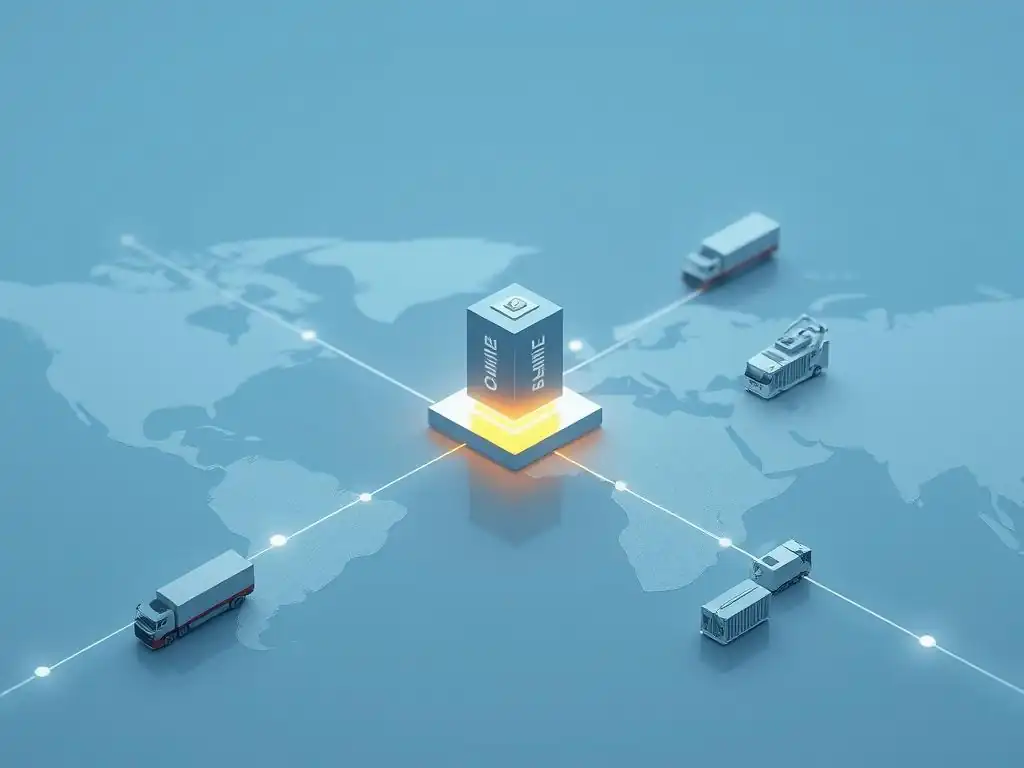
Technology integration streamlines supply chain processes and accelerates delivery times. AI-powered automation reduces manual bottlenecks and speeds up critical operations such as order processing, warehousing, and transportation. Real-time visibility, enabled by blockchain and AI, allows for proactive management of potential delays and disruptions, ensuring smoother and faster flow of goods. For example, real-time tracking of shipments using IoT sensors and blockchain allows logistics providers to proactively address potential delays due to traffic congestion or weather conditions, rerouting shipments and minimizing delivery times.
Faster delivery times enhance customer satisfaction and improve responsiveness to market demands. Streamlined processes reduce lead times and cycle times, allowing businesses to bring products to market more quickly. This agility is crucial in today's fast-paced and competitive business environment. By optimizing processes and accelerating delivery, technology integration enables businesses to meet customer expectations more effectively and gain a competitive edge in the market.
Data-Driven Decision-Making
The wealth of data generated and analyzed through blockchain and AI technologies empowers businesses to make more informed, data-driven decisions across their supply chains. Real-time insights into supply chain performance, demand patterns, and potential risks enable proactive and strategic decision-making. AI-powered analytics can identify trends, predict future outcomes, and recommend optimal courses of action, supporting better planning and resource allocation. For example, AI can analyze historical sales data, market trends, and competitor activities to inform pricing strategies and product development decisions.
Data-driven decision-making leads to more effective supply chain management, optimized resource utilization, and improved business outcomes. By moving away from reactive, intuition-based decisions to proactive, data-informed strategies, businesses can improve their responsiveness, resilience, and overall performance. The ability to leverage data effectively is becoming a key differentiator in today's competitive landscape, and technology integration provides the tools and insights necessary to harness the power of data for supply chain excellence.
Use Cases: Real-World Applications of Technology in Supply Chains
Pharmaceutical Supply Chain Security
The pharmaceutical industry faces significant challenges in ensuring the security and integrity of its supply chains, combating counterfeiting, and maintaining product quality. Blockchain technology offers a robust solution by providing end-to-end traceability and verification of pharmaceutical products. For instance, companies like Chronicled have partnered with pharmaceutical giants to implement blockchain-based solutions for tracking and tracing drugs from manufacturing to dispensing, ensuring authenticity and preventing counterfeit drugs from entering the supply chain. This is critical as the World Health Organization estimates that counterfeit drugs represent a multi-billion dollar industry, posing serious health risks to patients.
AI is also playing a crucial role in enhancing pharmaceutical supply chain security. AI-powered sensors and monitoring systems can track temperature, humidity, and other environmental conditions during transit, ensuring that temperature-sensitive pharmaceuticals maintain their efficacy. AI algorithms can also analyze data from various sources to detect anomalies and potential risks in the supply chain, such as suspicious shipments or deviations from expected routes, flagging potential counterfeit activities or diversions. The combination of blockchain and AI offers a comprehensive approach to securing pharmaceutical supply chains, protecting patients and brand integrity.
Food Supply Chain Traceability and Safety
In the food industry, traceability and safety are paramount concerns, driven by increasing consumer awareness and stringent regulations. Blockchain technology is being adopted to enhance food traceability, providing consumers with detailed information about the origin, processing, and journey of their food. Walmart, for example, has implemented a blockchain-based system to track mangoes and pork in its supply chain. This system allows them to trace the origin of a mango back to the farm in seconds, compared to days or weeks with traditional methods, significantly improving response times in case of foodborne illness outbreaks.
AI complements blockchain in food supply chains by enhancing food safety monitoring and quality control. AI-powered sensors and image recognition systems can be used to inspect food products for defects, contamination, and spoilage along the supply chain. AI algorithms can also analyze data from various sources, such as weather patterns, sensor data, and historical recall data, to predict potential food safety risks and proactively implement preventative measures. This combination of technologies is transforming food supply chains, making them more transparent, safe, and efficient, benefiting both consumers and businesses.
Sustainable and Ethical Fashion Supply Chains
The fashion industry is increasingly under pressure to improve sustainability and ethical practices across its complex global supply chains. Blockchain is being utilized to enhance transparency and traceability in fashion supply chains, allowing consumers to verify the ethical sourcing of materials and labor practices. For example, Provenance, a technology platform, is working with fashion brands to use blockchain to track the journey of garments from raw materials to finished products, providing consumers with verifiable information about the origin and ethical production of their clothing. This addresses growing consumer demand for transparency and accountability in the fashion industry.
AI can further enhance sustainability and ethical practices by optimizing resource utilization and reducing waste in fashion supply chains. AI-powered demand forecasting can help fashion brands better predict demand, reducing overproduction and minimizing textile waste. AI algorithms can also optimize manufacturing processes, reducing energy consumption and water usage. Furthermore, AI can be used to analyze data from supplier audits and certifications to identify and mitigate ethical risks in the supply chain. The integration of blockchain and AI is empowering the fashion industry to move towards more sustainable and ethical practices, responding to consumer demands and environmental concerns.
Automotive Supply Chain Optimization
The automotive industry, with its intricate and global supply chains, is leveraging technology to optimize efficiency, reduce costs, and improve resilience. Blockchain is being explored for applications such as tracking components and parts across the automotive supply chain, ensuring authenticity and preventing counterfeit parts from entering the manufacturing process. For instance, BMW is piloting blockchain solutions to track critical components and ensure the traceability of parts throughout its supply chain, enhancing quality control and preventing counterfeiting. This is vital in an industry where safety and reliability are paramount.
AI is playing a significant role in optimizing various aspects of the automotive supply chain. AI-powered predictive maintenance can anticipate equipment failures in manufacturing plants, reducing downtime and improving production efficiency. AI algorithms are also used to optimize logistics and transportation, reducing shipping costs and delivery times for automotive components and vehicles. Furthermore, AI can analyze vast datasets from sensors and connected vehicles to optimize supply chain planning and demand forecasting in the automotive sector. The adoption of blockchain and AI is driving significant improvements in efficiency, resilience, and cost-effectiveness within the automotive industry's complex supply chains.
Addressing Challenges in Technology Implementation
Data Integration and System Interoperability
One of the primary challenges in implementing blockchain and AI in supply chains is data integration and system interoperability. Supply chains often involve numerous stakeholders using disparate systems and data formats. Integrating blockchain and AI solutions with these legacy systems can be complex and require significant effort. Ensuring interoperability between different blockchain platforms and AI systems is also crucial for seamless data exchange and collaboration across the supply chain network. For example, integrating a blockchain-based traceability system with an existing Enterprise Resource Planning (ERP) system requires careful planning and technical expertise to ensure data compatibility and flow.
Addressing this challenge requires standardized data formats, Application Programming Interfaces (APIs), and middleware solutions that can facilitate data exchange between different systems. Collaboration among industry stakeholders to develop common standards for blockchain and AI implementation in supply chains is also essential. Overcoming data silos and ensuring seamless data integration are critical steps in realizing the full potential of technology integration in supply chain management.
Scalability and Performance Considerations
Scalability and performance are crucial considerations for implementing blockchain and AI solutions in large and complex supply chains. Blockchain networks need to be able to handle a high volume of transactions and data without compromising performance. Public blockchains may face scalability limitations, while permissioned blockchains offer better scalability for enterprise applications. Similarly, AI systems need to be able to process vast datasets in real-time to provide timely insights and support decision-making. For example, a global retail supply chain generating millions of transactions daily requires a blockchain solution that can handle this scale efficiently.
Addressing scalability and performance requires careful selection of technology platforms and architectures. Optimizing blockchain network design, using efficient consensus mechanisms, and employing off-chain data storage solutions can improve blockchain scalability. For AI systems, leveraging cloud computing, distributed processing, and optimized algorithms can enhance performance and handle large datasets effectively. Ensuring scalability and performance is essential for the long-term viability and effectiveness of technology implementations in supply chain management.
Regulatory Compliance and Data Governance
Regulatory compliance and data governance are significant challenges in implementing blockchain and AI in supply chains, particularly in industries with strict regulations, such as pharmaceuticals and food. Blockchain and AI solutions must comply with data privacy regulations, such as GDPR and CCPA, ensuring the secure and ethical handling of personal and sensitive data.
Data governance frameworks need to be established to define data ownership, access controls, and data retention policies within the blockchain network and AI systems. For example, in the pharmaceutical industry, blockchain solutions must comply with regulations related to drug traceability and data security, such as the Drug Supply Chain Security Act (DSCSA) in the United States.
Addressing regulatory compliance and data governance requires a proactive approach, involving legal and compliance experts in the design and implementation of technology solutions. Implementing privacy-preserving technologies, such as zero-knowledge proofs and homomorphic encryption, can enhance data privacy on blockchain networks. Establishing clear data governance policies and procedures, and conducting regular audits to ensure compliance, are essential for building trust and ensuring responsible use of technology in supply chains.
Ensuring Data Privacy and Security
While blockchain itself offers inherent security features, ensuring overall data privacy and security in technology-integrated supply chains is a multifaceted challenge. Data stored on blockchain networks, even permissioned ones, may be accessible to authorized participants, raising privacy concerns. AI systems also rely on large datasets, which may contain sensitive information that needs to be protected from unauthorized access and misuse. For example, supply chain data may include confidential pricing information, supplier details, and customer data, which require robust security measures.
Addressing data privacy and security requires a comprehensive approach, encompassing technical, organizational, and legal measures. Implementing encryption, access controls, and data anonymization techniques can enhance data privacy. Conducting regular security audits and penetration testing can identify and address vulnerabilities in blockchain and AI systems. Establishing clear data security policies and procedures, and training employees on data security best practices, are also crucial for mitigating risks and ensuring data privacy and security in technology-integrated supply chains.
The Future of Technology in Supply Chain Management
Emerging Trends and Innovations
The future of technology in supply chain management is marked by several emerging trends and innovations, further enhancing efficiency, transparency, and resilience. One key trend is the convergence of blockchain, AI, and the Internet of Things (IoT), creating intelligent and interconnected supply chain ecosystems. Another trend is the increasing adoption of digital twins, virtual representations of physical supply chains, enabling simulation, optimization, and predictive maintenance. For example, digital twins can be used to simulate different supply chain scenarios, assess risks, and optimize network design.
Further innovations include the development of more sophisticated AI algorithms for supply chain optimization, such as reinforcement learning and generative AI. These advanced AI techniques can enable autonomous decision-making and self-optimizing supply chains. The exploration of decentralized autonomous organizations (DAOs) for supply chain governance is also gaining momentum, potentially enabling more transparent and collaborative supply chain networks. These emerging trends and innovations promise to further revolutionize supply chain management, creating more agile, resilient, and efficient systems.
The Role of IoT and Sensor Technology
The Internet of Things (IoT) and sensor technology are playing an increasingly critical role in enhancing supply chain visibility and data collection. IoT devices, such as sensors, RFID tags, and GPS trackers, can be embedded in products, shipments, and transportation vehicles to collect real-time data on location, condition, and environmental factors. This data can be integrated with blockchain and AI systems to provide a comprehensive and granular view of the supply chain. For example, temperature sensors in refrigerated containers can monitor the condition of temperature-sensitive goods during transit, ensuring quality and compliance.
The integration of IoT and sensor technology enables proactive supply chain management, allowing businesses to identify and address potential issues before they escalate. Real-time data from IoT devices can trigger alerts for deviations from expected conditions, enabling timely interventions. AI algorithms can analyze IoT data to predict equipment failures, optimize routes, and improve inventory management. The combination of IoT, blockchain, and AI is creating a new era of data-driven and proactive supply chain management, enhancing efficiency, resilience, and transparency.
Decentralized and Autonomous Supply Chains
The long-term vision for technology in supply chain management points towards decentralized and autonomous supply chains. Decentralized supply chains, powered by blockchain, eliminate central intermediaries and foster greater collaboration and transparency among stakeholders. Autonomous supply chains, enabled by AI and automation, can operate with minimal human intervention, optimizing processes and responding dynamically to changing conditions. Imagine a future where supply chains are self-managing, automatically adjusting production, logistics, and inventory levels based on real-time data and AI-driven decision-making.
While fully autonomous supply chains are still in the early stages of development, advancements in AI, robotics, and blockchain are paving the way for this future. Decentralized autonomous organizations (DAOs) could play a key role in governing and coordinating autonomous supply chain networks. The transition towards decentralized and autonomous supply chains promises to unlock unprecedented levels of efficiency, resilience, and transparency, transforming global trade and commerce.
Conclusion: Embracing Technology for Supply Chain Excellence
Key Considerations and Future Opportunities
Embracing technology for supply chain excellence requires careful consideration of several key factors. Businesses need to assess their specific needs and challenges, select appropriate technology solutions, and develop a clear implementation strategy. Data integration, system interoperability, scalability, regulatory compliance, and data security must be addressed proactively. Investing in talent development and training is also crucial to ensure that employees have the skills to manage and leverage these new technologies effectively.
Looking ahead, the opportunities for technology-driven supply chain transformation are immense. The continued evolution of blockchain, AI, IoT, and other emerging technologies will unlock further efficiencies, transparency, and resilience. Businesses that embrace these technologies and adopt a proactive and strategic approach to implementation will be well-positioned to thrive in the increasingly complex and competitive global marketplace. The future of supply chain management is inextricably linked to technology innovation, and businesses that lead in technology adoption will lead in supply chain excellence.
The Path Forward for Businesses
The path forward for businesses seeking to leverage technology for supply chain optimization involves a phased approach. Starting with pilot projects to test and validate specific technology solutions is a prudent first step. Focusing on areas where technology can deliver the most immediate and significant benefits, such as traceability, automation, or demand forecasting, can demonstrate early successes and build momentum. Gradually scaling up technology implementations and expanding their scope across the supply chain network is a logical progression.
Continuous innovation and adaptation are essential in this rapidly evolving technological landscape. Businesses should stay informed about emerging trends, experiment with new technologies, and foster a culture of innovation within their supply chain organizations. Collaboration with technology partners, industry peers, and research institutions can accelerate technology adoption and drive collective progress towards more efficient, transparent, and resilient supply chains. By embracing technology strategically and proactively, businesses can unlock significant value and achieve supply chain excellence in the years to come.
Frequently Asked Questions
How does blockchain technology improve supply chain visibility?
Blockchain provides an immutable and transparent record of transactions, enabling real-time tracking of goods from origin to consumer. This enhanced visibility reduces fraud and improves accountability.
What are the primary benefits of using blockchain for supply chain optimization?
Blockchain supply chain optimization benefits include increased efficiency, reduced costs through automation, and enhanced trust among stakeholders due to data immutability.
Can blockchain integrate with existing supply chain management (SCM) systems?
Yes, blockchain can be integrated with existing SCM systems through APIs and middleware. This allows for a gradual adoption of blockchain technology without completely overhauling current infrastructure.
What role does AI play in enhancing blockchain-based supply chains?
AI can analyze blockchain data to identify inefficiencies and predict potential disruptions in the supply chain. It also helps with automated decision-making and optimization of logistics.
How does blockchain address security concerns in supply chains?
Blockchain's decentralized and encrypted nature makes it highly resistant to tampering and fraud. This enhanced security protects against counterfeit goods and ensures the integrity of supply chain data.
Final Reflection: Embracing the Transparent Future of Supply Chains
The journey through the potential of blockchain and AI in revolutionizing supply chains culminates in a powerful realization: we are on the cusp of a new era of transparency and efficiency. No longer are supply chains shrouded in opacity; instead, blockchain and AI offer the tools to illuminate every step, from origin to consumer, unlocking unprecedented optimization benefits. This is not just about technology; it's about building trust and resilience in a world increasingly reliant on interconnected networks.
The impact of this technological shift extends far beyond mere cost savings. It touches upon ethical sourcing, environmental sustainability, and ultimately, the very fabric of consumer confidence. The ability to trace a product's journey, verify its authenticity, and ensure fair labor practices is becoming not just a desirable feature, but a fundamental expectation. The supply chain of the future will not just be about moving goods; it will be about moving information, trust, and value.
This quote encapsulates the profound shift we are witnessing, a shift that demands a proactive and responsible approach from businesses and consumers alike.
As we stand at this pivotal moment, I invite you to consider the role you can play in shaping this future. How can you, as a consumer, demand greater transparency from the brands you support? How can you, as a business leader, embrace these technologies to build more resilient and ethical supply chains? The potential for positive change is immense. Let us embrace the power of blockchain and AI to create a supply chain that is not only efficient but also equitable, sustainable, and truly worthy of our trust.
Ignite Your Supply Chain: Start Tracking Smarter Today!
Thank you for exploring the potential of blockchain and AI-driven supply chain optimization. We hope you’ve gained valuable insights into how these technologies can transform your business. Now, it’s time to put that knowledge into action!
Here are a few steps you can take right now:
- Begin implementing a pilot project to track a small segment of your supply chain. Start small, learn quickly, and expand strategically.
- Explore available AI-powered platforms that integrate with blockchain for predictive analytics and anomaly detection. Don’t hesitate to request demos and compare features.
- Share this article with your colleagues and initiate a discussion about how blockchain and AI can benefit your organization. Consider hosting an internal workshop to brainstorm innovative use cases.
What is one immediate area within your supply chain where you can leverage blockchain or AI to achieve significant efficiency improvements? Share your ideas below!
Leave a Reply