
The Ultimate Guide to Ethereum, Polkadot, and Cosmos for Blockchain Beginners


Welcome to Blockchain Trends, your compass in the rapidly evolving world of decentralized technology! Ready to unlock the secrets behind the protocols powering the future? Our latest deep dive, " The Ultimate Guide to Ethereum, Polkadot, and Cosmos for Blockchain Beginners," is your starting point. Delve into the core concepts with our Ethereum blockchain beginner guide and discover how these innovative platforms are shaping everything from DeFi to enterprise solutions. Eager to understand the differences and the potential of each? Let's begin!
The Ultimate Guide to Ethereum, Polkadot, and Cosmos for Blockchain Beginners
- Ethereum Blockchain Beginner Guide: A Deep Dive
- Polkadot for Blockchain Beginners: A Beginner-Friendly Overview
- Cosmos for Blockchain Beginners: Building the Internet of Blockchains
- Ethereum vs. Polkadot vs. Cosmos: A Detailed Comparison for Beginners
- Use Cases: Real-World Applications of Ethereum, Polkadot, and Cosmos
- Getting Started: Resources for Ethereum, Polkadot, and Cosmos Beginners
- The Future of Blockchain: Ethereum, Polkadot, and Cosmos's Role
- Conclusion: Choosing the Right Blockchain Platform for Your Needs
-
Frequently Asked Questions
- How does Ethereum differ from Bitcoin?
- What are smart contracts, and why are they important on Ethereum?
- What are Polkadot and Cosmos, and how do they relate to Ethereum?
- Is Ethereum a good starting point for learning about blockchain technology?
- What are some potential enterprise applications of Ethereum's blockchain?
- Final Reflection: Navigating the Decentralized Future
- Unlock Your Blockchain Potential!
Ethereum Blockchain Beginner Guide: A Deep Dive
Understanding the Basics of Ethereum for Newcomers
For anyone starting their journey into the blockchain world, understanding Ethereum is crucial. Often described as the world computer, Ethereum is much more than just a cryptocurrency. It is a decentralized platform that allows for the creation and execution of smart contracts and decentralized applications (dApps). Imagine a digital ledger, not just for tracking transactions like Bitcoin, but also for recording and enforcing agreements automatically. This is the fundamental power of Ethereum, making it a foundational layer for a vast ecosystem of blockchain innovations.
Ethereum operates using its own cryptocurrency, Ether (ETH), which serves multiple purposes within the network. ETH is used to pay for transaction fees, often referred to as "gas," which are necessary to execute operations on the Ethereum blockchain. Think of gas as the fuel that powers the Ethereum network. Beyond transaction fees, ETH is also used for staking, a process that helps secure the network and allows participants to earn rewards. For a blockchain beginner, understanding that Ethereum is both a platform and a cryptocurrency is the first step to grasping its potential.
Ethereum's Role in Decentralized Applications (dApps)
One of the most transformative aspects of Ethereum is its ability to host decentralized applications, or dApps. Unlike traditional applications that reside on centralized servers controlled by a single entity, dApps are built on a decentralized blockchain network, making them more resistant to censorship and single points of failure. Ethereum provides the infrastructure for developers to build and deploy these dApps, opening up a new paradigm for software development and online services.
These dApps span a wide range of applications, from decentralized finance (DeFi) platforms that offer lending and borrowing services without intermediaries, to non-fungible token (NFT) marketplaces for digital art and collectibles, and even decentralized social media platforms. The possibilities are vast and continue to expand as the Ethereum ecosystem matures. For a blockchain beginner, exploring dApps on Ethereum provides a tangible understanding of the practical applications of blockchain technology beyond just digital currencies. It showcases the potential for a more open, transparent, and user-centric internet.
Key Features of the Ethereum Blockchain: Smart Contracts and More
At the heart of Ethereum's functionality lies the concept of smart contracts. These are self-executing contracts with the terms of the agreement directly written into code. Once deployed to the Ethereum blockchain, smart contracts automatically execute when predetermined conditions are met, eliminating the need for intermediaries and ensuring transparency and trust in agreements. This revolutionary feature has unlocked a plethora of use cases across various industries, from supply chain management to voting systems.
Beyond smart contracts, Ethereum boasts a robust and active developer community. This vibrant ecosystem contributes to constant innovation, tooling, and resources for developers looking to build on the platform. The Ethereum Virtual Machine (EVM) is another crucial component, acting as the runtime environment for smart contracts. It allows developers to write code in languages like Solidity, which is then compiled into bytecode that the EVM can execute. For a blockchain beginner, understanding these core features helps to appreciate the technical sophistication and the vast potential that Ethereum offers as a foundational blockchain platform.
Polkadot for Blockchain Beginners: A Beginner-Friendly Overview
Introducing Polkadot: The Interoperable Blockchain Solution
Polkadot emerges as a powerful solution to one of the significant challenges facing the blockchain space: interoperability. Imagine a world where different blockchains can seamlessly communicate and exchange information with each other. This is the vision of Polkadot. It is designed as a heterogeneous multi-chain architecture, meaning it's a network of blockchains rather than a single, monolithic blockchain. This approach aims to overcome the isolation of individual blockchains and unlock a new era of interconnectedness.
For a blockchain beginner, it's helpful to think of Polkadot as the "internet of blockchains." It provides a framework that allows different blockchains, known as parachains, to connect and interact securely. This interoperability is crucial for unlocking the full potential of blockchain technology, enabling the creation of complex applications that leverage the strengths of multiple specialized blockchains. Polkadot seeks to create a more unified and collaborative blockchain ecosystem.
Polkadot's Architecture: Parachains, Relay Chain, and Governance
Polkadot's architecture is built around three core components: the Relay Chain, Parachains, and Parathreads. The Relay Chain is the heart of Polkadot, providing security, consensus, and interoperability for the entire network. It's responsible for coordinating the system and ensuring the security of all connected parachains. Parachains are independent blockchains that run parallel to the Relay Chain and can be customized for specific use cases. Think of them as specialized lanes on a highway (the Relay Chain).
Parathreads are similar to parachains but operate on a pay-as-you-go model, offering a more economical option for blockchains that don't require continuous connection to the Relay Chain. Polkadot also features a sophisticated governance system, allowing DOT token holders to participate in network upgrades and decision-making processes. This on-chain governance ensures that Polkadot evolves in a decentralized and community-driven manner. Understanding these architectural components is key for any blockchain beginner looking to delve into Polkadot's capabilities.
Understanding Polkadot's Scalability and Interoperability Advantages
Polkadot's architecture offers significant advantages in terms of scalability and interoperability. By distributing transaction processing across multiple parachains, Polkadot can achieve higher throughput compared to single-chain blockchains. This parallel processing capability addresses a key bottleneck in blockchain scalability, allowing for faster transaction speeds and greater network capacity. Industry estimates suggest that parachains can significantly enhance transaction processing capabilities compared to older blockchain architectures.
Furthermore, Polkadot's inherent interoperability is a game-changer. Parachains can communicate with each other through the Relay Chain, enabling the seamless transfer of data and assets across different blockchains. This cross-chain communication opens up new possibilities for dApp development, allowing for the creation of applications that leverage the unique features of various specialized blockchains within the Polkadot ecosystem. For a blockchain beginner, understanding these advantages highlights Polkadot's potential to shape the future of a more interconnected and scalable blockchain landscape.
Cosmos for Blockchain Beginners: Building the Internet of Blockchains
What is Cosmos? An Introduction to the Cosmos Network
Cosmos, often referred to as the "Internet of Blockchains" alongside Polkadot, offers another compelling vision for blockchain interoperability. It is not a single blockchain, but rather a network of independent blockchains, called Zones, that can communicate with each other. Cosmos focuses on providing developers with the tools and framework to easily build their own sovereign blockchains and connect them to the broader Cosmos ecosystem. This approach emphasizes customization and control for individual blockchain projects.
For a blockchain beginner, Cosmos can be understood as a decentralized network designed to solve the fragmentation of the blockchain space. It aims to create a universe of interconnected blockchains, each tailored to specific applications, but able to interact seamlessly. This is achieved through its core technologies, including Tendermint Consensus and the Inter-Blockchain Communication protocol (IBC). Cosmos empowers developers to build application-specific blockchains while benefiting from the security and interoperability of the Cosmos network.
The Cosmos Hub and Zones: Connecting Independent Blockchains
The Cosmos network is structured around two main components: the Cosmos Hub and Zones. The Cosmos Hub acts as the central router and intermediary within the Cosmos network. It's a blockchain itself, secured by the Cosmos ATOM token, and its primary function is to facilitate the transfer of tokens and data between different Zones. Think of the Cosmos Hub as a central exchange point connecting various independent blockchain regions (Zones).
Zones, on the other hand, are independent blockchains built using the Cosmos SDK (Software Development Kit). These Zones can be customized to suit specific needs and applications, offering developers flexibility in their blockchain design. Each Zone maintains its own sovereignty and governance, while still being able to connect and interact with other Zones through the Cosmos Hub and the IBC protocol. This architecture allows for a diverse and scalable ecosystem of interconnected blockchains.
Cosmos's Tendermint Consensus: Security and Performance
A key technology underpinning Cosmos is Tendermint Consensus. Tendermint is a high-performance, Byzantine Fault Tolerant (BFT) consensus algorithm that provides fast finality and robust security to blockchains built using the Cosmos SDK. It is known for its speed and efficiency, enabling Cosmos-based blockchains to process transactions quickly and reliably. Many blockchains within the Cosmos ecosystem, including the Cosmos Hub itself, utilize Tendermint Consensus.
For a blockchain beginner, it's important to understand that consensus mechanisms are crucial for the security and operation of any blockchain. Tendermint's BFT nature ensures that the network can continue to function even if some nodes fail or act maliciously, providing a high level of security. Its performance characteristics contribute to the scalability of the Cosmos network, allowing for a large number of interconnected blockchains to operate efficiently. Tendermint is a foundational element that makes Cosmos a robust and reliable platform for building interoperable blockchains.
Ethereum vs. Polkadot vs. Cosmos: A Detailed Comparison for Beginners
Key Differences Between Ethereum, Polkadot, and Cosmos
While Ethereum, Polkadot, and Cosmos all contribute to the blockchain space, they differ significantly in their approaches and functionalities. Ethereum, as a Layer 1 blockchain, focuses on being a general-purpose platform for dApp development and smart contracts. It aims to be a foundational layer for a wide range of applications, with a large and established ecosystem. Polkadot, in contrast, is a Layer 0 protocol focused on interoperability, enabling different blockchains (parachains) to connect and communicate. It prioritizes cross-chain functionality and scalability through parallel processing.
Cosmos also focuses on interoperability, but takes a different approach by providing tools (Cosmos SDK) for building independent, sovereign blockchains (Zones) that can connect through the Cosmos Hub. Cosmos emphasizes blockchain sovereignty and customization, allowing developers to create application-specific blockchains. In essence, Ethereum is a platform for building dApps, Polkadot is a platform for connecting blockchains, and Cosmos is a platform for building and connecting sovereign blockchains. Understanding these fundamental differences is crucial for a blockchain beginner to navigate these ecosystems.
Scalability Solutions: Ethereum's Layer 2, Polkadot's Parachains, and Cosmos's Zones
Scalability is a critical challenge for blockchain technology, and each platform addresses it in its own way. Ethereum is actively pursuing Layer 2 scaling solutions, such as rollups and sidechains, to increase transaction throughput and reduce fees without fundamentally altering the base Layer 1 protocol. These Layer 2 solutions operate on top of Ethereum, inheriting its security while improving scalability. Examples include Optimism and Arbitrum, which are optimistic rollups, and Polygon, a sidechain solution.
Polkadot's scalability solution lies in its parachain architecture. By processing transactions in parallel across multiple parachains, Polkadot achieves horizontal scalability. Each parachain can handle a subset of transactions, significantly increasing the overall network capacity. Cosmos also achieves scalability through its Zones. Since each Zone is an independent blockchain, the network can scale horizontally by adding more Zones, each handling its own set of applications and transactions. These different approaches reflect the architectural philosophies of each platform in addressing the scalability challenge.
Governance Models: Comparing Decentralized Decision-Making
Governance is essential for the long-term evolution and sustainability of blockchain networks. Ethereum's governance is largely off-chain and community-driven, with core developers, researchers, and the community participating in Ethereum Improvement Proposals (EIPs) and decision-making processes. While there is no formal on-chain governance mechanism at the protocol level, community consensus plays a vital role in shaping Ethereum's future.
Polkadot has a sophisticated on-chain governance system. DOT token holders can participate in proposals, votes, and referendums to decide on network upgrades and protocol changes. This on-chain governance ensures a transparent and decentralized decision-making process. Cosmos also emphasizes on-chain governance within individual Zones. Each Zone can implement its own governance mechanisms, allowing for localized decision-making. However, the Cosmos Hub also has its own governance system for network-level decisions. These varying governance models reflect different philosophies on decentralization and community involvement in blockchain evolution.
Development Ecosystems: Choosing the Right Platform for Your Project
The development ecosystem is a crucial factor when choosing a blockchain platform for a project. Ethereum boasts the most mature and extensive development ecosystem, with a large community, abundant tooling, and a wide range of resources. Solidity is the primary smart contract language, and there are numerous frameworks and libraries available for dApp development. The Ethereum ecosystem is ideal for projects seeking a large community, established infrastructure, and extensive developer support.
Polkadot's development ecosystem is growing rapidly, centered around Substrate, a modular framework for building blockchains. Substrate allows developers to create custom parachains and easily integrate them into the Polkadot network. The Polkadot ecosystem is well-suited for projects requiring interoperability and customization, with a focus on building specialized blockchains. Cosmos offers the Cosmos SDK, a framework for building application-specific blockchains. The Cosmos SDK provides a modular and flexible environment for creating sovereign blockchains that can connect to the Cosmos network. Cosmos is a good choice for projects prioritizing blockchain sovereignty and customization, with a focus on building interconnected blockchain applications.
Use Cases: Real-World Applications of Ethereum, Polkadot, and Cosmos
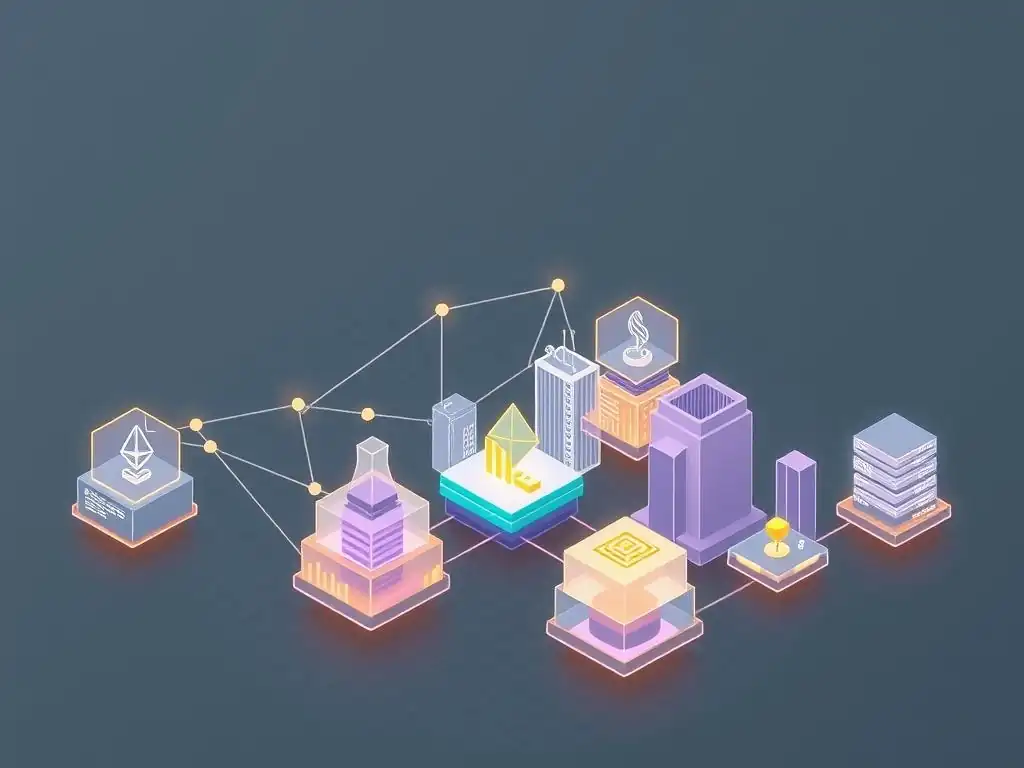
Ethereum Use Cases: DeFi, NFTs, and Beyond
Ethereum's versatility has led to a wide array of real-world use cases, particularly in Decentralized Finance (DeFi) and Non-Fungible Tokens (NFTs). DeFi applications on Ethereum encompass lending and borrowing platforms like Aave and Compound, decentralized exchanges (DEXs) like Uniswap and SushiSwap, and yield farming protocols. These platforms aim to recreate traditional financial services in a decentralized and transparent manner. The total value locked (TVL) in DeFi on Ethereum has reached billions of dollars, demonstrating its significant adoption.
NFTs on Ethereum have revolutionized digital ownership and collectibles. Platforms like OpenSea and Rarible have become marketplaces for digital art, collectibles, and virtual real estate. NFTs are also expanding into gaming, ticketing, and other areas, showcasing their potential to represent unique digital assets. Beyond DeFi and NFTs, Ethereum is also being used for supply chain tracking, identity management, and decentralized autonomous organizations (DAOs), highlighting its broad applicability across various industries.
Polkadot Use Cases: Supply Chain Management and Cross-Chain Data Oracles
Polkadot's interoperability focus makes it particularly well-suited for use cases requiring cross-chain communication and data sharing. Supply chain management is one area where Polkadot's capabilities can be leveraged. Parachains can be designed to track goods across different stages of the supply chain, with data from various blockchains integrated through Polkadot's Relay Chain. This can enhance transparency and efficiency in supply chain operations.
Cross-chain data oracles are another promising use case for Polkadot. Oracles bridge the gap between blockchains and the real world, providing external data to smart contracts. Polkadot's interoperability allows for the creation of decentralized oracle networks that can aggregate data from multiple blockchains, enhancing the reliability and security of data feeds for smart contracts. Projects like Chainlink are exploring cross-chain oracle solutions that could be integrated with Polkadot. These use cases demonstrate Polkadot's potential to facilitate complex, interconnected blockchain applications.
Cosmos Use Cases: Decentralized Exchanges and Sovereign Blockchain Applications
Cosmos's focus on sovereign blockchains and interoperability makes it ideal for building decentralized exchanges (DEXs) and application-specific blockchains. Decentralized exchanges built on Cosmos, such as Osmosis, leverage the IBC protocol to enable cross-chain trading of assets across different blockchains within the Cosmos ecosystem. This allows for a more seamless and efficient trading experience compared to DEXs limited to a single blockchain.
Cosmos is also being used to build sovereign blockchains tailored to specific applications. For example, Terra (now rebranded as Terra Classic), before its collapse, was built using the Cosmos SDK and focused on algorithmic stablecoins. Other projects are using Cosmos to build blockchains for gaming, social media, and various other use cases, highlighting the flexibility and customization offered by the Cosmos SDK for creating application-specific blockchains and connecting them within the Cosmos network.
Getting Started: Resources for Ethereum, Polkadot, and Cosmos Beginners
Learning Resources for Ethereum Development
For beginners eager to learn Ethereum development, a wealth of resources is available. The official Ethereum website, ethereum.org, offers comprehensive documentation, tutorials, and learning materials. ConsenSys Academy provides online courses and bootcamps focused on Ethereum development and blockchain fundamentals. Platforms like CryptoZombies offer interactive coding tutorials that guide beginners through building their first smart contracts.
Online communities like the Ethereum Stack Exchange and Reddit's r/ethereum and r/ethdev are excellent places to ask questions, seek help, and connect with other developers. Websites like Solidity by Example provide practical code examples and explanations of Solidity programming concepts. Exploring these resources provides a solid foundation for any beginner looking to embark on their Ethereum development journey.
Exploring Polkadot Development Tools and Frameworks
Aspiring Polkadot developers can leverage Substrate, Polkadot's modular blockchain framework, to build their own parachains and applications. The Substrate documentation provides in-depth guides and tutorials on using the framework. The Polkadot Wiki offers a wealth of information on Polkadot's architecture, concepts, and development resources. Parity Technologies, the core development team behind Polkadot, offers workshops and training programs on Substrate development.
The Substrate Developer Hub provides a centralized portal for resources, tools, and community support for Substrate developers. Online communities like the Polkadot Stack Exchange and the Polkadot Forum are valuable places to engage with other developers and seek assistance. Exploring these resources will equip beginners with the tools and knowledge needed to start building on Polkadot.
Cosmos SDK: Building Your Own Blockchain
Beginners interested in building their own blockchains with Cosmos can utilize the Cosmos SDK. The Cosmos SDK documentation provides detailed guides and tutorials on using the SDK to create custom blockchains. The Cosmos Academy offers learning resources and courses on Cosmos SDK development and blockchain architecture. The Interchain Foundation, which supports the development of Cosmos, provides grants and resources for projects building on Cosmos.
The Cosmos SDK GitHub repository is a valuable resource for exploring the codebase, finding examples, and contributing to the project. Online communities like the Cosmos Network Forum and Reddit's r/cosmosnetwork are great places to connect with other Cosmos developers and seek support. These resources empower beginners to delve into Cosmos SDK development and create their own sovereign blockchains within the Cosmos ecosystem.
The Future of Blockchain: Ethereum, Polkadot, and Cosmos's Role
Ethereum's Future: ETH2.0 and Beyond
Ethereum's future is heavily focused on the ongoing transition to ETH2.0, a series of upgrades aimed at improving scalability, security, and sustainability. A key component of ETH2.0 is the shift to Proof-of-Stake (PoS) consensus, which is already partially implemented with the Beacon Chain and staking. The full transition to PoS is expected to significantly reduce Ethereum's energy consumption and enhance its security.
Another crucial aspect of ETH2.0 is sharding, which aims to further improve scalability by dividing the blockchain into multiple shards that can process transactions in parallel. Rollups and Layer 2 scaling solutions will also continue to play a vital role in Ethereum's future, providing immediate scalability improvements while ETH2.0 is fully implemented. Ethereum's roadmap beyond ETH2.0 includes further optimizations and advancements, solidifying its position as a leading platform for decentralized applications.
Polkadot's Vision for Interconnected Blockchains
Polkadot's vision for the future is centered around building a truly interconnected blockchain ecosystem. The ongoing development of parachains and parathreads will expand the Polkadot network and enable a wider range of specialized blockchains to connect and interact. Cross-chain composability, allowing dApps to seamlessly leverage functionalities across different parachains, is a key focus for Polkadot's future.
Polkadot's governance system is also expected to evolve, further decentralizing decision-making and empowering the community to shape the network's trajectory. Advancements in interoperability protocols will further enhance Polkadot's ability to connect with blockchains outside of its own ecosystem, creating a more unified and collaborative blockchain landscape. Polkadot aims to be the foundational infrastructure for the next generation of interconnected blockchain applications.
Cosmos's Contribution to the Internet of Blockchains
Cosmos continues to contribute to the "Internet of Blockchains" vision by expanding its ecosystem of interconnected Zones and enhancing the Inter-Blockchain Communication (IBC) protocol. The development of new Zones and applications within the Cosmos network will further demonstrate the potential of sovereign blockchains and cross-chain interoperability. Improvements to the Cosmos SDK will make it even easier for developers to build custom blockchains and join the Cosmos ecosystem.
Cosmos is also exploring interchain security, a feature that would allow Zones to share security with the Cosmos Hub, enhancing the security of smaller or newer blockchains. Advancements in IBC will further improve the efficiency and functionality of cross-chain communication, enabling more complex and sophisticated interchain applications. Cosmos aims to foster a diverse and thriving ecosystem of interconnected blockchains, empowering innovation and collaboration across the blockchain space.
Conclusion: Choosing the Right Blockchain Platform for Your Needs
Choosing the right blockchain platform depends heavily on the specific needs and goals of your project. For projects prioritizing a mature ecosystem, a large developer community, and a wide range of dApp infrastructure, Ethereum remains a strong choice. Its robust smart contract capabilities and extensive DeFi and NFT ecosystems make it suitable for a broad spectrum of applications. However, scalability challenges and higher transaction fees are factors to consider.
Polkadot is ideal for projects requiring interoperability and scalability. Its parachain architecture and focus on cross-chain communication make it well-suited for applications that need to interact with multiple blockchains or require high transaction throughput. Polkadot's Substrate framework provides flexibility for building custom blockchains. Cosmos is the platform of choice for projects prioritizing blockchain sovereignty and customization.
Its Cosmos SDK empowers developers to build application-specific blockchains that can connect to the Cosmos network. Cosmos is suitable for projects seeking control over their blockchain's design and governance while benefiting from interoperability. Ultimately, understanding the strengths and weaknesses of Ethereum, Polkadot, and Cosmos is crucial for making an informed decision and selecting the platform that best aligns with your project's requirements and vision in the evolving blockchain landscape.
Frequently Asked Questions
How does Ethereum differ from Bitcoin?
Ethereum, unlike Bitcoin, is not just a cryptocurrency but a blockchain platform that supports smart contracts and decentralized applications (dApps). Bitcoin primarily functions as a digital currency and store of value.
What are smart contracts, and why are they important on Ethereum?
Smart contracts are self-executing agreements written in code and stored on the blockchain. They automate transactions and reduce the need for intermediaries, making processes more efficient and transparent on Ethereum.
What are Polkadot and Cosmos, and how do they relate to Ethereum?
Polkadot and Cosmos are interoperability blockchains aiming to connect different blockchains. They address Ethereum's scalability issues by allowing parallel processing and cross-chain communication.
Is Ethereum a good starting point for learning about blockchain technology?
Yes, Ethereum is an excellent starting point. Its large ecosystem and extensive documentation make it accessible for beginners wanting to understand blockchain concepts and development.
What are some potential enterprise applications of Ethereum's blockchain?
Ethereum's blockchain can be used for supply chain management, identity verification, and secure data sharing within enterprises, offering increased transparency and efficiency compared to traditional systems.
The journey into the world of blockchain, specifically through Ethereum, Polkadot, and Cosmos, reveals a landscape brimming with potential, but also complexity. Understanding these foundational platforms is no longer a niche interest, but a crucial step towards participating in the evolving digital economy. The power to build, transact, and govern in a decentralized manner is rapidly shifting from theoretical possibility to tangible reality, demanding a new generation of informed participants.
This exploration has not only illuminated the technical intricacies of these blockchains but also underscored their profound impact on the future of trust and collaboration. Witnessing the growth of decentralized applications and the emergence of new governance models has been truly inspiring, reinforcing the belief that blockchain technology holds the key to a more equitable and transparent world. The future is already here – it's just not evenly distributed.
- William Gibson. This quote resonates deeply, reminding us that the knowledge and access to these technologies are vital for ensuring a future where everyone can participate in shaping the decentralized landscape.
Now, armed with this foundational understanding, I urge you to embark on your own exploration. Don't be intimidated by the technical jargon or the perceived complexity. Embrace the learning process, experiment with decentralized applications, and contribute to the vibrant communities that are shaping the future of blockchain. The power to build a more decentralized and equitable world lies within your grasp.
Unlock Your Blockchain Potential!
Thank you for exploring Ethereum, Polkadot, and Cosmos with us! We hope this has given you a clearer understanding of these influential blockchain ecosystems and inspired you to learn more. Are you ready to take the next step in your blockchain journey?
Here’s how:
- Get started with Ethereum development: Install MetaMask to begin interacting with decentralized applications easily.
- Explore the interoperability landscape: Visit the official Polkadot website and learn about their parachain projects. You might discover an exciting project that sparks your interest!
- Share your knowledge: Pass this article along to a friend or colleague who is also curious about blockchain technology.
Are you ready to build the decentralized future? What are your first steps? Share your thoughts in the comments!
Leave a Reply