
A Tour of the DeFi Ecosystem: Key Components and Interactions


Welcome to Blockchain Trends, your compass in the rapidly evolving world of decentralized technology. Ready to move beyond the hype and delve into the real applications of blockchain?
This week, we're charting a course through the DeFi ecosystem, uncovering not just its components, but also exploring effective DeFi ecosystem investment strategies. Curious about how to navigate this innovative landscape and potentially capitalize on its growth? Let's begin your tour...
- A Tour of the DeFi Ecosystem: Key Components and Interactions
-
Key Components of the DeFi Ecosystem
- Decentralized Exchanges (DEXs): Trading Without Intermediaries
- Lending and Borrowing Platforms: Earning Interest on Crypto Assets
- Stablecoins: Maintaining Price Stability in the Crypto World
- Yield Farming and Liquidity Mining: Incentivizing Participation
- Derivatives and Synthetic Assets: Expanding DeFi's Capabilities
- Interactions Within the DeFi Ecosystem
- DeFi Investment Strategies: Navigating the Opportunities and Risks
- The Future of the DeFi Ecosystem and Investment
-
Frequently Asked Questions
- What are some of the key components of the DeFi ecosystem?
- How can investors effectively navigate the DeFi ecosystem?
- What are the main differences between DeFi and traditional finance (TradFi)?
- What role does regulation play in the future of the DeFi ecosystem?
- What are some promising areas for DeFi ecosystem investment strategies?
- Final Reflection: Navigating the Decentralized Future
- Unleash Your DeFi Potential: Start Exploring Now!
A Tour of the DeFi Ecosystem: Key Components and Interactions
What is DeFi? A Primer on Decentralized Finance
Decentralized Finance, or DeFi, represents a paradigm shift in finance, moving away from traditional, centralized institutions like banks and brokers towards peer-to-peer financial services built on blockchain technology. At its core, DeFi aims to democratize finance by making services like lending, borrowing, trading, and asset management accessible to anyone with an internet connection, without requiring permission or relying on intermediaries. These services are typically facilitated by smart contracts – self-executing agreements where the terms are directly written into code, running on a transparent and immutable ledger like Ethereum or other compatible blockchains.
The growth of the DeFi ecosystem has been exponential since its early days. While precise real-time figures fluctuate constantly, the total value locked (TVL) across various DeFi protocols has at times surpassed $100 billion, demonstrating significant user adoption and capital flow. This massive infusion of capital highlights the potential investors see in these decentralized financial services, driving innovation and expanding the range of available DeFi ecosystem investment strategies. The ecosystem is characterized by rapid development, introducing new protocols and financial primitives that were previously impossible or highly inefficient in traditional finance.
The Core Principles Driving DeFi Innovation
Transparency is a foundational principle of DeFi. Because transactions and protocol logic are recorded on public blockchains, anyone can audit the system's activity, including transaction volumes, asset reserves, and code execution. This open ledger approach fosters trust through verifiability, contrasting sharply with the opaque nature of many traditional financial institutions. While individual identities may be pseudonymous, the financial activity itself is publicly visible and auditable, creating a level playing field for participants exploring various DeFi ecosystem investment strategies.
Another key principle is permissionlessness. This means that anyone can participate in the DeFi ecosystem – whether as a user or a developer – without needing approval from a central authority. Users can access financial services simply by interacting with smart contracts through a compatible cryptocurrency wallet.
Developers can build new protocols and integrate with existing ones without needing licenses or going through lengthy approval processes. This open access fuels rapid innovation and allows for the creation of complex, interconnected financial applications, often referred to as "money legos," which can be combined in novel ways to execute sophisticated DeFi ecosystem investment strategies.
The Building Blocks of the DeFi Ecosystem
The DeFi ecosystem is constructed from several interconnected building blocks, each playing a crucial role in enabling decentralized financial services. These blocks include public blockchains (primarily Ethereum, but also others like BNB Chain, Polygon, Solana, etc.) that provide the underlying infrastructure for smart contracts and transactions. Smart contracts themselves are essential, automating agreements and executing financial logic without intermediaries.
Furthermore, digital assets, particularly cryptocurrencies and stablecoins, serve as the primary medium of exchange and value storage within the ecosystem. Wallets act as the user interface, allowing individuals to interact with protocols and manage their assets. These fundamental components work in concert to support the diverse applications that make up the DeFi landscape, from decentralized exchanges to lending protocols, enabling a wide array of DeFi ecosystem investment strategies for users globally.
Key Components of the DeFi Ecosystem
Decentralized Exchanges (DEXs): Trading Without Intermediaries
Decentralized exchanges (DEXs) allow users to trade cryptocurrencies directly with each other, without requiring a central authority to hold funds or manage order books. This eliminates counterparty risk associated with centralized exchanges and gives users full control over their private keys and assets throughout the trading process. DEXs operate entirely on blockchain smart contracts, automating the trade execution and settlement.
The trading volume on DEXs has seen significant growth, often reaching billions of dollars daily across various platforms. While still lagging behind the largest centralized exchanges in peak volume, DEXs have become indispensable for trading newer or less liquid tokens and are a cornerstone for many DeFi ecosystem investment strategies, particularly those involving participation in emerging projects or providing liquidity. Their non-custodial nature is a major draw for users prioritizing security and sovereignty over their digital assets.
How DEXs Work: Automated Market Makers (AMMs) Explained
Many modern DEXs utilize Automated Market Makers (AMMs) instead of traditional order books. AMMs rely on liquidity pools – pools of two or more tokens locked in a smart contract, typically funded by users called "liquidity providers." The price of the assets within the pool is determined algorithmically based on the ratio of tokens it holds. For example, in a simple AMM pool for tokens A and B, the product of the quantities of A and B remains constant (A * B = K), where K is a fixed constant.
When a trader buys token A from the pool, they deposit token B. This reduces the quantity of A and increases the quantity of B, shifting the ratio and increasing the price of A relative to B according to the algorithm. Liquidity providers earn a portion of the trading fees generated by the pool in return for depositing their assets, creating a passive income opportunity that is central to certain DeFi ecosystem investment strategies focused on yield generation.
Popular DEX Platforms: Uniswap, PancakeSwap, and Sushiswap
Uniswap is arguably the most prominent DEX, primarily operating on the Ethereum blockchain. As a pioneer of the AMM model, it has facilitated trillions of dollars in trading volume since its inception. Uniswap V3 introduced concentrated liquidity, allowing liquidity providers to allocate capital within specific price ranges, potentially increasing capital efficiency but also introducing more complexity.
PancakeSwap is another major DEX, built on the BNB Chain (formerly Binance Smart Chain). It gained popularity due to the lower transaction fees and faster confirmation times offered by BNB Chain compared to Ethereum during periods of high network congestion. PancakeSwap also offers additional features like yield farming and lotteries. SushiSwap, initially a fork of Uniswap, expanded its offerings beyond simple token swaps to include lending, yield farming, and other DeFi products, operating on multiple blockchains and further enriching the landscape for diverse DeFi ecosystem investment strategies.
Lending and Borrowing Platforms: Earning Interest on Crypto Assets
DeFi lending and borrowing platforms allow users to earn interest on their cryptocurrency holdings by lending them out to others, or to borrow assets by providing collateral. These services operate without traditional banks, using smart contracts to match lenders and borrowers, manage collateral, and distribute interest. Interest rates are typically determined algorithmically based on the supply and demand for specific assets within the protocol.
These platforms offer a way for crypto holders to generate passive income on assets that would otherwise sit idle in a wallet, forming a key component of many DeFi ecosystem investment strategies aimed at yield generation. Borrowers can access liquidity without selling their assets, which can be useful for various purposes, including leveraging positions or covering short-term expenses. The total value of assets locked in leading lending protocols often runs into billions of dollars, reflecting their significant role in the DeFi ecosystem.
Collateralization in DeFi Lending: Managing Risk
To mitigate the risk of loan defaults in a decentralized, trustless environment, DeFi lending protocols require borrowers to provide collateral. This collateral is locked in a smart contract and typically must exceed the value of the loan, a practice known as overcollateralization. A common collateralization ratio might be 150%, meaning a borrower must deposit $150 worth of crypto to borrow $100.
If the value of the collateral drops below a certain threshold (the liquidation price), the protocol automatically liquidates the collateral to repay the loan and accrued interest. This mechanism protects lenders and the protocol's solvency. Managing collateralization ratios and monitoring market prices is a crucial aspect for borrowers and impacts DeFi ecosystem investment strategies involving leverage or borrowing against volatile assets.
Leading DeFi Lending Protocols: Aave, Compound
Aave is one of the largest and most innovative DeFi lending protocols. It supports a wide range of assets and introduced features like "flash loans," which are uncollateralized loans that must be repaid within the same transaction. Aave operates on multiple networks, including Ethereum, Polygon, and Avalanche, expanding its reach and utility.
Compound is another foundational DeFi lending protocol. It pioneered the money market model where interest rates are determined by supply and demand algorithms. Compound allows users to deposit assets to earn interest and borrow assets by providing collateral. Both Aave and Compound manage billions of dollars in assets and have played a significant role in shaping the landscape of decentralized lending, providing robust platforms for DeFi ecosystem investment strategies focused on earning yield or accessing leverage.
Stablecoins: Maintaining Price Stability in the Crypto World
Stablecoins are cryptocurrencies designed to minimize price volatility, typically by pegging their value to a more stable asset like fiat currency (e.g., the US dollar), a basket of currencies, or even other cryptocurrencies. They act as a crucial bridge between the volatile crypto market and the traditional financial world, providing a stable medium of exchange and store of value within the DeFi ecosystem.
Their stability makes stablecoins indispensable for various DeFi activities, including trading, lending, and yield farming. They allow users to move in and out of volatile crypto positions without needing to convert back to fiat currency on a centralized exchange, reducing friction and transaction costs. Stablecoins are fundamental to executing many DeFi ecosystem investment strategies, particularly those focused on preserving capital or generating yield without taking on significant market risk from price fluctuations.
Types of Stablecoins: Fiat-backed, Crypto-backed, and Algorithmic
Fiat-backed stablecoins are the most common type. They maintain their peg by holding an equivalent reserve of fiat currency (or cash equivalents) in a traditional financial institution for every stablecoin issued. Examples include USDT (Tether) and USDC (USD Coin). While widely used, they introduce a degree of centralization due to the reliance on traditional banks and auditors.
Crypto-backed stablecoins are collateralized by other cryptocurrencies held in a smart contract. DAI, created by MakerDAO, is a prominent example, backed by a basket of cryptocurrencies like ETH and wBTC. These are more decentralized but require overcollateralization to absorb price volatility of the underlying assets. Algorithmic stablecoins attempt to maintain their peg using complex algorithms and smart contracts to manage supply and demand, without direct fiat or significant crypto reserves, though this model has proven challenging and prone to instability in practice.
The Role of Stablecoins in DeFi Investment Strategies
Stablecoins are foundational to many DeFi ecosystem investment strategies. They provide a safe haven asset within the crypto world, allowing investors to park funds during periods of high market volatility without exiting the ecosystem entirely. This is particularly useful for traders who want to lock in profits or wait for better entry points.
Furthermore, stablecoins are heavily utilized in DeFi lending protocols and yield farming. Users can lend out stablecoins like USDC or DAI to earn interest, often at competitive rates compared to traditional savings accounts. They are also paired with volatile assets in DEX liquidity pools, enabling yield farming opportunities while managing one side of the pair with a stable asset. Their predictable value makes stablecoins essential for calculating returns and managing risk in complex DeFi ecosystem investment strategies.
Yield Farming and Liquidity Mining: Incentivizing Participation
Yield farming is a process where DeFi users leverage their crypto assets to generate maximum returns, often by moving them between different protocols to capitalize on the highest available yields. It involves strategies like providing liquidity to DEXs, lending assets on money markets, or staking tokens in various protocols. Rewards typically come in the form of transaction fees, interest payments, or newly minted protocol tokens.
Liquidity mining is a specific type of yield farming where users earn a protocol's native token as a reward for providing liquidity. This mechanism is used by protocols to bootstrap liquidity and distribute governance tokens widely. Users deposit assets into a liquidity pool or stake them in a protocol and receive tokens proportionally to their contribution. Both yield farming and liquidity mining are popular but complex DeFi ecosystem investment strategies that require active management and understanding of underlying risks.
Understanding Yield Farming Rewards and Risks
Yield farming rewards can be substantial, sometimes offering annual percentage yields (APYs) ranging from single digits to triple digits, depending on the strategy, assets involved, and market conditions. Rewards typically consist of trading fees generated by the protocol (e.g., from DEX swaps) and/or inflationary emissions of the protocol's governance token. Higher rewards often correlate with higher risk, as protocols offering unsustainably high yields may be experimental or have underlying vulnerabilities.
The risks associated with yield farming are significant. These include smart contract risk (bugs or exploits in the code), impermanent loss (potential loss of value when providing liquidity to a volatile pair on a DEX), liquidation risk (if borrowing against collateral), and price risk of the reward tokens received. Navigating these risks is paramount for anyone pursuing DeFi ecosystem investment strategies involving yield farming.
Popular Yield Farming Strategies: A Deep Dive
One common yield farming strategy involves providing liquidity to an AMM DEX pool, such as a ETH/USDC pair on Uniswap. Users deposit equal values of both assets and earn a percentage of the trading fees generated by swaps in that pool, plus potential liquidity mining rewards in the form of the DEX's native token (e.g., UNI). This strategy is subject to impermanent loss if the price ratio of ETH to USDC changes significantly.
Another strategy involves lending stablecoins or major cryptocurrencies like ETH or WBTC on platforms like Aave or Compound to earn variable interest rates. This is generally considered lower risk than providing liquidity to volatile pairs, though still subject to smart contract risk and potential changes in interest rates. More complex strategies might involve borrowing assets against collateral and then using the borrowed assets in another yield-generating activity (e.g., borrowing stablecoins against ETH collateral and then yield farming with the stablecoins), which introduces significant leverage and liquidation risk, fundamentally changing the risk profile of the DeFi ecosystem investment strategies employed.
Derivatives and Synthetic Assets: Expanding DeFi's Capabilities
DeFi is expanding beyond basic spot trading and lending into more complex financial instruments like derivatives and synthetic assets. Derivatives are financial contracts that derive their value from an underlying asset, benchmark, or index. In DeFi, these are typically implemented via smart contracts, allowing users to gain leveraged exposure or hedge positions without holding the underlying asset directly.
Synthetic assets in DeFi are tokens that mimic the value of another asset, which could be cryptocurrencies, fiat currencies, commodities, stocks, or even indexes. They allow users to trade or gain exposure to assets that might not natively exist on the blockchain. Platforms offering these instruments are crucial for enabling more sophisticated and diverse DeFi ecosystem investment strategies, including hedging, speculation, and gaining exposure to traditional markets within a decentralized context.
How DeFi Derivatives Work: Perpetual Futures
Perpetual futures are a popular type of derivative in DeFi. Unlike traditional futures contracts that have an expiry date, perpetual futures do not. They allow traders to speculate on the future price of an asset with leverage. The price of the perpetual contract is kept close to the spot price of the underlying asset through a mechanism called the "funding rate."
The funding rate is a periodic payment exchanged between holders of the long and short positions. If the perpetual price is higher than the spot price, long position holders pay short position holders, incentivizing shorting and driving the perpetual price down towards spot. Conversely, if the perpetual price is lower, shorts pay longs. Platforms like dYdX or GMX facilitate decentralized perpetual trading, offering leverage up to 10x or more, which significantly amplifies both potential gains and losses for DeFi ecosystem investment strategies involving these instruments.
The Potential of Synthetic Assets in Decentralized Finance
Synthetic assets unlock the potential for global, permissionless access to a vast range of financial markets. By creating tokenized representations of real-world assets or indices, DeFi users can gain exposure to markets like gold, oil, or stock indices (like the S&P 500) without leaving the blockchain ecosystem or needing traditional brokerage accounts.
Protocols like Synthetix allow users to mint synthetic assets by locking collateral (typically the protocol's native token, SNX). The value of the synthetic asset tracks the price of the underlying asset via oracles that provide real-time price feeds. This expands the universe of tradable assets within DeFi, enabling more complex and diversified DeFi ecosystem investment strategies that were previously confined to traditional finance or required cumbersome cross-platform interactions.
Interactions Within the DeFi Ecosystem
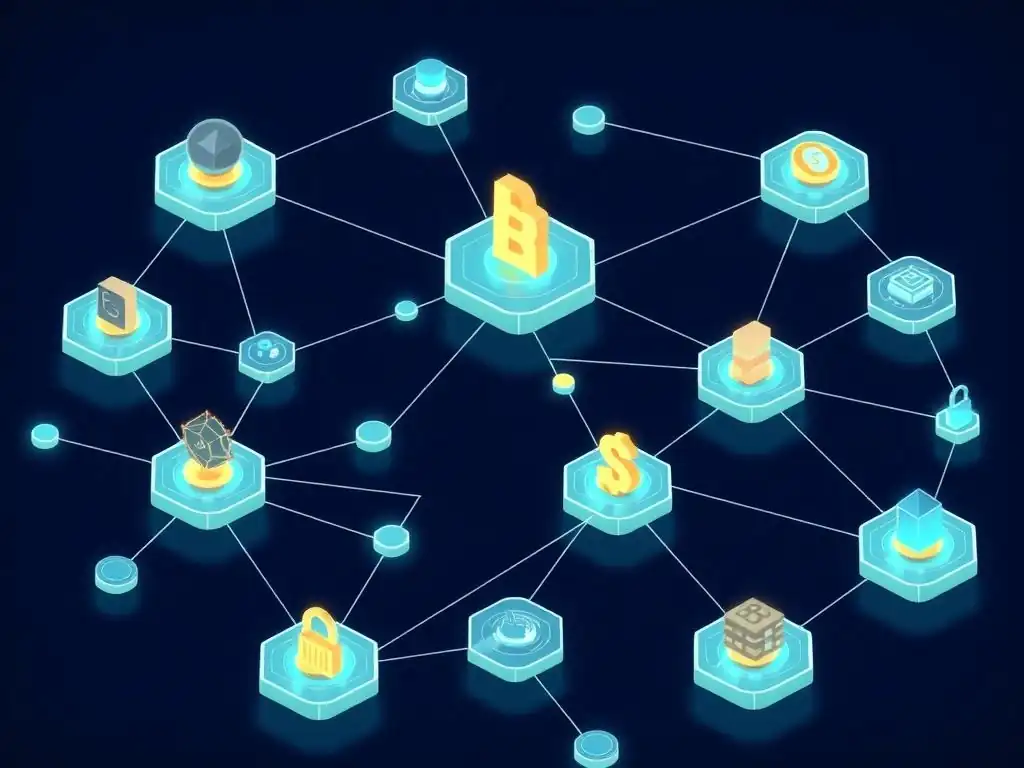
The Interconnectedness of DeFi Protocols
One of the most powerful aspects of the DeFi ecosystem is the high degree of interconnectedness between different protocols. Unlike traditional financial services which often operate in silos, DeFi protocols are designed to be interoperable. A user might deposit assets into a lending protocol like Aave, use the resulting interest-bearing tokens (like aTokens) as collateral in another protocol, and then borrow stablecoins to provide liquidity on a DEX like Uniswap, earning trading fees and liquidity mining rewards.
This interconnectedness creates a complex web of dependencies but also enables sophisticated financial operations. It means that innovations in one area, such as a new type of stablecoin or a more efficient DEX mechanism, can quickly be integrated and utilized by other protocols, driving overall ecosystem growth. Understanding these relationships is crucial for developing effective DeFi ecosystem investment strategies that leverage multiple protocols simultaneously.
Composability (Money Legos): Building on Existing Infrastructure
The term "money legos" is often used to describe the composable nature of DeFi protocols. Just as physical Lego bricks can be snapped together to build complex structures, DeFi protocols are designed with open APIs and transparent smart contracts that allow developers to easily integrate and build upon existing protocols. A new project doesn't need to reinvent the wheel for lending or swapping; it can simply integrate with established protocols like Compound or Uniswap.
This composability dramatically accelerates innovation and allows for the creation of novel financial products and strategies by combining different protocol functions. For instance, a protocol could build an automated yield optimization strategy by routing users' funds through multiple lending protocols and yield farms to find the highest yield, all by interacting with existing smart contracts. This ability to stack and combine protocols is a unique feature of DeFi, offering unparalleled flexibility in constructing DeFi ecosystem investment strategies.
Smart Contract Security: A Critical Consideration
Despite the potential of composability and decentralization, smart contract security remains a paramount concern within the DeFi ecosystem. Smart contracts are code, and like any code, they can contain bugs or vulnerabilities. Exploits of smart contract vulnerabilities have resulted in significant losses of user funds across various protocols, sometimes totaling hundreds of millions of dollars in a single incident.
While audits by reputable security firms are common practice, they do not guarantee immunity from exploits. The interconnected nature of DeFi means that a vulnerability in one protocol could potentially impact others that integrate with it. Users engaging in DeFi ecosystem investment strategies must be acutely aware of smart contract risk and exercise caution, often favoring protocols with a proven track record and robust security audits, though even these are not entirely risk-free.
DeFi offers a diverse range of investment opportunities, from simple yield generation to complex leveraged trading. However, these opportunities come with unique risks that differ from traditional finance. Successfully navigating the DeFi space requires a thorough understanding of the underlying technologies, market dynamics, and specific protocol mechanisms. Developing effective DeFi ecosystem investment strategies involves balancing potential returns against the inherent risks.
Investors can participate by holding protocol tokens, providing liquidity, lending assets, or engaging in more complex strategies like yield farming or using derivatives. Each approach has a distinct risk-reward profile. For example, simply holding major protocol tokens like UNI or AAVE carries market price risk but avoids smart contract risk associated with actively using the protocols, while yield farming offers potentially higher returns but introduces multiple layers of technical and market risk.
Assessing Risk in DeFi Investments
Assessing risk in DeFi investments involves evaluating multiple factors. Smart contract risk is fundamental – the possibility that the code contains bugs or vulnerabilities that could lead to loss of funds. This risk can be partially mitigated by choosing well-audited protocols with established track records, but never fully eliminated. Market risk, the volatility of cryptocurrency prices, is also a major factor, particularly when assets are used as collateral or provided in volatile pairs on DEXs.
Operational risk, such as the reliability of oracles providing price data or potential frontend website exploits, also needs consideration. Furthermore, specific DeFi activities introduce unique risks, like impermanent loss in liquidity provision or liquidation risk when borrowing. A comprehensive approach to DeFi ecosystem investment strategies requires understanding and attempting to quantify these varied risk vectors.
Diversification Strategies for DeFi Portfolios
Diversification is as crucial in DeFi as it is in traditional finance, but it takes on slightly different forms. Instead of just diversifying across asset classes (e.g., stocks, bonds, real estate), DeFi diversification involves spreading risk across different:
- Protocols: Investing in or using multiple lending platforms, DEXs, or yield farms reduces exposure to a single smart contract vulnerability or project failure.
- Blockchains: Operating on different blockchain networks (Ethereum, Polygon, Solana, etc.) mitigates risks specific to one chain (e.g., high gas fees impacting strategy execution or chain-specific exploits).
- Asset Types: Holding a mix of major cryptocurrencies, stablecoins, and protocol tokens reduces concentration risk in any single asset.
- Strategy Types: Combining passive holding or staking with more active yield farming or trading strategies can balance risk and potential return.
A well-diversified portfolio implementing various DeFi ecosystem investment strategies across different protocols and assets can help cushion against losses from issues affecting a single part of the ecosystem.
Long-Term DeFi Investment Approaches
Long-term DeFi ecosystem investment strategies often focus on holding or staking assets expected to appreciate over time or provide sustainable yield. This can include holding governance tokens of established protocols (like UNI, AAVE, COMP) based on the belief in the protocol's future growth and fee generation. Staking these tokens (if the protocol supports it) can provide additional yield through inflation or fee sharing, aligning investor incentives with protocol success.
Another long-term approach involves providing liquidity to highly stable or correlated pairs on DEXs (e.g., stablecoin-stablecoin pairs like USDC/DAI or major crypto pairs like ETH/WBTC) to earn trading fees with potentially lower impermanent loss compared to volatile pairs. Locking assets in long-term yield farms or lending protocols with consistent track records also falls under this category, prioritizing sustainable, albeit potentially lower, APY over short-term, high-risk opportunities.
Short-Term DeFi Trading Strategies
Short-term DeFi ecosystem investment strategies are typically more active and speculative. These involve trading assets on DEXs based on price movements, engaging in yield farming rotations to chase the highest temporary APYs, or using DeFi derivatives for leveraged speculation. Traders might use technical analysis or exploit minor price differences between DEXs (arbitrage).
Yield farming rotations involve constantly monitoring different liquidity pools and staking opportunities, moving assets frequently to capture fleeting high yields. This requires significant time, effort, and incurs transaction costs (gas fees), particularly on networks like Ethereum. Leveraged trading on perpetual platforms amplifies both potential gains and losses, making it a high-risk, high-reward strategy suited only for experienced traders who understand the mechanics of funding rates and liquidation risks.
Understanding Impermanent Loss in Liquidity Pools
Impermanent loss is a significant risk for liquidity providers (LPs) on AMM DEXs, particularly for volatile asset pairs. It occurs when the price ratio of assets in a liquidity pool changes relative to when the LP deposited them. The loss is "impermanent" because it only materializes if the LP withdraws their liquidity at a different price ratio than when they deposited; if the price ratio returns to the original state, the impermanent loss disappears.
When the price of one asset in a pool increases significantly compared to the other, arbitrage traders will rebalance the pool by buying the appreciating asset and selling the depreciating one until the price ratio aligns with the market. This leaves the LP with more of the depreciating asset and less of the appreciating asset than they would have had if they had simply held the assets outside the pool.
The value of their share in the pool might be less than the value of simply holding the initial assets, representing the impermanent loss. While LPs earn trading fees, these fees may or may not be enough to offset the impermanent loss, making it a critical factor in evaluating DeFi ecosystem investment strategies involving liquidity provision.
The Future of the DeFi Ecosystem and Investment
The DeFi ecosystem is still relatively young but is evolving rapidly. The pace of innovation, coupled with increasing user adoption and institutional interest, suggests a future where decentralized finance plays a more significant role in the global financial landscape. The evolution is driven by addressing current limitations and exploring new applications of blockchain technology beyond existing financial primitives.
Future developments are likely to focus on improving scalability, enhancing security, expanding the range of accessible assets, and potentially integrating more closely with traditional finance while maintaining core decentralized principles. These advancements will inevitably lead to the development of new and more sophisticated DeFi ecosystem investment strategies, requiring investors to continuously adapt and learn.
Emerging Trends in Decentralized Finance
Several emerging trends are shaping the future of DeFi. DeFi 2.0 concepts aim to address issues like impermanent loss and capital inefficiency through mechanisms like protocol-owned liquidity and bond markets. The integration of Non-Fungible Tokens (NFTs) into DeFi, such as using NFTs as collateral for loans or fractionalizing high-value NFTs, is opening up new possibilities.
Decentralized Autonomous Organizations (DAOs) are becoming more sophisticated in governing protocols, giving token holders more direct control over the future of the platforms they use. Furthermore, the expansion of DeFi onto multiple high-throughput blockchains is increasing accessibility and reducing transaction costs for a wider user base. These trends are creating new avenues and complexities for DeFi ecosystem investment strategies.
Scalability Solutions for DeFi: Layer-2 and Beyond
Scalability has been a major challenge for DeFi, particularly on the Ethereum mainnet, which has historically suffered from high transaction fees (gas costs) and slow confirmation times during peak usage. Layer-2 scaling solutions are critical to overcoming these limitations. Technologies like optimistic rollups (e.g., Optimism, Arbitrum) and zero-knowledge rollups (e.g., zkSync, StarkNet) process transactions off the main Ethereum chain and then batch them into a single transaction submitted to Layer-1, dramatically reducing costs and increasing throughput.
The successful implementation and adoption of Layer-2 solutions are essential for making DeFi accessible and affordable for mass adoption. As more protocols deploy on Layer-2 networks, it will lower the barrier to entry for users and enable more granular and cost-effective execution of various DeFi ecosystem investment strategies, making activities like frequent yield farming rotations or smaller transactions economically viable.
The Evolution of DeFi Investment Strategies
As the DeFi ecosystem matures and new protocols and technologies emerge, DeFi ecosystem investment strategies will continue to evolve. The increasing complexity and interconnectedness will require investors to develop deeper technical understanding and analytical skills. The availability of more sophisticated financial instruments, like complex derivatives or structured products built on DeFi primitives, will offer new ways to manage risk and pursue returns.
Furthermore, the rise of decentralized asset management protocols and yield aggregators will provide users with automated ways to implement strategies, though this introduces another layer of smart contract risk. Staying informed about protocol updates, security best practices, and market trends will be crucial for investors seeking to capitalize on the opportunities while mitigating the risks in the ever-changing DeFi landscape.
Regulatory Considerations for DeFi
The regulatory landscape surrounding DeFi is still developing and represents a significant factor shaping its future. Regulators globally are grappling with how to classify and oversee decentralized protocols, tokens, and activities. Concerns include consumer protection, anti-money laundering (AML), countering the financing of terrorism (CFT), and financial stability.
Uncertainty around future regulations poses a risk to the DeFi ecosystem. Overly restrictive regulations could stifle innovation and adoption, while inconsistent global approaches could create fragmentation. Investors pursuing DeFi ecosystem investment strategies must be aware of the potential impact of regulatory changes on specific protocols, assets, and the overall market, as regulatory actions could affect token prices, protocol accessibility, or the legality of certain activities. The balance between fostering innovation and ensuring responsible development will be key to the long-term sustainability of DeFi.
Frequently Asked Questions
What are some of the key components of the DeFi ecosystem?
The DeFi ecosystem comprises several essential components, including decentralized exchanges (DEXs), lending and borrowing platforms, and stablecoins. These elements interact to provide financial services without traditional intermediaries.
Navigating the DeFi ecosystem requires careful research and understanding of the associated risks. Investors should diversify their portfolios and stay informed about regulatory developments and emerging trends.
What are the main differences between DeFi and traditional finance (TradFi)?
DeFi utilizes blockchain technology for transparency and decentralization, while TradFi relies on centralized institutions. DeFi offers greater accessibility and potentially higher returns, but also carries more risk.
What role does regulation play in the future of the DeFi ecosystem?
Regulation is crucial for fostering sustainable growth and protecting investors in the DeFi space. Clear regulatory frameworks can attract institutional investment and improve market stability.
What are some promising areas for DeFi ecosystem investment strategies?
Promising investment areas include yield farming, staking, and participating in governance protocols. However, thorough due diligence and risk management are essential for success in these strategies.
The exploration of the DeFi ecosystem, as we've seen, reveals a complex but ultimately promising landscape. Understanding the intricacies of its key components and their interactions is no longer a niche interest, but a crucial skill for anyone seeking to participate in the future of finance. The potential for innovative investment strategies within DeFi is immense, but requires a grounded understanding of the underlying technology and its inherent risks.
The ongoing evolution of DeFi continues to reshape our perception of financial systems. It's a constant reminder that innovation, while exciting, demands diligent research and a cautious approach. The potential for financial inclusion and empowerment is undeniable, but so too are the risks of volatility and regulatory uncertainty. The future of finance is decentralized, but its success hinges on responsible innovation and informed participation.
This quote encapsulates the delicate balance we must strike as we navigate this new frontier.
As you consider the potential of DeFi ecosystem investment strategies, remember that knowledge is your most valuable asset. Take the time to deeply understand the protocols, the risks, and the potential rewards. Explore, experiment, but always prioritize security and responsible decision-making. The future of finance is being built now, and your informed participation can shape its trajectory for the better.
Unleash Your DeFi Potential: Start Exploring Now!
Thank you for exploring the DeFi ecosystem with us! We hope this overview has highlighted the key components and interactions that make this space so innovative. Now, it's time to apply your knowledge and become an active participant.
Here are a few next steps to consider:
- Begin with a small, well-researched investment in a DeFi protocol that matches your risk tolerance. Consider options like yield farming or staking to experience the benefits of decentralized finance firsthand.
- Visit the community forum discussions and share your thoughts on a DeFi project that interests you. Let’s learn together!
- Challenge yourself to explain one important DeFi concept to a friend or family member. Sharing knowledge helps promote adoption.
What specific DeFi protocol are you most excited to explore further, and why? Share your thoughts in the comments below!
Leave a Reply