
Web3 and the Future of Education: Decentralized Learning Platforms


Welcome to Blockchain Trends, where we delve into the revolutionary world of blockchain technology beyond the hype. Are you ready to explore how this powerful innovation is reshaping industries and redefining possibilities?
This week, we're unraveling the fascinating intersection of Web3 and education, focusing on decentralized learning platforms. Curious about how blockchain can revolutionize the way we learn and share knowledge, empowering individuals and fostering a more equitable educational landscape? Dive in to discover the transformative potential that awaits!
Web3 and the Future of Education: Decentralized Learning Platforms
- Introduction: The Evolution of Education with Web3
- What are Decentralized Learning Platforms (DLPs)?
- Key Features of Decentralized Education Platforms
- The Benefits of Decentralized Learning Platforms
- Use Cases of Blockchain in Education: Real-World Examples
- Challenges and Opportunities in Implementing Decentralized Learning
- The Future of Education: A Decentralized Vision
- Conclusion: Embracing the Potential of Decentralized Learning Platforms
-
Frequently Asked Questions
- What are decentralized learning platforms and how do they relate to blockchain?
- How can Web3 technologies enhance the learning experience?
- What are the potential benefits of using blockchain for educational credentialing?
- What are some of the regulatory challenges associated with decentralized learning platforms?
- How might decentralized learning platforms impact traditional educational institutions?
- Final Reflection: Embracing Decentralized Learning
- Reimagine Your Learning Journey!
Introduction: The Evolution of Education with Web3
Understanding Web3 and its Impact on Traditional Education Models
Web3 represents the next iteration of the internet, moving beyond centralized platforms towards decentralized, blockchain-powered ecosystems where users have greater control and ownership. This shift has profound implications for numerous industries, including education, which has historically relied on centralized institutions for content delivery, credentialing, and administration. Traditional models often face challenges related to accessibility, cost, data ownership, and the static nature of credentials.
The integration of Web3 technologies, such as blockchain, smart contracts, and decentralized identifiers (DIDs), offers a compelling alternative. By enabling peer-to-peer interactions and immutable record-keeping, Web3 can disrupt the current educational landscape. For instance, the global edtech market was valued at over $250 billion in recent years, and incorporating decentralized technologies could unlock new market segments and operational efficiencies previously unattainable within centralized frameworks. This evolution promises to make learning more open, secure, and tailored to individual needs.
The Rise of Decentralized Learning Platforms: A New Paradigm
The emergence of decentralized learning platforms (DLPs) signifies a fundamental shift in how education is accessed, delivered, and validated. Unlike traditional online learning platforms controlled by single entities, DLPs leverage blockchain technology to distribute control and data ownership among participants – learners, educators, and content creators. This creates a more equitable and transparent learning environment.
Decentralized learning platforms blockchain are designed to address many of the limitations of centralized systems. They offer enhanced security for sensitive student data, provide immutable records of achievements, and can facilitate direct peer-to-peer interactions without intermediaries. The potential for these platforms is vast, promising to democratize access to quality education globally, especially in regions where traditional infrastructure is lacking or expensive. The development of robust decentralized learning platforms blockchain is seen as a crucial step in building a more resilient and accessible future for education.
What are Decentralized Learning Platforms (DLPs)?
Defining Decentralized Learning Platforms: Key Characteristics
Decentralized learning platforms (DLPs) are educational ecosystems built on decentralized technologies, primarily blockchain. Their core characteristic is the removal of a single point of control or failure, distributing power and data across a network of participants. Key features include data immutability, transparency (for public data like credentials, not private learner data), censorship resistance, and peer-to-peer functionality.
These platforms prioritize user ownership of data and assets, moving away from models where platform providers own all content and user information. Think of a traditional online course platform where your progress and certificates are stored on their servers; in a DLP, your learning records or digital certificates might be stored on a blockchain, owned and controlled by you via a decentralized identity. This shift empowers learners and educators alike, fostering a more open and participatory educational landscape powered by decentralized learning platforms blockchain.
How Blockchain Technology Powers DLPs
Blockchain technology serves as the foundational layer for decentralized learning platforms. Its distributed ledger capability provides a secure, transparent, and immutable way to record educational achievements, credentials, and even interactions. Smart contracts, self-executing contracts with the terms directly written into code, automate processes like enrollment, grading, and certificate issuance without the need for intermediaries.
Furthermore, blockchain enables the creation of tokenized economies within DLPs. These tokens can be used for incentives, micropayments for content, or even represent fractional ownership in educational resources. The decentralized nature of the blockchain ensures that once data is recorded (like a completed course or issued certificate), it cannot be tampered with or removed without the consensus of the network, providing an unprecedented level of trust and authenticity to records stored on decentralized learning platforms blockchain.
Advantages of Using Blockchain for Education and Learning
Leveraging blockchain for education offers several significant advantages. Firstly, it enhances the security and integrity of educational records. Diplomas, certificates, and transcripts stored on a blockchain are virtually impossible to forge, solving a major problem for employers and institutions needing to verify credentials. This immutability provides a reliable source of truth for learner achievements.
Secondly, blockchain can significantly improve accessibility and reduce costs. By enabling peer-to-peer transactions and potentially disintermediating traditional institutions, education can become more affordable and available to individuals globally. The transparency of blockchain also builds trust in online learning environments. Overall, the integration of blockchain into decentralized learning platforms blockchain creates a more secure, accessible, and verifiable educational system.
Key Features of Decentralized Education Platforms
Secure and Transparent Student Records on the Blockchain
One of the most compelling features of decentralized learning platforms blockchain is their ability to manage student records securely and transparently. Instead of housing sensitive data in centralized databases vulnerable to hacks or single-point failures, DLPs can store verifiable proofs or actual records of academic achievements, course completions, and skills acquired on a blockchain.
This ensures that a student's academic history is immutable and accessible to them at any time. Institutions or employers can verify credentials directly on the blockchain with the student's permission, streamlining the verification process and drastically reducing the risk of fraudulent claims. This level of security and transparency is a major leap forward from traditional paper-based systems or siloed digital databases.
Tokenized Incentives and Rewards for Learners and Educators
Many decentralized learning platforms blockchain incorporate token economies to incentivize participation and achievement. Learners can earn tokens for completing modules, mastering skills, or contributing to the community, while educators and content creators can be rewarded for developing high-quality materials or providing valuable instruction.
These tokens can have various utilities within the platform, such as accessing premium content, participating in governance decisions, or being exchanged for other goods or services. This gamified approach, powered by blockchain tokens, motivates learners, fosters a sense of community, and creates a sustainable ecosystem where contributions are directly valued and rewarded, driving engagement on decentralized learning platforms blockchain.
Smart Contracts for Automated Grading and Certification
Smart contracts are integral to automating key processes within decentralized learning platforms. They can be programmed to automatically grade quizzes or assignments based on predefined criteria and, upon successful completion of a course or program, trigger the issuance of a digital certificate directly to the learner's decentralized identity or wallet on the blockchain.
This automation removes the need for manual intervention in many administrative tasks, reducing overhead costs and increasing efficiency. It also ensures that the criteria for earning a credential are transparent and consistently applied, as the logic is embedded in the immutable smart contract code. This use of smart contracts is a powerful element enabling the operational efficiency of decentralized learning platforms blockchain.
Peer-to-Peer Learning and Knowledge Sharing
Decentralized architectures naturally facilitate peer-to-peer interactions, enabling learners to connect directly with each other and with educators without requiring a central authority to broker every interaction. This fosters collaborative learning environments, study groups, and direct knowledge exchange.
Learners can potentially share their own expertise, contribute to course materials, or mentor others, creating a vibrant, self-sustaining community. This model leverages the collective intelligence of the network, making learning a more social and interactive process and empowering individuals within decentralized learning platforms blockchain to become both learners and teachers.
Decentralized Identity and Ownership of Learning Data
A core principle of Web3 and decentralized learning platforms blockchain is decentralized identity (DID). DIDs allow individuals to create and control their own digital identities, independent of any single platform or institution. This means a learner owns their identity and the data associated with their learning journey, including their academic records and skill endorsements.
This shift from institutional ownership to individual ownership of learning data is transformative. Learners can aggregate their achievements from various sources, share them selectively with potential employers or other institutions, and maintain a lifelong, portable record of their learning journey, all secured and managed through their decentralized identity on a blockchain-based platform.
The Benefits of Decentralized Learning Platforms
Enhanced Data Security and Privacy for Students
Decentralized learning platforms blockchain offer a significant upgrade in data security and privacy compared to traditional systems. By storing sensitive data securely on a blockchain or using cryptographic proofs linked to a decentralized identity, the risk of mass data breaches from centralized databases is drastically reduced.
Learners have greater control over who can access their data, granting permissions on a case-by-case basis rather than having their information held by a single entity. This enhanced privacy builds trust and empowers students, ensuring their personal and academic information is protected in an increasingly digital world, a key advantage of decentralized learning platforms blockchain.
Increased Accessibility to Education for Underserved Communities
One of the most impactful benefits of decentralized learning platforms is their potential to democratize access to education globally. In many parts of the world, traditional educational infrastructure is limited, expensive, or inaccessible due to geographical, political, or economic barriers.
DLPs, built on open, permissionless blockchains, can be accessed by anyone with an internet connection, regardless of location or socioeconomic status. By reducing administrative overhead and potentially offering more affordable pathways to credentials through tokenized economies, decentralized learning platforms blockchain can bring quality learning opportunities to millions who were previously excluded.
Greater Control and Ownership of Educational Content
Decentralized learning platforms empower both creators and learners by shifting ownership and control away from centralized platforms. Content creators (educators, subject matter experts) can publish their materials directly onto a DLP, potentially earning tokens based on usage or contributions, and retaining greater control over their intellectual property.
Learners also gain more control, not only over their data but potentially over their learning paths and even curriculum development through decentralized governance models. This paradigm fosters a more open ecosystem where knowledge is shared and evolved collaboratively, leveraging the unique capabilities of decentralized learning platforms blockchain.
Reduced Costs and Improved Efficiency in Educational Administration
Traditional educational institutions face significant administrative costs related to record-keeping, verification, and bureaucracy. Decentralized learning platforms blockchain, leveraging smart contracts and automated processes, can substantially reduce these overheads.
Automated grading, certificate issuance, and peer-to-peer transactions minimize the need for manual administrative tasks. Furthermore, the disintermediation potential of DLPs can lower the overall cost of education for learners by removing layers of institutional overhead. This efficiency makes education more affordable and scalable.
Fostering Lifelong Learning and Skill Development
The immutable and portable nature of credentials issued on decentralized learning platforms is perfectly suited for supporting lifelong learning. As individuals navigate increasingly dynamic career paths, the ability to continuously acquire new skills and have them instantly verified and added to a personal, decentralized record is invaluable.
Learners can build a comprehensive, verifiable portfolio of skills and micro-credentials earned throughout their lives from various sources, not just traditional degrees. This encourages continuous development and makes it easier for individuals to demonstrate their evolving capabilities to employers, a crucial aspect facilitated by decentralized learning platforms blockchain.
Use Cases of Blockchain in Education: Real-World Examples
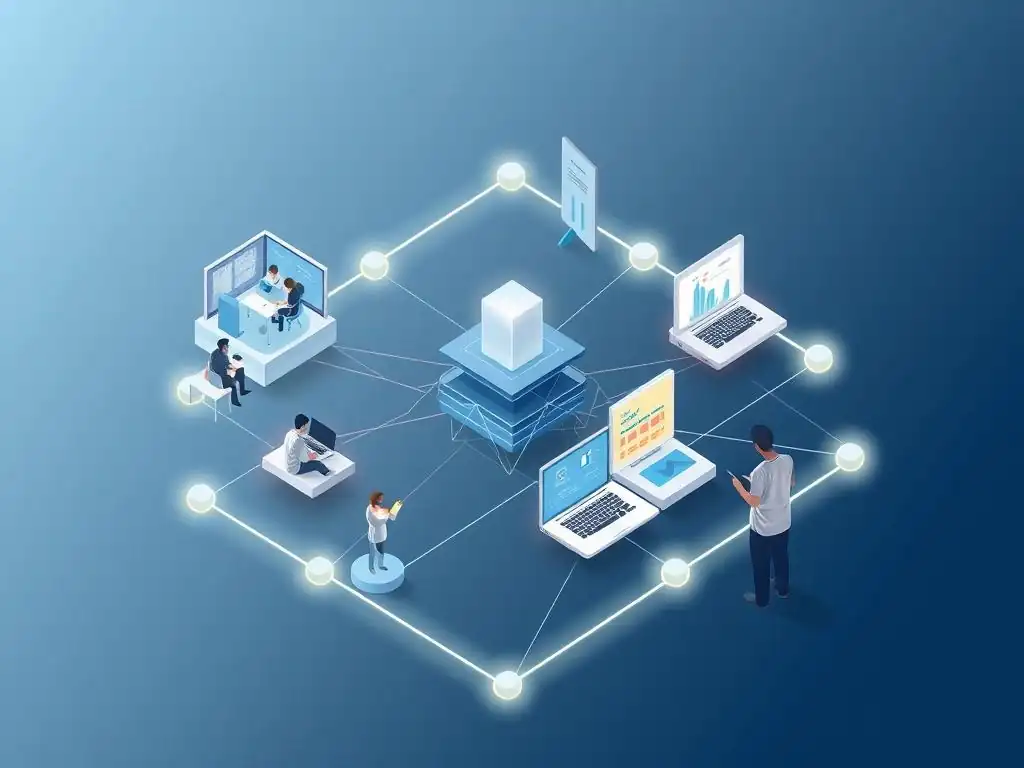
Blockchain-Based Credentialing and Verification Systems
One of the most mature use cases for blockchain in education is credentialing. Institutions and platforms are exploring or implementing systems to issue digital diplomas, certificates, and badges on a blockchain. Examples include initiatives by universities or companies partnering with blockchain credential providers.
These systems allow instant, secure verification of credentials by anyone with the necessary permissions, eliminating the need for manual checks and combating diploma mill fraud. A potential estimate suggests that blockchain could reduce credential verification costs significantly, perhaps by 50% or more, while increasing trust and efficiency in the hiring process.
DLPs for Skill-Based Learning and Professional Development
Decentralized learning platforms blockchain are particularly well-suited for skill-based learning and professional development. These platforms can offer modular courses, micro-credentials, and verifiable skill endorsements that are highly relevant to the job market.
Learners can acquire specific, in-demand skills and receive blockchain-based proofs of their competency that employers can easily verify. This model is more agile than traditional degree programs and caters to the growing need for continuous reskilling and upskilling in the workforce, making DLPs valuable tools for career advancement.
Decentralized Research and Collaboration Platforms
Blockchain can facilitate decentralized platforms for academic research and collaboration. Researchers can timestamp and immutably record their findings, preventing plagiarism and establishing clear intellectual property rights. Platforms can also use tokens to incentivize peer review and data sharing.
This creates a more open and collaborative research ecosystem, potentially accelerating discovery and making research more accessible. By decentralizing the publication and review process, these platforms can bypass traditional gatekeepers and foster more equitable participation in global research efforts.
Micropayment Systems for Educational Resources and Services
Blockchain enables efficient micropayment systems within decentralized learning platforms blockchain. This allows for granular payment models, where learners might pay small amounts of cryptocurrency or tokens for specific articles, video lectures, or tutoring sessions, rather than paying a large lump sum for an entire course.
This flexibility makes educational content more accessible and allows educators and content creators to be directly compensated for their contributions on a per-use basis. Micropayments facilitated by blockchain tokens create new economic models for distributing and accessing educational resources.
OpenEdX and Blockchain Integration
While OpenEdX itself is not inherently a decentralized learning platform blockchain, there have been explorations and integrations of blockchain technology with platforms based on OpenEdX. The flexibility of the OpenEdX architecture allows for third-party plugins and integrations, including those that leverage blockchain for specific functions like issuing certificates.
This demonstrates how existing, widely-used educational platforms can begin to incorporate decentralized elements, such as blockchain-based credentialing, without a complete overhaul. Such integrations represent a stepping stone towards more fully decentralized learning platforms blockchain by adding trust, security, and verifiability layers to traditional online learning experiences.
Challenges and Opportunities in Implementing Decentralized Learning
Scalability Issues with Blockchain Technology
One of the primary challenges facing the widespread adoption of decentralized learning platforms blockchain is the scalability of current blockchain networks. Public blockchains like Ethereum, while secure and decentralized, can suffer from high transaction fees (gas costs) and slow processing speeds, particularly during periods of high network congestion.
While Layer 2 scaling solutions and alternative blockchain protocols are being developed to address these issues, they still pose a hurdle for applications requiring frequent, low-cost transactions, such as large-scale educational platforms with millions of users interacting daily. Overcoming these technical limitations is crucial for DLPs to achieve mass adoption.
Regulatory Uncertainties Surrounding DLPs
The regulatory landscape for blockchain and Web3 technologies is still evolving globally, creating uncertainty for decentralized learning platforms. Issues surrounding data privacy (e.g., GDPR compliance when using immutable ledgers), the classification of educational tokens, and the legal recognition of blockchain-based credentials need to be clarified.
Different jurisdictions may have varying approaches, creating a complex environment for platforms aiming for global reach. Navigating these regulatory ambiguities and advocating for clear, supportive frameworks is a significant challenge but also an opportunity to shape the future of educational regulation.
The Need for User-Friendly Interfaces and Educational Content
Despite the technological promise, decentralized learning platforms blockchain must offer user experiences that are as intuitive and accessible as traditional online platforms. The complexities of managing crypto wallets, understanding blockchain transactions, or interacting with decentralized applications (dApps) can be a barrier for mainstream users, including students and educators who are not technologically savvy.
Furthermore, the success of any learning platform hinges on the quality and availability of educational content. DLPs need to attract educators and content creators to build comprehensive libraries of courses and resources, which requires overcoming potential resistance to adopting new technologies and business models.
Overcoming Resistance from Traditional Educational Institutions
Traditional universities, colleges, and educational bodies represent established systems with significant inertia. Adopting decentralized learning platforms blockchain requires a fundamental shift in thinking, technology infrastructure, and administrative processes, which can face resistance from entrenched interests and existing organizational structures.
Convincing traditional institutions of the benefits of blockchain-based systems, demonstrating their reliability and security, and integrating them with legacy systems are significant challenges. However, partnerships and pilot programs showcasing successful implementations can help build trust and pave the way for broader adoption.
Opportunities for Innovation and Growth in the DLP Market
Despite the challenges, the market for decentralized learning platforms blockchain presents immense opportunities for innovation and growth. The global demand for accessible, affordable, and verifiable education is growing, and DLPs are uniquely positioned to meet this need.
There is significant potential for developing novel educational models, assessment methods, and credentialing systems that are simply not possible with centralized technologies. The space is ripe for startups and developers to create innovative solutions addressing specific niches within the educational landscape, from K-12 to professional training, leveraging the power of decentralized learning platforms blockchain.
The Future of Education: A Decentralized Vision
The Role of DAOs (Decentralized Autonomous Organizations) in Education
In the future, Decentralized Autonomous Organizations (DAOs) could play a significant role in governing decentralized learning platforms and even entire educational institutions. A DAO is an organization represented by rules encoded as a transparent computer program, controlled by the organization members, and not influenced by a central government.
In an educational context, a DAO could allow learners, educators, and community stakeholders to collectively make decisions on curriculum development, platform features, resource allocation, and governance rules. This model promotes community ownership and democratic participation, moving towards truly decentralized educational ecosystems governed by the community itself.
The Convergence of Web3, AI, and Education
The future of education will likely see a convergence of Web3 technologies, including decentralized learning platforms blockchain, with Artificial Intelligence (AI). AI can personalize learning paths, automate tutoring, and provide adaptive content based on a learner's progress and style.
Combining AI's personalized approach with Web3's emphasis on data ownership and decentralized control creates powerful possibilities. Learners could have AI tutors that access their permissioned learning data on the blockchain to provide tailored support, all while maintaining control over their personal information via decentralized identity. This synergy promises highly effective and privacy-preserving educational experiences.
Democratizing Access to Knowledge and Empowering Learners Globally
At its core, the decentralized vision for education is about democratizing access to knowledge. By removing geographical barriers, reducing costs, and providing open, verifiable credentials, decentralized learning platforms blockchain can empower individuals worldwide, regardless of their background or location, to access quality learning opportunities.
This global reach has the potential to significantly reduce educational inequality and unlock human potential on a massive scale. Empowered learners with verifiable skills can participate more effectively in the global economy, fostering economic development and social mobility.
Personalized and Adaptive Learning Paths
Decentralized learning platforms, especially when combined with technologies like AI and decentralized data storage, can enable highly personalized and adaptive learning paths. Learners can aggregate credentials and skill proofs from various sources on their decentralized identity, creating a comprehensive profile of their abilities.
Platforms can then use this permissioned data to recommend relevant courses, suggest next steps for skill development, and adapt content delivery to suit individual learning styles and goals. This moves away from a one-size-fits-all model towards an educational experience uniquely tailored to each learner, facilitated by the secure and controllable data environment of decentralized learning platforms blockchain.
Conclusion: Embracing the Potential of Decentralized Learning Platforms
Decentralized Learning Platforms: A Paradigm Shift in Education
Decentralized learning platforms blockchain represent more than just a technological upgrade; they signify a fundamental paradigm shift in education. By leveraging blockchain, Web3, and other decentralized technologies, DLPs are challenging traditional centralized models, promising greater security, accessibility, affordability, and user control.
This evolution moves education from a system often characterized by gatekeepers and silos to an open, interconnected ecosystem where knowledge is shared, skills are verifiable, and learners are empowered owners of their educational journey. Embracing this shift is crucial for the future of learning.
Investing in the Future of Education with Blockchain Technology
Investing in the development and adoption of decentralized learning platforms blockchain is an investment in the future of education itself. This includes technological development, building robust and user-friendly platforms, creating high-quality decentralized educational content, and fostering collaboration between technologists, educators, and institutions.
While challenges remain, the potential benefits – from enhanced data security and reduced costs to increased global access and personalized learning – make DLPs a vital area for focus and investment. Supporting initiatives in this space is key to realizing the transformative power of blockchain in education.
The Long-Term Impact of DLPs on Society and the Global Economy
The long-term impact of widespread adoption of decentralized learning platforms blockchain on society and the global economy could be profound. A more educated and skilled global population, equipped with verifiable credentials, can drive innovation, economic growth, and social progress.
By democratizing access to knowledge and empowering individuals with ownership of their learning data and achievements, DLPs can contribute to a more equitable and prosperous world. The shift towards decentralized learning platforms blockchain is not merely about technology; it's about building a more open, accessible, and empowering future for learners everywhere.
Frequently Asked Questions
What are decentralized learning platforms and how do they relate to blockchain?
Decentralized learning platforms utilize blockchain technology to create a more transparent and secure educational environment. This involves distributing data and control, moving away from centralized institutions.
How can Web3 technologies enhance the learning experience?
Web3 offers enhanced security, data ownership, and new models for rewarding learning through tokenized incentives. It also enables more personalized and interactive learning experiences.
What are the potential benefits of using blockchain for educational credentialing?
Blockchain provides tamper-proof and verifiable credentials, making it easier for learners to prove their skills and achievements. This can streamline job applications and academic recognition, and reduces the risk of fraudulent qualifications.
What are some of the regulatory challenges associated with decentralized learning platforms?
Regulatory uncertainty surrounds the use of cryptocurrencies and tokens in education. Issues concerning data privacy and security also need careful consideration, as well as ensuring compliance with existing educational laws.
How might decentralized learning platforms impact traditional educational institutions?
They could force traditional institutions to adapt and innovate, potentially leading to collaborations or competition. Decentralized platforms offer alternative learning pathways and credentials, which could disrupt the established educational landscape and democratize access to education.
Final Reflection: Embracing Decentralized Learning
The exploration of Web3 and its potential to revolutionize education through decentralized learning platforms reveals a paradigm shift that is not just theoretical, but actively shaping the future of knowledge acquisition. The promise of blockchain technology to democratize access, enhance security, and foster personalized learning experiences is no longer a distant dream, but a tangible possibility being built upon today.
The impact of decentralized learning platforms extends far beyond simply digitizing traditional classrooms. It's about empowering learners, fostering critical thinking, and creating a more equitable educational landscape. The ability to own one's learning data and contribute to a community-driven curriculum is a powerful force for change, one that resonates deeply with the desire for autonomy and self-directed growth. Education is the most powerful weapon which you can use to change the world.
- Nelson Mandela. This quote underscores the transformative potential of education, and decentralized platforms offer a new and potent way to wield that weapon.
As we stand at the cusp of this educational revolution, I invite you to consider your own role in shaping this future. How can you leverage the power of decentralized learning platforms to enhance your own knowledge, contribute to the learning of others, and advocate for a more equitable and accessible educational system for all? The future of education is not just about technology; it's about empowering individuals and building a more informed and connected world.
Reimagine Your Learning Journey!
Thank you for exploring the exciting possibilities of Web3 in education with us! We hope you've gained valuable insights into how decentralized learning platforms can transform the way we acquire knowledge. Now, it's time to take action:
- Explore a decentralized learning platform today! Look into platforms like Odyssey or TalentLayer and enroll in a course that piques your interest. This is your first step toward experiencing the future of education firsthand.
- Share this article with educators and learners who are interested in innovative learning experiences. Help spread the word about how Web3 can revolutionize education!
- Reflect on your own educational journey: Are there aspects that could benefit from decentralization? Share your thoughts and ideas in the comments below!
Are you ready to join the decentralized education revolution? What skills are you most eager to learn through Web3 platforms?
Leave a Reply