
From Farm to Fork: Blockchain's Role in Transparent Food Supply Chains for a Greener Planet

Welcome to Blockchain Trends, your compass in the evolving landscape of decentralized technology.
Ever wondered how blockchain can revolutionize more than just finance? Dive into "From Farm to Fork: Blockchain's Role in Transparent Food Supply Chains for a Greener Planet" and discover how this groundbreaking technology is fostering blockchain food supply transparency, offering unprecedented visibility from production to consumption. Explore how it can empower consumers, reduce waste, and contribute to a more sustainable future. What secrets will the blockchain reveal about your next meal? Let's find out.
From Farm to Fork: Blockchain's Role in Transparent Food Supply Chains for a Greener Planet
- Introduction: The Urgent Need for Transparency in Food Supply Chains
- Blockchain Food Supply Transparency: A Deep Dive
- Enhancing Food Traceability with Blockchain: From Farm to Consumer
- Blockchain for Sustainable Food Systems: A Greener Approach
- Case Studies: Blockchain Success Stories in the Food Industry
- Overcoming Challenges to Blockchain Adoption in Food Supply Chains
- The Future of Blockchain in Food: Trends and Predictions
- Conclusion: Embracing Blockchain for a Transparent and Sustainable Food Future
-
Frequently Asked Questions
- How can blockchain technology improve food safety in the supply chain?
- What are the key benefits of using blockchain for food supply chain transparency?
- How does blockchain address the challenges of lack of transparency in traditional food supply chains?
- What are some real-world examples of companies using blockchain for food supply transparency?
- What are the main hurdles to widespread adoption of blockchain in the food supply chain?
- Final Reflection: Cultivating Trust, Harvesting Change
- Empower Change: Track Your Food's Journey!
Introduction: The Urgent Need for Transparency in Food Supply Chains
The Growing Demand for Ethical and Sustainable Food Production
Consumers today are increasingly conscious of the environmental and social impact of their food choices. This heightened awareness is driving a significant demand for ethical and sustainable food production practices. According to various surveys, a large percentage of consumers, often cited as over 60-70%, are willing to pay more for products that are sustainably sourced or produced ethically. This trend reflects a fundamental shift in consumer values, moving beyond price and quality to encompass the entire lifecycle of the food they purchase, from how it is grown or raised to how it reaches their plate.
This demand isn't just a niche trend; it's becoming mainstream, influencing grocery stores, restaurants, and food manufacturers alike. Consumers want to know the origin of their food, the conditions under which it was produced, whether fair labor practices were employed, and the environmental footprint left behind. Without clear and verifiable information, trust erodes, and brands struggle to connect with this growing segment of the market. The pressure is mounting on the food industry to provide verifiable claims about sustainability, animal welfare, and ethical sourcing, making transparency not just a desirable trait but a business imperative.
Challenges in Current Food Supply Chain Visibility
The modern food supply chain is incredibly complex, often spanning multiple continents and involving numerous intermediaries: farmers, processors, distributors, wholesalers, retailers, and logistics providers. This intricate web makes achieving end-to-end visibility exceptionally challenging. Information is often siloed within individual companies, passed along via disparate systems, or recorded on paper, leading to delays, errors, and a lack of standardized data. Tracing a product back to its origin can take days or even weeks, especially during a food safety crisis.
Furthermore, the lack of a single, immutable source of truth creates opportunities for mislabeling, fraud, and the obscuring of unsustainable practices. For instance, products marketed as "organic" or "fair trade" may pass through points in the supply chain where verification is weak, making it difficult to substantiate these claims reliably. This opacity not only harms consumer trust but also hinders efforts to optimize logistics, reduce waste, and accurately measure the environmental impact of food production and distribution. The inherent fragmentation and lack of interoperability within traditional supply chain systems pose significant barriers to achieving comprehensive blockchain food supply transparency.
How Blockchain Technology Addresses Food Supply Chain Issues
Blockchain technology offers a compelling solution to many of the visibility and trust issues plaguing the food supply chain. At its core, blockchain is a distributed, immutable ledger that records transactions transparently and securely across a network of participants. Each transaction (or block of data) is linked to the previous one, creating a chain that is extremely difficult to alter without the consensus of the network. This inherent structure provides a single, shared source of truth that all authorized parties can access.
Applying blockchain to the food supply chain means creating a secure, tamper-proof record of a product's journey from its origin (farm) through every step of processing, packaging, transportation, and distribution, right up to the point of sale (fork). Data points such as farming practices, harvest dates, processing information, temperature logs during transport, and inspection records can be recorded on the blockchain. This establishes an unbroken chain of custody and verifiable information, enabling rapid traceability, enhancing trust among stakeholders, and providing the foundation for true blockchain food supply transparency.
Blockchain Food Supply Transparency: A Deep Dive
What is Blockchain Technology and How Does it Work?
Blockchain technology is fundamentally a decentralized, distributed digital ledger that records transactions across many computers. Unlike traditional databases stored in a single location, a blockchain exists simultaneously on numerous nodes within a network. When a new transaction occurs, it is grouped with other recent transactions into a "block." This block is then validated by network participants (nodes) through a consensus mechanism. Once validated, the block is cryptographically linked to the previous block, forming a chronological chain.
The key characteristics that make blockchain suitable for supply chain transparency are its immutability and transparency (to authorized participants). Once data is added to the blockchain, it is virtually impossible to alter or delete it without the consensus of the network, ensuring the integrity of the historical record. While the data itself might be encrypted or permissioned, the existence of the transaction record is transparent across the distributed ledger. This shared, tamper-evident record forms the backbone of achieving robust blockchain food supply transparency.
Understanding the Concept of Blockchain Food Supply Chain Transparency
Blockchain food supply chain transparency refers to the ability to track and verify the journey and characteristics of food products across the entire supply chain using blockchain technology. It means creating a clear, accessible, and immutable record of every significant event that happens to a food item, from its point of origin (e.g., a specific farm or fishing vessel) through processing, logistics, and retail. This level of visibility goes far beyond traditional tracking methods, which often rely on fragmented databases or paper records.
Implementing blockchain food supply transparency allows stakeholders – including consumers, retailers, regulators, and even the farmers themselves – to access verified information about the food's history. This can include details about farming methods, use of pesticides, fair labor certifications, cold chain integrity during transport, and manufacturing dates. By providing this granular, verifiable data, blockchain empowers consumers to make informed choices and enables businesses to build trust, respond quickly to issues like recalls, and prove the authenticity of their sustainability and ethical claims.
Key Benefits of Blockchain in Food Traceability and Supply Chain Management
The application of blockchain technology offers numerous benefits for food traceability and overall supply chain management. One of the most significant is drastically improved traceability speed. In traditional systems, tracing a product from store shelf back to its farm of origin might take several days or weeks, involving phone calls, emails, and searching through scattered records. With a blockchain-based system, this traceability can often be achieved in mere seconds or minutes, simply by scanning a QR code or entering a product identifier, providing access to the full, verifiable history recorded on the distributed ledger.
Beyond speed, blockchain enhances data accuracy and reliability due to its immutable nature, reducing the risk of errors or fraudulent entries. This improved data integrity supports better inventory management, helps identify inefficiencies in the supply chain, and facilitates faster, more targeted product recalls, minimizing public health risks and financial losses. Furthermore, blockchain food supply transparency builds consumer trust by providing verifiable proof of origin and product claims, potentially leading to increased brand loyalty and market share for companies that adopt the technology.
Enhancing Food Traceability with Blockchain: From Farm to Consumer
Tracking Food Products from Origin to Table using Blockchain
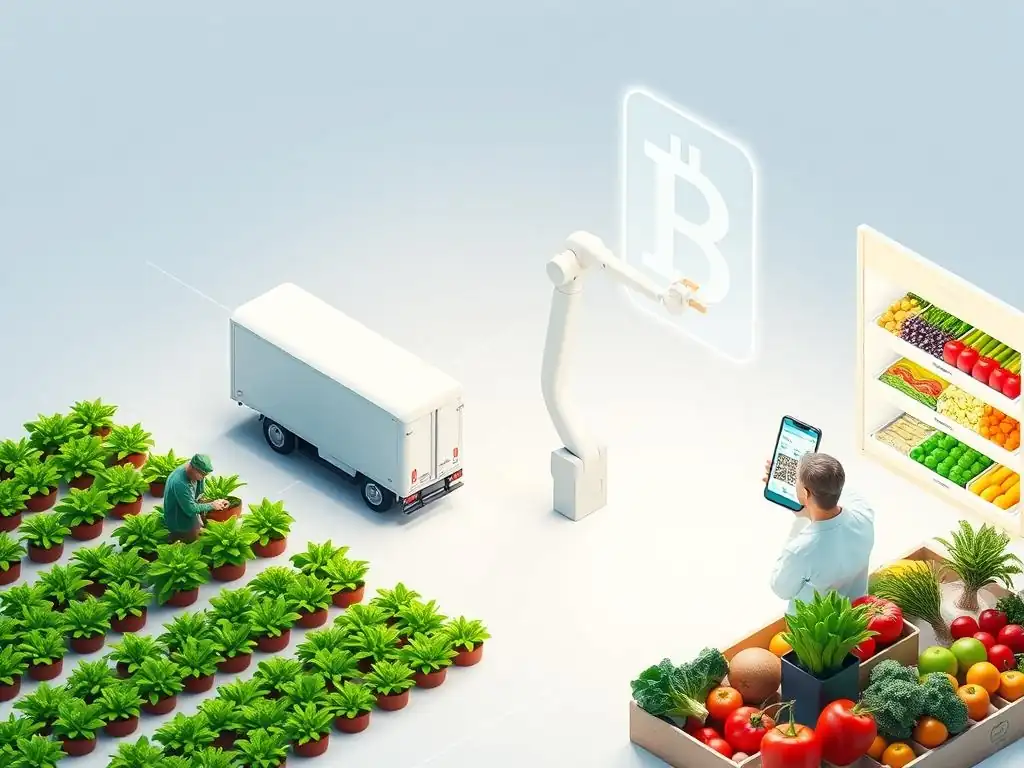
Tracking food products from origin to table using blockchain involves creating a digital identity for a batch of produce, livestock, or seafood at its source. This digital identity is linked to physical identifiers like QR codes or RFID tags. As the product moves through the supply chain – from harvesting, initial processing, packaging, transportation, distribution centers, and finally to retail – relevant data points are recorded on the blockchain ledger.
For instance, when a pallet of apples is harvested, details like the farm name, field location, harvest date, variety, and quantity are recorded. When these apples are packed, information about the packing facility and date is added. During transportation, data from IoT sensors recording temperature and humidity can be automatically logged onto the blockchain. At each handover point, from farm to processor, processor to distributor, and distributor to retailer, a transaction is recorded, creating an immutable, chronological trail. This comprehensive record, accessible to authorized participants, provides unparalleled blockchain food supply transparency.
Real-time Data and Enhanced Visibility Across the Supply Chain
One of the significant advantages of integrating blockchain with other technologies like IoT (Internet of Things) sensors is the ability to capture and record real-time data across the supply chain. IoT devices placed in storage facilities or transportation vehicles can monitor conditions critical to food safety and quality, such as temperature, humidity, and location. This data can be automatically fed into the blockchain ledger, creating a continuous and verifiable record of the product's environmental conditions throughout its journey.
This real-time flow of data provides enhanced visibility to all authorized parties. A retailer can see the temperature history of a specific shipment of frozen goods, a distributor can track the exact location of a truck, and a regulator can instantly access processing dates and locations during an investigation. This immediate access to verifiable information allows for proactive management of potential issues, optimizes logistics, and ensures that the recorded history on the blockchain accurately reflects the product's journey, significantly boosting blockchain food supply transparency.
Reducing Food Fraud and Counterfeit Products through Blockchain Verification
Food fraud is a significant global issue, estimated to cost the industry tens of billions of dollars annually and posing serious health risks. Common forms include mislabeling origin (e.g., selling conventional fish as wild-caught), adulterating ingredients (e.g., adding cheaper oils to olive oil), or selling counterfeit versions of popular food products. The opacity of traditional supply chains makes it difficult to detect these fraudulent activities.
Blockchain's immutable and transparent ledger provides a powerful tool to combat food fraud. By recording the verifiable origin and journey of a product, along with details like certifications, lab test results, and processing information, blockchain creates a digital fingerprint that is extremely hard to fake. Consumers or retailers can scan a code on the product packaging and instantly verify its history against the blockchain record.
Any discrepancy between the physical product and the blockchain data suggests potential fraud. This verifiable chain of custody significantly enhances blockchain food supply transparency, making it much harder for counterfeit or mislabeled goods to infiltrate the legitimate supply chain.
Blockchain for Sustainable Food Systems: A Greener Approach
Reducing Food Waste Through Improved Inventory Management with Blockchain
Food waste is a massive global problem, with an estimated one-third of all food produced for human consumption lost or wasted annually, contributing significantly to greenhouse gas emissions (if food waste were a country, it would be the third-largest emitter after China and the U.S.). A lack of accurate, real-time visibility into inventory levels, product locations, and expiration dates across complex supply chains is a major contributor to this waste.
Blockchain technology, by providing enhanced, real-time visibility and accurate data on product movement and status, can significantly improve inventory management. Businesses can track specific batches of products with precision, monitor their location and condition, and accurately forecast supply and demand based on verifiable data. This allows for better stock rotation, reduces instances of products expiring in warehouses or on shelves, and enables more efficient redistribution of surplus food before it spoils. Implementing blockchain food supply transparency directly translates into operational efficiencies that help curb food waste.
Optimizing Logistics and Transportation for Lower Carbon Footprint
The transportation of food across vast distances contributes significantly to the food industry's carbon footprint. Inefficient routes, half-empty trucks, and delays due to poor information flow all add to fuel consumption and emissions. Traditional logistics planning often relies on fragmented data and lacks real-time insights into the location and status of goods.
Blockchain can help optimize logistics and transportation by providing a shared, real-time view of shipments, routes, and capacity across different parties in the supply chain. Smart contracts, self-executing contracts with the terms directly written into code, can automate payments and trigger actions based on verified data (e.g., proof of delivery), streamlining operations.
Improved visibility allows for better route planning, consolidation of shipments, and reduced idle time, leading to lower fuel consumption and a smaller carbon footprint. Furthermore, verifiable data on transportation conditions (like temperature logs on the blockchain) can reduce spoilage during transit, preventing the environmental cost associated with wasted food.
Supporting Fair Trade Practices and Empowering Farmers
Ensuring fair trade practices and empowering smallholder farmers in developing regions is a critical aspect of building a sustainable food system. Often, farmers receive only a small fraction of the final retail price of their products due to multiple intermediaries and a lack of transparency in pricing and distribution. Verifying fair trade certifications and ensuring premiums reach the intended beneficiaries can also be challenging.
Blockchain technology can create a more direct and transparent connection between consumers and farmers. By recording each transaction and transfer of value on the blockchain, it becomes possible to track payments and ensure that farmers receive fair compensation. Consumers could potentially scan a product and see how much of the final price went back to the farmer or cooperative.
Furthermore, verifiable records of sustainable farming practices or organic certifications on the blockchain can help farmers prove their adherence to standards, potentially allowing them to command higher prices in the market. This increased blockchain food supply transparency can help shift power dynamics and ensure more equitable distribution of value throughout the chain.
Case Studies: Blockchain Success Stories in the Food Industry
IBM Food Trust and Walmart's Traceability of Mangoes
One of the most widely cited examples of blockchain in the food industry is the collaboration between IBM and Walmart using the IBM Food Trust platform. Walmart, a massive global retailer, faced the challenge of rapidly tracing the origin of food products during potential outbreaks or recalls. Traditional methods, involving calling suppliers and searching paper records, could take days.
In a pilot program focused on mangoes sold in select U.S. stores, Walmart implemented the IBM Food Trust blockchain solution. By requiring suppliers to upload data about the mangoes (farm origin, packing date, etc.) onto the shared blockchain ledger, Walmart drastically reduced the time needed for traceability. What previously took an average of 7 days to trace a mango back to its farm could now be done in just 2.2 seconds. This demonstrated the unprecedented speed and efficiency that blockchain food supply transparency brings to food safety and traceability.
Provenance and Tuna Tracking in the Pacific
Provenance, a technology provider, has been a pioneer in using blockchain for supply chain transparency, particularly in the seafood industry. One notable project involved tracking tuna caught in the Pacific Ocean. The seafood supply chain is notoriously complex and prone to issues like illegal fishing, mislabeling, and poor working conditions.
Provenance implemented a blockchain system to track tuna from the moment it was caught by verified sustainable fishing vessels. Data points recorded on the blockchain included catch location, date, vessel information, and processing details. This information was made accessible via digital tokens linked to individual fish or batches. Consumers in restaurants and retailers could scan a code and see the verified journey of the tuna they were about to eat, confirming its sustainable origin and fighting illegal fishing. This initiative highlighted how blockchain food supply transparency can empower consumers and support sustainable practices in a challenging global supply chain.
Analyzing the Impact and Results of Blockchain Implementation
The impact of these early blockchain implementations in the food industry has been significant, primarily demonstrating enhanced traceability, reduced recall times, and increased confidence in product claims. For Walmart and IBM Food Trust, the reduction in traceability time from days to seconds has profound implications for public health and financial savings during food safety events. A faster recall means fewer people exposed to contaminated food and less product needing to be discarded.
For initiatives like Provenance's tuna tracking, the impact extends to verifying sustainability claims and combating fraud, which supports environmental conservation and ethical sourcing. While initial deployments often focus on specific products or supply chain segments, the success of these pilots is driving broader interest. The results show that while challenges remain (like onboarding all suppliers), the core promise of blockchain food supply transparency – creating a secure, verifiable, and efficient flow of information – is being realized, paving the way for wider adoption.
Overcoming Challenges to Blockchain Adoption in Food Supply Chains
Addressing Data Security and Privacy Concerns
While blockchain is often touted for its security, implementing it in the food supply chain raises specific data security and privacy concerns. Not all information about a product's journey is meant for every participant. For example, a farmer's proprietary growing techniques or a processor's specific ingredient blends might be sensitive business data. Ensuring that commercially sensitive information is protected while still maintaining the necessary transparency for traceability and safety is crucial.
Solutions involve implementing permissioned blockchain networks, where access to data is restricted based on user roles and permissions. Cryptography plays a key role, allowing data to be recorded securely while only authorized parties hold the keys to decrypt specific information. Careful design of the blockchain architecture and data governance policies is essential to balance the need for blockchain food supply transparency with the requirement to protect sensitive business data and comply with privacy regulations like GDPR.
Ensuring Interoperability and Scalability of Blockchain Solutions
The food supply chain is incredibly diverse, involving businesses of all sizes, from small family farms to multinational corporations, using a multitude of legacy systems. Ensuring that different blockchain platforms can communicate with each other (interoperability) and that the chosen solution can handle the vast volume of transactions generated by global food production (scalability) are major challenges to widespread adoption.
Lack of interoperability means that data recorded on one company's blockchain system might not be easily shared with another company using a different system, recreating data silos. Scalability issues could lead to slow transaction processing times or high costs as the network grows. Addressing these requires developing industry-wide standards for data formatting and blockchain protocols, as well as utilizing blockchain architectures designed for high throughput, such as private or consortium chains, or Layer 2 scaling solutions. Collaboration among technology providers and industry stakeholders is key to building a connected and scalable ecosystem for blockchain food supply transparency.
The Importance of Collaboration and Standardization
Successful implementation of blockchain food supply transparency requires collaboration across the entire value chain. No single company can unilaterally implement a blockchain solution and achieve end-to-end traceability; it requires participation from farmers, processors, distributors, retailers, and even regulators. Getting diverse stakeholders with varying levels of technical expertise and resources to agree on a common platform or set of standards is a significant hurdle.
Standardization is critical for ensuring interoperability and ease of adoption. This includes agreeing on data standards (what information is recorded and how it's formatted), technical standards (blockchain protocols), and governance models (how the network is managed and decisions are made). Industry consortiums, like the aforementioned IBM Food Trust which brings together multiple food industry players, are examples of efforts to foster collaboration and develop shared standards necessary to build a truly interconnected and transparent food supply ecosystem using blockchain.
The Future of Blockchain in Food: Trends and Predictions
Emerging Technologies and Integrations (e.g., IoT, AI)
The future of blockchain food supply transparency lies in its integration with other cutting-edge technologies. As mentioned, IoT sensors are already being integrated to provide real-time environmental data. This trend will continue, with sensors becoming more sophisticated and widespread, monitoring everything from soil conditions on the farm to the exact temperature inside a delivery truck.
Artificial Intelligence (AI) and machine learning are also poised to play a significant role. AI can analyze the vast amounts of data collected on the blockchain (e.g., transportation logs, sensor data, processing records) to identify patterns indicative of potential issues like fraud, spoilage risks, or supply chain inefficiencies.
AI can predict potential cold chain breaches based on temperature fluctuations or flag suspicious activity based on deviations from typical supply chain routes or timings. These integrations will enhance the predictive capabilities and actionable insights derived from the transparent data recorded on the blockchain, moving beyond just traceability to proactive risk management and optimization.
The Role of Blockchain in Creating a More Resilient Food System
Recent global events have highlighted the fragility of global food supply chains, susceptible to disruptions from pandemics, climate change impacts, and geopolitical events. A resilient food system is one that can withstand shocks and continue to provide safe and accessible food. Blockchain technology can contribute significantly to building this resilience.
By providing unparalleled visibility and real-time data, blockchain allows stakeholders to quickly identify where disruptions are occurring, assess their impact, and reroute or adjust supply chains more effectively. In times of crisis, rapid traceability enabled by blockchain food supply transparency is crucial for managing potential contamination issues and maintaining public trust. Furthermore, by supporting localized food systems and providing verifiable data on local production, blockchain can help diversify supply sources and reduce reliance on long, complex international chains, making the overall system more robust against external shocks.
Policy and Regulatory Considerations for Blockchain in Agriculture
As blockchain adoption grows in the food sector, policy and regulatory frameworks will need to evolve. Governments and regulatory bodies like the FDA in the U.S. or EFSA in Europe are increasingly recognizing the potential of blockchain for enhancing food safety and traceability. However, clear guidelines are needed regarding data ownership, privacy standards, and the legal standing of blockchain records.
Regulators may need to define minimum data requirements for products tracked on a blockchain for safety purposes or establish standards for interoperability between different blockchain platforms used within a country or across borders. Policies could also incentivize or mandate the use of transparent technologies for certain high-risk food categories. Furthermore, international collaboration will be necessary to create harmonized standards for global food trade leveraging blockchain technology. Establishing clear regulatory pathways will be essential for fostering trust and accelerating the widespread adoption of blockchain food supply transparency across the industry.
Conclusion: Embracing Blockchain for a Transparent and Sustainable Food Future
The Potential of Blockchain to Transform the Food Industry
Blockchain technology holds immense potential to fundamentally transform the food industry. By providing a secure, immutable, and shared ledger for recording transactions and data points across the supply chain, it addresses long-standing issues of opacity, inefficiency, and lack of trust. From verifying the origin of ingredients and ensuring ethical sourcing to dramatically speeding up traceability during recalls and reducing food waste through better management, blockchain offers tangible benefits for businesses, regulators, and consumers alike.
The implementation of blockchain food supply transparency is not merely a technological upgrade; it represents a paradigm shift towards a more connected, accountable, and data-driven food system. While challenges related to implementation costs, interoperability, and data standards exist, the successful pilot programs and ongoing initiatives demonstrate that these hurdles are surmountable through collaboration and targeted development.
Call to Action: Encouraging Stakeholders to Explore Blockchain Solutions
Achieving widespread blockchain food supply transparency requires collective effort. Farmers, processors, distributors, retailers, technology providers, and regulators must collaborate to build and adopt shared platforms and standards. Businesses in the food sector, regardless of size, should explore the potential benefits of blockchain for their specific operations, starting perhaps with pilot programs on high-value or high-risk products.
Investing in education and training for supply chain participants is also crucial to ensure effective implementation and utilization of blockchain technology. Policy makers should engage with industry stakeholders to develop supportive regulatory frameworks that encourage innovation while ensuring food safety and consumer protection. Embracing blockchain is a strategic move towards building a more resilient, efficient, and trustworthy food supply chain for the future.
Blockchain Food Supply Transparency: A Key to a Greener Planet
Ultimately, blockchain food supply transparency is inextricably linked to creating a greener planet. By enabling precise tracking and verification, it supports sustainable farming practices, reduces the environmental impact of transportation through optimized logistics, and significantly cuts down on food waste – a major contributor to greenhouse gas emissions. The ability to verify claims about sustainability, fair labor, and ethical production empowers consumers to support environmentally and socially responsible businesses, driving positive change throughout the industry.
A transparent food supply chain, powered by blockchain, allows for better measurement and management of environmental footprints at every stage. It provides the data necessary to identify areas for improvement and hold stakeholders accountable for their environmental impact. Therefore, prioritizing blockchain food supply transparency is not just about improving business operations or ensuring food safety; it is a critical step towards building a more sustainable and environmentally conscious global food system for generations to come.
Frequently Asked Questions
How can blockchain technology improve food safety in the supply chain?
Blockchain creates a permanent and immutable record of each step in the supply chain. This allows for rapid tracing of contaminated products, improving response times and reducing the scope of potential outbreaks.
What are the key benefits of using blockchain for food supply chain transparency?
Beyond food safety, blockchain offers benefits like enhanced consumer trust, reduced food fraud, and improved efficiency throughout the entire supply chain, from farm to consumer.
How does blockchain address the challenges of lack of transparency in traditional food supply chains?
Traditional systems often rely on fragmented data and manual processes. Blockchain establishes a single, shared, and verifiable source of truth, eliminating information silos and increasing accountability.
What are some real-world examples of companies using blockchain for food supply transparency?
Several companies are piloting or implementing blockchain solutions, including Walmart tracking mangoes, and IBM Food Trust partnering with various food producers to enhance traceability.
What are the main hurdles to widespread adoption of blockchain in the food supply chain?
Challenges include high initial implementation costs, lack of industry standardization, and the need for stakeholder collaboration across the entire supply chain ecosystem to ensure data accuracy and interoperability.
Final Reflection: Cultivating Trust, Harvesting Change
The journey of food from farm to fork is often shrouded in mystery, but the potential of blockchain to illuminate this path is now undeniable. Blockchain food supply transparency isn't just a technological buzzword; it's a vital tool for building trust with consumers, ensuring food safety, and fostering a more sustainable and ethical food system. The insights explored in this article highlight the tangible benefits and transformative power of this technology in creating a greener planet.
The impact of blockchain on the food industry extends far beyond simple traceability. It's about empowering consumers to make informed choices, holding producers accountable for their practices, and ultimately, reshaping our relationship with the food we consume. This shift towards transparency is deeply personal for me, as it speaks to a fundamental desire for honesty and integrity in the systems that sustain us. The future of food is not just about what we eat, but how we know what we eat.
This quote encapsulates the essence of blockchain's potential to revolutionize the food supply chain and build a more sustainable future.
As we conclude this exploration of blockchain's role in food supply transparency, I invite you to consider your own connection to the food you consume. How can you advocate for greater transparency in your local food system? What steps can you take to support producers who prioritize ethical and sustainable practices? The power to create a more transparent and sustainable food future lies within each of us. Let us cultivate trust, harvest change, and nourish a greener planet, one blockchain-verified bite at a time.
Empower Change: Track Your Food's Journey!
Thank you for exploring how blockchain is revolutionizing food supply chains and promoting a more sustainable world. You've gained valuable insights into how this technology can ensure transparency and accountability, leading to a greener planet for all. Now, it's time to take action!
Here's how you can contribute to a more transparent and sustainable food system:
- Demand Transparency: Actively seek out and support brands that utilize blockchain technology to trace their products from farm to fork. Let them know you value transparency!
- Explore Open-Source Projects: Dive into the world of open-source blockchain initiatives dedicated to food supply chain tracking. Consider contributing your skills or resources to further develop these efforts.
- Share Your Knowledge: Spread the word about the importance of transparent food supply chains and the role of blockchain in achieving this goal. Discuss your findings with friends, family, and colleagues.
Ready to start demanding more transparency from your favorite food brands today? What is one product you'd like to see tracked on a blockchain?
Leave a Reply