
Blockchain Explorers with NFT Support: Visualize & Track Your Digital Collectibles


Welcome to Blockchain Trends, your guide to understanding the revolutionary power of blockchain technology.
Ever wondered how to truly visualize and track your NFT collection on the blockchain? Dive into our latest article exploring the best NFT blockchain visualization tracking tools available. Discover how these resources can unlock a deeper understanding of your digital assets and the wider NFT ecosystem, offering insights you won't find anywhere else. Intrigued? Keep reading to explore the future of NFT tracking!
- Introduction to NFT Blockchain Visualization Tracking Tools
- What Are Blockchain Explorers?
- Top NFT Blockchain Visualization Tracking Tools
- Comparative Analysis of NFT Blockchain Explorers
- Benefits of Using NFT Blockchain Visualization Tracking Tools
- Common Challenges in NFT Tracking and How to Overcome Them
- Conclusion: Choosing the Right NFT Blockchain Visualization Tracking Tool
-
Frequently Asked Questions
- What are NFT blockchain explorers and why are they useful?
- How do NFT blockchain visualization tools enhance the user experience?
- What types of NFT data can be tracked using blockchain explorers?
- Are there specific blockchain explorers that are recommended for tracking NFTs on different blockchains?
- What are some future trends in NFT blockchain visualization tracking tools?
- Final Reflection: Unveiling the Digital Canvas
- Unveil the Power of Your NFT Collection!
Introduction to NFT Blockchain Visualization Tracking Tools
The Importance of Tracking Your Digital Collectibles
In the burgeoning world of Non-Fungible Tokens (NFTs), tracking your digital collectibles has moved from a luxury to a necessity. As individuals and institutions alike invest significant capital into these unique digital assets, understanding their portfolio's performance, provenance, and market value becomes paramount. Imagine owning a rare trading card or a piece of fine art – you would naturally want to know its current worth, its transaction history, and ensure its authenticity.
The same principles apply to NFTs. Tracking tools provide clarity and control in a space that can otherwise feel opaque and rapidly evolving. Without proper tracking mechanisms, NFT holders are essentially navigating the digital collectibles market in the dark, susceptible to market volatility and lacking the insights needed for informed decision-making.
Effective NFT tracking is not just about monitoring price fluctuations. It’s about comprehensively managing your digital assets. This includes verifying ownership, tracing transaction history to ensure authenticity and provenance, and understanding the rarity and attributes of each NFT in your collection.
For instance, consider a collector who purchased several NFTs from a popular generative art collection. By utilizing NFT tracking tools, they can easily monitor the floor price of the collection, identify which of their NFTs are considered rarer based on specific traits, and evaluate the overall performance of their investment against the broader NFT market. This level of insight is crucial for both seasoned collectors and newcomers to the NFT space, empowering them to make strategic decisions and safeguard their digital investments.
Understanding NFTs and Their Growing Popularity
Non-Fungible Tokens (NFTs) have rapidly transitioned from a niche concept within the cryptocurrency community to a mainstream phenomenon, capturing the attention of artists, celebrities, brands, and investors globally. At their core, NFTs are unique digital assets representing ownership of a specific item or piece of content. This could be anything from digital art and music to virtual real estate, in-game items, and even domain names.
Unlike cryptocurrencies like Bitcoin or Ethereum, which are fungible and interchangeable, each NFT is distinct and cannot be replaced by another. This uniqueness is what drives their value and appeal in the digital world, enabling verifiable digital scarcity and ownership.
The explosion in NFT popularity can be attributed to several factors. Firstly, NFTs provide a novel way for creators to monetize their digital work directly, bypassing traditional intermediaries. Artists can sell their digital art as NFTs and receive royalties on secondary sales, fostering a more direct and equitable creator economy. Secondly, NFTs offer a new form of digital ownership and collecting in an increasingly digital world.
For many, owning an NFT is akin to owning a physical collectible, offering a sense of prestige and belonging to a community. The market capitalization of NFTs has seen exponential growth, reaching billions of dollars in trading volume annually, with platforms like OpenSea and Magic Eden facilitating millions of transactions. This growth underscores the increasing recognition of NFTs as legitimate digital assets and their expanding role in the future of digital ownership and commerce.
What Are Blockchain Explorers?
Definition and Purpose of Blockchain Explorers
Blockchain explorers are essentially search engines for blockchains. They serve as vital tools that allow users to navigate and scrutinize the vast amount of data residing on a blockchain network. Think of them as transparent windows into the otherwise complex and often opaque world of decentralized ledgers. A blockchain explorer indexes and presents blockchain data in an easily digestible format, making it accessible to both technical experts and casual users. These explorers provide a user-friendly interface to view transaction details, block information, addresses, smart contracts, and various other on-chain metrics.
The primary purpose of blockchain explorers is to enhance transparency and accessibility within blockchain networks. By using an explorer, anyone can verify transactions, track the flow of cryptocurrency, audit smart contracts, and gain insights into the overall health and activity of a blockchain. For instance, if you send a cryptocurrency transaction, you can use a blockchain explorer to confirm that the transaction has been successfully recorded on the blockchain and track its progress as it gets confirmed in subsequent blocks.
Beyond simple transaction tracking, explorers offer deeper analytical capabilities, allowing users to monitor network statistics like average block time, transaction fees, and the activity of specific addresses or contracts. This functionality is crucial for developers, investors, and anyone interested in understanding the intricacies of blockchain technology.
How Blockchain Explorers Enhance NFT Management
Blockchain explorers are not just limited to tracking cryptocurrency transactions; they are equally, if not more, crucial for managing and understanding NFTs. Given that NFTs reside on blockchains, primarily Ethereum, Solana, and others, blockchain explorers provide the foundational infrastructure for visualizing and verifying NFT-related data. For NFT holders, explorers offer a direct and transparent way to confirm ownership of their digital assets directly on the blockchain. By entering their wallet address into an explorer, users can see a comprehensive list of all NFTs associated with that address, effectively creating a verifiable inventory of their digital collection.
Moreover, blockchain explorers are invaluable for understanding the provenance and transaction history of NFTs. Each NFT transaction, from its initial minting to subsequent sales and transfers, is recorded permanently on the blockchain. Explorers allow users to trace this entire history, verifying the authenticity of an NFT and ensuring it has not been fraudulently created or manipulated.
For example, when considering purchasing an NFT on a secondary marketplace, a collector can use a blockchain explorer to examine its transaction history, confirming its origin, previous owners, and sale prices. This level of transparency is essential in building trust and mitigating risks in the NFT market, enabling collectors to make informed decisions and confidently manage their digital asset portfolios.
Top NFT Blockchain Visualization Tracking Tools
1. Etherscan: Comprehensive NFT Tracking Capabilities
Features of Etherscan for NFT Visualization
Etherscan, primarily known as a leading blockchain explorer for the Ethereum network, extends its robust functionalities to comprehensively support NFT visualization and tracking. For NFTs on Ethereum, Etherscan provides dedicated NFT pages where users can view detailed information about specific NFTs or collections. These pages display crucial metadata, including the NFT's description, attributes, associated media (images, videos, etc. ), and contract address.
Users can easily access the complete transaction history of an NFT, tracing its journey from minting to every subsequent transfer and sale. Etherscan also allows for the direct verification of NFT ownership. By entering a wallet address, users can see all ERC-721 and ERC-1155 tokens held in that wallet, providing a clear picture of their NFT portfolio.
Beyond individual NFT details, Etherscan offers aggregated data for NFT collections. Users can view the total supply, number of holders, and transaction volume of a collection, gaining insights into its popularity and market activity. For developers and technically inclined users, Etherscan provides access to the raw smart contract code governing NFTs, fostering transparency and enabling deeper analysis. Furthermore, Etherscan integrates with popular wallets like MetaMask, allowing for seamless interaction with NFTs directly from the explorer interface. This integration simplifies the process of viewing and managing NFTs, making Etherscan a versatile tool for both novice and experienced NFT enthusiasts.
Advantages of Using Etherscan for Collectors
For NFT collectors, the advantages of using Etherscan are numerous, primarily stemming from its reliability, comprehensiveness, and accessibility. Etherscan is widely recognized as a highly trusted and reputable source of Ethereum blockchain data. Its data accuracy is paramount, ensuring collectors can rely on the information presented for making informed decisions about their NFT holdings. The platform's comprehensive nature means it provides a wealth of data points for each NFT, going beyond just basic transaction history. Collectors can delve into contract interactions, token metadata, and even analyze gas fees associated with NFT transactions, providing a holistic understanding of their assets.
Another significant advantage is Etherscan's ease of use. Despite the complex data it presents, the interface is designed to be relatively intuitive, allowing users of varying technical backgrounds to navigate and extract the information they need. For NFT collectors focused on long-term holdings, Etherscan provides a stable and persistent record of their NFTs' provenance and history, crucial for maintaining the value and authenticity of their collection over time.
Moreover, Etherscan is a free resource for most standard uses, making it an accessible tool for all collectors, regardless of their budget. This combination of trust, comprehensive data, user-friendliness, and cost-effectiveness positions Etherscan as a go-to explorer for NFT collectors on the Ethereum blockchain.
Pricing and Accessibility
Etherscan operates on a freemium model, making its core functionalities readily accessible to the vast majority of users, including NFT collectors. For basic NFT visualization and tracking, such as viewing NFT details, transaction history, and portfolio holdings, Etherscan is entirely free to use. Users can access this wealth of information simply by navigating to the Etherscan website and entering relevant addresses or token IDs. This free access is a significant advantage, particularly for individual collectors who may not require advanced features or high-volume data access.
However, Etherscan also offers paid API services for developers and businesses that require programmatic access to blockchain data at scale. These APIs are tiered based on usage volume and feature sets, catering to enterprise-level applications and projects that need to integrate Etherscan's data into their own platforms or services.
While these API services have associated costs, the core explorer functionalities for individual NFT tracking and visualization remain freely available. This balanced approach ensures that Etherscan remains a valuable and accessible resource for the entire Ethereum community, from individual collectors to large-scale enterprises, without imposing financial barriers to basic NFT data access.
2. OpenSea: The Marketplace and Explorer Combined
Exploring NFT Collections on OpenSea
OpenSea distinguishes itself as not just a leading NFT marketplace, but also a powerful platform for exploring and visualizing NFT collections. Within OpenSea, users can delve into a vast universe of NFT collections spanning art, collectibles, gaming, and more. Each collection page on OpenSea provides a curated overview, displaying key metrics such as floor price, total volume traded, number of items, and number of owners.
This aggregated data allows users to quickly assess the market sentiment and overall performance of a particular collection. OpenSea's interface is visually rich, showcasing featured NFTs from collections and providing filters to sort and discover NFTs based on various criteria like price, rarity (if available), and attributes.
For those looking to research specific NFT projects, OpenSea offers detailed insights into each collection's ecosystem. Users can browse through all NFTs within a collection, view their individual listings, and examine their unique properties or traits. OpenSea also often integrates rarity rankings directly into the collection pages, providing immediate context on the relative scarcity of NFTs within a set. This combination of market data, visual browsing, and integrated rarity information makes OpenSea a compelling starting point for anyone looking to explore and understand the dynamics of different NFT collections.
User-Friendly Features for Tracking Digital Assets
OpenSea excels in providing user-friendly features specifically designed for tracking digital assets within its ecosystem. A key feature is the "Watchlist," which allows users to track specific NFTs or collections they are interested in. By adding NFTs or collections to their watchlist, users receive real-time updates on price changes, sales activity, and other relevant market movements.
This feature is invaluable for staying informed about the performance of assets they own or are considering purchasing. OpenSea also offers a personalized portfolio view for users who connect their crypto wallets to the platform. This portfolio view aggregates all NFTs held in the connected wallet, presenting them in a visually organized manner, along with their current estimated value based on floor prices.
Furthermore, OpenSea provides email notifications and activity feeds that keep users abreast of important events related to their watched NFTs or collections, such as price drops, new listings, or sales. The platform's mobile app further enhances accessibility, allowing users to track their NFT portfolios and market trends on the go. These features, combined with OpenSea's intuitive interface and seamless integration with NFT marketplaces, make it a highly user-friendly platform for both managing and tracking digital assets, especially for those actively engaged in buying, selling, and trading NFTs on the OpenSea marketplace.
OpenSea's Fees and Monetization Potential
OpenSea operates on a fee-based monetization model, primarily through charging a service fee on NFT sales that occur on its marketplace. Currently, OpenSea charges a 2.5% service fee on each successful NFT sale. This fee is deducted from the sale price and represents OpenSea's primary revenue stream.
In addition to the service fee, creators of NFT collections can also set creator royalties, which are automatically enforced by OpenSea on secondary sales. These royalties, typically ranging from 2.5% to 10%, are paid to the original creator of the NFT collection as a percentage of each subsequent sale price, providing ongoing income for creators.
While OpenSea charges these fees, it also provides significant value to users through its robust marketplace infrastructure, extensive user base, and comprehensive NFT exploration and tracking tools. For sellers, OpenSea offers a large and active audience of potential buyers, increasing the likelihood of successful sales. For buyers, the platform provides a secure and user-friendly environment to discover and purchase NFTs.
The fees charged by OpenSea are generally considered a cost of doing business within its ecosystem, granting access to its extensive marketplace and valuable tracking features. For users primarily focused on tracking their NFTs and exploring collections without actively trading, the exploration and visualization features of OpenSea are generally accessible without direct fees, as the fees are transaction-based.
3. Rarity.tools: Tracking Rarity and Value of NFTs
How Rarity.tools Helps Collectors Make Informed Decisions
Rarity.tools specializes in providing collectors with crucial data and analytics focused on NFT rarity, directly impacting informed decision-making in the NFT market. The platform meticulously analyzes NFT collections, calculating and assigning rarity scores to individual NFTs based on their traits and attributes. This rarity scoring system is instrumental for collectors in understanding the relative scarcity and potential value of their NFTs within a collection.
For instance, an NFT with rare traits, as identified by Rarity.tools, is often perceived as more valuable and desirable than those with common traits. By understanding these rarity rankings, collectors can more accurately assess the market value of their holdings and identify potentially undervalued NFTs with high rarity scores.
Rarity.tools goes beyond just providing rarity scores; it also offers comprehensive collection rankings and market analysis. The platform ranks NFT collections based on various metrics like average price, volume traded, and floor price, providing a snapshot of market trends and the relative popularity of different projects. This data empowers collectors to identify promising collections early on, assess the overall health of the market, and make strategic decisions about which NFTs to acquire or sell.
Furthermore, Rarity.tools often provides insights into upcoming NFT drops and mints, giving collectors a heads-up on potentially valuable new projects entering the market. By leveraging Rarity.tools' rarity analysis and market data, NFT collectors can move beyond subjective valuations and make data-driven decisions, increasing their chances of successful NFT investments.
Unique Features for NFT Visualization and Tracking
Rarity.tools offers several unique features specifically geared towards NFT visualization and rarity-focused tracking. Its core feature is the detailed rarity scoring system, which visually represents the rarity of each NFT within a collection. NFTs are typically ranked within their collection based on their rarity score, allowing users to quickly identify the most and least rare items.
Rarity.tools often presents this information in a visually appealing and easily digestible format, using rankings and color-coded indicators to highlight rarity levels. Beyond individual NFT rarity, the platform also visualizes collection-level rarity. This might include showing the distribution of rarity scores across an entire collection, providing a macro-view of the overall scarcity landscape within a project.
Another unique feature is Rarity.tools' focus on upcoming NFT drops and mints. The platform often lists and analyzes anticipated NFT projects before they launch, providing rarity predictions and initial insights into potential value. This forward-looking approach differentiates Rarity.tools from explorers that primarily focus on historical data.
Furthermore, Rarity.tools frequently integrates with NFT marketplaces, allowing users to directly access rarity information while browsing NFTs for sale. This seamless integration streamlines the process of evaluating NFTs based on rarity during the purchasing process. These features collectively position Rarity.tools as a specialized tool for collectors who prioritize rarity as a key factor in their NFT valuation and investment strategies.
Cost and Membership Options
Rarity.tools operates on a tiered access model, offering both free and paid membership options to cater to different user needs and levels of data access. The platform provides a limited free tier, which typically grants access to basic rarity scores, collection rankings, and some market data. This free access level can be sufficient for casual NFT collectors or those just beginning to explore rarity analysis. However, for more advanced users and serious NFT traders or investors, Rarity.tools offers premium membership tiers that unlock more comprehensive features and data.
Paid membership tiers on Rarity.tools typically provide enhanced data access, including more detailed rarity breakdowns, advanced collection analytics, and potentially early access to information on upcoming NFT drops. These paid tiers often come in different levels, with varying pricing based on the depth of data access and features offered.
The pricing for premium memberships can range from monthly subscriptions to potentially higher-tier access for institutional users or those requiring very high-volume data access. While Rarity.tools offers valuable free resources, users seeking to fully leverage its rarity-focused analytics and gain a competitive edge in the NFT market may find the paid membership tiers to be a worthwhile investment, providing access to more granular data and advanced features not available in the free version.
4. DappRadar: Analyzing NFT Market Trends
Utilizing DappRadar for Comprehensive NFT Insights
DappRadar stands out as a comprehensive platform for gaining broad NFT market insights, going beyond individual NFT tracking to provide a macro-level view of market trends. DappRadar aggregates NFT data from multiple blockchains and marketplaces, offering a unified dashboard to monitor the overall health and activity of the NFT ecosystem. Users can track key market metrics such as total NFT sales volume, number of traders, and average sale prices across various platforms and blockchains. This aggregated data provides a valuable perspective on the overall direction and momentum of the NFT market.
DappRadar also offers detailed analytics for specific NFT collections and marketplaces. For collections, users can analyze sales volume trends, floor price fluctuations, and the distribution of NFT sales over time. For marketplaces, DappRadar provides rankings based on trading volume and user activity, helping users identify the most popular and active platforms. Furthermore, DappRadar often categorizes NFTs by type (art, collectibles, gaming, etc. ), enabling users to track trends within specific NFT sectors. This comprehensive data coverage and analytical capabilities make DappRadar a powerful tool for anyone seeking to understand the broader NFT market dynamics and identify emerging trends.
Benefits of Data Analytics for NFT Investors
For NFT investors, the data analytics provided by DappRadar offer significant benefits, enabling more informed and strategic investment decisions. By tracking overall NFT market trends, investors can gauge market sentiment and identify periods of growth or contraction. This macro-level understanding helps in timing investment entries and exits. Analyzing collection-specific data allows investors to identify promising projects early on, assess the sustainability of collection popularity, and evaluate potential entry points into specific NFT collections. For instance, monitoring sales volume and floor price trends for a collection can provide insights into its current momentum and potential for future growth.
DappRadar's marketplace rankings and analytics help investors identify the most liquid and active NFT trading platforms. This information is crucial for ensuring efficient buying and selling of NFTs, as higher liquidity generally translates to tighter bid-ask spreads and faster transaction execution. Moreover, by tracking trends across different NFT categories, investors can identify emerging sectors and potentially capitalize on early-stage growth opportunities. The data-driven insights offered by DappRadar empower NFT investors to move beyond speculative investments and make decisions based on market data and trend analysis, ultimately aiming to improve investment outcomes and mitigate risks in the volatile NFT market.
Subscription Plans and Free Access
DappRadar operates on a freemium model, offering both free access to basic NFT market data and paid subscription plans that unlock more advanced features and deeper analytical capabilities. The free version of DappRadar provides a substantial amount of valuable information, including overall market summaries, rankings of top NFT collections and marketplaces, and basic collection-level data. This free access level is often sufficient for casual NFT enthusiasts or those seeking a general overview of the NFT market landscape.
However, for users requiring more granular data, advanced analytics, and real-time updates, DappRadar offers tiered subscription plans. These paid plans typically unlock features such as historical data access, more detailed collection analytics, real-time price alerts, and potentially API access for programmatic data integration.
Subscription plans often vary in pricing based on the level of data access and features included, catering to different user needs ranging from individual NFT traders to institutional investors. While the free version of DappRadar is a valuable resource, serious NFT investors and analysts may find the paid subscription plans to be a worthwhile investment, granting access to the more in-depth data and advanced tools needed for sophisticated market analysis and informed decision-making.
Comparative Analysis of NFT Blockchain Explorers
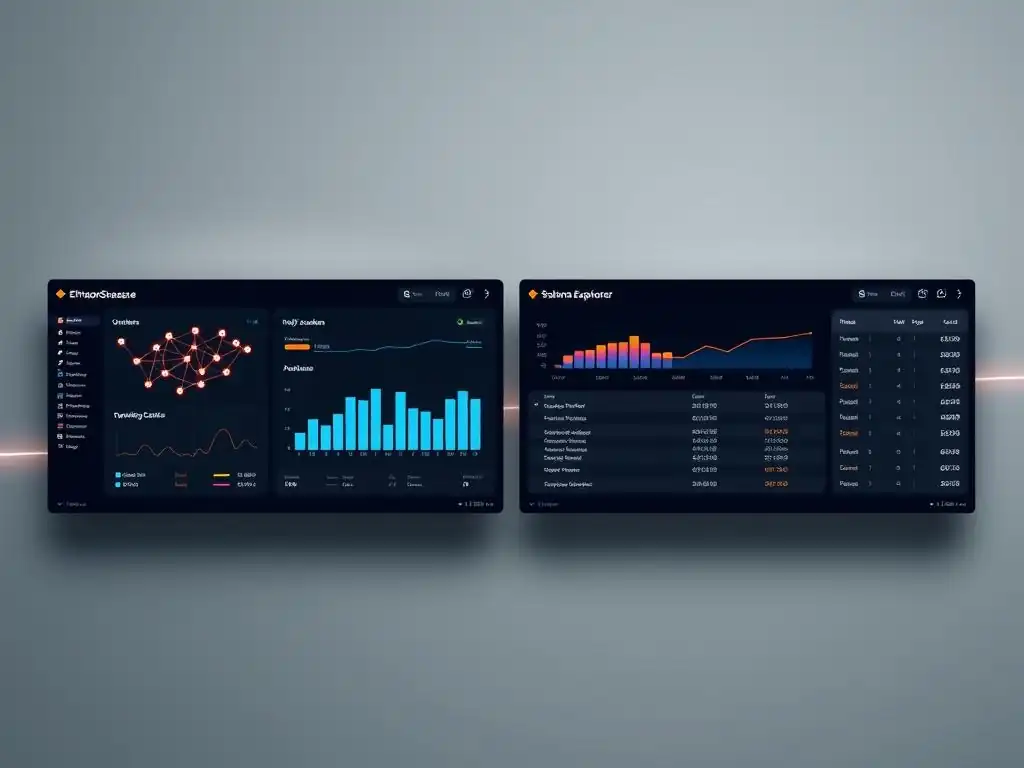
Key Features Comparison
When comparing NFT blockchain explorers, several key features differentiate their capabilities and suitability for various user needs. Etherscan, while primarily a blockchain explorer, offers robust NFT support, focusing on comprehensive on-chain data, transaction history, and metadata verification. OpenSea, as a marketplace combined with explorer functionalities, excels in user-friendly portfolio tracking, collection browsing, and integrated trading features within its platform.
Rarity.tools specializes in rarity analysis, providing unique rarity scores, collection rankings, and pre-mint insights, catering to collectors focused on rarity-driven value assessment. DappRadar distinguishes itself through its broad market trend analysis, offering aggregated data across multiple blockchains and marketplaces, providing macro-level NFT market insights and trend identification.
In terms of blockchain support, Etherscan primarily focuses on Ethereum, while OpenSea and DappRadar offer broader multi-chain support, including Ethereum, Solana, Polygon, and others. Rarity.tools typically focuses on collections on Ethereum and, increasingly, other prominent chains. User interface and experience vary, with Etherscan prioritizing data depth and transparency, OpenSea emphasizing visual appeal and ease of use within its marketplace context, Rarity.tools focusing on visual rarity representation, and DappRadar aiming for a comprehensive market overview dashboard. For users prioritizing on-chain data verification and detailed transaction history, Etherscan is a strong choice.
For those actively trading on OpenSea and seeking integrated portfolio management, OpenSea's platform is highly convenient. Collectors focused on rarity and value assessment will find Rarity.tools invaluable. Investors seeking broader market trends and aggregated data will benefit most from DappRadar's analytical capabilities.
Pricing and Monetization Opportunities
The pricing models and monetization strategies of these NFT blockchain visualization tracking tools vary, impacting their accessibility and potential cost for users. Etherscan primarily operates on a freemium model, with core explorer functionalities being free and API access for developers offered through paid plans. OpenSea monetizes through service fees on NFT sales within its marketplace (2.5% per sale) and creator royalties, with exploration and basic tracking features generally accessible without direct fees.
Rarity.tools utilizes a tiered membership model, offering a limited free tier and premium paid tiers that unlock more comprehensive rarity data and advanced features. DappRadar also follows a freemium approach, providing basic market data for free and offering paid subscription plans for access to more granular analytics, historical data, and real-time updates.
For individual NFT collectors, Etherscan's free explorer and OpenSea's marketplace exploration are generally cost-effective for basic tracking. Rarity.tools' free tier can be useful for initial rarity assessments, while serious rarity-focused collectors might consider paid memberships. DappRadar's free version offers valuable market overviews, with paid plans catering to investors seeking in-depth market analysis.
Monetization opportunities are more directly available for platforms like OpenSea through marketplace trading fees. For users looking to leverage these tools for commercial purposes, such as developing NFT-related applications or conducting in-depth market research, API access from Etherscan or premium subscriptions from Rarity.tools and DappRadar might present valuable investments, providing access to data and features that can enhance their projects or analytical capabilities.
User Experience and Interface
User experience and interface design are critical factors in the effectiveness and usability of NFT blockchain visualization tracking tools. Etherscan, while powerful and data-rich, presents a more technical interface, prioritizing data transparency and depth over visual appeal. Navigating Etherscan requires some familiarity with blockchain concepts, although its NFT-specific pages are designed to be relatively straightforward for viewing NFT details and transaction history.
OpenSea, as a marketplace, prioritizes a visually engaging and user-friendly interface. Its platform is designed for browsing NFTs, exploring collections, and facilitating transactions seamlessly. Portfolio tracking and watchlist features are integrated intuitively into the marketplace experience, making it easy for users to manage their digital assets within the OpenSea ecosystem.
Rarity.tools focuses on visual representations of rarity, using rankings, color-coding, and graphical displays to communicate rarity scores and collection analytics. Its interface is designed to be visually informative, emphasizing data visualization for rarity assessment. DappRadar aims for a comprehensive market overview dashboard, presenting aggregated data and charts to illustrate NFT market trends. Its interface is designed for data analysis, offering customizable dashboards and filters to explore market metrics across different blockchains and NFT categories.
For users seeking detailed on-chain data and are comfortable with a more technical interface, Etherscan is effective. For users prioritizing visual browsing, ease of use within a marketplace context, and integrated trading, OpenSea offers a smooth experience. For those focused on rarity and visual rarity assessment, Rarity.tools provides a specialized interface. For investors seeking comprehensive market trends and data-driven insights, DappRadar's analytical dashboard is well-suited.
Benefits of Using NFT Blockchain Visualization Tracking Tools
Enhancing Your NFT Collection Management
Utilizing NFT blockchain visualization tracking tools significantly enhances the management of your digital collectible portfolio. These tools provide a centralized and organized view of your NFT holdings, eliminating the need to manually track NFTs across different wallets and platforms. By connecting your crypto wallets to these tools, you gain an immediate overview of your entire NFT collection in one place.
This consolidated view allows for efficient portfolio monitoring, enabling you to quickly assess the composition and value distribution of your NFT assets. Furthermore, these tools often provide features for categorizing and tagging NFTs within your collection, allowing for personalized organization and easier retrieval of specific assets.
Effective collection management also extends to tracking the provenance and authenticity of your NFTs. Blockchain explorers and dedicated NFT tracking platforms provide verifiable records of each NFT's transaction history, ensuring transparency and confirming the legitimacy of your digital assets. This is particularly crucial in mitigating the risk of acquiring counterfeit or compromised NFTs. By leveraging these tools, collectors can maintain a well-organized, transparent, and secure inventory of their NFT holdings, fostering better control and oversight of their digital asset portfolio.
Making Informed Investment Decisions
NFT blockchain visualization tracking tools are instrumental in empowering NFT investors to make data-driven and informed investment decisions. These tools provide access to critical market data, including real-time price fluctuations, sales volume trends, and collection floor prices. By analyzing this data, investors can identify market opportunities, assess the volatility of specific NFT collections, and gauge overall market sentiment.
Rarity analysis tools, in particular, provide valuable insights into the relative scarcity and potential value of NFTs based on their traits and attributes. This information is crucial for identifying potentially undervalued NFTs with high rarity scores or for assessing the premium associated with rare NFTs within a collection.
Moreover, these tools often offer historical data and trend analysis, allowing investors to identify patterns, predict future market movements, and refine their investment strategies. By combining market data with rarity insights and collection analytics, NFT investors can move beyond speculative investments and make decisions based on concrete data points and market intelligence. This data-driven approach can significantly improve investment outcomes, mitigate risks, and enhance the overall profitability of NFT investments.
Staying Updated with Market Trends and Values
In the rapidly evolving NFT market, staying updated with the latest trends and value fluctuations is paramount. NFT blockchain visualization tracking tools provide real-time data and alerts, ensuring collectors and investors remain informed about critical market developments. These tools often offer features like price alerts, notifying users of significant price changes for specific NFTs or collections they are tracking.
Market trend dashboards provide a continuous overview of overall market activity, highlighting trending collections, top-selling NFTs, and shifts in market sentiment. By monitoring these real-time updates, users can react quickly to market changes, capitalize on emerging opportunities, and mitigate potential losses.
Furthermore, many NFT tracking tools provide social media integration and news aggregation features, keeping users informed about relevant news, community discussions, and upcoming NFT drops. This comprehensive information flow ensures that NFT enthusiasts are not only tracking data but also staying connected to the broader NFT ecosystem and its evolving trends. By leveraging these tools for real-time market monitoring and information aggregation, NFT collectors and investors can maintain a competitive edge, adapt to market dynamics, and make timely decisions in the fast-paced world of NFTs.
Common Challenges in NFT Tracking and How to Overcome Them
Issues with Data Accuracy and Real-Time Tracking
Despite the advancements in NFT blockchain visualization tracking tools, challenges persist, particularly concerning data accuracy and real-time tracking. Data discrepancies can arise from various sources, including differences in data aggregation methods across platforms, delays in data updates from blockchains, and potential inconsistencies in how marketplaces report sales data. This can lead to variations in reported floor prices, sales volumes, and even rarity rankings across different tracking tools.
Real-time tracking also faces limitations due to blockchain network congestion and processing times. While explorers strive for near real-time updates, delays of a few minutes or even longer can occur during periods of high network activity, potentially impacting the immediacy of market data.
Furthermore, the decentralized nature of the NFT ecosystem itself can contribute to data accuracy challenges. NFTs are traded across numerous marketplaces and blockchains, making it complex to aggregate and harmonize data from all sources comprehensively. Some smaller or newer marketplaces may not be fully integrated into all tracking tools, leading to incomplete market data. Addressing these challenges requires users to be aware of potential data discrepancies and to cross-reference information across multiple tracking tools to gain a more holistic and reliable view of the NFT market.
Solutions and Tools to Ensure Reliable NFT Management
To overcome the challenges of data accuracy and real-time tracking in NFT management, several solutions and strategies can be employed. Firstly, utilizing multiple NFT blockchain explorers and tracking tools in conjunction is highly recommended. By cross-referencing data from different platforms like Etherscan, OpenSea, Rarity.tools, and DappRadar, users can mitigate the impact of potential data discrepancies and gain a more robust understanding of NFT market data. Comparing data points across multiple sources can help identify outliers or inconsistencies and provide a more accurate overall picture.
Secondly, leveraging API access, where available, can enhance data reliability and real-time tracking capabilities. APIs offered by platforms like Etherscan and DappRadar provide programmatic access to raw blockchain data, allowing for more direct and potentially faster data retrieval. For users with technical expertise, building custom dashboards or integrations using these APIs can offer greater control over data accuracy and update frequency.
Furthermore, staying informed about the specific data sources and methodologies used by different tracking tools can help users understand the potential limitations and biases inherent in each platform. By combining cross-platform data verification, API utilization where feasible, and informed awareness of data sources, users can significantly improve the reliability and accuracy of their NFT management and tracking processes.
Recommended Products for Improved Tracking
For improved NFT tracking and management, leveraging a combination of the tools discussed is highly effective. For fundamental on-chain verification and detailed transaction history, Etherscan remains a cornerstone tool, particularly for Ethereum-based NFTs. For users actively engaged in trading on the OpenSea marketplace, utilizing OpenSea's built-in tracking features and portfolio management tools provides seamless integration and convenience. For collectors prioritizing rarity analysis and value assessment based on scarcity, Rarity.tools offers specialized rarity scoring and collection ranking functionalities. For investors seeking comprehensive market trends and aggregated data across multiple blockchains, DappRadar provides valuable market insights and analytical dashboards.
Beyond these core platforms, exploring portfolio management tools that integrate with multiple blockchain explorers and marketplaces can further streamline NFT tracking. Some portfolio trackers aggregate data from various sources and present a unified view of NFT holdings, potentially reducing the need to manually switch between different platforms. For users with more technical skills, utilizing APIs from platforms like Etherscan and DappRadar to build custom tracking solutions can offer tailored functionality and enhanced data control.
Ultimately, the optimal set of tools for improved NFT tracking depends on individual user needs, investment strategies, and technical capabilities. A combination of these recommended products, strategically chosen and utilized, can significantly enhance the effectiveness and accuracy of NFT management and tracking efforts.
Conclusion: Choosing the Right NFT Blockchain Visualization Tracking Tool
Summary of Key Features and Recommendations
Choosing the right NFT blockchain visualization tracking tool hinges on understanding your specific needs and priorities as an NFT collector or investor. Etherscan excels in providing in-depth on-chain data and transaction history, making it indispensable for verifying NFT authenticity and provenance, particularly for Ethereum-based NFTs. OpenSea, seamlessly integrating marketplace and explorer functionalities, offers user-friendly portfolio tracking and collection browsing, ideal for active traders within its ecosystem.
Rarity.tools specializes in rarity analysis, providing unique rarity scores and collection rankings, crucial for collectors focused on scarcity-driven value assessment. DappRadar distinguishes itself with comprehensive market trend analysis across multiple blockchains, offering macro-level insights for investors seeking broad market intelligence.
For users prioritizing fundamental on-chain data verification and detailed transaction history, Etherscan is the recommended choice. For those actively trading on OpenSea and seeking integrated portfolio management within the marketplace, OpenSea's platform is highly convenient. Collectors focused on rarity as a key valuation factor will find Rarity.tools invaluable. Investors seeking broad market trends and data-driven insights should leverage DappRadar's analytical capabilities. For a balanced approach, utilizing a combination of these tools, cross-referencing data, and leveraging their respective strengths can provide a comprehensive and robust NFT tracking strategy.
Final Thoughts on Maximizing Your NFT Collecting Experience
Maximizing your NFT collecting experience in today's dynamic digital asset landscape requires a strategic approach that incorporates the right tools and knowledge. NFT blockchain visualization tracking tools are no longer optional accessories but essential instruments for navigating the complexities of the NFT market. By leveraging these tools effectively, you gain enhanced control over your NFT portfolio, make more informed investment decisions, and stay ahead of market trends. Whether you are a seasoned collector or just starting your NFT journey, understanding and utilizing these tools is crucial for success.
Remember to choose tools that align with your specific needs, whether it's detailed on-chain data, rarity analysis, or broad market trends. Combine different tools to cross-verify data and gain a more holistic view. Stay informed about the evolving features and capabilities of these platforms to continuously refine your NFT management and tracking strategies. Ultimately, by embracing these powerful visualization and tracking tools, you can elevate your NFT collecting experience, transform from a passive observer to an informed participant, and navigate the exciting world of digital collectibles with greater confidence and strategic advantage.
Frequently Asked Questions
What are NFT blockchain explorers and why are they useful?
NFT blockchain explorers are online tools that allow you to view and track the history, ownership, and transactions associated with non-fungible tokens (NFTs) on a blockchain. They provide transparency and insights into the NFT ecosystem.
How do NFT blockchain visualization tools enhance the user experience?
These tools offer graphical representations of NFT data, making it easier to understand complex information like ownership history, transaction flows, and smart contract interactions. This enhanced visualization simplifies the analysis and tracking of NFTs.
What types of NFT data can be tracked using blockchain explorers?
You can track a wide range of data including transaction history, current and previous owners, smart contract details, metadata (e.g., image, description), and market activity such as sales and transfers.
Are there specific blockchain explorers that are recommended for tracking NFTs on different blockchains?
Yes, some explorers are tailored for specific blockchains. For example, Etherscan is popular for Ethereum-based NFTs, while other explorers support blockchains like Solana, Polygon, and Tezos. Choose one that specifically supports the blockchain your NFT is on.
What are some future trends in NFT blockchain visualization tracking tools?
Future trends may include AI-powered analytics, more sophisticated visualization techniques (like 3D representations), and cross-chain support to track NFTs across multiple blockchains from a single interface.
Final Reflection: Unveiling the Digital Canvas
The rise of NFTs has created a vibrant, yet often opaque, digital landscape. The need for accessible and intuitive NFT blockchain visualization tracking tools is now paramount, allowing both seasoned collectors and curious newcomers to navigate this complex ecosystem with confidence and clarity.
The ability to trace the provenance, ownership, and transaction history of NFTs isn't just about technical understanding; it's about empowering individuals to engage with digital art and collectibles in a meaningful way. This transparency fosters trust and encourages wider adoption, shaping the future of digital ownership and creative expression. Data is the new oil, and blockchain explorers are the refineries that transform raw data into valuable insights.
As we stand at the cusp of a new era of digital ownership, I encourage you to explore the power of these NFT blockchain visualization tracking tools. Delve into the stories behind your digital collectibles, understand their journey, and appreciate the artistry and innovation they represent. Embrace the transparency, engage with the community, and become an informed participant in the evolving world of NFTs.
Unveil the Power of Your NFT Collection!
Thank you for exploring the world of blockchain explorers and NFTs! You've gained valuable insights into tracking and visualizing your digital assets. Now it's time to put that knowledge into action.
Here are a few things you can do next:
- Start Exploring! Visit blockchaintrends.org and use our curated list of blockchain explorers to find the perfect platform for tracking your NFT collection.
- Discover new opportunities and emerging NFT projects in our community forum. Share insights and ask questions!
- Share this article with your crypto-enthusiast friends and let them know about the power of blockchain explorers!
What's the first NFT collection you're going to explore using these tools? Share in the comments below!
Leave a Reply