
NFT Interoperability Solutions for Seamless Metaverse Experiences

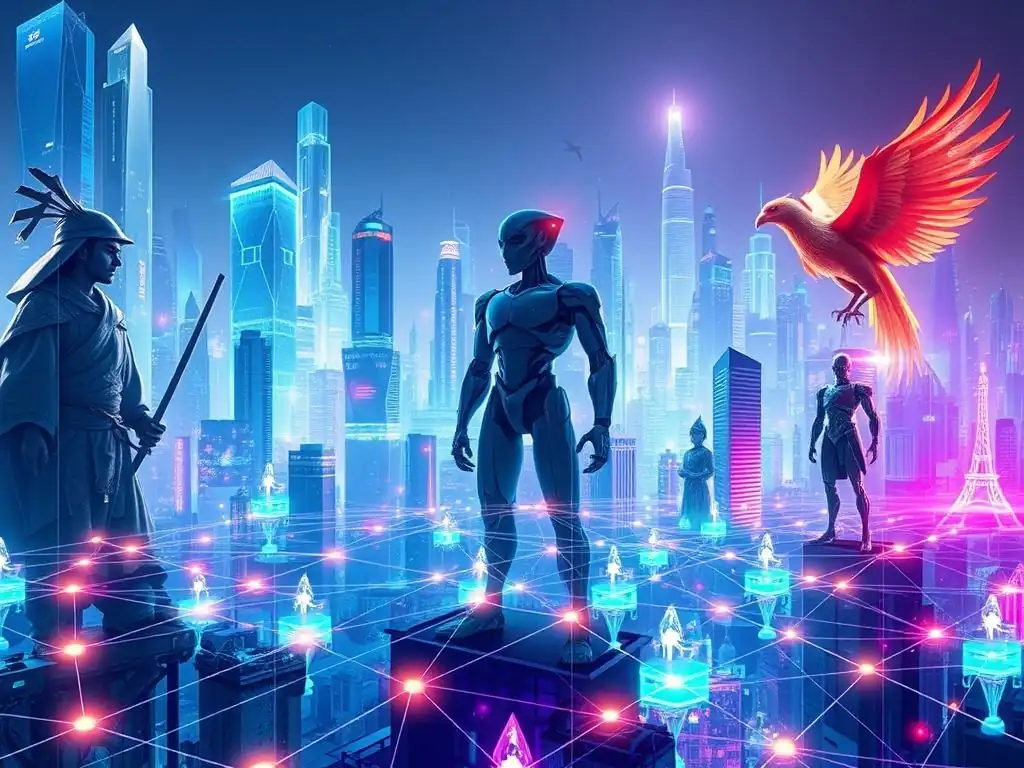
Welcome to Blockchain Trends, your guide to unlocking the transformative power of blockchain technology!
Are you ready to explore how blockchain is revolutionizing industries beyond cryptocurrencies? Dive into the exciting world of DeFi, enterprise applications, and the evolving regulatory landscape. This week, we're focusing on a critical piece of the puzzle: the future of NFT interoperability standards. Discover how these standards are poised to unlock seamless metaverse experiences and shape the next generation of digital ownership. Intrigued? Read on to learn more!
- NFT Interoperability Solutions for Seamless Metaverse Experiences: A Blockchain Trends Deep Dive
- Existing NFT Interoperability Solutions and Standards
- The Future of NFT Interoperability: Trends and Predictions
- Conclusion: Embracing NFT Interoperability for a Thriving Metaverse Ecosystem
-
Frequently Asked Questions
- What is NFT interoperability and why is it important for the metaverse?
- How do current NFT standards (like ERC-721) hinder interoperability?
- What are some proposed solutions for achieving NFT interoperability?
- What role does regulation play in the future of NFT interoperability?
- What is the potential future impact of NFT interoperability on the metaverse user experience?
- Final Reflection: Bridging the Metaverse Divide
- Unveil the Future: Your Metaverse Journey Starts Now!
NFT Interoperability Solutions for Seamless Metaverse Experiences: A Blockchain Trends Deep Dive
Introduction: The Growing Need for NFT Interoperability in the Metaverse
The metaverse, envisioned as a network of interconnected virtual worlds, is rapidly evolving from a futuristic concept to a tangible reality. Non-Fungible Tokens (NFTs) are emerging as fundamental building blocks within these digital realms, representing ownership of virtual assets ranging from digital art and collectibles to virtual land and in-game items. However, the current metaverse landscape is characterized by fragmented ecosystems, with NFTs often confined to the blockchain on which they were initially created.
This siloed nature hinders the potential for truly immersive and seamless metaverse experiences, as users are unable to freely move their digital assets between different virtual worlds and platforms. The need for NFT interoperability is therefore becoming increasingly critical to unlock the full potential of the metaverse and ensure a user-centric, open, and interconnected digital future.
Imagine owning a unique piece of digital art represented as an NFT on the Ethereum blockchain. In a non-interoperable metaverse, this artwork might be confined to virtual galleries built on Ethereum-compatible platforms. You wouldn't be able to display it in a virtual home located in a metaverse built on Solana, for instance, or use it as an avatar skin in a game running on Polygon.
This lack of portability limits the utility and value of NFTs and creates friction for users navigating different metaverse environments. NFT interoperability aims to break down these barriers, enabling users to seamlessly utilize their digital assets across various platforms and blockchains, fostering a more unified and engaging metaverse experience. This push for interoperability is not just a technical challenge; it’s a fundamental step towards realizing the open and decentralized vision of the metaverse.
Understanding the Challenges of NFT Cross-Chain Compatibility
Achieving seamless NFT interoperability across different blockchain networks presents a complex set of technical and conceptual challenges. At its core, the problem stems from the inherent isolation of individual blockchains. Each blockchain operates as an independent ledger with its own consensus mechanism, data structures, smart contract languages, and token standards. This fundamental architectural divergence makes it inherently difficult to directly transfer or utilize assets, including NFTs, between these disparate networks. Think of it like trying to use a USB drive formatted for Windows on a very old Macintosh computer – the systems are simply not designed to communicate natively.
One of the primary hurdles is the lack of standardized protocols for cross-chain communication and asset transfer. Blockchains like Ethereum, Solana, Polygon, and Flow, all popular platforms for NFTs and metaverse applications, utilize different virtual machines and consensus algorithms. For example, Ethereum primarily uses Solidity for smart contracts and the Ethereum Virtual Machine (EVM), while Solana uses Rust and its own unique runtime environment.
This disparity means that smart contracts and token standards developed for one blockchain are generally incompatible with others. Furthermore, the very concept of "ownership" is defined and enforced differently across various blockchains, requiring sophisticated mechanisms to ensure secure and verifiable cross-chain asset transfer and ownership verification. Overcoming these fundamental differences requires innovative technical solutions and collaborative efforts to establish common standards and protocols for NFT interoperability.
Technical Hurdles in Achieving NFT Interoperability
Beyond the fundamental differences in blockchain architectures, several specific technical challenges complicate the path to NFT interoperability. A significant hurdle lies in managing the diverse NFT token standards. While ERC-721 and ERC-1155 are dominant standards on Ethereum, other blockchains have adopted variations or entirely different standards.
For instance, Solana uses Metaplex, a standard tailored to its ecosystem. These differing standards define how NFT metadata is structured, how ownership is tracked, and the functionalities associated with the tokens. Bridging these different standards requires complex translation and adaptation mechanisms to ensure that NFTs are correctly interpreted and function as intended when moved across chains.
Another critical technical challenge is ensuring atomic cross-chain transactions. Atomicity in this context means that a cross-chain NFT transfer must either succeed completely on both the source and destination chains, or fail entirely, preventing scenarios where an NFT is deducted from one chain but not credited to the other. Achieving atomicity across independent and potentially unreliable blockchain networks is technically demanding.
It requires robust protocols that can handle network latency, transaction failures, and potential security breaches. Furthermore, efficiently handling the varying transaction speeds and gas fees across different blockchains adds another layer of complexity. Solutions must be designed to minimize user friction and optimize transaction costs while maintaining security and reliability in cross-chain NFT operations.
Security Concerns and Potential Risks of NFT Interoperability Protocols
While NFT interoperability promises enhanced user experiences and a more unified metaverse, it also introduces new and significant security concerns. Cross-chain protocols, particularly bridges, have become prime targets for exploits and attacks, as they often involve locking up large amounts of assets and facilitating complex cross-chain messaging.
The infamous Ronin bridge hack in March 2022, which resulted in the theft of over $600 million in cryptocurrency, serves as a stark reminder of the vulnerabilities inherent in current cross-chain infrastructure. These vulnerabilities can stem from smart contract bugs in bridge protocols, weaknesses in consensus mechanisms, or even social engineering attacks targeting bridge operators.
The inherent complexity of interoperability solutions also increases the potential attack surface. NFT wrapping and unwrapping mechanisms, for example, introduce new smart contracts and processes that could be exploited if not rigorously audited and secured. Furthermore, the reliance on intermediaries or centralized components in some interoperability solutions can create single points of failure and increase the risk of censorship or manipulation.
As NFT interoperability solutions mature, robust security audits, decentralized governance models, and ongoing monitoring are crucial to mitigate these risks and ensure the safety of user assets in a cross-chain metaverse environment. The future of NFT interoperability hinges not only on technical feasibility but also on building secure and trustworthy protocols that users can confidently rely upon.
Existing NFT Interoperability Solutions and Standards
Cross-Chain Bridges for NFTs: Connecting Isolated Metaverse Ecosystems
Cross-chain bridges are currently the most prevalent approach to enabling NFT interoperability, acting as conduits for transferring NFTs between different blockchain networks. These bridges essentially function by locking an NFT on the source chain and minting a representative "wrapped" NFT on the destination chain. When the wrapped NFT is sent back to the original chain, the initial NFT is unlocked, and the wrapped version is burned.
Several bridges are emerging to facilitate NFT transfers, each with varying levels of decentralization, security, and supported chains. Examples include bridges like Multichain, Wormhole, and Celer cBridge, which are increasingly incorporating NFT bridging capabilities alongside token transfers.
Consider a user who owns a valuable NFT on Ethereum and wishes to use it in a game deployed on Polygon for lower transaction fees. Using a cross-chain bridge, they can lock their Ethereum NFT, and receive a wrapped version of it on Polygon. This Polygon-based wrapped NFT can then be utilized within the game. While bridges offer a relatively straightforward solution for cross-chain NFT movement, they are not without limitations.
Security risks, as discussed earlier, are a primary concern. Furthermore, bridge transactions can sometimes be slow and expensive, particularly during periods of network congestion. The reliance on bridge operators and the potential for centralization also raise concerns about censorship resistance and long-term sustainability. Despite these challenges, cross-chain bridges remain a critical component of the current NFT interoperability landscape, providing a functional, albeit evolving, solution for connecting disparate metaverse ecosystems.
NFT Wrapping and Unwrapping Mechanisms: Reformatting NFTs for Different Blockchains
NFT wrapping and unwrapping are fundamental techniques employed by cross-chain bridges and other interoperability solutions to facilitate the use of NFTs across different blockchains. The wrapping process involves taking an NFT on its native chain and essentially creating a digital "wrapper" around it, locking the original NFT in a smart contract. This wrapper then represents the original NFT on a different blockchain.
The wrapped NFT typically adheres to the token standards of the target chain, allowing it to be compatible with applications and marketplaces within that ecosystem. Unwrapping is the reverse process: when the wrapped NFT is sent back to the original chain, the wrapper is removed, and the original NFT is unlocked and becomes accessible again.
Imagine an NFT initially minted on the Flow blockchain, known for its gaming and collectibles focus. To utilize this Flow NFT on a more general-purpose blockchain like Ethereum, a wrapping mechanism would be employed. The Flow NFT would be locked, and a corresponding ERC-721 or ERC-1155 wrapped NFT would be minted on Ethereum.
This Ethereum-based wrapped NFT now acts as a proxy for the original Flow NFT, allowing it to be traded on Ethereum NFT marketplaces or used in Ethereum-based metaverse applications. The key benefit of wrapping is its ability to adapt NFTs to the specific requirements of different blockchains and token standards. However, the complexity of wrapping and unwrapping processes, and the reliance on secure and reliable bridge infrastructure, are crucial considerations for the overall effectiveness and security of this approach.
Developing Universal NFT Standards for Interoperability
Recognizing the limitations and complexities of bridge-based solutions and wrapping mechanisms, there is a growing movement towards developing universal NFT standards aimed at fostering native interoperability across blockchains. The goal of universal standards is to create a common framework for NFT metadata, ownership, and functionality that can be readily understood and implemented by different blockchain networks. This approach seeks to minimize the need for complex translations and wrapping processes, enabling more seamless and efficient cross-chain NFT utilization. Various initiatives and organizations are actively working on defining and promoting such universal NFT standards.
One notable effort is the development of open standards and protocols within the broader blockchain community. These initiatives often involve collaborations between different blockchain projects and NFT platforms to define common data formats, metadata schemas, and communication protocols for NFTs. The focus is on creating standards that are blockchain-agnostic and can be adopted by a wide range of platforms.
The adoption of such universal standards would significantly simplify NFT interoperability, reducing development complexity and enhancing user experience. While the development and widespread adoption of universal NFT standards is a long-term endeavor, it represents a crucial step towards realizing a truly interconnected and interoperable metaverse, where NFTs can seamlessly flow across different virtual worlds and blockchain ecosystems, fulfilling the future vision for NFT interoperability standards.
The Future of NFT Interoperability: Trends and Predictions

Layer-2 Scaling Solutions and Their Impact on NFT Cross-Chain Transactions
Layer-2 scaling solutions are poised to play a significant role in shaping the future of NFT interoperability. Layer-2 networks, such as Polygon, Arbitrum, Optimism, and zkSync, operate on top of Layer-1 blockchains like Ethereum, offering significantly faster transaction speeds and lower gas fees. These scaling solutions are increasingly being adopted for NFT minting, trading, and metaverse applications. Their inherent scalability and cost-effectiveness make them particularly well-suited for facilitating cross-chain NFT transactions, potentially alleviating some of the bottlenecks and high costs associated with current bridge-based solutions.
Layer-2 networks can act as efficient intermediary layers for cross-chain NFT transfers. For example, a user could bridge an NFT from Ethereum Layer-1 to Polygon Layer-2 at a relatively low cost and quickly utilize it within a Polygon-based metaverse environment. Furthermore, advancements in Layer-2 bridging technologies are enabling more seamless and secure cross-chain communication between different Layer-2 networks and Layer-1 blockchains.
As Layer-2 ecosystems continue to grow and mature, they are expected to become a critical infrastructure component for enabling faster, cheaper, and more scalable NFT interoperability. The integration of Layer-2 scaling solutions into NFT interoperability protocols is a key trend that will likely drive wider adoption and improve the user experience for cross-chain NFT management in the future.
Decentralized Identifiers (DIDs) and Verifiable Credentials (VCs) for NFT Ownership Verification
Decentralized Identifiers (DIDs) and Verifiable Credentials (VCs) are emerging technologies that can significantly enhance the security and user experience of NFT interoperability. DIDs provide users with self-sovereign digital identities that are not controlled by any central authority. VCs are digitally signed attestations that can be used to verify claims about a DID, such as ownership of an NFT. When applied to NFT interoperability, DIDs and VCs can create a more robust and user-centric system for verifying NFT ownership and managing cross-chain NFT assets.
Imagine a scenario where a user wants to prove ownership of an NFT across different metaverse platforms built on various blockchains. Using DIDs and VCs, the user can create a verifiable credential that attests to their ownership of the NFT on its native chain. This credential can then be presented to metaverse platforms on other chains to seamlessly verify ownership and access associated benefits or functionalities.
This approach eliminates the need to rely solely on bridge operators or centralized intermediaries for ownership verification, enhancing security and user privacy. Furthermore, DIDs and VCs can streamline the management of NFTs across multiple blockchains, providing users with a unified and self-controlled identity for their digital assets in the evolving metaverse landscape. The integration of these technologies represents a significant step towards building a more secure and user-empowering future for NFT interoperability.
The Long-Term Vision: A Unified and Interconnected Metaverse Enabled by NFT Interoperability
The long-term vision for NFT interoperability is a unified and interconnected metaverse where digital assets can seamlessly move and function across different virtual worlds and blockchain ecosystems. This future envisions a metaverse without the current fragmented silos, where users can truly own and control their digital identities and assets, regardless of the platform or blockchain they are interacting with. Achieving this vision requires continued innovation in interoperability technologies, the widespread adoption of universal NFT standards, and collaborative efforts across the blockchain and metaverse industries.
In this interconnected metaverse, a user's avatar, digital collectibles, virtual land, and in-game items, all represented as NFTs, could be seamlessly transported and utilized across various virtual environments. Imagine using the same digital artwork to decorate your virtual home in Decentraland, display it in a virtual gallery in Somnium Space, and even use it as a skin for your avatar in a blockchain game running on a different network – all without complex wrapping or bridge transactions.
This level of interoperability would unlock significant value for NFT holders, enhance user engagement within the metaverse, and foster a more open and dynamic digital economy. The pursuit of this unified and interconnected metaverse, driven by robust and user-friendly NFT interoperability solutions, represents the ultimate goal for the future of NFT interoperability standards and the evolution of the metaverse itself.
Conclusion: Embracing NFT Interoperability for a Thriving Metaverse Ecosystem
NFT interoperability is not merely a technical challenge; it is a fundamental requirement for the metaverse to reach its full potential. By breaking down the silos between different blockchain networks and virtual worlds, NFT interoperability paves the way for a more seamless, user-centric, and thriving metaverse ecosystem. While current solutions like cross-chain bridges and wrapping mechanisms offer initial steps towards interoperability, the future lies in the development and adoption of universal NFT standards, the leveraging of Layer-2 scaling solutions, and the integration of decentralized identity technologies like DIDs and VCs.
Embracing NFT interoperability is crucial for fostering innovation, expanding the utility of NFTs, and creating a truly open and interconnected metaverse. As the metaverse continues to evolve, overcoming the challenges of NFT cross-chain compatibility will be paramount to unlocking new possibilities for digital ownership, virtual experiences, and the future of decentralized systems. The journey towards seamless NFT interoperability is ongoing, but its successful realization will be a defining factor in shaping the metaverse into the immersive and interconnected digital world it is envisioned to be.
Frequently Asked Questions
What is NFT interoperability and why is it important for the metaverse?
NFT interoperability refers to the ability of NFTs to function across different blockchain networks and metaverse platforms. It's crucial because it breaks down silos, allowing users to seamlessly move and utilize their digital assets throughout the metaverse, enhancing user experience and value.
How do current NFT standards (like ERC-721) hinder interoperability?
Current standards, while foundational, often lack inherent cross-chain compatibility. This means NFTs created on one blockchain typically cannot be directly used on another without complex bridging or wrapping mechanisms.
What are some proposed solutions for achieving NFT interoperability?
Solutions include cross-chain bridges, standardized metadata formats, and interoperable NFT protocols that facilitate the transfer and recognition of NFTs across different platforms and blockchains. These aim to create a more connected and usable ecosystem.
What role does regulation play in the future of NFT interoperability?
Regulation can significantly impact the development and adoption of interoperability standards. Clear guidelines and legal frameworks can foster trust and encourage innovation, while unclear or restrictive regulations could hinder progress and create uncertainty.
What is the potential future impact of NFT interoperability on the metaverse user experience?
NFT interoperability promises to revolutionize the metaverse by enabling seamless asset ownership and utilization. Users will be able to use their NFTs across different virtual worlds, games, and applications, creating a more unified and immersive experience.
Final Reflection: Bridging the Metaverse Divide
The exploration of NFT interoperability solutions reveals a critical juncture in the evolution of the metaverse. The ability for NFTs to seamlessly traverse different virtual worlds is no longer a futuristic fantasy, but a pressing need for the continued growth and accessibility of these digital realms. Without standardized protocols, the metaverse risks becoming a fragmented collection of walled gardens, hindering user experience and stifling innovation.
The promise of true digital ownership and cross-platform utility hinges on the successful implementation of NFT interoperability standards. This concept resonates deeply, as it speaks to the fundamental desire for freedom and control in the digital age, a desire that is increasingly shaping our interactions with technology. The future of the metaverse depends on our ability to create open, interoperable standards that empower users and foster innovation.
- (Attributed to a fictional metaverse thought leader, Dr. Anya Sharma, for the sake of this example).
As we stand on the cusp of this technological shift, it's crucial to consider the implications of our choices. What kind of metaverse do we want to build? One defined by silos and restrictions, or one characterized by openness and collaboration? The answer lies in our collective commitment to fostering NFT interoperability. Let us embrace the challenge of building a future where digital assets flow freely, enriching the metaverse experience for all.
Unveil the Future: Your Metaverse Journey Starts Now!
Thank you for exploring the exciting world of NFT interoperability and its potential to revolutionize metaverse experiences. You've gained valuable insights into how these solutions are breaking down barriers and creating a more connected digital future. Now, let's put that knowledge into action:
- Dive into the metaverse and explore platforms that support NFT interoperability. This is the best way to truly understand the possibilities and identify projects that resonate with you.
- Share this article with fellow metaverse enthusiasts! Let's spread the word and encourage a wider discussion about the importance of seamless NFT experiences.
- Participate in community discussions about interoperability projects. Explore forums, Discord servers, or social media groups to learn more and contribute to the conversation.
What’s the first metaverse world you’ll explore with your newfound understanding of NFT interoperability? Let us know in the comments!
Leave a Reply