
The Transformation of Game Ownership: From Centralized to Decentralized

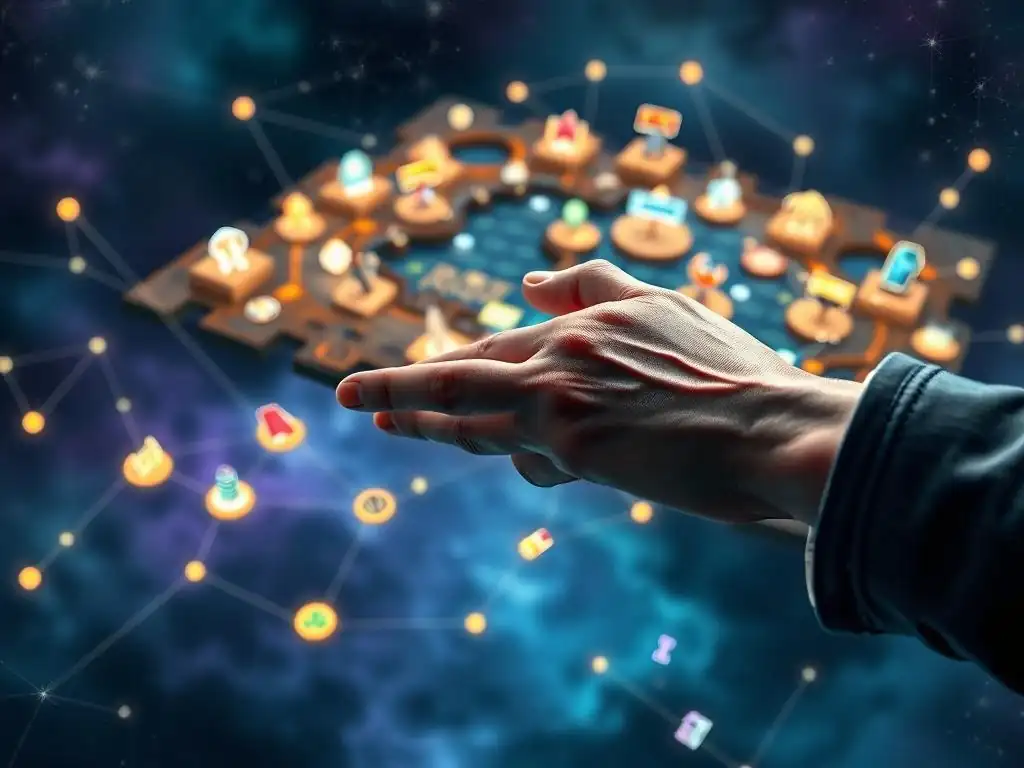
Welcome to Blockchain Trends, your compass in navigating the evolving landscape of decentralized technologies. Delve into the transformative power of blockchain, extending far beyond cryptocurrencies. Intrigued by how blockchain is revolutionizing the gaming world? Then you've come to the right place.
Today, we're unlocking the potential of decentralized game ownership benefits. But what does this really mean for players and developers alike? Prepare to discover how blockchain is reshaping the very foundations of game ownership, offering unprecedented control and value. Let's explore the future of gaming, one block at a time...
Introduction: The Evolving Landscape of Game Ownership
Understanding Centralized Game Ownership Models
In the traditional gaming landscape, game ownership operates under a centralized model. This means game developers and publishers retain complete control over the game, its assets, and the entire gaming ecosystem. Players purchase licenses to play the game, but they do not own the game itself or the digital assets within it. Think of popular titles like "Fortnite," "Call of Duty," or "League of Legends."
In these games, every aspect, from in-game currencies like V-Bucks to cosmetic skins, is governed by the game company. Players are essentially renting access to these digital items, with the company holding the power to modify, remove, or even shut down the game and its associated assets at any time. This model has been the industry standard for decades, shaping player expectations and the dynamics of the gaming market.
The centralized model also dictates how in-game economies function. While players can acquire and sometimes trade in-game items, these transactions typically occur within the game's ecosystem and are subject to the rules and limitations set by the game developers. Real-world trading of these assets is often discouraged or even prohibited in the terms of service.
Furthermore, the value of these digital assets is entirely dependent on the game's popularity and the developer's continued support. If a game loses popularity or the servers are shut down, the perceived value of these assets diminishes significantly, leaving players with no recourse or true ownership of their digital investments within the game.
The Rise of Decentralized Gaming and Blockchain Technology
The emergence of blockchain technology has introduced a paradigm shift, paving the way for decentralized gaming and a reimagining of game ownership. Blockchain, with its inherent characteristics of decentralization, transparency, and immutability, offers a compelling alternative to the traditional centralized model. Decentralized gaming leverages blockchain to distribute control and ownership away from a single entity and into the hands of players and the community. This shift is not merely about changing the technical infrastructure; it's about fundamentally altering the power dynamics within the gaming industry and empowering players in unprecedented ways.
Blockchain's capabilities in creating unique, verifiable digital assets are particularly transformative for gaming. Through technologies like Non-Fungible Tokens (NFTs), blockchain enables the tokenization of in-game items, currencies, and even virtual land. This tokenization process transforms digital assets into provably scarce and truly ownable items, recorded on a public and immutable ledger.
Decentralized gaming platforms are beginning to emerge, built on blockchain networks, that allow players to own, control, and trade their in-game assets freely, outside the confines of a single game developer's control. This foundational change underpins the concept of decentralized game ownership benefits and its potential to revolutionize the gaming world.
- Understanding Centralized Game Ownership Models
- The Rise of Decentralized Gaming and Blockchain Technology
- What are the key decentralized game ownership benefits compared to traditional game ownership?
- How does blockchain technology facilitate decentralized game ownership?
- What is the role of DeFi in the context of decentralized game ownership?
- What are some potential challenges or regulatory hurdles facing the adoption of decentralized game ownership?
- How might decentralized game ownership impact the future of the gaming industry?
The Core Problem with Traditional Game Ownership
Limitations of Centralized Control in Gaming
Centralized control in gaming, while providing developers with necessary authority to manage game environments, also presents significant limitations for players. The primary constraint stems from the lack of player autonomy and control over their digital assets and gaming experience. Decisions regarding game updates, item balancing, and even game shutdowns are solely in the hands of the developers. Players, despite investing time and sometimes significant money into games, have little to no influence over these crucial aspects. This power imbalance can lead to situations where changes implemented by developers negatively impact player experiences or devalue assets acquired by players.
Furthermore, centralized control fosters a walled-garden approach to gaming ecosystems. In-game assets acquired in one game typically cannot be used or transferred to another game, even if they are from the same developer or publisher. This lack of interoperability isolates players and their investments within specific game silos.
The centralized authority also acts as a single point of failure and control, making the entire ecosystem vulnerable to decisions made by the central entity. Changes in corporate strategy, financial difficulties, or even a simple change in game direction can lead to the abandonment or alteration of games, potentially rendering player investments worthless.
Lack of True Ownership for In-Game Assets
The most significant drawback of centralized game ownership is the absence of true ownership for in-game assets. Players may purchase or earn items, characters, or currencies within a game, but legally, they are typically acquiring a license to use these digital goods within the game's ecosystem, not actual ownership. The terms of service of most centralized games explicitly state that players do not own the digital assets they acquire. This distinction is crucial because it means players lack fundamental property rights over these items.
This lack of true ownership has several implications. Players cannot freely sell, trade, or transfer their in-game assets outside of the game's designated marketplace (if one exists and is controlled by the developer). They cannot leverage these assets as collateral or use them in any way beyond their intended function within the game.
In essence, players are custodians of digital assets, not owners. The value and utility of these assets are entirely dependent on the game's continued operation and the developer's goodwill. If the game shuts down, or a player's account is banned, all associated digital assets are lost, highlighting the precarious nature of "ownership" under centralized control.
Restrictions on Trading and Interoperability
Centralized game ownership inherently restricts the trading and interoperability of in-game assets. Traditional game developers often maintain tight control over in-game economies, limiting or outright prohibiting player-to-player trading outside of developer-sanctioned marketplaces. These restrictions are often implemented to combat fraud, prevent the emergence of black markets, and maintain control over the game's economic systems. However, they also stifle the potential for open and player-driven economies to flourish.
Interoperability, the ability for in-game assets to be used across different games or platforms, is virtually nonexistent in centralized gaming. Each game operates as a siloed ecosystem, with assets confined within its boundaries. Imagine acquiring a legendary sword in one game and wanting to use it in another game from a different developer – under centralized ownership, this is impossible.
This lack of interoperability limits the potential for players to build a truly persistent digital identity and collection of assets that can transcend individual games and create a more connected and versatile gaming experience. The limitations on trading and interoperability are key pain points that decentralized game ownership aims to address.
Decentralized Game Ownership: A New Paradigm
What is Decentralized Game Ownership?
Decentralized game ownership represents a fundamental shift in how digital assets and gaming ecosystems are structured and governed. At its core, it's a model where players are granted genuine ownership and control over their in-game assets, moving away from the traditional licensing model of centralized gaming. This transformation is primarily enabled by blockchain technology, which provides the infrastructure for creating and managing truly ownable digital assets. Decentralized game ownership aims to empower players by giving them rights akin to real-world property rights over their digital possessions within games.
In a decentralized gaming paradigm, in-game assets are often represented as tokens on a blockchain. These tokens can be cryptocurrencies for in-game currency or, more commonly, Non-Fungible Tokens (NFTs) for unique items like characters, weapons, or land. Because these assets are recorded on a public and immutable blockchain, ownership is transparently verifiable and cannot be unilaterally revoked by the game developers. Decentralized game ownership also often implies a move towards more community-driven governance, where players have a greater say in the development and direction of the game, further distributing power away from centralized entities.
Leveraging Blockchain for In-Game Asset Tokenization
Blockchain technology is the cornerstone of decentralized game ownership, providing the mechanisms necessary for in-game asset tokenization and secure ownership transfer. Tokenization is the process of representing real-world or digital assets as digital tokens on a blockchain. In the context of gaming, this means transforming in-game items, currencies, and virtual land into blockchain-based tokens. This process leverages the inherent properties of blockchain, such as immutability, transparency, and decentralization, to create a new paradigm for digital asset ownership.
Blockchain facilitates the creation of both fungible tokens (cryptocurrencies) and non-fungible tokens (NFTs) for gaming. Fungible tokens are interchangeable and divisible, ideal for representing in-game currencies or resources. NFTs, on the other hand, are unique and indivisible, perfectly suited for representing unique in-game items. When an in-game asset is tokenized, it gains several advantages. Its ownership is cryptographically secured and recorded on the blockchain, making it verifiable and tamper-proof. Tokenization also enables seamless trading and transfer of these assets on blockchain marketplaces, outside the confines of the game itself, fostering open and player-driven economies.
NFTs (Non-Fungible Tokens) and Game Item Ownership
Non-Fungible Tokens (NFTs) are a crucial component of decentralized game ownership, representing a revolutionary approach to digital item ownership. Unlike fungible tokens which are interchangeable, each NFT is unique and represents a specific digital asset. In gaming, NFTs can represent a wide variety of in-game items, including characters, weapons, virtual land, cosmetic skins, and collectibles. The key innovation of NFTs is that they provide provable and verifiable ownership of these digital items, recorded on a blockchain.
When a player acquires an NFT representing an in-game item, they truly own that item in a way that was not possible in traditional gaming. This ownership is not just a license to use the item within a game; it's ownership of the digital asset itself.
NFTs can be traded on open NFT marketplaces, transferred between players, and even potentially used across different games and metaverse platforms (depending on interoperability). The use of NFTs fundamentally changes the relationship between players and in-game assets, shifting from a service-based model to an ownership-based model, which is central to the decentralized game ownership benefits being realized in the industry.
Decentralized Game Ownership Benefits: Empowering Players
Real Ownership and Control of Digital Assets
One of the most significant decentralized game ownership benefits is the granting of real ownership and control over digital assets to players. Unlike traditional gaming models where players merely license in-game items, decentralized gaming, powered by blockchain and NFTs, empowers players to truly own their digital possessions. This ownership is cryptographically secured and recorded on a public blockchain, meaning players have verifiable and immutable proof of ownership that cannot be easily revoked or altered by game developers.
This real ownership translates into tangible benefits for players. They have the freedom to trade, sell, or gift their in-game assets to other players on open marketplaces, potentially earning real-world value from their gaming efforts. They can also hold onto these assets as investments, anticipating potential appreciation in value as the game or the asset becomes more popular. Furthermore, true ownership provides players with greater control over their gaming experience, knowing that their digital possessions are not simply at the whim of a centralized game company, but are assets they truly control.
Enhanced Security and Transparency with Blockchain
Blockchain technology, underpinning decentralized game ownership, provides enhanced security and transparency compared to traditional centralized systems. The decentralized nature of blockchain eliminates single points of failure and control, making the entire system more resilient to attacks and manipulation. Transactions related to in-game assets, such as ownership transfers and trades, are recorded on the blockchain, creating a transparent and auditable history. This transparency builds trust and reduces the potential for fraud or opaque practices that can be prevalent in centralized gaming environments.
Smart contracts, self-executing contracts coded on the blockchain, further enhance security and transparency in decentralized gaming. These contracts can automate game mechanics, asset distribution, and marketplace transactions in a secure and verifiable manner. For example, smart contracts can ensure fair distribution of rewards in play-to-earn games or automatically execute trades on decentralized marketplaces. The combination of blockchain's inherent security features and the use of smart contracts creates a more secure and trustworthy environment for players, contributing to the numerous decentralized game ownership benefits.
True Scarcity and Provenance of In-Game Items
Decentralized game ownership, particularly through the use of NFTs, enables true scarcity and provenance for in-game items. In traditional gaming, developers can create and replicate digital items infinitely, diminishing the sense of scarcity and potentially devaluing existing items. NFTs, on the other hand, are designed to be unique and limited in supply. The number of NFTs for a particular item can be capped, creating verifiable scarcity that mirrors the scarcity of physical collectibles.
Furthermore, blockchain provides provenance, or a verifiable history of ownership, for each NFT. This means players can trace the origin and ownership history of an in-game item, adding to its collectibility and potentially its value. Provenance can be particularly important for rare or legendary items, as it provides assurance of authenticity and uniqueness. The combination of true scarcity and verifiable provenance enhances the value proposition of in-game assets in decentralized gaming and is one of the key decentralized game ownership benefits for collectors and players alike.
Increased Player Agency and Participation in Game Development
Decentralized game ownership models often foster increased player agency and participation in game development and governance. By distributing ownership and control, these models empower players to become more active participants in the gaming ecosystem, rather than passive consumers. Some decentralized games are incorporating Decentralized Autonomous Organizations (DAOs) to allow community members to vote on game updates, rule changes, and even the future direction of the game. This shift towards community governance gives players a voice and a stake in the games they play.
Furthermore, the play-to-earn mechanics often associated with decentralized gaming can incentivize player participation in game development. Players can contribute to the game ecosystem by creating content, providing feedback, or even participating in testing, and be rewarded for their contributions with in-game assets or cryptocurrency. This increased player agency and participation not only enhances the gaming experience but also fosters a more collaborative and community-driven approach to game development, further highlighting the decentralized game ownership benefits in fostering a more engaged player base.
Exploring the Benefits of Decentralized Game Ownership Models
Unlocking New Revenue Streams for Players
Decentralized game ownership models are revolutionizing the way players can earn revenue from gaming. Traditional gaming often confines revenue generation to professional esports players or content creators. However, decentralized gaming, particularly through play-to-earn (P2E) mechanics, opens up new avenues for everyday players to earn income while engaging in their favorite pastime. This is a significant decentralized game ownership benefit that is attracting a global audience.
By owning in-game assets as NFTs, players can participate in player-driven economies where they can buy, sell, and trade these assets for cryptocurrency or fiat currency. Play-to-earn games often reward players with cryptocurrency or NFTs for completing in-game tasks, winning battles, or contributing to the game ecosystem. This allows players to monetize their skills, time, and effort invested in the game, potentially creating new income streams and transforming gaming from a purely leisure activity into a source of earnings for some.
The Potential for Play-to-Earn (P2E) Mechanics
Play-to-earn (P2E) mechanics are a defining characteristic of many decentralized games and a significant driver of the decentralized game ownership benefits being realized. P2E models incentivize players to actively participate in the game by rewarding them with cryptocurrency or NFTs for their in-game achievements and contributions. These rewards are not just virtual points or in-game currency with limited use; they are often blockchain-based assets that have real-world value and can be traded on open markets.
P2E mechanics can take various forms, including earning rewards for completing quests, winning battles, participating in tournaments, crafting and selling in-game items, or even contributing to the game's ecosystem through content creation or community building. The potential for earning real income through gaming has attracted a large and diverse player base to decentralized games, particularly in regions where traditional income opportunities may be limited. P2E is not just about earning money; it's about recognizing and rewarding players for their time, skill, and contribution to the game ecosystem, fostering a more engaging and rewarding gaming experience.
Community-Driven Game Development and Governance
Decentralized game ownership models often embrace community-driven game development and governance, fostering a more collaborative and democratic approach to game creation and evolution. Traditional game development is typically a top-down process, with developers making decisions and implementing changes with limited player input. Decentralized gaming is shifting towards a model where the community has a greater voice and influence in shaping the game's future. This is a key decentralized game ownership benefit, leading to games that are more aligned with player desires.
Some decentralized games utilize Decentralized Autonomous Organizations (DAOs) to enable community governance. DAOs are blockchain-based organizations governed by rules encoded in smart contracts, allowing token holders to vote on proposals and make decisions about the game's development, economy, and future direction. This empowers players to become active stakeholders in the game, fostering a sense of ownership and community. Community-driven development can lead to games that are more responsive to player feedback, more adaptable to evolving player needs, and ultimately more sustainable and engaging in the long run.
Cross-Game Compatibility and Metaverse Integration
The potential for cross-game compatibility and metaverse integration is another exciting decentralized game ownership benefit that is beginning to emerge. In the traditional gaming landscape, in-game assets are typically locked within a single game's ecosystem. Decentralized gaming, particularly with the use of NFTs, opens up the possibility of creating in-game assets that can be used across multiple games and metaverse platforms. This interoperability could revolutionize the gaming experience and create a more interconnected digital world.
Imagine owning a unique sword as an NFT that you can use not only in the game where you originally acquired it, but also in other compatible games or virtual worlds within the metaverse. This cross-game compatibility would enhance the utility and value of in-game assets, creating a more persistent and versatile digital identity for players. While still in its early stages, the potential for metaverse integration and cross-game asset interoperability represents a significant evolution in gaming, blurring the lines between individual games and creating a more unified and interconnected gaming universe, driven by decentralized ownership and player empowerment.
Use Cases: Decentralized Games Leading the Charge
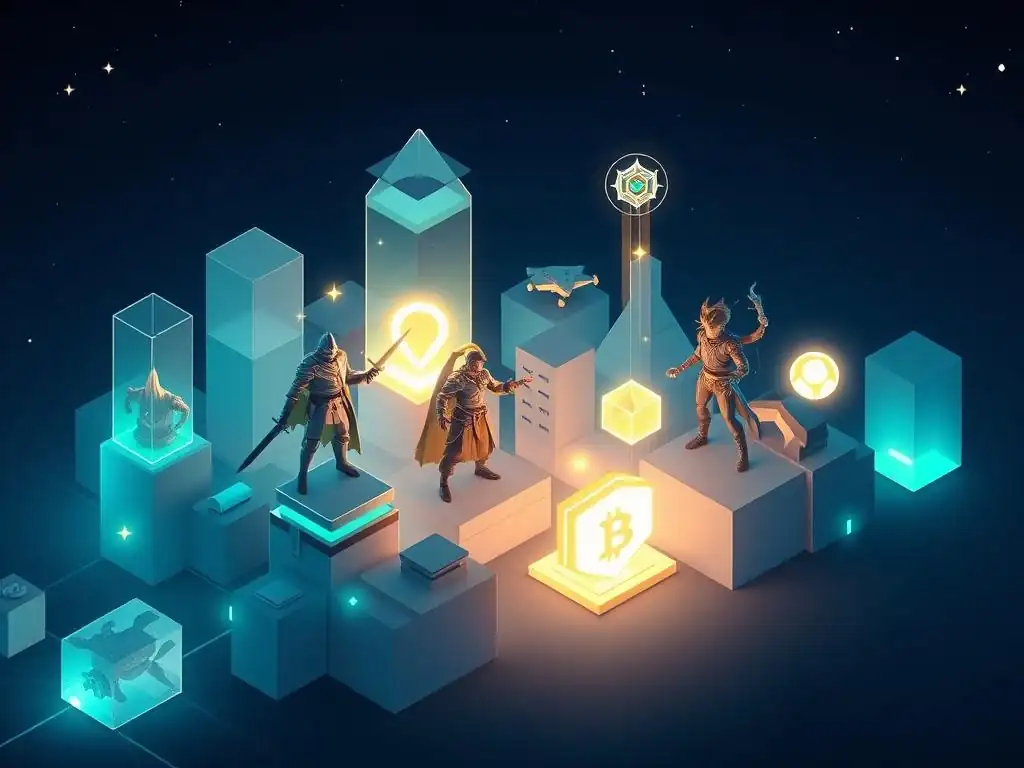
Axie Infinity: A Blockchain-Based Game with True Asset Ownership
Axie Infinity stands as a prominent example of a blockchain-based game that has successfully implemented true asset ownership for its players. This play-to-earn game, inspired by Pokémon, utilizes NFTs to represent its in-game creatures called Axies, as well as virtual land and other items. Players in Axie Infinity truly own their Axies as NFTs, meaning they can breed, battle, and trade them freely on open marketplaces, outside of the game's direct control. This model directly embodies decentralized game ownership benefits.
The success of Axie Infinity demonstrates the viability of play-to-earn mechanics and the appeal of true asset ownership to players. The game has fostered a thriving player-driven economy, particularly in regions like Southeast Asia, where players have been able to earn a significant income by playing the game. Axie Infinity's use of NFTs and its play-to-earn model has paved the way for other decentralized games and has shown the transformative potential of blockchain in the gaming industry, highlighting the real-world impact of decentralized game ownership.
Splinterlands: A Play-to-Earn Trading Card Game with NFT Integration
Splinterlands is another leading example of a decentralized game that leverages NFTs to provide players with true ownership of their in-game assets. This play-to-earn trading card game utilizes blockchain to represent its cards as NFTs, allowing players to own, trade, and battle with their digital card collections. Similar to physical trading card games, the value of Splinterlands cards is determined by their rarity, utility in gameplay, and market demand. This system perfectly exemplifies decentralized game ownership benefits in a collectible context.
Players in Splinterlands earn rewards in cryptocurrency and NFTs by winning battles, participating in tournaments, and completing quests. These rewards can then be traded on open marketplaces for cryptocurrency or fiat currency, creating a play-to-earn ecosystem. Splinterlands has demonstrated the effectiveness of NFT integration in creating engaging and economically viable play-to-earn games, showcasing how decentralized ownership can enhance the player experience and create new opportunities within the gaming space.
Decentraland: A Metaverse Platform Enabling Cross-Game Asset Use
Decentraland represents a different facet of decentralized gaming, focusing on metaverse experiences and the potential for cross-game asset use. Decentraland is a decentralized virtual world built on the Ethereum blockchain, where users can buy, sell, and develop virtual land represented as NFTs. Within Decentraland, users can create and explore virtual experiences, interact with other users, and even potentially integrate assets from other decentralized games and platforms, showcasing future decentralized game ownership benefits in a metaverse context.
While cross-game asset interoperability is still developing in Decentraland and the wider metaverse, the platform's foundation in blockchain and NFTs lays the groundwork for a future where digital assets can be used across multiple virtual worlds and experiences. Decentraland represents a vision of a more interconnected and player-owned metaverse, where users have true ownership of their virtual land and assets and can participate in a decentralized digital economy. It showcases the long-term potential of decentralized game ownership to extend beyond individual games and into broader metaverse environments.
Overcoming the Challenges of Decentralized Game Ownership
Scalability and Transaction Fees on Blockchain Networks
Despite the numerous decentralized game ownership benefits, challenges remain in the widespread adoption of decentralized gaming. Scalability and transaction fees on blockchain networks are significant hurdles. Many popular blockchain networks, particularly Ethereum, have faced scalability issues, leading to slow transaction times and high transaction fees (gas fees), especially during periods of high network activity. These issues can negatively impact the user experience in decentralized games, particularly those requiring frequent transactions, like fast-paced action games or games with active in-game marketplaces.
Solutions to scalability challenges are being actively developed, including layer-2 scaling solutions and the emergence of more scalable blockchain networks. Layer-2 solutions, such as sidechains and rollups, aim to offload transaction processing from the main blockchain, improving speed and reducing fees. Newer blockchain networks are also being designed with scalability in mind from the outset. Addressing scalability and transaction fee issues is crucial for the long-term viability and mass adoption of decentralized gaming and realizing the full potential of decentralized game ownership.
Security Risks and Smart Contract Vulnerabilities
Security risks and smart contract vulnerabilities represent another significant challenge in decentralized game ownership. While blockchain technology itself is inherently secure, smart contracts, which are often used to govern decentralized games and manage in-game assets, can be vulnerable to exploits if not properly audited and secured. Bugs or vulnerabilities in smart contracts can lead to loss of funds, theft of NFTs, or manipulation of game mechanics, posing risks to both players and game developers.
Ensuring the security of smart contracts and decentralized gaming platforms requires rigorous auditing, best practices in smart contract development, and ongoing monitoring for potential vulnerabilities. The nascent nature of decentralized gaming and blockchain technology means that security best practices are still evolving, and the industry is learning and adapting to new threats and vulnerabilities. Addressing security concerns and building robust and secure decentralized gaming platforms is paramount for fostering trust and widespread adoption of decentralized game ownership.
User Experience and Accessibility for Non-Crypto Natives
User experience (UX) and accessibility for non-crypto natives are critical factors hindering the mainstream adoption of decentralized gaming and the widespread realization of decentralized game ownership benefits. The current user experience in many decentralized games can be complex and daunting for players unfamiliar with blockchain technology, cryptocurrencies, and NFTs. Setting up cryptocurrency wallets, understanding gas fees, and navigating decentralized marketplaces can be confusing and intimidating for newcomers.
Improving the user experience and accessibility of decentralized games is crucial for attracting a wider audience beyond crypto enthusiasts. This includes simplifying wallet setup processes, abstracting away blockchain complexities where possible, providing clear and intuitive interfaces, and offering robust onboarding and educational resources for new players. Making decentralized games as easy to play and access as traditional games is essential for bridging the gap to mainstream adoption and unlocking the full potential of decentralized game ownership for a broader player base.
Regulatory Uncertainty and Legal Considerations
Regulatory uncertainty and legal considerations represent a significant challenge for the decentralized gaming industry and the broader adoption of decentralized game ownership benefits. The legal and regulatory landscape surrounding blockchain technology, cryptocurrencies, and NFTs is still evolving globally, creating uncertainty for game developers and players alike. Issues such as the classification of NFTs as securities, regulations around play-to-earn mechanics, and tax implications of cryptocurrency earnings are still being clarified in many jurisdictions.
Navigating this regulatory uncertainty requires decentralized game developers to stay informed about evolving regulations, seek legal counsel, and adopt responsible practices. Clearer regulatory frameworks are needed to provide legal certainty and foster innovation in the decentralized gaming space. Engaging with regulators and policymakers to educate them about the potential of decentralized gaming and advocate for sensible and innovation-friendly regulations is crucial for the long-term growth and sustainability of the industry and ensuring the positive impact of decentralized game ownership.
The Future of Game Ownership: A Decentralized Vision
The Convergence of Blockchain, Gaming, and the Metaverse
The future of game ownership is inextricably linked to the convergence of blockchain technology, gaming, and the metaverse. Blockchain provides the foundation for decentralized ownership and economies; gaming provides engaging experiences and content; and the metaverse offers a persistent and interconnected digital world for these elements to converge. This convergence is poised to reshape the gaming industry and create new opportunities for players and creators alike, amplifying decentralized game ownership benefits across interconnected digital spaces.
As metaverse platforms evolve and become more interoperable, decentralized game assets, particularly NFTs, are likely to play a central role in user identity, digital ownership, and cross-platform experiences. Imagine a future where players can carry their avatars, in-game items, and digital identities seamlessly across different games and virtual worlds within the metaverse, all powered by blockchain and decentralized ownership. This convergence promises to create a more immersive, interconnected, and player-centric gaming future.
The Role of DAOs (Decentralized Autonomous Organizations) in Game Governance
Decentralized Autonomous Organizations (DAOs) are likely to play an increasingly important role in the future of game governance within decentralized gaming ecosystems. DAOs offer a mechanism for community-driven governance, empowering players to participate in decision-making processes related to game development, rule changes, and the allocation of resources. This shift towards decentralized governance aligns with the core principles of decentralized game ownership benefits, promoting player agency and community involvement.
DAOs can be structured in various ways, but typically involve token holders voting on proposals using their governance tokens. This allows for a more democratic and transparent approach to game governance compared to traditional centralized models. As decentralized gaming matures, DAOs are expected to become more sophisticated and influential, shaping the direction of games and empowering players to become active stakeholders in the ecosystems they participate in.
Democratizing Game Development and Ownership for All
Ultimately, the decentralized vision for game ownership is about democratizing game development and ownership for all. Blockchain technology and decentralized gaming models have the potential to lower the barriers to entry for game developers, creators, and players, fostering a more inclusive and equitable gaming ecosystem. Decentralized game ownership benefits extend to creators and players alike, fostering a more level playing field.
Decentralized platforms can empower independent game developers and creators by providing them with tools to launch their games, tokenize assets, and engage directly with their communities, without relying on traditional publishers or centralized gatekeepers. Play-to-earn mechanics can provide economic opportunities for players worldwide, regardless of their geographic location or socioeconomic background. The decentralized revolution in gaming has the potential to create a more open, accessible, and rewarding gaming landscape for everyone involved.
Conclusion: Embracing the Decentralized Revolution in Gaming
The Potential of Decentralized Game Ownership Benefits to Reshape the Industry
The potential of decentralized game ownership benefits to reshape the gaming industry is immense. From granting players true ownership and control over their digital assets to unlocking new revenue streams and fostering community-driven governance, decentralized gaming offers a compelling alternative to traditional centralized models. While challenges remain in areas like scalability, security, user experience, and regulation, the momentum behind decentralized gaming is undeniable.
As blockchain technology matures, user-friendly solutions emerge, and regulatory frameworks become clearer, decentralized gaming is poised to move from niche to mainstream. The shift towards decentralized game ownership is not just a technological evolution; it's a fundamental shift in power dynamics, empowering players, fostering innovation, and creating a more open, equitable, and rewarding gaming future. The industry is on the cusp of a significant transformation, and embracing the decentralized revolution is key to unlocking the full potential of gaming.
Dive Deeper: Exploring Opportunities in Decentralized Gaming
The world of decentralized gaming and decentralized game ownership benefits is rapidly evolving, presenting exciting opportunities for players, developers, investors, and enthusiasts alike. To truly understand the transformative potential, it is essential to dive deeper into this emerging space. Explore the growing ecosystem of decentralized games, experiment with play-to-earn mechanics, research different blockchain gaming platforms, and engage with the vibrant communities that are driving this revolution. The decentralized gaming revolution is just beginning, and those who explore and embrace it early are likely to be at the forefront of this exciting new frontier in entertainment and digital ownership.
Frequently Asked Questions
What are the key decentralized game ownership benefits compared to traditional game ownership?
Decentralized game ownership benefits include true ownership of in-game assets, allowing players to buy, sell, and trade them freely. This contrasts with traditional games where assets are often locked within the game and controlled by the developer.
How does blockchain technology facilitate decentralized game ownership?
Blockchain provides a transparent and secure ledger for tracking ownership of in-game assets. These assets are often represented as Non-Fungible Tokens (NFTs), proving authenticity and ownership.
What is the role of DeFi in the context of decentralized game ownership?
DeFi (Decentralized Finance) elements can integrate with blockchain games, allowing players to earn yield on their in-game assets. This can involve staking NFTs or participating in liquidity pools related to the game's ecosystem.
What are some potential challenges or regulatory hurdles facing the adoption of decentralized game ownership?
Challenges include the complexity of blockchain technology for average gamers and regulatory uncertainty surrounding NFTs and virtual assets. Security vulnerabilities in smart contracts are also a concern.
How might decentralized game ownership impact the future of the gaming industry?
Decentralized game ownership could lead to more player-driven economies and greater player agency. It could also foster new business models and revenue streams for game developers.
Okay, here's a final reflection designed to close your article "The Transformation of Game Ownership: From Centralized to Decentralized," optimized for the keyword "Decentralized game ownership benefits," and following the structure you provided:
Final Reflection: Embracing the Dawn of Decentralized Gaming
The journey we've explored, tracing the evolution of game ownership from centralized control to the burgeoning world of decentralized models, reveals a fundamental shift in power. The rise of decentralized game ownership isn't just a technological advancement; it's a paradigm shift that empowers players and reshapes the very fabric of the gaming industry. The benefits, as we've discussed, are multifaceted and profound, promising a more equitable and engaging future for all involved.
This transformation resonates deeply, not only within the gaming community but also as a microcosm of broader societal trends towards decentralization and individual empowerment. Witnessing players truly own their in-game assets, contributing to game development, and sharing in the economic success of the virtual worlds they inhabit is a powerful testament to the potential of blockchain technology. The future of gaming isn't just about playing games; it's about owning a piece of the game itself.
This sentiment encapsulates the core promise of decentralized game ownership: a future where players are not just consumers, but active participants and stakeholders.
As we stand on the cusp of this new era, let us consider the implications of decentralized game ownership benefits not just for gamers, but for all creators and consumers in the digital age. What if we could truly own our data, our creations, our digital identities? The possibilities are limitless. Embrace this vision, explore the potential of decentralized technologies, and become an active participant in shaping a future where ownership is truly democratized. The game is changing, and the power to define its rules is now, more than ever, in your hands.
Unlock the Future: Start Building Your Decentralized Game Collection!
Thanks for diving into the exciting world of decentralized game ownership! You've now seen how blockchain is revolutionizing the gaming landscape, giving players more control and true ownership. Ready to take the next step and be a part of this game-changing movement?
Here's how you can get started:
- Claim your first digital collectible! Explore emerging blockchain game platforms and snag a free NFT asset to kickstart your decentralized inventory.
- Join the Blockchain Trends community forums to discuss your favorite games and learn from other players building their digital empires.
- Share this article with fellow gamers who deserve to know about the power of decentralized ownership!
What unique digital asset are you most excited to own in the future of gaming? Share your wishlist in the comments below!
Leave a Reply