
Tokenomics and ZeroKnowledge Proofs: Enhancing Privacy and Security in Crypto


Welcome to Blockchain Trends, your guide to navigating the evolving landscape of decentralized technology. Dive into our exploration of how blockchain is reshaping industries beyond cryptocurrencies. In this article, we delve into the critical realm of Blockchain privacy security protocols, specifically focusing on how tokenomics and innovative solutions like Zero-Knowledge Proofs are revolutionizing data protection and trust within decentralized systems. Are these innovations truly the key to widespread adoption and a secure decentralized future? Read on to find out!
Tokenomics and Zero-Knowledge Proofs: Enhancing Privacy and Security in Crypto
- Introduction: The Growing Need for Blockchain Privacy
- Tokenomics: Designing Secure and Sustainable Crypto Ecosystems
- Zero-Knowledge Proofs (ZKPs): Unlocking Privacy in Blockchain
- Integrating Tokenomics and Zero-Knowledge Proofs for Enhanced Security
- Challenges and Future Directions for Blockchain Privacy
- Conclusion: The Future of Secure and Private Blockchains
-
Frequently Asked Questions
- What are Tokenomics and how do they relate to blockchain privacy?
- What are Zero-Knowledge Proofs (ZKPs) and why are they important for blockchain privacy?
- How can Zero-Knowledge Proofs be used in DeFi (Decentralized Finance)?
- What are some challenges in implementing Blockchain privacy security protocols, like ZKPs, on a large scale?
- How does regulation impact the development and adoption of Blockchain privacy security protocols?
- Final Reflection: Embracing the Future of Private and Secure Blockchains
- Discover the Future of Crypto Privacy!
Introduction: The Growing Need for Blockchain Privacy
The Evolution of Blockchain and the Demand for Enhanced Privacy
Initially conceived as a transparent and immutable ledger, blockchain technology offered unprecedented security through decentralization and cryptographic hashing. Early blockchains, like Bitcoin, prioritized transparency, with every transaction publicly visible on the ledger. This public nature, while fostering trust and verifiability, inherently lacks privacy, revealing sender, receiver, and amount for all to see. As blockchain applications expanded beyond simple value transfer to complex smart contracts and decentralized finance (DeFi), the need for robust blockchain privacy security protocols became increasingly apparent. Users and enterprises require confidentiality for sensitive transactions, personal data, and business operations to leverage blockchain's benefits without sacrificing privacy.
The demand for enhanced privacy is driven by various factors, including regulatory requirements (like GDPR), the need for confidential business transactions, and individual desire for financial anonymity. While pseudonymous, public blockchains still allow for deanonymization through transaction graph analysis and linking addresses to real-world identities. This vulnerability poses significant risks for widespread adoption, particularly in sectors like healthcare, supply chain, and finance, where data privacy is paramount. Developing and implementing effective blockchain privacy security protocols is crucial for the next phase of blockchain evolution, enabling confidential interactions within a transparent framework.
Understanding Tokenomics and its Role in Crypto Security
Tokenomics, a portmanteau of "token" and "economics," refers to the economic design and properties of a cryptocurrency token. It encompasses everything that influences a token's value, utility, and behavior within its ecosystem, including issuance rules, distribution mechanisms, incentive structures, and how tokens are used or burned. A well-designed tokenomics model is fundamental not just for a project's economic sustainability but also for its security. By aligning the economic incentives of participants (miners, validators, users) with the network's goals, tokenomics can significantly strengthen the security of blockchain privacy security protocols.
The economic incentives embedded in a tokenomics model are powerful tools for deterring malicious behavior and encouraging honest participation. For instance, in Proof-of-Stake systems, validators stake tokens as collateral and are rewarded for validating blocks correctly, while risking their stake (slashing) for misbehavior. This economic stake directly contributes to the network's security by making attacks economically prohibitive.
Similarly, transaction fees, often paid in the native token, incentivize validators or miners to process transactions, ensuring the network remains operational and secure. Effective tokenomics design is therefore an integral component of robust blockchain privacy security protocols, influencing everything from network consensus to data integrity and user behavior.
Zero-Knowledge Proofs: A Revolutionary Approach to Blockchain Privacy
Zero-Knowledge Proofs (ZKPs) represent a class of cryptographic protocols that allow one party (the prover) to prove to another party (the verifier) that a statement is true, without revealing any information beyond the validity of the statement itself. In the context of blockchain, this means a user can prove they meet certain criteria for a transaction (e.g., owning enough funds, having a specific identity attribute) without revealing the specific details of those criteria (e.g., the exact balance, the specific identity document). This capability is revolutionary for blockchain privacy security protocols, enabling confidential transactions and interactions on otherwise public ledgers.
The core innovation of ZKPs lies in their ability to decouple verification from disclosure. Instead of broadcasting sensitive data onto the public ledger, ZKPs allow users to generate a cryptographic proof off-chain, which can then be verified on-chain efficiently. This proof confirms the validity of the underlying private data without revealing it.
This technology is essential for building truly private applications on public blockchains, addressing the inherent transparency issue that hinders enterprise and individual adoption for sensitive use cases. ZKPs are becoming a cornerstone of advanced blockchain privacy security protocols, enabling a new era of confidential computation and private interactions within decentralized systems.
Tokenomics: Designing Secure and Sustainable Crypto Ecosystems
Core Principles of Tokenomics: Supply, Demand, and Incentives
The foundation of any tokenomics model rests on the principles of supply, demand, and incentives, mirroring traditional economic concepts but applied to a decentralized digital asset. Supply encompasses the total number of tokens created, the rate at which new tokens are issued (inflation), and mechanisms for removing tokens from circulation (deflation/burning). Demand is driven by the token's utility within the ecosystem – whether it's used for payments, governance, staking, accessing services, or as a store of value. Balancing supply and demand is crucial for maintaining token value and network health.
Incentives are perhaps the most critical aspect of tokenomics for security. They are designed to encourage participants – miners, validators, developers, users – to act in the best interest of the network. These incentives can take various forms, including block rewards, transaction fees, staking rewards, and airdrops.
By rewarding positive contributions (like validating blocks or providing liquidity) and penalizing negative actions (like double-spending or downtime), tokenomics aligns individual economic rationality with collective network security. A well-designed incentive structure is paramount for bootstrapping network activity, ensuring consensus security, and fostering a vibrant ecosystem, forming a key layer of blockchain privacy security protocols.
Tokenomics Models and Their Impact on Network Security
Different consensus mechanisms rely on distinct tokenomics models, each presenting unique security considerations and vulnerabilities. Understanding these models is vital for evaluating the robustness of blockchain privacy security protocols.
Proof-of-Work (PoW) and Security Considerations
Proof-of-Work, famously used by Bitcoin and Ethereum (historically), relies on computational power to secure the network. Miners compete by solving complex mathematical puzzles; the first to solve it proposes the next block and earns a block reward (newly minted tokens) and transaction fees. The tokenomics here center on the issuance rate of new tokens (halving events in Bitcoin) and transaction fee market dynamics.
The security of PoW is based on the economic cost of computation – a 51% attack, requiring control of the majority of the network's hash rate, is incredibly expensive in terms of hardware and electricity. Bitcoin's network, for instance, consumes a significant amount of energy, estimated to be comparable to that of small countries, making a sustained 51% attack economically infeasible for most actors due to the immense capital and operational costs involved.
However, PoW has its own security considerations related to tokenomics. The decreasing block rewards over time mean that transaction fees become increasingly important for miner incentives. If transaction fees are too low, miners might be less incentivized to secure the network, potentially making it more susceptible to attacks, especially for smaller PoW chains. Furthermore, the concentration of mining power among a few large mining pools can introduce centralization risks, although the underlying protocol remains decentralized. The energy consumption is also a significant point of criticism, driving the search for more efficient blockchain privacy security protocols.
Proof-of-Stake (PoS) and Potential Vulnerabilities
Proof-of-Stake mechanisms, adopted by Ethereum 2.0 and utilized by many newer blockchains like Cardano and Solana, replace computational work with staking tokens. Validators stake a certain amount of the network's native token as collateral to participate in block validation. They are selected to propose or attest to blocks based on the amount they have staked and other factors.
Tokenomics in PoS involves staking rewards (often a percentage yield on staked tokens) and transaction fee distribution. The security relies on the economic stake: attacking the network requires acquiring a significant portion of the total staked tokens (typically 33% or more for certain attacks, or over 66% for others, depending on the specific PoS variant), which would drive up the token price significantly, making the attack prohibitively expensive.
Despite its efficiency, PoS introduces potential vulnerabilities related to token distribution and governance. If a large percentage of tokens is concentrated in the hands of a few entities, it can lead to centralization of validation power, potentially impacting consensus integrity and resistance to collusion. The "nothing at stake" problem, while largely mitigated by slashing mechanisms (penalties for misbehavior), was an early theoretical vulnerability where validators had no cost for validating on multiple forks. Ensuring a wide and decentralized distribution of tokens and designing effective slashing conditions are critical tokenomics considerations for robust PoS blockchain privacy security protocols.
Delegated Proof-of-Stake (DPoS) and Security Implications
Delegated Proof-of-Stake, used by networks like EOS and Tron, involves token holders electing a limited number of delegates (witnesses or block producers) to validate transactions and secure the network. Token holders' voting power is proportional to their stake. The tokenomics involve rewards for elected delegates (often a fixed amount or a share of transaction fees), incentivizing them to maintain network uptime and performance. Security in DPoS hinges on the assumption that token holders will elect honest delegates and can quickly vote out malicious ones.
The security implications of DPoS tokenomics primarily revolve around the potential for cartel formation and collusion among the limited number of delegates. If delegates collude, they could potentially manipulate the network or censor transactions. The system relies heavily on active and informed participation from token holders to elect diverse and trustworthy delegates. Furthermore, vote-buying or bribery can distort the election process. Designing tokenomics to encourage broad token holder participation in voting and implementing transparent delegate performance monitoring are crucial for maintaining the security and decentralization of DPoS blockchain privacy security protocols.
How Tokenomics Can Mitigate Common Crypto Security Threats
Tokenomics provides powerful economic levers to combat various security threats inherent in decentralized systems.
Preventing Sybil Attacks through Token Distribution
A Sybil attack involves an attacker creating a large number of fake identities or nodes to gain a disproportionate influence over the network. In systems without strong Sybil resistance, an attacker could potentially dominate consensus or disrupt network services. Tokenomics, particularly in PoS and DPoS systems, inherently provides Sybil resistance.
To participate in consensus (as a validator or delegate), an entity must hold or stake a certain amount of the native token. Acquiring a sufficient amount of tokens to launch a meaningful Sybil attack becomes economically prohibitive, especially on established networks with high token values and large total staked amounts. For example, securing a significant percentage of the staked value on a network like Ethereum 2.0 would require billions of dollars worth of ETH, making a Sybil attack economically unfeasible.
Furthermore, token distribution mechanisms can be designed to prevent excessive concentration of tokens initially. Fair launch models, distribution through active participation (mining, providing liquidity), and vesting schedules can help spread ownership and reduce the risk of a single entity accumulating enough tokens to threaten network security via Sybil-like tactics. This economic barrier is a fundamental aspect of how tokenomics contributes to the foundational security of blockchain privacy security protocols.
Ensuring Network Stability with Token Incentives
Network stability is continuously reinforced through token-based incentives that encourage desirable behavior and penalize undesirable actions. Validators or miners are incentivized to maintain high uptime, validate transactions correctly, and follow the protocol rules because their rewards depend on it. In PoS, slashing mechanisms directly penalize validators for downtime, double-signing blocks, or other protocol violations, causing them to lose a portion of their staked tokens. This economic consequence strongly motivates validators to maintain reliable and honest infrastructure.
Transaction fees paid by users also play a critical role in stability, particularly during periods of high network traffic. Higher fees incentivize validators/miners to prioritize and include transactions, preventing network congestion and ensuring transactions are processed in a timely manner. Without sufficient incentives (rewards + fees), participants might abandon the network, leading to reduced security and potential instability. The continuous flow of token incentives ensures that participants find it economically beneficial to contribute positively to the network's operation and security, thereby bolstering the overall resilience of blockchain privacy security protocols.
Zero-Knowledge Proofs (ZKPs): Unlocking Privacy in Blockchain
What are Zero-Knowledge Proofs and How Do They Work?
Zero-Knowledge Proofs (ZKPs) are a powerful cryptographic tool enabling one party (the prover) to convince another party (the verifier) that a statement is true, without revealing any information beyond the truth of the statement itself. Imagine proving you know a secret password without ever saying the password or any part of it. This is the essence of a ZKP. In the context of blockchain, this means proving a transaction is valid, or that you meet certain criteria, without revealing the sensitive details of the transaction or your identity.
The mechanics of ZKPs involve complex mathematical algorithms. Typically, the prover takes their private information (the "witness") and the statement they want to prove, and runs it through a specific ZKP algorithm. This process generates a compact cryptographic "proof." This proof is then sent to the verifier.
The verifier uses a corresponding verification algorithm, the public statement, and the proof to check its validity. Crucially, the verification algorithm does not require the private witness data. If the proof is valid, the verifier is convinced the original statement is true, even though they learned nothing about the private data used to generate the proof. This capability is transformative for building sophisticated blockchain privacy security protocols.
Types of Zero-Knowledge Proofs: zk-SNARKs, zk-STARKs, and Their Trade-offs
There are several types of ZKPs, each with different properties, strengths, and weaknesses, making them suitable for varying applications in blockchain privacy security protocols. The two most prominent types in the blockchain space are zk-SNARKs and zk-STARKs.
zk-SNARKs (Zero-Knowledge Succinct Non-Interactive Argument of Knowledge) are widely used, notably by Zcash. They produce proofs that are very small ("succinct") and verification is very fast ("non-interactive" means the prover sends one proof and the verifier checks it without further interaction). However, a significant trade-off for zk-SNARKs is the requirement for a "trusted setup."
This initial setup phase generates a set of public parameters that are essential for generating and verifying proofs. If the participants in the trusted setup are not truly trustworthy and retain certain secret information, they could potentially forge proofs. While multi-party computation (MPC) setups are used to mitigate this risk (requiring only one participant to be honest), the need for a trusted setup remains a point of concern for some.
zk-STARKs (Zero-Knowledge Scalable Transparent ARgument of Knowledge), developed partly to address the trusted setup issue of SNARKs, are "transparent," meaning they do not require a trusted setup. They rely on publicly verifiable randomness. zk-STARKs are also theoretically more scalable for certain types of computations and are quantum-resistant, unlike current zk-SNARKs.
The trade-off for STARKs is that their proofs are typically larger than SNARK proofs, and verification can be slower, although significant progress is being made to optimize them. Projects like StarkWare are building scaling solutions using STARKs. The choice between SNARKs and STARKs (or other ZKP types like Bulletproofs or PLONK) depends on the specific requirements of the application, balancing factors like proof size, verification speed, setup requirements, and quantum resistance when designing blockchain privacy security protocols.
Applications of ZKPs in Blockchain Privacy
ZKPs have diverse and impactful applications in enhancing privacy and security within blockchain ecosystems.
Private Transactions and Anonymity on Public Blockchains
One of the most direct applications of ZKPs is enabling private transactions on public blockchains. Instead of revealing the sender, receiver, and amount of a transaction, users can employ ZKPs to prove that a transaction is valid according to the protocol rules (e.g., the sender has sufficient funds, the transaction balances correctly) without disclosing the sensitive details. Zcash is a prime example, using zk-SNARKs to allow users to send "shielded" transactions where the details are hidden from public view but verifiable via a ZKP.
Similarly, projects like Tornado Cash (though facing regulatory challenges) utilized ZKPs to break the link between sender and receiver addresses by pooling funds, proving deposits and withdrawals without revealing which deposit corresponds to which withdrawal. These applications are foundational for achieving true anonymity as part of blockchain privacy security protocols.
This allows individuals and businesses to use public, verifiable ledgers without exposing their entire transaction history to the world. For instance, a company can prove it paid its suppliers without revealing who the suppliers are or the exact amounts paid, maintaining business confidentiality. This capability is vital for broader enterprise adoption of blockchain technology.
Secure and Private Identity Verification
Identity verification on blockchain presents a challenge: how to verify a user's identity or attributes (e.g., being over 18, residing in a certain country) without exposing their personal identifying information (PII) on a public ledger. ZKPs offer a solution by allowing users to prove they possess the necessary credentials or meet specific criteria without revealing the underlying data. For example, a user could prove they are over 18 by generating a ZKP from their government ID, and this proof can be verified on-chain without the verifier ever seeing the ID or the user's birthdate.
This application is crucial for Know Your Customer (KYC) and Anti-Money Laundering (AML) requirements in a decentralized context, enabling compliance without sacrificing user privacy. It allows for the creation of "self-sovereign identity" systems where individuals control their data and selectively reveal verifiable proofs of attributes using ZKPs, enhancing both privacy and security within blockchain privacy security protocols.
Scalability Solutions with ZK-Rollups
Beyond privacy, ZKPs are also being leveraged as a powerful scaling solution, particularly for Ethereum, through technologies like ZK-Rollups. Rollups execute transactions off-chain and then "roll them up" into a single batch. A ZKP (specifically, a zk-SNARK or zk-STARK) is generated to prove the validity of all transactions within that batch. This proof, along with a small amount of data needed to update the state, is then posted to the main Ethereum chain. The ZKP verifies that the state transition from executing all bundled transactions is correct, without needing to re-execute each transaction on-chain.
This significantly increases transaction throughput because the main chain only needs to verify one proof per batch, rather than processing thousands of individual transactions. While primarily a scaling technology, ZK-Rollups inherently provide a degree of privacy for the off-chain transactions within the rollup, as the individual transaction details within the batch are not typically posted on the main chain, only the validity proof. This makes ZK-Rollups a dual-purpose technology, contributing to both scalability and privacy within advanced blockchain privacy security protocols. Projects like zkSync and StarkNet are prominent examples leveraging ZKPs for scalability.
Integrating Tokenomics and Zero-Knowledge Proofs for Enhanced Security
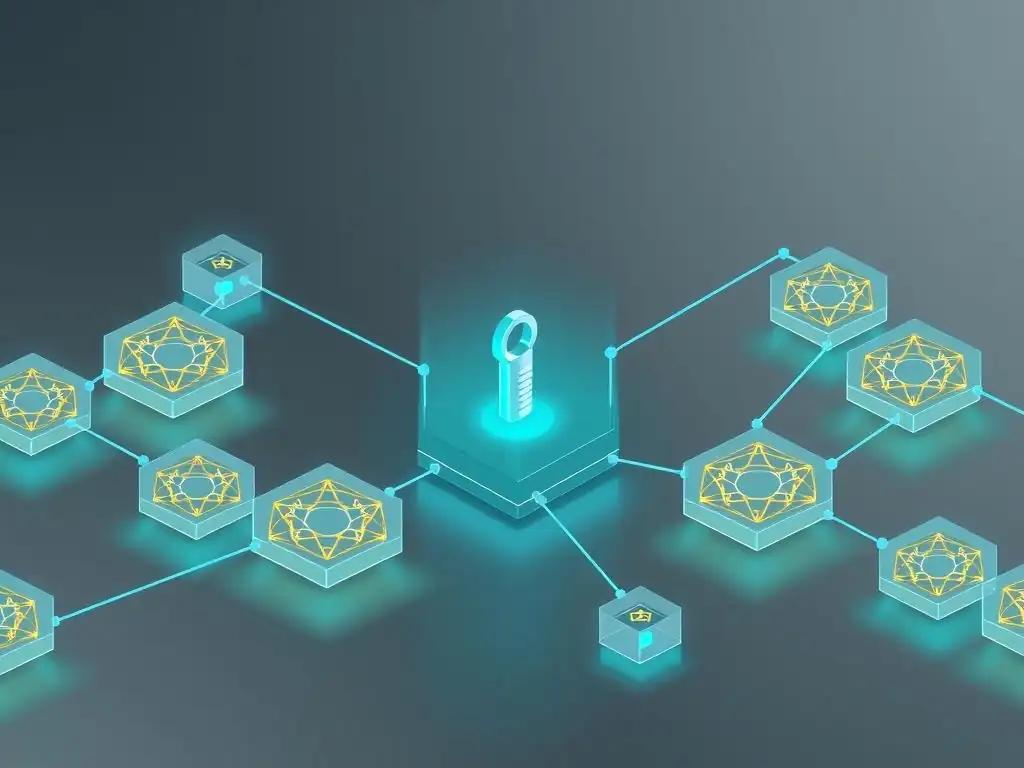
Combining Tokenomics and ZKPs: A Synergistic Approach
The combination of well-designed tokenomics and the application of Zero-Knowledge Proofs creates a powerful synergy for enhancing blockchain privacy security protocols. Tokenomics provides the economic framework and incentives that secure the network at a foundational level – ensuring consensus, deterring Sybil attacks, and aligning participant behavior. ZKPs add a crucial layer of privacy, allowing for confidential transactions and private data verification within that economically secured network.
Neither technology in isolation can fully address the complex challenges of creating secure, scalable, and private decentralized systems. A blockchain with strong tokenomics but no privacy features remains transparent, hindering certain use cases. Conversely, a system using ZKPs for privacy but lacking robust economic security from tokenomics could be vulnerable to attacks at the consensus layer.
By integrating these two elements, projects can build ecosystems where participants are economically incentivized to maintain the integrity and security of the network, while users can interact and transact with a high degree of privacy, verifiable through ZKPs. This integrated approach is essential for the next generation of blockchain privacy security protocols.
Case Studies: Projects Leveraging Both Tokenomics and ZKPs for Security
Several projects demonstrate the practical application of combining tokenomics and ZKPs to build more secure and private blockchain ecosystems.
Tornado Cash: Anonymity and its Token Economics
Tornado Cash, while now sanctioned and facing significant legal scrutiny, serves as a technical case study illustrating the use of ZKPs for anonymity combined with a tokenomics model. The protocol used zk-SNARKs to break the link between source and destination addresses on Ethereum by allowing users to deposit ETH or other tokens into a pool and withdraw them later from a different address.
A ZKP was used to prove that the withdrawal corresponds to a valid deposit without revealing which specific deposit it was. This provided a strong degree of transaction anonymity, a key feature of many blockchain privacy security protocols.
Tornado Cash also had a native token, TORN, which was used for governance (allowing token holders to vote on protocol upgrades) and potentially for privacy-preserving yield farming or other incentive mechanisms within the ecosystem. The tokenomics aimed to decentralize control over the protocol and incentivize participation. However, the project's utility was primarily focused on enhancing privacy via ZKPs. The legal actions against it highlight the complex regulatory challenges faced by privacy-enhancing technologies, particularly when they can be used for illicit purposes, underscoring that even technically robust blockchain privacy security protocols operate within a broader legal context.
Zcash: Private Transactions and PoW Security
Zcash is a pioneering cryptocurrency that specifically integrates ZKPs (zk-SNARKs) to offer private transactions. It allows users to send funds between "shielded" addresses, where the details of the transaction (sender, receiver, amount) are encrypted and hidden from the public ledger. A zk-SNARK proof is included with the transaction to verify its validity without revealing the sensitive information. This makes Zcash one of the most prominent examples of implementing ZKPs for core transaction privacy in blockchain privacy security protocols.
Zcash's security is underpinned by a Proof-of-Work consensus mechanism, similar to Bitcoin's. Miners use computational power to secure the network and validate blocks, earning block rewards in ZEC, the native token.
The tokenomics of Zcash, based on PoW issuance and transaction fees, provides the economic security layer that protects the integrity of the ledger, including the shielded transactions verified by zk-SNARKs. This combination of a well-established, economically robust consensus mechanism (PoW tokenomics) with cutting-edge privacy technology (ZKPs) demonstrates a holistic approach to building a secure and private digital currency, showcasing the synergy between tokenomics and ZKPs in blockchain privacy security protocols.
The Benefits of Integrated Security: Privacy, Scalability, and Trust
Integrating tokenomics and ZKPs yields significant benefits for blockchain ecosystems, primarily enhancing privacy, scalability, and trust. Privacy is directly addressed by ZKPs, allowing confidential transactions and interactions necessary for sensitive data and business operations. This moves blockchain beyond purely public ledgers, opening up vast new potential use cases in finance, healthcare, and supply chain management where data confidentiality is non-negotiable.
Scalability is improved, particularly through ZK-Rollups, which use ZKPs to validate large batches of off-chain transactions efficiently on the main chain. This drastically increases transaction throughput compared to executing every transaction on the base layer. Trust is reinforced in multiple ways: tokenomics incentives align participants' economic interests with network security and integrity, reducing reliance on trusting individual nodes.
ZKPs enable verifiable computation and privacy guarantees, allowing users to trust that statements are true and data is protected without needing to trust a third party or reveal sensitive information. This layered approach, combining economic security with cryptographic privacy, builds more robust and trustworthy blockchain privacy security protocols capable of supporting a wider range of real-world applications.
Challenges and Future Directions for Blockchain Privacy
Current Limitations of ZKPs: Computational Costs and Complexity
Despite their revolutionary potential, Zero-Knowledge Proofs still face significant limitations, primarily related to computational costs and complexity. Generating ZKPs, especially for complex statements or large batches of transactions (as in ZK-Rollups), is computationally intensive and requires substantial processing power and memory. While verification is typically fast, the generation process can be slow and resource-heavy, potentially limiting their widespread use on end-user devices and increasing the cost of private transactions. For instance, generating a zk-SNARK proof for a shielded transaction on Zcash or a complex operation within a ZK-Rollup can take several seconds to minutes, depending on the hardware.
Furthermore, implementing and deploying ZKP systems is technically complex. Designing the circuits and logic for the proofs requires highly specialized cryptographic expertise. Debugging and auditing these systems are also challenging due to their intricate mathematical nature. This complexity can slow down development, increase the risk of subtle bugs, and make it difficult for the average developer to integrate ZKPs into their applications. Addressing these computational and complexity hurdles is crucial for the broader adoption of ZKP-based blockchain privacy security protocols.
Tokenomics Design Challenges: Achieving Fair and Secure Distribution
Designing effective tokenomics models presents its own set of challenges, particularly in achieving fair and secure token distribution. The initial distribution of tokens (e.g., through initial coin offerings, airdrops, mining) significantly impacts the network's decentralization and security. Concentrated ownership can lead to centralization of power, whether in governance, validation, or control over the ecosystem, potentially undermining the decentralized nature of blockchain privacy security protocols. Ensuring a wide and equitable distribution from the outset is difficult and often involves trade-offs between funding development and decentralization.
Moreover, designing incentive structures that remain effective and aligned with network security over time is complex. As network dynamics change (e.g., decreasing block rewards, increasing transaction fees), the economic incentives for participants must be carefully managed to avoid unintended consequences, such as reduced security or miner/validator centralization. Balancing the needs of different stakeholders (developers, users, validators, investors) while maintaining a secure and sustainable economic model requires continuous monitoring, adjustment, and often, decentralized governance mechanisms enabled by the token itself. These challenges are ongoing considerations in the evolution of blockchain privacy security protocols.
The Future of Blockchain Security: Advancements in ZKPs and Tokenomics
The future of blockchain security and privacy lies in continued advancements and the synergistic integration of technologies like ZKPs and sophisticated tokenomics.
Research and Development in ZKP Technologies
Significant research and development efforts are focused on improving the efficiency, usability, and accessibility of ZKP technologies. Cryptographers are working on new ZKP schemes that require less computation for proof generation, have smaller proof sizes, and are easier to implement. Improvements in hardware acceleration for ZKP computation are also underway.
Techniques like recursive ZKPs, where a proof can verify other proofs, hold promise for further increasing scalability and efficiency. Standardizing ZKP circuits and libraries will make it easier for developers to incorporate privacy and scalability features into their applications. These advancements will lower the barriers to entry for using ZKPs, making robust blockchain privacy security protocols more widely available.
The focus is also on developing ZKPs suitable for a wider range of computations, including general-purpose computation (as explored by projects like Aleo and Polygon Hermez), which could enable entirely new classes of private, verifiable applications on blockchain. As ZKP technology matures and becomes more efficient, it will form an increasingly integral part of future blockchain privacy security protocols.
Emerging Trends in Tokenomics Design for Enhanced Security
Tokenomics design is also evolving, with emerging trends focused on creating more dynamic, resilient, and secure ecosystems. This includes exploring novel distribution mechanisms that promote wider ownership, such as Proof-of-Contribution or community-driven launches. Incentive structures are becoming more nuanced, incorporating concepts like quadratic funding for public goods, reputation systems linked to tokens, and complex staking derivatives to encourage long-term alignment and participation.
There's a growing recognition that tokenomics must be adaptable. Decentralized governance mechanisms, where token holders can propose and vote on changes to protocol parameters and tokenomics rules, are becoming standard. This allows ecosystems to react to changing market conditions, security threats, and community needs, ensuring the tokenomics remains effective in supporting the network's security and sustainability over time. Furthermore, research into cryptoeconomic security models is deepening, aiming to formally prove the security guarantees provided by different tokenomics designs under various attack vectors. These trends will lead to more sophisticated and robust blockchain privacy security protocols.
Conclusion: The Future of Secure and Private Blockchains
The Importance of Prioritizing Privacy and Security in Crypto Development
As blockchain technology matures and seeks wider adoption across industries and for everyday use, prioritizing privacy and security is paramount. Without robust blockchain privacy security protocols, sensitive transactions, personal data, and confidential business operations remain exposed, limiting potential applications and hindering trust among users and institutions. The early transparency of blockchain, while valuable for auditability, is insufficient for many real-world use cases that require confidentiality. Therefore, developers, researchers, and projects must continue to place privacy and security at the forefront of their design considerations, integrating advanced cryptographic techniques and sound economic principles.
Ignoring privacy and security risks not only limits the potential of blockchain but also poses significant risks to users, including financial loss, identity theft, and surveillance. Building systems that are secure against attacks (economic and technical) and that protect user data is not optional; it is a fundamental requirement for blockchain to fulfill its promise as a transformative technology. The ongoing efforts in developing and implementing sophisticated blockchain privacy security protocols are critical steps towards achieving this goal.
Tokenomics and ZKPs: Essential Tools for Building a More Secure Blockchain Ecosystem
Tokenomics and Zero-Knowledge Proofs stand out as two of the most essential tools for building more secure and private blockchain ecosystems. Tokenomics provides the necessary economic incentives and security mechanisms that underpin the entire network, ensuring consensus integrity and deterring malicious actors through economic costs. It creates the foundation of a secure decentralized system by aligning the self-interest of participants with the collective good of the network.
Zero-Knowledge Proofs add the critical layer of privacy, enabling confidential transactions, private data verification, and scalable computation without exposing sensitive information on a public ledger. They allow users to interact with blockchain applications while maintaining control over their data and preserving their anonymity where needed. The synergy between these two technologies—economic security provided by tokenomics and cryptographic privacy enabled by ZKPs—is a powerful combination that is driving the development of the next generation of robust blockchain privacy security protocols.
Concluding Remarks on the Future of Blockchain Privacy
The journey towards truly secure, scalable, and private blockchain systems is ongoing, but the progress made with technologies like ZKPs and the increasing sophistication of tokenomics design are paving the way. Future blockchain ecosystems will likely feature intricate integrations of these elements, offering users the benefits of decentralization and verifiability alongside essential privacy and robust security.
As research continues and implementation becomes more accessible, we can expect to see a wider adoption of these advanced blockchain privacy security protocols across various applications, from confidential financial markets to private identity management and beyond. The commitment to enhancing privacy and security through such innovative technologies is key to unlocking the full potential of blockchain and building a more trustworthy digital future.
Frequently Asked Questions
What are Tokenomics and how do they relate to blockchain privacy?
Tokenomics refers to the economic incentives within a blockchain system. They can influence user behavior and affect the overall security of the network, indirectly impacting privacy features.
What are Zero-Knowledge Proofs (ZKPs) and why are they important for blockchain privacy?
ZKPs are cryptographic protocols that allow one party to prove to another that a statement is true, without revealing any information beyond the validity of the statement itself. This is crucial for achieving enhanced privacy on blockchains.
How can Zero-Knowledge Proofs be used in DeFi (Decentralized Finance)?
ZKPs can enable private transactions within DeFi platforms, allowing users to interact with smart contracts and trade assets without revealing their transaction details or balances to the public blockchain.
What are some challenges in implementing Blockchain privacy security protocols, like ZKPs, on a large scale?
Challenges include the computational overhead associated with ZKP generation and verification, the complexity of integrating them into existing blockchain infrastructure, and the need for standardization and interoperability across different blockchain platforms.
How does regulation impact the development and adoption of Blockchain privacy security protocols?
Regulatory uncertainty and varying approaches to data privacy can create compliance challenges for projects implementing privacy-enhancing technologies. Clear and consistent regulations are needed to foster responsible innovation and adoption.
Final Reflection: Embracing the Future of Private and Secure Blockchains
The exploration of tokenomics intertwined with Zero-Knowledge Proofs (ZKPs) reveals a powerful synergy, and its relevance today is undeniable. The urgent need for enhanced privacy and security in the blockchain space has never been more critical, as data breaches and privacy concerns continue to plague the digital landscape. This fusion of economic incentives and cryptographic innovation offers a promising pathway towards a more trustworthy and user-centric blockchain ecosystem.
This convergence of tokenomics and ZKPs is not just a technological advancement; it's a cultural shift towards valuing privacy as a fundamental right in the digital age. The potential for these technologies to empower individuals and protect their sensitive information is profound, and its impact will only continue to grow as blockchain adoption expands. Privacy is not an option, and it shouldn't be the price we accept for just getting on the Internet.
- Gary Kovacs. This quote perfectly encapsulates the sentiment driving the development and adoption of blockchain privacy security protocols.
As we stand at the cusp of a new era of decentralized technology, let us not forget the importance of building a future where privacy and security are paramount. Consider how you can contribute to this movement, whether through supporting projects that prioritize these values, advocating for responsible data practices, or simply educating yourself and others about the power of Blockchain privacy security protocols. The future of the blockchain depends on our collective commitment to building a more private, secure, and equitable digital world.
Discover the Future of Crypto Privacy!
Thank you for exploring the fascinating world of tokenomics and zero-knowledge proofs. You've gained a deeper understanding of how these technologies are shaping a more secure and private future for cryptocurrency. Ready to take the next step?
Here are a few actions you can take right now:
- Research specific zero-knowledge proof implementations, such as zk-SNARKs or zk-STARKs, and examine how they are being applied in real-world crypto projects. Understanding the intricacies of these technologies is essential to appreciating their full potential.
- Share this article with your network! Help raise awareness about the importance of privacy and security in the crypto industry. Sharing knowledge empowers others to make informed decisions.
- Join the discussion on our forums! Which innovative use cases for zero-knowledge proofs excite you the most, and how do you believe they will influence the future of tokenomics?
Which zero-knowledge proof project will you explore first, and in what ways do you think it could transform the industry?
Leave a Reply