
Smart City Integration: The Future of Decentralized Real Estate in Urban Planning


Welcome to Blockchain Trends, your compass in the rapidly evolving world of decentralized technologies! Ever imagined how blockchain could revolutionize cityscapes? Dive into our latest exploration of "Blockchain real estate urban planning" and discover how this innovative technology is poised to reshape the future of smart cities, offering unprecedented transparency, efficiency, and community involvement. What possibilities await at the intersection of blockchain and urban development? Keep reading to uncover the potential!
Smart City Integration: The Future of Decentralized Real Estate in Urban Planning
- Blockchain Revolutionizing Urban Planning and Real Estate Development
- The Promise of Blockchain for Urban Real Estate Management
- Integrating Blockchain into Smart City Infrastructure
- Use Cases: Blockchain Applications in Decentralized Real Estate Urban Planning
- Challenges and Opportunities in Blockchain Real Estate Urban Planning
- The Future of Decentralized Real Estate in Smart Cities
- Frequently Asked Questions
- Final Reflection: Embracing Decentralized Urban Futures
- Envision Your Decentralized Future
Blockchain Revolutionizing Urban Planning and Real Estate Development
The intersection of smart city initiatives and blockchain technology is poised to fundamentally alter the landscape of urban development and real estate. As cities increasingly adopt digital infrastructure to enhance efficiency, sustainability, and quality of life, the need for secure, transparent, and decentralized systems becomes paramount. Blockchain, with its inherent properties of immutability and distributed ledger technology, offers a compelling solution for managing the complex data flows and transactions central to smart urban environments, particularly concerning property and land use.
This convergence creates a new paradigm for blockchain real estate urban planning, promising to streamline processes, improve data integrity, and foster more inclusive development. By decentralizing key aspects of real estate management, from land registration to property transactions and even community governance, blockchain can address long-standing issues of fraud, inefficiency, and lack of transparency that often plague traditional urban development projects. The focus shifts towards a more secure, efficient, and verifiable system for managing valuable urban assets.
Understanding the Convergence of Smart Cities and Blockchain Technology
Smart cities rely heavily on interconnected systems, data analytics, and digital platforms to manage services and infrastructure. This digital dependency, while offering immense benefits, also introduces vulnerabilities related to data security, privacy, and centralized control. Blockchain technology, by providing a decentralized and cryptographically secure ledger, offers a robust foundation for building trustworthy smart city applications, especially those involving high-value assets like real estate.
The integration means that data points crucial for urban planning – such as land ownership, property boundaries, zoning regulations, and transaction histories – can be recorded on an immutable ledger. This creates a single, verifiable source of truth accessible to authorized parties, mitigating disputes and errors. For instance, pilot projects exploring this convergence often focus on identity management and secure data sharing between municipal departments, laying the groundwork for more complex blockchain real estate urban planning applications.
Decentralized Real Estate: A New Paradigm for Smart City Development
Decentralized real estate, powered by blockchain, envisions a future where property ownership, transactions, and management are conducted on distributed networks, bypassing traditional intermediaries. In a smart city context, this means leveraging blockchain to create digital twins of properties, manage fractional ownership through tokenization, and automate administrative tasks via smart contracts. This paradigm shift can significantly impact urban development by enabling faster, more liquid, and potentially more equitable access to real estate assets.
This new model facilitates innovative approaches to financing urban projects, such as crowdfunding through tokenized real estate offerings. It also allows for more granular data collection and analysis regarding urban land use and value, providing planners with better insights for informed decision-making. The potential for enhanced community participation through decentralized governance models built on blockchain further underscores its transformative role in blockchain real estate urban planning.
The Promise of Blockchain for Urban Real Estate Management
The application of blockchain technology in urban real estate management holds significant promise for addressing inefficiencies and enhancing trust within the sector. Traditional real estate processes are often characterized by extensive paperwork, multiple intermediaries, and lengthy transaction times, leading to high costs and potential for errors or fraud. Blockchain offers a path towards a more streamlined, secure, and transparent system.
By leveraging distributed ledgers and smart contracts, urban real estate management can become more automated and less reliant on manual processes and centralized authorities. This not only speeds up transactions but also reduces the administrative burden on municipal agencies and private stakeholders involved in urban development. The potential for cost savings and increased efficiency makes blockchain a compelling technology for modernizing blockchain real estate urban planning frameworks.
Enhanced Transparency and Security in Property Transactions Using Blockchain
One of the most significant advantages of using blockchain in urban real estate is the enhanced transparency and security it provides for property transactions. Every transaction recorded on a blockchain is timestamped, cryptographically secured, and immutable, meaning it cannot be altered or deleted once verified. This creates a permanent and auditable history of ownership and transfers.
This level of transparency drastically reduces the risk of fraudulent activities, such as forged documents or double-selling properties. All parties involved in a transaction can access the same verified information on the distributed ledger, fostering trust and reducing the need for extensive due diligence and title searches, which are often time-consuming and costly in traditional systems. This security and transparency are foundational for building reliable blockchain real estate urban planning platforms.
Streamlining Real Estate Processes with Blockchain-Based Smart Contracts
Smart contracts, self-executing contracts with the terms of the agreement directly written into code, are a key enabler for streamlining real estate processes on the blockchain. These contracts can automate various steps in a property transaction, from the initial offer and acceptance to escrow release and title transfer, based on predefined conditions being met.
For example, a smart contract could be programmed to automatically release funds from an escrow account to the seller once the digital title transfer on the blockchain is confirmed. This eliminates manual intervention, reduces delays, and minimizes the risk of human error. Implementing smart contracts within blockchain real estate urban planning frameworks can lead to significant efficiencies, potentially reducing transaction times from weeks or months to just days or even hours.
Reducing Costs and Improving Efficiency in Urban Planning with Blockchain
The integration of blockchain technology into urban planning processes can lead to substantial cost reductions and efficiency gains. By creating a shared, immutable ledger for land use data, zoning information, permits, and development approvals, blockchain can eliminate redundant data entry, reduce paperwork, and minimize administrative overhead across different municipal departments.
Furthermore, automating processes through smart contracts can lower reliance on intermediaries such as lawyers, notaries, and escrow agents, thereby reducing associated fees. While initial implementation costs exist, the long-term operational savings and improvements in process speed and accuracy make a strong case for adopting blockchain in blockchain real estate urban planning initiatives. Estimates suggest potential cost savings of 10-30% or more in transaction fees alone.
Integrating Blockchain into Smart City Infrastructure
Integrating blockchain into the core infrastructure of a smart city requires careful planning and execution, particularly when dealing with critical systems like land registries and property management. It involves developing interoperable platforms that can communicate with existing legacy systems while leveraging the unique capabilities of distributed ledger technology. This integration is essential for realizing the full potential of blockchain real estate urban planning.
The process often begins with pilot projects focused on specific use cases, such as digital identity for property owners or secure data sharing between city departments. Successful pilots then pave the way for broader implementation, building a decentralized infrastructure layer that underpins various smart city services related to real estate and urban development.
Blockchain-Based Land Registries: A Secure and Transparent Solution
One of the most promising applications of blockchain in urban planning is the creation of blockchain-based land registries. Traditional paper-based or centralized digital land registries are vulnerable to data manipulation, loss, and bureaucratic delays. A blockchain registry offers a secure, transparent, and immutable record of land ownership and historical transactions.
Each land parcel can be assigned a unique digital identifier, with all ownership transfers and encumbrances recorded as transactions on the distributed ledger. This provides a single, verifiable source of truth that is resistant to fraud and unauthorized changes. Countries like Georgia and Sweden have explored or piloted blockchain for land registration, demonstrating its feasibility and potential to improve efficiency and trust in land administration, a cornerstone of effective blockchain real estate urban planning.
Decentralized Autonomous Organizations (DAOs) in Urban Real Estate Management
Decentralized Autonomous Organizations (DAOs) represent an innovative governance model that can be applied to urban real estate management within smart cities. A DAO is governed by rules encoded as computer programs (smart contracts) and operates transparently on a blockchain. In an urban context, DAOs could be used to manage shared property assets, govern community land trusts, or even manage aspects of urban development projects.
For example, residents in a specific urban development could form a DAO to collectively manage shared amenities, make decisions about maintenance, or vote on local development proposals. Ownership stakes or voting rights could be represented by tokens held by residents, enabling a more direct and democratic form of community participation in blockchain real estate urban planning decisions. This model fosters transparency and empowers stakeholders.
Smart Contracts for Automated Property Management and Rent Collection
Beyond transactions, smart contracts can revolutionize ongoing property management in smart cities. Tasks such as rent collection, maintenance scheduling, and lease enforcement can be automated through self-executing code on the blockchain. For instance, a smart lease agreement could automatically deduct rent from a tenant's digital wallet on a specific date or trigger a penalty if conditions are not met.
Similarly, maintenance requests could be initiated and tracked via smart contracts, with payment to service providers automatically released upon completion verification. This automation reduces administrative overhead for property managers and owners, improves efficiency, and provides a transparent record of all management activities. Implementing such systems is a key step in realizing the potential of blockchain real estate urban planning for streamlined urban living.
Use Cases: Blockchain Applications in Decentralized Real Estate Urban Planning
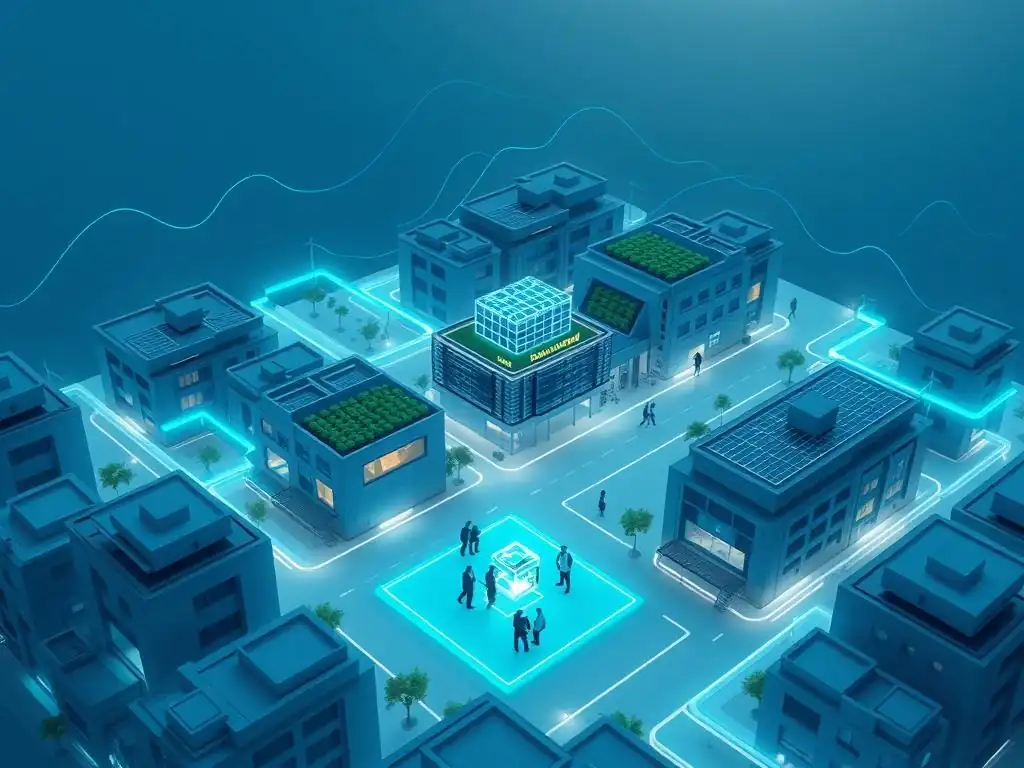
Real-world examples and pilot projects illustrate the tangible benefits of integrating blockchain into urban real estate and planning. These use cases demonstrate how the technology is moving beyond theoretical discussions to practical implementation, addressing specific challenges within the urban environment. Examining these examples provides insight into the current state and future potential of blockchain real estate urban planning.
From national land registries exploring blockchain to innovative approaches to property investment and community engagement, these case studies highlight the diverse applications and the transformative impact the technology can have on how we buy, sell, manage, and govern urban properties.
Case Study: Dubai's Land Department and Blockchain for Land Registry
Dubai has been a frontrunner in exploring blockchain for government services, including real estate. The Dubai Land Department (DLD) announced initiatives aimed at becoming the first government entity to conduct all its transactions via blockchain by a certain target date, often cited around 2020 or later for full implementation. While achieving 100% might be an ongoing process, the intent and initial steps are significant.
The focus has been on creating a blockchain-powered system for recording real estate agreements, managing property transactions, and integrating with other service providers like banks and utility companies. This system aims to enhance transparency, reduce fraud, and streamline processes for buyers, sellers, and investors. The DLD's efforts serve as a prominent example of a municipality actively pursuing blockchain real estate urban planning to modernize its land administration.
Tokenized Real Estate Assets: Democratizing Investment in Urban Development
Tokenization involves representing ownership of a real-world asset, such as a share in a property or an entire building, as digital tokens on a blockchain. This process breaks down large, illiquid assets into smaller, tradable units, making real estate investment more accessible to a broader range of investors. In the context of urban development, tokenization can democratize investment in large-scale projects.
Instead of requiring significant capital to buy an entire property, investors could purchase tokens representing a fraction of a development project, like a new residential building or commercial complex in a smart city zone. This lowers the barrier to entry, potentially attracting more capital for urban growth and allowing citizens to invest in the development of their own cities. The global market for tokenized real estate is estimated to potentially reach billions of dollars in the coming years, highlighting the growing interest in this aspect of blockchain real estate urban planning.
Blockchain-Enabled Community Governance in Smart City Projects
Blockchain technology can facilitate more direct and transparent community governance models within smart city developments. By issuing tokens that represent voting rights or shares in a local project or shared amenity, residents can participate in decision-making processes through secure, verifiable on-chain votes.
For instance, a new smart neighborhood could use a blockchain platform to allow residents to vote on how a portion of collected fees is spent on local improvements, or to approve design changes for public spaces. This distributed governance model empowers citizens, increases engagement, and ensures that decisions are recorded transparently on an immutable ledger. Such decentralized approaches are integral to creating citizen-centric blockchain real estate urban planning.
Challenges and Opportunities in Blockchain Real Estate Urban Planning
While the potential benefits of blockchain in urban real estate and planning are significant, its widespread adoption faces several challenges. These include navigating complex regulatory environments, addressing technical hurdles related to scalability and interoperability, and overcoming resistance from entrenched traditional industries. Understanding these challenges is crucial for effective implementation of blockchain real estate urban planning.
However, these challenges also present opportunities for innovation and collaboration. Developing clear legal frameworks, building robust and scalable technology solutions, and fostering education and adoption among stakeholders are key steps towards realizing the transformative potential of blockchain in urban development.
Regulatory Hurdles and Legal Frameworks for Blockchain Adoption
One of the primary obstacles to implementing blockchain real estate urban planning is the lack of clear and consistent regulatory frameworks. Real estate law is traditionally complex and varies significantly across jurisdictions. Integrating a novel technology like blockchain requires adapting existing laws or creating new ones to recognize blockchain-based property titles, smart contracts, and tokenized assets.
Governments and legal bodies are still grappling with how to classify and regulate these new forms of digital ownership and transaction. Uncertainty around legal validity and enforcement mechanisms for smart contracts, as well as compliance with existing anti-money laundering (AML) and know-your-customer (KYC) regulations, poses significant hurdles. Addressing these legal ambiguities through proactive legislative efforts is essential for widespread adoption.
Scalability and Interoperability Issues in Decentralized Real Estate Systems
Blockchain networks, particularly public ones, can face scalability issues, meaning they may struggle to handle the high volume of transactions required for a busy urban real estate market. While newer blockchain protocols and Layer 2 solutions are improving transaction speed and capacity, this remains a technical challenge that needs robust solutions for large-scale blockchain real estate urban planning.
Furthermore, achieving interoperability between different blockchain platforms and integrating them with existing legacy systems used by municipalities, banks, and other stakeholders is complex. Seamless data exchange and process coordination are necessary for a fully functional decentralized real estate ecosystem within a smart city. Developing standards and protocols for interoperability is a key technical opportunity.
Overcoming Resistance to Change in the Traditional Real Estate Industry
The real estate industry is often characterized by established practices and a reliance on traditional intermediaries. Introducing blockchain technology represents a significant disruption to these norms, potentially displacing roles and requiring new skills and understanding. Resistance to change from agents, lawyers, title companies, and even government employees accustomed to existing processes is a significant non-technical challenge for blockchain real estate urban planning.
Educating stakeholders about the benefits of blockchain, demonstrating successful pilot projects, and involving industry professionals in the transition process are crucial steps to overcome this resistance. Highlighting the long-term efficiencies, security improvements, and new opportunities that blockchain can bring can help foster acceptance and drive adoption.
The Future of Decentralized Real Estate in Smart Cities
The trajectory for blockchain in urban real estate points towards a future where decentralized systems play a foundational role in managing property, facilitating transactions, and enabling community participation within smart cities. As technology matures and regulatory clarity increases, the integration of blockchain is expected to become more seamless and widespread, transforming how urban spaces are developed and managed. The vision for blockchain real estate urban planning is one of greater efficiency, transparency, and inclusivity.
This future involves not just automating existing processes but enabling entirely new models of ownership, investment, and governance that were previously impractical or impossible. The potential for creating more dynamic, responsive, and equitable urban environments is immense.
Blockchain as the Foundation for Sustainable and Equitable Urban Development
Blockchain technology can contribute significantly to sustainable and equitable urban development. By providing transparent and immutable records of land use, environmental compliance, and resource consumption related to properties, it can support green building initiatives and track progress towards sustainability goals. For example, blockchain could verify the provenance of building materials or track energy efficiency certifications.
Furthermore, by lowering transaction costs and democratizing investment through tokenization, blockchain can make real estate more accessible and potentially help address issues of housing affordability and unequal access to opportunities in urban areas. Enabling community ownership models through DAOs also fosters more equitable distribution of control and benefits within urban projects. These capabilities position blockchain as a key enabler for sustainable and equitable blockchain real estate urban planning.
The Role of Blockchain in Creating Resilient and Citizen-Centric Smart Cities
Resilient smart cities are those capable of adapting to challenges like climate change, economic shifts, and population growth. Blockchain contributes to resilience by providing a decentralized and secure infrastructure that is less susceptible to single points of failure or cyberattacks compared to centralized systems. This robustness is vital for managing critical assets like real estate.
Citizen-centric smart cities prioritize the needs and participation of their residents. Blockchain-enabled decentralized governance models and transparent data sharing empower citizens, giving them more control and visibility over urban development processes that affect their lives. This focus on transparency, security, and empowerment underscores the vital role of blockchain in shaping the future of blockchain real estate urban planning towards more resilient and citizen-focused outcomes.
Predictions for the Growth of Blockchain Real Estate Urban Planning
Predictions for the growth of blockchain real estate urban planning are optimistic, albeit with varying timelines depending on regulatory progress and technological adoption rates. Experts anticipate a gradual but accelerating integration of blockchain into land registries, transaction platforms, and property management systems over the next decade.
While full displacement of traditional systems may take longer, the use of blockchain for specific functions like recording fractional ownership, automating escrow, and managing digital identities for property owners is expected to become increasingly common. As pilot projects demonstrate success and scalability solutions mature, the global market for blockchain in real estate is projected to grow substantially, potentially reaching tens of billions of dollars, solidifying its role in the future of urban development.
Frequently Asked Questions
What is the role of blockchain in urban planning?
Blockchain technology enhances transparency and efficiency in urban planning by enabling real-time data sharing and collaboration among stakeholders.
How can blockchain improve real estate transactions?
Blockchain can streamline real estate transactions through smart contracts, which automate processes, reduce fraud, and ensure secure ownership records.
What benefits does decentralized real estate offer?
Decentralized real estate provides greater access to investment opportunities, reduces intermediary costs, and fosters a more inclusive market for buyers and sellers.
Are there regulatory challenges associated with blockchain in real estate?
Yes, the integration of blockchain in real estate faces regulatory hurdles such as compliance with existing laws and the need for standardization in processes.
How does blockchain influence the future of smart cities?
Blockchain is pivotal for smart city integration, enabling data-driven decision-making, optimizing resource management, and enhancing citizen engagement in urban planning.
Final Reflection: Embracing Decentralized Urban Futures
The journey through smart city integration and decentralized real estate, as explored in this article, reveals that the convergence of blockchain technology and urban planning is no longer a futuristic fantasy, but a tangible force reshaping our cities. The potential for increased transparency, efficiency, and community empowerment within the real estate sector is undeniable, offering a compelling vision for more equitable and sustainable urban environments.
This exploration has underscored how blockchain technology can fundamentally alter the power dynamics within urban development, shifting control from centralized institutions to individual citizens. This shift is not merely technological; it's a cultural and social evolution. As we move forward, the ethical considerations and potential challenges of implementing these technologies must be carefully addressed to ensure that the benefits are distributed fairly and that no one is left behind. The future is already here – it's just not evenly distributed.
- William Gibson. This quote resonates deeply as we consider the potential for blockchain to democratize access to real estate and urban planning, but only if implemented thoughtfully and inclusively.
Now, consider the implications of this decentralized future for your own community. How can you, as a resident, a developer, or a policymaker, contribute to the responsible integration of blockchain technology into urban planning? Let us embrace the potential of blockchain to create smarter, more equitable, and more sustainable cities, ensuring that the future of urban development is one that benefits all.
Envision Your Decentralized Future
Thank you for exploring the world of smart cities and decentralized real estate. We hope this article highlighted the exciting potential of blockchain to transform urban planning. Now, it's time to turn that knowledge into action.
How can you become part of this evolving landscape?
- Explore opportunities to invest in fractionalized real estate tokens and learn how you can participate in urban development, no matter the size of your investment.
- Join the conversation: Share this article with a friend who is interested in urban development or blockchain technology to start a discussion.
- Brainstorm: What innovative applications of decentralized real estate have yet to be explored? Share your ideas in the comments section.
Are you ready to contribute to the next generation of smart cities?
Leave a Reply