
DeFi Derivatives & Synthetics: Are They Too Risky for Mainstream Adoption?

Welcome to Blockchain Trends, your gateway to understanding the evolving landscape of blockchain technology! Delve into the transformative potential beyond the hype, and explore the innovative applications shaping our future. Curious about the hidden risks in the world of decentralized finance? Our latest article tackles a critical question: Are DeFi derivatives really ready for the mainstream? Read on to uncover a comprehensive risk assessment and discover what the future holds for these complex financial instruments. Let's unravel the complexities together...
DeFi Derivatives & Synthetics: Navigating Risk for Mainstream Adoption
- Understanding DeFi Derivatives and Synthetic Assets
-
Frequently Asked Questions
- What are DeFi derivatives and synthetics, and why are they relevant?
- What are the primary risks associated with DeFi derivatives?
- How does the lack of regulation impact DeFi derivatives risk assessment?
- What role do price oracles play in DeFi derivatives, and how can they be exploited?
- What steps can be taken to mitigate the risks associated with DeFi derivatives and encourage wider adoption?
- Final Reflection: Navigating the Uncharted Waters of DeFi Derivatives
- Unleash Your DeFi Potential: Take Control Now!
Understanding DeFi Derivatives and Synthetic Assets
Decentralized Derivatives: A Fundamental Overview
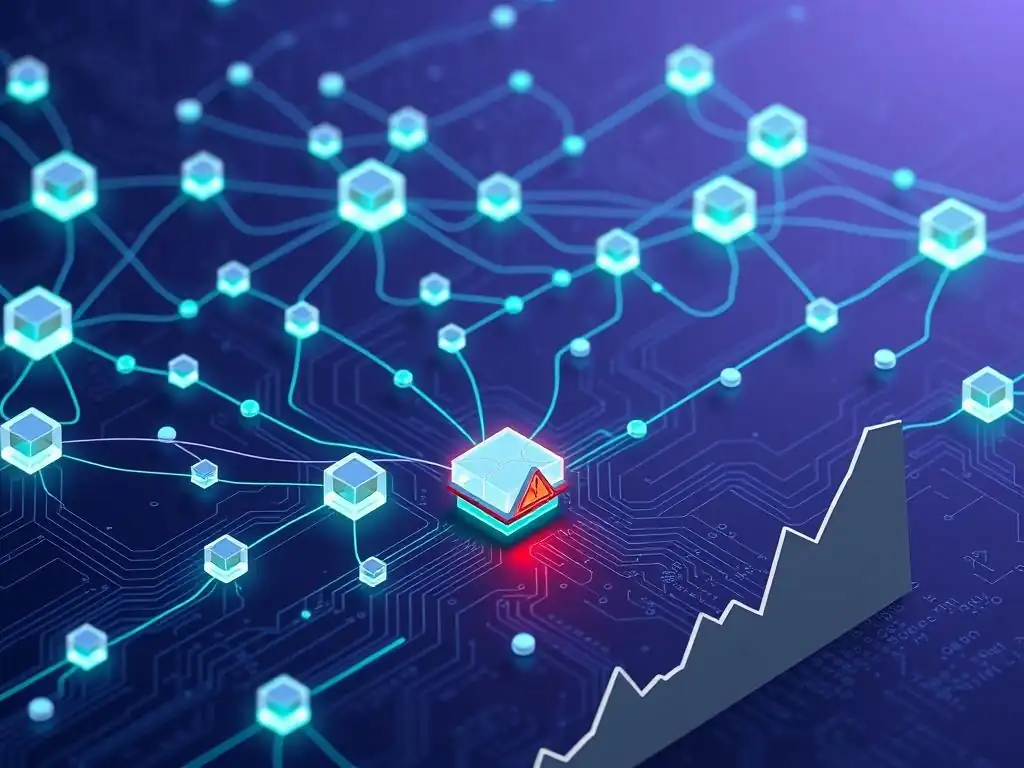
Decentralized derivatives represent a paradigm shift in financial markets, moving away from traditional intermediaries towards permissionless and transparent on-chain systems. Unlike their traditional counterparts traded on centralized exchanges, DeFi derivatives operate through smart contracts on blockchains, primarily Ethereum. These contracts automate the terms of agreements, such as perpetual swaps, options, and futures, eliminating the need for brokers, clearinghouses, and custodians. This disintermediation aims to reduce costs, enhance transparency, and broaden access to sophisticated financial instruments for a global audience.
The core concept revolves around creating synthetic exposure to various assets without directly holding them. For example, a user can gain exposure to the price movements of Bitcoin or gold without needing to own the underlying asset. This is achieved through mechanisms like collateralization and algorithmic market makers. Early DeFi derivative platforms, like dYdX and Synthetix, pioneered this space, showcasing the potential for decentralized trading of complex financial products. The total value locked (TVL) in DeFi derivatives protocols has fluctuated, reaching peaks above $1 billion in certain periods, indicating growing, albeit volatile, interest in this sector.
Synthetic Assets in DeFi: Creation and Functionality
Synthetic assets, or "synths," are digital representations of other assets, mimicking their value on a blockchain. In DeFi, these are typically created through over-collateralization, meaning users lock up more value in cryptocurrency than the value of the synth they wish to create. For example, to mint a synthetic US dollar (like sUSD on Synthetix), a user might need to deposit ETH or other cryptocurrencies worth 150% or more of the sUSD value. This over-collateralization acts as a buffer against price volatility and ensures the synth remains pegged to its target asset.
The functionality of synths extends to various asset classes, including fiat currencies, stocks, commodities, and even other cryptocurrencies. Platforms like Mirror Protocol allow users to create synthetic versions of popular stocks like Tesla (mTSLA) or Apple (mAAPL), enabling access to traditional equity markets within the DeFi ecosystem.
These synths are typically traded on decentralized exchanges (DEXs) or within the platforms that issue them. The price of a synth is often maintained through oracles, which provide real-world price feeds to the blockchain, and arbitrage opportunities, where traders profit from price discrepancies between the synth and its underlying asset in other markets, helping to maintain the peg.
Market Trends: Growth and Adoption of Decentralized Derivatives
The DeFi derivatives market has experienced significant growth, albeit with notable volatility and fluctuations in adoption rates. Early stages saw rapid expansion, fueled by the overall DeFi boom and the promise of permissionless and innovative financial products. Trading volumes on decentralized derivative exchanges have, at times, reached hundreds of millions of dollars daily, demonstrating substantial market activity. However, compared to traditional derivatives markets, which transact trillions of dollars daily, DeFi derivatives are still a nascent sector with considerable room for growth.
Adoption is driven by several factors, including the desire for greater financial inclusion and the appeal of self-custody and transparency inherent in blockchain technology. Geographically, regions with less developed traditional financial infrastructure may see faster adoption of DeFi alternatives. While precise global user demographics are challenging to obtain, anecdotal evidence suggests a user base that skews towards tech-savvy individuals and crypto-native investors. Mainstream adoption remains a key challenge, as it hinges on overcoming perceived risks and regulatory uncertainties, and demonstrating the robustness and user-friendliness of DeFi derivative platforms to a broader audience.
Frequently Asked Questions
What are DeFi derivatives and synthetics, and why are they relevant?
DeFi derivatives and synthetics are financial instruments built on blockchain, mirroring the value of other assets. They're relevant because they offer new ways to access markets and manage risk within decentralized finance.
What are the primary risks associated with DeFi derivatives?
Key risks include smart contract vulnerabilities, price oracle manipulation, and potential for systemic risk due to interconnectedness. These can lead to significant financial losses for users.
How does the lack of regulation impact DeFi derivatives risk assessment?
The absence of a clear regulatory framework creates uncertainty and makes risk assessment more complex. This can deter institutional investors and hinder mainstream adoption of DeFi derivatives.
What role do price oracles play in DeFi derivatives, and how can they be exploited?
Price oracles provide real-world price data to DeFi derivatives protocols. They can be exploited through data manipulation, leading to inaccurate pricing and potential for arbitrage attacks.
What steps can be taken to mitigate the risks associated with DeFi derivatives and encourage wider adoption?
Mitigation strategies include rigorous smart contract audits, diversifying oracle sources, and developing robust risk management frameworks. Clear regulation and user education are also crucial for mainstream adoption.
The exploration of DeFi derivatives and synthetics, as we've seen, reveals a landscape brimming with both immense potential and significant peril. The inherent volatility and complexity of these instruments, coupled with the nascent regulatory environment, present a formidable challenge to mainstream adoption. This isn't simply a theoretical discussion; it's a critical assessment of whether these powerful tools can be harnessed responsibly to unlock the next wave of financial innovation, or if they will remain confined to the realm of high-risk speculation.
The impact of DeFi derivatives extends far beyond the immediate concerns of individual investors. Their potential to democratize access to sophisticated financial products is undeniable, but so too is their capacity to amplify systemic risk within the broader DeFi ecosystem. The ongoing debate surrounding their safety and suitability underscores a fundamental tension between innovation and regulation, a tension that will ultimately shape the future of decentralized finance. With great power comes great responsibility.
This adage, often attributed to Voltaire, resonates deeply within the context of DeFi derivatives, reminding us that innovation must be tempered with prudence and a commitment to safeguarding the interests of all participants.
As we conclude this DeFi derivatives risk assessment, I invite you to consider your own role in shaping the future of decentralized finance. Are you willing to embrace the inherent risks in pursuit of potentially transformative gains? Or will you advocate for a more cautious and regulated approach, prioritizing stability and investor protection? The answers to these questions will determine whether DeFi derivatives become a force for good, empowering individuals and fostering financial inclusion, or a source of instability and widespread financial harm. The choice, ultimately, is ours.
Unleash Your DeFi Potential: Take Control Now!
Thanks for exploring the world of DeFi derivatives and synthetics with us! We hope you've gained valuable insights into their opportunities—and the associated risks. Now, it's time to apply what you've learned.
Eager to delve further and help shape the future of decentralized finance? Here are some steps you can take:
- Start small: Use a DeFi derivatives platform's demo or testnet to understand how everything works without risking real funds. This is the most important step to build your confidence and knowledge.
- Join the conversation: Share this article with fellow blockchain enthusiasts and discuss the potential benefits and challenges of DeFi derivatives on social media. Let’s expand the dialogue!
- Explore more: Investigate upcoming governance proposals related to risk management and consider getting involved in decision-making to influence protocol development.
What is one key risk mitigation strategy you believe is essential for DeFi derivatives to achieve mainstream adoption? Share your thoughts in the comments below!
Leave a Reply