
Exploring the Use Cases of Real Estate NFTs: Beyond Collectibles

Welcome to Blockchain Trends, your guide to understanding the revolutionary power of blockchain beyond the hype. Intrigued by the potential of NFTs? Dive in and discover how this technology is reshaping industries.
This month, we're unlocking a fascinating application: real estate. Could fractional ownership and increased liquidity be the future? Our Real Estate NFT Investment Guide provides a comprehensive look at this emerging trend. Are you ready to explore the opportunities and challenges? Keep reading to learn more!
- Comprehensive Real Estate NFT Investment Guide: Practical Use Cases
-
Frequently Asked Questions
- What are Real Estate NFTs, and how do they relate to traditional real estate?
- How can I use Real Estate NFTs for investment purposes?
- What are the potential benefits of investing in Real Estate NFTs compared to traditional real estate investments?
- What are the risks involved in investing in Real Estate NFTs?
- What is the future outlook for Real Estate NFTs and their impact on the real estate industry?
- Final Reflection: Unlocking the Future of Property Ownership
- Unveil Your Real Estate Future with NFTs!
Comprehensive Real Estate NFT Investment Guide: Practical Use Cases
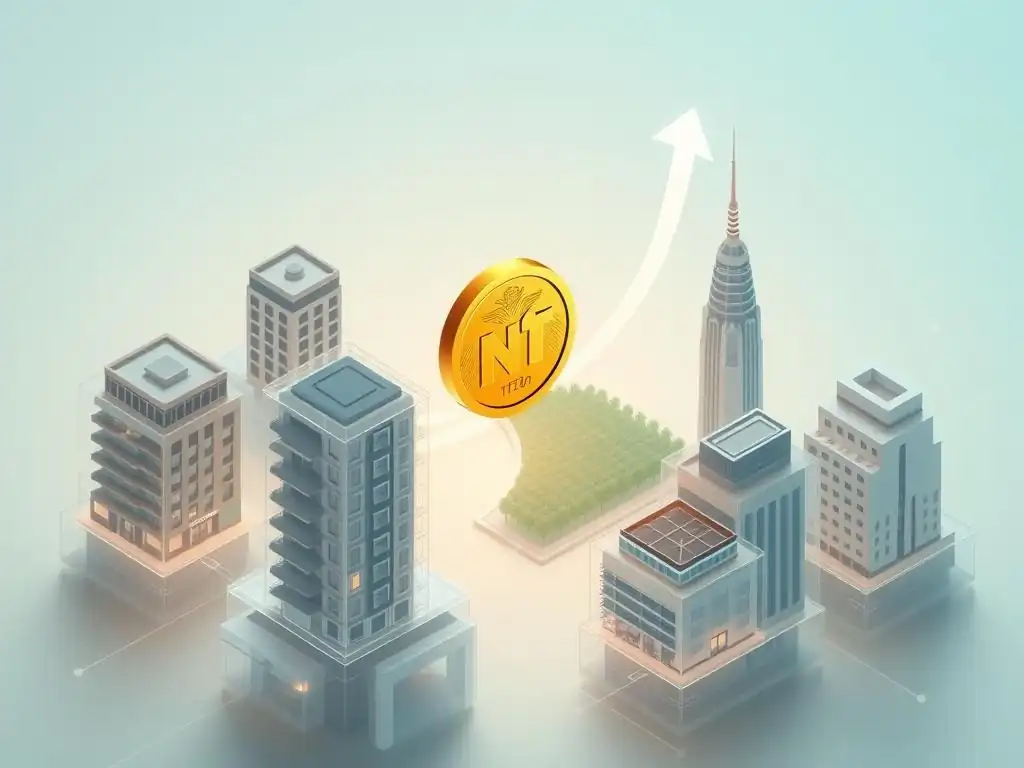
One of the most compelling applications revolutionizing property access is the use of NFTs to enable fractional ownership of real estate assets. Traditionally, investing in physical property requires significant capital, often excluding a large portion of potential investors. By tokenizing a property into a collection of non-fungible tokens, each NFT can represent a specific percentage or share of ownership in that asset.
This drastically lowers the entry barrier, allowing individuals to invest in high-value properties, such as commercial buildings or luxury homes, with smaller amounts, potentially starting from a few hundred or thousand dollars, rather than hundreds of thousands or millions. This approach transforms illiquid assets into more accessible investment opportunities, broadening the potential investor base significantly.
This model benefits not only small investors but also property owners and developers seeking to raise capital more efficiently. Instead of selling an entire property or relying on traditional financing methods, they can sell a portion of the ownership through an NFT offering. For example, a developer might tokenize a $10 million property into 10,000 NFTs, each valued at $1,000.
This allows for a faster capital raise from a global pool of investors. Platforms like Vesta Equity have explored this model for residential properties, allowing homeowners to sell equity fractions as NFTs, while projects like Elevated Returns have pursued tokenizing larger assets like the St. Regis Aspen Resort in the past, demonstrating the viability of using blockchain and tokenization, including NFT-like structures for shared ownership, for substantial real estate ventures. Such initiatives are key aspects explored in any comprehensive real estate NFT investment guide.
Streamlining Property Sales and Transfers with Real Estate NFTs
The process of buying and selling real estate has long been synonymous with bureaucracy, extensive paperwork, and significant delays, often taking weeks or even months to complete. Real estate NFTs offer a path to dramatically simplify and accelerate these transactions. When a property's ownership is represented by a unique NFT on a blockchain, the transfer of ownership becomes as simple as transferring the NFT from the seller's digital wallet to the buyer's.
This transaction is recorded immutably on the blockchain, providing a transparent and verifiable record of ownership change. The use of smart contracts embedded within the NFT framework can automate conditional transfers, ensuring that the NFT (and thus ownership) is only transferred once payment is confirmed, or other predefined conditions are met.
This blockchain-based approach significantly reduces reliance on multiple intermediaries such as lawyers, escrow agents, and title companies, although their expertise remains crucial for initial legal structuring and compliance checks. By cutting out layers of traditional processes, the costs associated with transactions can potentially decrease by a notable percentage – estimates often suggest savings of 1-3% of the property value in closing costs alone.
Furthermore, the time required for a transfer could be reduced from several weeks to just days or even hours, depending on the complexity and regulatory requirements involved. While widespread adoption is still developing, pilot programs in various jurisdictions, including parts of the US and Europe, have demonstrated the technical feasibility of using tokenization for real estate transfers, highlighting its potential as a future standard in a detailed real estate NFT investment guide.
Enhancing Liquidity in Real Estate Markets via NFT Tokenization
Real estate is notoriously illiquid; selling a property typically involves a lengthy and complex process. NFT tokenization addresses this challenge by transforming a large, indivisible asset into smaller, easily tradable digital units. As discussed with fractional ownership, investors can buy and sell these individual NFT fractions on secondary markets, similar to trading shares of stock.
This creates a level of liquidity previously unattainable for physical property assets. An investor who owns a fraction of a property represented by an NFT is not locked into waiting for a single buyer for the entire asset but can instead sell their specific share to anyone on a compatible platform.
This enhanced liquidity makes real estate a more attractive asset class for a broader range of investors, including those who need flexibility to enter and exit positions more easily. Secondary marketplaces dedicated to tokenized real estate are emerging, providing platforms where these fractional NFTs can be listed and traded peer-to-peer.
While trading volume on these specific real estate NFT markets is still nascent compared to traditional financial markets, the potential for growth is significant. Increased liquidity also contributes to more efficient price discovery, as the value of the property's tokens can be more readily influenced by market supply and demand dynamics, offering a clearer valuation mechanism often sought after in a comprehensive real estate NFT investment guide.
Leveraging NFTs for Real Estate Crowdfunding Opportunities
Crowdfunding has become a popular method for raising capital for real estate projects, allowing multiple investors to contribute smaller amounts to fund a development or acquisition. Integrating NFTs into the crowdfunding model adds layers of transparency, efficiency, and potential liquidity. Instead of receiving traditional shares or contractual agreements, investors in an NFT-based real estate crowdfunding campaign receive NFTs that represent their stake in the project or specific property. These NFTs can encode the investor's rights, such as a share of rental income, a percentage of the profits from a sale, or voting rights on project decisions.
Using NFTs for crowdfunding streamlines the distribution of investment units and provides investors with a digital asset that is potentially tradable on secondary markets, unlike traditional crowdfunding shares which are often illiquid until the project's completion or sale. Platforms are beginning to emerge that facilitate this type of real estate NFT investment, allowing project developers to raise funds from a global pool of investors while providing those investors with tokenized proof of their contribution and associated rights.
For example, a project needing $5 million for a new apartment complex could issue 5,000 NFTs at $1,000 each. Investors worldwide could purchase these NFTs, becoming fractional stakeholders and potentially trading their stake later if a secondary market develops, thereby enhancing the appeal of such ventures within the scope of a real estate NFT investment guide.
Frequently Asked Questions
What are Real Estate NFTs, and how do they relate to traditional real estate?
Real Estate NFTs (Non-Fungible Tokens) represent ownership rights or fractional ownership in real-world properties. They offer a digital representation of a physical asset on a blockchain, potentially streamlining transactions and increasing liquidity compared to traditional methods.
How can I use Real Estate NFTs for investment purposes?
You can invest in Real Estate NFTs by purchasing them on dedicated NFT marketplaces, potentially gaining exposure to the real estate market with lower entry barriers. They can also provide passive income through rental yields or appreciation in value.
What are the potential benefits of investing in Real Estate NFTs compared to traditional real estate investments?
Real Estate NFTs offer increased liquidity, allowing for easier buying and selling of property fractions. They also provide reduced transaction costs and greater transparency due to the nature of blockchain technology.
What are the risks involved in investing in Real Estate NFTs?
Investing in Real Estate NFTs carries risks such as market volatility, regulatory uncertainty, and the potential for fraudulent projects. Due diligence is crucial to assess the legitimacy and value of the underlying property.
What is the future outlook for Real Estate NFTs and their impact on the real estate industry?
The future of Real Estate NFTs is promising, with potential for greater adoption and integration into the traditional real estate market. They could revolutionize property ownership, making it more accessible and efficient for investors globally.
Okay, here's a final reflection designed for your article "Exploring the Use Cases of Real Estate NFTs: Beyond Collectibles," optimized for the keyword "Real estate nft investment guide," and following the requested structure:
Final Reflection: Unlocking the Future of Property Ownership
The journey through the diverse applications of Real Estate NFTs reveals a landscape far beyond mere digital collectibles. The potential for fractional ownership, streamlined transactions, and enhanced transparency is not just a futuristic concept; it's actively reshaping the real estate investment landscape today. This exploration underscores the urgent need for investors and industry professionals to understand and adapt to this evolving paradigm.
The rise of Real Estate NFTs is more than just a technological advancement; it represents a fundamental shift in how we perceive and interact with property. This shift demands a re-evaluation of traditional investment strategies and an embrace of innovative solutions that democratize access to real estate. The future of real estate is not about owning physical assets, but about owning the rights to those assets, and NFTs are the key to unlocking that future.
This quote perfectly encapsulates the transformative power of NFTs in redefining property ownership and investment.
As you consider the possibilities outlined in this guide, remember that the future of real estate investment is being written now. Embrace the opportunity to learn, explore, and engage with the world of Real Estate NFTs. By understanding the potential and navigating the challenges, you can position yourself at the forefront of this revolution and unlock new avenues for wealth creation and secure property ownership.
Unveil Your Real Estate Future with NFTs!
Thank you for exploring the exciting world of real estate NFTs with Blockchain Trends. We hope you've uncovered the potential these digital assets offer beyond mere collectibles. Now, it's time to take action and become a pioneer in this rapidly evolving field.
Here are some ways to get started:
- Begin with research: Look into platforms that facilitate fractional ownership through NFTs. This allows you to explore real estate investment with minimal initial capital.
- Join blockchain communities: Participate in discussions related to real estate. Learn from others, share your insights, and expand your network.
- Engage with professionals: Challenge traditional real estate experts to consider how NFTs could streamline transactions or enhance property management. You might spark innovative ideas!
What’s one unconventional way you imagine Real Estate NFTs could transform the property market? Are you ready to be part of that change? Share your thoughts below!
Leave a Reply