
Efficiency Gains: Streamlining Asset Management with Tokenization Technology


Welcome to Blockchain Trends, your go-to resource for navigating the evolving landscape of blockchain technology.
Intrigued by how blockchain is reshaping industries beyond just cryptocurrencies? Explore the transformative potential of DeFi, enterprise solutions, and decentralized systems with us. This article delves deep into the world of tokenization asset management efficiency gains, revealing how this innovative approach is revolutionizing asset management. Discover how tokenization is unlocking unprecedented efficiency, transparency, and accessibility. Ready to see the future of finance?
Efficiency Gains: Streamlining Real Estate Investment with Tokenization
- Tokenization: Revolutionizing Real Estate Investment for Enhanced Efficiency
- Tokenization Real Estate Investment Efficiency Gains: A Deep Dive
- Benefits of Tokenization for Real Estate Investment Companies
- Real-World Applications of Tokenized Real Estate Investment
- Overcoming Challenges in Tokenized Real Estate Investment Implementation
- The Future of Real Estate Investment: Tokenization as a Key Enabler
- Conclusion: Unlocking Efficiency Gains Through Tokenization
-
Frequently Asked Questions
- How does tokenization improve asset management efficiency?
- What types of assets can be tokenized for asset management?
- How does tokenization contribute to transparency in asset management?
- What regulatory considerations are associated with tokenized asset management?
- What are the potential future implications of tokenization for asset management?
- Final Reflection: Embracing Tokenized Efficiency
- Unlock the Power of Tokenization: Transform Your Asset Management Today!
Tokenization: Revolutionizing Real Estate Investment for Enhanced Efficiency
Understanding Tokenization and its Impact on Real Estate Investment
Tokenization, in the context of real estate, involves representing ownership rights or economic interests in a property as digital tokens on a blockchain. This process transforms traditionally illiquid physical assets into divisible, digital units that can be easily managed and traded. Essentially, it moves the record of ownership from paper deeds and centralized ledgers to a distributed, immutable blockchain, fundamentally altering how real estate assets are perceived and transacted.
The potential impact on the real estate market is profound. By digitizing ownership, tokenization breaks down geographical barriers and significantly lowers the entry threshold for investors. Considering the global real estate market is valued in the hundreds of trillions of USD, even a small fraction being tokenized represents a massive shift in capital flow and accessibility, promising substantial tokenization asset management efficiency gains.
The Current Challenges in Traditional Real Estate Investment
Traditional real estate investment is notoriously inefficient, plagued by significant challenges that limit participation and liquidity. One of the primary hurdles is illiquidity; buying or selling physical property or even shares in a traditional real estate partnership can take months, involving complex negotiations and legal processes. High transaction costs are another major deterrent, with expenses like broker commissions, legal fees, title insurance, and transfer taxes often accumulating to 5% to 10% or more of the property's value.
Furthermore, traditional real estate investment typically requires substantial capital, often hundreds of thousands or millions of dollars, making it inaccessible to the average investor. The process is also opaque, with manual due diligence, fragmented information, and a lack of real-time transparency regarding ownership history and transaction details. These embedded inefficiencies create significant friction and limit the potential for broad market participation and efficient asset management.
Tokenization Real Estate Investment Efficiency Gains: A Deep Dive
How Tokenization Improves Efficiency in Real Estate Trading
Tokenization dramatically improves the speed and efficiency of real estate trading by leveraging blockchain technology and smart contracts. Transactions, which traditionally take weeks or months to settle due to manual processes and multiple intermediaries, can potentially be executed and settled in days or even hours on a blockchain network. Smart contracts automate key aspects of the transaction, such as the transfer of the token upon verification of payment, reducing reliance on manual escrow processes.
Moreover, tokenization enables the creation of digital trading platforms that can operate 24/7, unlike traditional real estate markets with limited operating hours. This global, round-the-clock accessibility expands the potential pool of buyers and sellers, leading to faster transaction execution and improved price discovery. This acceleration of the trading cycle is a direct contributor to real estate tokenization efficiency gains.
Reducing Costs and Friction with Tokenized Real Estate
A key benefit of tokenization is the significant reduction in transaction costs and administrative friction. By automating processes via smart contracts and potentially reducing the need for certain intermediaries like traditional brokers or extensive manual legal checks for every transfer, costs associated with fees and paperwork can be substantially lowered. While specific savings vary, estimates suggest that tokenization could reduce overall transaction costs by several percentage points compared to traditional methods.
The removal of manual paperwork, streamlined identity verification (KYC/AML) integrated into platforms, and the elimination of logistical challenges associated with cross-border physical asset transfers all contribute to a smoother, less burdensome investment process. This reduction in friction directly translates into efficiency gains in tokenized real estate asset management and trading.
Enhancing Liquidity through Tokenization Platforms
One of the most significant asset management efficiency gains offered by tokenization is enhanced liquidity. By dividing large, illiquid assets like buildings into smaller, more affordable tokens (fractional ownership), tokenization expands the potential buyer pool beyond wealthy institutions or individuals to include smaller investors. This increased demand inherently makes the asset more liquid.
Furthermore, tokenization facilitates the development of regulated secondary trading platforms. Unlike traditional real estate where exiting an investment often requires selling the entire property or finding a specific buyer for a partnership stake, token holders can potentially sell their tokens on these digital exchanges more easily and quickly, similar to trading stocks. This improved ability to buy and sell tokens enhances market depth and provides investors with greater flexibility.
Benefits of Tokenization for Real Estate Investment Companies
Increased Transparency and Traceability in Property Ownership
For real estate investment companies managing portfolios, tokenization offers unprecedented levels of transparency and traceability. Every token issuance, transfer, and transaction is recorded on an immutable public or permissioned blockchain ledger. This provides a clear, verifiable, and tamper-proof history of ownership and activity related to the tokenized asset.
This inherent transparency benefits companies by simplifying audits, providing a real-time and accurate cap table of token holders, and reducing the risk of disputes or fraudulent claims. The enhanced traceability makes reporting to investors and regulators more straightforward, contributing to overall asset management efficiency gains within the company's operations.
Automated Compliance and Reporting using Tokenized Real Estate Assets
Compliance with securities regulations and investor requirements is a critical, often manual, process for real estate investment firms. Tokenization allows for compliance rules (e.g., investor accreditation status, geographic restrictions, lock-up periods) to be embedded directly into the token's smart contract. This enables automated checks and enforcement of these rules during token transfers or distributions, significantly reducing manual compliance work and its associated costs.
Furthermore, the availability of real-time transaction data on the blockchain can streamline reporting processes. Platforms can be built to automatically track token holder activity, calculate distributions (like rental income or sale proceeds), and generate reports for investors and regulatory bodies. This automation leads to substantial efficiency gains in administrative tasks and investor relations for firms managing tokenized real estate assets.
Fractional Ownership and Democratization of Real Estate Investment
Tokenization's ability to enable fractional ownership fundamentally democratizes access to real estate investment. Instead of requiring a minimum investment of perhaps $100,000 or more to participate in a commercial property syndication, investors can buy tokens representing a fraction of the asset for much smaller amounts, sometimes as low as $500 or $1,000. This opens up real estate investment to a broader global audience.
For real estate investment companies, this expanded investor base is a significant advantage. It makes raising capital for projects potentially faster and easier by tapping into a larger pool of potential investors. This democratization, facilitated by tokenization, enhances the tokenization asset management efficiency gains by improving capital formation and market reach.
Real-World Applications of Tokenized Real Estate Investment
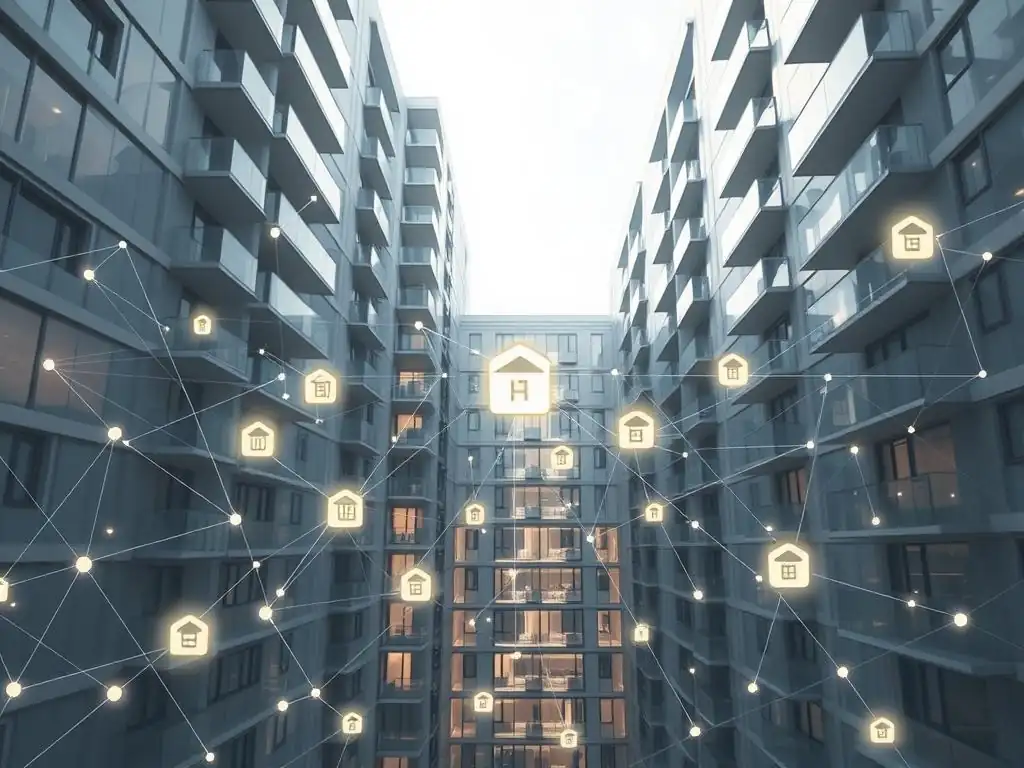
Tokenizing Commercial Real Estate for Increased Accessibility and Liquidity
Commercial real estate, known for its high value and illiquidity, is a prime candidate for tokenization. Projects have emerged aiming to tokenize assets like office buildings, hotels, and retail spaces. For example, the St. Regis Aspen Resort tokenization project by Elevated Returns aimed to offer fractional ownership in a luxury hotel property, seeking to raise capital and provide investors with a more liquid way to invest in a high-value asset. While specific outcomes vary, the goal is typically to break down multi-million dollar properties into smaller, tradable units.
The efficiency gains targeted in such applications include faster capital deployment compared to traditional syndication, reduced administrative overhead in managing a large pool of fractional owners compared to individual partnership agreements, and the potential for secondary trading to provide investors with an exit strategy previously unavailable for such specific assets. This demonstrates tangible real estate tokenization efficiency gains.
Tokenized REITs: Streamlining Capital Raising and Investor Relations
The concept of tokenizing shares in Real Estate Investment Trusts (REITs) or creating 'Digital REITs' is gaining traction. Instead of issuing traditional stock or fund units, a company can issue security tokens representing ownership in a portfolio of real estate assets. This allows for potentially faster issuance processes and near-instantaneous settlement compared to the multi-day settlement cycles of traditional stock markets.
For REIT managers, tokenization offers benefits beyond issuance speed. Smart contracts can automate dividend distributions directly to token holders, reducing administrative costs and potential errors. The transparent nature of blockchain can also provide investors with more direct visibility into the underlying assets and performance metrics (if structured appropriately). This streamlining of operations and investor interactions contributes directly to asset management efficiency for the REIT structure.
Tokenization of Vacation Homes: Enhancing Usage and Monetization
Tokenization can also be applied to individual properties like vacation homes, offering unique efficiency gains for co-ownership and usage. Instead of complex legal agreements for shared ownership, tokens can represent specific usage rights (e.g., certain weeks per year) or a share of rental income. This makes owning a piece of a vacation property more accessible and manageable for multiple parties.
The efficiency gains are evident in the simplified management of shared assets. Platforms can use tokens and smart contracts to automate booking schedules, distribute rental income proportionally among token holders, and manage shared expenses. This provides a more flexible and efficient way to monetize and manage leisure properties compared to traditional sole ownership or complex partnership structures.
Overcoming Challenges in Tokenized Real Estate Investment Implementation
Regulatory Considerations for Tokenized Real Estate Assets
A significant challenge in implementing tokenized real estate is navigating the complex and evolving regulatory landscape. In many jurisdictions, tokens representing ownership or economic rights in real estate are likely to be classified as securities. This necessitates compliance with stringent securities laws, including investor accreditation requirements, registration or exemption filings, and ongoing reporting obligations.
Navigating these regulations requires significant legal expertise and can add initial complexity and cost to tokenization projects, potentially offsetting some immediate efficiency gains. Regulatory uncertainty across different countries and even within jurisdictions remains a hurdle, requiring issuers to structure offerings carefully and potentially limiting the global reach of initial projects until clearer frameworks are established.
Security and Custody of Tokenized Real Estate Assets
While blockchain offers inherent security features like immutability, the digital nature of tokenized assets introduces new security and custody challenges. Risks include the security of private keys used to access and transfer tokens, potential vulnerabilities in the smart contracts governing the tokens, and the cybersecurity of the platforms where tokens are traded or managed. A single hack or loss of private keys could result in the irreversible loss of the asset represented by the tokens.
Investors and issuers need robust solutions for secure storage (custody) of these digital assets. This involves either secure self-custody practices (which require technical expertise) or using regulated third-party custodians specializing in digital assets. Ensuring the security and integrity of the custody solution is paramount for building investor confidence and the overall reliability of the tokenization asset management ecosystem.
Interoperability and Standardization in Real Estate Tokenization Ecosystems
The current landscape of real estate tokenization is fragmented, with different platforms using varying technical standards (e.g., ERC-20, ERC-721, ERC-1400 on Ethereum, or standards on other blockchains) and legal structures. This lack of standardization can hinder interoperability, making it difficult to transfer tokens between different platforms or integrate with broader DeFi ecosystems.
Achieving greater standardization and interoperability is crucial for unlocking the full potential for efficiency gains and creating a truly liquid global market for tokenized real estate. Industry initiatives are working towards developing common technical and legal frameworks, but widespread adoption will take time. Until then, fragmentation remains a challenge for market depth and seamless trading.
The Future of Real Estate Investment: Tokenization as a Key Enabler
The Rise of Decentralized Finance (DeFi) in Real Estate Investment
The intersection of tokenized real estate and Decentralized Finance (DeFi) holds significant promise for future efficiency gains. Once real estate assets are represented as liquid digital tokens, they can potentially be integrated into DeFi protocols. This could enable investors to use their tokenized property holdings as collateral for obtaining loans through decentralized lending platforms, unlocking liquidity from traditionally illiquid assets without needing to sell them.
Further integration could involve using tokenized rental income streams in DeFi yield farming protocols or trading real estate tokens on decentralized exchanges (DEXs). This convergence could create new financial primitives and opportunities, leveraging the unique characteristics of blockchain to enhance the financial utility and asset management efficiency of real estate investments.
The Role of Tokenization in Sustainable Real Estate Development
Tokenization can play a role in promoting and financing sustainable real estate development. By lowering investment minimums and increasing accessibility, it can open up funding opportunities for green building projects, energy-efficient retrofits, or developments focused on social impact. Investors interested in environmental, social, and governance (ESG) criteria can more easily allocate capital to specific sustainable real estate initiatives through tokenized offerings.
Furthermore, innovative token structures could be developed. For instance, tokens might be linked to achieving specific sustainability milestones (like obtaining LEED Platinum certification), potentially providing incentives or rewards to token holders. Tokenizing expected future rental income from energy savings could also provide upfront capital for efficiency upgrades. This offers novel ways to fund and track sustainable projects, providing efficiency gains in impact investing within the real estate sector.
Adoption of Blockchain-Based Land Registries
A foundational element that will significantly enhance the trustworthiness and efficiency gains of real estate tokenization is the widespread adoption of official blockchain-based land registries. Several countries and regions have explored or piloted using blockchain to record land ownership and property transfers, aiming to create an immutable, transparent, and digital source of truth.
While distinct from tokenizing specific asset ownership interests, a reliable digital land registry streamlines the verification of the underlying physical asset's legal status. This reduces the risk and complexity associated with traditional title searches and property verification processes. The synergy between a digital land registry and tokenized asset ownership derived from it promises substantial efficiency gains across the entire real estate lifecycle, from initial ownership recording to fractional investment and transfer.
Conclusion: Unlocking Efficiency Gains Through Tokenization
Tokenization: A Paradigm Shift in Real Estate Investment
Tokenization represents a fundamental paradigm shift in the world of real estate investment. By converting illiquid, high-value physical assets into divisible, digital tokens on a blockchain, it addresses many of the long-standing inefficiencies that have characterized the market. The ability to enable fractional ownership, reduce transaction costs and settlement times, and enhance transparency fundamentally changes how real estate assets can be owned, managed, and traded.
This transformation is not merely technological; it is reshaping market structures and democratizing access to an asset class previously available primarily to wealthy individuals and institutions. The cumulative effect of these changes leads to significant tokenization asset management efficiency gains across the entire investment lifecycle, from capital raising and investor onboarding to trading and reporting.
Embrace Tokenization for a More Efficient and Accessible Future
The path to full-scale adoption of tokenized real estate investment still involves challenges, particularly concerning regulatory clarity, security standards, and market standardization. However, the tangible efficiency gains demonstrated by early projects and the clear potential for increased liquidity, reduced costs, and broader accessibility make a compelling case for its future.
For investors seeking diversified portfolios, asset managers looking to streamline operations, and developers aiming for more efficient capital formation, embracing tokenization is becoming increasingly essential. As the technology matures and regulatory frameworks evolve, tokenization is poised to unlock a more efficient, liquid, and accessible future for real estate investment globally.
Frequently Asked Questions
How does tokenization improve asset management efficiency?
Tokenization allows for fractional ownership of assets, making them more liquid and accessible. This reduces transaction costs and administrative overhead, leading to significant efficiency gains.
What types of assets can be tokenized for asset management?
A wide range of assets, including real estate, commodities, art, and even intellectual property, can be tokenized. This expands investment opportunities and unlocks previously illiquid markets.
How does tokenization contribute to transparency in asset management?
Blockchain technology provides a transparent and immutable ledger for all token transactions. This enhances traceability and reduces the risk of fraud, improving overall transparency.
What regulatory considerations are associated with tokenized asset management?
Regulations are still evolving, but compliance with securities laws and AML/KYC requirements is crucial. Navigating the regulatory landscape is essential for successful tokenization projects.
What are the potential future implications of tokenization for asset management?
Tokenization could revolutionize asset management by creating more efficient, accessible, and transparent markets. This could lead to increased investment and innovation in various sectors.
Final Reflection: Embracing Tokenized Efficiency
The promise of tokenization asset management efficiency gains is no longer a futuristic concept; it's a tangible reality reshaping how we interact with and manage assets. The ability to fractionalize ownership, automate processes, and enhance transparency through blockchain technology is not just about incremental improvements; it's about fundamentally redefining the landscape of asset management for the better.
The impact of tokenization extends far beyond mere financial transactions. It democratizes access to investment opportunities, empowers smaller investors, and fosters a more inclusive and efficient global market. This shift is profound, and its influence will only continue to grow as more industries recognize the transformative potential of this technology. The future of finance is decentralized, and tokenization is the key to unlocking that potential.
As we stand at the cusp of this new era, let us not merely observe the evolution of tokenization. Instead, let us actively explore its possibilities, embrace its potential, and contribute to shaping a future where asset management is more accessible, transparent, and efficient for all. Consider how you can leverage these advancements in your own endeavors, whether as an investor, a business owner, or simply a curious observer. The future of asset management is being written now, and your participation is vital.
Unlock the Power of Tokenization: Transform Your Asset Management Today!
Thank you for exploring how tokenization is revolutionizing asset management. You've gained valuable insights into the potential for increased efficiency and transparency. Now, it's time to turn that knowledge into action!
Ready to move forward? Consider these steps:
- Explore Our Comprehensive Guide to Asset Tokenization Best Practices. This resource offers practical strategies to help you implement tokenization successfully.
- Share this article with your network on social media to help others discover how blockchain technologies can transform asset management.
- Contribute your thoughts and experiences with tokenizing assets in the comments below—your insights could inspire the next big innovation!
How do you plan to leverage tokenization to enhance your asset management processes?
Leave a Reply