
Digital Identity in the Metaverse: How Blockchain Interoperability Enables Universal Avatars

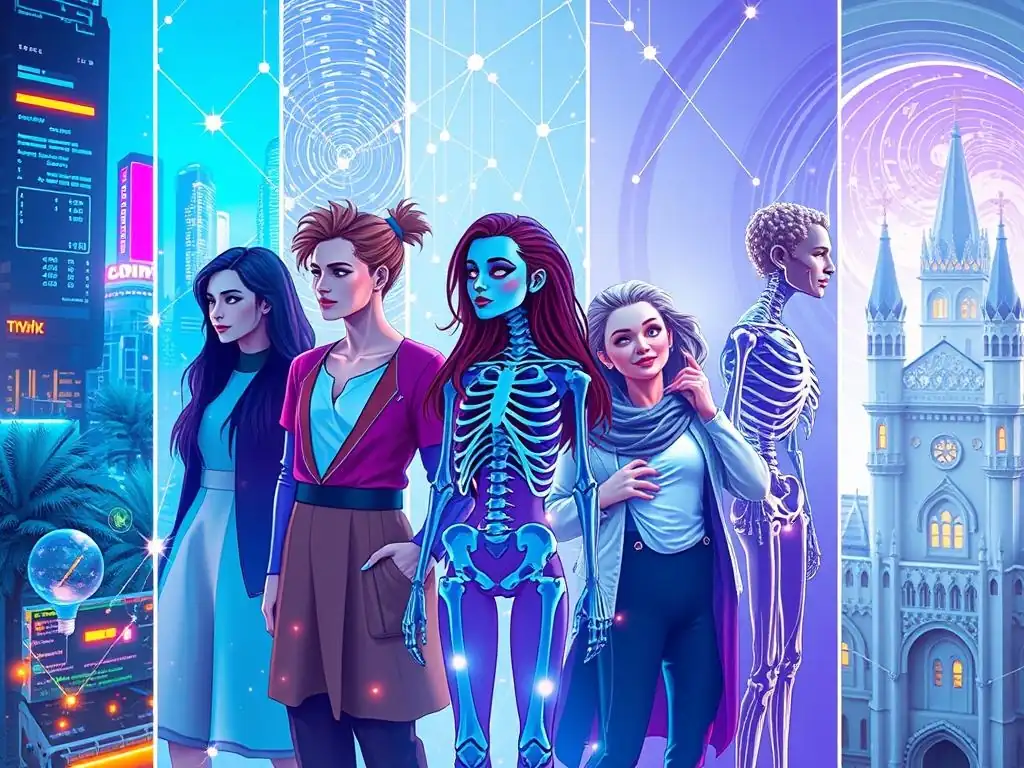
Welcome to Blockchain Trends, your guide to understanding the revolutionary impact of blockchain technology beyond the hype.
Ever wondered how your digital identity can seamlessly traverse the expanding metaverse? Our deep dive into blockchain interoperable metaverse avatars unveils the groundbreaking potential of creating truly universal avatars. Discover how blockchain-based solutions are paving the way for a future where your identity and assets can move freely between virtual worlds. Intrigued? Let's explore the possibilities...
Digital Identity in the Metaverse: Enabling Seamless Experiences with Blockchain Interoperability
- Introduction: The Potential of Interoperable Metaverse Avatars
- Understanding Digital Identity in the Metaverse
- Blockchain Interoperability: Enabling Avatar Portability
- Blockchain for Secure and Verifiable Avatars
- Benefits of Interoperable Metaverse Avatars
- Challenges and Considerations
- Real-World Examples and Use Cases
- The Future of Universal Avatars: An Interconnected Metaverse Vision
- Conclusion: Unlocking a Unified Metaverse Experience
-
Frequently Asked Questions
- How does blockchain interoperability contribute to universal avatars in the metaverse?
- What are the benefits of using blockchain for metaverse avatars compared to traditional systems?
- What challenges currently hinder the widespread adoption of blockchain interoperable metaverse avatars?
- How does Decentralized Finance (DeFi) relate to blockchain interoperable metaverse avatars?
- What are the potential future applications of blockchain interoperable metaverse avatars beyond gaming and social interaction?
- Final Reflection: Embracing the Interoperable Self
- Ignite Your Metaverse Identity!
Introduction: The Potential of Interoperable Metaverse Avatars
The metaverse, envisioned as a network of interconnected virtual worlds, promises to revolutionize how we interact, socialize, and transact online. Central to this vision is the concept of the avatar – our digital representation in these immersive environments. Imagine a future where your avatar, meticulously crafted and reflecting your unique digital identity, can seamlessly travel between different metaverse platforms, carrying your virtual possessions and reputation with you.
This is the promise of interoperable metaverse avatars, a concept increasingly reliant on the transformative power of blockchain technology, particularly blockchain interoperability solutions. The ability to move freely with a consistent digital identity across various virtual realms is not merely a matter of convenience; it is fundamental to establishing a truly open, user-centric, and ultimately, a more valuable metaverse experience.
The realization of a truly interconnected metaverse hinges on overcoming the current limitations of siloed platforms. Today, avatars are largely confined to the ecosystems in which they are created, hindering user freedom and fragmenting the digital experience. Blockchain technology, with its inherent properties of decentralization, security, and transparency, offers a compelling pathway towards achieving the necessary interoperability for universal avatars.
By leveraging blockchain's capabilities, we can envision a future where users possess a single, unified digital identity that transcends platform boundaries, unlocking a new era of immersive and interconnected virtual experiences. This article explores how blockchain interoperability is paving the way for universal avatars, examining the key concepts, technologies, benefits, and challenges that lie ahead in this exciting frontier.
The Current State of Metaverse Avatars: Siloed and Platform-Specific
Currently, metaverse avatars exist in fragmented ecosystems. Each platform, from gaming worlds like Fortnite and Roblox to virtual social spaces like VRChat and Horizon Worlds, typically operates with its own proprietary avatar system. Users create and customize avatars within the confines of these individual platforms, and these digital representations are generally locked within that specific environment. For instance, an avatar designed and purchased in Decentraland cannot be directly used in The Sandbox, and vice versa. This lack of interoperability creates a siloed experience, forcing users to recreate their digital identities and virtual possessions across different metaverse platforms.
This platform-specific approach presents significant limitations for users seeking a unified digital presence. Imagine investing time and resources in crafting a unique avatar and accumulating virtual assets, only to find that these investments are confined to a single platform. This fragmented landscape not only limits user agency and portability but also hinders the potential for a truly interconnected and immersive metaverse.
The current situation is akin to having separate email addresses for every website you visit – inefficient, cumbersome, and ultimately, detrimental to a seamless user experience. The need for a more unified and interoperable avatar system is becoming increasingly apparent as the metaverse continues to evolve and attract a wider user base.
Why Blockchain Interoperability is Essential for a Unified Digital Presence
Blockchain interoperability is the linchpin for achieving a unified digital presence in the metaverse. It refers to the ability of different blockchain networks to communicate and share information with each other. In the context of metaverse avatars, interoperability means enabling the transfer of avatar data, virtual assets, and identity information across various blockchain-based metaverse platforms. This cross-chain communication is crucial for breaking down the silos that currently characterize the metaverse landscape and fostering a more cohesive and user-centric digital world.
Without blockchain interoperability, the vision of a truly interconnected metaverse remains elusive. Each metaverse platform, potentially built on different blockchain infrastructures, would operate in isolation, perpetuating the current fragmented experience. Blockchain interoperability acts as the bridge, enabling seamless communication and data exchange between these disparate platforms.
By leveraging interoperable blockchain solutions, users can gain true ownership and control over their digital identities and virtual assets, allowing them to navigate the metaverse with a consistent and portable representation. This unified digital presence, enabled by blockchain interoperability, is essential for realizing the full potential of the metaverse as a truly interconnected and immersive digital realm.
Understanding Digital Identity in the Metaverse
Defining Digital Identity: Representation and Ownership in Virtual Worlds
Digital identity in the metaverse extends beyond a mere username or profile picture; it encompasses the entirety of an individual's representation and presence within virtual worlds. It includes the avatar itself, its visual characteristics, virtual possessions, reputation, social connections, and even behavioral patterns within these digital environments. Crucially, digital identity in the metaverse also raises questions of ownership and control. In traditional online spaces, user data is often controlled by centralized platforms. However, the decentralized nature of blockchain offers the potential for users to truly own and control their digital identities in the metaverse.
In the metaverse, your digital identity is your persona, your means of interaction, and your key to accessing virtual experiences and opportunities. It's how you are recognized and perceived by others within these digital realms. The concept of ownership is particularly significant in the metaverse context.
With blockchain-based digital identities, users can potentially own their avatars and associated data as non-fungible tokens (NFTs), granting them verifiable ownership and control that is not possible with traditional, platform-centric systems. This shift towards user-owned digital identities is a fundamental aspect of the decentralized metaverse vision, empowering individuals and fostering a more equitable and open digital future.
The Importance of Self-Sovereign Identity (SSI) for User Empowerment
Self-Sovereign Identity (SSI) is a crucial concept for user empowerment in the metaverse. SSI puts individuals at the center of their digital identity management, granting them control over their personal data and how it is shared. In the context of metaverse avatars, SSI means that users, rather than platforms, have ultimate authority over their avatar's identity, attributes, and associated data. Blockchain technology provides the infrastructure for implementing SSI principles in the metaverse, offering a secure and decentralized framework for managing digital identities.
SSI empowers users to decide what information they share, with whom, and for what purpose. This is particularly relevant in the metaverse, where vast amounts of personal data could be generated through user interactions and activities. By leveraging SSI principles and blockchain-based solutions, users can avoid the data silos and privacy concerns associated with centralized platforms.
SSI not only enhances user privacy and control but also fosters trust and transparency within the metaverse ecosystem. It is a cornerstone of a user-centric metaverse where individuals are empowered to manage their digital lives on their own terms, rather than being subjected to the control of centralized entities.
Challenges: Identity Fragmentation and Data Control Across Platforms
Despite the promise of SSI and blockchain technology, significant challenges remain in achieving unified digital identity in the metaverse. Identity fragmentation is a major hurdle, as different metaverse platforms currently operate with incompatible identity systems. Users are often required to create separate accounts and avatars for each platform, leading to a disjointed and inefficient experience. Furthermore, data control remains a concern, as many metaverse platforms still operate under centralized models, potentially compromising user privacy and data ownership.
Overcoming identity fragmentation requires the development of interoperable identity solutions that can bridge the gaps between different metaverse platforms. Standardization efforts are crucial to ensure that avatar data and identity information can be seamlessly transferred and recognized across various virtual environments. Addressing data control issues necessitates a shift towards decentralized identity management systems, leveraging blockchain technology and SSI principles. While blockchain offers the tools for achieving user-centric digital identity in the metaverse, widespread adoption and effective implementation require collaborative efforts across the industry to address these challenges and build a truly unified and empowering digital future.
Blockchain Interoperability: Enabling Avatar Portability
Blockchain Interoperability: Connecting Independent Blockchains
Blockchain interoperability is the technological foundation for enabling avatar portability across the metaverse. It refers to the ability of distinct and independent blockchain networks to communicate, interact, and share data securely and efficiently. In the context of universal avatars, blockchain interoperability allows for the transfer of avatar identity, attributes, and associated virtual assets between different metaverse platforms that may be built on separate blockchains. This cross-chain communication is essential for breaking down data silos and creating a truly interconnected metaverse experience.
Several approaches to blockchain interoperability are being developed, each with its own strengths and trade-offs. These include cross-chain bridges, which facilitate the transfer of assets and data between blockchains; atomic swaps, which enable direct peer-to-peer exchange of assets across different blockchains; and interoperability protocols, which establish standardized communication layers for cross-chain interactions. The selection and implementation of appropriate interoperability solutions are crucial for enabling seamless avatar portability and establishing a fluid and interconnected metaverse environment. Without robust blockchain interoperability, the vision of universal avatars and a unified digital presence would remain largely unrealized.
Cross-Chain Solutions: Protocols and Technologies for Avatar Transfer
Various cross-chain solutions are emerging to facilitate the transfer of avatars and their associated data across different metaverse platforms. Protocols like Polkadot, Cosmos, and LayerZero are designed to enable interoperability between different blockchains, providing the infrastructure for cross-chain avatar transfer. These protocols often utilize bridges or relay chains to facilitate communication and data exchange between otherwise isolated blockchain networks. Technologies like non-fungible tokens (NFTs) also play a crucial role, as they can represent avatars and virtual assets in a unique and portable manner across interoperable blockchains.
For instance, a user's avatar, represented as an NFT on one blockchain, could be transferred to another blockchain-based metaverse platform through a cross-chain bridge. The receiving platform, recognizing the NFT and its associated metadata, can then render the avatar within its environment, maintaining the user's digital identity and virtual possessions.
The development and adoption of standardized protocols and technologies for cross-chain avatar transfer are essential for creating a seamless and user-friendly experience in the interoperable metaverse. These solutions are paving the way for a future where users can effortlessly move their digital selves between different virtual worlds, carrying their identities and assets with them.
Enhanced User Experience: Seamless Transitions and Unified Identity
Blockchain interoperability directly translates to an enhanced user experience within the metaverse, primarily through seamless transitions and a unified identity. Imagine moving from a virtual gaming world to a virtual social space without having to create a new avatar or leave behind your digital possessions. Blockchain interoperability makes this possible by enabling users to carry their existing avatars and assets across different platforms, creating a fluid and consistent digital journey. This eliminates the friction of platform-specific identities and allows users to build a persistent and evolving digital persona across the entire metaverse.
This seamless transition fosters a more immersive and engaging metaverse experience. Users can cultivate a single, unified digital identity that represents them across various virtual worlds, building reputation and social connections that are not confined to individual platforms. The ability to maintain a consistent identity enhances user agency and control, allowing them to navigate the metaverse with greater freedom and flexibility. Blockchain interoperability is therefore not just a technical solution but a key enabler of a more user-centric and enjoyable metaverse experience, fostering a sense of continuity and ownership in the digital realm.
Blockchain for Secure and Verifiable Avatars
Blockchain-Based Authentication: Secure Access and Control
Blockchain technology offers robust authentication mechanisms for secure access and control over metaverse avatars. Traditional authentication methods often rely on centralized username and password systems, which are vulnerable to breaches and phishing attacks. Blockchain-based authentication, leveraging cryptographic keys and decentralized ledgers, provides a more secure and resilient alternative. By linking avatars to blockchain-based identities, users can gain greater control over access to their digital representations and virtual assets, mitigating the risks associated with centralized authentication systems.
For example, users can utilize cryptographic keys stored in a secure wallet to authenticate their ownership of an avatar and gain access to metaverse platforms. This eliminates the reliance on passwords and reduces the risk of account hijacking. Blockchain-based authentication can also be integrated with multi-factor authentication methods for enhanced security. Furthermore, the transparency and immutability of the blockchain ledger provide an auditable record of avatar ownership and access history, further strengthening security and accountability. Blockchain-based authentication is a critical component for establishing a secure and trustworthy metaverse environment where users can confidently manage their digital identities and assets.
Decentralized Identifiers (DIDs) and Verifiable Credentials (VCs): Identity Verification
Decentralized Identifiers (DIDs) and Verifiable Credentials (VCs) are key technologies for enabling identity verification and trust in the metaverse. DIDs are unique, globally resolvable identifiers that are controlled by the user and are independent of any centralized authority. VCs are digitally signed credentials that attest to specific attributes or claims about a DID subject, such as age verification or skill certifications. In the context of metaverse avatars, DIDs and VCs can be used to verify avatar identity, attributes, and reputation in a secure and privacy-preserving manner.
For instance, a user's avatar can be associated with a DID, allowing them to prove ownership and control over their digital identity. VCs can be issued to avatars to represent verified attributes, such as verified skills or reputation scores earned within metaverse platforms. These VCs can then be selectively presented to other metaverse platforms or users for identity verification purposes, without revealing unnecessary personal information. DIDs and VCs, built on blockchain technology, provide a foundation for establishing trust and verifiable identity in the metaverse, empowering users to control their digital reputations and interactions while enhancing security and privacy.
Data Privacy and Security: Protecting User Information on the Blockchain
Blockchain technology, while offering enhanced security and transparency, also raises important considerations regarding data privacy in the metaverse. While blockchain ledgers are transparent and auditable, the data stored on them can potentially be publicly accessible. Therefore, careful consideration must be given to how user information associated with avatars is stored and managed on the blockchain to ensure data privacy and compliance with privacy regulations. Techniques like zero-knowledge proofs and homomorphic encryption are being explored to enhance privacy while still leveraging the benefits of blockchain.
Furthermore, security risks associated with smart contracts and blockchain infrastructure must be addressed to protect user data and avatar identities. Smart contract vulnerabilities could potentially be exploited to compromise avatar ownership or access control. Robust security audits and best practices for smart contract development are essential to mitigate these risks. Balancing the benefits of blockchain's transparency and security with the need for data privacy is a critical challenge in developing blockchain-based solutions for metaverse avatars. Privacy-preserving technologies and security best practices are crucial for building a metaverse that is both secure and respectful of user privacy.
Benefits of Interoperable Metaverse Avatars

Enhanced User Experience: Seamless Transitions and Consistent Identity
Interoperable metaverse avatars drastically enhance the user experience by enabling seamless transitions between virtual worlds and fostering a consistent digital identity. Users are no longer confined to platform-specific avatars and can move freely across different metaverse environments with their established digital persona. This eliminates the need to recreate avatars and build separate reputations on each platform, streamlining the user journey and creating a more cohesive and enjoyable metaverse experience.
The ability to maintain a consistent identity across the metaverse fosters a sense of presence and continuity. Users can build lasting relationships and reputations that are not fragmented across different platforms. This enhanced user experience is crucial for driving wider adoption of the metaverse, as it removes significant friction points and makes virtual interactions more intuitive and user-friendly. Interoperable avatars contribute to a more immersive and engaging metaverse, encouraging users to explore and participate in various virtual worlds without the limitations of siloed identities.
Increased Data Ownership and Control: User-Managed Information
Interoperable avatars, particularly when built on blockchain and SSI principles, empower users with increased data ownership and control. Instead of platforms controlling avatar data and user information, users themselves can manage and control their digital identities. This shift towards user-centric data ownership is a fundamental benefit of interoperable avatars, aligning with the decentralized ethos of blockchain technology and promoting user autonomy in the metaverse.
With user-managed information, individuals can decide what data is shared, with whom, and for what purpose. This enhanced control mitigates privacy risks and empowers users to participate in the metaverse on their own terms. Blockchain-based solutions for interoperable avatars often utilize self-sovereign identity frameworks, giving users the tools to manage their digital identities and verifiable credentials in a secure and decentralized manner. This increased data ownership and control is a key differentiator of interoperable avatars, offering a significant advantage over traditional platform-centric approaches.
Fostering Innovation: New Applications and Creative Possibilities
The advent of interoperable metaverse avatars unlocks new applications and creative possibilities within the metaverse ecosystem. With a unified digital identity that transcends platform boundaries, developers can create innovative experiences that leverage avatar portability and cross-platform interactions. This opens up new avenues for creativity and innovation, fostering a more dynamic and diverse metaverse landscape.
For example, interoperable avatars can facilitate cross-platform gaming experiences, where users can bring their avatars and virtual possessions from one game to another. They can also enable seamless integration of metaverse experiences with real-world applications, such as using avatars for virtual meetings or online education across different platforms. The interoperability of avatars fosters a more open and collaborative metaverse environment, encouraging developers to build upon existing identities and assets, leading to a richer and more interconnected virtual world.
Economic Opportunities: Creation, Trade, and Monetization of Avatars
Interoperable metaverse avatars create new economic opportunities for creators, users, and businesses. The ability to create, trade, and monetize avatars and associated virtual assets across different platforms unlocks a vibrant digital economy. Creators can design and sell avatars that can be used in multiple metaverse environments, expanding their market reach and revenue potential. Users can invest in and trade avatars as digital assets, potentially generating economic value from their virtual identities.
The interoperability of avatars fosters a more liquid and efficient market for digital assets in the metaverse. The ability to transfer and utilize avatars across different platforms increases their utility and perceived value, driving demand and creating new economic opportunities. Furthermore, businesses can leverage interoperable avatars for branding, marketing, and customer engagement across various metaverse platforms, expanding their reach and creating new revenue streams. Interoperable avatars are therefore not just a technological advancement but also a catalyst for economic growth and innovation within the metaverse ecosystem.
Challenges and Considerations
Scalability and Performance: Handling High Transaction Volumes
Scalability and performance are critical challenges for blockchain-based interoperable metaverse avatars, particularly as the metaverse grows and user adoption increases. Blockchain networks need to be able to handle high transaction volumes associated with avatar transfers, identity verification, and virtual asset management across multiple platforms. Scalability limitations can lead to slow transaction speeds, high gas fees, and a degraded user experience.
Addressing scalability requires exploring layer-2 scaling solutions, such as rollups and sidechains, which can offload transaction processing from the main blockchain layer. Optimizing blockchain infrastructure and consensus mechanisms is also crucial for improving performance. Furthermore, efficient data management and storage solutions are needed to handle the large amounts of avatar data and virtual assets associated with a growing metaverse population. Scalability and performance are ongoing challenges that require continuous innovation and optimization to ensure a smooth and responsive experience for users of interoperable metaverse avatars.
Standardization: Avatar Formats and Data Interoperability
Standardization is essential for achieving true interoperability of metaverse avatars. Currently, different platforms utilize diverse avatar formats, data structures, and protocols, making cross-platform communication and avatar transfer complex and inefficient. Establishing common standards for avatar representation, data exchange, and identity management is crucial for enabling seamless interoperability across the metaverse.
Standardization efforts need to address various aspects, including avatar file formats, metadata schemas, identity protocols, and cross-chain communication interfaces. Industry-wide collaboration and open standards initiatives are necessary to define and promote these standards. Without standardization, interoperability will remain limited and fragmented, hindering the development of a truly unified metaverse experience. Standardized avatar formats and data protocols are fundamental building blocks for enabling seamless avatar portability and creating a truly interoperable metaverse ecosystem.
Regulatory compliance is a significant consideration for interoperable metaverse avatars, particularly in areas related to data privacy, identity verification, and virtual asset ownership. Existing legal frameworks may not be fully equipped to address the unique challenges posed by the metaverse and blockchain-based digital identities. Navigating these legal complexities and ensuring compliance with relevant regulations is crucial for the responsible development and deployment of interoperable avatar solutions.
Issues such as data privacy regulations (e.g., GDPR, CCPA), identity verification requirements (e.g., KYC/AML), and the legal status of virtual assets need to be carefully considered in the context of interoperable avatars. Collaboration between industry stakeholders, regulators, and legal experts is necessary to establish clear legal frameworks and guidelines for the metaverse. Regulatory compliance is not just a legal obligation but also a crucial factor for building trust and fostering the long-term sustainability of the interoperable metaverse ecosystem.
Security Risks: Protecting Against Vulnerabilities
Security risks are inherent in any digital system, and interoperable metaverse avatars are no exception. Vulnerabilities in blockchain infrastructure, smart contracts, or interoperability protocols could be exploited to compromise avatar identities, virtual assets, or user data. Protecting against these security risks is paramount for ensuring the safety and trustworthiness of the interoperable metaverse.
Robust security measures need to be implemented at all levels, from blockchain infrastructure and smart contract development to user-facing applications and interoperability protocols. Regular security audits, penetration testing, and vulnerability assessments are essential for identifying and mitigating potential risks. Furthermore, user education and best practices for secure avatar management are crucial for empowering users to protect their digital identities and assets in the metaverse. Addressing security risks proactively and comprehensively is vital for building a secure and resilient interoperable metaverse ecosystem.
Real-World Examples and Use Cases
Ready Player Me: Cross-Game Avatar Platform
Ready Player Me stands out as a prominent real-world example of a cross-game avatar platform striving for metaverse interoperability. It allows users to create a single, customizable avatar that can be used across thousands of different games and applications. Ready Player Me partners with various game developers and metaverse platforms, integrating its avatar system to enable users to seamlessly bring their digital identities into different virtual worlds. This platform demonstrates the growing demand for and feasibility of cross-game avatar interoperability.
Ready Player Me utilizes a standardized avatar format and provides developers with tools and SDKs to integrate its avatars into their applications. This simplifies the process of adopting interoperable avatars and encourages wider adoption across the metaverse. The platform's success highlights the potential for centralized solutions to address avatar interoperability, albeit within a controlled ecosystem. Ready Player Me serves as a valuable case study for understanding the challenges and opportunities associated with cross-game avatar platforms and their role in the evolving metaverse landscape.
Decentraland: User-Owned Virtual World with Avatar Customization
Decentraland, a user-owned virtual world built on the Ethereum blockchain, showcases the integration of blockchain-based avatars and virtual assets within a metaverse platform. Users in Decentraland own their avatars and virtual land as NFTs, granting them true ownership and control over their digital possessions. Decentraland's avatar system allows for extensive customization and personalization, enabling users to express their unique digital identities within the virtual world.
Decentraland's use of NFTs for avatars and land ownership exemplifies the potential of blockchain technology for empowering users in the metaverse. While avatars created within Decentraland may not be directly interoperable with other platforms in a seamless manner currently, the platform demonstrates the foundational elements for a user-centric and potentially interoperable metaverse experience built on blockchain principles. Decentraland serves as a real-world example of how blockchain can be utilized to create virtual worlds with user ownership and control at their core.
Future Applications: Interoperable Avatars in Education, Healthcare, and Remote Work
The potential applications of interoperable avatars extend far beyond gaming and entertainment, encompassing diverse sectors such as education, healthcare, and remote work. In education, interoperable avatars can facilitate immersive and engaging learning experiences across different virtual learning environments and platforms. Students could use their consistent avatars to attend virtual classes, participate in simulations, and collaborate with peers across various educational metaverse platforms.
In healthcare, interoperable avatars could enable remote consultations, virtual therapy sessions, and patient education in a more personalized and engaging manner. Healthcare professionals could use their avatars to interact with patients in virtual environments, providing remote care and support across different healthcare platforms. In remote work, interoperable avatars can enhance virtual meetings, collaborative workspaces, and team interactions across different remote work platforms.
Employees could use their avatars to participate in virtual meetings, collaborate on projects, and interact with colleagues in a more immersive and human-centric way. These future applications highlight the transformative potential of interoperable avatars to revolutionize various sectors beyond entertainment, creating more connected and engaging digital experiences across diverse domains.
The Future of Universal Avatars: An Interconnected Metaverse Vision
Predictions: Evolution of Blockchain-Based Digital Identity
The future of digital identity in the metaverse is likely to be increasingly shaped by blockchain technology and the principles of self-sovereign identity. Predictions point towards the evolution of blockchain-based digital identities becoming the norm, empowering users with greater control over their data and digital representations. Interoperability will become a key feature, with universal avatars capable of seamlessly traversing different metaverse platforms, creating a truly interconnected and user-centric digital world.
We can anticipate further advancements in blockchain interoperability solutions, making cross-chain avatar transfer more efficient and user-friendly. Standardization efforts will play a crucial role in establishing common protocols and formats for avatar representation and data exchange, fostering greater interoperability across the metaverse. The convergence of blockchain, SSI, and metaverse technologies will likely lead to the emergence of robust and secure digital identity solutions that empower users and unlock the full potential of a truly interconnected metaverse.
Impact: Increased Metaverse Adoption and User Engagement
The widespread adoption of interoperable metaverse avatars is expected to significantly impact metaverse adoption and user engagement. The ability to maintain a consistent digital identity across different platforms will remove a major friction point for users, making the metaverse more accessible and user-friendly. Seamless transitions and a unified digital presence will encourage users to explore and participate in various virtual worlds, driving increased metaverse adoption and engagement.
Interoperable avatars will foster a more immersive and engaging metaverse experience, encouraging users to invest time and resources in building their digital identities and virtual possessions. The enhanced user experience and increased user agency will contribute to a more vibrant and thriving metaverse ecosystem. As interoperability becomes a standard feature, the metaverse is likely to attract a wider user base and witness increased levels of user participation and interaction, unlocking its full potential as a transformative digital realm.
Decentralized Governance: Shaping the Future of Metaverse Identity
Decentralized governance models are likely to play a crucial role in shaping the future of metaverse identity and interoperability. As the metaverse evolves, decisions regarding standards, protocols, and governance of digital identities will need to be made in a collaborative and community-driven manner. Decentralized autonomous organizations (DAOs) and other decentralized governance mechanisms can empower users and stakeholders to participate in shaping the future of metaverse identity and ensure that it aligns with the principles of user empowerment and decentralization.
Decentralized governance can foster a more equitable and transparent metaverse ecosystem, where decisions are not solely controlled by centralized entities. Community-driven governance models can promote innovation and collaboration, ensuring that the development of metaverse identity solutions is aligned with the needs and values of the users. Decentralized governance is therefore essential for building a truly open, user-centric, and sustainable metaverse ecosystem where digital identities are managed and governed in a democratic and participatory manner.
Conclusion: Unlocking a Unified Metaverse Experience
Key Takeaways: The Power of Interoperable Metaverse Avatars
Interoperable metaverse avatars represent a paradigm shift in digital identity, offering the potential to unlock a truly unified and user-centric metaverse experience. By leveraging blockchain interoperability and self-sovereign identity principles, users can gain control over their digital representations, seamlessly traverse different virtual worlds, and build persistent digital identities that transcend platform boundaries. Interoperable avatars enhance user experience, foster innovation, create new economic opportunities, and pave the way for a more interconnected and engaging metaverse.
While challenges related to scalability, standardization, regulation, and security remain, the benefits of interoperable metaverse avatars are undeniable. As blockchain technology continues to evolve and mature, and as standardization efforts gain momentum, the vision of universal avatars and a unified metaverse experience is becoming increasingly attainable. Interoperable avatars are not just a technological advancement but a key enabler of a more open, user-empowering, and ultimately, a more valuable metaverse for all.
Call to Action: Explore and Support Blockchain-Based Metaverse Initiatives.
The journey towards a truly interoperable metaverse is ongoing, and active participation from users, developers, businesses, and policymakers is crucial for realizing its full potential. We encourage readers to explore and support blockchain-based metaverse initiatives that are driving innovation in digital identity, interoperability, and user empowerment. Engage with projects building interoperable avatar solutions, participate in decentralized governance discussions, and advocate for open standards and user-centric principles in the metaverse.
By actively supporting and contributing to the development of blockchain-based metaverse initiatives, we can collectively shape the future of digital identity and unlock a unified metaverse experience that is open, accessible, and empowering for all. The future of the metaverse is being built now, and your participation is vital in ensuring that it evolves in a direction that benefits users and fosters a truly interconnected and inclusive digital world.
Frequently Asked Questions
How does blockchain interoperability contribute to universal avatars in the metaverse?
Blockchain interoperability allows for the seamless transfer of avatar data and assets across different metaverse platforms. This ensures your digital identity remains consistent and accessible, creating a true universal avatar.
What are the benefits of using blockchain for metaverse avatars compared to traditional systems?
Blockchain offers enhanced security and ownership of your avatar's data and assets. It also enables decentralized control, removing reliance on single entities and promoting a more user-centric approach.
What challenges currently hinder the widespread adoption of blockchain interoperable metaverse avatars?
Challenges include the lack of standardized protocols for data exchange between blockchains and the scalability issues associated with handling large volumes of avatar transactions. Regulatory uncertainties also play a role.
How does Decentralized Finance (DeFi) relate to blockchain interoperable metaverse avatars?
DeFi elements can be integrated into avatars, allowing them to participate in metaverse economies. This might involve earning rewards for in-world activities or accessing financial services directly through their digital identity.
Future applications extend to areas like digital commerce, where avatars can verify identity for purchases, and remote work, enabling realistic representation in virtual meetings. Healthcare and education are also potential beneficiaries.
Final Reflection: Embracing the Interoperable Self
The journey through the possibilities of blockchain interoperable metaverse avatars reveals a future where our digital identities transcend the limitations of individual platforms. This is not merely about creating a cool avatar; it's about establishing a consistent and verifiable representation of ourselves across a multitude of virtual worlds, a concept that holds immense power and responsibility in our increasingly digital lives.
The promise of a truly interoperable metaverse, powered by blockchain technology, has already begun to shape our understanding of digital ownership and identity. The ability to carry our unique digital selves, complete with our earned achievements and personalized aesthetics, across different virtual environments, is a profound shift. It challenges the walled-garden approach of current platforms and empowers users with unprecedented control. The metaverse is not a place, it's a moment in time when our digital lives become more meaningful than our physical lives.
- Tim Sweeney
As we stand on the cusp of this transformative era, let us consider the implications of a universal digital identity. How will we choose to represent ourselves? What values will we embody in our blockchain interoperable metaverse avatars? The future of the metaverse is not predetermined; it is being shaped by the choices we make today. Embrace the opportunity to craft a digital identity that reflects your authentic self and contributes to a more inclusive and interconnected virtual world.
Ignite Your Metaverse Identity!
Thank you for exploring the fascinating world of digital identity in the metaverse and how blockchain interoperability is shaping the future of universal avatars. You now have a solid understanding of the exciting possibilities this technology offers! It's time to turn that knowledge into action.
- Create your first blockchain-based avatar! Try out platforms that offer avatar creation tools and start experimenting with digital self-expression. This is your first step into the metaverse!
- Share this article with your network to start a conversation about the significance of digital identity in virtual worlds and the role blockchain plays in enabling seamless interoperability. Let’s spread awareness and inspire innovation!
- Explore different blockchain solutions focused on avatar interoperability and identity management. Discover pioneers in the field and consider how you can contribute to advancing these technologies.
What features would you most like to see in a universal avatar system that emphasizes user privacy and control? Share your ideas in the comments below!
Leave a Reply