
Automated Rent Collection: Streamlining Payments with Blockchain in Property Management


Welcome to Blockchain Trends, your premier source for understanding the real-world applications of blockchain technology!
Imagine a world where rent collection is seamless, transparent, and virtually instantaneous. Our latest article dives deep into the innovative use of blockchain rent collection in property management, exploring how this groundbreaking technology is streamlining payments and revolutionizing the real estate industry. Intrigued? Discover how decentralized solutions are poised to reshape the future of property management – and how you can stay ahead of the curve.
- Blockchain Rent Collection: Revolutionizing Property Management Payments
- Benefits of Automated Rent Collection Using Blockchain
- How Blockchain-Based Rent Collection Works
- Implementing Blockchain Rent Collection
- Case Studies: Blockchain Rent Collection Success Stories
- The Future of Blockchain Rent Collection
- Overcoming Objections to Blockchain Rent Collection
- Conclusion: Embracing Blockchain for Streamlined and Secure Rent Collection
-
Frequently Asked Questions
- How does blockchain technology automate rent collection in property management?
- What are the key benefits of using blockchain for rent collection and property management?
- How does blockchain improve the security of rental payments compared to traditional methods?
- What role does DeFi (Decentralized Finance) play in blockchain-based rent collection?
- What are the potential regulatory challenges and considerations for implementing blockchain in property management and rent collection?
- Final Reflection: Embracing the Future of Property Management
- Embrace the Future: Revolutionize Your Rental Income!
Blockchain Rent Collection: Revolutionizing Property Management Payments
Rent collection stands as a fundamental yet often cumbersome process within property management. Traditional methods, ranging from manual checks and bank transfers to online payment portals, frequently encounter issues such as payment delays, reconciliation errors, high transaction fees, and a lack of transparency for both landlords and tenants. These inefficiencies can lead to significant administrative burdens, cash flow inconsistencies, and strained relationships between property managers and residents.
Addressing these persistent challenges requires innovative solutions that can automate processes, enhance security, and provide verifiable records. The emergence of blockchain technology offers a compelling pathway to fundamentally transform how rent is collected and managed. By leveraging distributed ledger technology and smart contracts, blockchain rent collection property management can introduce unprecedented levels of efficiency, security, and transparency into the payment ecosystem.
Challenges of Traditional Rent Collection
Traditional rent collection methods are fraught with inefficiencies that impact both the operational costs for property managers and the experience for tenants. Manual processes, such as handling paper checks or tracking bank transfers, are prone to human error, requiring significant time for data entry, reconciliation, and follow-up on late payments. According to industry reports, administrative costs associated with manual rent collection can represent a substantial portion of operational budgets, sometimes exceeding 5% of collected revenue.
Furthermore, traditional systems often lack real-time visibility and auditability. Disputes over payment dates or amounts can be difficult to resolve definitively without a clear, immutable record. Processing delays are common, particularly with methods like ACH transfers which can take 2-5 business days to settle, impacting cash flow predictability for landlords. Credit card payments, while faster, often incur significant processing fees, typically ranging from 2% to 3.5% of the transaction value, which can add up significantly for properties managing multiple units.
Blockchain Technology for Efficient Property Management
Blockchain technology provides a robust framework to address many of the inefficiencies inherent in traditional property management payment systems. Its core characteristics – decentralization, immutability, transparency (on public chains), and the ability to execute smart contracts – are uniquely suited to streamlining financial transactions like rent payments. Unlike centralized databases, a blockchain ledger is distributed across multiple nodes, making it highly resistant to tampering and single points of failure.
In the context of blockchain rent collection property management, this means that once a rent payment transaction is recorded on the blockchain, it cannot be altered or deleted. This creates a permanent, verifiable audit trail accessible to relevant parties (with appropriate permissions). Smart contracts, self-executing contracts with the terms of the agreement directly written into code, automate the payment process based on predefined conditions, such as the due date. This eliminates the need for manual intervention, reduces the likelihood of errors, and ensures timely execution of payments.
Benefits of Automated Rent Collection Using Blockchain
Adopting automated rent collection powered by blockchain technology introduces a multitude of benefits for stakeholders across the property management spectrum. From enhanced security to significant cost and time savings, the advantages represent a substantial improvement over legacy systems.
Enhanced Security and Transparency in Rent Payments
One of the most significant advantages of using blockchain for rent collection is the enhanced security and transparency it provides. Each transaction on the blockchain is cryptographically secured and linked to the previous one, forming a chain that is virtually impossible to alter retroactively. This inherent security minimizes the risk of fraud or unauthorized changes to payment records, offering a level of data integrity unmatched by traditional databases.
Transparency is also greatly improved. While the level of transparency depends on whether a public or permissioned blockchain is used, relevant parties (landlords, tenants, and potentially auditors, with appropriate permissions) can view a clear, immutable history of all rent payments. Tenants can verify that their payment has been successfully recorded on the ledger, and landlords have irrefutable proof of payment status. This transparency helps build trust and reduces disputes related to payment history.
Reduced Transaction Fees and Faster Processing Times
Blockchain-based payment systems can offer significant reductions in transaction fees compared to traditional methods, particularly credit card processing. While some blockchains have transaction fees (gas fees), these can often be substantially lower than the percentage-based fees charged by credit card companies, especially for larger rent amounts. Solutions built on efficient or Layer 2 blockchain networks can further minimize these costs, potentially bringing processing fees down to fractions of a dollar per transaction.
Furthermore, blockchain transactions can settle much faster than traditional bank transfers. While ACH payments can take several days, blockchain transactions can often be confirmed and settled within minutes, depending on the network's congestion and confirmation requirements. This near-instantaneous settlement improves cash flow predictability for property managers and provides tenants with immediate confirmation that their payment has been received and recorded.
Streamlined Rent Collection for Landlords and Tenants
The automation capabilities of smart contracts fundamentally streamline the rent collection process for both landlords and tenants. For landlords and property managers, this means an end to manually tracking payments, sending reminders, and reconciling bank statements. Smart contracts automatically initiate and process payments on the due date, provided the tenant's digital wallet contains sufficient funds (typically stablecoins pegged to fiat currency). This drastically reduces administrative overhead, freeing up staff time for more value-added activities.
For tenants, blockchain rent collection property management offers convenience and clarity. Once set up, payments can be automatically deducted from their digital wallet on the due date, eliminating the risk of late fees due to forgetfulness or manual processing delays. They gain access to a transparent, immutable record of their payment history on the blockchain, easily verifiable whenever needed. This automation simplifies the payment process, making it less stressful for residents.
Improved Record-Keeping and Auditability
The immutable nature of the blockchain ledger provides an unparalleled system for record-keeping and auditability. Every rent payment transaction, including the amount, date, and participating parties, is permanently recorded on the distributed ledger. This creates a tamper-proof history that serves as a definitive source of truth for all financial activities related to rent collection.
This level of record integrity is invaluable for accounting, legal, and compliance purposes. Auditors can easily verify payment records directly on the blockchain, reducing the time and complexity of audits. In the event of a legal dispute, the immutable ledger provides undeniable evidence of payment history. This robust record-keeping capability ensures compliance with financial regulations and simplifies reporting requirements for property management companies.
How Blockchain-Based Rent Collection Works
Implementing blockchain rent collection property management involves several technical components working in concert to automate and secure the payment process. At its core, it leverages digital representations of agreements and automated execution logic.
Tokenizing Rental Agreements and Rent Payments
A key step in establishing blockchain-based rent collection is the digital representation or "tokenization" of elements relevant to the rental agreement. While the entire lease agreement might not be tokenized, the payment obligations can be. This often involves representing the monthly rent amount as a specific quantity of a stablecoin (a cryptocurrency pegged to a stable asset like the US dollar, minimizing price volatility). The tenant would maintain the required amount of this stablecoin in a digital wallet associated with the system.
Alternatively, the right to occupy the property and the corresponding payment obligation could be linked to a non-fungible token (NFT) or a specific type of utility token associated with the property unit and the lease terms. The smart contract would then be programmed to interact with this token and the tenant's wallet containing the stablecoins to facilitate the payment. This tokenization creates digital assets on the blockchain that are directly tied to the real-world rental relationship and financial obligations.
Smart Contracts for Automated Payment Execution
Smart contracts are the engine that drives automated rent collection on the blockchain. These are self-executing pieces of code deployed on the blockchain network. The terms of the rent payment – the due date, the amount (in stablecoins), the recipient wallet address (landlord/property manager), and the source wallet address (tenant) – are all encoded within the smart contract.
On the specified due date, the smart contract automatically triggers the transfer of the predefined stablecoin amount from the tenant's linked digital wallet to the landlord's wallet. This execution happens automatically without manual intervention, provided the tenant's wallet contains sufficient funds. The smart contract can also be programmed to handle conditions like grace periods or trigger notifications for insufficient funds, adding layers of automation and reliability to the payment process.
Integrating Blockchain Rent Collection with Existing Systems
While blockchain offers a revolutionary approach, property management companies often rely on existing software for various operations, including accounting, tenant communication, and maintenance requests. Successful implementation of blockchain rent collection property management requires seamless integration with these legacy systems. This is typically achieved through Application Programming Interfaces (APIs) or middleware that connects the blockchain platform with existing property management software (PMS) and accounting packages.
Integration ensures that payment data recorded on the blockchain is automatically updated in the company's accounting records, tenant portals, and other relevant systems. For instance, when a smart contract executes a rent payment, the blockchain system can send a notification or data payload via an API to the PMS, which then marks the tenant's account as paid. This avoids the need for manual data entry and maintains data consistency across different platforms used by the property management team.
Implementing Blockchain Rent Collection
Adopting blockchain technology for rent collection requires careful planning and execution. From selecting the appropriate technology to ensuring user adoption, several key steps are involved in a successful rollout.
Choosing the Right Blockchain Platform
Selecting the appropriate blockchain platform is a critical decision for implementing blockchain rent collection. Factors to consider include the platform's transaction speed (throughput), the cost of transactions (gas fees), scalability to handle a growing number of properties and tenants, security features, and the maturity of its ecosystem and developer community. Public blockchains like Ethereum or Polygon (a Layer 2 solution for Ethereum) offer high levels of decentralization and security, though transaction costs and scalability can be considerations depending on network activity.
Alternatively, permissioned or private blockchains, such as Hyperledger Fabric or Corda, might be suitable for enterprises requiring more control over network participants and potentially lower, more predictable transaction costs. These platforms allow organizations to set up networks where only known and authorized parties can participate, which can be advantageous for regulatory compliance and data privacy in property management contexts. The choice depends on the specific needs regarding privacy, control, and transaction volume.
Onboarding Tenants to Blockchain Rent Collection
Tenant adoption is paramount for the success of any blockchain-based rent collection system. While the underlying technology is complex, the user interface for tenants must be intuitive and easy to use. The onboarding process should be simple, guiding tenants through setting up a digital wallet (if they don't have one), linking it to their rental agreement, and ensuring they understand how to fund it with the required stablecoins.
Providing clear educational materials, tutorials, and readily available support is crucial to address potential confusion or hesitation regarding using a new technology. Emphasizing the benefits for the tenant – such as automated payments, clear payment history, and potential reduction in certain fees – can help drive adoption. Many successful implementations prioritize creating a user experience that feels similar to existing online payment portals, masking the underlying blockchain complexity.
Addressing Security and Compliance
Security and compliance are non-negotiable aspects of financial transactions, and blockchain rent collection property management is no exception. While blockchain technology itself is inherently secure due to cryptography and decentralization, security risks can arise at the application layer or through user error. Implementing robust security practices is essential, including securing digital wallets with multi-factor authentication, regularly auditing smart contract code to identify vulnerabilities, and establishing procedures for handling lost or compromised wallets.
Compliance with relevant regulations is also vital. This includes Know Your Customer (KYC) and Anti-Money Laundering (AML) regulations, which may require verifying the identity of users involved in transactions. Data privacy laws, such as GDPR or CCPA, must also be considered, ensuring that personal data handled by the system complies with legal requirements, even when leveraging a distributed ledger. Choosing a platform and solution provider with a strong focus on regulatory compliance is crucial.
Case Studies: Blockchain Rent Collection Success Stories
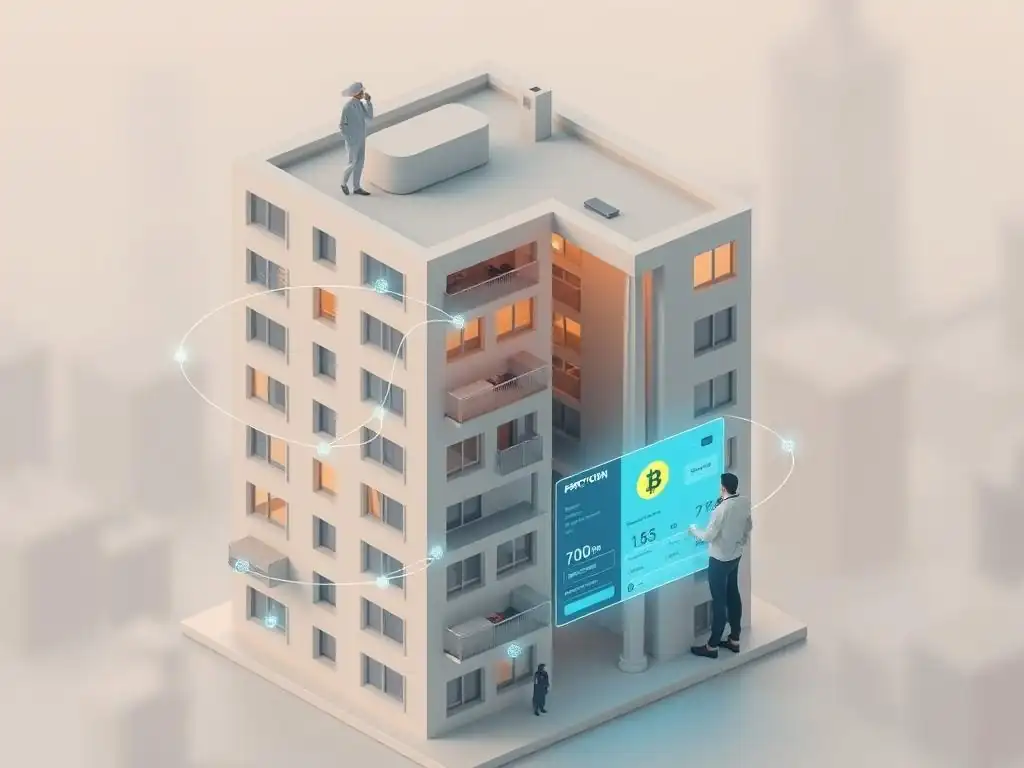
While still an emerging application, real-world examples demonstrate the tangible benefits of implementing blockchain rent collection property management. These cases highlight improvements in efficiency, cost savings, and tenant satisfaction.
Case Study: Increased Efficiency and Reduced Costs in Commercial Real Estate
A large commercial property management firm overseeing a portfolio of office buildings implemented a blockchain-based system for collecting rent from its corporate tenants. Prior to this, the firm faced challenges with delayed wire transfers and manual reconciliation of large sums, leading to significant administrative overhead and unpredictable cash flow. The process often involved multiple steps taking several days to confirm payments.
Following the implementation of automated rent collection via smart contracts and stablecoins on a permissioned blockchain, the firm reported a dramatic improvement. The time spent on payment reconciliation and follow-up was reduced by approximately 40%. Transaction fees associated with large wire transfers were nearly eliminated, resulting in an estimated cost saving of 1.8% on collected rent across the portfolio within the first year. Payments were settled within minutes, providing real-time cash flow visibility.
Case Study: Improved Tenant Satisfaction in Residential Properties
A residential property management company managing several hundred units implemented a user-friendly platform offering blockchain-based rent payment as an option alongside traditional methods. Their goal was to reduce late payments and disputes over payment history, which were common points of friction with tenants. Many tenants appreciated the convenience of automated payments and the ability to access an immutable record of their payment history.
Within six months of offering the blockchain payment option, the company observed a 15% reduction in late payments among tenants who opted into the system. Disputes regarding whether or not a payment was made or the exact date it was received dropped to near zero for these tenants, as the blockchain provided undeniable proof. Tenant feedback indicated higher satisfaction levels due to the ease of payment and the transparency of the system, contributing to improved landlord-tenant relationships.
The Future of Blockchain Rent Collection
The application of blockchain technology in property management, particularly for rent collection, is poised for significant growth and evolution. As the technology matures and adoption increases, we can anticipate more sophisticated integrations and broader applications.
Potential for Decentralized Property Management Platforms
Looking ahead, blockchain rent collection could become a core component of fully decentralized property management platforms. These platforms could operate as Decentralized Autonomous Organizations (DAOs), where property ownership is tokenized, and management tasks, including rent collection, maintenance requests, and lease agreements, are handled autonomously through smart contracts. This could remove the need for traditional intermediaries, potentially lowering costs and increasing efficiency.
In such a future, tenants might interact directly with smart contracts representing their lease, paying rent into a shared pool managed by the DAO, which then distributes funds to tokenized property owners. This vision represents a fundamental shift towards a more distributed and automated model for managing real estate assets, with automated rent collection as a foundational element.
Integration with Blockchain-Based Real Estate Solutions
Blockchain rent collection is likely to integrate seamlessly with other emerging blockchain applications in the real estate sector. This includes platforms for tokenizing real estate assets (allowing for fractional ownership), blockchain-based property registries for verifying ownership and title, and decentralized marketplaces for buying, selling, or leasing properties.
A tenant paying rent via blockchain could potentially be interacting with a system where their landlord's ownership is also recorded on the blockchain, or where the property itself is represented by a security token. This creates a connected ecosystem where all aspects of the real estate lifecycle, from ownership and financing to management and payments, are recorded and managed on distributed ledgers, increasing efficiency and reducing friction across the board.
Addressing Scalability and Adoption
While the potential is vast, the widespread adoption of blockchain rent collection still faces challenges, particularly regarding scalability and user adoption. Current blockchain networks, especially public ones, can sometimes face limitations in processing a massive volume of transactions required for large-scale residential property management. High transaction costs during peak network congestion can also be a barrier.
However, continuous development in blockchain technology, including Layer 2 scaling solutions, sharding, and more efficient consensus mechanisms, is actively addressing these scalability issues. Furthermore, efforts to improve user interfaces and educate the public about the benefits and ease of use of blockchain applications are crucial for overcoming adoption hurdles. As the technology becomes more robust and user-friendly, its application in property management will likely become increasingly common.
Overcoming Objections to Blockchain Rent Collection
Despite its clear advantages, the adoption of blockchain rent collection property management is often met with skepticism and objections. Addressing these concerns directly is essential for promoting wider acceptance.
Addressing Concerns about Volatility and Security
A primary concern often raised about using blockchain for payments is the volatility of cryptocurrencies. However, for rent collection, the solution lies in using stablecoins. These digital currencies are pegged to the value of stable assets like the US dollar, minimizing price fluctuations and ensuring that the value of the rent payment remains consistent. Educating users about stablecoins is key to alleviating volatility fears.
Regarding security, while blockchain is inherently secure, concerns about lost private keys or wallet hacks are valid. The solution involves promoting best practices for wallet security, including using reputable wallet providers, enabling multi-factor authentication, and providing clear guidance on how to secure private keys. Furthermore, smart contracts should undergo rigorous security audits to prevent vulnerabilities. These measures, combined with the immutable nature of the blockchain ledger, offer a high level of security when implemented correctly.
Demonstrating Value to Landlords and Tenants
Clearly articulating the tangible benefits to both landlords and tenants is crucial for overcoming resistance to change. For landlords, the value proposition centers around reduced administrative effort, lower transaction costs, faster access to funds, and improved record-keeping reliability. Quantifying potential savings in time and money based on real-world examples can be highly persuasive.
For tenants, the benefits include the convenience of automated payments, the elimination of late fees due to manual errors, and the ability to access a transparent, immutable record of their payment history anytime. Highlighting how the system simplifies their financial obligations and provides peace of mind can encourage adoption. Focusing on the user experience and ease of use is also vital in demonstrating value.
Educating Users on Blockchain Technology
The perceived complexity of blockchain technology is a significant barrier to adoption. Many landlords and tenants may be unfamiliar with concepts like digital wallets, stablecoins, or smart contracts. Therefore, comprehensive and accessible education is paramount. Providing simple, jargon-free explanations, step-by-step guides, video tutorials, and responsive customer support can help demystify the technology.
The goal is not to turn users into blockchain experts but to empower them to use the system confidently. Focusing on the practical aspects of how the system works from their perspective – how to set up payments, check balances, and view records – is more effective than delving into the technical intricacies of the blockchain itself. Building trust through clear communication and reliable support is essential for successful user onboarding and long-term adoption.
Conclusion: Embracing Blockchain for Streamlined and Secure Rent Collection
The traditional methods of rent collection in property management are ripe for disruption. Issues such as manual errors, processing delays, high fees, and a lack of transparency create inefficiencies and friction for both property managers and tenants. Blockchain technology, with its inherent security, transparency, and automation capabilities via smart contracts, offers a powerful solution to these challenges.
By implementing blockchain rent collection property management, stakeholders can benefit from enhanced security through cryptographic protection and immutable ledgers, reduced transaction costs compared to traditional payment processors, and significantly faster payment processing times. The automation provided by smart contracts streamlines the entire process, freeing up valuable time for property managers and offering tenants a convenient and reliable way to pay. Furthermore, the immutable record-keeping improves auditability and reduces disputes.
While challenges related to scalability, adoption, and education remain, ongoing technological advancements and focused user-centric design are paving the way for wider implementation. Embracing blockchain technology presents a clear opportunity for the property management industry to move towards a more efficient, secure, and transparent future for rent payments.
Frequently Asked Questions
How does blockchain technology automate rent collection in property management?
Blockchain enables smart contracts that automatically execute rent payments when conditions are met, eliminating intermediaries and reducing manual processes. This provides transparency and efficiency in the entire process.
What are the key benefits of using blockchain for rent collection and property management?
Using blockchain provides enhanced security through cryptography, reduced transaction costs by eliminating middlemen, and increased transparency for both landlords and tenants.
How does blockchain improve the security of rental payments compared to traditional methods?
Blockchain uses cryptographic encryption and a decentralized ledger making it significantly harder to tamper with or fraudulently alter payment records compared to traditional systems.
What role does DeFi (Decentralized Finance) play in blockchain-based rent collection?
DeFi protocols can integrate with blockchain rent collection systems to offer yield-generating opportunities on rental income or provide loans collateralized by rental agreements, expanding financial possibilities.
What are the potential regulatory challenges and considerations for implementing blockchain in property management and rent collection?
Regulatory uncertainty surrounding smart contract legality and data privacy are key challenges. Compliance with existing property laws and evolving blockchain regulations is crucial for successful implementation.
Final Reflection: Embracing the Future of Property Management
The exploration of blockchain-based automated rent collection underscores a pivotal shift in property management, highlighting the potential for increased efficiency and transparency in an industry often plagued by outdated processes. The promise of secure, immutable transactions and reduced administrative overhead is no longer a distant dream, but a tangible solution poised to revolutionize how landlords and tenants interact.
This technological evolution not only streamlines financial operations but also fosters a greater sense of trust and accountability within the rental ecosystem. The ability to track payments in real-time and eliminate intermediaries has the power to transform the landlord-tenant relationship, fostering a more collaborative and equitable environment. The future belongs to those who believe in the beauty of their dreams.
- Eleanor Roosevelt. This quote resonates deeply as we envision a future where blockchain technology empowers both property managers and tenants, creating a more efficient and transparent rental experience.
As we stand on the cusp of this technological transformation, let us embrace the opportunity to reimagine the future of property management. Consider how you can leverage the power of blockchain to enhance your own operations, fostering a more secure, transparent, and efficient rental experience for all. The future of property management is here; let's build it together.
Embrace the Future: Revolutionize Your Rental Income!
Thank you for exploring how blockchain is transforming rent collection. We hope this article highlighted the potential for increased efficiency and transparency in your property management practices. Now, it's time to put that knowledge into action.
Here are some steps you can take:
- Research and select a blockchain-based property management platform that suits your portfolio size and needs.
- Join our exclusive webinar on "Decentralized Property Management: A Hands-On Guide" for practical insights into implementation.
- Share this article with fellow property managers to encourage discussion about innovative solutions in the industry.
What immediate actions will you take to evaluate blockchain’s potential in streamlining your rent collection process? Share your thoughts in the comments below!
Leave a Reply