
Modular Blockchain Architecture: Customizing Solutions with Interchangeable Components


Welcome to Blockchain Trends, your compass in the rapidly evolving world of decentralized technology. Beyond the headlines of cryptocurrency, we delve into the practical applications and future implications of blockchain. Are you ready to unlock the full potential of blockchain technology? This week, we're exploring the exciting realm of modular blockchain architecture, uncovering the modular blockchain customization benefits and how interchangeable components are revolutionizing the way we build and deploy blockchain solutions. Intrigued? Dive in and discover how this innovative approach is shaping the future of decentralized systems.
Modular Blockchain Architecture: Tailoring Solutions for Specific Applications
- Introduction to Modular Blockchains and Customization Benefits
- Core Principles of Modular Blockchain Architecture
- Modular Blockchain Customization: Adapting Solutions to Specific Needs
- Benefits of Modular Blockchain Customization for Enterprises
- Use Cases of Modular Blockchain Solutions
- Comparing Modular Blockchains with Traditional Architectures
- Challenges and Considerations for Implementing Modular Blockchains
- The Future of Modular Blockchain Technology
- Conclusion: Embracing Modular Blockchain Customization for Innovation
-
Frequently Asked Questions
- How does modular blockchain architecture relate to blockchain customization?
- What are the key benefits of using a modular blockchain for a business application?
- Can you give an example of a real-world use case where modular blockchain customization benefits are evident?
- What are the potential challenges involved in implementing a modular blockchain solution?
- How does the regulatory landscape impact the adoption of modular blockchain architectures?
- Final Reflection: Embracing the Future of Blockchain Flexibility
- Reimagine Your Blockchain Strategy: Build Smarter!
Introduction to Modular Blockchains and Customization Benefits
Understanding the Limitations of Traditional Blockchain Designs
Traditional blockchain architectures, often referred to as monolithic blockchains, operate as single, unified systems. These designs, while foundational to the initial success of blockchain technology, integrate all core functionalities – consensus, data availability, and execution – into one tightly coupled layer. This monolithic approach, exemplified by early blockchains like Bitcoin and Ethereum (pre-merge), presents inherent limitations when aiming for scalability and application-specific optimization.
For instance, if a blockchain network experiences congestion due to high transaction volume on the execution layer, the entire network, including consensus and data availability, is affected. This lack of specialization and separation of concerns means that optimizing one aspect of the blockchain, such as transaction throughput, often comes at the expense of another, like security or decentralization. This inflexibility hinders the ability to tailor blockchain solutions to the diverse and nuanced requirements of various industries and use cases.
Furthermore, monolithic blockchains often face challenges in upgrading and adapting to new technological advancements. Because all components are intertwined, implementing even minor upgrades or changes can be complex, time-consuming, and potentially disruptive to the entire network. Hard forks, which are often necessary to introduce significant upgrades in monolithic blockchains, can lead to community splits and network instability, as seen in various instances throughout blockchain history. This rigidity makes it difficult for monolithic architectures to readily adopt cutting-edge technologies or efficiently cater to evolving application demands, creating a bottleneck for innovation and wider blockchain adoption across different sectors.
The Emergence of Modular Blockchain Architectures: A Flexible Approach
In contrast to monolithic designs, modular blockchain architectures represent a paradigm shift towards flexibility and specialization. Inspired by the principles of software modularity and layered architectures in computer science, modular blockchains decouple the core functionalities of a blockchain into distinct, interchangeable layers or modules.
This separation allows developers to select and customize specific components for each layer – consensus, data availability, and execution – based on the unique needs of an application. For example, a modular blockchain designed for high-throughput financial transactions might prioritize a faster consensus mechanism and a highly optimized execution environment, potentially sacrificing some aspects of decentralization to achieve optimal performance.
This modular approach fosters innovation and efficiency by enabling developers to "mix and match" different modules to create bespoke blockchain solutions. Imagine building with Lego bricks: each brick (module) serves a specific function, and you can combine them in countless ways to create diverse structures.
Similarly, modular blockchains allow for the creation of specialized blockchains tailored for specific use cases, ranging from supply chain management and decentralized finance (DeFi) to identity management and healthcare. This adaptability unlocks significant advantages in terms of performance, scalability, cost-effectiveness, and the ability to rapidly iterate and adapt to changing market conditions and technological advancements, paving the way for wider enterprise adoption and novel blockchain applications.
Key Advantages of Modular Blockchain Customization
Modular blockchain customization benefits are numerous and address many of the limitations inherent in traditional monolithic architectures. Firstly, enhanced performance and scalability are achieved by optimizing individual modules. For instance, a blockchain focused on high-frequency trading can employ a consensus mechanism prioritizing speed over absolute fault tolerance, while a data availability layer can be tailored for efficient data retrieval in high-volume scenarios. This targeted optimization contrasts sharply with monolithic blockchains, where performance improvements often require complex and network-wide upgrades, potentially impacting all functionalities equally, even when not all require optimization.
Secondly, modularity provides increased flexibility and adaptability. Businesses can select and combine modules that precisely match their specific requirements. As needs evolve, modules can be swapped out or upgraded independently without disrupting the entire system. This agility is crucial in rapidly changing technological landscapes and business environments. Thirdly, modularity can lead to reduced development costs and faster time-to-market.
Instead of building an entire blockchain from scratch, developers can leverage existing, pre-built modules, focusing their efforts on customization and integration. This streamlined development process accelerates deployment and reduces the resources needed to launch blockchain-based applications. Finally, modularity can enhance security and resilience. By isolating functionalities into distinct modules, the impact of a vulnerability in one module can be contained, preventing cascading failures across the entire system. Furthermore, specialized security modules, such as privacy-enhancing components, can be integrated to address specific security concerns related to different applications.
Core Principles of Modular Blockchain Architecture
Layered Structure in Modular Blockchains
The foundation of modular blockchain architecture lies in its layered structure, typically separating the traditional monolithic blockchain functionalities into distinct layers. While the exact layering may vary depending on the specific modular design, a common framework includes layers for consensus, data availability, and execution. The consensus layer is responsible for reaching agreement on the order of transactions and the state of the blockchain.
Modular blockchains offer the flexibility to choose different consensus mechanisms, such as Proof-of-Stake (PoS), Proof-of-Authority (PoA), or even customized variations, allowing for optimization based on the application's needs for speed, security, and decentralization. The data availability (DA) layer ensures that transaction data is accessible and verifiable by all network participants.
In monolithic blockchains, data availability is often intertwined with consensus. Modular designs, however, can utilize specialized DA solutions, such as data availability sampling or Validium technology, to improve scalability and efficiency, especially for applications handling large volumes of data.
The execution layer, also known as the settlement or computation layer, is where transactions are processed and smart contracts are executed. Modular blockchains can employ different execution environments, such as the Ethereum Virtual Machine (EVM), WebAssembly (WASM), or custom virtual machines optimized for specific types of computations. This separation of layers allows each layer to be optimized independently and even potentially outsourced to specialized providers.
For example, a modular blockchain might leverage a highly performant DA layer from a dedicated DA provider while using a customized execution environment tailored for specific smart contract logic. This layered approach is crucial for achieving the flexibility and customization benefits inherent in modular blockchain architecture, enabling the creation of highly specialized and efficient blockchain solutions.
Data Availability Solutions: Ensuring Data Integrity and Accessibility
Data availability (DA) is a critical aspect of blockchain security and functionality, ensuring that transaction data is publicly accessible and verifiable, preventing data withholding attacks and enabling anyone to reconstruct the blockchain's state. In monolithic blockchains, DA is often implicitly handled within the consensus mechanism, but modular blockchains can leverage specialized DA solutions to enhance scalability and efficiency. One prominent approach is data availability sampling (DAS), employed by networks like Celestia.
DAS allows light clients to probabilistically verify data availability without downloading the entire blockchain. This drastically reduces the bandwidth and storage requirements for nodes, enabling greater participation and decentralization, particularly in high-throughput environments. Instead of every node downloading and verifying all data, a sampling approach allows for efficient and scalable DA verification.
Another DA solution gaining traction is Validium technology. Validiums are off-chain scaling solutions that rely on cryptographic proofs, such as validity proofs or fraud proofs, to ensure data availability and transaction validity. In a Validium, transaction data is not stored on the main chain but is held by a data availability committee or a specialized DA provider.
However, cryptographic proofs guarantee that the transactions are valid and the data is available if needed for dispute resolution or verification. Validiums offer significant scalability improvements by moving data storage off-chain while maintaining security and data integrity through cryptographic guarantees. Choosing the appropriate DA solution in a modular blockchain design depends on the specific application requirements, considering factors like security needs, throughput demands, and the desired level of decentralization.
Consensus Mechanisms in Modular Designs
Consensus mechanisms are fundamental to blockchain technology, enabling distributed networks to agree on a single, consistent history of transactions. Modular blockchain architecture provides the flexibility to select and customize consensus algorithms to meet specific application needs, moving beyond the constraints of a single, fixed consensus mechanism in monolithic blockchains. Proof-of-Stake (PoS) is a popular consensus mechanism that offers energy efficiency and scalability compared to Proof-of-Work (PoW).
Modular blockchains can implement various PoS variations, adjusting parameters like staking requirements, slashing conditions, and reward distribution to optimize for specific performance and security trade-offs. For instance, a private or consortium modular blockchain might opt for a more permissioned PoS variant with a smaller validator set for faster consensus and higher throughput.
Proof-of-Authority (PoA) is another consensus mechanism suitable for modular blockchains, particularly in enterprise settings or permissioned environments. PoA relies on a set of pre-selected, reputable validators to secure the network. This approach offers high throughput and fast transaction finality, making it well-suited for applications where trust in validators is established.
Modular blockchains can also incorporate Byzantine Fault Tolerance (BFT) consensus algorithms, known for their robustness and fault tolerance, crucial for applications requiring high security and resilience, such as financial systems or critical infrastructure. Furthermore, modularity allows for the exploration of hybrid consensus mechanisms, combining aspects of different algorithms to achieve a desired balance of properties. For example, a modular blockchain could combine PoS for general consensus with a BFT mechanism for critical transactions, tailoring the consensus layer to the specific demands of diverse applications within the same system.
Execution Environments: Optimizing Transaction Processing and Smart Contracts
The execution environment in a blockchain, often referred to as the virtual machine (VM), is responsible for processing transactions and executing smart contracts. Modular blockchain architecture allows for the selection and customization of execution environments to optimize for specific types of applications and computational workloads. The Ethereum Virtual Machine (EVM) is a widely adopted execution environment known for its versatility and extensive developer tooling and community. Modular blockchains can incorporate the EVM to leverage this existing ecosystem and facilitate interoperability with Ethereum-based applications. However, the EVM is not always the most performant or efficient option for all use cases.
WebAssembly (WASM) is emerging as a compelling alternative execution environment for modular blockchains. WASM is a binary instruction format designed for high performance and portability, supporting multiple programming languages and offering significant performance improvements over the EVM in certain scenarios. Modular blockchains can adopt WASM VMs to enhance transaction processing speed and efficiency, particularly for computationally intensive applications. Beyond general-purpose VMs like EVM and WASM, modularity enables the development of specialized execution environments tailored for specific domains.
For example, a modular blockchain focused on privacy-preserving computations might utilize a VM optimized for zero-knowledge proofs or secure multi-party computation. Similarly, a blockchain designed for gaming applications could employ a VM optimized for real-time interactions and complex game logic. This ability to customize the execution environment is a key advantage of modular blockchain architecture, allowing for fine-grained optimization and the creation of highly specialized blockchain solutions.
Modular Blockchain Customization: Adapting Solutions to Specific Needs
Customizing Consensus Algorithms for Performance and Security
Modular blockchain customization truly shines in the ability to tailor consensus algorithms to meet specific performance and security requirements. For applications demanding high transaction throughput, such as decentralized exchanges or high-frequency trading platforms, consensus algorithms prioritizing speed and scalability are crucial.
This might involve selecting a Proof-of-Authority (PoA) mechanism for faster block times and transaction finality, or implementing variations of Proof-of-Stake (PoS) with optimized parameters for validator selection and block production. For instance, a private modular blockchain for supply chain management within a consortium could utilize a PoA consensus where validators are trusted members of the consortium, ensuring rapid transaction processing and efficient operations within a controlled environment.
Conversely, applications prioritizing security and decentralization, such as those handling high-value assets or sensitive data, might opt for more robust consensus algorithms like Byzantine Fault Tolerance (BFT) or more decentralized PoS variations with larger validator sets. These mechanisms, while potentially offering lower throughput compared to PoA, provide enhanced fault tolerance and resistance to attacks. Consider a modular blockchain designed for decentralized identity management; in this case, security and data integrity are paramount.
A BFT-based consensus or a highly secure PoS mechanism would be more appropriate, even if it means slightly lower transaction speeds, to ensure the robustness and trustworthiness of the identity management system. The modular approach allows for this nuanced selection, enabling developers to strike the right balance between performance and security based on the specific needs of the application, a level of customization not easily achievable with monolithic blockchains.
Implementing Specialized Data Availability Solutions
The flexibility of modular blockchain architecture extends to data availability (DA) solutions, allowing for the implementation of specialized DA strategies tailored to different application requirements. For applications generating massive amounts of data, such as decentralized social media platforms or IoT networks, efficient and scalable DA solutions are essential.
Data Availability Sampling (DAS) offers a compelling approach in such scenarios, enabling light clients to verify data availability without downloading the entire blockchain, significantly reducing bandwidth and storage demands. A modular blockchain powering a decentralized social media platform, for example, could leverage DAS to handle the vast volume of user-generated content and interactions efficiently, ensuring data availability without overwhelming network nodes.
For applications requiring enhanced privacy or confidentiality, specialized DA solutions like Validiums or Volitions can be implemented. Validiums, by storing transaction data off-chain and relying on cryptographic proofs for data availability and validity, can offer improved scalability and potentially enhance privacy as the full transaction data is not publicly available on the main chain.
Volitions combine aspects of Validiums and rollups, allowing users to choose between on-chain and off-chain data availability per transaction, offering flexibility and control over data visibility and cost. A modular blockchain used for handling sensitive healthcare data, for instance, could utilize Validium technology to ensure data availability for auditing and verification purposes while maintaining a degree of privacy by keeping the raw data off the main chain, aligning with stringent data privacy regulations.
The choice of DA solution becomes a customizable parameter, enabling modular blockchains to adapt to diverse data handling needs and privacy considerations across various applications.
Designing Optimized Execution Environments
Modular blockchain customization empowers developers to design optimized execution environments, or virtual machines (VMs), tailored to the specific computational demands of their applications. For applications requiring high computational throughput, such as decentralized scientific computing platforms or complex DeFi protocols, optimizing the VM for performance is critical.
This might involve adopting WebAssembly (WASM) VMs, known for their efficiency and support for multiple programming languages, or even developing custom VMs specifically designed for the target computational workloads. A modular blockchain powering a decentralized scientific computing platform, for example, could implement a WASM-based VM or a custom VM optimized for parallel processing and complex calculations, significantly boosting the platform's computational capacity.
For applications emphasizing security and formal verification, such as high-value financial instruments or critical infrastructure control systems, execution environments can be designed with built-in security features and formal verification capabilities. This could involve utilizing VMs with enhanced security sandboxing, support for formal methods to verify smart contract correctness, or even hardware-based secure enclaves for sensitive computations.
A modular blockchain used for issuing and managing security tokens, for instance, could employ a VM with robust security features and formal verification tools to ensure the integrity and security of token transactions and smart contract logic, minimizing the risk of vulnerabilities and exploits. Furthermore, modularity allows for the integration of specialized hardware accelerators or co-processors into the execution environment to further optimize performance for specific types of computations, like cryptographic operations or machine learning inference, enabling the creation of highly specialized and performant blockchain solutions.
Examples of Customizable Blockchain Modules [e.g., privacy modules, identity modules]
Modular blockchain architectures facilitate the integration of specialized modules that extend the core functionality of the blockchain, catering to specific application needs. Privacy modules are a prime example, enabling the incorporation of privacy-enhancing technologies directly into the blockchain framework. These modules can implement zero-knowledge proofs (ZKPs), secure multi-party computation (MPC), or other cryptographic techniques to enable confidential transactions and data processing. A modular blockchain designed for enterprise data sharing could incorporate a privacy module using ZKPs to allow companies to share data insights without revealing the underlying raw data, fostering collaboration while preserving data confidentiality.
Identity modules provide another powerful customization option, enabling the integration of decentralized identity solutions directly into the blockchain. These modules can handle KYC/AML compliance, verifiable credentials, and secure identity management, streamlining identity verification processes and enhancing user privacy and control over their digital identities. A modular blockchain for decentralized finance (DeFi) could include an identity module that allows users to seamlessly verify their identity for regulatory compliance while maintaining control over their personal data, simplifying onboarding and enhancing user experience.
Beyond privacy and identity, modular blockchains can incorporate modules for governance, enabling on-chain voting and decision-making processes; oracle integration, facilitating secure and reliable data feeds from external sources; and interoperability, enabling seamless communication and data exchange with other blockchains. The modular approach allows for a rich ecosystem of specialized modules that can be combined and customized to create highly tailored blockchain solutions for a wide range of use cases.
Benefits of Modular Blockchain Customization for Enterprises
Enhanced Scalability and Performance Through Component Optimization
Enterprises seeking to leverage blockchain technology often require solutions that can handle high transaction volumes and deliver optimal performance. Modular blockchain customization directly addresses this need by enabling component optimization.
Instead of being constrained by the limitations of a monolithic architecture, enterprises can fine-tune individual modules, such as the consensus mechanism and execution environment, to achieve superior scalability and performance tailored to their specific operational demands. For instance, a supply chain management system built on a modular blockchain could optimize its consensus layer for rapid transaction finality and high throughput, ensuring efficient tracking and processing of goods as they move through the supply chain.
Moreover, modularity facilitates the adoption of specialized scaling solutions at different layers. Enterprises can leverage advanced data availability techniques, such as data availability sampling or Validiums, to handle large datasets and high transaction loads without compromising network performance.
Similarly, they can choose execution environments optimized for specific computational tasks, ensuring efficient processing of complex smart contracts or data analytics within the blockchain network. This granular control over component optimization allows enterprises to build blockchain solutions that are not only scalable to meet their current needs but also adaptable to future growth and evolving business requirements, a critical advantage in dynamic business environments.
Increased Flexibility and Adaptability to Evolving Requirements
The business landscape is constantly evolving, and enterprises need technology solutions that can adapt to changing market conditions and emerging opportunities. Modular blockchain customization provides unparalleled flexibility and adaptability, allowing enterprises to readily adjust their blockchain infrastructure as their needs evolve.
Unlike monolithic blockchains, where significant changes often require complex and disruptive network-wide upgrades, modular systems enable modifications and upgrades to individual modules without impacting the entire system. For example, if an enterprise's data privacy requirements become more stringent due to new regulations, they can seamlessly integrate a specialized privacy module into their modular blockchain without requiring a complete system overhaul.
This adaptability extends to incorporating new technological advancements. As blockchain technology progresses, new consensus algorithms, data availability solutions, and execution environments emerge. Modular architectures allow enterprises to readily adopt these innovations by simply swapping out or upgrading specific modules, ensuring their blockchain solutions remain cutting-edge and competitive. This future-proof nature of modular blockchains is particularly valuable for enterprises making long-term investments in blockchain technology, providing the agility to adapt to unforeseen changes and capitalize on new opportunities as they arise, a stark contrast to the rigid and less adaptable nature of monolithic systems.
Reduced Development Costs and Time-to-Market
Developing blockchain solutions from scratch using monolithic architectures can be a costly and time-consuming endeavor. Modular blockchain customization offers a more efficient and cost-effective approach, significantly reducing development costs and accelerating time-to-market for enterprises. By leveraging pre-built and readily available modules for core blockchain functionalities, enterprises can avoid reinventing the wheel and focus their development efforts on customizing and integrating these modules to meet their specific business requirements. This modular approach streamlines the development process, reducing the need for extensive custom coding and allowing development teams to focus on higher-level application logic and business-specific features.
Furthermore, the modularity of the architecture promotes code reusability and simplifies maintenance. Modules can be reused across different blockchain applications within an enterprise, reducing development duplication and ensuring consistency.
Upgrades and maintenance can be performed on individual modules without requiring extensive testing and redeployment of the entire system, further reducing costs and development cycles. The accelerated time-to-market enabled by modularity is particularly crucial for enterprises operating in competitive markets, allowing them to quickly deploy innovative blockchain solutions, gain a first-mover advantage, and respond rapidly to market demands, a significant benefit compared to the longer development timelines associated with monolithic blockchain development.
Improved Security and Resilience with Tailored Modules
Security and resilience are paramount concerns for enterprises deploying blockchain solutions, especially for mission-critical applications. Modular blockchain customization enhances security and resilience by allowing enterprises to tailor security measures and fault tolerance mechanisms at a granular level. By isolating functionalities into distinct modules, the impact of a security vulnerability in one module can be contained, preventing cascading failures across the entire system. For example, a vulnerability in the execution environment would not necessarily compromise the consensus or data availability layers in a modular architecture, limiting the scope of potential attacks.
Enterprises can also integrate specialized security modules, such as privacy-enhancing modules, identity management modules, or intrusion detection systems, to address specific security threats and vulnerabilities relevant to their applications. Furthermore, modularity enables the implementation of tailored fault tolerance mechanisms at each layer.
For instance, a modular blockchain for financial transactions might employ a highly robust Byzantine Fault Tolerance (BFT) consensus mechanism for enhanced resilience against network attacks and node failures, while a less critical module might utilize a less resource-intensive fault tolerance approach. This layered security and resilience approach, enabled by modular customization, provides enterprises with greater control over their blockchain's security posture and ensures the robustness and reliability of their blockchain solutions, minimizing risks and enhancing trust in the system.
Use Cases of Modular Blockchain Solutions
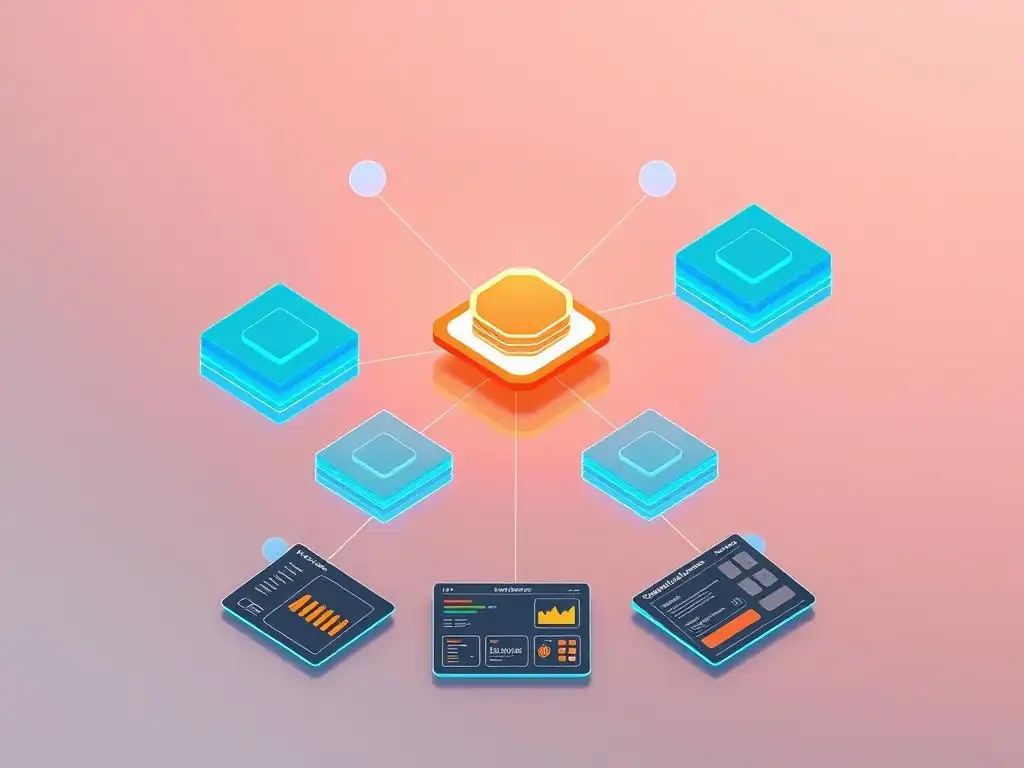
Supply Chain Management with Customized Traceability Modules
Modular blockchain solutions are particularly well-suited for supply chain management due to their ability to incorporate customized traceability modules. These modules can be designed to track products and materials at each stage of the supply chain, from origin to consumer, providing enhanced transparency and accountability.
A modular blockchain for supply chain traceability could include modules for tracking product provenance, recording temperature and humidity conditions during transit (for temperature-sensitive goods like pharmaceuticals or food), and verifying authenticity to combat counterfeiting. Customizable data fields within these modules can be tailored to capture specific information relevant to different industries and product types, such as batch numbers, expiration dates, and manufacturing details.
Furthermore, modularity allows for the integration of specialized modules for different stakeholders in the supply chain. For example, a manufacturer module could record production details, a logistics module could track shipment information, and a retailer module could verify product authenticity at the point of sale.
These modules can be designed with specific access permissions and data visibility settings, ensuring that each stakeholder only has access to the information relevant to their role in the supply chain. The enhanced transparency and traceability provided by modular blockchain solutions can improve supply chain efficiency, reduce fraud, enhance consumer trust, and facilitate compliance with regulations, particularly in industries with complex and global supply chains.
Decentralized Finance (DeFi) Applications with Specific Consensus Rules
Decentralized Finance (DeFi) applications often have unique requirements for speed, security, and decentralization, making modular blockchain solutions with customizable consensus rules highly advantageous. Different DeFi applications, such as decentralized exchanges (DEXs), lending platforms, and stablecoin protocols, may prioritize different aspects of consensus. For instance, a high-frequency DEX might require a consensus mechanism optimized for speed and low latency to facilitate rapid order execution, potentially sacrificing some degree of decentralization for performance. Modular blockchains allow DeFi developers to select consensus algorithms that align with the specific performance and security needs of their applications.
For example, a modular blockchain designed for a high-throughput DEX could utilize a Proof-of-Authority (PoA) or a delegated Proof-of-Stake (dPoS) consensus mechanism to achieve faster block times and transaction finality compared to more decentralized but slower consensus algorithms like Proof-of-Work (PoW). Conversely, a DeFi lending platform prioritizing security and immutability might opt for a more robust Byzantine Fault Tolerance (BFT) or a highly decentralized Proof-of-Stake (PoS) mechanism, even if it means slightly lower transaction speeds.
The ability to customize consensus rules in modular blockchains empowers DeFi developers to build applications that are optimized for their specific use cases, striking the right balance between performance, security, and decentralization.
Healthcare Data Management with Enhanced Privacy Features
Healthcare data is highly sensitive and subject to stringent privacy regulations like HIPAA and GDPR. Modular blockchain solutions, with their ability to incorporate enhanced privacy features, are well-suited for healthcare data management applications.
Modular blockchains can integrate specialized privacy modules that implement privacy-enhancing technologies (PETs) such as zero-knowledge proofs (ZKPs), secure multi-party computation (MPC), and homomorphic encryption to protect patient data while enabling secure data sharing and analysis. For example, a modular blockchain for healthcare data exchange could utilize a privacy module with ZKPs to allow researchers to access aggregated patient data for research purposes without revealing individual patient identities or sensitive medical information, ensuring compliance with privacy regulations.
Furthermore, modularity allows for the implementation of fine-grained access control mechanisms within the blockchain, ensuring that only authorized parties can access specific types of healthcare data. Identity modules can be integrated to manage patient identities and permissions securely, enabling patients to control who has access to their medical records.
Modular blockchains can also facilitate secure and auditable data sharing between healthcare providers, researchers, and patients, improving care coordination and advancing medical research while maintaining patient privacy and data security. The ability to customize privacy features and access controls makes modular blockchains a compelling solution for addressing the unique privacy and security challenges in healthcare data management.
Identity Management Solutions with Modular KYC/AML Compliance
Identity management is a critical requirement for many blockchain applications, particularly in regulated industries like finance and healthcare. Modular blockchain solutions can incorporate modular KYC/AML (Know Your Customer/Anti-Money Laundering) compliance modules to streamline identity verification processes and facilitate regulatory compliance.
These modules can be designed to integrate with existing KYC/AML service providers and databases, automating identity verification and compliance checks within the blockchain workflow. A modular blockchain for decentralized finance (DeFi) could include a KYC/AML module that allows users to securely verify their identity for regulatory compliance purposes before accessing certain DeFi services, simplifying onboarding and ensuring adherence to regulatory requirements.
Identity modules within modular blockchains can also enable users to manage their digital identities and verifiable credentials in a self-sovereign manner, giving them greater control over their personal data. Users can selectively share their identity information with different applications and services, enhancing privacy and reducing the risk of identity theft. Furthermore, modularity allows for the customization of KYC/AML compliance modules to meet the specific regulatory requirements of different jurisdictions and industries.
This flexibility is crucial for global blockchain applications that need to operate in diverse regulatory environments. The integration of modular KYC/AML compliance modules simplifies regulatory adherence, enhances user privacy, and promotes wider adoption of blockchain-based identity management solutions.
Comparing Modular Blockchains with Traditional Architectures
Monolithic vs. Modular: A Detailed Comparison
Monolithic and modular blockchain architectures represent fundamentally different approaches to blockchain design, each with its own set of strengths and weaknesses. Monolithic blockchains, like early versions of Bitcoin and Ethereum, integrate all core functionalities – consensus, data availability, and execution – into a single, tightly coupled layer. This approach simplifies initial development and deployment but leads to limitations in scalability, flexibility, and customizability. Upgrades and changes to monolithic blockchains are often complex and disruptive, requiring network-wide hard forks. Performance optimizations in one area can impact other functionalities, and tailoring the blockchain to specific application needs is challenging.
Modular blockchains, in contrast, decouple these core functionalities into distinct, interchangeable layers or modules. This separation allows for independent optimization and customization of each layer, leading to enhanced scalability, flexibility, and adaptability. Modular architectures enable the creation of specialized blockchain solutions tailored to diverse use cases, from high-throughput financial applications to privacy-preserving healthcare data management.
Upgrades and changes can be implemented at the module level, minimizing disruption and facilitating rapid innovation. However, modular blockchains introduce complexities in module integration, interoperability, and potentially governance, requiring careful design and engineering to realize their full potential. The choice between monolithic and modular architectures depends on the specific requirements of the application and the trade-offs between simplicity, flexibility, and performance.
Trade-offs Between Flexibility and Complexity
While modular blockchain architectures offer significant flexibility and customization benefits, they also introduce trade-offs, particularly in terms of complexity. Increased complexity is inherent in designing, developing, and deploying modular systems compared to monolithic blockchains. Developers need to manage the interactions and interoperability between different modules, ensuring seamless integration and data flow across layers. Defining clear interfaces and communication protocols between modules is crucial but adds to the design and engineering effort. Testing and debugging modular systems can also be more complex due to the distributed nature of functionalities across modules.
However, this increased complexity is often justified by the gains in flexibility and performance. Modular architectures allow for fine-grained optimization and customization, enabling the creation of highly specialized and efficient blockchain solutions that are not achievable with monolithic designs. The ability to "mix and match" modules and upgrade individual components independently provides unparalleled adaptability to evolving requirements and technological advancements.
Furthermore, as the modular blockchain ecosystem matures, standardized modules and development tools are emerging, simplifying the development process and mitigating some of the initial complexity. The trade-off between flexibility and complexity is a key consideration when choosing between monolithic and modular blockchain architectures, with modularity offering greater long-term benefits in adaptability and specialization at the cost of increased initial development and integration complexity.
Security Considerations in Modular Blockchain Design
Security is paramount in blockchain technology, and modular blockchain design introduces unique security considerations compared to monolithic architectures. While modularity can enhance security by isolating functionalities and limiting the impact of vulnerabilities, it also introduces new potential attack vectors related to module integration and interoperability. Inter-module communication and data transfer points become critical security boundaries that need to be carefully secured to prevent malicious actors from exploiting vulnerabilities in module interfaces. Ensuring the secure composition of modules from different providers or developers is also a challenge, requiring robust security audits and verification processes.
Furthermore, the complexity of modular systems can itself introduce security risks if not managed properly. Increased complexity can lead to subtle vulnerabilities that are harder to detect and exploit. Thorough security testing, formal verification, and ongoing monitoring are crucial for modular blockchains to mitigate these risks. However, modularity also offers security advantages.
Specialized security modules can be integrated to enhance privacy, identity management, and intrusion detection, providing tailored security measures for specific applications. The ability to isolate functionalities can also limit the blast radius of security breaches, preventing cascading failures across the entire system. Addressing security concerns in modular blockchain design requires a holistic approach that considers module integration, interoperability, and the overall system complexity, leveraging the inherent security advantages of modularity while mitigating potential new risks.
Challenges and Considerations for Implementing Modular Blockchains
Interoperability Between Different Modules
One of the primary challenges in implementing modular blockchains is ensuring seamless interoperability between different modules, especially when these modules are developed by different teams or organizations. Standardized interfaces and communication protocols are crucial for enabling modules to interact effectively and exchange data securely. Lack of standardization can lead to compatibility issues, hindering the "plug-and-play" nature of modular architectures and increasing integration complexity. Developing and adopting open standards for module interfaces, data formats, and communication protocols is essential for fostering a thriving modular blockchain ecosystem and facilitating seamless module integration.
Furthermore, governance and coordination are necessary to ensure that modules developed by different parties adhere to these standards and maintain interoperability over time. Community-driven initiatives and industry consortia can play a vital role in establishing and promoting interoperability standards for modular blockchains. Addressing interoperability challenges is crucial for realizing the full potential of modularity, enabling developers to easily combine and customize modules from different sources to create innovative and tailored blockchain solutions. Overcoming these challenges will unlock the true composability and flexibility promised by modular blockchain architectures.
Security Risks Associated with Component Integration
While modularity offers security advantages, it also introduces security risks associated with component integration. Integrating modules from different sources, with varying levels of security assurance, can create potential vulnerabilities if not managed carefully. Supply chain security becomes a critical concern, as the security of the overall modular blockchain system depends on the security of each individual module and the integrity of the integration process.
Malicious or compromised modules can introduce vulnerabilities that can be exploited to compromise the entire system. Robust security audits and verification processes are essential for ensuring the security of individual modules and the integrity of their integration.
Furthermore, inter-module communication channels can become potential attack vectors if not properly secured. Data exchanged between modules needs to be protected against eavesdropping, tampering, and unauthorized access. Secure communication protocols and access control mechanisms are crucial for mitigating these risks. Addressing security risks associated with component integration requires a layered security approach that includes module-level security audits, secure integration practices, and robust monitoring and incident response capabilities. A strong focus on security throughout the modular blockchain lifecycle, from module development to deployment and maintenance, is essential for building secure and resilient modular systems.
Governance and Upgradeability of Modular Systems
Governance and upgradeability are crucial considerations for the long-term sustainability and evolution of modular blockchain systems. Governance mechanisms are needed to manage the development, maintenance, and evolution of modules and the overall modular architecture. Decentralized governance models, involving stakeholders from different modules and the wider community, can ensure fair and transparent decision-making processes for upgrades, bug fixes, and feature enhancements. Establishing clear governance frameworks for modular blockchains is essential for fostering trust, ensuring accountability, and promoting long-term stability.
Upgradeability is particularly important for modular systems, as the ability to seamlessly upgrade individual modules and the overall architecture is a key advantage of modularity. However, managing upgrades in a modular environment can be complex, requiring careful coordination and testing to ensure that upgrades do not introduce compatibility issues or security vulnerabilities. Versioning mechanisms and backward compatibility are crucial for facilitating smooth upgrades and minimizing disruption. Developing robust governance and upgradeability mechanisms is essential for ensuring the long-term viability and adaptability of modular blockchain systems, allowing them to evolve and adapt to changing technological landscapes and user needs.
Standardization Efforts in the Modular Blockchain Space
Standardization is crucial for the widespread adoption and interoperability of modular blockchain technology. Standardization efforts are underway in various areas, including module interfaces, communication protocols, data formats, and security practices. Industry consortia, standards organizations, and open-source communities are playing a vital role in defining and promoting these standards. Standardized module interfaces would enable developers to easily combine and exchange modules from different providers, fostering a more vibrant and competitive modular blockchain ecosystem. Standardized communication protocols would ensure seamless interoperability between modules and across different modular blockchain systems.
Standardized data formats would facilitate data exchange and analysis across modular blockchains, enhancing data portability and utility. Standardized security practices would promote consistent security levels across modules and modular systems, improving overall security and trust. Continued standardization efforts are essential for reducing fragmentation in the modular blockchain space, promoting interoperability, fostering innovation, and accelerating the adoption of modular blockchain technology across various industries and use cases. Standardization will be a key enabler for realizing the full potential of modularity and unlocking the transformative power of customizable blockchain solutions.
The Future of Modular Blockchain Technology
Emerging Trends in Modular Blockchain Development
The modular blockchain space is rapidly evolving, with several emerging trends shaping its future trajectory. One key trend is the increasing specialization of modules. We are seeing the development of highly specialized modules for specific functionalities, such as privacy-preserving computations, decentralized identity management, and advanced data analytics.
This specialization allows for greater optimization and efficiency, enabling the creation of highly tailored blockchain solutions for niche applications. Another trend is the rise of data availability (DA) layers as a distinct modular component. Dedicated DA layers, like Celestia, are gaining traction as a foundational layer for modular blockchains, offering scalable and efficient DA solutions that can be leveraged by various execution layers and applications.
Interoperability solutions are also becoming increasingly important in the modular blockchain space. Cross-chain communication protocols and bridges are being developed to enable seamless interaction and data exchange between different modular blockchains and even between modular and monolithic blockchains. This interoperability will unlock new possibilities for cross-chain applications and create a more interconnected and collaborative blockchain ecosystem.
Furthermore, advancements in zero-knowledge proofs (ZKPs) and other privacy-enhancing technologies (PETs) are driving the development of more sophisticated privacy modules for modular blockchains, enabling confidential transactions and data processing while maintaining transparency and auditability. These emerging trends are pushing the boundaries of modular blockchain technology and paving the way for more powerful, versatile, and user-friendly blockchain solutions.
The Role of Modular Blockchains in Enterprise Adoption
Modular blockchains are poised to play a significant role in driving enterprise adoption of blockchain technology. Their customizability and flexibility make them particularly attractive to enterprises with diverse and evolving business requirements. Enterprises can tailor modular blockchain solutions to their specific needs, optimizing performance, security, and privacy to align with their operational demands and regulatory compliance requirements. The reduced development costs and faster time-to-market offered by modular architectures make blockchain technology more accessible and cost-effective for enterprises, encouraging experimentation and adoption.
Modular blockchains also address enterprise concerns about scalability and performance. The ability to optimize individual modules and leverage specialized scaling solutions enables enterprises to build blockchain solutions that can handle enterprise-grade transaction volumes and data loads. Furthermore, modularity facilitates seamless integration with existing enterprise systems.
Modules can be designed to interact with legacy IT infrastructure and enterprise applications, simplifying integration and minimizing disruption to existing workflows. As enterprises increasingly recognize the potential benefits of blockchain technology, modular blockchains are emerging as a compelling and practical approach for deploying blockchain solutions across various industries and use cases, accelerating enterprise blockchain adoption and innovation.
Predictions for the Evolution of Blockchain Architecture
The evolution of blockchain architecture is likely to be significantly influenced by the modular paradigm. Modular blockchains are expected to become the dominant architecture for many blockchain applications in the future, particularly in enterprise and specialized use cases. Monolithic blockchains will likely continue to exist, especially for foundational infrastructure and core cryptocurrencies, but modularity will offer greater flexibility and adaptability for a wider range of applications. We can anticipate the emergence of a rich ecosystem of modular blockchain components and service providers, offering specialized modules for consensus, data availability, execution environments, privacy, identity, and other functionalities.
This ecosystem will foster innovation and competition, driving the development of more efficient, secure, and user-friendly blockchain solutions. Interoperability between modular blockchains and other blockchain architectures will become increasingly crucial. Cross-chain communication protocols and bridges will enable seamless data exchange and value transfer across different blockchain networks, creating a more interconnected and collaborative blockchain ecosystem. The future of blockchain architecture is likely to be characterized by greater specialization, modularity, and interoperability, with modular blockchains playing a central role in unlocking the full potential of blockchain technology and driving its widespread adoption across various industries and sectors.
Conclusion: Embracing Modular Blockchain Customization for Innovation
Key Takeaways on the Advantages of Modular Design
Modular blockchain architecture represents a significant advancement in blockchain technology, offering a compelling alternative to traditional monolithic designs. The key takeaway is the unparalleled flexibility and customization that modularity provides. By decoupling core blockchain functionalities into interchangeable modules, developers can tailor solutions to specific application needs, optimizing for performance, security, and privacy. Enhanced scalability and performance are achieved through component optimization, allowing modular blockchains to handle high transaction volumes and complex computational workloads. Increased flexibility and adaptability enable enterprises to readily adjust their blockchain infrastructure to evolving requirements and technological advancements.
Reduced development costs and faster time-to-market are realized by leveraging pre-built modules and streamlining the development process. Improved security and resilience are achieved through tailored security modules and the isolation of functionalities, limiting the impact of vulnerabilities. Modular design empowers developers and enterprises to build highly specialized and efficient blockchain solutions, unlocking new possibilities and driving innovation across various industries. Embracing modular blockchain architecture is key to realizing the full potential of blockchain technology and addressing the diverse needs of a rapidly evolving digital landscape.
The Potential for Modular Blockchains to Transform Industries
Modular blockchains have the potential to transform a wide range of industries by providing customizable and adaptable blockchain solutions tailored to specific sector needs. In supply chain management, modular blockchains can enhance transparency, traceability, and efficiency, combating counterfeiting and improving logistics. In decentralized finance (DeFi), modularity enables the creation of specialized DeFi applications with optimized consensus rules and execution environments, fostering innovation and expanding financial inclusion.
In healthcare, modular blockchains can enhance data privacy, security, and interoperability, improving patient care and advancing medical research. In identity management, modularity facilitates secure and self-sovereign identity solutions, empowering users and streamlining KYC/AML compliance.
Beyond these examples, modular blockchains can be applied to numerous other industries, including gaming, IoT, energy, and government services, enabling the creation of tailored blockchain solutions for specific use cases and challenges. The ability to customize and adapt modular blockchains to meet the unique requirements of different industries unlocks the transformative potential of blockchain technology, paving the way for new business models, enhanced efficiency, and greater transparency across various sectors. Modular blockchains are not just a technological advancement; they are a catalyst for industry-wide innovation and disruption.
Call to Action: Exploring Modular Solutions for Specific Use Cases
The time is ripe for developers, enterprises, and innovators to explore the potential of modular blockchain solutions for their specific use cases. Identify the unique requirements and challenges of your industry or application and consider how modular blockchain customization can address them. Investigate existing modular blockchain platforms and frameworks to understand the available tools and technologies. Experiment with building and deploying modular blockchain prototypes to test their feasibility and validate their benefits in your specific context. Engage with the modular blockchain community to learn from experts, collaborate with other developers, and contribute to the growth of the modular ecosystem.
Modular blockchain technology is still in its early stages of adoption, but its potential is immense. By actively exploring and experimenting with modular solutions, you can position yourself at the forefront of blockchain innovation and unlock the transformative power of customizable blockchain technology for your organization or industry. Embrace the modular paradigm, explore the possibilities, and be a part of shaping the future of blockchain architecture and its impact on the world.
Frequently Asked Questions
How does modular blockchain architecture relate to blockchain customization?
Modular blockchains are designed with interchangeable components, allowing developers to tailor solutions to specific needs, rather than using a monolithic, one-size-fits-all approach. This enables greater flexibility and optimization.
What are the key benefits of using a modular blockchain for a business application?
Modular blockchains offer increased scalability, improved security through specialized modules, and the ability to easily upgrade or replace individual components without disrupting the entire system.
Can you give an example of a real-world use case where modular blockchain customization benefits are evident?
Supply chain management can benefit from a modular design, with separate modules for tracking, authentication, and payment, allowing businesses to optimize each aspect independently and integrate with existing systems.
What are the potential challenges involved in implementing a modular blockchain solution?
Developing and integrating different modules can be complex, requiring specialized expertise. Ensuring seamless interoperability between modules is also a significant challenge.
How does the regulatory landscape impact the adoption of modular blockchain architectures?
Regulations around data privacy, security, and cross-border transactions can significantly influence the design and deployment of modular blockchains, requiring careful compliance considerations for each component.
Final Reflection: Embracing the Future of Blockchain Flexibility
The exploration of modular blockchain architecture reveals a paradigm shift, where customization and adaptability are no longer luxuries, but necessities. The ability to tailor blockchain solutions to specific needs, swapping components like building blocks, directly addresses the limitations of monolithic designs and opens doors to unprecedented innovation in various industries. This isn't just about theoretical advantages; it's about empowering developers and businesses to build more efficient, secure, and scalable applications in a rapidly evolving technological landscape.
The impact of modular blockchains extends beyond mere technical improvements. It fosters a more inclusive and democratic blockchain ecosystem, allowing smaller players to compete and innovate without being constrained by the limitations of existing platforms. This democratization is crucial for the widespread adoption of blockchain technology and its integration into everyday life. The future of blockchain isn't about one-size-fits-all solutions; it's about creating a diverse ecosystem of specialized chains that can interoperate seamlessly.
This vision underscores the importance of modularity in unlocking the true potential of blockchain.
As we conclude this exploration of modular blockchain customization benefits, consider the implications for your own endeavors. How can you leverage the principles of modularity and adaptability to build more resilient and innovative solutions? The future of blockchain is being shaped by those who embrace flexibility and customization. Embrace the modular mindset, and you'll be well-positioned to contribute to the next generation of decentralized technologies.
Reimagine Your Blockchain Strategy: Build Smarter!
Thanks for exploring the world of modular blockchains! We hope you now have a clearer understanding of how these customizable systems can transform your approach to blockchain development. Now, let's put that knowledge into action and help shape the future of decentralized technology.
Here's how you can take the next step:
- Explore specific modular frameworks to understand how they enable customizable solutions. This is your primary action—start experimenting!
- Share this article with a colleague or friend who's also interested in blockchain architecture. Let’s spark a discussion and expand our collective knowledge!
- Consider reviewing your current blockchain solutions to identify components that could benefit from a modular approach. Are you achieving maximum efficiency and flexibility?
What specific module would you like to see developed to address a current blockchain challenge? Share your ideas in the comments below!
Leave a Reply