
The Blockchain Solution for Ethical and Sustainable Supply Chain Practices


Welcome to Blockchain Trends, your compass in the evolving world of decentralized technology!
Delve into the transformative power of blockchain beyond the buzzwords. Are you curious about how this technology is revolutionizing ethical practices? This week, we're unlocking the secrets to building a more responsible future, exploring the intersection of blockchain, supply chain ethics, and sustainability. Discover how distributed ledger technology is bringing unprecedented transparency and accountability to global supply chains, and why it matters more than ever. Intrigued? Read on to uncover the blockchain solution!
Blockchain for Ethical and Sustainable Supply Chain Management
- Blockchain and Supply Chain: A Foundation for Trust and Sustainability
- Enhancing Ethical Sourcing with Blockchain Transparency
- Promoting Sustainable Practices Through Blockchain
- Real-World Applications: Blockchain in Supply Chains
- Benefits of Blockchain for Supply Chain Sustainability and Ethics
- Overcoming Challenges in Blockchain Adoption
- The Future of Blockchain in Supply Chains
-
Frequently Asked Questions
- How can blockchain technology improve supply chain ethics?
- What role does sustainability play in the adoption of blockchain for supply chains?
- What are the main challenges in implementing blockchain for supply chain management?
- How does blockchain enhance supply chain transparency?
- How can blockchain address the lack of trust in global supply chains?
- Final Reflection: Empowering Transparency Through Blockchain
- Embrace Transparency: Transform Your Supply Chain Today!
Blockchain and Supply Chain: A Foundation for Trust and Sustainability
Challenges in Traditional Supply Chains
Traditional supply chains are notoriously complex, often spanning multiple continents and involving dozens or even hundreds of intermediaries. This inherent complexity creates significant opacity, making it exceedingly difficult to gain true end-to-end visibility. Without clear visibility, verifying the origin of raw materials, tracking labor practices at different stages, or accurately measuring environmental impact becomes a daunting task. This lack of transparency is a major barrier to achieving robust Blockchain supply chain ethics sustainability, as unethical practices like forced labor or excessive pollution can easily be hidden within the tangled network of suppliers and distributors.
Furthermore, the reliance on disparate, often paper-based or siloed digital systems within traditional supply chains makes data sharing cumbersome and prone to errors or deliberate manipulation. Each handover point between parties represents a potential vulnerability where information can be lost, altered, or fabricated.
This makes it hard to build a chain of custody that is truly trustworthy for ethical sourcing or environmental compliance. For instance, proving that a product is genuinely "fair trade" or "carbon neutral" requires verifiable data across every step, something traditional systems struggle profoundly to provide consistently and reliably, hindering efforts towards comprehensive Blockchain supply chain ethics sustainability.
Blockchain's Role in Addressing Supply Chain Issues
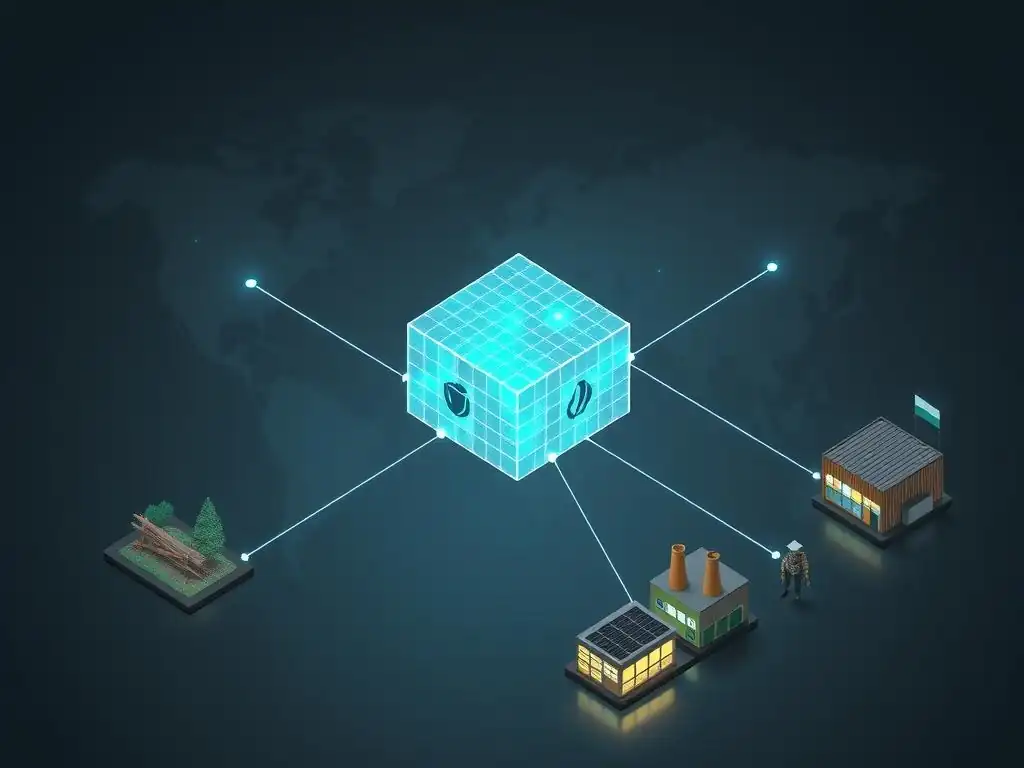
Blockchain technology offers a compelling solution to many of the fundamental issues plaguing traditional supply chains, particularly concerning trust and transparency. By providing a decentralized, immutable ledger shared among participants, blockchain creates a single, tamper-evident record of transactions and events. As goods move through the supply chain, key data points – such as origin, processing steps, quality checks, and transportation details – can be recorded on the blockchain. This ensures that information, once added, cannot be altered without detection, establishing a new level of accountability and trust that is crucial for achieving Blockchain supply chain ethics sustainability.
This shared, immutable record fundamentally changes how participants interact and share information. Instead of relying on fragmented databases or trusting individual parties' assertions, stakeholders can access a verified history of the product or material. This inherent transparency allows for unprecedented visibility into the product's journey, from initial source to final destination. By making information about sourcing, production conditions, and environmental certifications readily accessible and verifiable, blockchain empowers companies and consumers to make informed decisions, driving improvements in Blockchain supply chain ethics sustainability across the entire value chain.
Enhancing Ethical Sourcing with Blockchain Transparency
Traceability and Provenance: Verifying Ethical Claims
Blockchain excels at creating a detailed, verifiable history of a product's origin and journey, a process known as provenance tracking. By assigning a unique digital identity (often linked to a physical tag or identifier) to goods at their source, and recording each subsequent handling, transformation, or location change on the distributed ledger, blockchain builds an irrefutable chain of custody. This allows companies to definitively prove claims about ethical sourcing, such as ensuring minerals are conflict-free, coffee beans are fair trade certified, or wood comes from sustainably managed forests.
For consumers and regulators, this means that labels like "ethically sourced" or "conflict-free" move from being trust-based claims to verifiable facts. For example, in the diamond industry, platforms like De Beers' Tracr track individual stones from mine to retailer, recording attributes and ownership transfers on a blockchain. This provides immutable proof of origin, assuring buyers that their diamond is natural and has followed an ethical path. Such traceability is paramount for building consumer confidence and meeting regulatory requirements related to Blockchain supply chain ethics sustainability.
Blockchain-Based Solutions for Fair Labor
Ensuring fair labor practices throughout complex supply chains is a significant ethical challenge. Blockchain can contribute to solutions by creating transparent and verifiable records related to working conditions, certifications, and even payments. While directly tracking every worker's condition is complex, blockchain can track the flow of funds to cooperatives or suppliers certified for fair labor, verify labor compliance audits, or record certifications like SA8000 at specific production facilities.
Some initiatives explore using blockchain to facilitate more transparent payment systems, ensuring that fair wages or premiums intended for workers or farmers actually reach them, rather than being absorbed by intermediaries. By tokenizing payments or linking payment records to verified work completion logs on a blockchain, a clearer audit trail can be established. This potential for increased accountability in financial flows and verification of labor standards offers a powerful tool in the pursuit of Blockchain supply chain ethics sustainability.
Combating Counterfeit Goods
Counterfeiting is not only a significant economic problem, estimated to cost the global economy hundreds of billions annually, but also a major ethical and sustainability issue. Counterfeit goods often originate from illicit, unregulated factories with terrible labor conditions and disregard for environmental standards. Moreover, they represent wasted resources and contribute to landfill waste. Blockchain provides a powerful defense by enabling the creation of unique, verifiable digital identities for authentic products.
By embedding unique identifiers (like QR codes or NFC tags) on products at the point of manufacture and linking them to a blockchain record, consumers, retailers, and customs officials can instantly verify the authenticity of an item. This makes it significantly harder for counterfeit products to infiltrate the legitimate supply chain. Reducing the flow of counterfeits directly supports Blockchain supply chain ethics sustainability by cutting off demand for unethically produced goods and reducing the waste associated with their production and disposal.
Promoting Sustainable Practices Through Blockchain
Tracking Environmental Impact with Blockchain
Monitoring and mitigating environmental impact across vast supply chains is a complex undertaking. Blockchain can provide the necessary framework for transparently tracking environmental data points, such as carbon emissions, energy consumption, water usage, or waste generation, at different stages of production and transportation. By recording verified environmental data onto the blockchain, companies can create an auditable trail of their ecological footprint.
This immutable record allows for more accurate reporting on sustainability metrics and helps identify areas where environmental performance needs improvement. Furthermore, blockchain can facilitate the tracking and trading of environmental assets like carbon credits or renewable energy certificates, ensuring their validity and preventing double-counting. This enhanced visibility and accountability for environmental data is a critical component of achieving Blockchain supply chain ethics sustainability.
Blockchain for Waste Reduction and Circularity
Moving from a linear "take-make-dispose" economy to a circular one requires sophisticated tracking of materials and products throughout their lifecycle, including their return and repurposing. Blockchain is ideally suited to facilitate this by creating transparent and persistent records of product components, materials used, and end-of-life disposition. By tracking materials from source through manufacturing, use, and eventual recycling or disposal, blockchain can enable more effective waste management and resource recovery.
For example, a blockchain could record the type and quantity of recyclable materials in a product, making it easier for recycling facilities to identify and process them correctly. It could also track the journey of returned products in reverse logistics, ensuring they are properly refurbished, remanufactured, or recycled. This level of visibility supports the development of closed-loop systems and reduces overall waste, contributing significantly to Blockchain supply chain ethics sustainability.
Verifying Sustainable Materials
Consumers and businesses increasingly demand products made from sustainable materials, such as recycled plastics, certified sustainable timber, or organic cotton. Verifying the authenticity of these claims, however, can be challenging due to complex sourcing networks. Blockchain provides a mechanism to create a verifiable digital passport for materials, tracking their origin, processing, and certifications from the initial source to the final product.
By recording certifications (e.g., FSC for timber, GOTS for organic textiles) directly onto the blockchain and linking them to specific batches of material, companies can provide immutable proof of their sustainable origins. This transparency builds trust with customers and ensures that investments in sustainable sourcing are genuinely reflected in the final product. Reliable verification of sustainable materials is a cornerstone of achieving comprehensive Blockchain supply chain ethics sustainability.
Real-World Applications: Blockchain in Supply Chains
De Beers' Tracr Platform for Diamond Provenance
De Beers, a leading diamond company, launched the Tracr platform to provide provenance assurance for natural diamonds. This blockchain-based platform registers rough diamonds at the point of production and tracks them through the value chain – cutting, polishing, wholesale, and retail. Each diamond registered on Tracr receives a unique GIA Diamond Dossier number, and its journey is recorded on the immutable ledger.
Tracr aims to enhance consumer confidence by providing verifiable proof that a diamond is natural and has followed an ethical and conflict-free path from mine to finger. Participants on the platform, including manufacturers and retailers, contribute data at each step, creating a shared, secure record. By tracking millions of individual diamonds, Tracr demonstrates how blockchain can bring unparalleled transparency to high-value, complex supply chains, directly supporting Blockchain supply chain ethics sustainability goals in the luxury sector.
IBM Food Trust for Food Safety and Traceability
IBM Food Trust is one of the most prominent examples of blockchain application in supply chains, specifically focusing on the food industry. Developed by IBM, the platform connects growers, processors, wholesalers, distributors, manufacturers, retailers, and others through a permissioned blockchain network. Participants share data regarding food origin, processing, shipping, and handling.
A key benefit demonstrated by IBM Food Trust is the dramatic reduction in the time it takes to trace a food item back to its source in the event of a recall or contamination scare. What used to take days or even weeks using traditional methods can be accomplished in seconds with the blockchain platform. This rapid traceability enhances food safety, reduces the economic impact of recalls, and minimizes food waste, showcasing blockchain's practical impact on efficiency and contributing to Blockchain supply chain ethics sustainability. Major companies like Walmart, Nestle, and Dole have participated in or adopted the platform.
Benefits of Blockchain for Supply Chain Sustainability and Ethics
Increased Transparency
One of the most significant benefits blockchain brings to supply chains is unprecedented transparency. By creating a shared, distributed ledger where every transaction and event is recorded immutably, blockchain allows all authorized participants to have a clear, real-time view of the product's journey from origin to destination. This eliminates information silos and reduces the reliance on trust between individual parties, as data can be independently verified on the blockchain.
This enhanced transparency is fundamental to achieving Blockchain supply chain ethics sustainability. It makes it significantly harder for unethical practices (like using child labor or dumping toxic waste) to remain hidden, as audit trails become readily accessible. Companies can use this transparency to back up their ethical and sustainable claims with verifiable data, building stronger relationships with consumers and stakeholders who demand accountability.
Improved Efficiency
While transparency is a direct benefit, blockchain also leads to improved operational efficiency within supply chains, which indirectly supports sustainability. By streamlining processes like documentation, customs clearance, and payments through shared, automated smart contracts, blockchain reduces delays and administrative overhead. The ability to quickly trace products, as demonstrated by IBM Food Trust reducing traceability time from days to seconds, is another major efficiency gain.
Faster, more accurate processes mean less paperwork, fewer errors, and quicker response times to disruptions or quality issues. This efficiency translates to reduced waste – less spoilage due to delays, less energy spent on inefficient processes, and a more optimized flow of goods. These operational improvements contribute to a more sustainable supply chain by minimizing resource consumption and environmental impact, reinforcing the link between efficiency and Blockchain supply chain ethics sustainability.
Enhanced Consumer Trust
In today's market, consumers are increasingly demanding transparency and ethical behavior from the brands they support. They want to know where their products come from, under what conditions they were made, and their environmental impact. However, traditional marketing claims about sustainability or ethics are often met with skepticism due to a lack of verifiable information. Blockchain directly addresses this trust deficit.
By providing a platform where ethical sourcing and sustainable practices can be immutably recorded and verified, blockchain allows companies to share credible proof of their commitments with consumers. Consumers can potentially scan a QR code on a product and access a simplified view of its journey and certifications on the blockchain. This ability to verify claims builds confidence and loyalty, rewarding companies that genuinely invest in Blockchain supply chain ethics sustainability and encouraging others to follow suit.
Overcoming Challenges in Blockchain Adoption
Data Interoperability
A significant hurdle in implementing blockchain for supply chains is ensuring interoperability between the new blockchain system and existing legacy systems used by different participants (e.g., enterprise resource planning (ERP), warehouse management systems (WMS), transportation management systems (TMS)). Supply chains involve diverse companies, each with its own technological infrastructure, often built over decades. Integrating these disparate systems to feed accurate and timely data into a blockchain network is complex.
Furthermore, different blockchain platforms and protocols exist (e.g., Hyperledger Fabric, Ethereum, Corda), and ensuring they can communicate and share data effectively is crucial for building seamless, end-to-end traceability. Developing industry standards and middleware solutions that can bridge the gap between various enterprise systems and blockchain networks is an ongoing challenge that needs to be addressed for widespread adoption and realizing the full potential of Blockchain supply chain ethics sustainability.
Scalability
Supply chains generate vast amounts of data daily – from tracking individual items or batches to recording quality checks, location updates, and sensor readings. For a blockchain solution to be practical for large-scale supply chains, it must be able to handle a high volume of transactions efficiently and cost-effectively. Early blockchain platforms, like public Ethereum, faced challenges with transaction speed and cost as network usage increased.
While newer blockchain architectures and Layer 2 solutions offer improved scalability, ensuring that a chosen blockchain platform can handle the specific throughput requirements of a global supply chain without becoming prohibitively slow or expensive remains a critical consideration. The technical challenges of processing and storing immense amounts of data on a distributed ledger need continuous innovation to support the widespread implementation required for Blockchain supply chain ethics sustainability across various industries.
Regulatory Compliance
Navigating the complex and evolving landscape of international regulations poses another challenge for blockchain adoption in supply chains. Regulations vary significantly across countries and regions, covering areas such as data privacy (e.g., GDPR), electronic signatures, customs reporting, and industry-specific compliance (e.g., food safety, pharmaceuticals). Integrating a blockchain solution must ensure compliance with all relevant legal frameworks.
For instance, the "right to be forgotten" under GDPR presents a challenge for immutable blockchain ledgers, requiring careful design considerations, such as storing sensitive personal data off-chain with only hashed references on the blockchain. Ensuring that smart contracts comply with legal requirements and are enforceable across jurisdictions also adds complexity. Addressing these legal and regulatory complexities is essential for building trust and enabling the lawful use of blockchain in pursuit of Blockchain supply chain ethics sustainability.
The Future of Blockchain in Supply Chains
Emerging Trends
The future of blockchain in supply chains is poised for significant growth and integration with other cutting-edge technologies. We can expect to see increased convergence with the Internet of Things (IoT), where sensors on goods, vehicles, or storage facilities automatically record data (like temperature, humidity, or location) directly onto the blockchain, creating highly accurate and automated audit trails. Artificial intelligence (AI) will likely be used to analyze the vast datasets collected on blockchains, identifying patterns, predicting risks, and optimizing routes or inventory.
Furthermore, the development of more sophisticated smart contracts will enable greater automation of supply chain processes, from triggering payments upon verified delivery to automatically adjusting inventory levels based on real-time sales data recorded on the ledger. The exploration of different blockchain architectures, including hybrid and consortium chains tailored for enterprise use, will likely lead to more scalable and interoperable solutions capable of supporting complex global supply chains and advancing Blockchain supply chain ethics sustainability.
Blockchain and Sustainable Development Goals
Blockchain technology has the potential to be a powerful enabler for achieving several of the United Nations' Sustainable Development Goals (SDGs), particularly those related to responsible consumption and production (SDG 12), decent work and economic growth (SDG 8), and climate action (SDG 13). By providing transparency into resource use, waste generation, emissions, and labor practices, blockchain offers a verifiable framework for tracking progress towards sustainability targets.
For instance, blockchain can help companies demonstrate compliance with environmental regulations (SDG 13), verify fair wages and safe working conditions (SDG 8), and enable circular economy initiatives that reduce waste and promote resource efficiency (SDG 12). The immutable nature of blockchain records provides a trustworthy basis for reporting on SDG contributions, allowing companies and governments to track impact and hold stakeholders accountable. This makes blockchain a key technology for driving global efforts towards Blockchain supply chain ethics sustainability and broader development goals.
Preparing for Blockchain Adoption
For businesses looking to leverage blockchain for Blockchain supply chain ethics sustainability, preparation is key. This involves several steps, starting with clearly identifying the specific ethical or sustainability challenges the company aims to address with blockchain, such as improving fair trade verification or reducing carbon footprint reporting complexity. Understanding the potential return on investment and the resources required is crucial.
Companies should also engage key stakeholders across their supply chain, from raw material suppliers to end retailers and even consumers, to ensure buy-in and facilitate data sharing. Piloting blockchain solutions on a smaller scale within a specific part of the supply chain allows businesses to test the technology, identify challenges, and refine implementation strategies before a full-scale rollout. Building internal expertise and collaborating with experienced blockchain providers are also vital steps in successfully adopting blockchain for enhanced Blockchain supply chain ethics sustainability.
- Identify specific goals (e.g., fair labor, carbon tracking).
- Engage supply chain partners.
- Conduct pilot programs.
- Build internal expertise.
Frequently Asked Questions
How can blockchain technology improve supply chain ethics?
Blockchain offers immutable records allowing for increased transparency and traceability of goods throughout the supply chain. This helps verify ethical sourcing and labor practices.
What role does sustainability play in the adoption of blockchain for supply chains?
Sustainability is a key driver. Consumers and businesses are demanding eco-friendly practices. Blockchain can verify sustainable sourcing, reducing environmental impact.
What are the main challenges in implementing blockchain for supply chain management?
Challenges include scalability, integration with existing systems, and the need for industry-wide collaboration to establish common standards and data protocols.
How does blockchain enhance supply chain transparency?
Blockchain provides a shared, tamper-proof ledger. This allows stakeholders to track products from origin to consumer, ensuring accountability and authenticity.
How can blockchain address the lack of trust in global supply chains?
By creating a decentralized and verifiable record, blockchain builds trust among stakeholders. This reduces fraud and ensures the integrity of the supply chain.
Final Reflection: Empowering Transparency Through Blockchain
The exploration of blockchain's potential to revolutionize supply chain ethics and sustainability culminates in a crucial realization: transparency is no longer a luxury, but a necessity. In a world increasingly aware of the ethical and environmental implications of our consumption, the ability to trace a product's journey from origin to consumer becomes paramount. Blockchain offers a powerful tool to achieve this, fostering accountability and driving positive change within global supply chains.
This technology's impact extends far beyond mere tracking; it fundamentally reshapes the power dynamics within the supply chain. Witnessing the potential for blockchain to empower marginalized producers and hold corporations accountable fills me with hope for a more equitable future. The future of supply chains is not just about efficiency; it's about building trust and ensuring ethical practices at every step.
This quote encapsulates the transformative potential of blockchain, moving us towards a system where ethical considerations are intrinsically linked to economic success.
Now, consider your own role in this evolving landscape. How can you, as a consumer, a business leader, or a policymaker, champion the adoption of blockchain-based solutions for ethical and sustainable supply chains? The power to demand transparency and support responsible practices lies within each of us. Let us embrace this technology not just as an innovation, but as a catalyst for a more just and sustainable world, one block at a time.
Embrace Transparency: Transform Your Supply Chain Today!
Thank you for exploring how blockchain technology can revolutionize ethical and sustainable supply chain practices. We hope you’ve gained valuable insights into creating a more responsible and transparent world. Now, let's put that knowledge into action!
Here are some ways you can contribute to a more ethical and sustainable future:
- Research companies leveraging blockchain to promote ethical sourcing. Identify one organization whose practices resonate with you and analyze their approach. Share your findings with your network!
- If you're a business owner, consider attending a blockchain conference focused on supply chain management. This will allow you to connect with industry experts and explore potential pilot projects for your company.
- Engage the Community: Leave a comment below sharing your biggest takeaway from this article or suggesting other potential blockchain applications for sustainability.
What steps will you take to promote ethical and sustainable supply chains using blockchain? Share your thoughts in the comments below!
Leave a Reply