
The Metaverse as a Platform: Blockchain Infrastructure for Decentralized Applications


Welcome to Blockchain Trends, your trusted source for unraveling the revolutionary potential of blockchain technology! Ever wondered how blockchain extends far beyond just cryptocurrencies? Dive into the fascinating intersection of decentralized finance (DeFi), enterprise solutions, and emerging regulatory landscapes.
In this article, we're exploring the intriguing world of blockchain metaverse infrastructure development opportunities. Discover how blockchain is poised to reshape the metaverse, paving the way for truly decentralized applications. What possibilities lie ahead, and how can you get involved? Let's delve into the future, together!
The Metaverse as a Platform: Blockchain Infrastructure for Decentralized Applications
- Introduction: Unveiling Blockchain's Role in Shaping the Metaverse
- Blockchain Metaverse Infrastructure Development Opportunities: An Overview
- Core Components of Blockchain Infrastructure for the Metaverse
- Decentralized Applications (dApps) Powering the Metaverse
- Scaling Blockchain for Metaverse Adoption: Addressing Performance Challenges
- Security Considerations for Blockchain-Based Metaverse Platforms
- The Future of Blockchain Metaverse Infrastructure: Trends and Predictions
- Real-World Examples of Blockchain Integration in Metaverse Projects
- Overcoming Challenges in Blockchain Metaverse Infrastructure Development
- Conclusion: Embracing Blockchain for a Decentralized and Immersive Metaverse
-
Frequently Asked Questions
- What role does blockchain play in the development of the metaverse?
- How can blockchain enhance security within the metaverse?
- What are some examples of blockchain-based metaverse infrastructure?
- What are the key blockchain metaverse infrastructure development opportunities?
- How is regulation impacting the development of blockchain-based metaverse infrastructure?
- Final Reflection: Building the Decentralized Future
- Unleash Your Metaverse Potential!
Introduction: Unveiling Blockchain's Role in Shaping the Metaverse
Defining the Metaverse and its Dependence on Blockchain Technology
The metaverse, often envisioned as a persistent, shared, 3D virtual world, or a universe of interconnected digital environments, is rapidly evolving from science fiction to a tangible, albeit nascent, reality. At its core, the metaverse promises a more immersive and interactive internet experience, blurring the lines between the physical and digital realms. However, to truly realize its potential as a decentralized and user-centric platform, the metaverse heavily relies on robust and innovative underlying technologies.
Blockchain technology emerges as a critical infrastructure component, providing the foundational layers necessary for security, ownership, and interoperability within these virtual worlds. Without blockchain, the metaverse risks becoming just another iteration of centralized online platforms, lacking the key principles of user empowerment and distributed governance that many proponents envision.
The dependence of the metaverse on blockchain stems from the need for verifiable digital ownership and secure, transparent transactions within these virtual environments. Imagine a metaverse where digital assets, identities, and experiences are controlled by centralized entities. Such a scenario would mirror the limitations of the current internet, where users often lack true ownership and control over their data and digital creations.
Blockchain, with its inherent properties of immutability, transparency, and decentralization, offers a compelling alternative. It enables the creation of digital scarcity, facilitates secure peer-to-peer transactions without intermediaries, and empowers users with genuine ownership of their metaverse assets. This fundamental shift towards decentralization is what distinguishes the blockchain-powered metaverse from previous iterations of virtual worlds, paving the way for a more open, equitable, and user-driven digital future.
The Promise of Decentralization: Why Blockchain is Crucial for Metaverse Evolution
Decentralization, powered by blockchain, is not merely a technical feature but a philosophical cornerstone for the metaverse's evolution. Traditional online platforms operate on a centralized model, where user data, assets, and governance are controlled by a single entity. This model presents inherent risks, including data breaches, censorship, and a lack of user control. In contrast, a decentralized metaverse, built upon blockchain infrastructure, distributes power and control across a network of participants. This distribution mitigates the risks associated with central points of failure and fosters a more democratic and resilient ecosystem.
The promise of decentralization extends beyond security and resilience; it fundamentally alters the power dynamics within the metaverse. Blockchain enables the creation of decentralized autonomous organizations (DAOs) for governance, allowing metaverse users to collectively participate in decision-making processes that shape the virtual world. Furthermore, decentralized marketplaces and economies, facilitated by blockchain-based tokens and NFTs, empower creators and users to directly engage in value exchange without relying on intermediaries.
This shift towards a decentralized paradigm is crucial for fostering innovation, promoting fair access, and ensuring that the metaverse evolves as a truly open and user-owned platform, rather than a collection of walled gardens controlled by corporations. The development of blockchain metaverse infrastructure is therefore not just about building technology, but about architecting a new paradigm for digital interaction and ownership.
Blockchain Metaverse Infrastructure Development Opportunities: An Overview
Exploring Key Areas for Blockchain Integration in the Metaverse
The integration of blockchain technology into the metaverse is not a monolithic endeavor but rather a multifaceted undertaking encompassing various critical areas. One prominent area is digital identity and avatar management. Blockchain-based decentralized identities (DIDs) offer users control over their digital personas across different metaverse platforms, enhancing privacy and reducing reliance on centralized identity providers.
Another key area lies in virtual asset ownership and management. Non-fungible tokens (NFTs) provide a mechanism for establishing provable ownership of digital assets within the metaverse, ranging from virtual land and avatars to in-game items and digital art. This fosters a robust digital economy and empowers creators and users alike.
Furthermore, decentralized governance mechanisms are essential for shaping the rules and evolution of metaverse environments. Smart contracts and DAOs can facilitate transparent and community-driven governance, ensuring that metaverse platforms are responsive to user needs and interests. Interoperability solutions, leveraging blockchain's cross-chain capabilities, are also crucial for creating a unified and seamless metaverse experience across different virtual worlds.
Finally, decentralized data storage and processing utilizing blockchain and related technologies can enhance data privacy and security within the metaverse, moving away from centralized data silos. These key areas represent significant blockchain metaverse infrastructure development opportunities, each vital for realizing the full potential of a decentralized and open metaverse.
The Need for Scalable and Secure Blockchain Solutions for Metaverse Applications
As metaverse applications become more complex and user bases expand, the underlying blockchain infrastructure must be both scalable and secure to support mass adoption. Scalability is paramount because metaverse environments often require handling a high volume of transactions and interactions in real-time. Traditional blockchain networks, particularly those employing proof-of-work consensus mechanisms, can face limitations in transaction throughput and speed, leading to congestion and high gas fees. For a seamless and responsive metaverse experience, blockchain solutions need to achieve significantly higher transaction processing capabilities.
Security is equally crucial, given the potential for high-value digital assets and sensitive user data within metaverse platforms. Blockchain's inherent security features, such as cryptographic hashing and distributed consensus, provide a strong foundation. However, metaverse applications also introduce new security challenges, including vulnerabilities in smart contracts, risks associated with cross-chain interactions, and the need to protect user identities and digital assets from cyber threats.
Therefore, blockchain metaverse infrastructure development must prioritize robust security measures at every layer, from protocol design to application development, to ensure a safe and trustworthy environment for users. Addressing both scalability and security is not just a technical imperative, but a prerequisite for the widespread adoption and long-term viability of blockchain-powered metaverses.
Core Components of Blockchain Infrastructure for the Metaverse
Decentralized Identity (DID) Management in the Metaverse
Decentralized Identity (DID) management is a cornerstone of blockchain infrastructure for the metaverse, offering users unprecedented control and privacy over their digital personas. In contrast to traditional centralized identity systems where users rely on platforms to manage their credentials and data, DIDs empower individuals to own and control their identities. A DID is a verifiable, decentralized digital identity that is rooted in blockchain technology. Users can create and manage their DIDs independently, without the need for intermediaries, and selectively share verified information with metaverse applications and services.
Within the metaverse, DIDs enable users to maintain a consistent identity across different virtual worlds and platforms, enhancing interoperability and user experience. Imagine seamlessly transitioning between virtual spaces while maintaining a unified avatar and digital reputation, all secured by your DID. Furthermore, DIDs enhance user privacy by minimizing data collection and centralizing it in the hands of platforms.
Users can selectively disclose only the necessary information required for specific interactions, reducing the risk of data breaches and privacy violations. The adoption of DID standards, such as those developed by the Decentralized Identity Foundation (DIF) and the World Wide Web Consortium (W3C), is crucial for fostering interoperability and widespread adoption of decentralized identity management within the evolving metaverse landscape. This focus on user-centric identity is a significant blockchain metaverse infrastructure development opportunity.
Smart Contracts: Enabling Automation and Governance in Virtual Worlds
Smart contracts are self-executing agreements written in code and deployed on a blockchain, playing a pivotal role in automating processes and establishing transparent governance within virtual worlds. In the metaverse context, smart contracts can automate a wide range of functions, from facilitating virtual land transactions and managing digital asset ownership to governing in-game economies and enforcing community rules. These contracts operate autonomously once deployed, ensuring that agreements are executed precisely as programmed, eliminating the need for intermediaries and reducing the potential for disputes.
Smart contracts also form the backbone of decentralized governance within the metaverse. Decentralized Autonomous Organizations (DAOs), built upon smart contracts, enable communities to collectively govern virtual worlds and platforms. DAO members can use tokens to vote on proposals, allocate resources, and make decisions regarding the metaverse's development and evolution.
This decentralized governance model promotes transparency, inclusivity, and user participation in shaping the metaverse's future. For example, in virtual land platforms, smart contracts can automate the process of land ownership transfer and enforce rules regarding land usage, ensuring a transparent and efficient marketplace. The versatility and automation capabilities of smart contracts are fundamental to building dynamic and user-governed virtual worlds, highlighting their importance in blockchain metaverse infrastructure development.
Interoperability and Cross-Chain Solutions for a Unified Metaverse Experience
Interoperability and cross-chain solutions are critical for realizing the vision of a unified and interconnected metaverse, rather than a fragmented collection of isolated virtual worlds. In the current landscape, different metaverse platforms often operate on separate blockchain networks, creating silos and limiting the seamless transfer of assets and identities between them.
Imagine owning a digital asset in one metaverse and being unable to use it in another – this lack of interoperability hinders the user experience and limits the potential of the metaverse as a whole. Cross-chain solutions, leveraging technologies like bridges and atomic swaps, aim to bridge these gaps and enable seamless communication and asset transfer between different blockchain networks.
These solutions are essential for creating a truly open and interconnected metaverse where users can move freely between virtual worlds, carrying their digital assets and identities with them. Interoperability also fosters network effects, increasing the value and utility of the metaverse as a whole. For instance, a user might acquire a digital artwork on one blockchain platform and seamlessly display it in their virtual home within another metaverse environment operating on a different blockchain.
The development of robust and secure cross-chain solutions is a major focus area in blockchain metaverse infrastructure development, paving the way for a more unified and user-centric metaverse experience. Achieving true interoperability will unlock significant potential for innovation and growth within the metaverse ecosystem.
Decentralized Applications (dApps) Powering the Metaverse
Gaming and Play-to-Earn (P2E) Models: Revolutionizing Metaverse Gaming
Decentralized applications (dApps) are transforming the gaming landscape within the metaverse, particularly through the rise of play-to-earn (P2E) models. Traditional gaming often operates on a centralized model where players invest time and resources into games but have limited ownership of in-game assets and no direct financial rewards.
P2E gaming, enabled by blockchain technology and NFTs, flips this paradigm by rewarding players with cryptocurrency and digital assets that they genuinely own and can trade or sell outside of the game environment. This shift towards player ownership and economic empowerment is revolutionizing the gaming industry and driving significant growth in metaverse gaming.
Games like Axie Infinity exemplify the P2E model, where players earn crypto tokens (AXS and SLP) through gameplay, which can then be exchanged for fiat currency or other cryptocurrencies. These tokens and in-game NFTs, representing creatures called Axies, have real-world value and are traded on open marketplaces. The success of P2E games demonstrates the potential of blockchain to create new economic opportunities within the metaverse and incentivize player engagement.
Furthermore, blockchain-based gaming platforms often incorporate decentralized governance mechanisms, allowing players to participate in shaping the game's development and economy. The integration of blockchain and P2E models is not just about gaming; it represents a fundamental shift towards a more player-centric and economically rewarding metaverse experience, fostering significant blockchain metaverse infrastructure development opportunities within the gaming sector.
Blockchain technology is enhancing social interaction and community building within decentralized virtual spaces in the metaverse, moving beyond traditional centralized social media platforms. Centralized platforms often control user data, content, and algorithms, limiting user autonomy and potentially leading to censorship and privacy concerns. Decentralized social metaverse platforms, leveraging blockchain, aim to empower users with greater control over their social interactions and content, fostering more open, transparent, and community-driven environments.
Blockchain enables new forms of social interaction within the metaverse, such as decentralized social networks and DAOs for community governance. Users can own their social data and content, stored on decentralized networks, and participate in community governance through token-based voting mechanisms. Furthermore, NFTs can be used to represent membership in virtual communities or access to exclusive social spaces within the metaverse.
For example, platforms like Decentraland and The Sandbox facilitate the creation of user-owned virtual spaces where communities can gather, interact, and build social connections. These decentralized virtual spaces promote a sense of ownership and belonging, fostering stronger and more resilient online communities. The development of blockchain-based social metaverse platforms represents a significant opportunity to reshape social interaction and community building in the digital age.
Digital Art and NFTs: Creating and Trading Unique Metaverse Assets
Digital art and Non-Fungible Tokens (NFTs) are intrinsically linked within the metaverse, with NFTs providing the mechanism for creating, owning, and trading unique digital assets. In the traditional digital art world, proving authenticity and ownership of digital creations has been a challenge. NFTs, utilizing blockchain technology, solve this problem by providing a verifiable and immutable record of ownership and provenance for digital artworks.
Each NFT is unique and represents a specific digital asset, such as an image, video, or 3D model, stored on a blockchain. This digital scarcity and provable ownership have revolutionized the digital art market and opened up new avenues for creators and collectors within the metaverse.
Within the metaverse, NFTs are not limited to just digital art; they represent a broad spectrum of unique digital assets, including virtual land, avatars, in-game items, and collectibles. NFT marketplaces, often built on blockchain platforms, facilitate the trading and exchange of these metaverse assets. Platforms like OpenSea and Rarible have emerged as prominent marketplaces for NFTs, enabling creators to monetize their digital creations and collectors to acquire and showcase unique metaverse assets.
The integration of NFTs into the metaverse is driving the growth of a vibrant digital economy and empowering creators with new ways to generate value from their work. The continued evolution of NFT technology and its integration within metaverse platforms represents a significant area of blockchain metaverse infrastructure development and innovation.
Scaling Blockchain for Metaverse Adoption: Addressing Performance Challenges
Layer-2 Scaling Solutions: Optimizing Transaction Speed and Cost
Layer-2 scaling solutions are crucial for addressing the performance challenges of blockchain networks and enabling the mass adoption of metaverse applications. As metaverse environments become more complex and user activity increases, the underlying blockchain infrastructure needs to handle a significantly higher volume of transactions and interactions. Traditional layer-1 blockchains, like Ethereum, can face limitations in transaction throughput and speed, leading to network congestion and high gas fees, which can hinder the user experience in real-time metaverse environments. Layer-2 solutions are built on top of existing layer-1 blockchains to improve scalability without compromising security or decentralization.
These solutions employ various techniques to offload transaction processing from the main layer-1 chain, such as rollups, sidechains, and state channels. Rollups, for example, bundle multiple transactions together and process them off-chain before submitting a summary of the transactions to the layer-1 chain, significantly increasing transaction throughput and reducing gas fees. Sidechains are separate blockchains that run parallel to the main chain and are connected to it through bridges, allowing for faster and cheaper transactions.
State channels enable participants to conduct multiple transactions off-chain and only settle the final state on the main chain. By leveraging layer-2 scaling solutions, blockchain metaverse infrastructure can achieve the necessary transaction speed and cost-effectiveness to support millions of users and complex metaverse applications, making them a vital area of blockchain metaverse infrastructure development.
Sharding and advanced consensus mechanisms are further strategies for enhancing the network capacity of blockchain platforms and paving the way for mass adoption of metaverse applications. Sharding is a database partitioning technique that divides a blockchain network into smaller, manageable pieces called shards. Each shard processes only a subset of transactions, significantly increasing the overall transaction throughput of the network. This approach allows blockchain networks to scale horizontally, meaning that network capacity can be increased by adding more shards as needed, accommodating the growing demands of the metaverse.
Furthermore, the choice of consensus mechanism plays a crucial role in network performance and scalability. Proof-of-Work (PoW) consensus, while secure, can be resource-intensive and slow. Alternative consensus mechanisms, such as Proof-of-Stake (PoS) and Delegated Proof-of-Stake (DPoS), offer improved energy efficiency and faster transaction confirmation times.
Emerging consensus mechanisms, like those based on Directed Acyclic Graphs (DAGs), are also being explored for their potential to achieve even higher scalability and near-instant transaction finality. The ongoing research and development in sharding and consensus mechanisms are vital for creating blockchain networks capable of supporting the massive scale and performance requirements of the future metaverse, representing critical blockchain metaverse infrastructure development opportunities.
Security Considerations for Blockchain-Based Metaverse Platforms
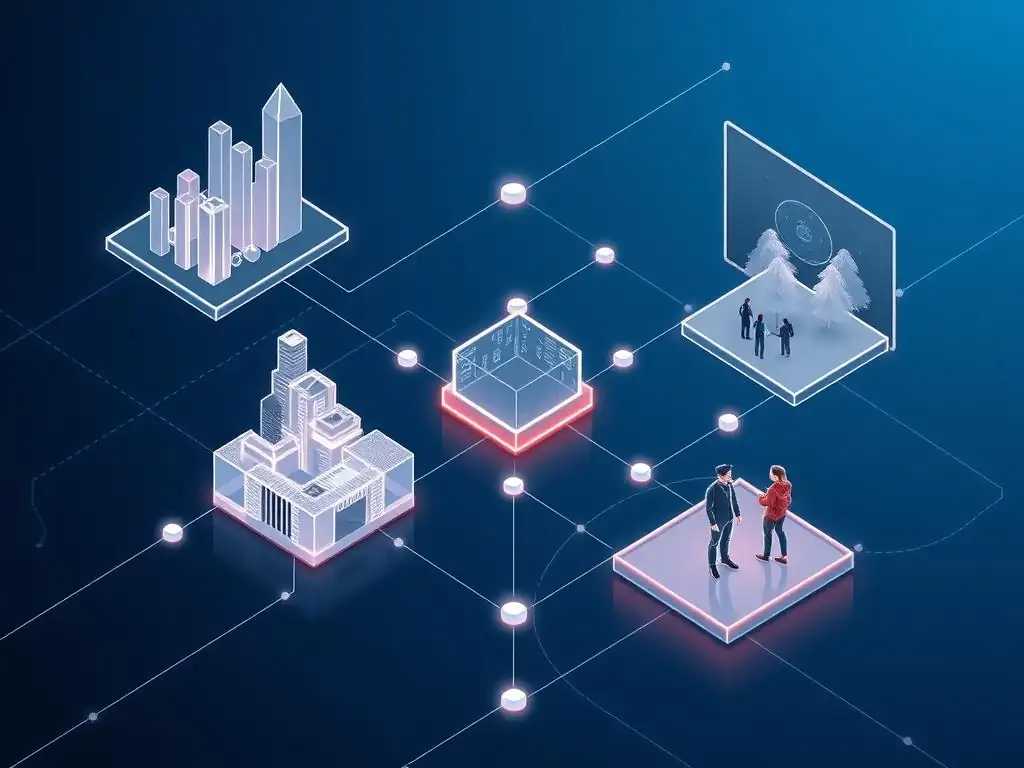
Protecting User Data and Digital Assets from Cyber Threats
Security is paramount for blockchain-based metaverse platforms, especially considering the potential for high-value digital assets and sensitive user data within these virtual worlds. Protecting user data and digital assets from cyber threats requires a multi-faceted approach, encompassing robust security measures at various levels of the metaverse infrastructure. Blockchain's inherent security features, such as cryptography and decentralization, provide a strong foundation, but additional security layers are necessary to mitigate specific risks in the metaverse context.
These security measures include secure smart contract development practices to prevent vulnerabilities, robust access control mechanisms to protect user accounts and digital assets, and decentralized storage solutions to enhance data privacy and resilience. Furthermore, cybersecurity best practices, such as regular security audits, penetration testing, and incident response plans, are essential for identifying and mitigating potential threats. User education and awareness are also crucial in preventing phishing attacks and social engineering attempts.
The ongoing evolution of cyber threats necessitates a proactive and adaptive security approach, ensuring that blockchain metaverse platforms remain safe and trustworthy environments for users to interact and transact. Prioritizing security is not just a technical consideration but a fundamental requirement for the long-term success and adoption of the blockchain metaverse.
Ensuring Transparency and Auditability of Metaverse Transactions
Transparency and auditability are inherent benefits of blockchain technology and are crucial for building trust and accountability within metaverse platforms. All transactions on a blockchain are recorded on a public and immutable ledger, making them transparent and auditable. This transparency allows users to verify the authenticity and provenance of digital assets, track transaction history, and ensure the integrity of metaverse economies. In contrast to traditional centralized platforms where transaction records may be opaque and controlled by a single entity, blockchain provides a verifiable and auditable record for all participants.
This transparency extends to smart contracts, which are publicly auditable code. Users can inspect the code of smart contracts to understand their functionality and ensure that they operate as intended. Auditability is particularly important for metaverse governance mechanisms and decentralized autonomous organizations (DAOs), where transparency in decision-making and resource allocation is essential for community trust. By leveraging blockchain's transparency and auditability features, metaverse platforms can foster a more trustworthy and accountable environment, reducing the potential for fraud and manipulation. This built-in transparency is a key differentiator of blockchain-based metaverses and a significant advantage over traditional centralized platforms.
Mitigating Risks Associated with Smart Contract Vulnerabilities
While smart contracts offer numerous benefits for automation and governance in the metaverse, they also introduce potential security risks if not developed and audited properly. Smart contracts are written in code, and like any software, they can contain vulnerabilities that can be exploited by malicious actors. These vulnerabilities can lead to significant financial losses, data breaches, or disruptions to metaverse applications. Mitigating risks associated with smart contract vulnerabilities is therefore a critical aspect of blockchain metaverse infrastructure development.
Best practices for secure smart contract development include rigorous code audits by independent security experts, formal verification methods to mathematically prove the correctness of smart contract code, and thorough testing and simulation before deployment. Furthermore, smart contract developers should follow secure coding guidelines and stay updated on known vulnerabilities and attack vectors.
Insurance protocols and decentralized security solutions are also emerging to provide protection against smart contract exploits. The ongoing development of secure smart contract development tools and best practices is essential for building robust and trustworthy blockchain metaverse platforms, minimizing the risks associated with smart contract vulnerabilities and fostering user confidence.
The Future of Blockchain Metaverse Infrastructure: Trends and Predictions
The Rise of Metaverse-Specific Blockchain Protocols
Looking ahead, a significant trend in blockchain metaverse infrastructure development is the emergence of metaverse-specific blockchain protocols. While existing general-purpose blockchains like Ethereum and Solana are currently being used to build metaverse applications, these networks were not specifically designed for the unique requirements of virtual worlds. Metaverse-specific blockchains are being developed to optimize performance, scalability, and features tailored to the needs of metaverse environments.
These protocols may incorporate features such as enhanced support for real-time interactions, optimized handling of large numbers of digital assets and NFTs, and built-in interoperability mechanisms. They may also prioritize features like decentralized identity management, governance tools, and economic models specifically designed for virtual economies. The development of metaverse-specific blockchains reflects a growing recognition that the metaverse has unique infrastructure needs that may not be fully addressed by existing general-purpose blockchains.
This specialization is likely to drive innovation and improve the overall performance and user experience of blockchain-based metaverses. The emergence of these specialized protocols is a key indicator of the maturing blockchain metaverse infrastructure landscape.
Convergence of AI and Blockchain in Metaverse Development
The convergence of Artificial Intelligence (AI) and blockchain technology is another significant trend shaping the future of metaverse development. AI can enhance various aspects of the metaverse, from creating more realistic and interactive virtual environments to personalizing user experiences and automating content creation. Blockchain provides the underlying infrastructure for securing and decentralizing AI applications within the metaverse, ensuring transparency, auditability, and user control over AI-driven systems.
For example, AI can be used to create more intelligent and responsive virtual avatars, generate dynamic and personalized content, and automate tasks within metaverse environments. Blockchain can be used to ensure the provenance and ownership of AI-generated content, create decentralized AI marketplaces, and enable transparent and auditable AI governance mechanisms.
The synergy between AI and blockchain has the potential to create more immersive, intelligent, and user-centric metaverse experiences. This convergence is likely to drive innovation in areas such as personalized virtual assistants, AI-powered content creation tools, and decentralized AI-driven metaverse economies, representing a key direction in blockchain metaverse infrastructure development.
Regulatory Landscape and its Impact on Blockchain Metaverse Growth
The evolving regulatory landscape surrounding blockchain technology and the metaverse will significantly impact the growth and development of blockchain metaverse infrastructure. Governments and regulatory bodies worldwide are increasingly focusing on the metaverse and the technologies that underpin it, including blockchain, NFTs, and cryptocurrencies. The regulatory approach taken by different jurisdictions will shape the legal and compliance frameworks for metaverse platforms and applications, influencing innovation and adoption.
Regulations related to data privacy, digital asset ownership, taxation, and consumer protection will be particularly relevant to the metaverse. Clear and consistent regulations can provide clarity and certainty for businesses and users, fostering innovation and investment in the blockchain metaverse space. However, overly restrictive or unclear regulations could stifle innovation and hinder the growth of the metaverse.
The industry needs to proactively engage with regulators to ensure that regulations are balanced, promoting innovation while addressing legitimate concerns. The regulatory landscape will be a key factor influencing the future trajectory of blockchain metaverse infrastructure development and the overall growth of the metaverse ecosystem.
Real-World Examples of Blockchain Integration in Metaverse Projects
Decentraland - Showcasing Decentralized Land Ownership
Decentraland stands as a prominent example of a blockchain-based metaverse project, notably showcasing decentralized land ownership through NFTs. Built on the Ethereum blockchain, Decentraland allows users to purchase, develop, and monetize virtual land parcels represented as NFTs called LAND. This decentralized land ownership model is a core feature of Decentraland, empowering users with true ownership and control over their virtual real estate. LAND owners have the freedom to build experiences, host events, and create virtual businesses on their parcels, fostering a user-generated content ecosystem.
The scarcity of LAND, with a fixed supply, contributes to its value and creates a digital real estate market within Decentraland. Transactions involving LAND are recorded on the Ethereum blockchain, ensuring transparency and immutability of ownership records. Decentraland's approach to decentralized land ownership exemplifies the potential of blockchain to create new forms of digital property rights and virtual economies within the metaverse. It demonstrates how blockchain metaverse infrastructure development can empower users and foster a user-owned and governed virtual world. Decentraland serves as a real-world case study for the practical application of blockchain in creating decentralized metaverse experiences.
The Sandbox - Demonstrating Innovative dApp Integration
The Sandbox is another leading metaverse platform that effectively demonstrates innovative decentralized application (dApp) integration within a virtual world. Also built on blockchain technology, The Sandbox empowers users to create, own, and monetize their gaming experiences and digital assets in a voxel-based metaverse. A key feature of The Sandbox is its robust ecosystem of user-generated content, facilitated by its Game Maker and VoxEdit tools, allowing users to create and animate 3D assets and build interactive games and experiences.
These user-created assets and experiences are represented as NFTs, enabling users to own and trade them within The Sandbox marketplace. The Sandbox also integrates with various dApps and blockchain protocols, expanding its functionality and interoperability. For instance, users can import NFTs from other platforms into The Sandbox and use them within their virtual experiences.
The Sandbox showcases how blockchain metaverse infrastructure development can foster a vibrant creator economy and enable seamless integration of dApps within a virtual world, creating a dynamic and user-driven metaverse platform. Its approach to dApp integration exemplifies the potential of blockchain to build rich and interactive metaverse experiences.
Axie Infinity - Highlighting Scalability and Interoperability
Axie Infinity, a popular play-to-earn (P2E) game, serves as a compelling example highlighting scalability and interoperability considerations within the blockchain metaverse. Initially built on the Ethereum blockchain, Axie Infinity faced scalability challenges as its user base grew, leading to high gas fees and transaction delays. To address these issues, Axie Infinity developed Ronin, a custom-built sidechain specifically designed for the game. Ronin provides significantly faster and cheaper transactions compared to the Ethereum mainnet, enabling a smoother and more accessible gaming experience for Axie Infinity players.
The development of Ronin demonstrates the importance of scalability solutions for blockchain metaverse applications, especially those with high transaction volumes like P2E games. Furthermore, Axie Infinity is exploring interoperability solutions to connect Ronin with other blockchain networks, expanding the reach and utility of its ecosystem. Axie Infinity's journey highlights the practical challenges and solutions related to scalability and interoperability in blockchain metaverse infrastructure development. Its adoption of a sidechain and focus on interoperability showcase the ongoing efforts to overcome performance limitations and build more interconnected and scalable blockchain-based metaverse platforms.
Overcoming Challenges in Blockchain Metaverse Infrastructure Development
Addressing Scalability Limitations and Transaction Costs
Addressing scalability limitations and transaction costs remains a significant challenge in blockchain metaverse infrastructure development. While layer-2 scaling solutions and advancements in consensus mechanisms are making progress, achieving the massive scalability required for widespread metaverse adoption is an ongoing effort. Metaverse environments with millions of concurrent users and complex interactions demand blockchain infrastructure capable of handling a vast volume of transactions with low latency and minimal fees.
Further research and development are needed in areas such as sharding, state channels, rollups, and alternative consensus mechanisms to push the boundaries of blockchain scalability. Optimizing transaction costs is also crucial for making metaverse applications accessible to a wider audience. High gas fees on layer-1 blockchains can be a barrier to entry for users and developers.
Layer-2 solutions and alternative blockchain platforms with lower transaction fees are essential for reducing costs and fostering broader adoption. Overcoming these scalability and cost challenges is paramount for unlocking the full potential of the blockchain metaverse and enabling mass participation. Continued innovation in blockchain technology is key to addressing these critical infrastructure hurdles.
Ensuring User-Friendly Experiences and Accessibility
Ensuring user-friendly experiences and accessibility is another crucial challenge in blockchain metaverse infrastructure development. Blockchain technology, while powerful, can be complex and intimidating for mainstream users. Onboarding new users to blockchain-based metaverse platforms needs to be seamless and intuitive, abstracting away the underlying technical complexities. User interfaces and user experiences need to be designed with simplicity and usability in mind, making it easy for users to navigate virtual worlds, interact with dApps, and manage their digital assets without requiring deep technical knowledge.
Accessibility is also important, ensuring that metaverse platforms are inclusive and accessible to users with diverse needs and backgrounds. This includes considerations for users with disabilities, users in different geographic locations with varying internet access, and users with different levels of technical literacy. Developing user-friendly wallets, intuitive interfaces for interacting with smart contracts and NFTs, and providing clear and accessible educational resources are essential for making the blockchain metaverse accessible to a wider audience. Focusing on user experience and accessibility is critical for driving mainstream adoption and ensuring that the metaverse is a welcoming and inclusive space for everyone.
Fostering Collaboration and Standardization Across Metaverse Ecosystems
Fostering collaboration and standardization across metaverse ecosystems is essential for creating a unified and interoperable metaverse experience. Currently, the metaverse landscape is fragmented, with different platforms and projects often operating in silos, using different technologies and standards. This lack of interoperability limits user experience and hinders the potential of the metaverse as a whole. Collaboration among metaverse developers, blockchain projects, and industry stakeholders is crucial for establishing common standards and protocols that enable seamless interoperability between different virtual worlds and platforms.
Standardization efforts are needed in areas such as digital identity, asset formats, communication protocols, and data exchange. Open standards and protocols will facilitate the seamless transfer of assets, identities, and experiences between different metaverse environments, creating a more unified and interconnected metaverse. Industry consortia, open-source initiatives, and collaborative development efforts are essential for driving standardization and fostering interoperability. Collaboration and standardization are not just technical challenges but also require coordination and agreement among diverse stakeholders. Overcoming these challenges is vital for realizing the vision of a truly open and interoperable metaverse that benefits all users and creators.
Conclusion: Embracing Blockchain for a Decentralized and Immersive Metaverse
The Transformative Potential of Blockchain in Shaping the Future of the Metaverse
Blockchain technology holds transformative potential for shaping the future of the metaverse, moving it beyond centralized platforms towards a decentralized, immersive, and user-owned digital realm. By providing the foundational infrastructure for digital ownership, secure transactions, and decentralized governance, blockchain empowers users and creators within virtual worlds. The integration of blockchain into the metaverse is not just about technology; it represents a paradigm shift towards a more open, equitable, and user-centric internet experience. The potential of blockchain to create new economic opportunities, foster vibrant communities, and revolutionize industries like gaming, social interaction, and digital art within the metaverse is immense.
As blockchain technology continues to evolve and mature, its role in the metaverse is expected to become even more profound. Advancements in scalability, interoperability, and security will further unlock the potential of blockchain to power increasingly complex and immersive metaverse experiences. The convergence of blockchain with other transformative technologies like AI and augmented reality will further accelerate the evolution of the metaverse and its impact on society. Embracing blockchain is not just a technological choice but a strategic imperative for building a future metaverse that is truly open, decentralized, and beneficial for all participants.
Call to Action: Exploring Blockchain Metaverse Infrastructure Development Opportunities for Innovation and Growth
The development of blockchain metaverse infrastructure presents vast opportunities for innovation and growth across various sectors. Developers, entrepreneurs, and businesses are invited to explore the multitude of blockchain metaverse infrastructure development opportunities to contribute to the evolution of this transformative technology. From building scalable layer-2 solutions and interoperable cross-chain bridges to creating user-friendly decentralized identity management systems and secure smart contract frameworks, the opportunities for innovation are abundant.
Furthermore, exploring new applications of blockchain within the metaverse, such as decentralized governance models, play-to-earn gaming ecosystems, and NFT-based virtual economies, can unlock significant growth potential. Investing in research and development, fostering collaboration across the ecosystem, and addressing the challenges of scalability, user experience, and regulation are crucial steps for realizing the full potential of the blockchain metaverse.
By embracing blockchain and actively participating in the development of its metaverse infrastructure, we can collectively shape a future where the metaverse is a truly decentralized, immersive, and empowering digital realm, driving innovation and creating new opportunities for growth and societal benefit.
Frequently Asked Questions
What role does blockchain play in the development of the metaverse?
Blockchain provides the decentralized infrastructure necessary for a robust and secure metaverse. It enables digital ownership, verifiable identity, and transparent governance. This fosters trust and allows for new economic models within the metaverse.
How can blockchain enhance security within the metaverse?
Blockchain's inherent security features, such as cryptographic hashing and immutable ledgers, protect against fraud and data breaches. This helps maintain the integrity of virtual assets and user identities in the metaverse.
What are some examples of blockchain-based metaverse infrastructure?
Examples include decentralized storage solutions for metaverse assets, blockchain-based identity management systems, and platforms for creating and trading non-fungible tokens (NFTs). These build the foundation for interoperable and user-controlled virtual worlds.
What are the key blockchain metaverse infrastructure development opportunities?
Opportunities abound in areas like creating scalable blockchain solutions for handling massive metaverse transactions, developing secure and user-friendly wallets for virtual assets, and building interoperable platforms that connect different metaverse environments.
How is regulation impacting the development of blockchain-based metaverse infrastructure?
Regulatory scrutiny is increasing, particularly regarding data privacy, digital asset classification, and the prevention of illicit activities. Navigating these regulations is crucial for the long-term sustainability and adoption of blockchain-based metaverse infrastructure.
Final Reflection: Building the Decentralized Future
The exploration of the Metaverse as a platform, underpinned by blockchain infrastructure, reveals not just a technological frontier, but a fundamental shift in how we interact with digital spaces. The potential for decentralized applications within the Metaverse is now more tangible than ever, offering a glimpse into a future where ownership, creativity, and community are truly empowered. This isn't just about gaming or entertainment; it's about reshaping the very fabric of digital society.
This vision of a decentralized Metaverse, built on blockchain, has profoundly influenced the conversation around digital ownership and user agency. It's inspiring to witness the growing momentum behind this movement, as developers and creators alike recognize the transformative power of blockchain technology. The future is already here – it's just not evenly distributed.
- William Gibson. This quote resonates deeply, reminding us that the potential of the blockchain metaverse is already unfolding, and it's our responsibility to ensure its benefits are accessible to all.
As we stand on the cusp of this new era, I urge you to consider your role in shaping the decentralized future. Reflect on how you can contribute to the development of a Metaverse that is truly open, equitable, and empowering. Embrace the opportunities presented by blockchain metaverse infrastructure development, and let us collectively build a digital world where innovation thrives and ownership belongs to the people.
Unleash Your Metaverse Potential!
Thank you for exploring the foundational role of blockchain in powering decentralized applications within the metaverse. Now that you understand the infrastructure, it's time to take action and become a builder in this exciting space.
Here are a few steps you can take right now:
- Dive into a blockchain development tutorial focused on metaverse applications. This hands-on experience is the fastest way to grasp practical implementation.
- Explore existing metaverse platforms and identify areas where blockchain solutions can enhance user experience or security. Consider proposing improvements for decentralized applications on these platforms!
- Join a blockchain and metaverse developer community to connect with like-minded individuals and collaborate on innovative projects. Shared knowledge is key to thriving in this new frontier.
What's one decentralized application you'd create for the metaverse, and which blockchain would you choose to power it? Share your ideas below!
Leave a Reply