
Uniswap vs SushiSwap: A Deep Dive Comparison of Leading AMMs

Welcome to Blockchain Trends, your guide to navigating the evolving landscape of decentralized innovation. Dive into the groundbreaking world beyond cryptocurrencies and uncover the true potential of blockchain technology. Curious about navigating the world of DeFi? This week, we're unraveling the complexities of Automated Market Makers with a detailed look at decentralized exchange comparison strategies, specifically pitting Uniswap against SushiSwap. Which AMM will reign supreme? Let's explore the key metrics and performance indicators that separate these DeFi giants and discover the best approach for your needs. Read on to find out!
Ethereum vs. Solana: A Deep Dive Comparison of Leading Blockchains
- Understanding Blockchain Technology and its Applications
- Ethereum: The Pioneer of Smart Contract Platforms
- Solana: A High-Performance Blockchain Alternative
- Blockchain Comparison Strategies: Ethereum vs. Solana
- Security Considerations: Audits and Vulnerabilities
- User Experience (UX) and Application Development
- The Future of Blockchain Platforms: Innovation and Competition
- Conclusion: Choosing the Right Blockchain for Your Needs
-
Frequently Asked Questions
- What are the key differences between Uniswap and SushiSwap as leading AMMs?
- How do Uniswap and SushiSwap compare in terms of decentralized exchange comparison strategies for traders?
- How do governance structures differ between Uniswap and SushiSwap?
- What are the main benefits of using an AMM like Uniswap or SushiSwap over a centralized exchange?
- What is the future outlook for AMMs like Uniswap and SushiSwap in the broader blockchain ecosystem?
- Final Reflection: Navigating the Future of Decentralized Finance
- Unlock Your DeFi Potential: Choose Your AMM Path!
Understanding Blockchain Technology and its Applications
The Rise of Decentralized Applications (dApps) and Blockchain Platforms
The evolution of blockchain technology has moved significantly beyond its initial application in cryptocurrencies like Bitcoin. Today, blockchain serves as the foundational layer for a burgeoning ecosystem of decentralized applications, or dApps. These applications span a wide array of sectors, from finance (DeFi) and supply chain management to gaming, digital identity, and non-fungible tokens (NFTs).
The emergence of dApps necessitates robust, scalable, and secure blockchain platforms capable of supporting complex smart contracts and high transaction volumes. Understanding the underlying architecture and performance characteristics of these platforms is crucial, forming the basis for effective blockchain comparison strategies, particularly when evaluating the infrastructure supporting decentralized finance protocols or exchanges.
As the demand for decentralized services grows, so does the competition among blockchain platforms vying to become the dominant host for this new wave of internet applications. Early platforms, while pioneering, often faced limitations in terms of scalability and transaction costs, which hindered mass adoption for certain types of dApps.
Newer generations of blockchain aim to address these challenges through innovative consensus mechanisms, data structuring, and parallel processing capabilities. A thorough analysis requires applying specific blockchain comparison strategies that weigh factors like throughput, finality, cost, and network effects against the specific requirements of the decentralized application being considered, such as a high-frequency decentralized exchange or a low-value micro-transaction game.
How Blockchain Technology Enables Secure and Transparent Transactions
At its core, blockchain technology provides a decentralized, immutable, and transparent ledger for recording transactions. This security is primarily achieved through sophisticated cryptographic principles. Each block of transactions is linked to the previous one using a cryptographic hash, creating a chain where altering any past data would require recomputing the hash of every subsequent block, a computationally infeasible task. This inherent immutability ensures that once a transaction is recorded and confirmed, it cannot be retroactively changed or deleted without the consensus of the network participants.
Transparency is another key feature, as the full ledger is typically publicly accessible (though participant identities can be pseudonymous). Anyone can verify the history of transactions on the network. The security is further reinforced by the decentralized nature of the network, which is maintained by a distributed network of nodes or validators.
These participants collectively validate transactions and agree on the state of the ledger through a consensus mechanism. This distributed control eliminates single points of failure and makes the network highly resistant to censorship and tampering, providing a level of trust and security not possible with traditional centralized systems.
Ethereum: The Pioneer of Smart Contract Platforms
Ethereum's Core Features and Functionality
Ethereum stands as the pioneering blockchain platform that introduced the concept of programmable money and decentralized applications through smart contracts. Launched in 2015, its core innovation is the Ethereum Virtual Machine (EVM), a Turing-complete virtual machine that can execute code (smart contracts) deployed on the blockchain. This capability transformed blockchain from a simple value transfer system into a powerful platform for building complex, automated agreements and applications without intermediaries. Ethereum utilizes accounts (Externally Owned Accounts controlled by private keys and Contract Accounts controlled by their code) and a transaction-based state transition function.
Transactions on Ethereum require 'gas', a unit of computation, to execute. Users pay transaction fees in Ether (ETH), the network's native currency, to compensate validators for the computational resources used. The gas system prevents infinite loops and resource abuse, acting as a fee market where the cost of a transaction fluctuates based on network congestion and the complexity of the smart contract execution. Ethereum boasts the largest and most mature ecosystem of developers, tools, and dApps, including the vast majority of the decentralized finance (DeFi) and non-fungible token (NFT) markets historically built on its Layer 1.
Ethereum 1.0 vs Ethereum 2.0: Key Differences and Improvements
The transition from Ethereum 1.0 (often referred to as the Execution Layer or Eth1) to Ethereum 2.0 (now known as the Consensus Layer or Eth2, post-Merge) represents a fundamental shift in the network's architecture, primarily moving from a Proof-of-Work (PoW) to a Proof-of-Stake (PoS) consensus mechanism. The original Ethereum 1.0 relied on PoW mining, which was energy-intensive and limited the network's transaction throughput to approximately 15-30 transactions per second (TPS) on the mainnet. This limitation led to high transaction fees (gas costs) during periods of high demand, hindering scalability and user experience.
Ethereum's move to Proof-of-Stake, completed with The Merge in September 2022, significantly reduced energy consumption by over 99% and laid the groundwork for future scalability upgrades. While The Merge itself didn't immediately increase L1 throughput dramatically, it enabled the implementation of sharding, a future upgrade that will split the network into multiple chains (shards) to process transactions in parallel, aiming for potentially thousands of TPS on the base layer. Other improvements in the PoS transition include enhanced security through economic penalties (slashing) for malicious validators and a more predictable block production rate.
Smart Contracts and Decentralized Applications on Ethereum
Smart contracts are self-executing contracts with the terms of the agreement directly written into code. Deployed on the Ethereum blockchain, they automatically execute actions when predefined conditions are met, without the need for intermediaries. This capability has powered the explosion of decentralized applications across various sectors. For example, decentralized exchanges like Uniswap use smart contracts to enable peer-to-peer token swaps directly on the blockchain via automated market makers (AMMs), eliminating the need for a traditional order book and central authority. Lending protocols like Aave and Compound use smart contracts to manage collateralized loans and interest rates algorithmically.
The development of smart contracts on Ethereum is primarily done using the Solidity programming language, although other languages like Vyper are also used. The network benefits from well-established standards like ERC-20 for fungible tokens and ERC-721 and ERC-1155 for non-fungible tokens, which have facilitated massive interoperability and composability within the ecosystem. The sheer volume and variety of dApps on Ethereum, ranging from complex financial protocols to digital art marketplaces like OpenSea, underscore its position as the leading platform for decentralized application development, despite challenges related to Layer 1 transaction costs and speed.
Solana: A High-Performance Blockchain Alternative
Solana's Origins: Focusing on Speed and Scalability
Solana emerged with a primary focus on tackling the blockchain trilemma – the challenge of simultaneously achieving high scalability, security, and decentralization. Founded in 2017 by Anatoly Yakovenko, Solana Labs aimed to build a blockchain capable of processing transaction volumes comparable to centralized payment processors like Visa. The core thesis was that blockchain throughput could be dramatically increased without sacrificing security or significantly compromising decentralization by optimizing transaction processing and block propagation.
Unlike many blockchains that process transactions sequentially, Solana was designed from the ground up to handle thousands of transactions in parallel. This architectural choice, combined with several innovative technologies, positions Solana as a high-throughput, low-latency alternative to existing platforms. The focus on speed and scalability was intended to unlock new use cases for blockchain technology that were previously impractical due to the limitations of earlier networks, such as high-frequency trading on decentralized exchanges or large-scale gaming applications.
The SOL Token and its Role in the Solana Ecosystem
The native cryptocurrency of the Solana network is SOL. It serves multiple essential functions within the ecosystem. Primarily, SOL is used to pay transaction fees incurred when interacting with smart contracts or transferring tokens on the network. These fees are typically very low, often fractions of a cent, which is a key feature enabling micro-transactions and high-volume activities. A portion of these transaction fees is burned, introducing a deflationary pressure on the token supply.
Beyond transaction fees, SOL is integral to the network's security and governance. Validators on the Solana network stake SOL to participate in the consensus process and secure the network. Stakers who delegate their SOL to validators also contribute to network security and earn rewards. Furthermore, SOL holders can participate in the network's governance, voting on proposals that affect the future development and direction of the Solana protocol. The utility and demand for SOL are directly tied to the activity and growth of the Solana network and its ecosystem of dApps.
Solana's Innovative Features: Proof of History and Turbine
Solana distinguishes itself through several novel technical innovations designed to achieve high performance. The most notable is Proof of History (PoH), a decentralized clock that cryptographically orders events and verifies the passage of time between them. PoH creates a historical record that proves an event occurred at a specific moment in time, allowing validators to process transactions much faster without needing to wait for global network consensus on the sequence of events. This pre-ordering significantly reduces the overhead typically associated with consensus mechanisms.
Another key innovation is Turbine, Solana's block propagation protocol. Turbine breaks down blocks into smaller packets, making it easier and faster to transmit data across the network to a large number of validators. This efficient data distribution, combined with Sealevel (a parallel smart contracts runtime) and Gulfstream (a mempool-less transaction forwarding protocol), allows the Solana network to achieve significantly higher theoretical transaction throughput rates compared to many other blockchains. While peak theoretical throughput is cited in the tens of thousands of TPS, real-world sustained throughput varies but remains considerably higher than Ethereum's Layer 1 capacity.
Blockchain Comparison Strategies: Ethereum vs. Solana
Transaction Throughput: Comparing Speed and Scalability
Applying effective blockchain comparison strategies requires a close look at performance metrics like transaction throughput, which directly impacts scalability and user experience for dApps, including decentralized exchanges.
Ethereum Transaction Throughput and Scalability Challenges
Ethereum's current Layer 1 throughput, post-Merge to Proof-of-Stake, typically ranges from 15 to 30 transactions per second (TPS). While this is a foundational layer and much activity occurs on Layer 2 solutions, the base layer's limited capacity has historically led to significant scalability challenges. During periods of peak network demand, such as major NFT drops or DeFi surges, the network can become congested, causing transaction processing times to increase and, more notably, driving up gas fees exponentially. This has made certain types of applications requiring frequent, low-value transactions impractical on the Ethereum mainnet.
The challenge stems partly from the sequential processing of transactions on the current L1 design and the global consensus required for each block. While Layer 2 scaling solutions like rollups offer significant improvements (potentially thousands of TPS collectively), the underlying L1 throughput remains a bottleneck for applications that must settle directly on the base chain or rely solely on L1 interactions. Addressing this L1 limitation is a key focus for future Ethereum upgrades like sharding, aiming to parallelize transaction processing.
Solana Transaction Throughput and High-Speed Capabilities
Solana is engineered for high transaction throughput, boasting a theoretical peak capacity of over 65,000 transactions per second (TPS) under optimal conditions. In practice, sustained throughput varies but is significantly higher than Ethereum's Layer 1, often handling thousands of TPS depending on network load and transaction complexity. This high speed is a direct result of its innovative architecture, including the Proof-of-History clock, parallel transaction processing (Sealevel), and efficient block propagation (Turbine).
This high throughput capability means that Solana can support demanding applications like high-frequency trading platforms or large-scale gaming ecosystems with lower latency and without the same level of congestion issues seen on Ethereum's L1. The ability to process transactions rapidly and in parallel allows for a smoother user experience, particularly for applications where speed is critical. When conducting a blockchain comparison strategy focused on raw transaction speed at the base layer, Solana generally presents a compelling case.
Consensus Mechanisms and Network Security Compared
Consensus mechanisms are fundamental to blockchain security and agreement on the network state. Comparing Ethereum's PoS with Solana's hybrid approach is vital for understanding their respective security models.
Ethereum's Proof-of-Stake (PoS) Consensus
Following The Merge, Ethereum now uses a Proof-of-Stake (PoS) consensus mechanism. In this system, validators, instead of miners, propose and attest to blocks based on the amount of ETH they have staked (currently requiring 32 ETH to run a full validator node). This mechanism is significantly more energy-efficient than PoW. Security in PoS is economic; validators who act maliciously or fail to perform their duties correctly risk losing a portion or all of their staked ETH through a process called slashing. Finality is achieved when a block is attested to by a sufficient majority (2/3) of the staked ETH.
Ethereum's PoS relies on a distributed network of validators and aims for high client diversity (multiple independent software implementations of the Ethereum protocol) to enhance network resilience against bugs in any single client. The long history of the network and its large, active community contribute to its perceived security and decentralization, built over years of development and battle-testing, though the PoS system is relatively new compared to the original PoW.
Solana's Proof-of-History (PoH) and Turbine Consensus
Solana employs a hybrid consensus model that combines its innovative Proof-of-History (PoH) with a Proof-of-Stake (PoS) system called Tower BFT (a variation of Practical Byzantine Fault Tolerance). PoH acts as a cryptographic clock, providing a verifiable ordering of events before consensus is reached, dramatically speeding up the consensus process itself. Tower BFT then leverages the PoH sequence to agree on the state of the ledger. Validators stake SOL tokens to participate in this Tower BFT consensus.
While PoH contributes significantly to speed, the security of the network relies on the economic incentives and penalties within the Tower BFT PoS system, similar to Ethereum's PoS. Validators are rewarded for correctly voting on the state and penalized (slashed) for malicious behavior or inactivity. The efficiency of the Turbine protocol in propagating data quickly is also key to maintaining network liveness and security at high speeds. However, Solana's architecture and high hardware requirements for validators have sometimes raised questions regarding the degree of decentralization compared to Ethereum, an important consideration in blockchain comparison strategies focused on censorship resistance.
Transaction Fees: A Cost Analysis for Users
Transaction fees are a critical factor for user adoption and dApp viability. Comparing the cost structures of Ethereum and Solana highlights significant differences relevant to decentralized exchange comparison strategies.
Ethereum Transaction Fees (Gas) Breakdown
Transaction fees on Ethereum, known as gas fees, are notorious for their variability and potential to be very high, especially during network congestion. The fee is calculated based on the complexity of the transaction (gas units consumed) multiplied by the current price of gas (paid in Gwei, a denomination of ETH). The introduction of EIP-1559 in 2021 changed the fee model to include a base fee (burned) and an optional priority fee (tip to validators), making fees more predictable but still highly dependent on network demand.
During peak demand periods, gas fees can surge to tens or even hundreds of dollars for a single transaction, making simple actions like token transfers or interacting with DeFi protocols prohibitively expensive for many users. This cost barrier has been a major driver for the development and adoption of Layer 2 scaling solutions, which offer significantly lower transaction costs by processing transactions off-chain and periodically submitting bundled proofs to the Ethereum mainnet.
Solana Transaction Fees Structure and Low-Cost Transactions
Solana is known for its consistently low transaction fees. A typical transaction on the Solana network costs fractions of a cent, often averaging around $0.00025 per transaction. This predictable and minimal cost is a direct benefit of the network's high throughput capacity. Because the network can process a large volume of transactions efficiently, there is less competition for block space compared to Ethereum's Layer 1, which keeps fees very low.
This low-cost structure makes Solana particularly attractive for applications requiring frequent, low-value transactions, such as micro-payments, in-game item transfers, or high-frequency trading strategies on decentralized exchanges built on the platform. The predictable and negligible cost removes a major barrier to entry and usage for both developers and end-users, presenting a strong alternative for those prioritizing cost-efficiency in their blockchain comparison strategies.
Decentralization and Network Governance
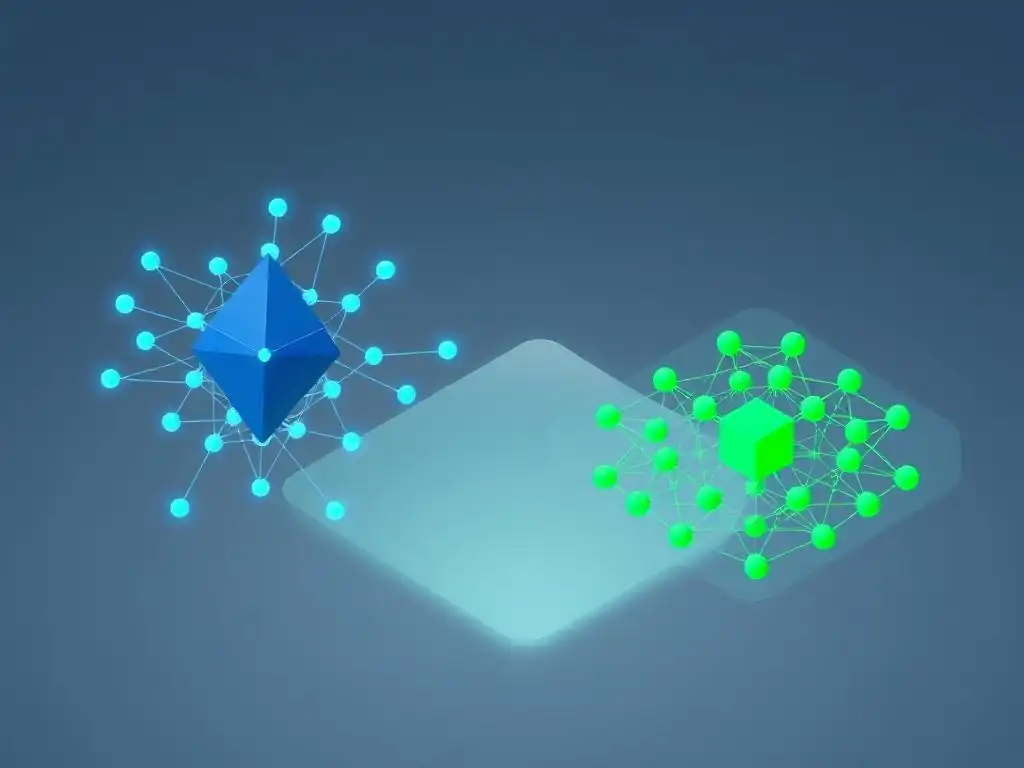
Decentralization is a core tenet of blockchain technology, influencing security, censorship resistance, and governance. Comparing the decentralization and governance models of Ethereum and Solana is essential.
Ethereum's Decentralized Network and Community Governance
Ethereum benefits from a long history and a large, globally distributed network of nodes and validators. The relatively modest hardware requirements for running a validator node (32 ETH stake and reasonable hardware) help contribute to a wider distribution of participants compared to networks with very high hardware demands. The network has successfully weathered numerous challenges and upgrades through a community-driven process. Governance on Ethereum is multifaceted, involving core developers, researchers, node operators, stakers, and the broader community.
Major protocol changes are proposed through Ethereum Improvement Proposals (EIPs), which undergo extensive technical review, community discussion (via forums, calls, social media), and eventual implementation by client teams. While there isn't a formal on-chain voting mechanism for protocol upgrades, consensus is reached through a combination of social coordination, developer agreement, and node operator adoption. This organic, decentralized governance process is seen by many as a strength, though it can sometimes be slow.
Solana's Governance Model and Node Requirements
Solana aims for decentralization, but its architecture presents different challenges. The high transaction throughput necessitates significant hardware resources for validators to keep up with the data stream and processing demands. This can potentially limit the number of individuals or entities capable of running a full validator node compared to Ethereum, leading to concerns about potential centralization of staking power among larger players or data centers. Efforts are underway to make validator hardware more accessible.
Governance on Solana is typically conducted through on-chain voting mechanisms where SOL token holders can vote on proposals. This provides a more direct, albeit potentially plutocratic (rule by wealth), form of governance compared to Ethereum's off-chain social consensus. While the number of validators on Solana is in the thousands, analyzing the distribution of staked SOL and the geographical/organizational diversity of validators is a crucial part of a comprehensive blockchain comparison strategy focused on decentralization metrics.
Developer Ecosystem and Tooling
The vibrancy and maturity of a blockchain's developer ecosystem and the availability of robust tooling are critical for application development and innovation.
Ethereum's Developer Community and Extensive Tooling
Ethereum boasts the largest and most mature developer ecosystem in the blockchain space. With years of active development since 2015, there is a vast amount of documentation, tutorials, and support available. The primary smart contract language, Solidity, is widely adopted, and a rich set of development tools and frameworks exists. Examples include development environments like Truffle Suite and Hardhat, integrated development environments (IDEs) like Remix, and client libraries like Web3.js and Ethers.js for interacting with the blockchain.
This mature ecosystem means that developers looking to build dApps, including decentralized exchanges or DeFi protocols, often find it easier to get started, access necessary resources, and find existing libraries or components. The large pool of experienced Ethereum developers is a significant asset, contributing to rapid innovation and a high volume of dApp deployment on the network and its associated Layer 2s.
Solana's Growing Developer Ecosystem and Programming Languages
Solana's developer ecosystem is younger than Ethereum's but is growing rapidly. While Ethereum primarily uses Solidity (an object-oriented, high-level language), Solana programs (smart contracts) are typically written in Rust, C, or C++, which are lower-level languages known for performance. This can present a steeper learning curve for developers coming from other blockchain ecosystems or traditional web development.
Despite the language difference, the ecosystem is expanding with frameworks like Anchor, which simplifies Solana program development, and a growing suite of tools for testing, deploying, and interacting with the network. The focus on performance and lower transaction costs attracts developers building specific types of applications that benefit from high throughput. While the tooling might not be as extensive or mature as Ethereum's, the community is active, and resources are increasing, making Solana an increasingly viable platform for new dApp development.
Security Considerations: Audits and Vulnerabilities
Security is paramount for any blockchain platform, especially those handling significant financial value or sensitive data. Examining security practices and historical vulnerabilities provides crucial insights for blockchain comparison strategies.
Ethereum Security Audits and Risk Mitigation
Ethereum's security relies on the robustness of its protocol, the security of smart contracts deployed on it, and the vigilance of its community. Smart contract vulnerabilities are a significant risk vector, with historical incidents like the DAO hack (2016, resulting in a hard fork) highlighting the potential for catastrophic losses. Consequently, smart contract security audits by specialized firms (e.g., ConsenSys Diligence, Trail of Bits, CertiK) are standard practice before deploying complex or high-value contracts. Formal verification methods are also increasingly used to mathematically prove the correctness of critical contract code.
At the protocol level, Ethereum's PoS security relies on validator integrity and economic incentives. Client diversity (running multiple independent software clients like Geth, Nethermind, Besu, Erigon) is crucial to prevent a bug in a single client from compromising the entire network. Regular security audits of the core protocol code and ongoing research into potential vulnerabilities are standard procedures. The network's long operational history and large bug bounty programs contribute to its resilience, though the transition to PoS introduced new potential attack vectors that are continuously being monitored and addressed.
Solana Security Measures and Vulnerability History
Solana's security model is built upon its unique architecture and consensus mechanism. While the core protocol has undergone audits, the complexity and relative novelty of features like Proof of History and Turbine mean they are continuously being tested in real-world conditions. A notable aspect of Solana's history has been network stability issues, including several significant outages in 2022 and 2023 where the network became unavailable or highly degraded for hours or even days. These outages were often attributed to factors like high transaction volumes overwhelming validator capacity or bugs related to handling specific transaction types.
These incidents, while not necessarily protocol-level cryptographic hacks, represent a different type of security concern: liveness and reliability. They highlight the challenges of maintaining stability in a high-throughput system and the importance of validator coordination during stress events.
While Solana Labs and the community are actively working on improving network stability and resilience (e.g., through initiatives like Firedancer), this history is a factor users and developers consider when evaluating the platform's reliability for mission-critical applications like decentralized exchanges. Smart contracts on Solana (written in Rust, C, C++) are also subject to security audits, and vulnerabilities in dApps have occurred, similar to other platforms.
User Experience (UX) and Application Development
User experience and the ease of application development are key factors influencing adoption and innovation on a blockchain platform.
Developing dApps on Ethereum
Developing dApps on Ethereum involves writing smart contracts, typically in Solidity, and building frontend interfaces that interact with these contracts via libraries like Ethers.js or Web3.js. The development workflow is well-established, with mature tools for local development, testing, and deployment. However, the high gas costs and relatively slow transaction finality on the Ethereum Layer 1 can significantly impact the user experience of dApps. Users often face delays and unpredictable costs, which can be frustrating, especially for applications requiring frequent interactions or low transaction values.
The advent of Layer 2 scaling solutions has drastically improved UX for many Ethereum-based applications. By moving the bulk of transactions off-chain, L2s like Optimism and Arbitrum (Optimistic Rollups) or zkSync and StarkNet (ZK-Rollups) offer significantly faster transaction speeds (near-instantaneous confirmation on the L2) and dramatically lower fees (often cents rather than dollars). Developers building on Ethereum today often design their applications to reside primarily on Layer 2s to provide a better user experience while leveraging the security of the Ethereum mainnet for final settlement.
Building Applications on the Solana Platform: A UX Overview
Building applications on Solana involves writing programs (smart contracts) primarily in Rust, C, or C++. While the language choice can be a barrier for developers new to these languages, frameworks like Anchor aim to streamline the process. A major advantage for application development on Solana is the network's high speed and low transaction costs. This allows developers to design applications that involve a high volume of transactions or micro-transactions that would be economically infeasible on Ethereum Layer 1.
From a user experience perspective, the low fees and rapid transaction finality on Solana are significant benefits. Users can interact with dApps, including decentralized exchanges, transfer assets, and execute smart contract functions quickly and cheaply. This enables smoother, more responsive applications. However, the historical network stability issues have, at times, negatively impacted UX by causing periods of inaccessibility. As the network matures and stability improves, Solana's performance characteristics offer the potential for highly performant and cost-effective decentralized applications.
The Future of Blockchain Platforms: Innovation and Competition
The blockchain landscape is dynamic, with continuous innovation driving competition and shaping the future of decentralized systems. Applying effective blockchain comparison strategies requires looking at future roadmaps and emerging trends.
Emerging Trends in Blockchain Technology
Several key trends are shaping the future of blockchain technology. Interoperability is becoming increasingly important, with projects focusing on building bridges and protocols (like IBC - Inter-Blockchain Communication) to allow assets and data to flow seamlessly between different blockchains. This addresses the fragmentation of the blockchain space. Scalability solutions, particularly zero-knowledge proofs (ZKPs) used in ZK-Rollups and other ZK-based technologies, are seen as critical for enabling mass adoption by providing privacy and efficiency gains.
Sustainability is another major trend, with a strong shift towards more energy-efficient consensus mechanisms like Proof-of-Stake. Regulatory clarity and compliance are also growing concerns as governments around the world grapple with how to integrate decentralized technologies into existing legal frameworks. Finally, the tokenization of real-world assets (RWAs) on blockchain platforms is gaining traction, potentially bringing vast amounts of traditional value onto decentralized ledgers and opening up new use cases for DeFi and other dApps.
Layer-2 Scaling Solutions for Ethereum
Ethereum's future scalability strategy heavily relies on Layer 2 solutions. These protocols process transactions off the Ethereum mainnet (Layer 1) and periodically post compressed data or proofs back to L1, inheriting its security. Optimistic Rollups (e.g., Optimism, Arbitrum) assume transactions are valid by default and run computation off-chain, relying on a fraud proof period where anyone can challenge a transaction if it's invalid. ZK-Rollups (e.g., zkSync, StarkNet, Polygon zkEVM) run computation off-chain and generate cryptographic validity proofs (ZK-SNARKs or ZK-STARKs) that are posted on L1, verifying the correctness of the off-chain state transitions.
These L2s dramatically increase transaction throughput (potentially thousands of TPS per rollup) and reduce transaction costs compared to L1, while still benefiting from the security and finality of the Ethereum mainnet. The development of L2 ecosystems is a major focus for Ethereum, effectively turning the L1 into a secure settlement layer for multiple high-throughput execution layers. This strategy allows Ethereum to scale while preserving its core tenets of decentralization and security.
Solana's Roadmap and Future Developments
Solana's roadmap continues to focus on enhancing network performance, stability, and decentralization. A major ongoing development is Firedancer, an independent validator client being built by Jump Crypto. Firedancer is designed from scratch to be highly performant and resilient, aiming to increase the diversity of validator software clients (similar to Ethereum's client diversity efforts) and potentially enabling even higher transaction throughput and improved network stability.
Other future developments include continued optimization of the core protocol, research into new scaling techniques, and initiatives aimed at improving decentralization, such as reducing hardware requirements for validators or supporting alternative hardware configurations. Solana is also exploring mobile integration, exemplified by the Saga phone, to expand the reach of its ecosystem. The focus remains on pushing the boundaries of performance to support mainstream-scale decentralized applications.
Conclusion: Choosing the Right Blockchain for Your Needs
Key Takeaways: Ethereum vs. Solana
Comparing Ethereum and Solana using effective blockchain comparison strategies reveals two distinct approaches to building a decentralized platform. Ethereum, with its longer history, robust developer ecosystem, and strong emphasis on decentralization through its PoS network and Layer 2 scaling, offers a mature and secure environment, albeit with higher base-layer transaction costs and lower Layer 1 throughput. Its strength lies in its established network effects, vast number of dApps, and proven security record over years of operation.
Solana, on the other hand, prioritizes raw speed and low transaction costs through its innovative architecture, including Proof of History and parallel processing. It offers a compelling platform for applications requiring high transaction volume and low latency, presenting a strong alternative for developers and users frustrated by high gas fees. However, it is a younger network with a history of stability challenges and raises different considerations regarding the decentralization of its validator set due to higher hardware requirements.
Factors to Consider When Selecting a Blockchain Platform
When selecting a blockchain platform for a specific application, such as a decentralized exchange or a gaming platform, several factors should be carefully considered using a structured blockchain comparison strategy:
- Required Throughput and Latency: Does the application need to handle thousands of transactions per second with near-instant finality (favoring Solana or Ethereum L2s), or is a lower base layer throughput acceptable (Ethereum L1)?
- Transaction Costs: Are low, predictable fees essential for the application's economic model (favoring Solana or Ethereum L2s), or can users tolerate potentially high, variable costs (Ethereum L1 during congestion)?
- Security and Reliability: What is the risk tolerance for smart contract vulnerabilities and network outages? Consider the platform's security history, audit practices, and network stability record.
- Decentralization Requirements: How critical is a highly distributed and censorship-resistant network? Evaluate the distribution of nodes, validators, and staking power.
- Developer Familiarity and Ecosystem: Is the development team more familiar with Solidity/EVM tools or Rust/Solana tools? Does the platform have existing libraries, frameworks, and community support needed for the project?
- Future Scalability and Roadmap: How does the platform plan to scale further? Are the proposed solutions viable and aligned with the application's long-term needs?
Ultimately, the choice between Ethereum and Solana (or other platforms) depends on the specific priorities and constraints of the decentralized application being built or used. There is no single "best" blockchain; rather, the optimal choice results from applying relevant blockchain comparison strategies based on the application's unique requirements.
Frequently Asked Questions
What are the key differences between Uniswap and SushiSwap as leading AMMs?
Uniswap focuses on simplicity and a minimalist approach, while SushiSwap offers additional features like yield farming and a governance token (SUSHI), aiming to incentivize liquidity providers beyond trading fees.
How do Uniswap and SushiSwap compare in terms of decentralized exchange comparison strategies for traders?
Traders should compare transaction fees, liquidity depth for their desired trading pair, and the potential for slippage on both platforms. SushiSwap also offers additional incentives that might attract certain traders.
How do governance structures differ between Uniswap and SushiSwap?
Uniswap's governance is more formalized, while SushiSwap relies more on its community and the SUSHI token holders to influence decisions. This affects the speed and direction of platform development.
What are the main benefits of using an AMM like Uniswap or SushiSwap over a centralized exchange?
AMMs offer permissionless trading, greater transparency, and self-custody of funds, eliminating reliance on intermediaries. This aligns with the core principles of decentralized finance.
What is the future outlook for AMMs like Uniswap and SushiSwap in the broader blockchain ecosystem?
AMMs are expected to play a crucial role in the growth of DeFi, with ongoing innovation focused on improving efficiency, security, and user experience. They will likely integrate with other blockchain applications.
The exploration of Uniswap and SushiSwap, as leading Automated Market Makers (AMMs), reveals more than just technical differences; it highlights the dynamic and evolving nature of decentralized finance (DeFi). Understanding these platforms and their respective strengths is crucial, not just for developers and investors, but for anyone seeking to participate in a more equitable and transparent financial system. The future of finance is being built now, and AMMs are a cornerstone of that revolution.
The ongoing competition between Uniswap and SushiSwap, and the broader AMM landscape, underscores the power of community and innovation in shaping the future of finance. This constant evolution reminds us that DeFi is not a static entity, but a living ecosystem that demands continuous learning and adaptation. The only constant in life is change.
This quote, often attributed to Heraclitus, perfectly encapsulates the spirit of DeFi, where innovation and adaptation are key to survival and success. The choices we make today, in terms of platform adoption and strategic engagement, will directly influence the trajectory of this transformative technology.
As we conclude this comparison, I invite you to reflect on your own role in this unfolding narrative. Consider how you can leverage the power of decentralized exchanges to achieve your financial goals, while also contributing to a more inclusive and accessible financial future. Embrace the opportunities presented by DeFi, and let your understanding of platforms like Uniswap and SushiSwap guide you towards informed and impactful participation. The future of finance is decentralized, and it's waiting for you to help shape it.
Okay, here's a CTA designed for the end of an article titled "Uniswap vs SushiSwap: A Deep Dive Comparison of Leading AMMs," published on blockchaintrends.org.
Unlock Your DeFi Potential: Choose Your AMM Path!
Thank you for diving deep into the world of Uniswap and SushiSwap with Blockchain Trends. We hope this comparison has equipped you with the knowledge to navigate these leading Automated Market Makers with confidence. Now, it's time to put that knowledge into action!
Here's how you can take your DeFi journey to the next level:
- Test the waters! Make a small swap on either Uniswap or SushiSwap. Start with a minimal amount to familiarize yourself with the interface, gas fees, and overall experience on your chosen platform.
- Explore other AMMs and compare their features to Uniswap and SushiSwap
- Share your experience! Join the discussion on our Blockchain Trends forums or social media channels and tell us which AMM you prefer and why.
Ready to start swapping and earning? Which platform will you explore first and what factors influenced your decision? Let us know in the comments below!
Leave a Reply