
Tokenomics and the Macroeconomic Environment: How Global Events Impact Crypto Markets

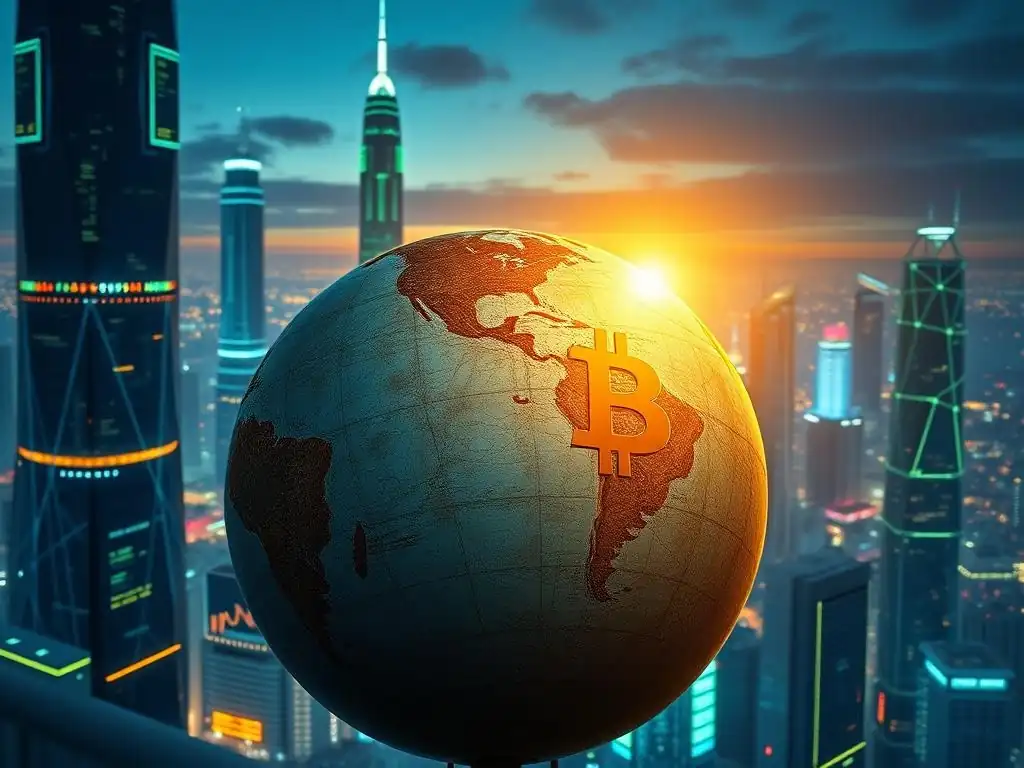
Welcome to Blockchain Trends, your guide to understanding the revolutionary world of blockchain technology.
Delve into the transformative potential of blockchain, extending far beyond cryptocurrencies. Are you ready to uncover the hidden connections between global events and the volatile crypto markets? In our latest article, Tokenomics and the Macroeconomic Environment, we dissect the intricate relationship, exploring the Blockchain DeFi macroeconomic impact and how it's reshaping the financial landscape. Discover how tokenomics are being affected by world events, and what this means for the future of decentralized finance. Intrigued? Read on to learn more about the forces shaping the next generation of finance.
- Tokenomics and the Macroeconomic Environment: How Global Events Impact Crypto Markets
- The Macroeconomic Landscape and Its Influence on Crypto
- Blockchain DeFi Macroeconomic Impact: A Closer Look
- Navigating Market Volatility: Risk Management in DeFi
- The Future of DeFi: Adapting to a Changing Economic Climate
- Case Studies: Analyzing Real-World Examples of Macroeconomic Impact on DeFi
- Conclusion: Investing in DeFi with a Macroeconomic Perspective
-
Frequently Asked Questions
- What is Tokenomics and how does it relate to the Blockchain DeFi macroeconomic impact?
- How do global macroeconomic events like inflation or interest rate hikes affect the Blockchain DeFi macroeconomic impact?
- What are some examples of enterprise applications mentioned in the context of Blockchain DeFi macroeconomic impact and how are they affected?
- What kind of regulation is being considered for DeFi and how might it affect the Blockchain DeFi macroeconomic impact?
- How does the future of decentralized systems and the Blockchain DeFi macroeconomic impact depend on broader economic conditions?
- Final Reflection: Navigating the Crypto Seas
- Decode Your Crypto Future: Navigate the Global Landscape!
Tokenomics and the Macroeconomic Environment: How Global Events Impact Crypto Markets
What is Tokenomics and Why Does it Matter?
Tokenomics, a portmanteau of "token" and "economics," refers to the economic principles and mechanisms governing a cryptocurrency token. It encompasses factors such as a token's supply and demand dynamics, distribution methods, utility within its ecosystem, incentive structures for users and participants (like stakers or liquidity providers), governance rights, and mechanisms for value capture or reduction (like burning).
Understanding a project's tokenomics is fundamental because it dictates how the token is created, managed, and potentially accrues value over time. For investors in the Blockchain DeFi sector, analyzing tokenomics is crucial for assessing a project's long-term viability and potential return, moving beyond mere speculation based on price charts.
The importance of tokenomics is particularly pronounced in decentralized finance (DeFi), where tokens often serve multiple purposes – as a medium of exchange, a store of value, a unit of account, a source of yield, and a governance tool. A well-designed tokenomic model can align the incentives of token holders with the success and growth of the underlying protocol, creating a virtuous cycle.
Conversely, poor tokenomics, such as excessive inflation or concentration of supply, can lead to instability and eventual failure, regardless of the technology's sophistication. For example, the governance token of a leading decentralized exchange (DEX) might grant holders the right to vote on fee structures or treasury usage, directly linking the token's value to the protocol's activity and community control.
Key Tokenomic Metrics for Evaluating DeFi Projects
Evaluating DeFi projects requires scrutinizing several key tokenomic metrics. The Total Supply and Circulating Supply provide insights into the maximum number of tokens that will ever exist and how many are currently available in the market, respectively. These figures are essential for calculating Market Capitalization (Circulating Supply * Price) and Fully Diluted Valuation (FDV) (Total Supply * Price). Comparing Market Cap to FDV can reveal potential future selling pressure if a large portion of the total supply is yet to enter circulation via vesting schedules or unlocks.
Beyond supply, token distribution is vital. Examining how tokens were allocated (e.g., to the team, advisors, private investors, public sale participants, ecosystem funds, liquidity mining rewards) and their corresponding vesting schedules helps assess the risk of large token releases hitting the market simultaneously.
Inflationary and deflationary mechanisms, such as token minting through yield farming or burning through protocol fees (like Ethereum's EIP-1559 burning a portion of transaction fees), directly impact supply over time. Staking yields and how protocol revenue is generated and distributed to token holders (e.g., via token buybacks, dividends in other assets) indicate the token's utility and potential for yield generation, a core component of the Blockchain DeFi macroeconomic impact on individual investor returns.
The Role of Tokenomics in DeFi Sustainability
Sustainable tokenomics are the bedrock of long-term success in the DeFi ecosystem. Protocols must design token models that incentivize desired behaviors without creating excessive, unsustainable inflation. For instance, while high yield farming rewards can bootstrap liquidity quickly, if these rewards come solely from minting new tokens without corresponding protocol revenue or value capture, they can lead to rapid token price depreciation as recipients sell rewards, creating a downward spiral. This highlights a critical aspect of the Blockchain DeFi macroeconomic impact at the micro-level of a protocol.
Sustainable models often involve mechanisms where token value is tied to protocol usage or revenue. Examples include protocols that distribute a portion of trading fees to token stakers, use protocol revenue to buy back and burn tokens, or require tokens to access services or participate in governance that controls valuable protocol parameters. Aligning the incentives of liquidity providers, users, and token holders through thoughtful tokenomics ensures that the protocol can continue to operate, attract capital, and innovate over time, making it more resilient to external macroeconomic pressures compared to models built on pure speculation or unsustainable emissions.
The Macroeconomic Landscape and Its Influence on Crypto
Global Economic Trends and Crypto Market Performance
The performance of the crypto market, while once hypothesized to be uncorrelated with traditional finance (TradFi), has shown increasing correlation with global economic trends, particularly those affecting risk-on assets. Broad macroeconomic shifts, such as periods of quantitative easing or tightening by central banks, influence overall market liquidity and investor appetite for speculative investments. During periods of abundant liquidity and low interest rates, capital tends to flow into riskier assets, including cryptocurrencies and DeFi protocols, contributing to bull markets.
Conversely, when central banks tighten monetary policy to combat inflation, raising interest rates and reducing bond purchases, it increases the cost of capital and makes safer assets like government bonds more attractive. This leads to a general risk-off sentiment, causing investors to withdraw from speculative assets.
Data from 2022 and 2023 clearly illustrates this, with major cryptocurrencies like Bitcoin and Ethereum showing a significant positive correlation with tech-heavy stock indices like the Nasdaq 100. For instance, the correlation coefficient between Bitcoin and the Nasdaq 100 often hovered above 0.6 during this period of aggressive monetary tightening, indicating that crypto assets were largely trading in tandem with traditional growth stocks rather than acting as an independent hedge.
Inflation, Interest Rates, and the Blockchain DeFi Sector
Inflation and the resulting central bank responses are potent macroeconomic forces directly impacting the Blockchain DeFi sector. High inflation erodes the purchasing power of fiat currencies, which some proponents argue makes scarce assets like Bitcoin appealing as a hedge or store of value. However, the narrative of crypto as an inflation hedge was challenged during the high-inflation environment of 2022, where crypto prices fell alongside other risk assets.
More directly, rising interest rates impact DeFi yields and capital flows. Traditional finance offers risk-free or low-risk rates (like yields on US Treasury bills), which become more competitive as central banks hike rates.
This dynamic can reduce the attractiveness of stablecoin lending pools or yield farming strategies in DeFi, especially those offering lower or variable yields that struggle to compete with rising TradFi rates. For example, as the US Federal Reserve increased its benchmark interest rate from near 0% in early 2022 to over 5% by mid-2023, yields available in traditional money markets became significantly higher, potentially drawing capital away from certain DeFi protocols or forcing them to seek riskier strategies to offer competitive yields, further highlighting the Blockchain DeFi macroeconomic impact.
Geopolitical Events and Their Ripple Effects on Crypto Valuations
Geopolitical events, ranging from regional conflicts to trade wars and political instability, introduce uncertainty into global markets and can trigger significant volatility in crypto valuations. The initial reaction to such events can be mixed: some may see crypto as a censorship-resistant way to transfer value or a safe haven from traditional financial systems under stress, while others may simply sell off crypto assets as part of a broader move to cash or safer assets.
The Russia-Ukraine war, which began in early 2022, serves as a stark example. While there were instances of crypto being used for humanitarian aid and reports of increased trading volume on exchanges in the affected regions as citizens sought alternatives to potentially unstable local currencies and banking systems, the broader market reaction was dominated by increased global uncertainty and risk aversion.
This contributed to the overall downturn in crypto prices seen throughout 2022. Furthermore, the associated energy crisis exacerbated by the conflict had specific implications for energy-intensive proof-of-work mining operations, particularly in Europe, impacting profitability and potentially influencing regional crypto infrastructure development.
Blockchain DeFi Macroeconomic Impact: A Closer Look
How Global Economic Shocks Affect DeFi Liquidity
Global economic shocks have a profound and often rapid impact on liquidity within the Blockchain DeFi sector. DeFi protocols, such as lending platforms and decentralized exchanges (DEXs), rely heavily on Total Value Locked (TVL) – the aggregate value of crypto assets deposited by users – to function. These assets serve as the liquidity pools for trading, lending, and borrowing activities.
During periods of macroeconomic stress, such as market crashes driven by recession fears or financial contagion events, users tend to withdraw assets from DeFi protocols. This can be due to deleveraging positions, seeking perceived safety in stablecoins or fiat, or needing funds for other purposes. This rapid outflow of capital causes TVL to plummet, drastically reducing available liquidity.
For instance, during the broad crypto market downturns of 2022, the overall DeFi TVL across all chains fell from a peak of over $150 billion to below $40 billion at its lowest point. Reduced liquidity on DEXs leads to increased slippage for traders, while on lending platforms, it can lead to higher borrowing interest rates and increased risk of liquidation for borrowers as collateral values fall and borrowing capacity shrinks – a direct manifestation of the Blockchain DeFi macroeconomic impact on protocol functionality.
The Correlation Between Traditional Markets and Crypto Assets
As previously mentioned, the correlation between traditional financial markets and crypto assets has strengthened significantly, especially between major cryptocurrencies and tech stocks. This increasing linkage means that macroeconomic indicators and events that move Wall Street often have a mirrored effect on crypto markets. Factors contributing to this correlation include the growing participation of institutional investors who often treat crypto as a high-beta tech play, the increasing use of leverage in both markets, and the overarching influence of global liquidity conditions set by central banks.
This correlation implies that crypto assets, including those within the Blockchain DeFi ecosystem, are not currently acting as effective hedges against downturns in traditional risk asset markets. Instead, they often amplify the movements of indices like the Nasdaq 100 during periods of heightened macroeconomic sensitivity. For example, on days when the US Consumer Price Index (CPI) inflation data or Federal Reserve interest rate decisions are announced, crypto markets frequently exhibit price swings that closely mirror the reactions seen in equity markets, underscoring the deep connection between macroeconomic forces and crypto valuations.
The Impact of the 2022 Energy Crisis on European Crypto Adoption
The energy crisis that affected Europe significantly in 2022, exacerbated by the geopolitical situation, provides a specific regional example of macroeconomic impact on the crypto space. Soaring electricity prices directly affected the profitability and feasibility of energy-intensive proof-of-work crypto mining operations within the continent. Miners faced substantially higher operating costs, leading some to reduce operations, relocate, or even shut down, impacting the regional distribution of hash rate.
While direct, quantifiable data solely on the energy crisis's impact on adoption of Blockchain DeFi services by end-users is difficult to isolate from the broader market downturn, the crisis did influence the narrative and regulatory focus within Europe. Discussions around the energy consumption of certain blockchains intensified, contributing to regulatory debates and potentially influencing user preferences towards more energy-efficient proof-of-stake protocols within the DeFi space.
Anecdotal evidence and market reports suggested that the economic strain on households due to high energy costs might have also reduced discretionary income available for speculative investments like crypto, indirectly impacting retail adoption levels across the continent during that period.

Diversification Strategies for DeFi Portfolios
Navigating the volatility inherent in the Blockchain DeFi sector, especially when influenced by macroeconomic forces, requires robust risk management. Diversification is a key strategy, but in DeFi, it extends beyond simply holding different tokens. Investors should consider diversifying across various DeFi sub-sectors, such as lending/borrowing protocols, decentralized exchanges (DEXs), derivatives platforms, asset management protocols, and decentralized insurance. This helps mitigate the risk associated with a single sector facing specific challenges (e.g., lending protocols during a liquidation crisis).
Furthermore, diversifying across different blockchain networks (like Ethereum, Polygon, Solana, Avalanche, etc.) can help reduce exposure to chain-specific risks, such as network outages or gas fee spikes.
Diversifying asset types within a portfolio (e.g., holding stablecoins, blue-chip DeFi tokens, yield-bearing tokens, and potentially some exposure to newer, higher-risk protocols) balances potential returns with risk tolerance. For example, allocating a portion of capital to stablecoin lending on a battle-tested protocol like Aave provides relatively lower, but more stable, yield compared to providing liquidity for volatile token pairs on a new DEX, illustrating a practical application of diversification in managing the Blockchain DeFi macroeconomic impact on portfolio value.
Understanding and Mitigating DeFi Smart Contract Risks
A unique risk in DeFi is the potential for vulnerabilities or bugs in the underlying smart contracts that power the protocols. Unlike traditional finance, there is no central authority to recover funds lost due to a smart contract exploit, oracle failure, or governance attack. High-profile incidents, such as the Ronin bridge hack ($600M+ lost) or the Wormhole bridge exploit ($300M+ lost), underscore the severity of these risks.
Mitigating smart contract risk involves several steps. Investors should prioritize protocols that have undergone rigorous audits by reputable blockchain security firms. While audits are not a guarantee against exploits, they significantly reduce the likelihood of undiscovered vulnerabilities.
Utilizing decentralized insurance protocols, such as Nexus Mutual or InsurAce, can provide coverage against specific smart contract risks for a premium. Thorough research into the protocol's team, its history, the complexity of its code, and how long it has been operating successfully can also offer clues about its security posture. Finally, limiting the amount of capital allocated to any single protocol and only investing funds you can afford to lose are fundamental risk management principles in the volatile and experimental DeFi space.
On-Chain Analytics for Tracking Macroeconomic Indicators
Public blockchain data provides a transparent ledger of activity that can offer insights potentially correlated with macroeconomic shifts and market sentiment. Analyzing on-chain metrics allows participants in the Blockchain DeFi sector to gain a data-driven perspective on capital flows and user behavior. For instance, tracking the net flow of assets into and out of centralized exchanges can signal market sentiment: large inflows of Bitcoin or Ethereum to exchanges might suggest intent to sell, potentially driven by risk aversion during macroeconomic uncertainty, while large outflows might indicate accumulation by long-term holders.
Movements in stablecoin supply and usage are particularly telling. Increased minting of stablecoins and their flow onto exchanges or into DeFi protocols can indicate capital entering the crypto ecosystem, often as a safe haven during volatility or in preparation for buying opportunities. Conversely, large-scale redemption or movement of stablecoins off-chain can signal capital exiting the ecosystem, potentially driven by a flight to fiat during severe macroeconomic downturns.
Monitoring Total Value Locked (TVL) across different DeFi sectors and chains provides a direct measure of capital commitment to the space, and sudden drops in TVL often coincide with periods of macroeconomic stress, reflecting users withdrawing assets due to fear or deleveraging. For example, during the market turmoil in May 2022 following macroeconomic concerns and the Terra/Luna collapse, on-chain data showed billions of dollars in stablecoins being redeemed and TVL across major DeFi protocols declining sharply.
The Future of DeFi: Adapting to a Changing Economic Climate
Emerging Trends in Tokenomics and DeFi
The macroeconomic shifts of recent years, particularly the move to a higher interest rate environment, are driving innovation and adaptation within DeFi tokenomics. The era of relying solely on high inflationary token emissions to attract liquidity is waning, giving rise to models focused on sustainability and "real yield." Real yield refers to protocols distributing revenue generated from actual economic activity (like trading fees, lending interest spread, or derivative funding rates) to token holders, often in established assets like ETH or stablecoins, rather than solely in their native, potentially inflationary, token.
Other emerging trends include the increasing adoption of vote-escrow (veTokenomics) models, popularized by Curve Finance (veCRV), where users lock tokens for extended periods in exchange for boosted yields and governance power, aligning long-term holding with protocol success. Protocol Owned Liquidity (POL), where the protocol itself owns a portion of its liquidity rather than relying entirely on external providers, is also gaining traction to reduce dependence on mercenary capital and enhance stability. These evolutions in tokenomics reflect the Blockchain DeFi sector's attempt to build more resilient and value-accruing models in response to less favorable macroeconomic conditions.
Regulatory Considerations and the Macroeconomic Environment
The macroeconomic environment is increasingly influencing the regulatory landscape for crypto and DeFi. As the sector has grown in size and interconnectedness with TradFi, central banks and financial regulators globally have paid closer attention, particularly following market instability events like the 2022 downturn. Policymakers are concerned about potential systemic risks, consumer protection, and the use of crypto for illicit finance.
Regulatory proposals and actions, such as efforts to regulate stablecoins, impose stricter Know Your Customer (KYC) and Anti-Money Laundering (AML) requirements on DeFi interfaces, or clarify the tax treatment of DeFi activities, are often motivated by macroeconomic stability concerns. For example, the collapse of a major stablecoin and its ripple effects highlighted the need for regulatory frameworks for stablecoins to prevent potential financial stability risks.
The European Union's MiCA regulation and ongoing discussions in the United States regarding crypto oversight are direct responses to the growing size and perceived macroeconomic relevance of the crypto market, shaping the future operating environment for the Blockchain DeFi sector.
Long-Term Impact of Central Bank Digital Currencies (CBDCs) on DeFi
The potential introduction of Central Bank Digital Currencies (CBDCs) by major economies represents a significant long-term macroeconomic development that could interact with the Blockchain DeFi sector in complex ways. CBDCs are digital forms of a country's fiat currency, issued and backed by the central bank. Their widespread adoption could significantly alter the digital money landscape.
CBDCs could pose competition to existing stablecoins, potentially reducing demand for them if users opt for a central bank-issued digital currency perceived as lower risk. However, CBDCs could also potentially be integrated into DeFi protocols, serving as a highly stable form of collateral or a medium of exchange, bridging the gap between traditional finance and decentralized ecosystems.
The design choices of CBDCs (e.g., whether they are account-based or token-based, programmable, or allow for anonymity) will heavily influence their interaction with DeFi. While the full impact is years away, the development and potential rollout of CBDCs by central banks globally (like the ongoing Digital Euro project or research into a US Digital Dollar) represent a macroeconomic shift in the nature of money that the Blockchain DeFi sector will need to adapt to, presenting both challenges and potential opportunities for integration and innovation.
Case Studies: Analyzing Real-World Examples of Macroeconomic Impact on DeFi
Case Study 1: Impact of Inflation on Anchor Protocol's UST Peg (Pre-Collapse)
While the ultimate collapse of Anchor Protocol's UST peg in May 2022 was multifaceted, the changing macroeconomic environment played a significant role in highlighting the unsustainability of its model. Anchor Protocol offered an extremely high, fixed yield of approximately 20% on UST stablecoin deposits. In the low-interest-rate environment prevalent in 2020-2021, this yield was exceptionally attractive compared to negligible returns in traditional savings accounts or bonds, driving massive capital inflows into UST and Anchor, with Anchor's TVL peaking at over $17 billion and UST's market cap exceeding $18 billion.
However, as global central banks, led by the US Federal Reserve, began aggressively raising interest rates in late 2021 and early 2022 to combat rising inflation, the macroeconomic backdrop shifted dramatically. Yields on traditional safe assets, such as US Treasury bills, began to rise, making Anchor's 20% yield, which was not based on sustainable protocol revenue but rather on subsidies and the growth of the Terra ecosystem, look increasingly unrealistic and risky by comparison.
This widening gap between rising TradFi yields and Anchor's fixed, high yield highlighted the inherent fragility of the model to market participants, contributing to a change in sentiment and capital flows that, combined with specific market events and design flaws, ultimately led to the run on UST and its de-pegging, demonstrating how macroeconomic forces can expose vulnerabilities in DeFi tokenomics.
Case Study 2: How Interest Rate Hikes Affected Trading Volume on Uniswap
Decentralized exchanges like Uniswap are bellwethers for activity within the Blockchain DeFi sector. Their trading volume is heavily influenced by overall market sentiment, price volatility, and speculative activity. The aggressive interest rate hikes by central banks starting in 2022 had a clear macroeconomic impact that correlated with a significant decline in trading volume across crypto markets, including on Uniswap.
As interest rates rose, increasing the cost of capital and leading to a broader risk-off environment, speculative trading activity decreased. The overall market capitalization of crypto assets fell, and volatility, while still present, shifted from upward momentum to downward or sideways price action for extended periods. This macroeconomic-driven cooling of the market directly translated to lower trading volumes on decentralized platforms.
For example, Uniswap V3, which saw monthly trading volumes often exceeding $100 billion during the peak bull market in 2021, experienced a substantial drop in 2022, with average monthly volumes frequently falling below $50 billion. This reduction in activity directly reflects how tightening macroeconomic conditions can suppress the trading and capital flows that power core DeFi protocols like DEXs.
Case Study 3: The Effect of the Russia-Ukraine War on Stablecoin Adoption in Affected Regions
The geopolitical and resulting macroeconomic shockwaves from the Russia-Ukraine war starting in February 2022 had a specific, regional impact on crypto adoption, particularly for stablecoins. The conflict led to significant economic uncertainty, imposition of capital controls, disruption of traditional banking services, and rapid devaluation of local currencies in both Ukraine and Russia. In this crisis environment, citizens sought ways to preserve value, access funds, and facilitate cross-border transactions outside the traditional financial system.
Stablecoins, such as USDT and USDC, emerged as a viable alternative. Reports from the time indicated a surge in crypto trading volume on exchanges in both countries immediately following the invasion. Stablecoins were reportedly used by Ukrainians to receive donations and move wealth out of affected areas, and by Russians facing sanctions and banking restrictions.
Peer-to-peer (P2P) crypto trading volumes, often involving stablecoins exchanged for local currency, also saw a significant increase. While precise, comprehensive adoption statistics are challenging to obtain, the observed market activity and anecdotal reports clearly demonstrate how a severe geopolitical and macroeconomic crisis can drive rapid, necessity-based adoption of Blockchain DeFi tools like stablecoins as a means of navigating financial instability when traditional systems fail.
Conclusion: Investing in DeFi with a Macroeconomic Perspective
Investing in the Blockchain DeFi sector requires more than just understanding complex tokenomics or the technology behind decentralized protocols. It necessitates a keen awareness of the broader macroeconomic environment and its profound influence on market dynamics. Global economic trends, inflation, interest rates, and geopolitical events are not distant forces; they are increasingly correlated factors that directly impact crypto valuations, liquidity within DeFi protocols, and investor behavior.
The interconnectedness between traditional finance and crypto is growing, meaning that the Blockchain DeFi macroeconomic impact is a critical consideration for risk management and investment strategy. By analyzing key tokenomic metrics alongside macroeconomic indicators and historical responses to global events, investors can gain a more holistic understanding of potential risks and opportunities.
Diversification, understanding smart contract risks, and utilizing available on-chain data are essential tools for navigating the inherent volatility. As the DeFi space matures and global economies evolve, integrating a macroeconomic perspective into investment decisions will be paramount for participants seeking to build resilient portfolios and contribute to the sustainable growth of decentralized finance.
Frequently Asked Questions
What is Tokenomics and how does it relate to the Blockchain DeFi macroeconomic impact?
Tokenomics refers to the economic principles governing a cryptocurrency or token. Its design directly influences a project's success and is vulnerable to global economic events, impacting market stability and investment.
How do global macroeconomic events like inflation or interest rate hikes affect the Blockchain DeFi macroeconomic impact?
Inflation and interest rate hikes can reduce liquidity in DeFi, leading to price volatility and potentially decreasing investment in blockchain-based projects, thereby affecting the Blockchain DeFi macroeconomic impact.
What are some examples of enterprise applications mentioned in the context of Blockchain DeFi macroeconomic impact and how are they affected?
While not directly detailed here, enterprise applications using blockchain are indirectly affected. A downturn in the overall economy can lead to reduced investment in these applications, slowing their growth and macroeconomic influence.
What kind of regulation is being considered for DeFi and how might it affect the Blockchain DeFi macroeconomic impact?
Regulation could range from KYC/AML requirements to stricter controls on stablecoins. Stricter regulation can impact DeFi adoption and overall market size, shaping the Blockchain DeFi macroeconomic impact positively or negatively.
How does the future of decentralized systems and the Blockchain DeFi macroeconomic impact depend on broader economic conditions?
The future hinges on economic stability. Bear markets can stifle innovation and investment, while bull markets can fuel growth. A healthy global economy is crucial for the sustained growth and positive impact of decentralized systems.
The intricate dance between tokenomics and the global macroeconomic environment has never been more apparent than it is today. The volatility we've witnessed in the crypto markets, deeply intertwined with geopolitical events and fiscal policies, underscores the critical need for a nuanced understanding of these interconnected forces. Ignoring the broader economic landscape is akin to sailing uncharted waters without a compass, leaving investors and projects vulnerable to unforeseen storms.
This interplay has profoundly shaped the cultural narrative surrounding cryptocurrency, moving it beyond a niche interest to a subject of mainstream discussion and debate. The potential for Blockchain DeFi to revolutionize finance is undeniable, but its susceptibility to macroeconomic pressures demands a cautious and informed approach. In the midst of chaos, there is also opportunity.
This quote, often attributed to Sun Tzu, resonates deeply as we navigate the turbulent waters of the current economic climate, seeking to harness the transformative power of DeFi while mitigating its inherent risks.
As we look to the future, let us not forget the lessons learned from the past. The Blockchain DeFi macroeconomic impact is a complex and evolving phenomenon, demanding continuous learning and adaptation. Consider how your own investment strategies and project development can be fortified against external shocks. Embrace a holistic perspective, recognizing that the success of the decentralized future hinges on our collective ability to navigate the complexities of the global economy.
Thanks for exploring the intricate relationship between tokenomics and macroeconomic factors. We hope you now have a clearer understanding of how global events influence the cryptocurrency markets. Are you ready to apply this knowledge?
Consider taking these actionable steps:
- Refine your crypto portfolio strategy: Reassess your current holdings based on insights into global economic trends and their potential effects on specific tokens. This is an opportunity to proactively adjust your investments to market conditions.
- Explore historical correlations: Investigate past economic events and their impacts on particular cryptocurrencies. Recognizing these patterns can help you anticipate similar developments in the future.
- Share this article! Spread the knowledge by sharing this piece with your friends on social media, along with a note highlighting the most important idea you found.
How do you plan to leverage this information to shape your investment strategies in the coming months? Share your approach in the comments below!
Leave a Reply