
Building Your Own World: Development Tools for Decentralized Metaverses

Welcome to Blockchain Trends, your compass in the rapidly evolving world of decentralized technology!
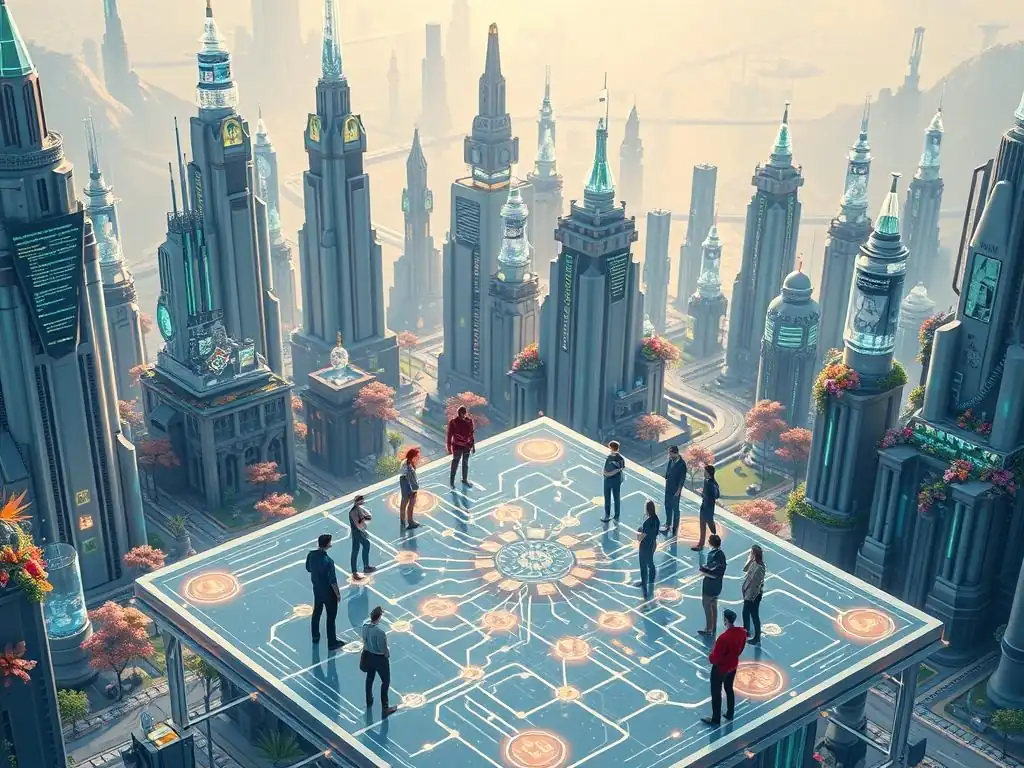
Ever wondered how the metaverse will truly become decentralized? Dive into our latest exploration of decentralized metaverse development tools and uncover the key technologies empowering creators to build immersive, user-owned worlds. Discover the innovative platforms and frameworks reshaping digital ownership and sparking a new era of virtual experiences. Ready to build the future? Let's begin!
Building Your Own World: Development Tools for Decentralized Metaverses
- Introduction: Entering the Realm of Decentralized Metaverse Creation
-
Essential Decentralized Metaverse Development Tools: A Comprehensive Overview
- Game Engines: Powering Immersive Experiences
- Blockchain Integration Tools: Connecting to the Decentralized Web
- 3D Modeling and Asset Creation: Bringing Your Vision to Life
- Spatial Audio and Immersive Sound Design: Enhancing the Metaverse Experience
- SDKs and APIs for Decentralized Metaverse Platforms
- Key Considerations for Choosing Decentralized Metaverse Development Tools
- Building Blocks: Creating Interactive Experiences in Decentralized Metaverses
- The Future of Decentralized Metaverse Development: Trends and Innovations
- Conclusion: Empowering Creators in the Decentralized Metaverse
-
Frequently Asked Questions
- What are the key benefits of using decentralized metaverse development tools?
- How do decentralized metaverse development tools differ from traditional game development engines?
- What are some examples of popular decentralized metaverse development tools currently available?
- How does blockchain technology contribute to the decentralization of metaverse development?
- What are the potential challenges of using decentralized metaverse development tools?
- Final Reflection: Empowering Decentralized Worlds
- Unleash Your Metaverse Vision!
Introduction: Entering the Realm of Decentralized Metaverse Creation
The Rise of User-Generated Content in the Metaverse
The metaverse, once a concept confined to science fiction, is rapidly becoming a tangible reality. At its core, the vision of the metaverse is deeply intertwined with user-generated content (UGC). Unlike traditional digital platforms where content creation is largely centralized and controlled by platform owners, the metaverse promises a more democratic landscape. Users are not just consumers but active creators, building experiences, assets, and even entire worlds within these digital realms.
This shift towards UGC is fueled by the desire for more immersive, personalized, and community-driven online experiences. Early metaverse platforms, such as Second Life and Roblox, have already demonstrated the power of UGC, with millions of users creating and sharing content, driving engagement and shaping the platform's evolution. The next generation of metaverses is poised to amplify this trend, placing UGC at the very heart of their ecosystems.
This burgeoning creator economy within the metaverse is not just about entertainment; it's about empowerment and economic opportunity. Creators can monetize their creations, establish virtual businesses, and build communities around their digital assets. Imagine artists selling virtual sculptures directly to collectors, architects designing virtual spaces for clients across the globe, or educators building immersive learning environments accessible to anyone, anywhere.
The potential is vast, and the tools to facilitate this creator revolution are becoming increasingly sophisticated and accessible. This movement towards user-generated content is fundamentally altering the digital landscape, paving the way for more diverse, dynamic, and user-centric metaverse experiences.
Understanding Decentralization in Metaverse Environments
Decentralization is a paradigm shift that differentiates the next wave of metaverses from their centralized predecessors. In a centralized metaverse, a single entity typically controls the platform, its infrastructure, and the assets within it. This control extends to data ownership, content moderation, and economic policies. Decentralized metaverses, on the other hand, leverage blockchain technology to distribute control and ownership across a network of participants. This means that no single entity dictates the rules, and users have greater autonomy and ownership over their digital assets and experiences.
The benefits of decentralization in metaverse environments are manifold. Firstly, it fosters greater transparency and trust. Transactions and ownership records are immutably recorded on a blockchain, making them verifiable and auditable by all participants. Secondly, it enhances security and resilience. By distributing data and processing across a network, decentralized systems are less vulnerable to single points of failure or censorship.
Thirdly, decentralization empowers users by granting them true ownership of their digital assets in the form of NFTs (Non-Fungible Tokens). This ownership extends beyond mere usage rights, enabling users to freely trade, sell, and transfer their assets outside of the platform's control. Finally, decentralized governance models can allow users to participate in decision-making processes, shaping the future evolution of the metaverse they inhabit. This move towards decentralization is crucial for building open, interoperable, and user-owned metaverse ecosystems.
Essential Decentralized Metaverse Development Tools: A Comprehensive Overview
Game Engines: Powering Immersive Experiences
Game engines are the foundational software frameworks for building interactive and visually rich metaverse experiences. They provide a comprehensive suite of tools for 3D rendering, physics simulation, animation, scripting, and asset management. For decentralized metaverses, game engines are essential for creating the immersive environments that users explore, interact with, and build upon. These engines are the workhorses behind the visual fidelity and interactive capabilities that define modern metaverse platforms. Choosing the right game engine is a critical first step in any decentralized metaverse development project.
Beyond visual rendering, game engines offer robust ecosystems of plugins and extensions that streamline development workflows. They often include integrated development environments (IDEs), asset stores with pre-made models and textures, and networking capabilities for creating multiplayer experiences. Furthermore, modern game engines are increasingly adaptable to blockchain integration, allowing developers to connect their metaverse creations to decentralized networks and incorporate blockchain-based functionalities. The selection of a game engine depends on factors such as project scope, target platform, desired visual style, and the development team's expertise.
Unity for Blockchain-Based Metaverse Games: Advantages and Limitations
Unity is a widely adopted game engine, known for its ease of use, cross-platform compatibility, and extensive asset store. Its user-friendly interface and C# scripting language make it accessible to both novice and experienced developers. For decentralized metaverse development, Unity offers a significant advantage due to its large community and readily available resources, including tutorials and pre-built assets that can accelerate development.
Many blockchain-based games and metaverse projects have been successfully built using Unity, leveraging its flexibility to integrate with various blockchain networks and smart contract platforms. Examples include projects focusing on play-to-earn mechanics and NFT integration within Unity-based games.
However, Unity also has limitations. While it supports high-fidelity graphics, achieving truly photorealistic visuals might require more extensive optimization and custom rendering pipelines compared to engines like Unreal Engine. Furthermore, while Unity's asset store is a boon, relying heavily on pre-made assets can sometimes lead to a less unique visual style. Performance optimization can also be a consideration for large-scale, complex metaverse environments built in Unity, especially when targeting lower-end devices. Despite these limitations, Unity remains a powerful and versatile tool for building a wide range of decentralized metaverse experiences, particularly those focused on gameplay and interactive content.
Unreal Engine for High-Fidelity Decentralized Worlds: Pros and Cons
Unreal Engine, developed by Epic Games, is renowned for its cutting-edge graphics capabilities and its use in AAA game development. It offers a powerful suite of tools for creating stunningly realistic and visually immersive metaverse environments. Its node-based visual scripting system, Blueprint, makes it accessible to designers and artists, while C++ support provides the depth and control needed for complex systems and performance optimization.
For decentralized metaverse projects aiming for high visual fidelity and cinematic quality, Unreal Engine is often the engine of choice. Projects seeking to push the boundaries of visual realism in decentralized virtual worlds frequently leverage Unreal Engine's advanced features.
However, Unreal Engine's complexity and steeper learning curve can be a disadvantage for smaller teams or developers new to game engine technology. While Blueprint simplifies certain aspects, mastering the full potential of Unreal Engine, particularly for advanced features and optimization, requires significant expertise. Furthermore, while Unreal Engine is becoming increasingly accessible, its licensing model, particularly for commercial projects, should be considered. Despite these potential drawbacks, Unreal Engine's unmatched graphical power and robust feature set make it a compelling option for building visually breathtaking and technically sophisticated decentralized metaverse experiences, especially for projects prioritizing visual fidelity and large-scale environments.
Blockchain Integration Tools: Connecting to the Decentralized Web
Blockchain integration tools are the bridge between the visual and interactive elements of a metaverse and the underlying decentralized infrastructure. These tools enable developers to connect their metaverse creations to blockchain networks, enabling functionalities like NFT asset ownership, cryptocurrency payments, and decentralized governance. Without these tools, a metaverse would remain a centralized digital world, lacking the core tenets of decentralization and user ownership. These tools are crucial for realizing the vision of a truly decentralized metaverse.
Blockchain integration often involves libraries, SDKs, and APIs that facilitate communication between the metaverse application and a blockchain network. These tools handle tasks such as transaction signing, smart contract interaction, and data retrieval from the blockchain. The choice of blockchain integration tools depends on the specific blockchain network being used (e.g., Ethereum, Polygon, Solana) and the programming language of the metaverse development environment. Efficient and secure blockchain integration is paramount for building robust and user-friendly decentralized metaverse experiences.
Web3.js and Ethers.js: Interacting with Blockchain Networks
Web3.js and Ethers.js are two of the most popular JavaScript libraries for interacting with Ethereum-compatible blockchains. They provide a comprehensive set of functions for communicating with blockchain nodes, sending transactions, querying blockchain data, and interacting with smart contracts. For decentralized metaverse projects built using web technologies or JavaScript-based game engines like Babylon.js, Web3.js and Ethers.js are indispensable tools for blockchain integration. These libraries simplify the complexities of blockchain communication, allowing developers to focus on building metaverse features rather than low-level networking protocols.
Web3.js is a mature and widely used library with extensive documentation and community support. Ethers.js is a more recent library, known for its smaller size, modularity, and focus on security and developer experience. Both libraries offer similar core functionalities but differ in their API design and implementation details. Choosing between Web3.js and Ethers.js often comes down to developer preference and project-specific requirements. However, both are essential tools for any developer building decentralized metaverse applications on Ethereum or other EVM-compatible blockchains. Millions of developers globally utilize these libraries, contributing to the vibrant ecosystem of decentralized applications.
Smart Contract Development for Metaverse Assets and Interactions
Smart contracts are self-executing agreements written in code and deployed on a blockchain. In the context of decentralized metaverses, smart contracts are fundamental for defining the rules of asset ownership, creating in-world economies, and managing interactive elements. They govern the creation, transfer, and functionality of NFTs representing virtual land, avatars, items, and other metaverse assets. Smart contracts ensure transparency and immutability in metaverse asset ownership and interactions, forming the backbone of decentralized economies within these virtual worlds.
Solidity is the most widely used programming language for writing smart contracts on Ethereum and EVM-compatible blockchains. Tools like Hardhat and Truffle provide development environments for compiling, testing, and deploying Solidity smart contracts. Developing secure and efficient smart contracts is crucial for the success of any decentralized metaverse project. Auditing smart contracts by security experts is a recommended practice to mitigate potential vulnerabilities and ensure the integrity of the metaverse's decentralized systems. The logic encoded within these smart contracts defines the very fabric of decentralized metaverse economies and interactions.
3D Modeling and Asset Creation: Bringing Your Vision to Life
3D modeling and asset creation tools are essential for visually realizing the metaverse. These software packages allow artists and designers to create the 3D models of environments, avatars, objects, and other visual elements that populate the metaverse. The quality and style of these assets directly impact the visual appeal and immersiveness of the decentralized metaverse experience. From simple geometric shapes to highly detailed and textured models, 3D modeling tools are the artist's palette for painting the digital canvas of the metaverse.
These tools offer a wide range of features, including polygon modeling, sculpting, texturing, rigging, and animation. The choice of 3D modeling software often depends on the artist's skill level, desired style, project budget, and compatibility with the chosen game engine or metaverse platform. Efficient workflows, optimized polygon counts, and appropriate texturing techniques are crucial for creating visually appealing and performant metaverse assets. The metaverse landscape is populated by billions of 3D assets, each contributing to the richness and diversity of these virtual worlds.
Blender: A Powerful Open-Source Option for Metaverse Assets
Blender is a free and open-source 3D creation suite that has become a powerhouse in the industry, particularly for independent creators and metaverse developers. It offers a comprehensive set of tools for modeling, sculpting, animation, rendering, and more. Blender's versatility and active community support make it an attractive option for decentralized metaverse projects, especially those with budget constraints or a commitment to open-source principles. Many independent metaverse creators and smaller development teams rely on Blender as their primary 3D modeling tool.
Blender's strengths include its robust modeling tools, powerful sculpting capabilities, and increasingly sophisticated rendering engine (Cycles). Its open-source nature means it is constantly evolving with community contributions and updates. While initially perceived as having a steeper learning curve compared to some commercial alternatives, Blender's user interface and workflow have significantly improved in recent years, making it more accessible to new users. Furthermore, Blender's active community provides ample tutorials, add-ons, and support resources, making it a viable and powerful choice for creating high-quality metaverse assets. Millions of artists worldwide use Blender, contributing to its vast user base and continuous development.
Maya and 3ds Max: Industry-Standard Tools for Professional Metaverse Content
Maya and 3ds Max are industry-standard 3D modeling and animation software packages widely used in professional game development, film production, and visual effects. Developed by Autodesk, these tools offer advanced features, robust workflows, and seamless integration with other professional pipelines. For decentralized metaverse projects aiming for the highest level of visual quality and industry-standard workflows, Maya and 3ds Max are often the preferred choices. Large metaverse development studios and projects with significant budgets frequently utilize Maya and 3ds Max for their asset creation pipelines.
Maya is particularly renowned for its animation and rigging capabilities, while 3ds Max excels in architectural visualization and hard-surface modeling. Both packages offer extensive feature sets, including advanced modeling tools, sophisticated rendering engines (Arnold in Maya, Scanline/Arnold in 3ds Max), and scripting capabilities (MEL in Maya, MaxScript in 3ds Max).
However, Maya and 3ds Max are commercial software with subscription-based licensing models, which can be a significant cost factor for smaller teams or individual creators. Despite the cost, their industry-standard status and advanced features make them essential tools for professional metaverse content creation, especially when aiming for cinematic quality and complex animations.
Spatial Audio and Immersive Sound Design: Enhancing the Metaverse Experience
Spatial audio and immersive sound design are crucial, yet often overlooked, aspects of metaverse development. Sound plays a vital role in creating a sense of presence, immersion, and emotional connection within virtual environments. Spatial audio technologies allow sounds to be positioned and dynamically adjusted in 3D space, creating a more realistic and believable auditory experience. For decentralized metaverses striving for true immersion, incorporating sophisticated spatial audio is essential. Sound design transforms a visually compelling world into a truly living and breathing environment.
Spatial audio engines and middleware provide tools for implementing positional audio, environmental effects, and dynamic soundscapes. These tools allow sound designers to create complex and nuanced auditory experiences that react to user interactions and the virtual environment. Integrating spatial audio effectively can significantly enhance the sense of presence and immersion in a metaverse, making interactions more engaging and believable. The difference between a metaverse with and without well-implemented spatial audio is often the difference between a passive viewing experience and a truly immersive presence.
FMOD Studio: Creating Dynamic Soundscapes for Decentralized Worlds
FMOD Studio is a popular audio middleware solution widely used in game development and increasingly adopted for metaverse projects. It offers a user-friendly interface, a powerful audio engine, and a flexible event-based system for creating dynamic and interactive soundscapes. FMOD Studio allows sound designers to create complex audio behaviors that respond to game events, user actions, and environmental parameters, enhancing the immersiveness of decentralized metaverse experiences. Many metaverse projects utilize FMOD Studio to create rich and interactive sound environments.
FMOD Studio's strengths lie in its ease of use, cross-platform compatibility, and robust feature set. It supports a wide range of audio formats, spatialization techniques (including binaural and ambisonics), and real-time mixing capabilities. Its event-based system allows sound designers to create complex audio behaviors without extensive coding knowledge. While FMOD Studio is a commercial product, it offers free licenses for indie developers and educational purposes, making it accessible to a wide range of metaverse creators. Its intuitive workflow and powerful features make it a valuable tool for crafting dynamic and engaging auditory experiences in decentralized metaverses.
Wwise: Advanced Audio Middleware for Complex Metaverse Environments
Wwise (Wave Works Interactive Sound Engine) is another leading audio middleware solution, often considered the industry standard for AAA game development and large-scale interactive experiences. Wwise offers an even more extensive feature set than FMOD Studio, providing advanced tools for complex audio systems, performance optimization, and collaborative workflows. For decentralized metaverse projects aiming for highly sophisticated and performant audio environments, particularly those with large player counts and intricate soundscapes, Wwise is a powerful option. Large-scale and technically ambitious metaverse projects often choose Wwise for its advanced capabilities and optimization features.
Wwise's strengths include its highly optimized audio engine, advanced spatial audio features (including object-based audio), and robust scripting capabilities (using C++ or Lua). It also offers sophisticated profiling and debugging tools for optimizing audio performance in complex scenes. However, Wwise has a steeper learning curve than FMOD Studio and is generally more complex to integrate and use.
It is also a commercial product with a licensing model that can be more expensive for larger projects. Despite the complexity and cost, Wwise's unmatched power and performance make it the preferred choice for decentralized metaverse projects demanding the highest levels of audio fidelity and technical sophistication, especially for projects with vast and dynamic soundscapes.
SDKs and APIs for Decentralized Metaverse Platforms
SDKs (Software Development Kits) and APIs (Application Programming Interfaces) provided by specific decentralized metaverse platforms are crucial for building experiences within those ecosystems. These tools provide developers with the necessary libraries, documentation, and examples to create content, build applications, and interact with the platform's features and functionalities. Platform-specific SDKs and APIs are essential for tailoring experiences to the unique characteristics and rules of each decentralized metaverse. Each platform has its own ecosystem and requires developers to utilize its specific tools for integration.
These SDKs and APIs typically include functionalities for accessing platform assets, interacting with user avatars, managing land parcels, integrating with the platform's economy, and deploying user-created content. They often abstract away the complexities of the underlying blockchain infrastructure, allowing developers to focus on building engaging experiences. Utilizing platform-specific SDKs and APIs is the gateway to creating content and applications within established decentralized metaverse environments.
Decentraland SDK: Building Experiences Within Decentraland
Decentraland, one of the pioneering decentralized metaverse platforms, provides its own SDK for developers to create interactive scenes, games, and experiences within its virtual world. The Decentraland SDK is based on TypeScript and allows developers to build 3D content, program interactive behaviors using a component-entity-system architecture, and deploy their creations onto LAND parcels within Decentraland. It is the primary tool for content creators to populate and enrich the Decentraland metaverse. Thousands of scenes and experiences within Decentraland have been built using its SDK.
The Decentraland SDK is relatively accessible and well-documented, with a growing community providing support and resources. It leverages web technologies and is designed to be user-friendly for web developers. The SDK allows developers to create a wide range of experiences, from simple art installations to complex games and social hubs. However, the Decentraland SDK is specific to the Decentraland platform and cannot be used to build content for other metaverses. It is the key to unlocking the creative potential within the Decentraland ecosystem, enabling users to contribute to and shape its virtual landscape.
The Sandbox SDK: Crafting Games and Assets for The Sandbox
The Sandbox, another prominent decentralized metaverse platform focused on user-generated content and gaming, offers its own suite of tools, including the VoxEdit asset creation tool and the Game Maker SDK. VoxEdit is a user-friendly voxel-based editor for creating 3D assets (avatars, items, creatures) that can be used within The Sandbox. The Game Maker SDK is a visual scripting tool that allows users to create interactive games and experiences within The Sandbox without requiring coding knowledge.
These tools empower users of all skill levels to contribute to The Sandbox metaverse. A vast library of user-created assets and games populates The Sandbox metaverse, built using these tools.
The Sandbox SDK and VoxEdit are designed to be accessible to both creators with and without coding experience. The voxel-based aesthetic of The Sandbox is distinctive and lends itself to a wide range of creative styles. The platform emphasizes play-to-earn mechanics and NFT asset ownership, making it attractive to creators interested in monetizing their metaverse creations. Like the Decentraland SDK, The Sandbox SDK is specific to The Sandbox platform and cannot be used for other metaverses. It is the gateway to creating and participating in the gaming-focused ecosystem of The Sandbox.
Cryptovoxels API: Building and Scripting in Cryptovoxels
Cryptovoxels, a browser-based decentralized metaverse platform, provides a JavaScript API for developers to build and script interactive elements within its virtual world. The Cryptovoxels API allows developers to dynamically modify parcels, create interactive objects, and integrate external data sources into their Cryptovoxels experiences. It is a more code-centric approach compared to the visual SDKs of Decentraland and The Sandbox, appealing to developers who prefer scripting and programmatic control. Developers leverage the Cryptovoxels API to create dynamic art galleries, interactive installations, and data visualizations within the platform.
The Cryptovoxels API, being JavaScript-based, is readily accessible to web developers. It offers a flexible and powerful way to customize and extend the functionality of parcels within Cryptovoxels. The platform's focus on art and digital ownership makes it a popular choice for artists and creators showcasing and selling their digital works. While less visually elaborate than some other metaverses, Cryptovoxels' API provides a robust foundation for building interactive and data-driven experiences. Its API-centric approach caters to developers who prefer programmatic control and web-based integration.
Key Considerations for Choosing Decentralized Metaverse Development Tools
Technical Expertise and Learning Curve
When selecting decentralized metaverse development tools, the technical expertise of your team and the learning curve associated with each tool are critical factors. Some tools, like visual scripting systems in game engines or user-friendly SDKs, are designed for accessibility and require less coding expertise. Others, like advanced audio middleware or complex 3D modeling software, demand specialized skills and significant training. Matching the tools to your team's current skill set and the project's complexity is crucial for efficient development and avoiding costly delays. A mismatch between tool complexity and team expertise can lead to project bottlenecks and increased development time.
Consider the programming languages, scripting systems, and specific software proficiencies required for each tool. Evaluate the availability of training resources, tutorials, and community support for the chosen tools. If your team is new to metaverse development, starting with more user-friendly tools and gradually expanding your skillset as the project evolves might be a pragmatic approach. Investing in training and upskilling your team in the chosen tools is a worthwhile investment for long-term success in decentralized metaverse development. A realistic assessment of technical capabilities is a foundational step in tool selection.
Budget and Resource Allocation
Budget and resource allocation are significant constraints in any development project, and decentralized metaverse development is no exception. The cost of software licenses, hardware requirements, asset acquisition, and team salaries must be carefully considered when choosing development tools. Commercial software packages like Maya, 3ds Max, and Wwise can incur significant licensing fees, especially for larger teams or extended project timelines. Open-source alternatives like Blender and free-tier licenses for tools like FMOD Studio can offer cost-effective solutions, particularly for indie developers or projects with limited budgets. Budgetary constraints often dictate the choice between commercial and open-source tools.
Beyond software costs, consider the hardware requirements for running development tools and testing metaverse experiences. High-fidelity metaverse development often demands powerful workstations with dedicated graphics cards and ample processing power. Resource allocation also extends to team size and expertise. Smaller teams may need to prioritize tools that streamline workflows and minimize the need for specialized roles. Careful budgeting and resource planning are essential for ensuring the financial viability and successful execution of decentralized metaverse projects. A detailed cost-benefit analysis of different tool options is a necessary step in the selection process.
Community Support and Documentation
Robust community support and comprehensive documentation are invaluable assets when working with any development tool, especially in the rapidly evolving field of decentralized metaverse development. Active communities provide forums for troubleshooting issues, sharing knowledge, and accessing user-generated tutorials and assets. Well-maintained documentation, including API references, tutorials, and example projects, is essential for efficient learning and problem-solving. A strong community and thorough documentation can significantly accelerate the learning process and reduce development time.
Evaluate the size and activity level of the community forums and online resources associated with each tool. Assess the quality and completeness of the official documentation. Consider whether the tool has a reputation for being well-supported and actively maintained. A vibrant community and readily available documentation can be a significant advantage, particularly when encountering technical challenges or needing to learn new features quickly. Community and documentation resources act as a valuable safety net and knowledge base for developers.
Scalability and Performance Optimization
Scalability and performance optimization are crucial considerations for decentralized metaverse development, particularly for projects aiming to support large numbers of concurrent users and complex virtual environments. The chosen development tools should facilitate the creation of metaverse experiences that can scale effectively without compromising performance. Game engines, audio middleware, and blockchain integration tools all play a role in determining the scalability and performance characteristics of a decentralized metaverse. Performance bottlenecks can severely impact user experience, especially in large-scale metaverse environments.
Consider the performance overhead associated with each tool. Evaluate the engine's rendering capabilities, physics simulation efficiency, and networking performance. Assess the audio middleware's processing demands and spatial audio implementation efficiency. Choose blockchain integration tools that are optimized for performance and minimize transaction latency. Performance testing and optimization should be an integral part of the development process, ensuring that the metaverse experience remains smooth and responsive even under heavy load. Scalability and performance are paramount for creating metaverse experiences that can accommodate growing user bases and evolving content complexity.
Building Blocks: Creating Interactive Experiences in Decentralized Metaverses
Smart Contracts for Asset Ownership and Trading
Smart contracts are the foundational building blocks for establishing digital ownership and enabling decentralized economies within metaverses. They act as automated agreements that define the rules for creating, owning, and trading virtual assets, primarily NFTs. Smart contracts ensure that ownership is transparent, verifiable, and immutable on the blockchain, empowering users with true digital property rights. Without smart contracts, decentralized asset ownership and trading within metaverses would be impossible.
Smart contracts govern various aspects of metaverse asset management, including minting new NFTs, transferring ownership between users, facilitating marketplaces for buying and selling assets, and defining asset scarcity and rarity. They can also encode complex rules for asset functionality and interactions within the metaverse environment. Secure and well-designed smart contracts are essential for building trust and fostering a thriving decentralized economy within a metaverse. The logic within these contracts defines the economic and ownership framework of the virtual world.
NFTs and Digital Collectibles: Defining Uniqueness and Rarity
NFTs (Non-Fungible Tokens) are the digital representations of unique and scarce assets within decentralized metaverses. They are tokens on a blockchain that cryptographically verify the ownership and authenticity of a digital item. In metaverses, NFTs can represent virtual land parcels, avatars, in-game items, digital art, and collectibles. NFTs bring scarcity and provable ownership to digital assets, creating new economic models and opportunities for creators and users. NFTs are the cornerstone of digital scarcity and ownership in decentralized virtual worlds.
NFTs enable users to truly own their digital assets, allowing them to trade, sell, or transfer them freely outside of the metaverse platform's control. They empower creators to monetize their digital creations and establish direct relationships with their audience. The concept of digital collectibles and verifiable scarcity, enabled by NFTs, is a key driver of the decentralized metaverse economy. NFTs transform digital assets from mere in-game items to verifiable digital property with real-world value.
Avatars and Identity Management: Representing Users in the Metaverse
Avatars are the digital representations of users within the metaverse. They are how users express their identity, interact with others, and navigate the virtual world. Decentralized metaverses often prioritize user agency and control over their avatars and digital identities. Avatars are more than just visual representations; they are the embodiment of user presence and identity within the virtual realm.
Decentralized identity solutions and blockchain-based avatar systems can empower users to own and control their avatar data and digital identities. NFTs can be used to represent unique avatar components, customizations, and virtual wearables, allowing users to personalize and express themselves in the metaverse. Interoperable avatar standards and technologies are emerging to enable users to carry their avatars and digital identities across different decentralized metaverse platforms, fostering a more connected and user-centric metaverse experience. User-owned and portable avatars are central to the vision of an open and interoperable metaverse.
Multiplayer Interactions and Real-Time Communication
Multiplayer interactions and real-time communication are essential for creating social and engaging metaverse experiences. Decentralized metaverses should support seamless real-time interactions between users, enabling social gatherings, collaborative activities, and shared experiences. Robust networking infrastructure and efficient communication protocols are crucial for delivering smooth and responsive multiplayer interactions. Social interaction and shared experiences are fundamental to the social fabric of a metaverse.
Technologies like WebRTC and decentralized networking solutions are being explored to facilitate real-time communication and multiplayer interactions in decentralized metaverses. Voice chat, text chat, and in-world interactions are key components of social metaverse experiences. Optimizing networking performance and minimizing latency are critical for creating a seamless and enjoyable multiplayer metaverse environment. Multiplayer capabilities transform a solitary virtual world into a vibrant and social digital space.
The Future of Decentralized Metaverse Development: Trends and Innovations
Advancements in Blockchain Technology for Metaverses
Advancements in blockchain technology are continuously shaping the future of decentralized metaverses. Layer-2 scaling solutions, such as Polygon and Optimism, are improving transaction speeds and reducing gas fees on blockchains like Ethereum, making them more viable for high-throughput metaverse applications. Interoperability protocols are emerging to enable seamless asset transfers and communication between different blockchain networks, fostering a more interconnected and open metaverse ecosystem. Blockchain innovation is constantly pushing the boundaries of what is possible in decentralized metaverses.
New blockchain platforms specifically designed for metaverse applications are also emerging, offering features tailored to the unique needs of virtual worlds, such as high transaction throughput, low latency, and support for complex smart contracts. Developments in decentralized storage solutions and decentralized identity management are further enhancing the capabilities and user experience of decentralized metaverses. The ongoing evolution of blockchain technology is the engine driving the advancement and expansion of decentralized metaverse possibilities.
AI and Machine Learning Integration for Dynamic Content Generation
AI (Artificial Intelligence) and machine learning are poised to revolutionize decentralized metaverse development by enabling dynamic content generation, personalized experiences, and intelligent virtual agents. AI-powered tools can automate asset creation, generate procedural environments, and create adaptive game mechanics that respond to user behavior. AI can bring unprecedented levels of dynamism and personalization to metaverse experiences.
AI-driven NPCs (Non-Player Characters) can create more engaging and interactive virtual worlds, providing personalized guidance, companionship, or challenges to users. Machine learning algorithms can analyze user data to personalize metaverse experiences, tailoring content, recommendations, and interactions to individual preferences. AI and machine learning integration has the potential to transform static metaverse environments into dynamic, personalized, and ever-evolving virtual worlds. AI is set to become a powerful creative force in the metaverse development landscape.
The Role of Virtual and Augmented Reality in Decentralized Metaverse Experiences
Virtual Reality (VR) and Augmented Reality (AR) technologies are increasingly seen as key enablers of truly immersive metaverse experiences. VR headsets can transport users into fully immersive virtual worlds, enhancing the sense of presence and engagement. AR technologies can overlay digital content onto the real world, blurring the lines between the physical and digital realms and creating new forms of metaverse interaction. VR and AR are poised to become the primary interfaces for experiencing the metaverse.
Decentralized metaverse platforms are beginning to explore VR and AR integration, creating more immersive and accessible metaverse experiences. WebXR and other open standards are facilitating the development of cross-platform VR/AR metaverse applications. As VR and AR technology becomes more affordable and accessible, their integration into decentralized metaverses will likely accelerate, ushering in a new era of immersive digital experiences. VR and AR are the gateways to truly stepping inside the metaverse.
Conclusion: Empowering Creators in the Decentralized Metaverse
The Potential of User-Generated Content and Ownership
The decentralized metaverse holds immense potential to empower creators and revolutionize the digital landscape. By placing user-generated content at its core and leveraging blockchain technology for ownership and decentralization, these virtual worlds are shifting the power dynamics of the internet. Creators are no longer just contributors to centralized platforms but active participants in user-owned and user-governed ecosystems. This shift towards user empowerment is a fundamental paradigm change in the digital world.
Decentralized metaverses offer new economic opportunities for creators, allowing them to monetize their skills, creations, and virtual assets directly, without relying on intermediaries or centralized platforms. The combination of UGC and blockchain-based ownership is fostering a vibrant creator economy within these virtual worlds, enabling individuals to build businesses, communities, and careers within the metaverse. This creator-centric approach is redefining the digital economy and fostering a more equitable and user-driven internet.
Shaping the Future of the Metaverse Through Decentralized Development
Decentralized development is not just a technical approach; it is a philosophy that shapes the very future of the metaverse. By embracing open-source tools, community-driven development, and user ownership, decentralized metaverse projects are building more open, interoperable, and equitable virtual worlds. This collaborative and decentralized approach is fostering innovation and accelerating the evolution of the metaverse.
The tools and technologies discussed in this article are the building blocks for this decentralized metaverse future. By empowering creators with accessible and powerful development tools, and by fostering a community-driven ethos, we are collectively shaping a metaverse that is not only immersive and engaging but also open, user-owned, and truly transformative. Decentralized metaverse development is not just about building virtual worlds; it's about building a more democratic and user-centric digital future.
Frequently Asked Questions
What are the key benefits of using decentralized metaverse development tools?
Decentralized tools offer increased ownership and creative freedom for builders. They also foster greater transparency and community governance within the metaverse. This avoids reliance on centralized entities.
How do decentralized metaverse development tools differ from traditional game development engines?
Unlike traditional engines, decentralized tools often integrate blockchain technology directly. This enables NFT integration, tokenized assets, and decentralized governance mechanisms within the metaverse environment.
What are some examples of popular decentralized metaverse development tools currently available?
Examples include platforms like Decentraland's SDK, The Sandbox's Game Maker, and tools built on blockchain-based game engines like Enjin. These focus on user-generated content and asset ownership.
How does blockchain technology contribute to the decentralization of metaverse development?
Blockchain provides a secure and transparent ledger for managing digital assets and ownership. It facilitates decentralized marketplaces for buying and selling virtual land, avatars, and other in-world items.
What are the potential challenges of using decentralized metaverse development tools?
Challenges include the technical complexity of blockchain integration, scalability issues within decentralized networks, and the evolving regulatory landscape surrounding decentralized technologies.
Final Reflection: Empowering Decentralized Worlds
The exploration of decentralized metaverse development tools reveals more than just a technological landscape; it unveils a burgeoning frontier where creators hold the keys to their own digital universes. The tools discussed are not simply lines of code, but instruments of empowerment, enabling individuals and communities to shape immersive experiences free from centralized control, a concept increasingly vital in our digital age.
This movement towards decentralized metaverses is profoundly reshaping the cultural and social landscape, offering a compelling alternative to the walled gardens of traditional platforms. The ability to own, control, and monetize one's creations within these spaces fosters a sense of agency and belonging that is often lacking in centralized environments. The future is already here – it's just not evenly distributed.
- William Gibson. This quote resonates deeply as we witness the uneven distribution of power in the current digital landscape, a disparity that decentralized metaverses are poised to address.
As you navigate the ever-evolving digital world, consider the potential of these decentralized tools to unlock your own creative vision. Embrace the opportunity to build, contribute, and participate in shaping the future of the metaverse. The power to create immersive, community-driven experiences is now within your reach – what world will you build?
Unleash Your Metaverse Vision!
Thank you for exploring the exciting world of decentralized metaverse development. We hope you found inspiration and valuable resources to start building your own digital universe. Now, it's time to turn your ideas into reality.
Here are some ways to get started:
- Begin creating your first metaverse scene using accessible development tools. This is the perfect first step to gaining hands-on experience.
- Join communities focused on these tools. Sharing ideas and collaborating can speed up your learning and open up new opportunities.
- Challenge yourself to design a unique user experience within your metaverse, emphasizing social interaction or gamified learning. Think about how you can make your world stand out from existing platforms.
What innovative feature are you most excited to develop for your decentralized metaverse? Share your ideas in the comments below!
Leave a Reply