
The Role of Hardware Wallets in Institutional Crypto Adoption

Welcome to Blockchain Trends, your gateway to understanding the revolutionary power of blockchain beyond the hype.
Dive into the evolving landscape where decentralized systems are reshaping industries. Ever wondered how institutions are securing their growing crypto assets? Our latest article explores the critical role of hardware wallets in institutional crypto adoption. Discover how these secure devices are becoming essential for safeguarding digital assets and paving the way for wider institutional participation. Uncover the strategies and best practices that are driving this secure revolution.
-
The Role of Hardware Wallets in Institutional Crypto Adoption
- Understanding Hardware Wallets for Institutional Use
- The Growing Need for Security in Institutional Crypto Adoption
- Key Features of Hardware Wallets for Institutions
- Comparative Analysis of Top Hardware Wallets for Institutions
- Best Practices for Institutions Using Hardware Wallets
- Conclusion: The Future of Hardware Wallets in Institutional Crypto Adoption
-
Frequently Asked Questions
- What are hardware wallets and why are they important for institutional crypto adoption?
- How do hardware wallets address the unique security challenges faced by institutions dealing with crypto?
- What are some key features to consider when selecting a hardware wallet for institutional use?
- How do hardware wallets contribute to regulatory compliance for institutions in the crypto space?
- How is the adoption of hardware wallets impacting the overall institutional adoption of cryptocurrencies?
- Final Reflection: Securing the Future of Institutional Crypto
- Unlock Institutional Crypto Adoption: Secure Your Future Now!
The Role of Hardware Wallets in Institutional Crypto Adoption
Understanding Hardware Wallets for Institutional Use
What are Hardware Wallets?
Hardware wallets are physical electronic devices designed to store the private keys to a user's cryptocurrency holdings offline. Unlike software wallets that reside on a computer or mobile device connected to the internet, hardware wallets keep private keys isolated from potentially vulnerable online environments. This "cold storage" method significantly reduces the risk of theft or loss due to malware, phishing attacks, or other online threats. The device typically requires physical interaction from the user to authorize transactions, adding an extra layer of security.
These devices range in complexity and features, from simple USB-like sticks to more advanced devices with touchscreens and Bluetooth connectivity. Their primary function is to sign transactions securely offline. When a user wants to send cryptocurrency, they initiate the transaction on a connected computer or smartphone.
The details are sent to the hardware wallet, which then uses the stored private key to sign the transaction within the secure environment of the device itself. Only the signed transaction is sent back to the online device for broadcast to the blockchain; the private key never leaves the hardware wallet. This fundamental principle makes hardware wallets a cornerstone of secure digital asset management, particularly crucial for the substantial assets handled by institutional players.
How Hardware Wallets Differ from Software Wallets
The key distinction between hardware and software wallets lies in their exposure to the internet and the method of private key storage. Software wallets, including desktop, mobile, and web wallets, store private keys on internet-connected devices. While convenient for frequent transactions, this connectivity makes them susceptible to online attacks. If the device hosting the software wallet is compromised by viruses or malware, the private keys can be stolen, leading to the loss of funds. Examples include browser extension wallets or mobile apps.
Hardware wallets, in contrast, provide an air-gapped environment for private keys. The private key is generated and stored on the device itself and is never exposed to the internet or the computer/phone it's connected to. This isolation is paramount for security.
While software wallets offer ease of access for smaller, everyday transactions (often referred to as 'hot wallets'), hardware wallets are ideal for storing larger amounts of digital assets securely offline ('cold storage'). For institutions managing significant capital, this difference in security posture is not merely a preference but a critical requirement for protecting investor funds and maintaining operational integrity. The robust security offered by hardware wallets institutional crypto operations rely on is a game-changer compared to the inherent risks of software solutions for large-scale holdings.
Importance of Security in Institutional Crypto Management
For institutions entering or expanding their presence in the cryptocurrency market, security is arguably the single most critical factor. Managing millions or even billions of dollars in digital assets introduces substantial risks that differ from traditional finance. The immutable nature of blockchain transactions means that once funds are stolen, recovery is often impossible.
High-profile hacks and thefts have repeatedly underscored the vulnerabilities inherent in managing digital assets, especially when relying on hot wallets or centralized exchanges for storage. For instance, the Mt. Gox hack in 2014 resulted in the loss of hundreds of thousands of Bitcoins, illustrating the devastating impact of inadequate security measures.
Institutional investors, such as hedge funds, asset managers, and corporations, are subject to stringent regulatory requirements and fiduciary duties to protect client or shareholder assets. A security breach leading to the loss of digital assets could result in catastrophic financial losses, reputational damage, and legal liabilities. Therefore, implementing enterprise-grade security solutions is non-negotiable.
This includes not only technological safeguards like hardware wallets but also robust internal controls, multi-signature policies, and comprehensive risk management frameworks. The secure storage provided by hardware wallets institutional crypto strategies increasingly depend on is foundational to building trust and ensuring the long-term viability of digital asset investments within traditional financial structures.
The Growing Need for Security in Institutional Crypto Adoption
Current Trends in Institutional Crypto Investments
Institutional interest in cryptocurrencies has surged dramatically over the past few years. Initially hesitant, major financial players are now actively exploring and allocating capital to digital assets. This trend is evidenced by the launch of Bitcoin futures ETFs in the US, increased corporate treasury allocations to Bitcoin (e.g., MicroStrategy holds over 200,000 BTC as of early 2024), and growing participation from hedge funds and asset managers.
Reports from firms like Fidelity and Coinbase consistently show rising demand from institutional clients for exposure to Bitcoin, Ethereum, and other digital assets. For example, a 2023 Coinbase report indicated that institutional trading volume represented a significant portion of their overall activity.
This influx of institutional capital brings with it larger transaction sizes and vastly greater aggregate holdings compared to retail investors. A single institution might hold digital assets worth hundreds of millions or even billions of dollars. This concentration of value makes them prime targets for sophisticated cyberattacks.
As the volume and value of institutional digital asset holdings increase, the imperative for ironclad security solutions scales proportionally. Traditional security measures are often insufficient, necessitating specialized tools and practices tailored to the unique challenges of blockchain technology and digital asset management. The requirement for robust security underpins the increasing adoption of hardware wallets institutional crypto operations need to safeguard their significant investments.
Risks Associated with Holding Digital Assets
Holding digital assets exposes institutions to a unique set of risks, primarily centered around the security of private keys. Unlike traditional assets held by custodians or centralized banks with extensive insurance and recovery mechanisms, the bearer nature of cryptocurrencies means whoever controls the private key controls the assets. The main risks include:
- Cyberattacks: Phishing, malware, ransomware, and direct hacks targeting hot wallets, exchanges, or internal systems can lead to the theft of private keys. The 2018 Coincheck hack, resulting in the loss of $534 million in NEM, highlighted the vulnerability of exchange hot wallets.
- Internal Threats: Malicious or negligent actions by employees with access to private keys or wallet infrastructure pose a significant risk.
- Loss of Keys: Misplacing or losing access to private keys or recovery seeds can result in permanent loss of funds, as there is no central authority to recover them. Estimates suggest millions of Bitcoins may be lost forever due to misplaced keys.
- Regulatory Uncertainty: Evolving regulations can impact how digital assets are held and managed, potentially requiring specific compliance measures related to custody and security.
Mitigating these risks requires a multi-layered approach, with secure private key management at its core. Institutions cannot afford the potential losses associated with inadequate security measures. The scale of their holdings means that even a small percentage loss can translate into millions of dollars, making the investment in high-grade security infrastructure, such as hardware wallets, a necessary cost of doing business in the digital asset space.
The Role of Hardware Wallets in Mitigating Risks
Hardware wallets play a critical role in mitigating the primary risks associated with holding digital assets by providing an isolated, offline environment for private keys. By signing transactions within the device itself, the private key is never exposed to potentially compromised online systems. This dramatically reduces the attack surface compared to software wallets. If a connected computer is infected with malware, the malware cannot access the private key stored securely on the hardware wallet.
Furthermore, many hardware wallets offer features crucial for institutional environments, such as multi-signature (multisig) capabilities. Multisig requires multiple private keys (held on different hardware wallets, potentially by different individuals or departments) to authorize a single transaction. For example, a multisig setup might require 3 out of 5 designated key holders to approve a transfer.
This prevents single points of failure and requires collusion among multiple parties to compromise assets. This setup is invaluable for institutional governance and control. The robust, offline security and advanced features like multisig make hardware wallets institutional crypto custody solutions highly secure and resilient against many common threat vectors, providing a foundational layer of defense for large-scale digital asset holdings.
Key Features of Hardware Wallets for Institutions
Multi-signature Support and Enhanced Security Features
For institutions, multi-signature (multisig) support is not just a feature but often a requirement. Standard single-signature wallets mean one private key controls the funds. With multisig, a transaction requires signatures from a predefined number of separate private keys out of a total set (e.g., a 2-of-3 or 3-of-5 scheme). This distributes control and prevents any single person or point of compromise from unilaterally moving funds. For a financial institution, this aligns with internal control policies requiring multiple approvals for significant transactions, mirroring traditional dual-control or multi-authorization processes.
Beyond multisig, institutional-grade hardware wallets often incorporate additional security enhancements. This includes secure elements (specialized chips designed to resist tampering), robust firmware verification processes to prevent malicious updates, and physical security features that make it difficult to tamper with the device itself. Some devices also offer advanced access controls, audit trails, and integration capabilities with institutional custody platforms. These combined features create a highly secure environment for managing private keys, essential for the scale and security needs associated with hardware wallets institutional crypto holdings demand.
User-Friendly Interfaces for Institutional Teams
While security is paramount, ease of use and manageability are also crucial for institutions. Deploying hardware wallets across a team requires devices with intuitive interfaces that minimize the risk of user error, which could lead to lost funds or security vulnerabilities. Institutional users, who may not be blockchain experts, need clear instructions and straightforward processes for setting up wallets, receiving assets, initiating transactions, and verifying addresses.
Modern hardware wallets designed with professional use in mind feature clear displays (sometimes touchscreens), easy-to-navigate menus, and seamless integration with accompanying software interfaces on computers or mobile devices. They often provide detailed transaction previews, allowing users to verify all critical details before signing. The setup process, including seed phrase backup procedures, needs to be unambiguous. While the underlying technology is complex, a user-friendly design reduces training overhead and operational risk, making the adoption of hardware wallets institutional crypto workflows more efficient and safer.
Compatibility with Various Digital Assets and Blockchains
An institution's digital asset portfolio is likely to include a variety of cryptocurrencies beyond just Bitcoin and Ethereum. Therefore, a suitable hardware wallet must support a wide range of digital assets (altcoins, tokens like ERC-20, NFTs) and be compatible with multiple blockchain networks. Managing separate wallets for different assets can be cumbersome and increase the risk of errors.
Leading hardware wallets continually update their firmware to add support for new coins, tokens, and blockchain protocols. This broad compatibility allows institutions to consolidate their cold storage solution, simplifying management and enhancing security across their diverse holdings. Compatibility also extends to integration with various software wallets, portfolio trackers, and institutional trading platforms, providing flexibility within the broader digital asset management infrastructure. This versatility is a key factor for hardware wallets institutional crypto desks choose to manage their increasingly complex portfolios.
Comparative Analysis of Top Hardware Wallets for Institutions
Ledger Nano X: Robust Security with Bluetooth Connectivity
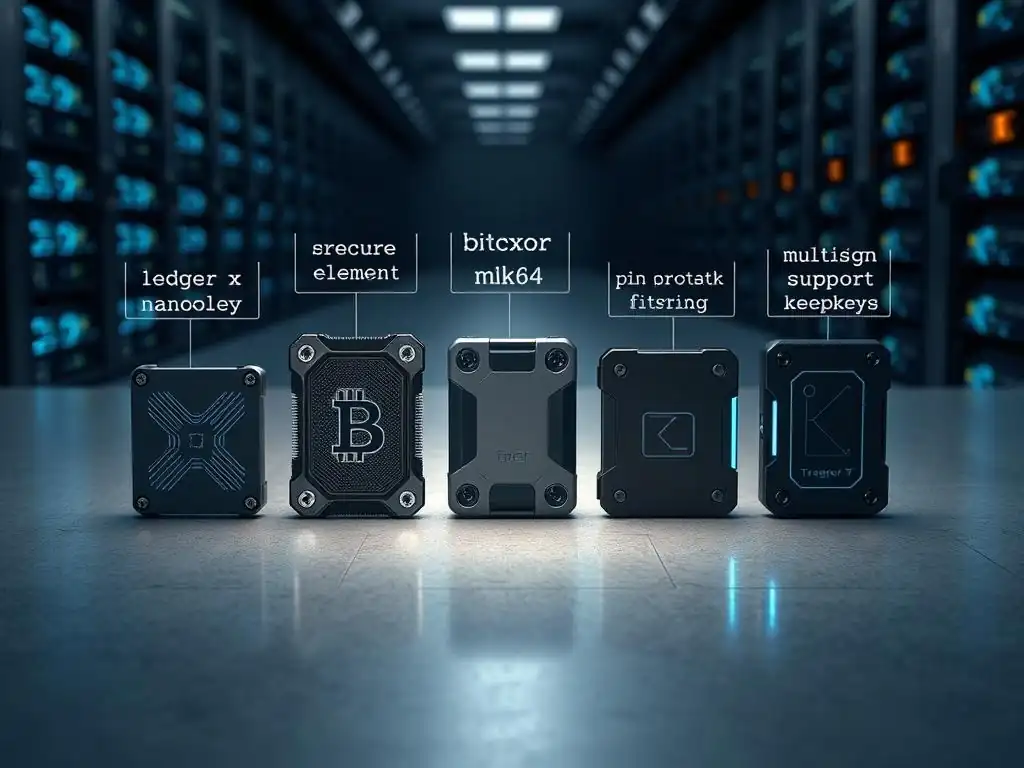
The Ledger Nano X is a popular choice known for its strong security features and broad asset support. It utilizes a certified secure element chip (CC EAL5+) designed to withstand sophisticated attacks. The device supports a vast number of cryptocurrencies and tokens (over 5,500 according to Ledger's website). A key feature is its Bluetooth connectivity, which allows it to be used wirelessly with mobile devices, adding convenience, though some institutions may prefer to disable this for maximum security.
The Nano X has a larger screen than its predecessor, the Nano S, making it easier to verify transaction details. It is managed via the Ledger Live software, which provides a user-friendly interface for managing multiple assets. For institutional use, Ledger offers specific enterprise solutions like Ledger Enterprise Solutions (formerly Ledger Vault), which builds upon the hardware security with additional governance, multisig, and recovery features tailored for businesses. While the standard Nano X provides a solid hardware foundation, the enterprise offering addresses the complex operational needs of large organizations.
Trezor Model T: User-Friendly Touchscreen Experience
The Trezor Model T is another leading hardware wallet, distinguished by its color touchscreen interface. This touchscreen allows users to enter their PIN and recovery phrase directly on the device, providing an extra layer of security against keyloggers on connected computers. Trezor emphasizes open-source principles, with its firmware and hardware design publicly auditable, fostering trust among technically inclined users and institutions.
The Model T supports a wide range of cryptocurrencies, though typically fewer than Ledger's extensive list, focusing on major coins and tokens. It connects via USB-C and is managed through the Trezor Suite software, which offers a comprehensive interface for managing assets, including features like coinjoins for enhanced privacy (for supported assets like Bitcoin). For institutional clients, Trezor also provides enterprise solutions focusing on secure custody. The Model T's ease of use via the touchscreen and its strong open-source security pedigree make it a compelling option for institutions prioritizing transparency and user experience alongside security.
BitBox02: Open-Source and Privacy-Focused Solution
The BitBox02, developed by Shift Crypto, is known for its focus on privacy and simplicity, built on open-source principles. It uses a secure chip but also relies heavily on its open-source firmware for security. It supports a more curated list of coins, primarily Bitcoin, Litecoin, Ethereum, and ERC-20 tokens, with dedicated versions like the BitBox02 Bitcoin-only edition appealing to BTC maximalists.
A unique feature is its intuitive touch sensors for navigation and confirmation, along with a microSD card slot for easy and reliable seed phrase backups. The device is managed via the BitBoxApp, which is also open-source and designed for clarity and ease of use.
While perhaps not as widely adopted by large, traditional financial institutions as Ledger or Trezor's enterprise offerings, the BitBox02's strong emphasis on open-source security, privacy features (like easily connecting to your own full node), and straightforward backup process makes it an attractive option for certain institutional niches or corporate treasuries prioritizing these aspects. The focus on core assets and auditable code aligns well with the security demands of hardware wallets institutional crypto operations value.
Best Practices for Institutions Using Hardware Wallets
Setting Up Hardware Wallets for Institutional Security
Proper setup is the first critical step in leveraging hardware wallets for institutional security. This involves generating a new seed phrase on the device itself, never using a pre-generated one or entering it on a computer. The seed phrase must be backed up meticulously on durable, offline materials (e.g., metal plates) and stored in multiple secure, geographically dispersed locations, such as safety deposit boxes or secure vaults. This backup is the only way to recover assets if the hardware wallet is lost or destroyed.
Institutions should implement clear procedures for the setup process, involving multiple personnel to ensure transparency and prevent single points of failure. This might include a "ceremony" where multiple authorized individuals are present during seed phrase generation and backup. Furthermore, using strong PINs and passphrase features (if available and managed securely) adds layers of protection. Thorough documentation of the setup process and storage locations is essential for operational continuity and auditing.
Regular Updates and Maintenance of Wallet Firmware
Hardware wallet manufacturers regularly release firmware updates to fix bugs, improve security, add support for new assets, and introduce new features. Keeping the device firmware updated is crucial for maintaining the highest level of security. Institutions must incorporate firmware updates into their regular operational procedures.
However, updates must be performed carefully and securely. This involves downloading updates only from official sources (usually through the manufacturer's dedicated software application) and verifying the integrity of the update file if possible. Procedures should dictate who is authorized to perform updates and how verification steps are documented. Neglecting updates can leave devices vulnerable to known exploits, while performing updates incorrectly or from unofficial sources can compromise the device. A disciplined approach to maintenance is vital for the ongoing security provided by hardware wallets institutional crypto management depends on.
Training Institutional Teams on Wallet Usage and Security
Even the most secure hardware wallet can be compromised through human error or lack of understanding. Comprehensive training for all personnel who interact with the hardware wallets or the associated management software is non-negotiable. This training should cover:
- The fundamental principles of hardware wallet security (private key isolation).
- Proper procedures for initiating, verifying, and signing transactions.
- Recognizing and avoiding phishing attempts and social engineering tactics.
- Secure handling of seed phrases and PINs.
- Protocols for reporting suspicious activity or potential security incidents.
- Procedures for managing access controls and user permissions within the wallet management system or custody solution.
- Develop training modules on hardware wallet security.
- Conduct mandatory security training for relevant personnel.
- Implement a policy requiring dual control for significant transactions signed with hardware wallets.
- Establish clear protocols for seed phrase backup storage and access.
Regular refresher training and simulated phishing exercises can help keep teams vigilant. Ensuring every individual understands their role in the security chain is paramount. For hardware wallets institutional crypto strategies are built upon, the human element of security is just as important as the technological one.
Conclusion: The Future of Hardware Wallets in Institutional Crypto Adoption
The Impact of Hardware Wallets on Crypto Regulation
The increasing adoption of hardware wallets, particularly within institutional custody solutions, has a significant impact on the regulatory landscape for digital assets. Regulators are keenly focused on how institutions manage the risks associated with digital assets, with secure custody being a primary concern. The use of verifiable, auditable, and highly secure offline storage methods like hardware wallets provides regulators with greater confidence that institutions can meet their obligations to protect client and investor assets.
As regulatory frameworks evolve (e.g., discussions around broker-dealer custody requirements for digital asset securities), the ability to demonstrate control over private keys through robust hardware-based solutions will likely become a standard expectation. Hardware wallets, especially when integrated into enterprise-grade custody platforms with granular access controls and audit trails, align well with traditional finance's emphasis on segregation of duties, internal controls, and proof of reserves. This technological advancement in secure storage facilitates regulatory clarity and acceptance, paving the way for broader institutional participation.
Predictions for Hardware Wallet Development
The hardware wallet market is expected to continue innovating to meet the evolving needs of both retail and institutional users. Future developments may include:
- Enhanced Institutional Features: More sophisticated multisig schemes, integration with Hardware Security Modules (HSMs) for higher-level enterprise security, and features specifically designed for compliance and reporting.
- Biometric Authentication: Wider adoption of fingerprint or other biometric scanners integrated into devices for additional user authentication layers.
- Increased Interoperability: Seamless integration with a broader range of blockchain networks, DeFi protocols, and potentially even traditional financial systems.
- Focus on Supply Chain Security: Greater transparency and security measures throughout the manufacturing and distribution process to prevent tampering before devices reach the end-user.
- Improved Disaster Recovery: More robust and user-friendly options for recovering assets in case of device loss or destruction, potentially involving distributed key sharding solutions.
These advancements will likely make hardware wallets even more secure, user-friendly, and capable of handling the complex demands of institutional digital asset management, further solidifying their role in the ecosystem.
Final Thoughts on Hardware Wallets and Institutional Crypto Growth
Hardware wallets have emerged as an indispensable tool for institutions navigating the digital asset landscape. Their fundamental ability to isolate private keys offline provides a level of security essential for managing significant capital in an environment rife with online threats. As institutional adoption of cryptocurrencies accelerates, the demand for robust, scalable, and compliance-friendly security solutions will only grow.
The features offered by modern hardware wallets—from multisig support and broad asset compatibility to user-friendly interfaces and integration with enterprise custody platforms—directly address the core security and operational challenges faced by financial institutions. While not a complete solution in themselves, hardware wallets form a critical foundation upon which secure and compliant institutional digital asset strategies can be built.
Their continued development and integration into institutional workflows are paramount for fostering trust, mitigating risk, and enabling the mainstream adoption and growth of the institutional crypto market. The secure custody provided by hardware wallets institutional crypto investors rely on is key to unlocking the full potential of this nascent asset class.
Frequently Asked Questions
What are hardware wallets and why are they important for institutional crypto adoption?
Hardware wallets are physical devices that store your private keys offline, providing a much higher level of security than software wallets. This enhanced security is crucial for institutions managing large crypto holdings.
How do hardware wallets address the unique security challenges faced by institutions dealing with crypto?
Institutions face risks like internal fraud and sophisticated cyberattacks. Hardware wallets mitigate these risks by requiring physical confirmation for transactions and isolating private keys from online vulnerabilities.
What are some key features to consider when selecting a hardware wallet for institutional use?
Look for features like multi-signature support, robust access controls, and compatibility with the institution's existing security infrastructure. Audit trails and reporting capabilities are also important.
How do hardware wallets contribute to regulatory compliance for institutions in the crypto space?
Hardware wallets help institutions maintain secure custody of crypto assets, a key requirement in many jurisdictions. They provide proof of ownership and facilitate compliance audits.
How is the adoption of hardware wallets impacting the overall institutional adoption of cryptocurrencies?
By providing a secure and compliant way to manage crypto assets, hardware wallets are lowering the barrier to entry for institutions. This increased security fosters greater confidence in the crypto market.
Okay, here's a final reflection designed to close your article "The Role of Hardware Wallets in Institutional Crypto Adoption," optimized for the keyword "Hardware wallets institutional crypto" and following the structure you provided:
Final Reflection: Securing the Future of Institutional Crypto
The insights shared throughout this article underscore the critical role of hardware wallets in bridging the gap between institutional interest and actual adoption of cryptocurrencies. The security and control offered by hardware wallets are no longer a luxury, but a fundamental requirement for institutions venturing into the digital asset space. This is especially true given the increasing sophistication of cyber threats targeting crypto holdings.
This shift towards prioritizing security is profoundly shaping the institutional landscape. The growing acceptance and integration of hardware wallets represent a maturing of the crypto industry, signaling a move away from speculative fervor towards sustainable, long-term investment strategies. Security is not a product, but a process.
This quote perfectly encapsulates the ongoing commitment required to safeguard institutional crypto assets, a commitment that hardware wallets facilitate.
Now, as you consider the implications of hardware wallets for institutional crypto adoption, I encourage you to reflect on your own role in shaping this future. Are you prepared to advocate for robust security measures within your organization? Are you actively seeking solutions that empower institutions to confidently participate in the crypto revolution? The future of institutional crypto hinges on our collective commitment to security and responsible innovation.
Unlock Institutional Crypto Adoption: Secure Your Future Now!
Thank you for exploring the importance of hardware wallets in facilitating institutional crypto adoption. You now have valuable insights into how secure storage solutions are enabling broader acceptance of digital assets by organizations. Are you ready to take the next step and become part of this transformative movement?
Here are some practical actions you can take today:
- Deepen your understanding of hardware wallet security features by researching different models and comparing their capabilities.
- Share this article with colleagues and fellow investors to foster meaningful discussions about safeguarding institutional crypto assets.
- Explore our glossary to clarify complex crypto terminology and enhance your expertise.
What security feature of hardware wallets do you believe is most vital for institutional adoption, and why? Share your thoughts in the comments below!
Leave a Reply