
Transparency Rx: How Blockchain is Healing Pharma Supply Chain Woes


Welcome to Blockchain Trends, where we delve deep into the transformative potential of blockchain technology across various sectors. Today, we invite you to uncover the fascinating world of the pharmaceutical supply chain through our feature article, "Transparency Rx: How Blockchain is Healing Pharma Supply Chain Woes." As we explore the intersection of blockchain and healthcare, prepare to discover how this groundbreaking technology is revolutionizing transparency, efficiency, and trust in the industry. Are you ready to learn how blockchain is not just a buzzword but a powerful tool for change? Let’s dive in!
- Introduction: The Urgent Need for Transparency in the Pharma Supply Chain
- Understanding the Challenges of the Traditional Pharmaceutical Supply Chain
- Blockchain Pharma Supply Chain: A Revolutionary Solution
- Key Benefits of Implementing Blockchain in Pharma Supply Chains
- Real-World Applications of Blockchain in the Pharmaceutical Industry
- Blockchain Technology and DSCSA (Drug Supply Chain Security Act) Compliance
- Overcoming the Challenges of Blockchain Implementation in Pharma
- The Future of Blockchain in the Pharmaceutical Supply Chain
- Conclusion: Blockchain – A Prescription for a Healthier Pharma Supply Chain
-
Frequently Asked Questions
- What are the primary benefits of using blockchain in the pharma supply chain?
- How does blockchain address the issue of counterfeit drugs in the pharmaceutical industry?
- What are some of the key challenges in implementing blockchain solutions in the pharma supply chain?
- How can blockchain improve the efficiency of the pharma supply chain beyond tracking and tracing?
- What is the regulatory landscape surrounding the use of blockchain in the pharma supply chain?
- Final Reflection: Embracing Trust in a Transparent Future
- Unveil the Future of Pharma: Secure Your Supply Chain Today!
Introduction: The Urgent Need for Transparency in the Pharma Supply Chain
The Problem: Counterfeit Drugs and Supply Chain Inefficiencies
The global pharmaceutical supply chain is a complex web involving manufacturers, distributors, wholesalers, pharmacies, and ultimately, patients. This intricate structure, while facilitating the delivery of life-saving medications, is plagued by significant vulnerabilities. One of the most critical issues is the proliferation of counterfeit drugs.
The World Health Organization (WHO) estimates that 10% of medical products in low- and middle-income countries are substandard or falsified, a figure that can rise to 30% in some areas. These fake medications pose a severe threat to public health, lacking active ingredients, containing incorrect dosages, or harboring toxic substances, leading to treatment failure, worsening health conditions, and even death.
Beyond the life-threatening issue of counterfeits, the traditional pharma supply chain suffers from deep-rooted inefficiencies. Relying on fragmented systems, manual processes, and siloed data leads to delays, errors, and increased costs. For instance, reconciling chargebacks between manufacturers and distributors can be a cumbersome, months-long process involving significant administrative overhead and disputes. Furthermore, the lack of real-time visibility makes it difficult to track product movement accurately, manage inventory effectively, and respond swiftly to recalls or supply disruptions. These inefficiencies not only inflate operational expenses but also impact the timely availability of essential medicines.
The Promise: Blockchain Technology for Pharma Traceability
Against this backdrop of challenges, blockchain technology emerges as a transformative solution, offering the potential to fundamentally reshape the pharmaceutical supply chain by injecting unprecedented levels of transparency, security, and efficiency. At its core, blockchain is a distributed, immutable ledger that records transactions across multiple computers, making it virtually impossible to alter past records without the consensus of the network. This inherent characteristic makes it ideal for creating a secure and verifiable history of a drug's journey from its origin to the patient.
The application of blockchain to the pharma supply chain, often referred to as the blockchain pharma supply chain, promises to address critical pain points. By creating a shared, trustworthy record of each transaction – from manufacturing and packaging to shipping, handling, and dispensing – stakeholders can gain end-to-end visibility.
This traceability is crucial for verifying the authenticity of products, preventing diversion, and ensuring that temperature-sensitive medications are handled correctly. The distributed nature of the ledger also reduces reliance on central authorities and minimizes the risk of single points of failure or data manipulation, paving the way for a more robust and reliable system.
Understanding the Challenges of the Traditional Pharmaceutical Supply Chain
Lack of End-to-End Visibility: A Breeding Ground for Counterfeits
One of the most significant impediments in the traditional pharmaceutical supply chain is the severe lack of end-to-end visibility. Information about a product's journey is often held in disparate systems managed by different entities – manufacturers, wholesalers, distributors, and pharmacies – using incompatible technologies and data formats. This fragmentation means that no single party has a complete, real-time view of where a specific drug is, who has handled it, and its current status. This information gap creates 'blind spots' where counterfeit products can be introduced or legitimate products can be diverted from the authorized supply chain.
The inability to quickly and reliably trace a product's provenance makes verifying its authenticity challenging for anyone downstream in the chain. For example, a pharmacy receiving a shipment might have limited means to confirm the drug's origin beyond checking basic packaging, which counterfeiters can often replicate convincingly. This opacity not only facilitates the entry of fake drugs but also hinders rapid response during recalls, making it difficult to identify and quarantine affected batches efficiently. Without a unified, transparent record, building trust and ensuring the integrity of the supply chain remains an uphill battle.
Data Silos and Inefficient Communication
The pharmaceutical supply chain is characterized by numerous data silos, where critical information is locked within individual company systems and is not easily shared or integrated with partners. Manufacturers have data on production batches, wholesalers track shipments to pharmacies, and pharmacies manage dispensing records, but these datasets often reside in isolated databases. Exchanging information typically involves manual processes, emails, faxes, or outdated electronic data interchange (EDI) systems, which are slow, error-prone, and lack real-time capabilities.
This inefficient communication and data fragmentation lead to significant operational challenges. Processes like order fulfillment, inventory management, and financial settlements (such as chargebacks) become cumbersome and time-intensive, requiring manual reconciliation across different systems. Disputes over missing shipments or incorrect billing are common, consuming valuable resources and straining relationships between supply chain partners. The lack of a shared, accessible source of truth impedes collaboration, slows down decision-making, and adds considerable cost and complexity to the entire operation, highlighting the need for a more integrated and efficient data-sharing mechanism like a blockchain pharma supply chain.
Regulatory Compliance Challenges in Pharma
The pharmaceutical industry operates under stringent regulatory requirements designed to ensure product safety, quality, and traceability. In the United States, the Drug Supply Chain Security Act (DSCSA) mandates specific requirements for tracing certain prescription drugs through the supply chain, including serialization (assigning a unique identifier to each product), tracing (tracking ownership changes), and verification (checking product authenticity). Compliance with these regulations is complex, requiring robust systems for data capture, storage, and exchange.
Meeting DSCSA and similar regulations globally often involves significant investment in IT infrastructure and ongoing operational costs. Companies must manage vast amounts of serialization data, maintain detailed transaction histories, and be prepared to respond quickly to verification requests or trace inquiries from regulators or trading partners. The challenge is compounded by the need for interoperability between different companies' systems. Ensuring that data can be seamlessly exchanged and understood across the diverse network of stakeholders, each potentially using different software or databases, presents a major hurdle in achieving full regulatory compliance efficiently.
Blockchain Pharma Supply Chain: A Revolutionary Solution
How Blockchain Enhances Pharma Supply Chain Security
Blockchain technology significantly enhances security within the pharmaceutical supply chain through its core architectural principles. Unlike traditional centralized databases that are vulnerable to single points of attack, a blockchain is a distributed ledger replicated across numerous nodes (computers) within the network. Any transaction or data added to the blockchain is validated by multiple participants according to predefined consensus rules before being added as a new 'block' to the chain. Once a block is added, it is cryptographically linked to the previous block, forming an immutable chain.
This distributed validation process makes it incredibly difficult for malicious actors to tamper with records. To alter past data, an attacker would need to gain control of a majority of the network's nodes and simultaneously change the data on all those distributed ledgers, a computationally infeasible task for permissioned blockchain networks typically used in enterprise settings. This inherent security mechanism ensures that the history of a drug's movement and handling recorded on the blockchain is trustworthy and resistant to fraud, providing a strong defense against the introduction of counterfeit or diverted products.
Immutability and Transparency: Core Benefits of Blockchain
The immutability of a blockchain is one of its most powerful features for the pharma supply chain. Once data, such as a transaction record indicating a change of ownership or a temperature reading during transit, is added to the blockchain, it cannot be retrospectively altered or deleted. Each block contains a cryptographic hash of the previous block, meaning any attempt to modify historical data would break the chain of hashes, immediately signaling that the data has been tampered with. This creates a permanent, auditable trail of every event in a drug's lifecycle.
Coupled with immutability is enhanced transparency. While the data itself might be permissioned (only accessible to authorized parties in a private or consortium blockchain), the fact that the data exists and is verifiable across the network increases trust. Stakeholders with appropriate permissions can access the shared ledger to view the complete history of a product, from manufacture to delivery. This shared, single source of truth eliminates disputes arising from conflicting records and provides a clear, undeniable account of a product's journey, significantly improving accountability and trust among supply chain partners leveraging a blockchain pharma supply chain solution.
Enhanced Traceability of Pharmaceuticals from Manufacturer to Patient
The application of blockchain technology enables granular, item-level traceability of pharmaceuticals throughout the entire supply chain, a crucial element for combating counterfeits and ensuring patient safety. By assigning a unique serialized identifier (like a 2D data matrix containing GS1 standards such as GTIN, serial number, batch/lot number, and expiration date) to each individual package and recording key events associated with that identifier on the blockchain, a digital twin of the physical product's journey is created.
As the product moves from the manufacturer to a wholesaler, then to a pharmacy, and finally potentially to a patient (depending on the scope), each transfer of ownership or significant handling event (e.g., aggregation into a case, de-aggregation, shipping, receiving) is recorded as a transaction on the distributed ledger. This creates a verifiable, time-stamped history linked to the specific serial number.
In case of a suspected counterfeit or a recall, regulators, manufacturers, and other authorized parties can query the blockchain to instantly trace the product's path, identify its origin, and verify its legitimate movement through the authorized blockchain pharma supply chain. This level of precise, real-time traceability is a significant leap forward from traditional batch-level tracking or paper-based systems.
Key Benefits of Implementing Blockchain in Pharma Supply Chains
Combating Counterfeit Drugs and Protecting Patient Safety
Implementing a blockchain pharma supply chain provides a robust defense mechanism against the infiltration of counterfeit drugs, directly safeguarding patient safety. By creating an immutable and transparent record of each drug package's journey using unique serial identifiers, the system makes it significantly harder for fake products to enter and move undetected within the legitimate supply chain. When a product reaches a pharmacy or a dispenser, its unique identifier can be scanned and verified against the blockchain ledger.
This verification process can instantly confirm whether the serial number is legitimate, if it originated from an authorized manufacturer, if it has followed the expected path through the authorized distributors, and if it has already been marked as dispensed. Any discrepancy – such as a serial number not found on the ledger, appearing in the wrong location, or showing signs of tampering – immediately flags the product as suspicious.
This ability to verify authenticity at multiple points in the chain, right up to the point of dispense, empowers stakeholders to identify and isolate potentially dangerous counterfeit medications before they reach patients, thereby preventing adverse health outcomes and rebuilding trust in the integrity of the drug supply.
Improving Supply Chain Efficiency and Reducing Costs
Beyond security, integrating blockchain technology into pharmaceutical supply chains can drive substantial improvements in operational efficiency and lead to cost reductions. The shared, transparent ledger eliminates the need for intermediaries to reconcile disparate records, streamlining processes like inventory management, order tracking, and financial settlements. For example, automated chargeback reconciliation, a process notoriously inefficient in pharma, can be significantly expedited.
By providing a single, indisputable record of transactions and product movements accessible to all authorized parties, blockchain reduces the time and effort spent on manual data entry, reconciliation, and dispute resolution. Industry estimates suggest that manual chargeback processes can cost pharmaceutical companies hundreds of millions of dollars annually in administrative overhead and lost revenue due to errors and delays. By automating verification against the blockchain ledger, these processes can be completed in near real-time, reducing administrative costs, improving cash flow, and allowing resources to be reallocated to more productive activities.
Streamlining Regulatory Compliance and Auditing
Regulatory compliance, particularly with mandates like the DSCSA, becomes significantly more manageable and less burdensome with a blockchain pharma supply chain. The technology inherently supports the requirements for serialization, tracing, and verification by providing a secure and accessible platform for storing and managing the necessary data. Each serialized transaction is recorded on the distributed ledger, automatically creating the required transaction history (transaction information, transaction history, and transaction statement).
Furthermore, the immutable nature of the blockchain simplifies auditing processes. Regulators or auditors can be granted permission to access the ledger to review the complete history of a product or batch, confident that the data has not been altered. This eliminates the need for companies to compile complex reports from multiple disparate systems, saving significant time and resources during audits. The ability to quickly and accurately provide verifiable data demonstrates a higher level of compliance readiness and transparency, potentially reducing regulatory risks and penalties.
Enhancing Trust and Collaboration Among Stakeholders
The traditional pharmaceutical supply chain is often characterized by a degree of mistrust and limited collaboration between independent entities, stemming from data silos and a lack of shared visibility. Manufacturers might question the inventory data provided by distributors, while pharmacies might lack full confidence in the provenance of products received from wholesalers. A blockchain pharma supply chain fundamentally alters this dynamic by establishing a foundation of shared trust built on verifiable data.
Because all authorized participants are operating off the same immutable ledger, there is a shared, undeniable source of truth regarding product movements and transactions. This transparency fosters greater collaboration as partners can rely on the accuracy of the shared information. Disputes are reduced, communication is streamlined, and stakeholders can work together more effectively to manage inventory, respond to issues, and ensure the integrity of the supply chain. This enhanced trust and collaboration are essential for building a resilient and efficient network capable of reliably delivering medicines to patients.
Real-World Applications of Blockchain in the Pharmaceutical Industry
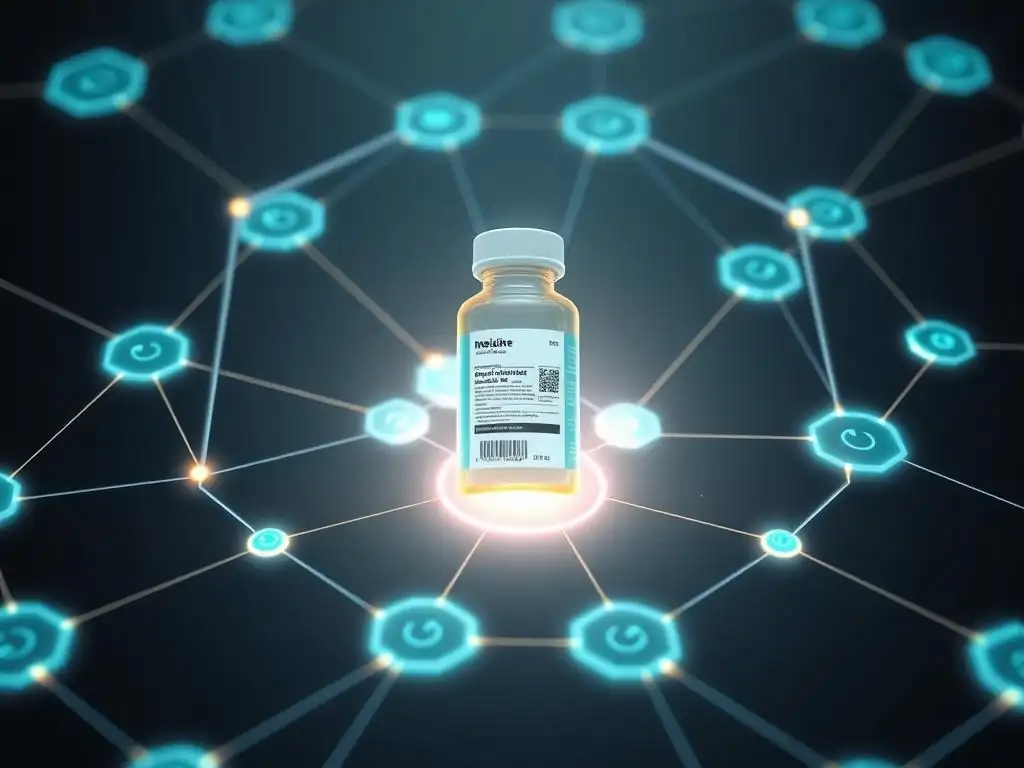
Case Study 1: MediLedger's Chargeback Reconciliation Solution
One of the early and successful real-world applications of blockchain in the pharmaceutical industry is the MediLedger Project, a consortium focused on leveraging blockchain for specific supply chain challenges. A prominent use case within MediLedger is automated chargeback reconciliation between pharmaceutical manufacturers and wholesale distributors. The traditional process involves wholesalers claiming chargebacks from manufacturers for discounts provided to end customers (like hospitals or pharmacies), a complex system fraught with discrepancies and manual effort.
The MediLedger solution uses a permissioned blockchain to create a shared, immutable record of product sales and contract eligibility data between manufacturers and wholesalers. When a wholesaler makes a sale eligible for a chargeback, the relevant data is recorded on the blockchain. Manufacturers can then automatically verify the chargeback claim against this shared, trustworthy data. This eliminates the need for manual data matching and reconciliation between disparate systems, significantly reducing the time it takes to settle chargebacks from potentially months to just days or even hours, cutting administrative costs and improving cash flow for both parties.
Case Study 2: IBM Food Trust's Role in Pharma Traceability
While primarily known for its application in the food industry, platforms like IBM Food Trust demonstrate the foundational capabilities required for robust supply chain traceability, which are directly transferable to the pharmaceutical sector. IBM Food Trust utilizes a permissioned blockchain network to allow participants across the food supply chain – from farmers and processors to distributors and retailers – to share data about food products in a secure and transparent manner. This enables rapid tracing of products back to their origin in seconds, a process that previously took days or weeks.
The principles applied in IBM Food Trust – creating a network of trusted partners, capturing data at each handoff, and storing it immutably on a blockchain for authorized access – are directly applicable to creating a blockchain pharma supply chain. Companies can adapt similar blockchain frameworks to track pharmaceutical products, recording key data points such as manufacturing date, batch number, serial number, temperature logs during transport, and changes in ownership. This capability to quickly trace a product's journey through a complex network is vital for verifying authenticity and responding effectively during recalls, mirroring the success seen in food traceability.
Pilot Projects and Emerging Trends in Blockchain Pharma
Beyond established examples like MediLedger, numerous pilot projects and initiatives are exploring the potential of blockchain across various aspects of the pharmaceutical supply chain. Companies are experimenting with blockchain for tracking temperature-sensitive goods (cold chain management), managing clinical trial data, verifying the authenticity of medical devices, and even tokenizing supply chain assets for improved financing. For instance, several consortia involving major pharma companies, logistics providers, and technology firms are running pilots specifically focused on meeting DSCSA requirements using blockchain technology.
Emerging trends include the integration of Internet of Things (IoT) devices, such as temperature sensors or GPS trackers, directly with blockchain networks to automatically record verifiable data about product conditions and location during transit. There is also growing interest in combining blockchain with artificial intelligence (AI) for predictive analytics on supply chain risks, using the clean, verifiable data from the blockchain as a reliable input. These diverse pilot projects and emerging trends underscore the industry's increasing recognition of blockchain as a foundational technology for building the next generation of secure, transparent, and efficient pharmaceutical supply chains.
Blockchain Technology and DSCSA (Drug Supply Chain Security Act) Compliance
DSCSA Requirements and the Role of Blockchain
The Drug Supply Chain Security Act (DSCSA), enacted in the United States, outlines a phased approach to building an electronic, interoperable system to identify and trace certain prescription drugs as they are distributed. Key requirements include:
- Product Identification: Applying unique product identifiers (serialization) at the package level.
- Tracing: Capturing and maintaining transaction information (TI), transaction history (TH), and transaction statement (TS) for each change of ownership.
- Verification: The ability for trading partners to verify the legitimacy of a product, often using the product identifier.
- Detection and Response: Systems to detect and respond to suspect or illegitimate products.
A blockchain pharma supply chain is inherently well-suited to address these DSCSA requirements. The unique serialized identifier for each drug package can be the primary key on the blockchain. As products move through the supply chain, each transaction (change of ownership) can be recorded as an immutable entry on the distributed ledger, automatically generating a verifiable history that serves as the TI and TH.
Meeting Serialization and Verification Mandates with Blockchain Solutions
Serialization, a cornerstone of DSCSA, requires assigning and managing unique serial numbers for millions, if not billions, of individual drug packages annually. Blockchain provides a secure and decentralized way to store and manage the data associated with these serial numbers. When a product is manufactured and serialized, its unique ID and associated information (batch, expiry) can be registered on the blockchain. Subsequent transactions involving this serial number are then recorded as updates to its history on the ledger.
Verification, another critical DSCSA mandate, involves confirming that a product is legitimate. Using a blockchain pharma supply chain, authorized trading partners can query the network using a product's serial number. The blockchain can instantly return the complete, immutable history of that product's movement through the authorized supply chain. This allows pharmacies, for example, to verify that a product came from a legitimate source and followed the expected path, providing a high level of assurance against counterfeits, far more robust than relying on static databases or paper trails.
Future-Proofing Your Pharma Supply Chain with Blockchain
Adopting blockchain technology is not just about meeting current DSCSA requirements; it's about building a future-proof pharmaceutical supply chain capable of adapting to evolving regulations and technological advancements. While DSCSA currently focuses on tracing ownership changes, future regulations may require more granular data, such as temperature logs for cold chain products or handling events at specific locations. A blockchain-based system is flexible enough to incorporate these additional data points into the immutable ledger as required.
Furthermore, the interoperability challenges faced in meeting DSCSA can be mitigated by blockchain. By agreeing on common data standards and network protocols within a consortium blockchain, different companies can seamlessly exchange verifiable data, ensuring compliance across the entire network. As regulatory landscapes continue to tighten globally to combat drug counterfeiting and ensure patient safety, investing in a robust blockchain pharma supply chain positions companies to meet these challenges effectively and efficiently, providing a scalable foundation for future compliance mandates and industry best practices.
Overcoming the Challenges of Blockchain Implementation in Pharma
Addressing Scalability Concerns in Pharma Blockchain
One of the primary concerns when considering a blockchain pharma supply chain is scalability. The pharmaceutical industry handles billions of drug packages annually, generating a massive volume of transaction data. Public blockchains like Bitcoin or Ethereum, while decentralized, can face limitations in transaction speed and capacity, potentially becoming bottlenecks for high-volume enterprise applications. However, enterprise-grade blockchain platforms and permissioned ledgers are specifically designed to address these scalability issues.
These platforms, such as Hyperledger Fabric or R3 Corda, allow for faster transaction processing by limiting participation to known, authorized entities and often employing different consensus mechanisms more suited for enterprise throughput. Furthermore, strategies like 'off-chain' transactions for less critical data, batch processing, and sharding (partitioning the ledger) are being explored and implemented to handle the vast data volumes typical of the pharmaceutical supply chain. Careful design and selection of the appropriate blockchain architecture are crucial to ensure the solution can scale to meet the industry's needs.
Ensuring Interoperability Between Different Blockchain Platforms
While blockchain offers the promise of a unified ledger, the reality is that different companies or consortia might adopt different blockchain platforms or develop their own solutions. This raises concerns about interoperability – the ability for different blockchain networks or systems to communicate and share data seamlessly. A manufacturer might use one blockchain platform to track products internally, while a distributor might be part of a consortium using a different platform.
Addressing interoperability requires establishing common standards and protocols for data exchange between different blockchain networks or with legacy systems. Initiatives are underway to develop interoperability frameworks and gateways that allow data to be securely shared and verified across disparate blockchain platforms. Standardizing data formats (like using GS1 standards for serialization) is also critical. The success of a widespread blockchain pharma supply chain will heavily rely on the industry's ability to agree upon and implement these standards to ensure smooth data flow across the entire ecosystem, regardless of the underlying blockchain technology used by individual participants.
Data Privacy and Security Considerations in Pharma
Handling sensitive data within a blockchain pharma supply chain requires careful consideration of privacy and security, especially given stringent regulations like HIPAA in healthcare. While blockchain provides immutability and security for transaction data, the data itself, such as sensitive business information or potentially patient-level data (if the chain extends that far), must be protected. Storing highly confidential information directly on a shared ledger might not be appropriate.
Permissioned blockchains offer granular control over data access, ensuring that only authorized parties can view specific types of information. Techniques like data encryption, hashing, and zero-knowledge proofs can be employed to protect sensitive data while still allowing verification on the blockchain.
For instance, rather than putting raw sensitive data on the ledger, a hash of the data can be stored on the blockchain, with the actual data residing securely off-chain, accessible only to parties with the correct permissions and decryption keys. Implementing robust access controls and data governance policies is paramount to maintaining privacy and security in a blockchain pharma supply chain.
The Importance of Collaboration and Standardization
Successfully implementing a transformative technology like a blockchain pharma supply chain across an entire industry requires unprecedented levels of collaboration and standardization among diverse stakeholders. Manufacturers, wholesalers, distributors, pharmacies, regulators, and technology providers must work together to define common goals, agree on shared processes, and adopt interoperable technical standards.
Industry consortia, like the MediLedger Project or other DSCSA-focused groups, play a vital role in facilitating this collaboration. These forums allow competing companies to come together to solve common supply chain challenges, agreeing on the rules of the network, data formats, and governance models. Without widespread adoption of common standards for serialization, data exchange, and verification protocols, the benefits of a blockchain solution in achieving end-to-end traceability and trust will be significantly limited. The journey towards a fully functional blockchain pharma supply chain is as much about forging industry consensus as it is about technological implementation.
The Future of Blockchain in the Pharmaceutical Supply Chain
Emerging Technologies and Synergies with Blockchain
The future of the blockchain pharma supply chain is intrinsically linked with the integration of other emerging technologies, creating powerful synergies that enhance its capabilities. Beyond the core function of providing an immutable ledger, blockchain can serve as a trust layer connecting data from various sources. For instance, combining blockchain with the Internet of Things (IoT) allows for automated, verifiable recording of environmental conditions, such as temperature and humidity, for sensitive pharmaceutical products during transit using smart sensors.
Similarly, integrating blockchain with unique physical identifiers beyond serialization, such as tamper-evident seals with embedded NFC or RFID chips, can further enhance security. When a seal is broken or a product is scanned, this event can be automatically recorded on the blockchain, providing real-time alerts about potential tampering or diversion. These integrations create a more dynamic, responsive, and trustworthy supply chain, where physical product attributes and environmental conditions are linked to their digital twin on the blockchain.
The Role of AI and IoT in Enhancing Blockchain Pharma Solutions
Artificial Intelligence (AI) and IoT are poised to play crucial roles in maximizing the value derived from a blockchain pharma supply chain. IoT devices can generate vast amounts of real-time data – temperature, location, handling shocks, etc. Blockchain provides the secure, immutable backbone to store this data, ensuring its integrity and trustworthiness. AI can then leverage this clean, verifiable data from the blockchain and IoT sensors to perform advanced analytics.
AI algorithms can identify patterns indicative of potential fraud or diversion by analyzing transaction histories and sensor data recorded on the blockchain. They can predict potential supply chain disruptions based on real-time tracking data or optimize logistics routes. AI can also enhance the verification process, potentially identifying sophisticated counterfeit attempts that might mimic legitimate product movements but show subtle anomalies detectable through pattern analysis of blockchain records. This synergy between AI, IoT, and blockchain creates an intelligent, self-monitoring, and highly resilient pharmaceutical supply chain.
Predictions for the Growth of Blockchain in Pharma by 2028
Industry analysts and market reports project significant growth in the adoption of blockchain technology within the pharmaceutical supply chain over the next few years. While still in relatively early stages compared to other industries, the pressures of regulatory compliance (like DSCSA enforcement), the persistent threat of counterfeits, and the drive for greater efficiency are strong catalysts. Reports often predict substantial market size increases for blockchain in healthcare and pharmaceuticals specifically.
For instance, some market research indicates the global blockchain in healthcare market, which includes pharma supply chain applications, could reach several billion dollars by 2028, growing at a compound annual growth rate (CAGR) exceeding 50%. While specific figures vary, the consensus points towards increasing investment and implementation of blockchain solutions for traceability, verification, and process automation within the pharma sector. By 2028, it is anticipated that blockchain will move beyond pilot projects and become a more integrated and essential component of the standard pharmaceutical supply chain infrastructure, particularly among major players and those needing to meet strict regulatory mandates.
Conclusion: Blockchain – A Prescription for a Healthier Pharma Supply Chain
Embracing Blockchain for a More Secure and Transparent Future
The traditional pharmaceutical supply chain, burdened by fragmentation, inefficiency, and the constant threat of counterfeit drugs, is in urgent need of a modern prescription for health. Blockchain technology offers a powerful remedy. By providing an immutable, transparent, and distributed ledger for tracking pharmaceuticals, a blockchain pharma supply chain directly addresses core vulnerabilities. It enables end-to-end traceability, making it significantly harder for illegitimate products to infiltrate the system and easier to verify the authenticity of medicines.
Beyond security, blockchain fosters greater efficiency by streamlining processes like regulatory compliance and chargeback reconciliation, leading to reduced operational costs. It builds a foundation of trust and collaboration among supply chain partners by providing a shared, verifiable source of truth. While implementation challenges related to scalability, interoperability, and data privacy exist, ongoing developments in enterprise blockchain platforms and industry collaboration are steadily paving the way for broader adoption. Embracing this technology is a critical step towards building a more resilient, trustworthy, and ultimately, safer global pharmaceutical supply chain.
Call to Action: Explore Blockchain Solutions to Enhance Your Pharmaceutical Supply Chain
The evidence is clear: blockchain technology offers compelling benefits for the pharmaceutical industry. From combating the dangerous proliferation of counterfeit drugs to streamlining complex regulatory processes and improving overall operational efficiency, the potential impact is transformative. Ignoring this technology could leave your organization vulnerable to risks and inefficiencies that competitors are actively addressing.
It's time to move beyond theoretical discussions and explore practical applications of blockchain within your own operations. Identify specific pain points in your current supply chain – whether it's traceability gaps, compliance hurdles, or inefficiencies in partner interactions. Research existing blockchain pharma supply chain solutions and consortia. Engage with technology providers and industry peers who are pioneering the use of this technology. Understanding the potential and planning for strategic adoption of blockchain is no longer optional; it is essential for securing the integrity and future success of your pharmaceutical supply chain in an increasingly complex global environment.
Frequently Asked Questions
What are the primary benefits of using blockchain in the pharma supply chain?
Blockchain offers enhanced transparency and traceability throughout the supply chain. This helps in combating counterfeit drugs and ensuring product integrity from manufacturer to consumer.
How does blockchain address the issue of counterfeit drugs in the pharmaceutical industry?
Blockchain creates an immutable record of each product's journey. This makes it easier to verify authenticity and detect counterfeit products entering the supply chain, reducing risks for consumers.
What are some of the key challenges in implementing blockchain solutions in the pharma supply chain?
Challenges include the need for industry-wide collaboration, the complexity of integrating with existing systems, and concerns about data privacy and regulatory compliance.
How can blockchain improve the efficiency of the pharma supply chain beyond tracking and tracing?
Blockchain can streamline processes like inventory management and payment settlements. It can also automate processes through smart contracts, reducing administrative overhead.
What is the regulatory landscape surrounding the use of blockchain in the pharma supply chain?
Regulations are still evolving but focus on ensuring data security, patient privacy, and compliance with existing pharmaceutical regulations like the Drug Supply Chain Security Act (DSCSA).
Final Reflection: Embracing Trust in a Transparent Future
The journey through the intricacies of pharmaceutical supply chains, illuminated by the promise of blockchain technology, reveals a profound truth: trust is the ultimate medicine. The vulnerabilities exposed, the inefficiencies identified, and the potential solutions explored all converge on the critical need for verifiable, transparent systems. In a world increasingly reliant on global networks, the ability to ensure the authenticity and integrity of life-saving medications is not merely a technological challenge, but a moral imperative.
The impact of a secure and transparent pharmaceutical supply chain extends far beyond the logistical realm. It touches the lives of individuals, families, and communities, fostering confidence in the medications they rely on. Witnessing the potential of blockchain to combat counterfeit drugs and streamline distribution has reinforced my belief in the power of technology to address critical societal challenges. The best way to predict the future is to create it.
- Peter Drucker. This quote resonates deeply, as the adoption of blockchain in the pharmaceutical industry represents a proactive step towards building a healthier and more trustworthy future for all.
As we stand at the cusp of this technological revolution, I invite you to consider your own role in fostering transparency and accountability. Reflect on how you can advocate for the adoption of secure and verifiable systems in your own sphere of influence, whether it's supporting ethical sourcing practices, demanding greater transparency from healthcare providers, or simply staying informed about the latest advancements in blockchain technology. The future of healthcare depends on our collective commitment to building a world where trust is not a luxury, but a fundamental right.
Unveil the Future of Pharma: Secure Your Supply Chain Today!
Thank you for exploring how blockchain technology is transforming the pharmaceutical supply chain and enhancing patient safety. Now that you’re informed, it’s time to take action.
Consider how blockchain could improve transparency and security within your own work or daily life. Think about specific medications, suppliers, or processes that could benefit from greater oversight.
Share this article with colleagues and friends to raise awareness about the potential of blockchain in healthcare. Starting conversations can help accelerate innovation.
Additionally, brainstorm new blockchain applications to address particular challenges in pharmaceutical logistics. Your unique ideas could lead to meaningful improvements.
What is the first step you will take to support blockchain’s role in creating a safer, more transparent pharmaceutical supply chain? Share your thoughts below!
Leave a Reply