
Decentralized Identity and Data Ownership: Empowering Individuals in the Data Economy


Welcome to Blockchain Trends, your compass navigating the ever-evolving landscape of blockchain technology! Beyond the hype of cryptocurrencies lies a revolution – a future where decentralized systems reshape industries and empower individuals. Ready to delve into how blockchain is transforming digital identity? This month, we're exploring the critical concept of blockchain identity data ownership and its potential to give you control over your personal information. Discover how this groundbreaking technology is poised to redefine privacy and security in the data economy. Let's unlock the possibilities together – read on to learn more!
- Decentralized Identity and Data Ownership: Empowering Individuals in the Data Economy
- Understanding Decentralized Identity (DID) and its Importance
- Blockchain's Role in Decentralized Identity Management
- Data Ownership and Control: The Core of Decentralized Identity
- The Benefits of Blockchain Identity Data Ownership
- Use Cases of Decentralized Identity and Blockchain Data Ownership
- Challenges and Opportunities in Implementing Decentralized Identity
- The Future of Blockchain Identity Data Ownership: A Vision
- Conclusion: Embracing Decentralized Identity for a More Empowered Future
-
Frequently Asked Questions
- What is decentralized identity in the context of Blockchain Trends?
- How does blockchain contribute to enhancing Blockchain identity data ownership?
- What are some potential applications of Blockchain identity data ownership beyond cryptocurrencies?
- What are the main regulatory challenges surrounding Blockchain identity data ownership?
- What is the future outlook for Blockchain identity data ownership and its impact on the data economy?
- Final Reflection: Reclaiming Digital Sovereignty
- Unleash Your Data Power: Start Owning Your Digital Footprint!
Decentralized Identity and Data Ownership: Empowering Individuals in the Data Economy
The digital landscape is rapidly evolving, and at its core lies the fundamental question of identity. In a world increasingly reliant on online interactions and data exchange, the traditional models of managing who we are and controlling our personal information are proving inadequate. This article explores the transformative potential of decentralized identity (DID) and blockchain identity data ownership, highlighting how these technologies can shift power back to individuals in the burgeoning data economy.
Blockchain technology, initially recognized for its role in cryptocurrencies, offers a robust foundation for building new systems that prioritize security, transparency, and user control. Decentralized identity leverages these properties to create a paradigm where individuals, not third parties, are the primary custodians of their digital identities and associated data. This shift has profound implications for privacy, security, and the way data is valued and exchanged.
Understanding Decentralized Identity (DID) and its Importance
Decentralized identity represents a fundamental departure from traditional, centralized systems of identity management. It is a concept and set of technologies designed to give individuals greater control over their digital personas and interactions. Understanding its core principles is crucial to appreciating its potential impact on the blockchain identity data ownership landscape.
DID is not just a technical specification; it's a philosophical shift towards empowering the individual in the digital realm. By moving away from reliance on single points of authority like governments or corporations for identity verification, DIDs aim to create a more resilient, private, and user-centric system. This is particularly relevant as individuals accumulate vast amounts of data across countless online services.
What is Decentralized Identity (DID)? A Definition
Decentralized Identity (DID) refers to a type of digital identity that is not dependent on a centralized authority or registry. Instead, it allows individuals, organizations, or things to create and control their own identifiers, which can be verified in a secure and privacy-preserving manner. These identifiers are typically registered on a decentralized ledger, often a blockchain, providing an immutable and tamper-evident record.
A DID is essentially a unique identifier, like did:example:123456789abcdefg, that points to a DID document. This document contains cryptographic material, such as public keys, and service endpoints necessary to establish secure communication and verify credentials associated with the DID. The key characteristic is that the control over the DID and its associated document rests with the entity that owns it, facilitated by private keys, rather than being issued and managed by a central authority.
The Problem with Traditional Identity Management
Traditional identity management systems are inherently centralized and fragmented, leading to numerous security and privacy vulnerabilities. Individuals are required to create separate accounts and provide sensitive personal information (PII) to countless service providers – banks, social media platforms, e-commerce sites, healthcare providers, etc. Each provider acts as a silo, storing duplicate copies of this data.
This centralized model creates attractive targets for cybercriminals. High-profile data breaches, such as the 2017 Equifax incident which exposed the data of approximately 147 million people, or the 2013 Yahoo breach affecting billions of accounts, demonstrate the catastrophic consequences of relying on centralized databases. Users have little to no control over how their data is stored, secured, or shared once it's in the hands of these third parties, leading to a significant lack of blockchain identity data ownership for the individual.
The Rise of Self-Sovereign Identity (SSI) and its Connection to DIDs
Self-Sovereign Identity (SSI) is a concept that describes the ideal state of digital identity where an individual has complete ownership and control over their identity. In an SSI model, individuals can manage their digital credentials, decide what information to share, with whom, and when, without relying on a third party as an intermediary. It emphasizes user agency and privacy by design.
Decentralized Identifiers (DIDs) and the underlying blockchain technology serve as key technical enablers for achieving Self-Sovereign Identity. DIDs provide the method for creating persistent, decentralized identifiers, while blockchain offers the secure, immutable ledger needed to anchor these identifiers and manage cryptographic keys.
Verifiable Credentials (VCs), another component of the SSI ecosystem, allow trusted issuers (like a university issuing a degree or a government issuing a driver's license) to issue cryptographically signed claims about a DID holder, which the holder can then selectively present to verifiers. Together, these elements form the foundation for true blockchain identity data ownership, allowing individuals to hold and manage their verifiable attributes.
Blockchain's Role in Decentralized Identity Management
Blockchain technology provides the foundational infrastructure necessary for decentralized identity systems to function securely and reliably. Its inherent characteristics address many of the shortcomings of traditional identity management, paving the way for enhanced blockchain identity data ownership. The distributed and immutable nature of blockchain creates a trust layer that is independent of any single entity.
By leveraging blockchain, decentralized identity solutions can ensure that identity information, or at least the pointers to it and the cryptographic keys controlling it, are resistant to tampering and single points of failure. This is a critical step in building a digital identity framework where individuals are truly in control, facilitating robust blockchain identity data ownership.
How Blockchain Enhances Identity Security and Transparency
Blockchain enhances identity security through cryptography and its distributed ledger architecture. Each transaction (like creating a DID or registering a public key) is cryptographically signed and linked to the previous one, forming a chain that is extremely difficult to alter retroactively. This immutability ensures that the history of an identity's key management or credential issuance is transparent and verifiable by anyone on the network, without revealing private information.
Furthermore, the decentralized nature means there is no single database to hack. Copies of the ledger are distributed across many nodes, making it highly resilient to attacks. While personal data itself is typically not stored directly on the public blockchain for privacy reasons, the cryptographic proofs and pointers that verify identity attributes are anchored there, providing a secure and transparent log of verification events. This underpins the security aspect of blockchain identity data ownership.
Blockchain-Based Identity Solutions: An Overview
Several initiatives and platforms are building decentralized identity solutions utilizing blockchain technology. Projects like Sovrin, Hyperledger Indy, and the W3C's DID specification are at the forefront of defining the standards and protocols for creating, resolving, and verifying DIDs and Verifiable Credentials on distributed ledgers. These platforms provide the tools for issuing, holding, and verifying digital identities.
These solutions typically involve a distributed ledger (often a purpose-built or permissioned blockchain), a network of participants (issuers, holders, verifiers), and wallet applications for individuals to manage their DIDs and VCs. For example, a university could be an issuer of a degree credential, an individual is the holder of that credential stored in their digital wallet, and an employer is the verifier who can cryptographically check the credential's validity against the ledger and the issuer's public key. This ecosystem facilitates the practical implementation of blockchain identity data ownership.
Key Benefits of Using Blockchain for Identity Verification
Using blockchain for identity verification offers several significant benefits over traditional methods. Firstly, it drastically reduces reliance on central authorities, minimizing the risk associated with centralized databases and single points of failure. Identity verification can occur through cryptographic proofs and decentralized ledgers, enhancing resilience.
Secondly, it enables selective disclosure of information. Instead of sharing a full government ID to prove age, a user could present a Verifiable Credential signed by a trusted issuer that simply confirms they are over 18, without revealing their name, address, or date of birth. This granular control significantly improves privacy. Finally, the immutability of the blockchain ensures that once a credential or identity attribute is recorded or verified, that record cannot be tampered with, increasing trust and transparency in the verification process, which is central to effective blockchain identity data ownership.
Data Ownership and Control: The Core of Decentralized Identity
The concept of data ownership in the digital age is complex and often contentious. Who truly owns the vast amounts of data generated by individuals every day? Traditional models largely place ownership, or at least control and monetization rights, in the hands of the platforms and services that collect the data. Decentralized identity seeks to fundamentally alter this dynamic, placing the individual back at the center of their data universe.
Empowering individuals with genuine blockchain identity data ownership is not just a technical challenge but also a societal and economic one. It requires rethinking how data is collected, stored, accessed, and valued, ensuring that the individual's rights and privacy are paramount.
Defining Data Ownership in the Digital Age
Defining data ownership in the digital age is challenging because data is non-rivalrous and can be copied infinitely. Unlike physical property, digital data can be used simultaneously by multiple parties. Currently, data ownership often defaults to the entity that collects or processes the data, as outlined in terms of service agreements that few users fully read or understand. This has led to massive data exploitation and a significant power imbalance.
True data ownership, in the context of decentralized identity, means having the legal, technical, and practical ability to control access to, and usage of, one's personal data. It implies the right to know what data is held, the right to rectify it, the right to erase it (within technical constraints), and potentially the right to port it or even monetize it. This aligns directly with the goals of blockchain identity data ownership, where the individual holds the keys and grants permissions.
Why Data Ownership Matters for Individuals and Businesses
Data ownership matters significantly for individuals because it directly impacts their privacy, security, and autonomy. Lack of control over personal data exposes individuals to risks like identity theft, targeted manipulation, and pervasive surveillance. Furthermore, individuals are currently generating immense value through their data, yet they receive little to no direct benefit from its collection and use by corporations.
For businesses, recognizing and facilitating individual data ownership can build trust and improve customer relationships. Compliance with evolving data protection regulations like GDPR in Europe (with potential fines up to 4% of global annual revenue) or CCPA in California is becoming mandatory. Moving towards models that respect blockchain identity data ownership can reduce legal risks, enhance data quality through user consent, and potentially unlock new, ethical business models centered around user-controlled data marketplaces.
How DIDs Enable Individuals to Control Their Personal Data
Decentralized Identifiers (DIDs) enable individuals to control their personal data primarily by decoupling identity from centralized data silos. Instead of logging into a service using a username/password tied to a specific database, a user can authenticate using their DID. When data needs to be shared (e.g., proving residency), the individual holds the Verifiable Credential proving residency, which is linked to their DID.
The individual uses their private key associated with the DID to authorize the release of specific credentials or attestations to a verifier. The data itself might reside encrypted in a decentralized storage system or even on the user's device, with the DID document containing pointers or keys. This architecture ensures that the individual is the gatekeeper, deciding precisely what information is shared and with whom, thereby enacting true blockchain identity data ownership. They are no longer required to hand over their entire identity or complete datasets just to access a service.
The Benefits of Blockchain Identity Data Ownership
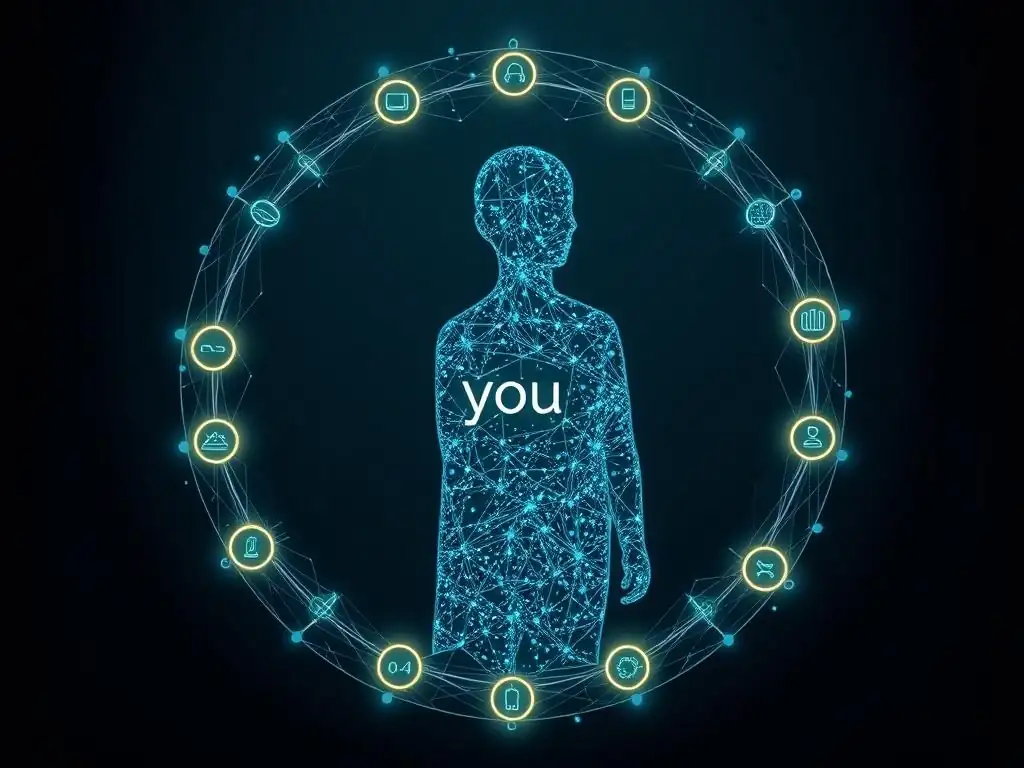
The convergence of decentralized identity and blockchain technology offers a powerful solution to many of the challenges inherent in traditional identity and data management. Empowering individuals with control over their digital selves through blockchain identity data ownership yields substantial benefits across multiple dimensions, from personal privacy to systemic efficiency and security.
These benefits are not merely theoretical; they represent tangible improvements in how we interact online, conduct business, and protect ourselves in an increasingly data-driven world. The shift towards a user-centric model fundamentally changes the power dynamics between individuals and institutions.
Enhanced Privacy and Security for Personal Information
One of the most significant benefits of blockchain identity data ownership is the substantial enhancement of privacy and security for personal information. In a DID system, individuals are not required to scatter copies of their sensitive data across dozens or hundreds of online services. Instead, they hold their verifiable credentials and personal attributes in a secure digital wallet, often encrypted on their own device.
When a service requires verification (e.g., proving age or address), the user can selectively disclose only the necessary information, often through a cryptographically verifiable proof, without revealing underlying details or their full identity. This "minimum necessary disclosure" principle dramatically reduces the attack surface for hackers. There is no longer a single, massive database of user PII for criminals to target, reducing the likelihood and impact of large-scale data breaches like those seen in centralized systems.
Increased Transparency and Accountability in Data Usage
Blockchain identity data ownership fosters greater transparency and accountability in how personal data is used. While the personal data itself is typically kept off the public ledger, the actions related to verifying identities and accessing credentials can be recorded on the blockchain. This creates an immutable audit trail of who accessed what verifiable proof and when (though not necessarily why, depending on the system design).
This verifiable history provides individuals with unprecedented insight into how their identity and associated data points are being accessed and used. It allows for auditing and ensures that entities requesting and using identity information are accountable for their actions. This stands in stark contrast to current systems where users often have little visibility into third-party data sharing practices, even with regulations like GDPR requiring reporting of breaches.
Reduced Risk of Identity Theft and Data Breaches
By eliminating the need for centralized honey pots of sensitive personal data, blockchain identity data ownership significantly reduces the risk of large-scale identity theft and data breaches. Attackers targeting a decentralized system would need to compromise individual wallets, which are protected by the user's private keys, rather than breaching a single, central database containing millions or billions of records.
Furthermore, even if a specific credential held by an individual were compromised, the damage would be limited to that specific piece of information, unlike centralized breaches that often expose a person's entire identity profile (name, address, social security number, date of birth, etc.). The cryptographic security inherent in blockchain and DID systems makes it much harder for attackers to forge credentials or impersonate users, enhancing overall security and mitigating the devastating consequences of identity theft, which cost Americans alone an estimated $56 billion in 2020 according to one study.
Enabling New Business Models Based on Data Ownership
Empowering individuals with blockchain identity data ownership opens the door to entirely new business models centered around user-controlled data. Instead of companies unilaterally collecting and monetizing user data, individuals could potentially choose to share anonymized or aggregated data streams in exchange for compensation or improved services.
This could lead to the development of personal data marketplaces where individuals license the use of their data under specific terms they dictate. Businesses could gain access to higher-quality, consented data, while users could finally receive value from the digital footprints they generate. For example, a marketing company might pay users for permission to access specific demographic or preference data, creating a more equitable data economy. This represents a significant shift from the current model where users are the product, towards one where users are compensated participants in the data flow.
Use Cases of Decentralized Identity and Blockchain Data Ownership
The potential applications of decentralized identity and blockchain identity data ownership span numerous sectors, promising to improve efficiency, security, and user experience. From highly regulated industries like healthcare and finance to everyday interactions like online logins, DIDs offer a robust alternative to current, often cumbersome and insecure, processes.
Exploring specific examples helps to illustrate the practical impact of shifting identity and data control to the individual. These use cases demonstrate how putting blockchain identity data ownership into practice can solve real-world problems and create more trustworthy digital interactions.
Healthcare: Secure and Patient-Controlled Medical Records
In healthcare, decentralized identity can revolutionize how medical records are managed and accessed. Currently, patient data is fragmented across different hospitals, clinics, and specialists, often stored in incompatible electronic health record (EHR) systems. Patients typically do not have easy, comprehensive access to their own records and must request them from providers.
With a DID system, a patient could have a decentralized identifier linked to their medical history. Hospitals, labs, and doctors could issue Verifiable Credentials for specific medical events (e.g., test results, diagnoses, prescriptions). The patient holds these credentials in their digital wallet and can grant specific healthcare providers, or even researchers, granular access to relevant parts of their record when needed. This enhances patient privacy, improves interoperability between systems, and gives patients true blockchain identity data ownership over their sensitive health information, potentially streamlining care coordination and emergency access.
Supply Chain: Verifying Product Authenticity and Provenance
Decentralized identity and blockchain data ownership can significantly improve transparency and trust in supply chains. Products, components, or even raw materials can be assigned DIDs. As an item moves through the supply chain, each handler (manufacturer, transporter, distributor) can issue Verifiable Credentials associated with the product's DID, attesting to its origin, handling, quality checks, or location at a specific time.
Consumers could scan a QR code on a product to view its DID and verify its journey through the supply chain by checking the associated VCs on the blockchain. This helps combat counterfeiting, verify ethical sourcing, and improve recall efficiency. For instance, a consumer buying organic produce could verify its farm of origin and transport history, or a company buying electronic components could verify their authenticity and handling conditions, leveraging blockchain identity data ownership associated with physical goods.
Government Services: Streamlining Identity Verification and Access
Governments are major issuers and consumers of identity information (passports, driver's licenses, social security numbers). Decentralized identity can streamline access to government services while enhancing citizen privacy and reducing administrative overhead. Instead of presenting physical documents or relying on centralized government databases for every interaction, citizens could use their DID to authenticate and selectively share necessary credentials.
For example, applying for a permit might require proof of residency and income. A citizen could present Verifiable Credentials issued by a municipality (for residency) and a tax authority (for income), linked to their DID. The government agency needing verification could cryptographically confirm the validity of these credentials on the blockchain without needing to maintain its own copies of sensitive PII. This improves efficiency, reduces the risk of data breaches from government databases, and provides citizens with greater control over their interactions, representing a significant step towards blockchain identity data ownership in the public sector.
Finance: KYC/AML Compliance and Secure Transactions
The financial sector is heavily reliant on identity verification for Know Your Customer (KYC) and Anti-Money Laundering (AML) compliance. Traditional processes are often manual, expensive, and repetitive, requiring customers to submit the same documents to multiple institutions. Decentralized identity offers a way to streamline these processes while improving security and data privacy.
A customer could undergo a KYC process with one trusted entity (e.g., a bank or specialized identity verification service) and receive a Verifiable Credential stating that they have met KYC requirements up to a certain level. They could then present this credential to other financial institutions, who could verify its authenticity on the blockchain without needing to re-collect and re-verify all the underlying documents.
This reduces friction for the customer, lowers costs for institutions (estimated global KYC/AML spending is in the tens of billions annually), and enhances security by minimizing the sharing of sensitive PII, embodying the principles of blockchain identity data ownership in finance.
Challenges and Opportunities in Implementing Decentralized Identity
While the potential benefits of decentralized identity and blockchain identity data ownership are significant, their widespread adoption faces several technical, organizational, and societal challenges. Overcoming these hurdles will require collaboration among technologists, businesses, governments, and users. However, these challenges also present opportunities for innovation and the development of robust, user-centric solutions.
Addressing these complexities head-on is crucial for the successful transition from traditional identity systems to a decentralized future. The path involves not only building the right technology but also fostering trust, establishing standards, and navigating the existing legal and regulatory landscape.
Scalability and Performance of Blockchain-Based Identity Systems
One of the primary technical challenges for blockchain-based identity systems is scalability. Public blockchains, while offering high decentralization, can have limited transaction throughput (e.g., Bitcoin processes ~7 transactions/sec, Ethereum ~15-30 transactions/sec, compared to Visa's capacity of tens of thousands per second) and can incur transaction fees (gas costs). While identity operations might not require the same throughput as global payments, registering and resolving billions of DIDs and verifying countless credentials daily demands a highly scalable infrastructure.
This challenge presents an opportunity for innovation in blockchain technology itself, such as layer 2 scaling solutions, sharding, or the use of purpose-built distributed ledgers optimized for identity transactions. Permissioned or consortium blockchains might offer higher performance and lower costs for specific use cases, though they introduce some degree of centralization. Finding the right balance between decentralization, performance, and cost is crucial for enabling widespread blockchain identity data ownership.
Interoperability Between Different DID Solutions
The decentralized identity landscape is evolving rapidly, with various projects and platforms developing their own protocols and implementations (e.g., based on different blockchains or ledger technologies). Ensuring interoperability between these disparate systems is a significant challenge. An individual's DID created on one network should ideally be verifiable by a service using a different network or protocol.
Standardization efforts, such as those by the W3C (World Wide Web Consortium) around DIDs and Verifiable Credentials, are crucial to addressing this. Adherence to common standards allows for different wallets, issuers, and verifiers to communicate and trust each other, regardless of the underlying technology. Achieving widespread interoperability is key to preventing the fragmentation of digital identity and ensuring that blockchain identity data ownership is truly portable and universal for the user.
User Adoption and Education for Decentralized Identity Technologies
For decentralized identity to succeed, individuals need to understand its benefits and feel comfortable using the technology. This requires significant user adoption and education. Managing private keys, understanding concepts like Verifiable Credentials, and navigating decentralized applications can be complex for average users accustomed to simple username/password logins.
Designing intuitive user interfaces (UI) and user experiences (UX) for DID wallets and applications is essential. Educational initiatives are needed to explain the value proposition – enhanced privacy, security, and control – in simple terms. The opportunity lies in creating solutions that are not only secure and decentralized but also as easy, if not easier, to use than current systems. Successful user adoption will be a major driver for the realization of widespread blockchain identity data ownership.
Regulatory Landscape and Compliance Considerations for DIDs
The regulatory landscape for decentralized identity and blockchain identity data ownership is still developing. Existing regulations around data privacy (like GDPR), identity verification (like KYC/AML), and electronic signatures were designed for centralized systems. Applying these rules to decentralized, self-sovereign models presents challenges and requires careful consideration.
Regulators need to understand how DIDs function and how they can meet compliance requirements in novel ways (e.g., how to verify identity without storing PII, how to handle the "right to be forgotten" on immutable ledgers – often addressed by revoking credentials or managing data off-chain). There is an opportunity for collaboration between the industry and regulators to develop clear guidelines and legal frameworks that support innovation while ensuring consumer protection and preventing illicit use. Navigating this evolving legal space is critical for the maturation of blockchain identity data ownership solutions.
The Future of Blockchain Identity Data Ownership: A Vision
The trajectory of decentralized identity and blockchain identity data ownership points towards a future where individuals are firmly in control of their digital lives. This vision extends beyond simply logging into websites differently; it encompasses a fundamental shift in how data is managed, valued, and exchanged, creating a more equitable and secure digital economy.
As the technology matures and adoption grows, we can expect to see profound changes in various aspects of society and commerce. The future is one where identity is a tool for empowerment, not vulnerability, built on the robust foundation of decentralized systems.
The Evolution of Self-Sovereign Identity and its Impact
Self-Sovereign Identity (SSI), enabled by technologies like DIDs and Verifiable Credentials on the blockchain, is expected to evolve from niche applications to a mainstream paradigm. As standards solidify and user-friendly interfaces emerge, SSI will become the default way individuals manage their digital presence and interactions. This evolution will have a significant impact on privacy, security, and trust online.
Imagine a future where signing up for a new service takes seconds using pre-verified credentials from your SSI wallet, without typing in personal details or creating yet another password. Or where you can prove your professional qualifications to a potential employer instantly and verifiably. This shift will reduce friction in countless online processes and empower individuals to curate their digital reputation and share it on their terms, solidifying the principles of blockchain identity data ownership.
The Role of DIDs in the Emerging Data Economy
Decentralized Identifiers will play a pivotal role in the emerging data economy. As individuals gain control over their data via DIDs and SSI principles, they will be positioned to participate more actively and beneficially in the exchange of data. This could lead to the creation of new markets and platforms where individuals can permission access to their data streams, potentially receiving compensation or personalized services in return.
This contrasts sharply with the current model where a few large tech companies control and profit from the vast majority of user data. DIDs provide the technical framework for individuals to become active agents in the data economy, deciding which businesses gain access to their insights and under what conditions. This shift towards user-centric blockchain identity data ownership can unlock new economic opportunities and foster greater data fairness.
Predictions for the Growth of Decentralized Identity Solutions
Industry analysts predict substantial growth in the decentralized identity market. While specific figures vary, the broader digital identity verification market is already large, estimated to be worth tens of billions of dollars annually and growing rapidly. As blockchain-based solutions mature and demonstrate their value proposition in terms of security, privacy, and efficiency, they are expected to capture a significant share of this market.
Projections often point towards widespread adoption within the next five to ten years, particularly in regulated industries like finance and healthcare, and eventually extending to consumer applications. The increasing awareness of data privacy issues among the public and the push from regulations like GDPR are strong tailwinds for decentralized identity technologies. The convergence of technological readiness, market demand, and regulatory pressure suggests a promising future for blockchain identity data ownership.
Conclusion: Embracing Decentralized Identity for a More Empowered Future
The journey towards widespread decentralized identity and blockchain identity data ownership represents a transformative shift in the digital landscape. It moves us away from a world where our identities and personal information are fragmented, vulnerable, and controlled by third parties, towards one where individuals are empowered custodians of their digital selves.
Embracing this paradigm is not just about adopting a new technology; it's about fostering a more secure, private, and equitable digital society. The potential benefits, ranging from enhanced personal privacy and reduced fraud to streamlined services and new economic models, are compelling and far-reaching.
The Transformative Potential of Blockchain Identity Data Ownership
Blockchain identity data ownership has the transformative potential to redefine trust and interaction in the digital realm. By leveraging the security, transparency, and immutability of blockchain, combined with the user-centric principles of decentralized identity, we can build systems that are inherently more resilient and respectful of individual rights.
This technology is not a panacea for all digital woes, but it provides a critical missing piece in the puzzle of online security and privacy. It offers a credible alternative to centralized vulnerabilities and lays the groundwork for a future where digital identity is a source of empowerment, not anxiety, enabling individuals to truly own and control their digital presence and associated data.
Empowering Individuals Through Control Over Their Digital Identities
At its heart, decentralized identity is about empowering individuals. It gives them control over how their identity is represented online, which attributes are shared, and with whom. This control is facilitated by cryptographic keys, putting the individual, not an institution, in the driver's seat.
This empowerment is crucial in an era where digital identities are increasingly intertwined with our real-world lives. From accessing essential services to participating in social and economic activities, our digital identity is fundamental. Ensuring individuals have sovereign control over this identity is essential for their autonomy and well-being in the digital age, fulfilling the promise of blockchain identity data ownership.
Looking Ahead: The Future of Decentralized Identity and the Data Economy
Looking ahead, the future of decentralized identity and the data economy is bright but requires continued effort. As the technology matures, standards converge, and user-friendly applications emerge, we can anticipate broader adoption across various sectors. The concept of blockchain identity data ownership will likely become increasingly relevant as individuals seek to reclaim value and privacy from their digital footprints.
The path forward involves ongoing collaboration, education, and innovation. By working together to build robust, interoperable, and user-friendly DID solutions, we can pave the way for a future where decentralized identity is the norm, enabling a data economy that is more secure, transparent, and fundamentally centered around the empowered individual.
Frequently Asked Questions
What is decentralized identity in the context of Blockchain Trends?
Decentralized identity refers to a system where individuals, not central authorities, control their own digital identities. This leverages blockchain technology to create secure and verifiable credentials. It aims to shift data ownership back to the user.
How does blockchain contribute to enhancing Blockchain identity data ownership?
Blockchain ensures data immutability and transparency, making it difficult to alter or tamper with identity information. It allows individuals to grant and revoke access to their data as they see fit, reinforcing ownership.
What are some potential applications of Blockchain identity data ownership beyond cryptocurrencies?
Besides crypto, it can revolutionize areas like healthcare, allowing patients to control their medical records. It can also improve supply chain management by providing verifiable proof of origin and authenticity.
What are the main regulatory challenges surrounding Blockchain identity data ownership?
A major challenge is navigating the complex web of existing data privacy regulations like GDPR while ensuring compliance with evolving blockchain-specific laws. Establishing clear legal frameworks for data ownership is crucial.
What is the future outlook for Blockchain identity data ownership and its impact on the data economy?
The future involves wider adoption of self-sovereign identity solutions, empowering individuals to monetize their data and participate in a more equitable data economy. This will lead to increased data privacy and control for users.
Final Reflection: Reclaiming Digital Sovereignty
The exploration of decentralized identity and data ownership reveals a fundamental shift in how we interact with the digital world. The promise of empowering individuals through blockchain technology is no longer a futuristic fantasy, but a tangible possibility reshaping the very foundations of the data economy. This shift demands a critical re-evaluation of existing power structures and a proactive embrace of solutions that prioritize individual autonomy and control.
The journey towards true data ownership is far from over, but its impact is already being felt across various sectors. The potential to mitigate data breaches, enhance privacy, and foster greater trust online is immense, and it resonates deeply with the growing desire for digital self-determination. Information is the oil of the 21st century, and analytics is the combustion engine.
- Peter Sondergaard. This quote underscores the value of data, but it also highlights the urgent need to ensure that individuals, not corporations, control the flow and usage of their personal information.
As we stand at the cusp of this technological revolution, let us not be passive observers. Let us actively engage in shaping a future where individuals are not merely data points to be exploited, but empowered participants in the data economy. Reflect on how you can leverage decentralized identity solutions to reclaim your digital sovereignty and contribute to a more equitable and transparent online world. The power to shape this future lies within each of us.
Unleash Your Data Power: Start Owning Your Digital Footprint!
Thank you for exploring the world of decentralized identity and data ownership with us. We hope you've gained valuable insights into how you can reclaim control of your personal information in the evolving digital landscape. Now, it's time to take action and begin shaping your data future!
Ready to embrace true digital sovereignty? Here’s how you can get started:
- Research and select a decentralized identity wallet that aligns with your needs and values. This is your first step toward taking control!
- Explore decentralized applications that prioritize data privacy and ownership, and consider migrating your online activity to these platforms.
- Share this article with friends and family to raise awareness about the importance of data ownership and to encourage discussions about a more equitable data economy.
What concrete step will you take today to reclaim ownership of your digital identity and contribute to a more decentralized future? Share your plans in the comments below!
Leave a Reply