
The DApp Development Lifecycle: From Concept to Deployment and Beyond


Welcome to Blockchain Trends, your guide to understanding the revolutionary impact of blockchain beyond the hype.
Delve into the transformative power of decentralized systems and discover how blockchain is reshaping industries. Are you ready to build the next generation of applications? Then, explore the intricacies of the DApp development lifecycle stages. This article provides a comprehensive overview, guiding you from initial concept to successful deployment and beyond. Curious about the crucial steps involved? Let's begin!
The DApp Development Lifecycle: From Concept to Deployment and Beyond
- Understanding the DApp Development Lifecycle Stages
- Phase 1: Conceptualization and Planning
- Phase 2: Design and Prototyping
- Phase 3: Development and Smart Contract Implementation
- Phase 4: Testing and Auditing
- Phase 5: Deployment and Launch
- Phase 6: Maintenance, Updates, and Governance
- Beyond Deployment: The Future
-
Frequently Asked Questions
- What are the key phases involved in the DApp development lifecycle?
- How does the DApp development lifecycle differ from traditional software development lifecycles?
- What are some crucial considerations during the design and architecture phase of DApp development?
- What are the main challenges faced during the deployment phase of a DApp?
- Why is ongoing maintenance and upgrades crucial after deploying a DApp?
- Final Reflection: Embracing the Decentralized Future
- Unlock Your DApp Potential: Start Building Today!
Understanding the DApp Development Lifecycle Stages
What is the DApp Development Lifecycle? An Overview
The DApp development lifecycle refers to the structured process that decentralized applications (DApps) undergo from their initial idea phase through design, development, testing, deployment, and ongoing maintenance. Unlike traditional software development lifecycles, the DApp process introduces unique complexities related to blockchain technology, smart contracts, decentralization, and consensus mechanisms. Each stage of the DApp development lifecycle demands specialized knowledge and careful execution to ensure the application is not only functional but also secure, transparent, and truly decentralized.
Navigating the DApp development lifecycle stages effectively is paramount for project success. It involves distinct phases, starting with defining the core problem the DApp aims to solve and how blockchain technology provides a superior solution compared to centralized alternatives. This early stage is critical for laying a solid foundation, considering factors like scalability, security, and user experience from the outset. A well-defined lifecycle helps teams manage the inherent risks of building on nascent technology and ensures a systematic approach to development, testing, and deployment on a public or private blockchain network.
Why a Structured DApp Development Lifecycle is Crucial
A structured DApp development lifecycle is vital because it provides a roadmap for navigating the complexities unique to decentralized applications. Developing DApps involves working with immutable smart contracts, managing distributed consensus, and ensuring robust security in an environment where vulnerabilities can have irreversible financial consequences. Without a clear process, projects risk significant delays, budget overruns, and critical security flaws that can undermine the DApp's credibility and user trust.
Furthermore, following a structured DApp development lifecycle improves collaboration among diverse teams, including blockchain developers, smart contract auditors, UI/UX designers, and community managers. It establishes clear milestones, deliverables, and quality gates at each stage, facilitating better project management and risk mitigation. This systematic approach is particularly important when dealing with smart contracts, which, once deployed, are often difficult or impossible to alter, making thorough planning, testing, and auditing indispensable steps before launch.
Phase 1: Conceptualization and Planning
Defining the Purpose and Functionality
The initial step in the DApp development lifecycle is clearly defining the DApp's core purpose and its intended functionality. This involves articulating the specific problem the application solves and how blockchain technology uniquely addresses it. For example, a supply chain DApp might aim to increase transparency and traceability, while a decentralized finance (DeFi) DApp might seek to offer lending without intermediaries. This phase requires deep analysis of the market, competitive landscape, and the value proposition that decentralization brings.
Defining functionality extends to mapping out user interactions, core features, and the flow of value or data within the DApp. This includes specifying how users will connect (e.g., via a Web3 wallet like MetaMask), how transactions will be processed on the blockchain, and what data will be stored on-chain versus off-chain. A detailed functional specification serves as the blueprint for the subsequent design and development stages of the DApp development lifecycle.
Identifying the Target Audience and Use Cases
Understanding who the DApp is for and how they will use it is fundamental. Identifying the target audience involves demographic analysis, understanding their technical proficiency with blockchain technology, and determining their specific needs and pain points that the DApp will address. For instance, a DApp targeting institutional investors for tokenized real estate will have vastly different user experience requirements compared to a decentralized game aimed at a broad consumer base.
Defining specific use cases provides concrete examples of how the target audience will interact with the DApp. This helps validate the proposed functionality and ensures the DApp is designed to meet real-world needs. For a decentralized identity DApp, use cases might include secure login to websites, verifiable credential issuance, or peer-to-peer data sharing. Pinpointing these scenarios early in the DApp development lifecycle helps prioritize features and tailor the user experience.
Blockchain Selection: Choosing the Right Platform (Ethereum, Polygon, Solana)
Selecting the appropriate blockchain platform is a critical decision that significantly impacts the DApp's performance, cost, and capabilities. Various platforms offer different trade-offs in terms of scalability, transaction speed, fees (gas costs), security, and developer ecosystem. Ethereum, for instance, is the most established platform with a large developer community and robust tooling, supporting complex smart contracts, but it can suffer from high gas fees and network congestion during peak times.
Layer 2 solutions like Polygon (a sidechain scaling solution for Ethereum) offer significantly lower transaction costs and faster speeds, making them suitable for DApps requiring frequent, low-value transactions, such as decentralized games or social media platforms. Solana, another popular alternative, boasts extremely high transaction throughput (potentially tens of thousands of transactions per second) and low costs, appealing to DApps that demand high performance, like decentralized exchanges (DEXs). The choice depends heavily on the DApp's specific requirements regarding transaction volume, complexity, cost sensitivity, and security model, deeply influencing the subsequent DApp development lifecycle stages.
Smart Contract Design and Architecture Planning
Smart contracts are the backbone of most DApps, automating logic and managing assets on the blockchain. Designing their architecture requires careful planning to ensure they are efficient, secure, and modular. This involves breaking down the DApp's functionality into smaller, manageable smart contracts, defining their interactions, and planning for potential upgrades or modifications if the platform allows. The architecture must account for data storage (on-chain vs. off-chain), access control, and the flow of digital assets or tokens.
Planning the smart contract architecture also includes defining contract interfaces (ABIs), state variables, and functions. Consideration must be given to gas optimization to minimize transaction costs for users, especially on platforms like Ethereum. Security is paramount at this stage; common attack vectors like reentrancy, integer overflow/underflow, and access control issues must be considered and mitigated in the design. This foundational work is crucial for the successful implementation phase of the DApp development lifecycle.
Initial Security Considerations
Security must be a primary consideration from the very beginning of the DApp development lifecycle. This initial phase involves identifying potential security risks inherent in the DApp's design and the chosen blockchain platform. Risks might include vulnerabilities in smart contract logic, potential attack vectors targeting user interfaces, or risks associated with external dependencies. Planning for security audits later in the lifecycle is also essential, but proactive security design significantly reduces the likelihood of critical flaws.
Early security considerations also involve planning how sensitive data will be handled, whether on-chain or off-chain, and implementing access control mechanisms. Deciding on the use of multi-signature wallets for critical operations or implementing time locks for sensitive functions are examples of security measures considered at this stage. Establishing a "security-first" mindset from conceptualization is a non-negotiable aspect of building robust and trustworthy decentralized applications.
Phase 2: Design and Prototyping
User Interface (UI) and User Experience (UX) Design
Designing the User Interface (UI) and User Experience (UX) for a DApp presents unique challenges compared to traditional applications. While traditional UI/UX principles apply, DApps often require users to interact with blockchain wallets, understand transaction confirmations, and potentially manage gas fees. The design must simplify these complex interactions and provide clear feedback to the user about the status of on-chain operations. A well-designed UI/UX is crucial for adoption, as users may be less forgiving of clunky or confusing interfaces when dealing with their digital assets.
Focus areas include designing intuitive wallet connection flows, clear displays of transaction details (including estimated gas costs), and effective error handling for blockchain-specific issues (like failed transactions). Visualizing the state of smart contracts or the progress of on-chain actions can greatly enhance user understanding. The goal is to make interacting with the decentralized backend as seamless and familiar as possible, bridging the gap between traditional web interfaces and the complexities of the blockchain.
Developing a Functional Prototype
Developing a functional prototype is a key step in the DApp development lifecycle stages, allowing teams to test the core functionality and user flow before committing to full-scale development. This prototype might involve mockups of the user interface connected to simulated blockchain interactions or a minimal set of smart contracts deployed on a testnet. The purpose is to visualize the DApp's workflow, gather feedback on the user experience, and identify potential design flaws early on.
A prototype helps validate assumptions made during the planning phase and provides a tangible representation of the DApp's vision. It can be used for internal reviews, user testing sessions, and even demonstrating the concept to potential stakeholders or early adopters. Iterating on the prototype based on feedback ensures that the final product aligns closely with user needs and expectations, reducing the risk of costly changes later in the DApp development lifecycle.
Testing and Iteration
Testing at the prototyping stage focuses primarily on usability and flow. This involves conducting user testing sessions where representatives of the target audience interact with the prototype. Observing how users navigate the interface, complete key tasks, and react to the DApp's logic provides invaluable insights. For example, tests might reveal that users struggle to understand how to approve token spending or confirm a transaction with their wallet.
Based on the feedback gathered during testing, the design and prototype are iterated upon. This cyclical process of testing and refinement is essential for creating a user-friendly DApp. Each iteration brings the design closer to the ideal user experience, addressing pain points and optimizing interactions before significant development resources are committed to building the final product. This iterative approach minimizes the need for major redesigns during or after the development phase of the DApp development lifecycle.
Choosing Development Tools and Frameworks
Selecting the right development tools and frameworks is crucial for efficient and effective DApp development. For smart contract development on Ethereum or Polygon, popular choices include Truffle, Hardhat, or Foundry, which provide development environments, testing frameworks, and deployment pipelines for Solidity contracts. Libraries like OpenZeppelin offer battle-tested smart contract standards and components, significantly reducing development time and improving security.
For the front-end, standard web development frameworks like React, Vue.js, or Angular are commonly used, integrated with libraries like Web3.js or Ethers.js to interact with the blockchain. These libraries allow the front-end to connect to user wallets, send transactions, and read data from smart contracts. The choice of tools impacts developer productivity, the ease of testing, and the overall quality of the code produced throughout the DApp development lifecycle.
Phase 3: Development and Smart Contract Implementation
Writing and Implementing Smart Contracts (Solidity)
This phase involves translating the smart contract design and architecture into actual code, often using languages like Solidity for Ethereum-compatible blockchains. Writing smart contracts requires meticulous attention to detail, as even small errors can lead to significant vulnerabilities. Developers implement the core logic defined in the planning phase, including functions for managing assets, handling user interactions, and enforcing the DApp's rules.
Implementing smart contracts also involves setting up development environments using tools chosen in the previous phase. This includes configuring compilers, testing frameworks, and deployment scripts. Developers write tests for individual contract functions (unit tests) and for interactions between multiple contracts. Adhering to best practices, such as using the latest compiler versions, avoiding common pitfalls, and keeping contracts simple and modular, is critical during this intensive stage of the DApp development lifecycle.
Front-End Development and Integration with Smart Contracts
The front-end development involves building the user interface that users interact with. This includes creating web pages or mobile interfaces using standard web technologies. The key challenge is integrating this front-end with the deployed smart contracts on the blockchain. This is typically done using JavaScript libraries like Web3.js or Ethers.js, which allow the front-end code to communicate with a user's blockchain wallet and interact with the smart contracts via the wallet's provider.
Integration involves calling smart contract functions (read and write operations), listening for events emitted by smart contracts, and handling blockchain-specific responses like transaction hashes or errors. The front-end must guide the user through the process of signing transactions with their wallet and provide feedback on the transaction's status (pending, confirmed, failed). This tight coupling between the front-end and the decentralized backend is a defining characteristic of DApp development.
Back-End Development
While DApps aim for decentralization, many still require some form of off-chain backend infrastructure. This might include servers for indexing blockchain data (e.g., using The Graph), managing user sessions (if not fully decentralized), handling off-chain storage (e.g., using IPFS for large files), or providing traditional API endpoints for features that are not suitable or cost-effective for on-chain execution. The back-end complements the smart contracts, providing services that enhance usability or performance.
Developing the back-end involves building APIs, setting up databases (if necessary, for off-chain data), and integrating with off-chain services. This infrastructure needs to be robust and scalable, even though the core application logic resides on the blockchain. The design must carefully consider which data and processes remain centralized and how they interact securely with the decentralized components, maintaining the overall integrity of the DApp development lifecycle.
Code Review and Security Best Practices
Code review is an indispensable part of the development phase, especially for smart contracts. Peers review the code line by line to identify potential bugs, inefficiencies, and security vulnerabilities. Given the immutability of deployed smart contracts and the potential for significant financial losses from exploits, thorough code review by experienced blockchain developers is paramount. This process helps catch errors that automated tests might miss.
Adhering to security best practices is crucial throughout development. This includes following established smart contract security patterns, using safe math libraries to prevent overflow/underflow issues, implementing proper access control, and being mindful of gas limits and potential denial-of-service vectors. Developers must stay updated on common vulnerabilities and attack techniques in the blockchain space. A rigorous development process incorporating continuous code review and security checks is fundamental to the DApp development lifecycle.
Phase 4: Testing and Auditing
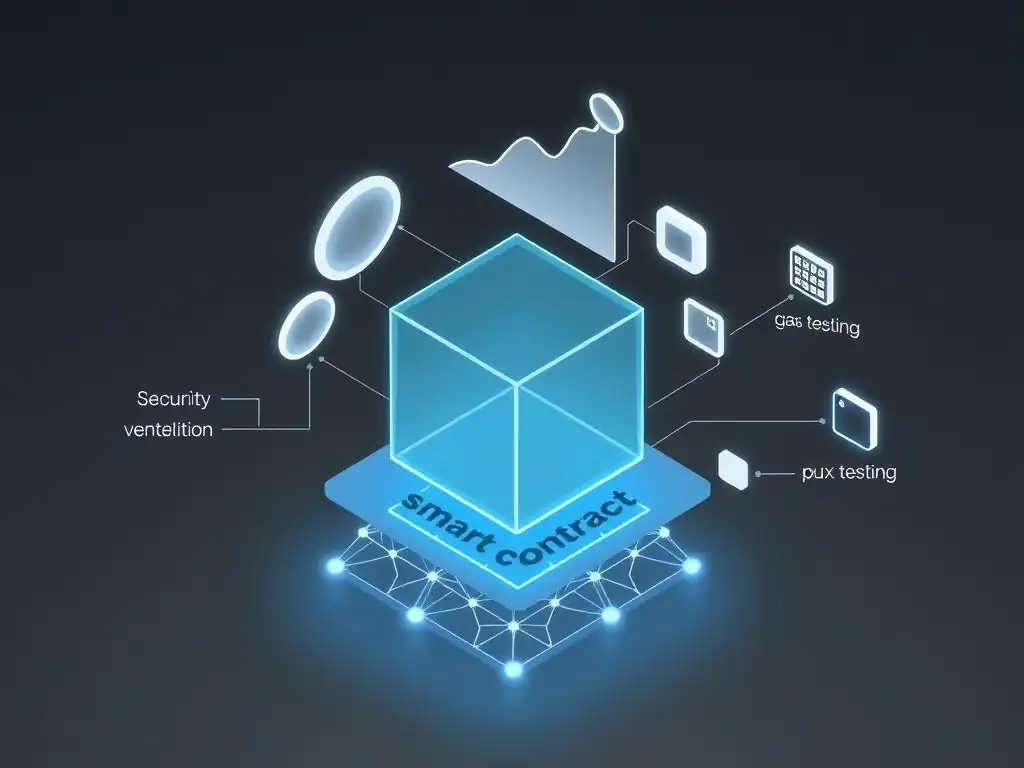
Comprehensive Testing Strategies: Unit, Integration, and System Testing
Thorough testing is arguably the most critical phase in the DApp development lifecycle before deployment. This involves multiple layers of testing to ensure the application functions correctly and securely. Unit testing focuses on individual smart contract functions or front-end components in isolation. Developers write tests to verify that each piece of code behaves as expected under various inputs and conditions.
Integration testing checks the interactions between different components, such as how the front-end correctly calls smart contract functions or how multiple smart contracts interact with each other. System testing evaluates the DApp as a complete system, simulating real-world user scenarios and interactions to ensure that all parts work together seamlessly. This includes testing the end-to-end flow, from user interaction with the UI to the final state change on the blockchain.
Smart Contract Auditing: Ensuring Security and Reliability
Smart contract auditing is a specialized and essential step in the DApp development lifecycle. Independent security firms or expert auditors review the smart contract code to identify vulnerabilities, logical errors, and deviations from best practices. Audits often involve manual code review, automated analysis tools, and formal verification methods to provide a high level of assurance regarding the contract's security and correctness.
Audit reports typically detail findings, categorize their severity (critical, major, minor), and provide recommendations for remediation. It is common for initial audits to uncover significant vulnerabilities; for instance, reports from major auditing firms frequently highlight issues like reentrancy risks, access control problems, or gas optimization needs in early-stage contracts. Addressing all critical and major findings before deployment is non-negotiable to protect users' funds and data.
Identifying and Addressing Vulnerabilities
Based on the results of comprehensive testing and the smart contract audit, the development team must diligently identify and address all discovered vulnerabilities and bugs. This involves fixing code errors, refining smart contract logic, and improving security measures based on audit recommendations. For critical vulnerabilities, this might require significant code changes and subsequent re-testing and potentially re-auditing of the modified sections.
Addressing vulnerabilities is an iterative process. After fixes are implemented, the relevant tests must be re-run, and the modified code should be reviewed again. The goal is to eliminate all known security risks and ensure the DApp is robust against potential attacks before it handles real assets on the mainnet. This phase underscores the importance of security throughout the entire DApp development lifecycle stages.
Security Best Practices for Deployment
Even after rigorous testing and auditing, specific security practices are crucial for the deployment phase. This includes verifying the exact version of the smart contract code being deployed matches the audited version. Deploying contracts to the correct network (testnet vs. mainnet) and ensuring the deployer account is secure are also vital steps.
Post-deployment security checks are also important. This might involve setting up monitoring tools to detect unusual activity or transaction patterns. Planning for potential incident response in case of an exploit, despite all precautions, is a necessary part of preparing for the reality of deploying immutable code on a public ledger. These final security checks provide an extra layer of assurance before the DApp goes live.
Phase 5: Deployment and Launch
Preparing for Deployment on the Chosen Blockchain
Preparation for deployment involves several key steps to ensure a smooth launch. This includes finalizing smart contract code, ensuring all dependencies are correctly configured, and setting up the deployment environment. Teams must decide on the deployment strategy, such as whether to use a single transaction or multiple transactions for deploying various contracts, and prepare deployment scripts using tools like Hardhat or Truffle.
Calculating estimated gas costs for deployment transactions is also important, especially on networks with variable fees like Ethereum. Teams need to ensure they have sufficient native currency (e.g., ETH) in the deployment wallet to cover these costs. Final checks on configuration files, network endpoints, and access controls are performed to minimize the risk of deployment errors, which can be costly and difficult to fix once smart contracts are live.
Deploying Smart Contracts to Mainnet or Testnet
Deploying smart contracts is the process of publishing the compiled bytecode onto the blockchain network. This is typically done using a transaction signed by a designated account. For DApps targeting a public release, deployment usually happens first on a testnet (like Sepolia for Ethereum or Mumbai for Polygon) to perform final end-to-end testing in a live, albeit non-value, environment.
Once satisfied with testnet performance and functionality, the smart contracts are deployed to the mainnet, the live, public blockchain where real value is transacted. This step is irreversible for immutable contracts, highlighting why the prior testing and auditing phases in the DApp development lifecycle are so critical. The deployment transaction records the contract code on the blockchain, making it accessible for user interaction via the DApp's front-end.
Launching the DApp and Onboarding Users
With the smart contracts deployed and the front-end connected, the DApp is ready for public launch. This involves making the front-end application accessible to the target audience, whether through a website, mobile app store, or other distribution channels. Launching also includes executing the go-to-market strategy developed during the planning phase, which might involve marketing campaigns, community building, and public relations efforts.
Onboarding users to a DApp requires guiding them through connecting their wallet, understanding blockchain transactions, and using the DApp's specific features. Providing clear documentation, tutorials, and support is essential, especially for users new to blockchain technology. A smooth onboarding experience is crucial for early adoption and sets the stage for user retention in the post-launch phase of the DApp development lifecycle.
Initial Monitoring and Performance Analysis
Immediately following launch, rigorous monitoring of the DApp's performance and on-chain activity is essential. This involves tracking transaction volume, smart contract interactions, gas usage, and any errors or anomalies reported by users or monitoring tools. Tools like blockchain explorers (e.g., Etherscan, PolygonScan, Solana Explorer) are invaluable for observing on-chain activity related to the DApp's smart contracts.
Performance analysis involves assessing how the DApp handles user load and transaction volume on the live network. This helps identify bottlenecks, potential scalability issues, or unexpected behavior under real-world conditions. Data gathered during this initial monitoring period informs decisions about future optimizations, infrastructure scaling, and potential updates to the DApp's code or configuration.
Phase 6: Maintenance, Updates, and Governance
Ongoing Monitoring and Performance Optimization
The DApp development lifecycle doesn't end at deployment. Ongoing monitoring is required to ensure the DApp remains operational, secure, and performant. This includes continuous tracking of smart contract activity, server health for any off-chain components, and user feedback channels. Performance optimization involves identifying areas where transaction costs can be reduced, response times improved, or user experience enhanced based on live data.
For example, monitoring gas usage might reveal specific smart contract functions that are unexpectedly expensive, prompting a review for potential optimizations. Analyzing user behavior data can highlight flows where users drop off, suggesting areas for UI/UX improvements or clearer guidance. This continuous cycle of monitoring and optimization is key to maintaining a healthy and user-friendly DApp.
Implementing Updates and New Features
Unlike traditional software, updating smart contracts on the blockchain is often challenging due to their immutability. If the smart contract architecture was designed with upgradeability in mind (e.g., using proxy patterns), new versions of the logic can be deployed and linked. If not, updates might require deploying entirely new contracts and migrating user assets/data, a complex and potentially disruptive process.
Implementing new features often involves developing new smart contracts or updating existing ones (if upgradeable) and updating the front-end and back-end components to support the new functionality. Each update, especially to smart contracts, requires revisiting the testing and auditing phases of the DApp development lifecycle to ensure the changes do not introduce new vulnerabilities or break existing functionality.
Community Engagement and Governance Models
Many DApps, particularly those aiming for true decentralization, involve their community in governance. This can range from simple feedback mechanisms to formal decentralized autonomous organizations (DAOs) where token holders vote on proposals for updates, feature prioritization, or parameter changes. Engaging with the community provides valuable input for the DApp's evolution and fosters a sense of ownership.
Implementing a governance model requires designing smart contracts for voting, proposal submission, and execution. This adds another layer of complexity to the DApp development lifecycle. Establishing clear processes for community proposals and decision-making is crucial for decentralized governance to function effectively and transparently.
Managing Security Risks and Addressing Vulnerabilities Post-Deployment
Even after launch, the DApp remains a potential target for attackers. Ongoing security management involves continuous monitoring for suspicious activity, staying informed about new attack vectors targeting the blockchain space, and being prepared to respond to security incidents. This might involve paused contracts (if designed with emergency mechanisms), informing users, and coordinating with security experts.
If a vulnerability is discovered post-deployment, especially in immutable contracts, the response options are limited. This could involve migrating users to a new, fixed version of the DApp (if feasible), or in severe cases, accepting losses if assets are compromised. This stark reality reinforces the critical importance of the extensive testing and auditing phases earlier in the DApp development lifecycle stages.
The Importance of Continuous Improvement
The blockchain landscape is constantly evolving, with new technologies, standards, and user expectations emerging regularly. Continuous improvement is therefore essential for a DApp's long-term success. This involves regularly evaluating the DApp's performance, security posture, user feedback, and market trends.
Based on this evaluation, teams should prioritize updates, new features, and optimizations to keep the DApp relevant and competitive. This iterative process of development, deployment, monitoring, and refinement forms a continuous loop that extends indefinitely beyond the initial launch, representing the ongoing nature of the DApp development lifecycle.
Beyond Deployment: The Future
Scaling for Increased User Adoption
As a DApp gains traction, scaling becomes a primary concern. Blockchain networks have inherent limitations on transaction throughput compared to centralized systems. Scaling strategies might involve optimizing smart contract code for gas efficiency, utilizing Layer 2 scaling solutions (like rollups or sidechains), or potentially migrating to a more scalable blockchain platform if the initial choice proves insufficient.
Scaling also involves optimizing off-chain components, such as indexing services or backend APIs, to handle increased load. Planning for scalability needs to start early in the DApp development lifecycle, but the real challenges and solutions often become apparent only after achieving significant user adoption on the live network.
Exploring Advanced Features and Integrations
The future of a DApp often involves exploring and integrating advanced features that leverage the unique capabilities of blockchain and Web3. This could include integrating with other DeFi protocols, incorporating NFTs, implementing more sophisticated governance mechanisms, or exploring cross-chain compatibility.
Adding advanced features requires careful design and implementation to ensure they align with the DApp's core purpose and do not introduce new security risks. Each new integration or feature essentially triggers a mini-DApp development lifecycle for that specific component, requiring design, development, testing, and potential auditing.
Long-Term Sustainability and Evolution
Ensuring a DApp's long-term sustainability involves more than just technical maintenance. It requires planning for funding ongoing development, community management, and operational costs. Decentralized governance models can play a role in allocating resources and guiding the DApp's evolution based on community consensus.
The DApp must also evolve to adapt to changes in the blockchain ecosystem, regulatory landscape, and user needs. This might mean adopting new standards (like ERC-4626 for tokenized vaults), integrating with emerging protocols, or adjusting the business model. A successful DApp development lifecycle fosters a project capable of adapting and thriving in a dynamic environment.
DApp Development Lifecycle: Key Takeaways and Best Practices
Navigating the DApp development lifecycle stages successfully requires a structured, security-focused, and iterative approach. Key takeaways include the paramount importance of security from day one, the necessity of rigorous testing and independent smart contract audits, and the unique challenges of development and updates on immutable ledgers.
Best practices involve thorough planning, choosing the right blockchain platform based on specific needs, designing for upgradeability where possible, engaging the community, and committing to continuous monitoring and improvement. While challenging, following a defined DApp development lifecycle significantly increases the probability of building a secure, functional, and successful decentralized application that delivers real value to its users.
Frequently Asked Questions
What are the key phases involved in the DApp development lifecycle?
The DApp development lifecycle typically includes phases such as planning and research, design and architecture, development and testing, deployment, and maintenance and upgrades.
How does the DApp development lifecycle differ from traditional software development lifecycles?
While sharing similarities, DApp development incorporates blockchain-specific considerations like smart contract integration, tokenomics design, and decentralized storage. These unique aspects require specialized expertise.
What are some crucial considerations during the design and architecture phase of DApp development?
Key considerations include selecting the appropriate blockchain platform, designing a secure and efficient smart contract architecture, and planning for scalability and interoperability.
What are the main challenges faced during the deployment phase of a DApp?
Deployment challenges often involve gas optimization, security audits of smart contracts, and ensuring seamless integration with existing decentralized infrastructure.
Why is ongoing maintenance and upgrades crucial after deploying a DApp?
Ongoing maintenance is vital to address security vulnerabilities, implement new features, and adapt to evolving blockchain technology standards and user needs, ensuring long-term sustainability.
Final Reflection: Embracing the Decentralized Future
The journey through the DApp development lifecycle, as we've explored, is not merely a technical process but a transformative one. The potential of decentralized applications to reshape industries and empower individuals is more relevant today than ever, as we grapple with concerns about data privacy, centralized control, and the need for greater transparency in our digital interactions. Understanding the DApp development lifecycle stages is crucial for anyone seeking to build a more equitable and secure future.
The impact of DApps extends far beyond the realm of technology, influencing how we interact with finance, governance, and even art. Witnessing the evolution of DApps from nascent concepts to functional applications has been a deeply inspiring experience, highlighting the power of collaborative innovation. The future is already here – it's just not evenly distributed.
- William Gibson. This quote resonates deeply, reminding us that the decentralized future is being built now, and understanding the DApp development lifecycle is key to participating in its creation.
As you consider the stages we've discussed – from initial concept to ongoing maintenance – I encourage you to reflect on your own role in this emerging landscape. What problems can you solve with decentralized solutions? What innovations can you bring to the DApp ecosystem? The future of the internet is being written today, and your understanding of the DApp development lifecycle empowers you to be an active author in this exciting new chapter.
Unlock Your DApp Potential: Start Building Today!
Thank you for diving into the DApp development lifecycle! We hope this guide has illuminated the path from concept to a thriving decentralized application. Now it's time to translate that knowledge into action.
Here's how you can continue your DApp journey:
- Begin prototyping your DApp idea! Don't wait, even a basic wireframe will solidify your vision. This is the most important step.
- Explore different blockchain platforms and smart contract languages to find the perfect fit for your project. Visit Blockchain Trends to discover more resources on this topic.
- Share this article with fellow developers and enthusiasts to spark collaborative discussions and build a stronger DApp community.
What's the first feature you envision implementing in your dream DApp? Share your ideas in the comments below!
Leave a Reply