
Smart Contracts in Gaming: Creating Decentralized and PlayerOwned Worlds

Welcome to Blockchain Trends, your guide to understanding the real-world impact of blockchain technology.
Ever wondered how blockchain can revolutionize more than just finance? Dive into our latest exploration of decentralized gaming smart contract design, where we unlock the potential of player-owned worlds and transparent gaming ecosystems. Discover the innovative smart contract architecture powering the future of gaming and learn how it's reshaping the industry – the possibilities are more exciting than you think!
Smart Contracts in Gaming: Creating Decentralized and Player-Owned Worlds
- Introduction to Decentralized Gaming with Smart Contracts
- Decentralized Gaming Smart Contract Design: Key Considerations
- Building Blocks of a Decentralized Gaming Smart Contract
- Implementing Core Game Mechanics with Smart Contracts
- Examples of Decentralized Gaming Smart Contract Use Cases
- Challenges and Limitations of Decentralized Gaming
- The Future of Decentralized Gaming: Trends and Opportunities
- Conclusion: Empowering Players Through Decentralized Gaming Smart Contracts
-
Frequently Asked Questions
- How does blockchain technology enhance player ownership in gaming?
- What role do smart contracts play in decentralized gaming?
- What are the key considerations when designing smart contracts for decentralized gaming?
- What are the benefits of using decentralized gaming smart contract design for game developers?
- How are regulators approaching the use of smart contracts in gaming and what are the potential challenges?
- Final Reflection: Embracing the Decentralized Gaming Revolution
- Unleash Your Inner Game Designer!
Introduction to Decentralized Gaming with Smart Contracts
The Rise of Blockchain Gaming and Player Ownership
The gaming industry, a behemoth generating hundreds of billions of dollars annually, is undergoing a significant paradigm shift thanks to blockchain technology. Traditionally, players invest countless hours and significant sums of money into games, acquiring in-game items, currencies, and progress. However, these digital assets are typically confined within the game's ecosystem, controlled entirely by the game developers.
This centralized model often leaves players with limited ownership and control over their hard-earned digital possessions. Blockchain gaming, and particularly decentralized gaming enabled by smart contracts, is challenging this status quo by introducing true player ownership and new economic models. This transition is driven by a growing player base that demands more agency and tangible value from their gaming experiences, moving beyond simple entertainment towards potentially lucrative digital economies.
The concept of player ownership in gaming is not entirely new, but blockchain technology provides the tools to realize it in a truly meaningful way. Before blockchain, attempts at player-driven economies and item trading often relied on centralized platforms susceptible to manipulation, shutdowns, or restrictive terms of service. Decentralized gaming, powered by blockchain, offers a transparent, secure, and immutable ledger for in-game assets.
Players can verifiably own their digital items as NFTs (Non-Fungible Tokens), trade them freely outside the game's boundaries, and even potentially utilize them across different gaming platforms. This paradigm shift is not just about owning digital trinkets; it's about fundamentally altering the relationship between players and game developers, fostering a more equitable and engaging gaming ecosystem.
Understanding Smart Contracts: The Foundation of Decentralized Gaming
At the heart of decentralized gaming lies the concept of smart contracts. Imagine a contract in the real world, but instead of being written on paper and enforced by lawyers, it’s written in code and automatically executed by a computer network – in this case, a blockchain. Smart contracts are self-executing agreements where the terms of the agreement are directly written into lines of code. This code controls the execution, and transactions are traceable and irreversible. In the context of gaming, smart contracts automate various game mechanics and interactions, ensuring fairness, transparency, and immutability.
These digital contracts operate on a blockchain, a distributed ledger that is inherently transparent and secure. Every action governed by a smart contract is recorded on the blockchain, making it publicly verifiable and auditable. This transparency is crucial for establishing trust in decentralized gaming environments.
Furthermore, once a smart contract is deployed on the blockchain, its code is immutable, meaning it cannot be altered without consensus from the network. This immutability guarantees that the rules of the game, as defined in the smart contract, are consistently applied and cannot be unilaterally changed by the game developers, fostering a level of trust and predictability previously unattainable in online gaming.
Why Smart Contracts are Revolutionizing the Gaming Industry
Smart contracts are not just a technological novelty in gaming; they are a catalyst for fundamental changes that are revolutionizing the industry. One of the most significant impacts is the empowerment of players through true digital asset ownership. By utilizing NFTs governed by smart contracts, players can own in-game items with the same level of verifiable scarcity and ownership as physical collectibles. This ownership extends beyond the game itself, allowing players to trade, sell, or even lend their assets in open marketplaces, creating real-world economic value from their in-game achievements and investments.
Beyond ownership, smart contracts bring unprecedented transparency and fairness to game mechanics. Random number generation, a critical component in many games for loot drops or critical hits, can be implemented using verifiable on-chain methods within smart contracts, eliminating any suspicion of developer manipulation.
Furthermore, smart contracts can automate complex in-game economies, distributing rewards, managing marketplaces, and enforcing game rules in a decentralized and trustless manner. This shift towards transparency and fairness not only enhances player trust but also opens up new possibilities for innovative game designs focused on player-driven economies and decentralized governance, paving the way for a more equitable and engaging gaming future.
Decentralized Gaming Smart Contract Design: Key Considerations
Defining Game Logic and Rules on the Blockchain
Designing smart contracts for decentralized gaming requires a fundamental shift in thinking about game logic and rule enforcement. In traditional games, game logic resides on centralized servers controlled by the game developers. In decentralized gaming, the crucial game rules and logic are encoded within smart contracts deployed on the blockchain. This shift necessitates careful consideration of what aspects of the game should be placed on-chain versus off-chain. On-chain logic offers transparency and immutability, making game rules verifiable and resistant to manipulation, but it also comes with limitations in terms of computational complexity and transaction costs.
When defining game logic for a decentralized game, developers must prioritize core game mechanics that benefit most from blockchain's inherent properties. This includes aspects like asset ownership, in-game economies, and verifiable randomness. For instance, the minting and trading of in-game NFTs, the distribution of rewards based on player performance, and the outcome of crucial in-game events can all be governed by on-chain smart contracts.
However, computationally intensive tasks like real-time physics simulations, complex AI behaviors, or rendering graphics are typically better suited for off-chain execution due to the performance limitations and gas costs associated with on-chain computation. Therefore, a balanced approach is crucial, strategically placing key game logic on-chain to ensure transparency and fairness while leveraging off-chain solutions for performance-sensitive aspects.
Security Audits and Best Practices for Gaming Smart Contracts
Security is paramount in smart contract development, and this is even more critical in the context of decentralized gaming, where valuable digital assets and in-game economies are at stake. Gaming smart contracts often handle significant financial value and control the ownership of player assets, making them prime targets for malicious actors. A single vulnerability in a gaming smart contract can lead to exploits that result in substantial financial losses for players and damage the game's reputation and long-term viability. Therefore, rigorous security audits and adherence to best practices are indispensable components of decentralized gaming smart contract design.
Best practices for secure gaming smart contract development include employing established coding patterns, minimizing code complexity, and thoroughly testing contracts before deployment. Formal verification methods and static analysis tools can also be used to identify potential vulnerabilities. However, the most crucial step is engaging independent security auditors with expertise in blockchain and smart contract security.
These auditors meticulously review the smart contract code to identify potential vulnerabilities such as reentrancy attacks, integer overflows, and access control issues. Security audits should be conducted not only before the initial deployment but also whenever significant changes are made to the smart contract code, ensuring ongoing security and player trust in the decentralized gaming ecosystem.
Scalability Solutions for High-Transaction Gaming Environments
Blockchain technology, while offering significant advantages for gaming, faces scalability challenges that are particularly relevant for high-transaction gaming environments. Traditional blockchains, like Ethereum mainnet, have limitations in terms of transaction throughput and speed, which can lead to congestion and high gas fees, especially during periods of high demand. For games that involve frequent in-game transactions, such as trading items, participating in battles, or claiming rewards, these scalability limitations can severely impact the player experience and hinder mass adoption of decentralized gaming.
To address these scalability challenges, various layer-2 scaling solutions are being developed and adopted in the blockchain space, and these are crucial for the future of decentralized gaming. Layer-2 solutions, such as sidechains, rollups (Optimistic and ZK-Rollups), and state channels, operate on top of the main blockchain (layer-1) to process transactions more efficiently and at lower costs. For instance, sidechains are independent blockchains that run parallel to the main chain and can handle a higher volume of transactions.
Rollups batch multiple transactions together and process them off-chain before submitting a summarized proof to the main chain, significantly increasing throughput. By leveraging these layer-2 scaling solutions, decentralized games can achieve the transaction speeds and low fees necessary to support complex in-game economies and a seamless player experience, paving the way for wider adoption of blockchain gaming.
Building Blocks of a Decentralized Gaming Smart Contract
Token Standards (ERC-20, ERC-721, ERC-1155) for In-Game Assets
Token standards are fundamental building blocks for creating and managing in-game assets within decentralized gaming smart contracts. These standards define a set of rules and interfaces that ensure interoperability and compatibility across different platforms and marketplaces within the blockchain ecosystem. Three prominent token standards are particularly relevant to gaming: ERC-20, ERC-721, and ERC-1155, each serving different purposes in representing in-game assets. Understanding these standards is crucial for effective decentralized gaming smart contract design.
ERC-20 is the standard for fungible tokens, representing assets that are interchangeable and divisible, much like traditional cryptocurrencies. In gaming, ERC-20 tokens are typically used for in-game currencies, reward tokens, or resources that are not unique and can be exchanged on a 1:1 basis. ERC-721 is the standard for non-fungible tokens (NFTs), representing unique digital assets.
Each ERC-721 token is distinct and indivisible, making it ideal for representing unique in-game items like characters, weapons, collectibles, or virtual land. ERC-1155 is a more recent standard that combines features of both ERC-20 and ERC-721, allowing for the creation of both fungible and non-fungible assets within a single contract, offering greater flexibility and efficiency for managing diverse in-game asset types.
Implementing ERC-721 for Unique In-Game Items
ERC-721 tokens are the cornerstone of representing unique in-game items as NFTs in decentralized gaming. Implementing ERC-721 involves creating a smart contract that adheres to the ERC-721 standard interface, which includes functions for minting, transferring, and managing ownership of unique tokens. Each ERC-721 token is associated with a unique token ID and metadata, typically stored off-chain using IPFS or similar decentralized storage solutions. This metadata describes the characteristics and properties of the unique in-game item, such as its name, description, image, and attributes.
When implementing ERC-721 for in-game items, developers need to carefully consider the metadata structure and how it will be used within the game. For instance, the metadata might include attributes that influence the item's in-game performance or rarity. The minting process, which creates new ERC-721 tokens representing unique items, can be designed to be triggered by various in-game events, such as completing quests, crafting items, or purchasing them from a marketplace.
Once minted, these ERC-721 tokens represent provably unique and player-owned in-game assets that can be traded, collected, and utilized within the decentralized gaming ecosystem. A real-world example is the CryptoKitties game, one of the early pioneers of using ERC-721 to represent unique collectible digital cats, demonstrating the power of NFTs for player ownership in gaming.
Leveraging ERC-1155 for Fungible and Non-Fungible Assets
ERC-1155 token standard offers a versatile approach to managing both fungible and non-fungible assets within a single smart contract, making it highly efficient for games with diverse asset types. Unlike ERC-721, which requires a separate contract for each type of unique item, ERC-1155 allows for the creation of multiple types of tokens within a single contract, reducing deployment costs and simplifying asset management. This is particularly beneficial for games that feature a mix of unique collectibles (NFTs) and fungible resources or currencies.
Leveraging ERC-1155 in decentralized gaming allows developers to represent a wide range of in-game assets efficiently. For example, a game could use ERC-1155 to represent unique character NFTs (non-fungible) alongside common resources like gold or potions (fungible) within the same contract. This simplifies the smart contract architecture and reduces gas costs associated with deploying and interacting with multiple contracts.
Furthermore, ERC-1155 includes batch transfer functionalities, enabling players to transfer multiple types of tokens in a single transaction, further optimizing gas efficiency and improving the user experience, especially in games with frequent asset trading or interactions. Enjin, a blockchain gaming platform, is a prominent example of leveraging ERC-1155 to power its ecosystem and support games with diverse asset economies.
On-Chain Game Logic vs. Off-Chain Computation
A critical decision in decentralized gaming smart contract design is determining the balance between on-chain game logic and off-chain computation. As discussed earlier, on-chain logic offers transparency and security, but it is also limited by the computational constraints and gas costs of the blockchain. Off-chain computation, on the other hand, allows for more complex and performance-intensive game mechanics but sacrifices some level of transparency and decentralization. Finding the optimal balance between these two approaches is crucial for creating engaging and scalable decentralized games.
The decision of whether to implement game logic on-chain or off-chain often depends on the specific game mechanic and its requirements. Core game mechanics that directly impact asset ownership, in-game economies, and fairness are typically better suited for on-chain implementation. Examples include the logic for minting and trading NFTs, distributing rewards based on player achievements, and resolving disputes or enforcing game rules.
However, computationally intensive tasks such as real-time physics simulations, complex AI behaviors, rendering graphics, and handling a large volume of player interactions are generally more efficiently handled off-chain. A common architecture involves using smart contracts to manage core asset ownership and economic logic on-chain while delegating computationally demanding game mechanics to off-chain servers or clients. This hybrid approach allows developers to leverage the benefits of blockchain for transparency and ownership while maintaining the performance necessary for a compelling gaming experience.
Oracles and External Data Integration for Dynamic Game Worlds
Decentralized gaming smart contracts, operating on the blockchain, are inherently isolated from external data sources. However, many games require access to real-world data or external events to create dynamic and engaging game worlds. This is where oracles come into play. Oracles are services that bridge the gap between blockchains and the external world, providing smart contracts with access to off-chain data in a secure and reliable manner. In decentralized gaming, oracles can be used to integrate various types of external data, enhancing gameplay and creating more immersive experiences.
Oracles can be used in gaming to introduce dynamic events based on real-world conditions, such as weather changes, stock market data, or sports scores. For example, a racing game could adjust track conditions based on real-time weather data fetched by an oracle, creating a more dynamic and unpredictable gameplay experience. Oracles can also be used to integrate verifiable randomness from external sources, ensuring fairness in loot drops or in-game events that rely on chance.
Furthermore, oracles can facilitate interactions with other blockchains or off-chain systems, enabling cross-game asset interoperability or integration with external services. Chainlink is a prominent example of a decentralized oracle network that provides secure and reliable data feeds to smart contracts, enabling developers to build more sophisticated and data-driven decentralized gaming applications.
Implementing Core Game Mechanics with Smart Contracts
Player Identity and Account Management on the Blockchain
Managing player identity and accounts in a decentralized gaming environment presents unique challenges and opportunities compared to traditional centralized systems. In traditional games, player accounts are typically managed by the game developers on centralized servers. Decentralized gaming, however, leverages blockchain technology to offer players greater control over their identity and accounts. Smart contracts play a crucial role in implementing decentralized player identity and account management, enabling self-sovereign identity and enhanced security.
One approach to decentralized player identity is using blockchain-based wallets as player accounts. Players can use their existing cryptocurrency wallets to interact with decentralized games, eliminating the need to create separate game-specific accounts. Smart contracts can be designed to authenticate players based on their wallet addresses and manage their in-game assets associated with those addresses.
Furthermore, decentralized identity solutions, such as those based on verifiable credentials, can be integrated with gaming smart contracts to provide players with more control over their personal data and privacy. These solutions allow players to selectively share verified information with games without revealing unnecessary personal details. This shift towards decentralized player identity not only enhances player privacy and security but also aligns with the core principles of decentralization and player ownership in blockchain gaming.
In-Game Currency and Economy Design using Smart Contracts
Smart contracts are instrumental in designing and implementing decentralized in-game currencies and economies, offering transparency, security, and player ownership. In traditional games, in-game currencies are typically controlled by the game developers and lack real-world value or transferability outside the game ecosystem. Decentralized gaming leverages blockchain-based tokens as in-game currencies, enabling players to truly own their earnings and participate in player-driven economies. Smart contracts automate the creation, distribution, and management of these in-game currencies, ensuring fairness and transparency.
ERC-20 tokens are commonly used as in-game currencies in decentralized games. Smart contracts can be designed to manage the token supply, distribute tokens as rewards for in-game achievements, and facilitate in-game transactions. Decentralized exchanges (DEXs) can be integrated or linked to the game, allowing players to trade their in-game currencies for other cryptocurrencies or even fiat currencies, creating real-world value for their in-game efforts.
Furthermore, smart contracts can implement sophisticated tokenomics models, such as staking mechanisms, burning mechanisms, or governance tokens, to incentivize player participation, manage inflation, and create sustainable in-game economies. This shift towards decentralized in-game currencies empowers players, fosters player-driven economies, and creates new opportunities for play-to-earn gaming models.
Creating and Managing In-Game Items and NFTs
The creation and management of in-game items as NFTs is a defining feature of decentralized gaming, enabled by smart contracts. NFTs, typically implemented using ERC-721 or ERC-1155 standards, represent unique and provably scarce in-game assets that players truly own. Smart contracts govern the minting, ownership, and transfer of these NFTs, ensuring transparency and immutability. The process of creating and managing in-game items as NFTs involves several key steps.
First, the game developers design the in-game items and their associated metadata, which describes their attributes and properties. Then, smart contracts are deployed that implement the chosen NFT standard (e.g., ERC-721 or ERC-1155) and define the logic for minting new NFTs. NFTs can be minted through various in-game actions, such as completing quests, crafting items, purchasing them from in-game marketplaces, or participating in special events.
Once minted, the ownership of these NFTs is recorded on the blockchain and managed by the smart contract. Players can then trade their NFTs on decentralized marketplaces, use them within the game, or even potentially utilize them in other compatible games or platforms, depending on the game's ecosystem and interoperability features. Smart contracts ensure that the ownership and transfer of these in-game NFTs are secure, transparent, and player-controlled.
Implementing Fair and Transparent Random Number Generation (RNG)
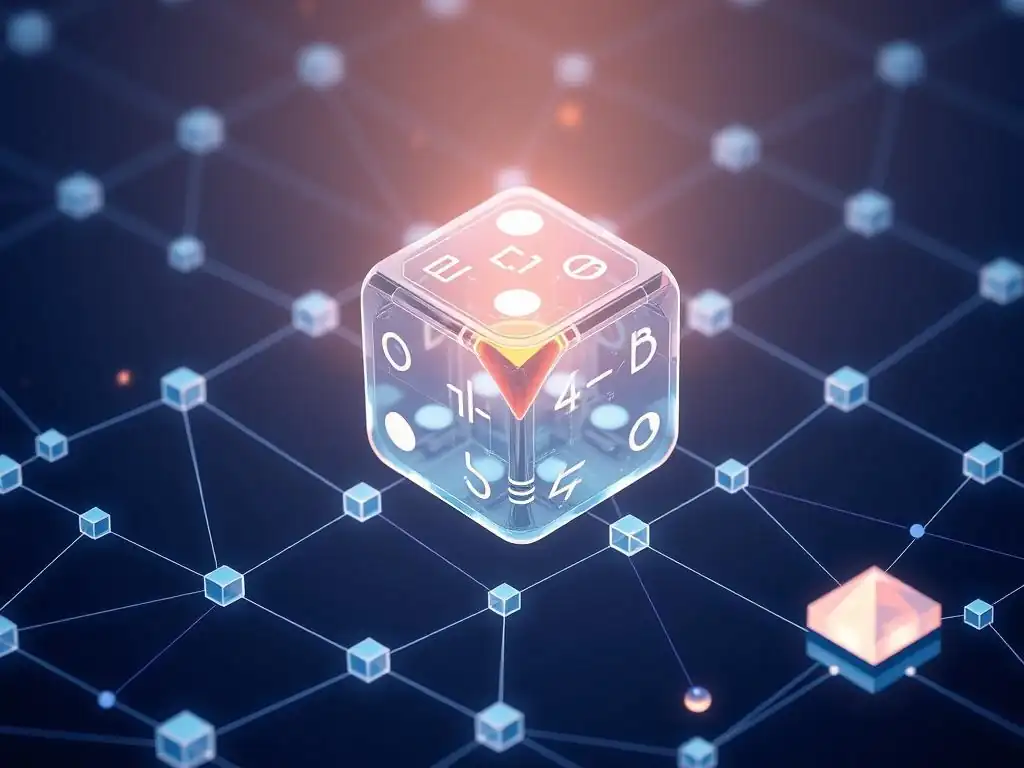
Random number generation (RNG) is a fundamental component of many games, used for loot drops, critical hits, procedural generation, and various other game mechanics. In traditional centralized games, RNG is typically handled by server-side algorithms, which are opaque and potentially susceptible to manipulation. Decentralized gaming, with its emphasis on transparency and fairness, requires verifiable and transparent RNG solutions. Smart contracts can be used to implement fair and transparent RNG on the blockchain, ensuring that random outcomes are provably unbiased and tamper-proof.
Implementing fair RNG on-chain is a challenging problem due to the deterministic nature of blockchains. However, several approaches have been developed to address this challenge. One common approach is to use commit-reveal schemes, where participants commit to a secret value and then reveal it later to generate a random number in a decentralized and verifiable manner.
Another approach is to utilize oracle services that provide verifiable randomness from external sources, such as Drand or Chainlink VRF (Verifiable Random Function). These oracles use cryptographic techniques to generate random numbers that are provably fair and unpredictable. By integrating these verifiable RNG solutions into gaming smart contracts, developers can ensure that random outcomes in decentralized games are transparent, fair, and resistant to manipulation, enhancing player trust and the integrity of the game's mechanics.
Decentralized Governance and Community Participation in Game Development
Decentralized governance and community participation are emerging trends in blockchain gaming, aiming to empower players and give them a voice in the game's development and evolution. Traditional game development is typically centralized, with decisions made by game studios with limited player input. Decentralized gaming, leveraging blockchain technology and smart contracts, can enable new models of game governance where players actively participate in shaping the game's future. Smart contracts facilitate decentralized governance mechanisms, such as voting systems and Decentralized Autonomous Organizations (DAOs), allowing players to collectively make decisions about game updates, rule changes, or the allocation of game resources.
Decentralized governance can be implemented through various mechanisms. Governance tokens, often ERC-20 tokens, can be distributed to players based on their in-game activity or contributions. These tokens grant voting rights, allowing players to participate in on-chain voting proposals related to game development.
Smart contracts can be designed to execute the outcomes of these votes automatically, ensuring that player decisions are directly implemented in the game. DAOs, governed by smart contracts, can be established to manage game treasuries, development funds, or even the game's intellectual property. This shift towards decentralized governance empowers players, fosters a sense of community ownership, and can lead to more player-centric and sustainable game ecosystems.
Examples of Decentralized Gaming Smart Contract Use Cases
Decentralized Autonomous Organizations (DAOs) for Game Governance
Decentralized Autonomous Organizations (DAOs) are increasingly being adopted in decentralized gaming to empower players and enable community-driven game governance. DAOs are organizations governed by rules encoded in smart contracts, operating autonomously and transparently without central intermediaries. In the context of gaming, DAOs can be used to manage various aspects of game governance, from deciding on game updates and rule changes to managing in-game treasuries and allocating development resources.
A DAO for game governance typically consists of governance tokens distributed to players, a set of smart contracts defining the DAO's rules and voting mechanisms, and a community forum for discussions and proposal submissions. Token holders can submit proposals for game changes, and other token holders can vote on these proposals using their voting power, proportional to their token holdings.
Smart contracts automatically execute the outcomes of successful votes, ensuring that the community's decisions are implemented transparently and without the need for central intervention. Examples of games exploring DAO governance include projects aiming to allow players to vote on new features, balance changes, or even the direction of the game's lore and narrative, fostering a sense of collective ownership and responsibility for the game's evolution.
Play-to-Earn (P2E) Mechanics and Smart Contract Integration
Play-to-Earn (P2E) gaming has emerged as a revolutionary model in the gaming industry, enabled by blockchain technology and smart contracts. P2E games allow players to earn real-world value by playing the game, typically through in-game rewards, tokenized assets, and player-driven economies. Smart contracts are fundamental to implementing P2E mechanics, ensuring transparency, fairness, and secure distribution of rewards.
Smart contracts are used to manage in-game currencies, distribute rewards based on player achievements, and facilitate the trading of in-game assets as NFTs. For example, smart contracts can automatically distribute tokens to players for completing quests, winning battles, or contributing to the game's ecosystem. These tokens can then be traded on decentralized exchanges for other cryptocurrencies or fiat currencies, providing players with tangible economic benefits from their gameplay.
Furthermore, smart contracts can govern the scarcity and distribution of valuable in-game NFTs, creating player-driven economies where the value of assets is determined by supply and demand within the game's ecosystem. Axie Infinity, a prominent example of a P2E game, utilizes smart contracts extensively to manage its in-game economy, reward distribution, and NFT marketplace, demonstrating the potential of P2E mechanics to revolutionize the gaming industry.
NFT-Based Gaming and Asset Ownership
NFT-based gaming is a core paradigm in decentralized gaming, driven by the concept of true player ownership of in-game assets facilitated by Non-Fungible Tokens (NFTs). NFTs, governed by smart contracts, represent unique and provably scarce digital items, granting players verifiable ownership and control over their in-game possessions. This fundamentally shifts the traditional gaming model where in-game assets are typically owned and controlled by game developers.
NFTs in gaming can represent a wide range of in-game assets, including characters, weapons, collectibles, virtual land, and more. Smart contracts ensure that these NFTs are unique, provably scarce, and cannot be duplicated or tampered with. Players can freely trade, sell, or transfer their NFTs on decentralized marketplaces, creating player-driven economies and new forms of digital asset ownership.
Furthermore, NFT-based gaming enables interoperability and cross-game asset utility. Ideally, in the future, NFTs acquired in one game could potentially be used in other compatible games or platforms, further enhancing their value and utility. Examples of NFT-based games are proliferating, showcasing diverse use cases, from collectible card games like Gods Unchained to virtual world games like Decentraland, demonstrating the transformative potential of NFTs for player ownership and new gaming experiences.
Axie Infinity: A Case Study in P2E Gaming
Axie Infinity stands out as a prominent case study in Play-to-Earn (P2E) gaming and the successful implementation of decentralized gaming smart contracts. Axie Infinity is a blockchain-based game where players collect, breed, battle, and trade digital creatures called Axies, which are represented as NFTs. The game's economy is heavily reliant on smart contracts, which govern the ownership of Axies, the distribution of in-game currencies (Smooth Love Potion - SLP and Axie Infinity Shards - AXS), and the marketplace for trading Axies and other in-game assets.
Axie Infinity utilizes smart contracts to ensure the scarcity and ownership of Axie NFTs, allowing players to truly own their digital creatures. The game features a dual-token system, with SLP earned through gameplay and AXS as the governance token. Smart contracts automate the distribution of SLP rewards to players for winning battles and completing daily quests, creating a P2E economy.
The Axie Marketplace, also powered by smart contracts, enables players to trade their Axies and other assets in a decentralized and transparent manner. Axie Infinity's success, reaching millions of players globally and generating significant economic activity, demonstrates the potential of decentralized gaming smart contract design and P2E mechanics to create engaging and economically rewarding gaming experiences. However, it also highlights the challenges of sustainability and economic balancing in P2E models, which are crucial considerations for future decentralized gaming projects.
Challenges and Limitations of Decentralized Gaming
Gas Fees and Transaction Costs on the Blockchain
One of the significant challenges currently facing decentralized gaming is gas fees and transaction costs on the blockchain, particularly on networks like Ethereum mainnet. Gas fees are the transaction fees required to execute smart contract operations and record transactions on the blockchain. During periods of network congestion, gas fees can become prohibitively expensive, especially for games that involve frequent in-game transactions. High gas fees can negatively impact the player experience, making simple actions like trading items or claiming rewards costly and discouraging player participation.
The volatility and unpredictability of gas fees also pose a challenge for game developers and players. Fluctuating gas prices can make it difficult to design sustainable in-game economies and predict transaction costs. For players in regions with lower economic power, high gas fees can be a significant barrier to entry, limiting accessibility to decentralized games. While layer-2 scaling solutions are being developed to address gas fee issues, they are not yet universally adopted, and gas fees remain a significant hurdle for the widespread adoption of decentralized gaming, particularly for games with high transaction volumes or microtransactions.
Scalability Issues and Performance Bottlenecks
Scalability is another major limitation of current blockchain technology that impacts decentralized gaming. Traditional blockchains have inherent limitations in terms of transaction throughput and processing speed compared to centralized gaming servers. This can lead to performance bottlenecks, especially for games that require real-time interactions, high transaction volumes, or complex on-chain computations. Games with fast-paced action, large numbers of concurrent players, or intricate game mechanics may struggle to perform optimally on current blockchain infrastructure.
Scalability issues can manifest as slow transaction confirmation times, network congestion, and limitations on the complexity of on-chain game logic. While layer-2 scaling solutions offer improvements, achieving the scalability necessary to support massive multiplayer online games or highly demanding gaming experiences on the blockchain remains an ongoing challenge. Developers of decentralized games must carefully consider scalability limitations when designing their game mechanics and architecture, often adopting hybrid approaches that combine on-chain and off-chain components to optimize performance and mitigate scalability bottlenecks.
Security Vulnerabilities and Smart Contract Exploits
Security vulnerabilities in smart contracts and the potential for exploits are significant concerns in decentralized gaming. Gaming smart contracts often handle valuable digital assets and manage complex in-game economies, making them attractive targets for malicious actors. A single vulnerability in a smart contract can be exploited to steal player assets, manipulate game mechanics, or disrupt the game's ecosystem. The immutability of smart contracts, while a benefit in terms of transparency, also means that once a vulnerability is deployed on the blockchain, it is difficult and costly to fix.
Historical examples of smart contract exploits in the blockchain space highlight the real risks involved. Reentrancy attacks, integer overflows, and access control vulnerabilities are common types of smart contract exploits that can lead to significant financial losses. In the context of gaming, exploits could result in the theft of NFTs, the manipulation of in-game currencies, or the unfair advantage of certain players. Therefore, rigorous security audits, adherence to best practices in smart contract development, and ongoing monitoring are crucial to mitigate security risks and protect players and the integrity of decentralized gaming ecosystems.
Regulatory Uncertainty and Legal Considerations
The regulatory landscape surrounding blockchain technology, cryptocurrencies, and NFTs is still evolving and often uncertain, posing challenges for decentralized gaming. Regulations vary significantly across jurisdictions, and the legal status of in-game NFTs, play-to-earn mechanics, and decentralized game economies is not always clear. This regulatory uncertainty can create legal risks for game developers, players, and the overall decentralized gaming ecosystem.
Concerns around money laundering, securities regulations, and gambling laws are particularly relevant to decentralized gaming. P2E mechanics, where players can earn real-world value, may be subject to regulations related to financial services or gambling in certain jurisdictions. The classification of in-game NFTs as securities or commodities can also have legal implications. Game developers need to navigate this complex and evolving regulatory landscape carefully to ensure compliance and avoid legal pitfalls. Clearer and more consistent regulations are needed to foster the growth and mainstream adoption of decentralized gaming while protecting players and addressing legitimate regulatory concerns.
The Future of Decentralized Gaming: Trends and Opportunities
Layer-2 Scaling Solutions for Enhanced Gaming Performance
The future of decentralized gaming is heavily reliant on the continued development and adoption of layer-2 scaling solutions. As discussed earlier, layer-2 solutions like sidechains, rollups, and state channels are crucial for overcoming the scalability limitations and high gas fees of mainnet blockchains, enabling enhanced gaming performance and a smoother player experience. These solutions are essential for supporting complex, high-transaction volume games and making decentralized gaming accessible to a wider audience.
Rollups, particularly Optimistic and ZK-Rollups, are gaining traction as promising scaling solutions for gaming. Optimistic Rollups offer increased transaction throughput and lower fees while maintaining compatibility with Ethereum's smart contracts. ZK-Rollups provide even greater scalability and faster finality but often require more complex development. Sidechains, like Polygon, offer a separate blockchain environment with higher throughput and lower fees, while still maintaining a bridge to the main chain. The increasing maturity and adoption of these layer-2 solutions will pave the way for more performant and scalable decentralized games, enabling richer gameplay experiences and wider mainstream adoption.
Interoperability and Cross-Chain Gaming Experiences
Interoperability and cross-chain gaming experiences represent a significant trend and opportunity in the future of decentralized gaming. Currently, many decentralized games operate in isolated ecosystems, with in-game assets and currencies confined to a single game or blockchain. Interoperability aims to break down these silos, enabling assets and data to be seamlessly transferred and utilized across different games and blockchain platforms. This can enhance the utility and value of in-game assets, create richer gaming ecosystems, and foster a more connected and open metaverse.
Cross-chain bridges and interoperability protocols are being developed to facilitate the transfer of assets and data between different blockchains. For example, NFTs acquired in one game could potentially be used in another compatible game on a different blockchain. This interoperability can create new gameplay possibilities, increase the value proposition of NFTs, and foster a more interconnected and user-centric gaming metaverse. Projects focused on cross-chain gaming and asset interoperability are poised to play a key role in shaping the future of decentralized gaming, creating more open, engaging, and valuable gaming experiences for players.
Metaverse Integration and Virtual Land Ownership
The convergence of decentralized gaming and the metaverse is a powerful trend shaping the future of digital entertainment and virtual worlds. Metaverses, persistent shared virtual environments, offer immersive and interactive experiences, and decentralized gaming principles align perfectly with the vision of open, user-owned, and community-driven metaverses. Virtual land ownership, often represented by NFTs, is a key component of many metaverse projects and decentralized gaming ecosystems.
Decentralized games are increasingly integrating with metaverse platforms, allowing players to bring their in-game assets and identities into shared virtual worlds. Virtual land NFTs in metaverses can be used to host decentralized games, create player-owned virtual spaces, and build immersive gaming experiences. The combination of decentralized gaming and metaverse technologies creates opportunities for new forms of social interaction, virtual economies, and user-generated content within persistent virtual worlds. Projects like Decentraland and The Sandbox exemplify this convergence, showcasing the potential of decentralized gaming and virtual land ownership to create user-owned and community-driven metaverse experiences.
The Convergence of AI and Blockchain in Gaming
The convergence of Artificial Intelligence (AI) and blockchain technology presents exciting opportunities for the future of gaming, particularly in the decentralized gaming space. AI can enhance various aspects of decentralized gaming, from creating more intelligent and engaging game environments to improving game economies and player experiences. Blockchain provides the foundation for transparency, ownership, and decentralization, while AI can add intelligence, personalization, and dynamic adaptability to decentralized games.
AI can be used to create more sophisticated and responsive game AI opponents, generate dynamic game content, personalize gameplay experiences based on player behavior, and detect and prevent cheating in decentralized games. Blockchain can ensure the transparency and verifiability of AI algorithms used in gaming, building trust and fairness.
Furthermore, AI-powered oracles could provide more dynamic and intelligent data feeds to gaming smart contracts, enabling more complex and data-driven game mechanics. The integration of AI and blockchain in gaming has the potential to create truly next-generation gaming experiences that are both intelligent and decentralized, pushing the boundaries of interactive entertainment.
Conclusion: Empowering Players Through Decentralized Gaming Smart Contracts
The Potential of Blockchain to Transform the Gaming Industry
Blockchain technology, and specifically smart contracts, holds immense potential to transform the gaming industry fundamentally. By introducing decentralization, transparency, and player ownership, blockchain is challenging the traditional centralized model of gaming and paving the way for a more equitable and player-centric future. Smart contracts are the engine of this transformation, enabling new game mechanics, player-driven economies, and decentralized governance models that were previously unimaginable.
The potential benefits of blockchain in gaming extend beyond just player ownership. Decentralization can foster greater innovation and competition in the gaming industry, empowering independent developers and creators. Transparency can build trust between players and game developers, fostering more sustainable and community-driven gaming ecosystems. New economic models, such as play-to-earn, can create real-world value for players and incentivize participation and engagement. While challenges remain, the transformative potential of blockchain to reshape the gaming industry is undeniable, promising a future where players are truly empowered and gaming experiences are more engaging, equitable, and rewarding.
Embracing Player Ownership and Decentralized Governance
Embracing player ownership and decentralized governance are key principles that will drive the future of gaming. Decentralized gaming smart contracts empower players by granting them true ownership of their in-game assets, enabling them to participate in player-driven economies, and giving them a voice in the game's development and evolution. This shift towards player ownership and decentralized governance is not just a technological trend; it reflects a fundamental shift in the relationship between players and game developers, moving towards a more collaborative and community-centric model.
Decentralized governance mechanisms, such as DAOs, can empower players to collectively shape the future of their favorite games, ensuring that game development aligns with the community's interests and values. Player ownership of in-game assets, facilitated by NFTs, creates new economic opportunities and incentivizes long-term engagement and investment in gaming ecosystems. By embracing player ownership and decentralized governance, the gaming industry can unlock new levels of player engagement, community building, and innovation, creating more sustainable and rewarding gaming experiences for all.
The Future is Decentralized Gaming
The future of gaming is increasingly decentralized. While challenges remain to be addressed, the potential benefits of decentralized gaming, powered by smart contracts, are too significant to ignore. As layer-2 scaling solutions mature, regulatory clarity emerges, and developers continue to innovate, decentralized gaming is poised to move from a niche trend to a mainstream force in the gaming industry. The promise of player ownership, decentralized governance, play-to-earn mechanics, and more transparent and equitable gaming ecosystems is compelling and resonates with a growing player base that demands more agency and value from their gaming experiences.
Decentralized gaming is not just about incorporating blockchain technology into existing gaming models; it is about creating entirely new paradigms of gaming experiences. It is about building games that are more open, transparent, community-driven, and economically rewarding for players. The journey towards a fully decentralized gaming future is ongoing, but the momentum is building, and the potential for transformation is vast. As technology evolves and adoption grows, decentralized gaming is set to redefine the landscape of interactive entertainment, empowering players and creating a more vibrant and engaging gaming future for all.
Frequently Asked Questions
How does blockchain technology enhance player ownership in gaming?
Blockchain enables true ownership of in-game assets through NFTs, which are unique digital tokens recorded on the blockchain. This allows players to buy, sell, and trade their items independently.
What role do smart contracts play in decentralized gaming?
Smart contracts automate and enforce game rules, eliminating centralized control and ensuring fairness. They manage in-game transactions, asset ownership, and reward distribution transparently.
What are the key considerations when designing smart contracts for decentralized gaming?
Security is paramount; auditing contracts is crucial to prevent exploits. Scalability is essential to handle a large number of transactions and players. Gas optimization is needed to reduce transaction costs.
What are the benefits of using decentralized gaming smart contract design for game developers?
Decentralized gaming fosters greater trust and transparency, attracting players who value ownership. It also opens new revenue streams through NFT sales and in-game economies, benefiting developers.
How are regulators approaching the use of smart contracts in gaming and what are the potential challenges?
Regulatory frameworks are still evolving, creating uncertainty around legal compliance. Issues arise concerning gambling regulations and the classification of in-game assets as securities.
Final Reflection: Embracing the Decentralized Gaming Revolution
The journey through the landscape of decentralized gaming, powered by smart contracts, reveals a profound shift in power dynamics. The rise of player-owned worlds signifies more than just a technological advancement; it represents a fundamental reimagining of the relationship between developers and players. This paradigm shift, driven by the innovative use of decentralized gaming smart contract design, is not just a future possibility, but a tangible reality unfolding before our eyes.
The impact of this decentralized approach extends far beyond mere gameplay. It fosters a sense of ownership, community, and true digital scarcity, reshaping the cultural and economic landscape of gaming. Witnessing the emergence of player-driven economies and the empowerment of creators within these ecosystems is truly inspiring. The future of gaming is not just about playing games, but about owning a piece of the game itself.
This quote encapsulates the transformative potential of decentralized gaming, where players are no longer just consumers, but active participants in shaping the virtual worlds they inhabit.
As we stand at the cusp of this decentralized gaming revolution, let us reflect on the potential for positive change. How can we, as players, developers, and innovators, contribute to building equitable and sustainable ecosystems? Let us embrace the principles of transparency, community, and player ownership, and together, forge a future where gaming is not just a pastime, but a powerful force for creativity, collaboration, and economic empowerment. The future of gaming is in our hands; let's build it together, one smart contract at a time.
Unleash Your Inner Game Designer!
Thanks for diving into the exciting world of smart contracts and decentralized gaming! We hope you've uncovered new possibilities for building truly player-owned experiences. Now, it's time to take your newfound knowledge and turn it into action:
- Dive Deep: Start building your own basic game mechanic using a smart contract!: Experiment with simple rules and rewards to understand the fundamentals.
- Explore existing decentralized games and communities to see how they're leveraging smart contracts for governance, ownership, and unique gameplay.
- Share this article with a fellow gamer or developer and discuss how smart contracts could revolutionize the games we play!
What game-changing mechanic will you create with the power of smart contracts? Let us know in the comments below!
Leave a Reply