
SelfSovereign Identity: A BlockchainPowered Path to True Data Ownership


Welcome to Blockchain Trends, your compass in navigating the ever-evolving world of decentralized technologies!
Are you ready to reclaim control over your digital life? This week, we delve into the heart of Self-Sovereign Identity and explore groundbreaking blockchain data ownership solutions that are reshaping how we manage and protect our personal information. Discover how blockchain is empowering individuals to own their data, paving the way for a future where digital identity is truly in your hands. Curious to learn more about this transformative shift? Let's unlock the potential together...
- Understanding Decentralized Identity (DID) and Data Control
- The Role of Blockchain in Enabling Decentralized Identity
- Benefits of Blockchain-Based Data Ownership Solutions
- Key Components of a Blockchain Data Ownership Ecosystem
- Decentralized Identity Solutions: Use Cases and Applications
- Overcoming the Challenges of Implementing Blockchain Data Ownership
- The Future of Decentralized Identity and Blockchain Technology
- Choosing the Right Decentralized Identity Platform
- Conclusion: Embracing Blockchain for True Data Ownership and Control
-
Frequently Asked Questions
- How does Self-Sovereign Identity (SSI) relate to blockchain data ownership solutions?
- What are the primary benefits of using blockchain for blockchain data ownership solutions?
- Beyond personal identity, where else can blockchain data ownership solutions be applied?
- What are the regulatory considerations surrounding blockchain data ownership solutions and SSI?
- What is the future outlook for blockchain data ownership solutions and the adoption of SSI?
- Final Reflection: Embracing the Future of Digital Autonomy
- Embrace Your Data Destiny: Start Your SSI Journey!
Understanding Decentralized Identity (DID) and Data Control
What is Decentralized Identity? Defining True Digital Autonomy
Decentralized Identity (DID), often referred to as Self-Sovereign Identity (SSI), represents a paradigm shift in how individuals manage their digital presence and personal information. Unlike traditional identity systems where a central authority like a government, bank, or social media platform controls and stores user data, DID puts the individual in control. It is the digital manifestation of self-sovereignty, empowering users to own, control, and manage their identity data without relying on intermediaries. This approach leverages technologies like blockchain to create secure, verifiable, and tamper-proof identity anchors.
The core principle of DID is that individuals should have ultimate autonomy over their digital identity and the data associated with it. This includes deciding who they share their information with, when they share it, and for what purpose. It moves away from the current model where users often grant broad permissions to third parties, leading to potential misuse, data breaches, and a lack of transparency regarding how personal data is handled. DID frameworks provide the technical means for individuals to assert this control, making Blockchain data ownership solutions a critical component of this new digital landscape.
The Limitations of Federated and Centralized Identity Management Systems
Current identity management systems predominantly fall into two categories: centralized and federated. Centralized systems, like a single company's user database, are highly vulnerable to data breaches. A single point of failure can expose millions of user records, as seen in numerous high-profile incidents. For example, the Equifax breach in 2017 exposed the personal data of approximately 147 million consumers, highlighting the inherent risks of centralizing sensitive information. Users have minimal control over how their data is stored or used within these systems.
Federated identity systems, such as using a Google or Facebook account to log into third-party websites, offer convenience but still rely on a central provider. While they reduce the need for multiple usernames and passwords, they create a dependency on the identity provider.
This provider acts as a gatekeeper, holding significant power over the user's digital life and potentially tracking their online activities across different services. Furthermore, if the central provider's system is compromised or the provider decides to terminate the user's account, the user can lose access to multiple linked services, demonstrating a clear lack of true data control or Blockchain data ownership solutions.
How DID Empowers Users with Data Ownership
Decentralized Identity fundamentally shifts the power dynamic by giving users direct control over their digital identity. Instead of storing identity data in centralized silos, DID frameworks allow users to store their identity information securely in personal digital wallets, often underpinned by blockchain technology. This enables individuals to selectively disclose only the specific pieces of information required for a particular interaction, rather than sharing their entire profile. For instance, to prove they are over 18, a user can present a verifiable credential confirming their age without revealing their exact date of birth or other personal details.
This granular control over data sharing is the essence of Blockchain data ownership solutions. Users issue claims about themselves (e.g., "I am John Doe," "I have a university degree," "I am over 21"), which are then attested to by trusted third parties (issuers) and stored as verifiable credentials in the user's wallet.
The user can then present these credentials to verifiers without needing to go back to the original issuer or rely on a central authority. This architecture minimizes the data footprint left behind with various service providers and significantly enhances privacy and security, making the user the ultimate custodian of their identity data.
The Role of Blockchain in Enabling Decentralized Identity
Blockchain as a Secure and Decentralized Foundation for DID
Blockchain technology serves as a foundational layer for many Decentralized Identity systems due to its inherent properties of decentralization, immutability, and transparency. Instead of storing sensitive identity data directly on the blockchain (which is generally not advisable for privacy reasons), the blockchain is typically used to anchor decentralized identifiers (DIDs) and the cryptographic keys associated with them. These DIDs are unique, persistent identifiers registered on a decentralized ledger, providing a tamper-evident record of the DID's existence and its associated control mechanisms.
By using a distributed ledger, DID systems avoid the single points of failure inherent in centralized databases. The decentralized nature of blockchain ensures that no single entity has complete control over the identity network or the ability to arbitrarily alter or delete identity anchors. This provides a robust and censorship-resistant base layer upon which individuals can build and manage their digital identities. This application of blockchain is crucial for developing effective and trustworthy Blockchain data ownership solutions.
Immutable Data Storage: Ensuring Data Integrity in DID Solutions
While personal identity data is stored off-chain in the user's secure wallet, blockchain's immutability plays a critical role in maintaining the integrity of the DID system itself. The public key associated with a DID, which is used to verify signatures and encrypt communications, is registered on the blockchain.
Any changes to this public key, or the delegation of control over the DID, are recorded as transactions on the ledger. Once a block of transactions is added to the blockchain, it is cryptographically linked to the previous block, making it virtually impossible to alter past records without consensus from the network participants.
This immutability ensures that the history of a DID's control is transparent and verifiable. It prevents malicious actors from tampering with the identity anchor or fraudulently claiming control of a DID. This tamper-proof record is essential for building trust in the decentralized identity system and ensuring that the identity assertions linked to a DID are rooted in a secure and verifiable foundation. It underpins the reliability of Blockchain data ownership solutions by providing a robust audit trail for identity-related events.
Smart Contracts and Automated Identity Verification
Smart contracts, self-executing contracts with the terms of the agreement directly written into code, can automate various processes within a DID ecosystem. For instance, smart contracts can be used to manage the lifecycle of verifiable credentials, defining rules for their issuance, expiration, or revocation. They can also facilitate automated verification processes, where a smart contract checks the validity of a presented verifiable credential against the issuer's public key anchored on the blockchain, without requiring manual intervention or direct communication with the issuer at the time of verification.
Furthermore, smart contracts can enforce complex policies regarding data sharing and access control based on the attributes contained within verifiable credentials. For example, a smart contract could automatically grant access to a specific service only if a user presents a verifiable credential proving they meet certain criteria (e.g., being an accredited investor). This automation streamlines identity verification processes, reduces operational costs, and enhances security by relying on immutable code executed on the decentralized network. This integration of smart contracts is a key feature of advanced Blockchain data ownership solutions.
Benefits of Blockchain-Based Data Ownership Solutions
Enhanced Privacy and Data Security with DID
One of the most significant advantages of Blockchain data ownership solutions based on DID is the substantial enhancement of user privacy and data security. In traditional systems, users are forced to share excessive amounts of personal information with multiple service providers, creating numerous honeypots for cybercriminals. With DID, users store their sensitive data locally in encrypted digital wallets and only share minimal, specific information required for a transaction or service. For example, proving eligibility for a discount might only require revealing that you are a student, not your name, address, or student ID number.
Moreover, because the identity data is not aggregated in large, centralized databases controlled by third parties, the risk of mass data breaches is drastically reduced. If a user's wallet is compromised, only their individual data is at risk, not the data of millions of users. The use of strong cryptography for signing and verifying credentials further secures interactions. This shift from third-party data custodianship to individual control significantly improves the overall security posture for personal information online.
Reduced Reliance on Centralized Identity Providers
DID liberates users from the dependency on centralized identity providers (IdPs) like social media giants or government databases. This reduces the power these entities hold over individuals' digital lives and mitigates the risks associated with their policies, potential failures, or security vulnerabilities. Users are no longer subject to the arbitrary decisions of an IdP regarding access to their identity or linked services. If a service provider or issuer goes offline or changes its policies, the user's core decentralized identity, anchored on the blockchain, remains unaffected and accessible.
This independence fosters a more resilient and user-centric digital ecosystem. Users can interact with various services across different sectors (finance, healthcare, government) using a consistent, self-managed identity without being locked into a single provider's ecosystem. This autonomy is a cornerstone of true Blockchain data ownership solutions, empowering individuals rather than institutions.
Improved User Experience and Control Over Personal Information
While seemingly complex, DID aims to improve the user experience in the long run by simplifying secure interactions and providing unprecedented control. Instead of creating countless accounts and remembering numerous passwords, users manage their verifiable credentials in a single digital wallet. They can easily select and present the necessary credentials with a few clicks, streamlining processes like online sign-ups, age verification, or accessing restricted information.
The ability to see exactly what information is being requested and having the explicit choice to share it or not provides users with transparency and control that is currently lacking. This contrasts sharply with opaque privacy policies and mandatory data sharing often encountered in centralized systems. This user-centric design philosophy is integral to the success and adoption of Blockchain data ownership solutions.
Increased Trust and Transparency in Digital Interactions
Blockchain's transparency (for public ledgers) and the cryptographic verifiability of credentials enhance trust in digital interactions. When a user presents a verifiable credential, the verifier can cryptographically confirm that the credential was issued by a trusted entity and that it has not been tampered with since issuance. The integrity of the DID itself, anchored on the blockchain, provides a root of trust for these interactions.
This system replaces the need to implicitly trust intermediaries with a system based on cryptographic proof and verifiable data. Businesses and service providers can have higher confidence in the authenticity of the identity information they receive, reducing fraud and compliance costs. This increased trust and transparency are key benefits delivered by Blockchain data ownership solutions in various applications.
Key Components of a Blockchain Data Ownership Ecosystem
Digital Wallets for Secure Identity Storage
Central to the Decentralized Identity ecosystem is the digital wallet. This is a software application, often running on a smartphone or computer, where users securely store their decentralized identifiers (DIDs), private keys, and verifiable credentials. Unlike traditional wallets storing cryptocurrencies, these wallets are designed specifically for managing identity data. They use strong encryption to protect the user's sensitive information.
The wallet acts as the user's personal identity hub. It allows the user to generate new DIDs, manage the keys associated with them, receive verifiable credentials from issuers, store them securely, and selectively present them to verifiers when needed. The security of the wallet is paramount, as it is the user's primary tool for exercising control over their identity and engaging with Blockchain data ownership solutions.
Decentralized Identifiers (DIDs): A Universal Identity Standard
Decentralized Identifiers (DIDs) are a new type of identifier designed for verifiable digital interactions. They are persistent, globally unique, and do not require a centralized registration authority. A DID is essentially a URI (Uniform Resource Identifier) that resolves to a DID Document. The DID Document contains information necessary to use the DID, including public keys and service endpoints, and is typically anchored on a decentralized system like a blockchain or distributed ledger.
Standardized by the W3C (World Wide Web Consortium), DIDs provide a universal method for referencing decentralized identities across different systems and blockchains. This standardization is crucial for interoperability, allowing identities created on one network or platform to be recognized and used on others. DIDs are the foundational layer upon which Blockchain data ownership solutions are built, providing a stable and verifiable anchor for identity.
Verifiable Credentials (VCs): Proof of Identity and Attributes
Verifiable Credentials (VCs) are tamper-evident digital credentials that can be used to prove attributes about an individual or entity. A VC consists of a set of claims made by an issuer about a subject (e.g., "Alice Smith is a graduate of XYZ University," "Bob Jones is an employee of ABC Corp."). The issuer cryptographically signs the credential, and the signature can be verified by any third party (verifier) using the issuer's public key, which is often associated with their DID anchored on a blockchain.
VCs are a digital equivalent of physical documents like passports, driver's licenses, or university degrees, but with enhanced security and privacy features. Users can store VCs in their digital wallets and present them selectively. For instance, to prove employment, a user presents their employment VC; to prove age, they present their age VC. This allows for fine-grained control over data sharing, a key aspect of Blockchain data ownership solutions.
The Interoperability Challenge: Connecting Different DID Systems
While DIDs and VCs provide standards, achieving true interoperability across different blockchain networks and DID implementations remains a challenge. Various organizations and consortiums are developing their own DID methods and infrastructure, often tied to specific blockchains (e.g., Hyperledger Indy, Ethereum, Polygon ID). Ensuring that a verifiable credential issued on one network can be seamlessly recognized and verified on another is critical for widespread adoption.
Efforts are underway to develop universal resolvers and cross-chain compatibility layers. For example, the Decentralized Identity Foundation (DIF) and W3C are working on specifications and reference implementations to bridge these gaps. Overcoming the interoperability challenge is essential for Blockchain data ownership solutions to scale and enable users to transact across a fragmented digital landscape using a single, self-sovereign identity.
Decentralized Identity Solutions: Use Cases and Applications
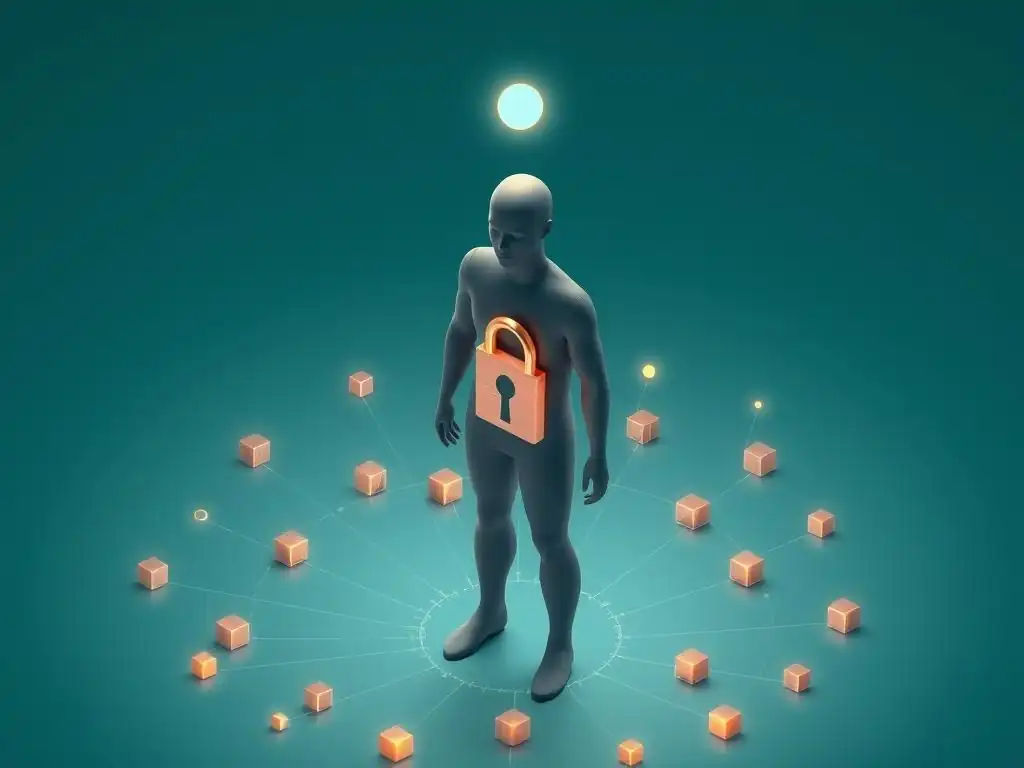
DID in Healthcare: Patient-Centric Data Management
DID holds significant potential to revolutionize healthcare by enabling patient-centric data management. Patients could control access to their medical records, granting specific doctors, hospitals, or specialists permission to view relevant portions of their history using verifiable credentials. For example, a patient could issue a VC allowing a new specialist read-only access to their cardiology records for a limited time. This contrasts with current systems where patient data is often siloed across different healthcare providers, making it difficult for patients to access or share their full medical history.
A system using DID could allow patients to aggregate their health data from various sources into their personal digital wallet, providing them with a comprehensive view and true Blockchain data ownership solutions for their sensitive health information. This empowers patients, improves coordination of care, and could facilitate secure participation in research studies by allowing granular, auditable sharing of specific data points.
DID in Supply Chain: Verifying Product Authenticity and Provenance
In supply chain management, DID can be used to create verifiable digital identities for products, components, and even locations involved in the chain. This allows stakeholders to verify the authenticity and provenance of goods by checking verifiable credentials associated with the product's DID. For example, a luxury good manufacturer could issue a VC for each product, detailing its origin, materials used, and manufacturing date.
Consumers could scan a QR code linked to the product's DID to access and verify these credentials, ensuring they are purchasing a genuine item and understanding its journey from source to sale. This application of Blockchain data ownership solutions enhances transparency, combats counterfeiting (estimated to cost the global economy hundreds of billions annually), and builds consumer trust by providing verifiable evidence of product history.
DID in Government: Secure and Transparent Citizen Services
Governments can leverage DID to provide secure, transparent, and efficient citizen services. Citizens could use their decentralized identity to access a range of services online without needing to present physical documents or repeatedly enter personal information. For example, applying for a permit, renewing a license, or accessing social benefits could be streamlined by presenting the necessary verifiable credentials from a digital wallet.
This approach reduces administrative burden, minimizes opportunities for identity fraud, and enhances privacy by allowing citizens to share only the specific proofs required for a service (e.g., proof of address without revealing the full address to every service provider). Countries like Estonia have explored aspects of digital identity, and DID takes this further by placing the identity under the citizen's control, representing a significant step towards truly citizen-owned Blockchain data ownership solutions.
DID in Finance: Streamlining KYC/AML Processes
The financial sector is heavily reliant on Know Your Customer (KYC) and Anti-Money Laundering (AML) regulations, which are often cumbersome and data-intensive. DID can streamline these processes by allowing individuals and entities to manage reusable KYC/AML verifiable credentials. Instead of submitting identity documents to every financial institution, a user could get verified once by a trusted identity verification service (an issuer) and receive a KYC VC in their digital wallet.
They could then present this VC to multiple banks, exchanges, or financial service providers, who can cryptographically verify its authenticity. This reduces duplication of effort, improves data accuracy, enhances user privacy by limiting data sharing, and significantly cuts down onboarding time and costs for financial institutions. This application demonstrates the efficiency gains possible with Blockchain data ownership solutions in regulated industries.
Overcoming the Challenges of Implementing Blockchain Data Ownership
Scalability Concerns and Potential Solutions
One of the primary challenges for widespread adoption of Blockchain data ownership solutions is the scalability of the underlying blockchain networks. Public blockchains like Ethereum, while decentralized, can suffer from high transaction fees and slow processing times, especially during periods of high network congestion. Recording every DID creation or key update on the main chain can become prohibitively expensive and slow if millions or billions of users adopt the technology.
Potential solutions involve using layer 2 scaling technologies (e.g., rollups, sidechains) or utilizing blockchains specifically designed for higher throughput and lower costs (e.g., Polygon, Solana, or permissioned ledgers like Hyperledger Indy for specific use cases). Off-chain storage of verifiable credentials, with only cryptographic proofs or anchors on-chain, is also crucial for scalability and privacy. Research and development in blockchain technology continue to address these limitations, paving the way for more scalable DID implementations.
Regulatory Landscape and Compliance Requirements
The regulatory landscape for digital identity and blockchain technology is still evolving and varies significantly across jurisdictions. Implementing Blockchain data ownership solutions requires navigating complex legal frameworks related to data protection (like GDPR or CCPA), electronic signatures, and identity verification standards. Regulators need to understand how decentralized systems comply with existing laws and whether new regulations are needed to address the unique aspects of DID.
Compliance with KYC/AML regulations, for instance, requires verifiers to trust the identity information presented. While VCs provide cryptographic proof of issuance and integrity, the legal recognition of a decentralized identity and the liability framework in case of misuse or errors need to be clearly defined. Collaboration between technology developers, businesses, and regulators is essential to create a clear and supportive legal environment for DID.
User Adoption and Education: Bridging the Knowledge Gap
Despite the compelling benefits, user adoption of Blockchain data ownership solutions faces hurdles related to complexity and a lack of awareness. Concepts like DIDs, VCs, and digital wallets are new to most people. Users need easy-to-use interfaces and clear explanations of how these technologies work and the value they provide in terms of privacy and control. The user experience must be significantly simpler than current identity management methods for mass adoption to occur.
Education is key to bridging this knowledge gap. Users need to understand the risks of current centralized systems and the advantages offered by decentralized identity. They must also be educated on how to securely manage their private keys and digital wallets, as self-sovereignty comes with the responsibility of self-custody. Developing intuitive applications and providing accessible educational resources are critical for driving user adoption.
The Future of Decentralized Identity and Blockchain Technology
Emerging Trends in Blockchain-Based Identity Solutions
The field of Blockchain data ownership solutions and Decentralized Identity is rapidly evolving. Emerging trends include the development of more sophisticated privacy-preserving technologies, such as Zero-Knowledge Proofs (ZKPs), which allow users to prove possession of a credential or attribute without revealing the underlying data itself. For example, proving you are over 18 without revealing your date of birth using a ZKP.
Another trend is the integration of DID with decentralized autonomous organizations (DAOs) and Web3 applications, enabling verifiable participation and governance based on reputation or credentials rather than just token holdings. We are also seeing increased focus on cross-chain compatibility and standard harmonization to ensure that DID systems are interoperable across different blockchain ecosystems. The development of mobile-first DID wallets with seamless integration into everyday apps is also a key area of focus for improving user experience.
The Potential of DID to Revolutionize Data Ownership
Decentralized Identity, powered by blockchain, has the potential to fundamentally revolutionize data ownership beyond just identity information. The principles of DID – user control, verifiable credentials, and decentralized anchoring – can be extended to other types of personal data, such as health records, financial transaction history, educational achievements, and even data generated from IoT devices.
By using verifiable credentials and secure personal data stores (often referred to as Personal Data Accounts or Pods), individuals could gain granular control over all types of data associated with them. They could monetize their data by selectively sharing anonymized or aggregated insights with researchers or businesses, or simply keep it private. This shift empowers individuals, turning data from a liability (in terms of privacy risk) into an asset they control, truly realizing the promise of Blockchain data ownership solutions for a wide range of personal information.
Choosing the Right Decentralized Identity Platform
Evaluating Different Decentralized Identity Technologies
Selecting a Decentralized Identity platform involves evaluating various underlying technologies and frameworks. Key factors include the choice of the decentralized ledger or blockchain technology used for anchoring DIDs (e.g., public vs. permissioned, specific blockchain protocols like Ethereum, Solana, Hyperledger Indy), the maturity and adoption of the DID method supported, and the ecosystem built around the platform. Some platforms might offer specific features tailored to certain industries, like healthcare or finance.
Consider the platform's approach to scalability, privacy features (like ZKP support), interoperability standards compliance (W3C DID and VC specifications), and the ease of integration with existing systems. The developer community and available tools are also important for businesses looking to build applications on the platform. The choice should align with the specific use case requirements and the desired level of decentralization and performance.
Key Considerations for Selecting a DID Solution
When selecting a specific DID solution or vendor, several considerations are crucial. First, assess their adherence to open standards (W3C DIDs and VCs) to ensure interoperability. Proprietary solutions can lead to vendor lock-in. Second, evaluate their security architecture, including key management practices and wallet security. Third, consider the user experience provided by their wallet and credential management tools – ease of use is vital for adoption.
Furthermore, look at the legal and compliance support offered by the provider, especially if operating in regulated industries. Understand their business model and long-term viability. Finally, assess the community and support available, as DID technology is still evolving. Choosing the right platform and solution is a critical step in successfully implementing Blockchain data ownership solutions that are secure, scalable, and user-friendly.
Conclusion: Embracing Blockchain for True Data Ownership and Control
The current digital landscape, characterized by centralized control and frequent data breaches, underscores the urgent need for a fundamental shift in how identity and personal data are managed. Decentralized Identity, powered by blockchain technology, offers a compelling path forward by placing individuals firmly in control of their digital selves. By leveraging the immutability and decentralization of blockchain to anchor DIDs and using verifiable credentials for secure, selective data sharing, DID frameworks enable true Blockchain data ownership solutions.
Embracing this technology promises enhanced privacy, improved security, reduced reliance on intermediaries, and a more trustworthy digital environment. While challenges related to scalability, regulation, and user adoption remain, ongoing developments in blockchain and DID technology are steadily addressing these hurdles. As the digital world becomes increasingly integrated into our lives, empowering individuals with control over their identity and data is not just a technical upgrade but a necessary step towards a more equitable and secure future. The journey towards widespread Blockchain data ownership solutions is underway, promising a future where digital autonomy is the norm, not the exception.
Frequently Asked Questions
How does Self-Sovereign Identity (SSI) relate to blockchain data ownership solutions?
SSI leverages blockchain technology to give individuals complete control over their digital identities and personal data. This contrasts with traditional systems where data is stored and managed by centralized entities, empowering users to own their data.
What are the primary benefits of using blockchain for blockchain data ownership solutions?
Blockchain's inherent features like immutability, transparency, and decentralization ensure data integrity and prevent unauthorized access or modification. This creates a more secure and trustworthy environment for managing and sharing personal information.
Beyond personal identity, where else can blockchain data ownership solutions be applied?
The principles of SSI and blockchain-based data ownership can be extended to various enterprise applications, such as supply chain management, healthcare records, and intellectual property protection. These solutions provide enhanced transparency and control over sensitive data.
What are the regulatory considerations surrounding blockchain data ownership solutions and SSI?
Regulations like GDPR and CCPA emphasize data privacy and user control. Blockchain-based solutions can help organizations comply with these regulations by providing users with greater control over their data and ensuring transparency in data processing practices.
What is the future outlook for blockchain data ownership solutions and the adoption of SSI?
The future is promising, with increasing awareness and demand for decentralized and user-centric data management systems. As blockchain technology matures and standards are developed, SSI is poised to become a mainstream solution for data ownership.
Final Reflection: Embracing the Future of Digital Autonomy
The exploration of Self-Sovereign Identity (SSI) through blockchain technology reveals a powerful paradigm shift, and its relevance is undeniable in today's data-driven world. The promise of true data ownership, once a distant ideal, is now within reach, offering individuals unprecedented control over their digital lives and challenging the traditional power structures that have long dictated how personal information is managed. This isn't just about technology; it's about reclaiming agency in an increasingly digital society.
The impact of SSI extends far beyond individual empowerment; it has the potential to reshape entire industries and redefine the relationship between individuals and institutions. The journey towards widespread adoption may be complex, but the potential benefits – increased privacy, enhanced security, and streamlined processes – are too significant to ignore. The future of identity is decentralized, secure, and user-centric. It's about empowering individuals with control over their own data and enabling seamless interactions in the digital world.
This quote encapsulates the core vision of SSI, highlighting its transformative potential.
As we stand at the cusp of this new era, I invite you to consider the role you can play in shaping the future of digital identity. Reflect on the ways in which your own data is currently managed and controlled, and explore the possibilities that SSI offers for reclaiming ownership. Embrace the potential of blockchain data ownership solutions and become an advocate for a more equitable and empowering digital landscape. The future of data ownership is not just a technological advancement; it's a fundamental human right, and it's time to claim it.
Embrace Your Data Destiny: Start Your SSI Journey!
Thank you for exploring the world of Self-Sovereign Identity! We hope you've gained a clear understanding of how blockchain technology can empower you to take control of your personal data. Now, it's time to turn that knowledge into action and help shape the future of digital identity.
Here's how to get started:
- Claim your digital sovereignty: Research and select a reputable SSI wallet to begin managing your identity today. This is your first step toward true data ownership!
- Explore open-source SSI projects: Visit platforms like GitHub and consider contributing your expertise to this growing movement.
- Share this article with friends or colleagues who care about data privacy and invite them to join the conversation.
Are you ready to take control of your data and become a pioneer in the SSI movement? Let us know in the comments: What will be your first step toward embracing Self-Sovereign Identity, and what challenges do you expect to face?
Leave a Reply