
DApp Ecosystem Essentials: Wallets, Oracles, and Decentralized Infrastructure

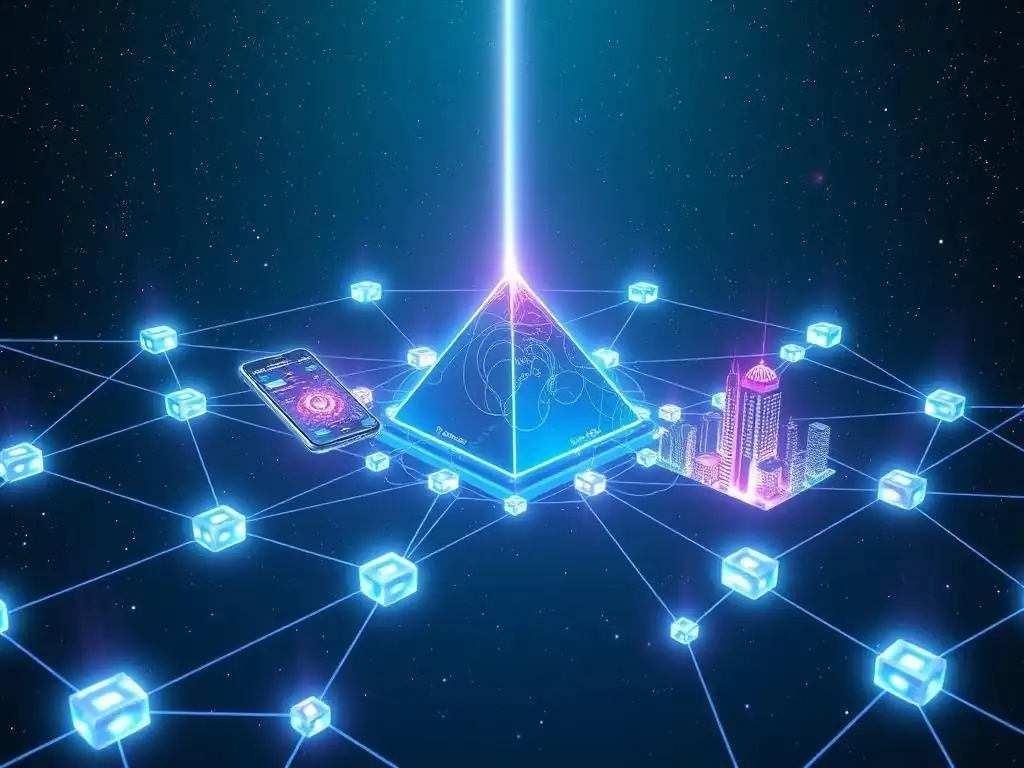
Welcome to Blockchain Trends, your compass in the ever-evolving world of distributed ledger technology! Beyond the hype of cryptocurrencies, lies a universe of groundbreaking applications. Are you ready to uncover how blockchain is reshaping industries and redefining trust?
In this deep dive, we're unraveling the decentralized application infrastructure basics. Understanding the core components – wallets, oracles, and the very foundation upon which DApps are built – is paramount. Curious about how these elements interoperate to create a secure and transparent ecosystem? Let's begin!
DApp Ecosystem Essentials: Wallets, Oracles, and Decentralized Infrastructure
- Understanding Decentralized Application (DApp) Infrastructure Basics
- Decentralized Wallets: Gateways to DApps
- Oracles: Bridging the Gap Between DApps and Real-World Data
- Decentralized Infrastructure: Powering DApps
- Essential Tools and Technologies for DApp Development
- The Future of DApp Infrastructure
- Building Secure and Scalable DApps: Best Practices
-
Frequently Asked Questions
- What are the essential components of a Decentralized Application (DApp) ecosystem?
- How do wallets contribute to the functionality of a DApp?
- What role do oracles play in DApp development and function?
- Why is decentralized application infrastructure crucial for DApp success?
- What are some key considerations when choosing the right decentralized application infrastructure?
- Final Reflection: Embracing the Decentralized Future
- Unlock Your DApp Potential!
Understanding Decentralized Application (DApp) Infrastructure Basics
What Defines DApp Infrastructure? Key Components Explained
Decentralized application infrastructure basics encompass the foundational elements that enable DApps to function autonomously and transparently, distinguishing them from traditional web applications. Unlike centralized applications that rely on a single server and database, DApps operate on a decentralized network, typically a blockchain. This fundamental shift necessitates a different set of infrastructural components.
Key among these are decentralized wallets, which empower users to manage their digital assets and interact with DApps; oracles, acting as crucial bridges to bring external, real-world data onto the blockchain; and decentralized infrastructure solutions for storage and computing, ensuring resilience and censorship resistance. These components, working in concert, form the backbone of a robust DApp ecosystem, enabling functionalities ranging from decentralized finance (DeFi) to supply chain management and beyond.
At its core, DApp infrastructure is about distributing control and data across a network, thereby mitigating single points of failure and enhancing security. This distribution demands a rethinking of traditional infrastructure models. For instance, instead of relying on centralized databases, DApps leverage distributed ledgers for data storage and consensus mechanisms to validate transactions.
Similarly, user authentication shifts from password-based systems to cryptographic key pairs managed by decentralized wallets. The integration of oracles allows DApps to react to real-world events, making them dynamic and adaptable. Understanding these core components is crucial for anyone venturing into the world of decentralized applications, whether as a developer, user, or investor.
The Importance of a Robust DApp Ecosystem
A robust DApp ecosystem is paramount for the widespread adoption and long-term success of decentralized applications. Imagine a city without roads, electricity, or communication networks – it would be virtually impossible for businesses and residents to thrive. Similarly, a weak or underdeveloped DApp infrastructure hinders innovation, limits scalability, and compromises the user experience.
A strong ecosystem, conversely, fosters innovation by providing developers with reliable and efficient tools and services. It enhances scalability, allowing DApps to handle increasing user loads and transaction volumes, critical for mainstream adoption. Furthermore, it improves user experience by ensuring seamless interactions, secure transactions, and easy access to decentralized services.
The strength of the DApp ecosystem directly influences the security and resilience of individual DApps. A well-diversified and robust infrastructure, supported by multiple decentralized solutions, reduces the risk of systemic failures and censorship. For example, reliance on a single centralized oracle provider could become a point of vulnerability, whereas a diverse ecosystem of decentralized oracles enhances data reliability and integrity.
Moreover, a thriving ecosystem attracts more developers, users, and investors, creating a positive feedback loop that further strengthens the infrastructure and fuels innovation in the decentralized space. Ultimately, a robust DApp ecosystem is not just beneficial but essential for realizing the transformative potential of blockchain technology and decentralized applications.
Decentralized Wallets: Gateways to DApps
Types of Decentralized Wallets: Hardware, Software, and Web Wallets
Decentralized wallets are the primary interface for users to interact with DApps and the broader Web3 ecosystem. They serve as custodians of users' private keys, granting control over their digital assets and enabling them to sign transactions on the blockchain. Decentralized wallets come in various forms, each offering different trade-offs in terms of security, convenience, and accessibility.
Hardware wallets, like Ledger and Trezor, are considered the most secure as they store private keys offline, isolated from internet-connected devices, thus minimizing exposure to online threats. These are physical devices that require confirmation on the device itself for transaction signing, offering an extra layer of security.
Software wallets, also known as hot wallets, are applications installed on computers or mobile devices. Examples include MetaMask, Trust Wallet, and Exodus. These wallets offer greater convenience as they are readily accessible and often integrated directly into web browsers or mobile DApp browsers. However, they are considered less secure than hardware wallets because the private keys are stored on internet-connected devices, making them potentially vulnerable to malware or phishing attacks.
Web wallets, often browser extensions like MetaMask, provide a seamless way to interact with DApps directly within web browsers. They are convenient for frequent DApp users but require careful attention to security practices due to their online nature. Choosing the right type of decentralized wallet depends on individual user needs and risk tolerance, balancing security with ease of use.
Wallet Security Best Practices for DApp Users
Securing your decentralized wallet is paramount to protecting your digital assets when interacting with DApps. The cardinal rule is to protect your seed phrase (also known as a recovery phrase or mnemonic phrase) at all costs. This phrase is the master key to your wallet and should be stored offline, preferably written down on paper and kept in a secure, private location.
Never store your seed phrase digitally on your computer, phone, or in the cloud, as this significantly increases the risk of it being compromised. Be wary of phishing attempts, which often come in the form of emails or fake websites designed to trick you into revealing your seed phrase or private key. Always verify the website address and be cautious of unsolicited requests for your wallet information.
Another crucial security practice is to use strong, unique passwords for your wallet and any associated accounts. Enable two-factor authentication (2FA) whenever possible for added security. Regularly update your wallet software to ensure you have the latest security patches. Exercise caution when connecting your wallet to DApps.
Only connect to reputable DApps and carefully review transaction details before signing them. Consider using a separate wallet for everyday DApp interactions and reserve a hardware wallet for storing larger amounts of cryptocurrency for long-term security. By adhering to these best practices, DApp users can significantly mitigate the risks associated with managing decentralized wallets and safeguard their digital assets.
Connecting Your Wallet to DApps: A Step-by-Step Guide
Connecting a decentralized wallet to a DApp is generally a straightforward process, designed for user-friendliness. Most DApps will have a prominent "Connect Wallet" button, usually located in the top right corner of the interface. Clicking this button typically initiates a pop-up window from your wallet extension, such as MetaMask. This pop-up will display a request to connect to the specific DApp you are trying to access. Before approving the connection, it is crucial to verify the DApp's URL to ensure you are interacting with the legitimate application and not a phishing site.
Upon verifying the DApp's legitimacy, you will be prompted to select the account you wish to connect with. If you have multiple accounts within your wallet, choose the appropriate one. The wallet will then request permission for the DApp to access certain information, such as your public address. Review these permissions carefully.
In most cases, DApps only require access to your public address to identify you and facilitate transactions; they should not be requesting access to your private keys or seed phrase. After approving the connection, your wallet will be linked to the DApp, allowing you to interact with its features, sign transactions, and manage your assets within the DApp's environment. The connection can usually be disconnected from within the wallet interface or sometimes within the DApp settings.
Oracles: Bridging the Gap Between DApps and Real-World Data
The Oracle Problem: Ensuring Data Accuracy and Reliability
The "oracle problem" is a fundamental challenge in the realm of decentralized applications. Blockchains, by design, operate in a deterministic and isolated environment. They cannot inherently access or verify data originating from the external, real world.
However, many DApps require real-world information to function effectively – for example, DeFi platforms need price feeds, prediction markets need event outcomes, and supply chain DApps need tracking data. Oracles are the entities that bridge this gap, acting as data feeds that bring external information onto the blockchain for use by smart contracts. The challenge lies in ensuring the accuracy and reliability of this data in a decentralized and trustless manner.
The core issue stems from the fact that oracles are external entities, and their data is not inherently verifiable by the blockchain itself. If an oracle provides inaccurate or manipulated data, the smart contracts relying on that data will execute incorrectly, potentially leading to financial losses or other undesirable outcomes. This is particularly critical for high-value DApps.
For instance, if a DeFi lending platform relies on a compromised oracle providing manipulated price data, it could lead to incorrect loan liquidations or other market distortions. Therefore, addressing the oracle problem is crucial for building secure and trustworthy DApps that interact with the real world. Solutions focus on decentralization, reputation systems, and incentive mechanisms to ensure oracle data integrity.
Types of Oracles: Centralized vs. Decentralized
Oracles can be broadly categorized into centralized and decentralized types, each with distinct characteristics and trade-offs. Centralized oracles rely on a single source to provide data to the blockchain. While they can be simpler and potentially faster to implement, they introduce a single point of failure and trust. If the centralized oracle is compromised, malicious, or simply experiences downtime, the DApps relying on it will be affected. Examples of centralized oracles might include a single company providing weather data or a lone API endpoint feeding price information. The trust in the data's integrity rests entirely on this single entity.
Decentralized oracles, in contrast, leverage a network of multiple independent data sources and verification mechanisms to enhance data reliability and security. Instead of relying on a single point, they aggregate data from multiple oracles, often employing consensus mechanisms to identify and filter out inaccurate or malicious data points. This approach significantly reduces the risk of data manipulation and single points of failure.
Decentralized oracles can be further categorized based on their data sourcing and verification methods, including consensus-based oracles, bonded oracles, and compute oracles. The choice between centralized and decentralized oracles depends on the specific needs of the DApp, balancing factors like security requirements, cost, and speed of data delivery. For applications requiring high security and data integrity, decentralized oracles are generally preferred.
Popular Oracle Networks for DApp Development: Chainlink, Band Protocol, API3
Several prominent oracle networks have emerged to address the oracle problem and provide reliable data feeds for DApp development. Chainlink is arguably the most widely adopted decentralized oracle network. It offers a vast network of independent node operators and a wide range of data feeds, including price data, weather data, and more. Chainlink emphasizes security and reliability through features like decentralized node selection, data aggregation, and cryptographic proofs. Many major DeFi protocols, such as Aave and Synthetix, utilize Chainlink oracles for their price feeds.
Band Protocol is another notable decentralized oracle network that focuses on cross-chain data delivery and scalability. It utilizes a delegated proof-of-stake (dPoS) consensus mechanism for oracle node operation and data validation, aiming for high performance and cost-efficiency. Band Protocol supports a wide array of data sources and is designed for seamless integration with various blockchains. API3 takes a different approach, focusing on "Airnode" technology, which allows API providers to directly operate their own oracles.
This aims to improve data source transparency and reduce the reliance on intermediaries. API3 emphasizes first-party oracles, where the data originates directly from the API provider, enhancing data provenance and trust. These oracle networks provide developers with robust options for securely and reliably integrating real-world data into their DApps, each with its own strengths and focus areas.
Decentralized Infrastructure: Powering DApps

Decentralized Storage Solutions: IPFS, Arweave, Sia
Decentralized storage solutions are crucial components of DApp infrastructure, offering alternatives to traditional centralized cloud storage providers. These solutions leverage distributed networks to store data, enhancing resilience, censorship resistance, and data ownership. IPFS (InterPlanetary File System) is a peer-to-peer hypermedia protocol designed to make the web faster, safer, and more open.
It uses content-addressing, meaning files are identified by their content rather than their location, ensuring data integrity and preventing content tampering. IPFS distributes files across a network of nodes, making data more resilient to censorship and single points of failure. Many DApps utilize IPFS to store static website assets, NFTs, and other data.
Arweave is another decentralized storage network focused on permanent data storage. Unlike traditional storage models where data can be deleted or lost, Arweave aims to provide a "permaweb" where data is stored permanently and immutably. It uses a novel "blockweave" data structure and a sustainable endowment model to incentivize long-term storage. Arweave is particularly suitable for applications requiring data archival, historical records, and censorship-resistant content.
Sia is a decentralized cloud storage platform that utilizes blockchain technology to create a marketplace for storage. It connects users who need storage with hosts who have spare storage capacity. Sia encrypts and distributes data across a network of hosts, offering competitive pricing and enhanced privacy compared to centralized cloud storage. These decentralized storage solutions provide DApp developers with powerful tools to build more robust, resilient, and user-centric applications.
Decentralized Computing Platforms: Golem, Akash Network, iExec
Decentralized computing platforms offer a distributed alternative to centralized cloud computing services, enabling DApps to access computational resources in a more open and censorship-resistant manner. Golem is a decentralized compute network that allows users to rent out their idle computing power to others who need it. It creates a global marketplace for computing resources, making it accessible and affordable for DApps and other applications requiring processing power. Golem is particularly well-suited for tasks like rendering, scientific simulations, and machine learning.
Akash Network is a decentralized cloud computing marketplace built on blockchain technology. It aims to provide a cheaper and more censorship-resistant alternative to centralized cloud providers like AWS and Google Cloud. Akash allows users to deploy and run applications in a decentralized cloud environment, leveraging a network of independent data centers and providers. It is designed for hosting websites, APIs, and various types of DApps.
iExec focuses on providing decentralized high-performance computing (HPC) resources. It aims to create a decentralized marketplace for computing power, datasets, and algorithms, catering to computationally intensive tasks and data-sensitive applications. iExec emphasizes data confidentiality and secure execution environments. These decentralized computing platforms empower DApp developers to build more scalable, resilient, and cost-effective applications by leveraging distributed computational resources.
Decentralized Identity (DID) Solutions for DApps
Decentralized Identity (DID) solutions are gaining prominence in the DApp ecosystem as a way to empower users with greater control over their digital identities and data. Traditional online identity systems often rely on centralized providers, raising concerns about privacy, data security, and censorship. DIDs offer a user-centric approach to identity management, where individuals control their own identifiers and data, without reliance on central authorities.
A DID is a globally unique identifier that enables verifiable, decentralized digital identity. It is typically associated with a DID document that contains public keys, service endpoints, and other metadata that can be used to verify the DID owner's identity and interact with them.
For DApps, DIDs offer several key benefits. They enhance user privacy by allowing users to selectively disclose information and control data sharing. They improve security by reducing reliance on passwords and centralized identity providers, mitigating the risks of password breaches and single points of failure. DIDs also enable interoperability across different DApps and platforms, as users can use the same DID across various services.
Solutions like uPort, Sovrin, and Blockstack (now Hiro) are examples of projects developing DID frameworks and tools. These solutions often leverage blockchain technology to anchor DID documents and facilitate secure and verifiable identity interactions. As the DApp ecosystem matures, DIDs are expected to play an increasingly important role in creating user-centric and privacy-preserving decentralized applications.
Essential Tools and Technologies for DApp Development
Smart Contract Languages: Solidity, Vyper, and Others
Smart contracts are the foundational building blocks of DApps, and choosing the right smart contract language is crucial for development. Solidity is currently the most popular and widely used smart contract language, particularly for Ethereum and other EVM-compatible blockchains. It is a high-level, object-oriented language inspired by JavaScript, C++, and Python. Solidity is well-documented, has a large developer community, and a rich ecosystem of tools and libraries, making it a robust choice for DApp development. However, Solidity's complexity and potential for vulnerabilities require careful coding practices and security audits.
Vyper is a newer smart contract language designed with security and simplicity in mind. It is a Python-like language that aims to reduce the attack surface of smart contracts by limiting certain features found in Solidity, such as modifiers and loops. Vyper emphasizes auditability and formal verification, making it a compelling option for security-sensitive DApps.
While Vyper's ecosystem is still developing and its community is smaller than Solidity's, it is gaining traction for its focus on security and ease of auditing. Beyond Solidity and Vyper, other smart contract languages exist, such as Rust (often used with blockchains like Solana and Polkadot), Go (used with blockchains like GoChain), and JavaScript (with frameworks like CosmWasm). The choice of language often depends on the target blockchain platform, developer familiarity, and the specific requirements of the DApp.
DApp Development Frameworks: Truffle, Hardhat, and Brownie
DApp development frameworks significantly streamline the development process by providing developers with essential tools, libraries, and workflows. Truffle Suite is a comprehensive DApp development framework that includes Truffle, Ganache, and Drizzle. Truffle provides tools for smart contract compilation, deployment, testing, and migration. Ganache is a local blockchain emulator that allows developers to test their DApps in a sandboxed environment without deploying to a public network. Drizzle is a frontend library that simplifies the integration of DApp frontends with smart contracts. Truffle Suite is widely adopted and offers a robust and mature development environment.
Hardhat is another popular Ethereum development environment, known for its speed, flexibility, and extensibility. It provides features for smart contract compilation, testing, deployment, and debugging. Hardhat emphasizes developer experience and offers plugins for extending its functionality. It is gaining popularity for its ease of use and powerful features.
Brownie is a Python-based development framework for smart contracts targeting Ethereum. It is designed to be user-friendly, especially for developers familiar with Python. Brownie focuses on rapid development, testing, and deployment of smart contracts and DApps. These frameworks significantly reduce the complexity of DApp development, allowing developers to focus on building application logic rather than infrastructure setup and boilerplate code.
Web3 Libraries: Connecting Frontends to Blockchains
Web3 libraries are essential for bridging the gap between DApp frontends (typically built with web technologies like JavaScript and HTML) and the blockchain backend. These libraries provide APIs and tools for interacting with blockchains, sending transactions, querying data, and managing user accounts. Web3.js is one of the most widely used JavaScript libraries for interacting with Ethereum and other EVM-compatible blockchains. It provides a comprehensive set of functionalities for connecting to blockchain nodes, sending transactions, deploying smart contracts, and reading blockchain data. Web3.js is a mature and well-documented library, widely supported in the DApp development community.
Ethers.js is another popular JavaScript library that offers similar functionalities to Web3.js. It is known for its smaller bundle size, improved performance, and more modular design. Ethers.js is also actively developed and well-documented, providing a strong alternative to Web3.js. Beyond JavaScript libraries, other Web3 libraries exist for different programming languages, such as Web3.py (for Python), Web3j (for Java), and Nethereum (for .NET). These libraries abstract away the complexities of blockchain interaction, allowing frontend developers to seamlessly integrate blockchain functionalities into their DApp user interfaces. They are crucial for building user-friendly and interactive DApps.
The Future of DApp Infrastructure
Scalability Solutions for DApps: Layer-2 Scaling and Sharding
Scalability remains a significant challenge for widespread DApp adoption. Base layer blockchains like Ethereum have limitations in transaction throughput and speed, leading to network congestion and high gas fees, especially during periods of high demand. Layer-2 scaling solutions are designed to address these limitations by processing transactions off-chain while still inheriting the security of the main chain (Layer-1).
Rollups are a prominent type of Layer-2 solution that bundles multiple transactions into a single transaction on the main chain, significantly increasing throughput and reducing gas costs. Optimistic Rollups and Zero-Knowledge Rollups (zk-Rollups) are two main categories of rollups, each with different security and performance trade-offs. Examples of Layer-2 solutions include Polygon, Optimism, and Arbitrum on Ethereum.
Sharding is another scalability approach, aiming to improve Layer-1 scalability by dividing the blockchain into multiple shards, each capable of processing transactions in parallel. This increases the overall network capacity and throughput. Sharding is a complex and technically challenging solution to implement, but it has the potential to significantly scale base layer blockchains. Ethereum 2.0 is undergoing a major upgrade that includes sharding as a key component of its scalability roadmap.
Other blockchains, like Polkadot, also employ sharding-like architectures to achieve scalability. Layer-2 solutions are currently more readily available and widely adopted, while sharding represents a longer-term approach to scaling blockchain infrastructure. Both approaches are crucial for enabling DApps to handle mass adoption and support a wide range of use cases.
Interoperability: Connecting Different Blockchain Networks for DApps
Interoperability, the ability for different blockchain networks to communicate and interact with each other, is becoming increasingly important for the future of DApps. Currently, many blockchains operate in silos, limiting the potential for cross-chain interactions and data sharing. Cross-chain bridges are technologies designed to facilitate the transfer of assets and data between different blockchains. These bridges enable users to move tokens between networks, access DApps on different chains, and leverage the unique functionalities of various blockchain platforms. Examples of cross-chain bridges include bridges connecting Ethereum to Polygon, Binance Smart Chain, and other networks.
Interoperability protocols are being developed to establish standardized communication layers between blockchains, enabling more seamless and trustless cross-chain interactions. Projects like Polkadot and Cosmos are building interoperable blockchain ecosystems, allowing different blockchains (parachains in Polkadot, zones in Cosmos) to communicate and share data within a unified framework. Interoperability is crucial for creating a more connected and efficient blockchain ecosystem, unlocking new possibilities for DApps.
It enables DApps to leverage the strengths of different blockchains, access wider user bases, and facilitate cross-chain DeFi and other applications. As the blockchain space matures, interoperability is expected to play a vital role in fostering innovation and broader adoption.
Emerging Trends in Decentralized Application Development
Several emerging trends are shaping the future of decentralized application development and infrastructure. Account abstraction is a significant trend aimed at improving user experience and security by decoupling user accounts from private keys and smart contracts. It allows for more flexible account management, social recovery mechanisms, and programmable wallets, making DApps more user-friendly and accessible to a wider audience. Account abstraction is gaining momentum on Ethereum and other blockchains.
Modular blockchains are another emerging trend, focusing on separating different functionalities of a blockchain (e.g., consensus, execution, data availability) into distinct modules that can be customized and combined. This modular approach aims to improve blockchain scalability, flexibility, and adaptability, allowing for more specialized and efficient blockchain architectures. Zero-knowledge proofs (ZKPs) are gaining increasing attention for their potential to enhance privacy and scalability in DApps. ZKPs enable proving the validity of a statement without revealing the underlying information, offering privacy-preserving solutions for transactions, identity verification, and other applications.
Decentralized autonomous organizations (DAOs) are becoming more prevalent for managing DApps and decentralized communities. DAOs utilize smart contracts to automate governance and decision-making processes, empowering communities to collectively manage and control DApp projects. These emerging trends point towards a future of DApp infrastructure that is more user-centric, scalable, private, and community-driven.
Building Secure and Scalable DApps: Best Practices
Auditing Smart Contracts: Ensuring Security and Preventing Exploits
Auditing smart contracts is a critical step in the DApp development lifecycle, essential for ensuring security and preventing costly exploits. Smart contracts, once deployed on the blockchain, are immutable and cannot be easily changed. Vulnerabilities in smart contracts can lead to significant financial losses, as demonstrated by numerous high-profile exploits in the DeFi space. A smart contract audit involves a thorough review of the smart contract code by independent security experts to identify potential vulnerabilities, bugs, and security flaws. The auditing process typically includes static analysis, dynamic analysis, and manual code review.
Reputable auditing firms employ experienced security engineers who are well-versed in smart contract security best practices and common attack vectors. The audit report typically provides a detailed assessment of the smart contract's security posture, highlighting identified vulnerabilities and recommending remediation steps. Developers should address the findings of the audit and make necessary code changes before deploying the smart contract to a production environment.
Regular audits, especially for complex and high-value smart contracts, are crucial for maintaining the security and trustworthiness of DApps. Engaging with the security community, participating in bug bounty programs, and staying updated on the latest security threats are also important practices for building secure DApps.
Optimizing DApp Performance: Gas Optimization, Efficient Data Structures
Optimizing DApp performance is crucial for ensuring a smooth user experience and minimizing gas costs, particularly on networks like Ethereum where transaction fees can be significant. Gas optimization in smart contracts involves writing code that minimizes the computational resources required to execute transactions, thereby reducing gas consumption. This can be achieved through various techniques, such as using efficient data structures, minimizing storage operations, optimizing loops, and avoiding unnecessary computations. Developers should carefully analyze their smart contract code to identify areas for gas optimization.
Efficient data structures play a vital role in DApp performance. Choosing appropriate data structures, such as mappings, arrays, and structs, can significantly impact gas costs and execution speed. For instance, using mappings for lookups is generally more gas-efficient than iterating through arrays. Caching frequently accessed data can also improve performance and reduce gas costs.
On the frontend side, optimizing DApp performance involves techniques like code minification, lazy loading, and efficient data fetching. Regularly profiling DApp performance, both on the smart contract and frontend sides, can help identify bottlenecks and areas for optimization. Performance optimization is an ongoing process throughout the DApp development lifecycle.
Community Engagement: Building a Thriving DApp Ecosystem
Community engagement is paramount for building a thriving DApp ecosystem. A strong and active community can provide valuable feedback, contribute to development, promote adoption, and foster long-term growth. Engaging with the community early and often is crucial. This can involve creating online forums, chat channels (e.g., Discord, Telegram), and social media groups to facilitate communication and interaction. Actively soliciting feedback from the community on DApp features, user experience, and roadmap is essential for building user-centric applications.
Open-source development practices can encourage community contributions to the DApp codebase, bug fixing, and feature development. Providing clear documentation, tutorials, and developer resources can empower community members to contribute and build upon the DApp platform. Organizing community events, hackathons, and workshops can foster collaboration and innovation within the ecosystem. Rewarding community contributions through grants, bounties, or recognition programs can incentivize active participation. A strong and engaged community is not only a valuable asset for DApp development but also a key factor in the long-term success and sustainability of decentralized applications.
Frequently Asked Questions
What are the essential components of a Decentralized Application (DApp) ecosystem?
The core components include decentralized application infrastructure, wallets for user interaction, and oracles for real-world data integration. These elements are crucial for DApp functionality and adoption.
How do wallets contribute to the functionality of a DApp?
Wallets provide users with a secure way to manage their digital assets and interact with the DApp. They enable transaction signing and authentication within the decentralized network.
What role do oracles play in DApp development and function?
Oracles bridge the gap between blockchains and the real world, supplying DApps with external data. This data integration allows DApps to interact with information not natively available on the blockchain.
Why is decentralized application infrastructure crucial for DApp success?
Decentralized infrastructure ensures that the DApp is not controlled by a single entity, enhancing security and resilience. This is a cornerstone of trustless and transparent operation.
What are some key considerations when choosing the right decentralized application infrastructure?
Factors to consider include scalability, security, and cost-effectiveness. Choosing infrastructure that aligns with the DApp's specific needs is paramount for optimal performance.
Final Reflection: Embracing the Decentralized Future
The journey through the DApp ecosystem, from wallets to oracles and decentralized infrastructure, reveals a landscape brimming with potential, yet still navigating its formative stages. The promise of a truly decentralized web, where power is distributed and trust is minimized, is not just a technological aspiration, but a fundamental shift in how we interact with information and each other. This shift is already underway, impacting industries from finance to supply chain management, and its influence will only continue to grow.
The ongoing evolution of decentralized application infrastructure is profoundly shaping the cultural and social landscape. It's not just about code; it's about empowering individuals and fostering transparency in systems that have historically been opaque. The challenges are real, from scalability to security, but the potential rewards – a more equitable and resilient digital world – are worth striving for. The future is already here – it's just not evenly distributed.
- William Gibson. This quote perfectly encapsulates the current state of DApps; the technology exists, but its widespread adoption and equitable distribution are the next crucial steps.
As you navigate the complexities of the digital age, remember the principles of decentralization: transparency, security, and user empowerment. Consider how you can contribute to building a more decentralized future, whether through supporting DApp development, advocating for open-source technologies, or simply educating yourself and others about the potential of this transformative technology. The future of the web is being written now, and your understanding and participation are essential to shaping a future that benefits everyone.
Unlock Your DApp Potential!
Thank you for exploring the world of DApp ecosystems with Blockchain Trends. You now have a solid understanding of wallets, oracles, and decentralized infrastructure—the foundational elements shaping the future of decentralized applications. Are you ready to take the next step?
Here are some ways to advance your DApp journey:
- Engage with a real-world DApp project: Choose a decentralized application that interests you and actively participate—test its features, explore its open-source code if available, and contribute to its community. This hands-on experience is invaluable for deepening your understanding.
- Try out different wallet options: Experiment with various web3 wallets such as MetaMask, Trust Wallet, or hardware wallets like Ledger, and compare their features, security measures, and ease of use.
- Share your insights: Write a brief post on social media or on Blockchain Trends' forum about a DApp or oracle solution that impressed you, emphasizing its innovative aspects and potential impact.
What specific DApp feature are you most excited to see developed in the coming year? How might decentralized infrastructure enable its realization? Share your thoughts below!
Leave a Reply