
How SelfSovereign Identity Can Foster Greater Digital Trust and Confidence


Welcome to Blockchain Trends, your guide to navigating the ever-evolving world of blockchain technology! Forget just cryptocurrencies; we delve into the transformative potential of this technology across industries. Intrigued by how blockchain can revolutionize digital trust? Dive into our latest article exploring how selfsovereign identity blockchain trust is reshaping the landscape of digital interactions and building a more secure, user-centric future. Discover how this innovative approach can empower individuals and organizations alike, and leave you questioning the very nature of online identity.
How Self-Sovereign Identity Can Foster Greater Digital Trust and Confidence
- Introduction: The Need for Enhanced Digital Trust
- Understanding Self-Sovereign Identity (SSI)
- The Role of Blockchain in Enabling Self-Sovereign Identity
- Fostering Digital Trust with Self-Sovereign Identity
- Self-Sovereign Identity: Real-World Applications
- Addressing the Challenges of SSI Implementation
- Building Confidence in Digital Interactions Through SSI
- The Impact of SSI on the Future of Digital Identity
- Conclusion: Embracing Self-Sovereign Identity for a More Trustworthy Digital World
-
Frequently Asked Questions
- How does self-sovereign identity (SSI) enhance digital trust?
- What role does blockchain play in securing self-sovereign identity?
- Beyond cryptocurrencies, where can SSI be applied in enterprise settings?
- What are the key regulatory considerations for implementing SSI solutions?
- How does SSI contribute to the future of decentralized systems?
- Final Reflection: Embracing a Future of Digital Empowerment
- Unveil Your Digital Future: Take Control of Your Identity!
Introduction: The Need for Enhanced Digital Trust
The Growing Crisis of Trust in Centralized Digital Systems
The digital landscape is increasingly defined by a pervasive crisis of trust. Traditional centralized systems, which hold vast amounts of personal data in honeypots, have become prime targets for cybercriminals. High-profile data breaches are a frequent occurrence, eroding consumer confidence. For instance, reports indicate that in 2023 alone, billions of records were exposed globally through various incidents, highlighting the vulnerability inherent in storing sensitive information in single, centralized locations. This constant threat of data compromise makes users hesitant to share personal information online, hindering the potential of digital services and interactions.
Furthermore, the lack of transparency in how centralized entities collect, use, and share personal data contributes significantly to this trust deficit. Users often have limited visibility or control over their digital footprint, leading to concerns about surveillance, unauthorized data sharing, and algorithmic bias. This opaque environment makes it difficult for individuals to verify who has accessed their data and for what purpose, creating a fundamental imbalance of power between users and the platforms they interact with daily. Restoring digital trust requires a paradigm shift away from these vulnerable and opaque centralized models.
Self-Sovereign Identity (SSI) as a Solution to Digital Trust Deficits
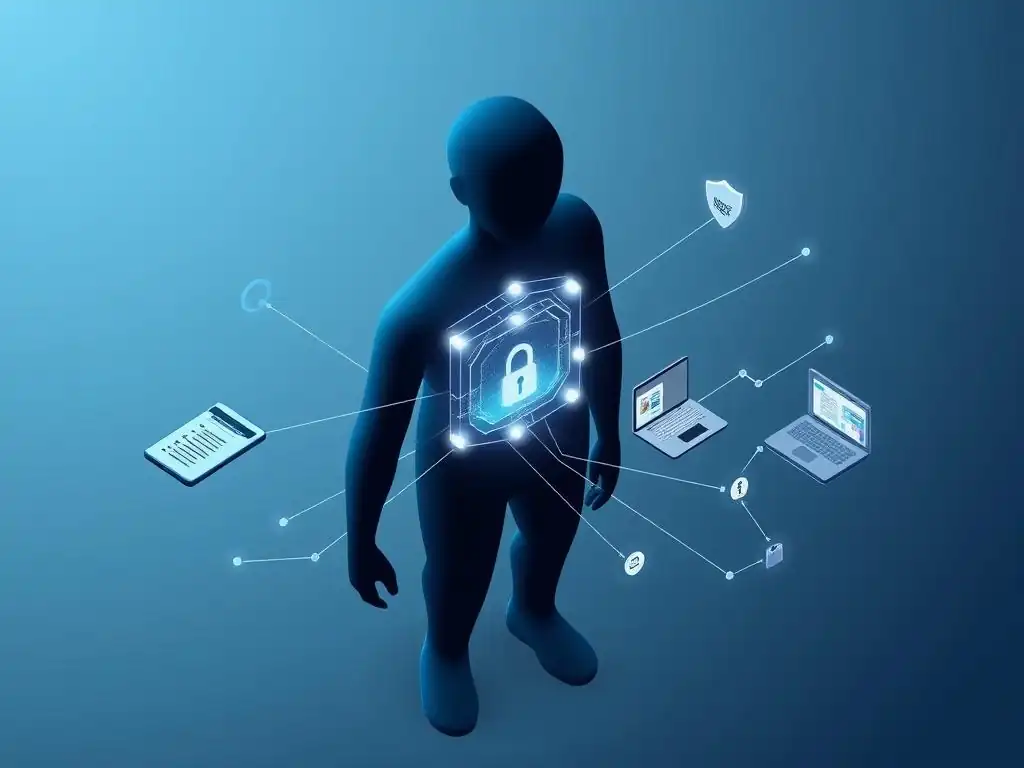
Self-Sovereign Identity (SSI) emerges as a promising framework to address the prevalent digital trust deficits by shifting control of identity data from institutions back to the individual. At its core, SSI proposes a system where individuals own and manage their digital identities, choosing precisely what information to share, with whom, and when. This user-centric approach contrasts sharply with traditional models where identities are managed by third parties like governments, corporations, or social media platforms, which often act as intermediaries and central points of failure.
By empowering individuals with granular control over their personal information, SSI inherently fosters greater digital trust. When users know they are in charge of their data and can verify its integrity and provenance, they are more likely to engage confidently in digital transactions and interactions. This model reduces reliance on trusting third parties implicitly and instead builds trust through verifiable claims and decentralized data management, laying a foundation for a more secure and equitable digital future where the user is paramount.
Blockchain Trends: Exploring the Intersection of SSI and Blockchain Technology
Blockchain technology is at the forefront of current blockchain trends, providing a foundational layer of security, transparency, and immutability that is crucial for realizing the full potential of Self-Sovereign Identity. While SSI is a concept independent of blockchain, the distributed ledger technology offers a robust infrastructure for managing the verifiable credentials and decentralized identifiers (DIDs) that are central to the SSI model. The inherent immutability of blockchain ensures that once a credential is recorded, it cannot be tampered with, providing a high level of assurance regarding the integrity of identity data.
Exploring the intersection of Self-Sovereign Identity blockchain trust is vital for understanding how decentralized systems can revolutionize identity management. Blockchain enables a trustless environment in the sense that participants don't need to trust a central authority; instead, trust is distributed across the network and secured cryptographically. This makes blockchain an ideal backbone for SSI solutions, allowing individuals to manage their digital identities securely and privately, free from the vulnerabilities associated with centralized databases and the potential for data misuse by intermediaries.
Understanding Self-Sovereign Identity (SSI)
Defining Self-Sovereign Identity: User-Centric Control
Self-Sovereign Identity (SSI) is a model for digital identity that gives individuals ultimate control over their digital identifiers and personal data. Unlike traditional federated or siloed identity systems where organizations manage user identities (e.g., logging into multiple sites using a Google or Facebook account, or relying on a government database for verification), SSI places the individual at the center.
The user holds the keys to their identity and decides which pieces of information, or "claims," they want to share with relying parties (entities requesting verification). This user-centric approach is a fundamental shift, moving away from third-party custodianship of sensitive personal information.
In practice, this means an individual might have a collection of verifiable credentials – digital proofs of attributes like their age, education, or professional certifications – issued by trusted authorities (e.g., a university, a government department, an employer). With SSI, the user stores these credentials securely on their device or in a personal cloud wallet, rather than leaving them stored in the databases of the issuing organizations.
When a relying party needs to verify an attribute, the user can selectively present the relevant credential directly from their wallet, often without revealing any other information about themselves, thus maximizing privacy and control.
Key Principles of SSI: Control, Access, Transparency, Portability, and Persistence
Self-Sovereign Identity is built upon a set of core principles designed to empower the individual. Control is paramount; users have the right to own and manage their digital identity and data without reliance on any single entity. Access ensures that individuals can access their own identity information at any time and from anywhere, free from restrictions imposed by third parties. Transparency dictates that the processes and systems used to manage identity should be open and understandable, allowing users to see how their data is used and verified.
Other critical principles include Portability and Persistence. Portability means that the identity and its associated credentials are not tied to a specific application, service, or vendor; they can be used across different platforms and contexts. Persistence implies that the identity should endure over time, independent of any single issuing authority or service provider. These principles collectively aim to create a digital identity framework that is resilient, trustworthy, and truly serves the individual's interests, moving beyond the limitations and risks of current identity management paradigms.
How SSI Differs from Traditional Identity Management Systems
Self-Sovereign Identity represents a significant departure from both traditional siloed and federated identity management systems. In traditional siloed systems, each online service or organization maintains its own separate database of user identities (e.g., individual usernames and passwords for every website). This leads to user friction (managing many credentials) and security risks (data breaches in individual databases). Federated identity systems, like single sign-on (SSO) using Google or Facebook accounts, improve convenience but consolidate power and data with large identity providers, creating a central point of failure and raising privacy concerns about the provider's access to user activity across different services.
SSI, conversely, eliminates the need for central identity providers. Instead of logging into service B using credentials verified by service A (federated), or creating a new identity for service C (siloed), an individual using SSI presents verifiable credentials directly to the service requiring verification.
The service can cryptographically verify the authenticity of the credential and the issuer without needing to interact with or trust a central identity provider or even the original issuer at the time of verification. This decentralized model significantly enhances privacy, security, and user autonomy, fundamentally changing the dynamics of digital interactions and building Selfsovereign identity blockchain trust.
The Role of Blockchain in Enabling Self-Sovereign Identity
Blockchain as a Secure and Immutable Ledger for Identity Data
Blockchain technology plays a pivotal role in realizing Self-Sovereign Identity by providing a secure, immutable, and decentralized ledger. While the actual sensitive identity data is typically stored off-chain by the user, blockchain is often used to anchor public keys, decentralized identifiers (DIDs), and revocation registries for verifiable credentials.
The inherent properties of blockchain – its distributed nature, cryptographic security, and append-only structure – make it exceptionally resistant to tampering and censorship. Once a record, such as the public key linked to a DID or the status of a credential, is added to the blockchain, it is extremely difficult to alter or remove.
This immutability is crucial for establishing trust in the SSI ecosystem. It ensures that the foundational elements linking an individual to their identity infrastructure are secure and verifiable by anyone on the network. For example, if a university issues a digital degree credential to a student, the integrity of that credential can be cryptographically verified against information anchored or referenced on a public or permissioned blockchain. This provides a high level of assurance to relying parties that the credential is authentic and has not been revoked, underpinning the technical framework for Selfsovereign identity blockchain trust.
Decentralized Identifiers (DIDs) and Verifiable Credentials on the Blockchain
Decentralized Identifiers (DIDs) and Verifiable Credentials (VCs) are core components of the SSI architecture, and blockchain provides a robust infrastructure for their operation. DIDs are a new type of globally unique identifier that does not require a centralized registration authority. They are designed to be resolvable to DID documents, which contain cryptographic material (like public keys) and service endpoints necessary to establish secure interactions with the DID subject. Blockchains often serve as the method or "DID method" for resolving DIDs, storing the link between the DID and its associated DID document securely and immutably.
Verifiable Credentials are tamper-evident digital representations of information about a subject (the credential holder), issued by an authority (the issuer), and verifiable by a third party (the verifier). While the credential content itself is usually not stored on the blockchain for privacy reasons, the blockchain can be used to anchor cryptographic proofs related to the credential, such as the issuer's public key or a hash of the credential's schema.
The blockchain can also maintain a public revocation list, allowing verifiers to check if a credential is still valid. This combination of DIDs, VCs, and blockchain technology creates a powerful system for verifiable, privacy-preserving digital identity, solidifying the technical foundation for Selfsovereign identity blockchain trust.
Benefits of Using Blockchain for SSI: Security, Transparency, and Interoperability
Leveraging blockchain technology for Self-Sovereign Identity offers significant benefits, particularly in terms of security, transparency, and interoperability. Security is enhanced because cryptographic proofs and public keys are anchored on a distributed, immutable ledger, making it highly resistant to attacks aimed at altering identity data or compromising the system's integrity. Unlike centralized databases which are single points of failure, a blockchain network is distributed, making it much harder for malicious actors to disrupt or corrupt the system. This distributed security model is fundamental to fostering Selfsovereign identity blockchain trust.
Transparency is also a key advantage. While sensitive personal data remains private, the system's rules, the status of DIDs, and revocation information can be publicly auditable on a transparent blockchain.
This allows participants to verify the system's operations and the validity of credentials without needing to trust a central authority. Furthermore, blockchain standards, combined with DID and VC specifications (like those from the W3C), promote interoperability between different SSI systems and applications, potentially creating a global network of verifiable digital identities that can be used seamlessly across various sectors and borders, a capability often lacking in fragmented traditional identity systems.
Fostering Digital Trust with Self-Sovereign Identity
Increased User Control Over Personal Data
One of the most significant ways Self-Sovereign Identity fosters digital trust is by giving individuals unprecedented control over their personal data. In traditional systems, users often relinquish control over their data when signing up for services, with limited understanding of how it will be used or shared. SSI reverses this dynamic.
Users hold their verifiable credentials in their own digital wallets and decide precisely which specific pieces of information to share with a relying party. For example, instead of providing a full driver's license scan to prove age, an SSI user could present a verifiable credential that only attests to being over 18, without revealing their name, address, or exact birth date.
This granular control builds trust because users feel empowered and secure knowing they are not oversharing sensitive information. They can consent explicitly to each data disclosure, understanding exactly what is being shared and with whom. This contrasts sharply with opaque terms of service and implicit data usage common in existing digital platforms. By making the individual the gatekeeper of their own data, SSI aligns digital interactions with real-world expectations of privacy and consent, establishing a foundation of Selfsovereign identity blockchain trust rooted in user agency.
Enhanced Data Privacy and Security Through Decentralization
Self-Sovereign Identity significantly enhances data privacy and security, which are critical components of digital trust. By decentralizing the storage and management of identity data, SSI mitigates the risks associated with centralized databases. Instead of sensitive personal information being aggregated in large data silos that are attractive targets for hackers, data is held by the individual or distributed across decentralized networks. Verifiable credentials, while anchored or referenced on a blockchain, typically store sensitive data off-chain in the user's secure wallet, often encrypted.
Furthermore, the use of cryptographic proofs and selective disclosure mechanisms inherent in VCs means that users can prove attributes about themselves without revealing the underlying data. For instance, proving eligibility for a service based on income bracket can be done by presenting a zero-knowledge proof that verifies the income falls within a certain range, without revealing the exact income figure. This approach minimizes the amount of sensitive data transmitted and stored by relying parties, drastically reducing the attack surface and enhancing privacy far beyond what is possible with traditional identity systems, thereby bolstering Selfsovereign identity blockchain trust.
Improved Transparency and Accountability in Data Sharing
Self-Sovereign Identity improves transparency and accountability in digital interactions, further contributing to digital trust. The SSI framework, especially when combined with blockchain, allows for a clear record of credential issuance and verification events. While the content of a transaction might be private, the fact that a credential was issued or verified can potentially be recorded or referenced on a transparent ledger. This creates an auditable trail, making it harder for entities to misuse credentials or for relying parties to make unsubstantiated claims about verifying an individual's identity.
Moreover, the decentralized nature of SSI means that trust is placed in cryptographic verification and transparent processes rather than relying solely on the reputation or promises of a central authority. Users can verify the validity of an issuer's credentials and relying parties can verify the integrity of a presented credential using publicly available information anchored on the blockchain. This system promotes accountability among issuers and verifiers, as their actions are verifiable within the SSI framework. This inherent transparency and accountability build confidence among all participants, strengthening the overall Selfsovereign identity blockchain trust ecosystem.
Self-Sovereign Identity: Real-World Applications
SSI in Healthcare: Streamlining Patient Data Management
Self-Sovereign Identity holds immense potential in healthcare for streamlining patient data management while significantly enhancing privacy and control. Patients could manage their own medical records as a collection of verifiable credentials issued by various healthcare providers (doctors, hospitals, labs).
Instead of fragmented records held by different institutions, the patient would have a comprehensive, portable digital health history in their SSI wallet. When visiting a new specialist or emergency room, the patient could grant temporary, selective access to specific parts of their record (e.g., allergies, past procedures, current medications) without needing to transfer their entire history or rely on interoperability between disparate hospital systems.
This application addresses critical issues in healthcare: improving data accessibility for patients, enhancing data portability between providers, and increasing security and privacy. It reduces administrative burdens associated with requesting and transferring records and minimizes the risk of data breaches from centralized health databases.
A pilot project by the Estonian e-Health system, for instance, has explored using blockchain-like technology to secure health records, demonstrating the feasibility of decentralized approaches. Implementing SSI principles could further empower patients, allowing them to manage consent for research or data sharing more effectively, fostering Selfsovereign identity blockchain trust in a sector where data sensitivity is paramount.
SSI in Supply Chain: Enhancing Product Traceability
In supply chain management, Self-Sovereign Identity can enhance product traceability and build trust among participants and with consumers. Products, components, or even shipping containers could be assigned DIDs, and their journey through the supply chain recorded using verifiable credentials issued at each step (e.g., manufacturing origin, shipping manifest, customs clearance, quality inspection). This creates a transparent and immutable history for each item, accessible to authorized parties. Consumers could scan a QR code on a product to verify its authenticity and origin, checking credentials issued by the manufacturer, logistics provider, and retailer.
This application combats counterfeiting, improves recall efficiency, and provides consumers with verifiable information about the products they purchase. For example, tracking the provenance of food items or luxury goods becomes significantly more reliable.
A consortium like the IBM Food Trust uses blockchain to track food products, reducing the time needed to trace contaminated items from days to seconds. Integrating SSI principles into such systems would allow entities within the supply chain (farmers, manufacturers, distributors) to manage their own verifiable business credentials and issue product credentials, creating a network of trusted, verifiable information flows that enhance Selfsovereign identity blockchain trust throughout the entire value chain.
The Future of Self-Sovereign Identity Applications
The potential applications for Self-Sovereign Identity extend far beyond healthcare and supply chain. In education, students could manage their academic records, degrees, and certifications as verifiable credentials, simplifying the process of applying for jobs or further education. In finance, SSI could enable more secure and privacy-preserving Know Your Customer (KYC) processes, allowing users to prove their identity and eligibility for financial services without repeatedly submitting sensitive documents to different institutions. This could reduce the cost and friction of KYC, while also enhancing user privacy.
Furthermore, SSI is poised to play a crucial role in the burgeoning world of Web3 and the metaverse, where digital identities will need to be portable, interoperable, and user-controlled. Imagine carrying a single, verifiable digital identity across virtual worlds, proving ownership of digital assets, verifying participation in decentralized autonomous organizations (DAOs), or accessing services without relying on centralized platform providers. As digital interactions become more complex and integrated, the need for a trustworthy, user-centric identity layer becomes paramount, making Selfsovereign identity blockchain trust a foundational element for the future digital landscape.
Addressing the Challenges of SSI Implementation
Scalability Concerns and Potential Solutions
Implementing Self-Sovereign Identity on a large scale presents significant technical challenges, particularly concerning scalability. While blockchain provides security and immutability, public blockchains can face limitations in transaction throughput and speed, which could hinder the widespread adoption of SSI if every identity-related transaction (like anchoring a DID or updating a revocation status) needed to occur directly on the main chain. Processing millions or billions of identity events daily requires an infrastructure capable of handling high transaction volumes efficiently and economically.
Potential solutions to address SSI scalability often involve layering architectures and alternative decentralized technologies. Layer 2 scaling solutions for blockchains, such as rollups or state channels, can process transactions off-chain and periodically anchor proofs onto the main chain, dramatically increasing throughput. Alternatively, some SSI implementations utilize permissioned blockchains or distributed ledgers specifically designed for higher transaction volumes.
Other approaches involve using blockchain only for anchoring the most critical information (like DID methods or root keys) while managing credentials and interactions using off-chain protocols and decentralized storage solutions. The choice of technology significantly impacts the ability to deliver Selfsovereign identity blockchain trust at a global scale.
Interoperability Between Different SSI Systems
Another significant challenge for Self-Sovereign Identity adoption is ensuring interoperability between different SSI systems and implementations. As various organizations and vendors develop SSI solutions, there is a risk of fragmentation, where credentials issued within one ecosystem cannot be verified or used within another. This would undermine the core promise of portability and widespread utility that SSI offers. For SSI to achieve its potential, credentials and DIDs must be usable across different wallets, platforms, and industries, regardless of the underlying technology stack or issuer.
Efforts to address interoperability are centered around the development and adoption of open standards. Organizations like the World Wide Web Consortium (W3C) have developed specifications for Decentralized Identifiers (DIDs) and Verifiable Credentials (VCs), providing a common language and framework for creating and exchanging digital credentials. Adherence to these global standards is crucial for ensuring that an individual's digital identity and credentials are portable and verifiable across different SSI-compliant systems. Promoting the widespread adoption of these standards through industry collaboration and regulatory support is essential for building a truly interconnected Selfsovereign identity blockchain trust network.
Regulatory Considerations and Compliance Requirements
Navigating the complex landscape of global regulations and compliance requirements is a major hurdle for SSI implementation. Digital identity and personal data are subject to a patchwork of laws across different jurisdictions, such as GDPR in Europe, CCPA in California, and various national identity schemes. SSI's decentralized and user-controlled nature can sometimes present challenges in fitting within existing regulatory frameworks designed for centralized data custodianship. For example, regulations around the "right to be forgotten" or data residency requirements need careful consideration in a decentralized identity system.
Implementing SSI requires careful attention to designing systems that comply with these diverse legal obligations while maintaining the core principles of user control and privacy. This involves working closely with legal experts and regulators to ensure that SSI solutions meet compliance standards for data protection, anti-money laundering (AML), Know Your Customer (KYC), and other relevant areas.
Developing clear guidelines and best practices for deploying SSI in a compliant manner is crucial for fostering adoption and building regulatory trust in Selfsovereign identity blockchain trust solutions. Collaboration between technologists, legal experts, and policymakers is essential to pave the way for legal and compliant SSI deployments.
Building Confidence in Digital Interactions Through SSI
Reducing Identity Fraud and Theft
Self-Sovereign Identity offers a powerful mechanism for reducing identity fraud and theft, thereby building significant confidence in digital interactions. Traditional identity systems, relying on static identifiers like usernames, passwords, and government-issued numbers, are highly susceptible to compromise through phishing, data breaches, and impersonation. Once these static credentials are stolen, malicious actors can use them to access accounts, open credit lines, or engage in fraudulent activities, causing substantial harm to individuals and businesses.
SSI mitigates these risks by moving away from static, reusable secrets towards dynamic, cryptographically verifiable credentials. Instead of logging in with a password that could be stolen, an SSI user proves their identity or attributes using a cryptographically signed credential issued by a trusted authority. These credentials are often tied to the user's private key, which remains under their control.
Furthermore, selective disclosure allows users to share only the minimum necessary information, reducing the amount of data available for attackers to steal. The verifiable nature of credentials, often anchored or referenced on a blockchain, makes them extremely difficult to forge or tamper with, significantly enhancing security and reducing the prevalence of identity-related fraud, thereby strengthening Selfsovereign identity blockchain trust.
Empowering Users to Control Their Digital Footprint
Empowering users with control over their digital footprint is a fundamental aspect of Self-Sovereign Identity and a key driver of digital confidence. In the current digital environment, individuals often leave behind a sprawling, uncontrollable digital footprint across countless websites and services, with little visibility into how their data is collected, used, or shared. This lack of control is a major source of anxiety and distrust. SSI puts the individual back in the driver's seat, allowing them to manage their verifiable credentials and decide exactly what information is shared and with whom.
This empowerment transforms the user from a passive data subject into an active participant in their digital life. They can audit who has requested or verified their credentials and revoke access if necessary. This level of transparency and control builds confidence, as users are no longer at the mercy of opaque data practices by third parties. By enabling individuals to curate and control their digital identity and data, SSI fosters a sense of ownership and security, encouraging more confident and secure participation in the digital economy and reinforcing Selfsovereign identity blockchain trust.
Creating a More Trustworthy and Secure Digital Ecosystem
Ultimately, Self-Sovereign Identity contributes to creating a more trustworthy and secure digital ecosystem for everyone. By shifting away from centralized vulnerabilities and opaque data practices towards a decentralized, transparent, and user-controlled model, SSI reduces systemic risks and builds trust through verifiable interactions. When individuals can confidently prove who they are, and relying parties can trust the authenticity of the credentials presented, digital transactions and relationships become inherently more secure and reliable.
This creates a positive feedback loop: as more individuals and organizations adopt SSI, the network effects increase, making the system more valuable and robust. Businesses can reduce the costs associated with identity verification and fraud prevention, while users benefit from enhanced privacy, security, and convenience. The move towards a digital identity framework built on principles of user control, transparency, and verifiable credentials, often underpinned by the security of blockchain, is essential for unlocking the full potential of the digital world while mitigating its significant risks, establishing a new standard for Selfsovereign identity blockchain trust.
The Impact of SSI on the Future of Digital Identity
The Transition to a User-Centric Identity Model
The advent of Self-Sovereign Identity signifies a fundamental transition in the future of digital identity – a shift towards a truly user-centric model. For decades, digital identity has been managed primarily by institutions, whether governments issuing physical IDs or corporations managing online accounts. This has created fragmented, insecure, and often inconvenient identity experiences for users. SSI proposes a future where the individual is the primary custodian of their digital identity, holding the keys and deciding how and when their identity attributes are shared.
This transition empowers individuals, granting them autonomy over their personal information in the digital realm, mirroring the control they expect in the physical world. It moves away from the idea that identity is something granted or managed by an authority and towards the recognition that identity is an inherent aspect of the individual, which they should control. This paradigm shift is not merely technical; it's a social and economic transformation that rebalances power in the digital landscape, making Selfsovereign identity blockchain trust a cornerstone of future digital interactions.
The Potential for Greater Digital Inclusion
Self-Sovereign Identity also holds significant potential for fostering greater digital inclusion. Billions of people globally lack official forms of identification, which prevents them from accessing essential services like banking, healthcare, education, and government benefits. Traditional identity systems often require physical presence and specific documentation that may be difficult or impossible for marginalized populations to obtain. SSI offers a pathway to a digital identity that is not solely reliant on traditional, institution-issued documents.
With SSI, individuals could potentially build their digital identity over time using a variety of verifiable claims from different sources – perhaps starting with credentials issued by NGOs, community leaders, or mobile network operators, and later incorporating government-issued credentials as they become available. This layered approach allows individuals to establish a verifiable digital presence and access services previously out of reach. By lowering the barriers to establishing a digital identity, SSI can help bridge the digital divide and provide underserved populations with access to the digital economy, demonstrating the inclusive power of Selfsovereign identity blockchain trust.
SSI: A Vision for the Future
Self-Sovereign Identity represents a compelling vision for the future of digital identity – one that is secure, private, portable, and puts the individual in control. It envisions a world where individuals can seamlessly and safely interact online, proving necessary attributes without oversharing sensitive information, free from the risks of centralized data breaches and the friction of fragmented identity systems. This future is built on open standards and decentralized technologies, fostering interoperability and resilience.
The implementation of SSI, often leveraging the robust capabilities of blockchain technology, promises to unlock new possibilities for digital commerce, governance, and social interaction. It moves towards a system where trust is established through verifiable claims and cryptographic proofs rather than blind faith in intermediaries. While challenges remain in achieving widespread adoption and interoperability, the trajectory towards a user-centric, verifiable digital identity is clear. SSI is not just an improvement on existing systems; it's a foundational shift towards a more trustworthy, secure, and equitable digital world, powered by Selfsovereign identity blockchain trust.
Conclusion: Embracing Self-Sovereign Identity for a More Trustworthy Digital World
The Transformative Potential of SSI
The transformative potential of Self-Sovereign Identity cannot be overstated. By fundamentally altering the relationship between individuals and their digital identity, SSI promises to create a digital world that is significantly more secure, private, and user-empowering than the one we inhabit today.
The shift from institution-controlled identities to user-controlled verifiable credentials addresses the root causes of many current digital trust issues, including data breaches, identity theft, and lack of transparency in data usage. This change is not incremental; it is a paradigm shift that has the potential to reshape online interactions across every sector, from finance and healthcare to social media and e-commerce.
SSI, particularly when underpinned by the security and immutability offered by blockchain technology, provides a robust framework for building trust in a decentralized manner. It enables individuals to participate in the digital economy with confidence, knowing that their identity and data are under their control and are protected by strong cryptography. The ability to selectively disclose minimal necessary information reduces privacy risks, while the verifiable nature of credentials combats fraud. Embracing SSI is essential for building a digital future where individuals are respected, protected, and empowered.
Call to Action: Explore the Benefits of Self-Sovereign Identity
Given the significant benefits and transformative potential of Self-Sovereign Identity, individuals and organizations are encouraged to explore and understand this emerging model. For individuals, learning about SSI wallets and verifiable credentials is the first step towards taking control of your digital identity. For businesses and developers, investigating how SSI can enhance security, streamline user onboarding, and build customer trust is crucial for staying competitive and responsible in the evolving digital landscape. Pilots and early implementations across various industries demonstrate the practical feasibility and advantages of SSI.
Adopting SSI principles and technologies is an investment in a more secure, private, and trustworthy digital future. It requires collaboration across industries, continued development of open standards, and user education. The journey towards widespread SSI adoption is ongoing, but the direction is clear: towards a digital world where identity serves the individual, not the other way around. Engage with the SSI community, explore available technologies, and consider how you or your organization can contribute to or benefit from this important evolution in digital identity.
Blockchain Trends: Stay Informed About the Latest SSI Developments
As Self-Sovereign Identity continues to evolve, staying informed about the latest developments, especially concerning the integration of SSI with blockchain technology, is crucial. Blockchain Trends provides a platform to explore these advancements, from new DID methods and verifiable credential specifications to real-world SSI deployments and regulatory updates. The intersection of Self-Sovereign Identity blockchain trust is a dynamic space, with ongoing innovation pushing the boundaries of what is possible in decentralized identity management.
Monitoring pilot programs, industry consortiums, and regulatory discussions will provide valuable insights into the progress and challenges of SSI adoption. Understanding how different blockchain platforms and decentralized technologies are being leveraged to support SSI is key to appreciating its potential and practical implementation. Staying informed allows stakeholders to anticipate future trends, identify opportunities, and contribute meaningfully to the development of a more trustworthy digital ecosystem powered by Self-Sovereign Identity.
Frequently Asked Questions
How does self-sovereign identity (SSI) enhance digital trust?
SSI gives individuals control over their own data, allowing them to share only what's necessary, reducing reliance on centralized authorities. This decentralized trust model fosters greater confidence in online interactions.
What role does blockchain play in securing self-sovereign identity?
Blockchain provides an immutable and transparent ledger for verifying identity credentials. This enhanced security helps prevent fraud and ensures the authenticity of digital identities.
Beyond cryptocurrencies, where can SSI be applied in enterprise settings?
SSI can streamline processes like employee onboarding and KYC compliance, reducing administrative burdens and improving data security. It also enables secure data sharing with partners and customers.
What are the key regulatory considerations for implementing SSI solutions?
Regulations surrounding data privacy and security, such as GDPR, are crucial. SSI solutions must comply with these regulations to ensure user rights and data protection.
How does SSI contribute to the future of decentralized systems?
SSI empowers individuals with greater control over their digital lives, enabling them to participate in decentralized ecosystems with confidence. This fosters a more user-centric and trustworthy internet.
Final Reflection: Embracing a Future of Digital Empowerment
The journey through the intricacies of Self-Sovereign Identity (SSI) reveals its profound potential to reshape our digital interactions. The promise of returning control over personal data to the individual, facilitated by blockchain technology, is no longer a futuristic concept, but a tangible solution to the growing crisis of trust in the digital age. The current landscape, riddled with data breaches and centralized control, necessitates a paradigm shift, and SSI offers precisely that: a foundation for a more equitable and secure digital future.
The influence of SSI extends far beyond mere technological advancement; it touches upon fundamental questions of autonomy and digital citizenship. Witnessing the burgeoning interest in SSI, and the passionate community driving its development, underscores its significance in shaping a future where individuals are empowered, not exploited, by their digital identities. Identity is not just a piece of information; it is the essence of who we are, and we should have the power to control it.
This sentiment, echoed by many in the SSI movement, highlights the profound ethical considerations at the heart of this technological revolution.
As we stand at the cusp of this transformative era, let us not be passive observers. Consider how you can champion the principles of self-sovereignty in your own digital life. Explore the possibilities of SSI, advocate for its adoption, and demand greater transparency and control over your personal data. The future of digital trust is not predetermined; it is a future we must actively build, together, one self-sovereign identity at a time.
Unveil Your Digital Future: Take Control of Your Identity!
Thank you for exploring the world of Self-Sovereign Identity. We hope you gained valuable insights into how SSI can transform digital trust and security. Now, it's time to put that knowledge into practice.
You can start by exploring SSI wallets and platforms to experience firsthand the benefits of owning and controlling your data. Consider researching how SSI is being applied in industries like healthcare, finance, or supply chain to see the technology in action.
Share this article with your network to encourage conversations about digital self-sovereignty. Together, we can help build a more trustworthy and user-centric internet.
What is the first step you'll take to regain control over your digital identity? Share your thoughts in the comments below!
Leave a Reply