
Blockchain Interoperability: Moving Beyond the Hype to RealWorld Impact


Welcome to Blockchain Trends, your guide to navigating the ever-evolving world of decentralized technology. Are you ready to move beyond the cryptocurrency headlines and discover the true potential of blockchain? This month, we delve into a critical aspect shaping the future: Blockchain interoperability benefits businesses in ways you might not expect. Unlock new efficiencies, streamline processes, and explore previously unimagined collaborations. Keep reading to uncover how seamless blockchain communication is revolutionizing industries and paving the way for a truly decentralized future.
Blockchain Interoperability: Enabling Seamless Data and Asset Transfer
- Introduction: The Imperative of Connecting Disparate Blockchains
- Defining Blockchain Interoperability: Mechanisms and Approaches
- Business Benefits: Expanding Capabilities with Interoperable Blockchains
-
Real-World Applications: Use Cases Demonstrating Interoperability
- Cross-Border Payments: Faster, Cheaper, and More Transparent Transactions
- Tokenized Assets: Seamless Transfer and Trading Across Different Platforms
- Decentralized Identity: Portable and Verifiable Credentials Across Blockchains
- Supply Chain Visibility: Enhanced Tracking and Transparency Across Networks
-
Addressing the Challenges of Interoperability: Security and Scalability
- Mitigating Security Risks: Protecting Against Attacks on Cross-Chain Communication
- Enhancing Scalability: Optimizing Performance for High-Volume Transactions
- Navigating Governance and Compliance: Adhering to Regulatory Requirements
- Achieving Consensus: Ensuring Agreement Across Heterogeneous Blockchains
- The Future of Blockchain Interoperability: Trends and Opportunities
- Measuring Success: Key Performance Indicators for Interoperable Networks
- Case Studies: Demonstrating Successful Interoperability Solutions
- Conclusion: Building a Connected and Collaborative Blockchain Ecosystem
-
Frequently Asked Questions
- How does blockchain interoperability benefit businesses?
- What are some real-world applications of blockchain interoperability?
- What are the main challenges in achieving seamless blockchain interoperability?
- How does blockchain interoperability impact the future of decentralized systems?
- What role does regulation play in the development of blockchain interoperability?
- Final Reflection: Bridging the Blockchain Divide
- Unveil the Power of Connected Blockchains!
Introduction: The Imperative of Connecting Disparate Blockchains
The Challenge of Siloed Blockchains: Limited Communication and Data Sharing
The current blockchain landscape is characterized by a multitude of independent networks, each operating with its own protocols, consensus mechanisms, and data structures. This creates isolated ecosystems, often referred to as "silos," where assets, data, and logic are confined to their native chain. For instance, an asset on the Ethereum network cannot be directly used or transferred on the Solana network without some form of intermediary process. This fundamental lack of direct communication restricts the flow of value and information across different blockchains.
This isolation leads to significant friction for users and developers. Businesses looking to leverage blockchain technology often find themselves locked into a single ecosystem, limiting their reach and potential applications. Transferring assets or data between chains is cumbersome, typically requiring wrapped assets or complex, often costly, multi-step processes involving centralized exchanges or specialized services. This fragmentation hinders the overall growth and widespread adoption of blockchain technology, preventing the creation of a truly interconnected decentralized web.
Why Interoperability Drives Business Value: Efficiency and Innovation
Blockchain interoperability is the key to unlocking the full potential of decentralized technologies for enterprise and consumer applications. By enabling seamless interaction between different blockchain networks, it allows for the free movement of assets and data, breaking down the barriers imposed by siloed systems. This connectivity is not just a technical convenience; it directly translates into tangible business value.
The primary way blockchain interoperability benefits businesses is by enhancing efficiency and fostering innovation. Consider a business operating across multiple supply chains or financial systems that reside on different blockchains. Interoperability allows these disparate systems to communicate and share information or value directly, automating processes that were previously manual or required trusted intermediaries.
This reduction in friction and reliance on third parties leads to significant cost savings and accelerates transaction speeds, fundamentally changing how businesses can operate in a decentralized environment. Furthermore, the ability to combine features and assets from various chains opens up entirely new possibilities for product development and service delivery, driving innovation that was previously impossible within a single blockchain ecosystem.
Defining Blockchain Interoperability: Mechanisms and Approaches
Understanding Interoperability: Connecting Networks for Data and Value Exchange
At its core, blockchain interoperability refers to the ability of different blockchain networks to exchange information and transact with each other. This goes beyond simply reading data from another chain; it involves the capacity to transfer assets, execute smart contracts, and verify state changes across distinct blockchain protocols. Think of it as building bridges and common languages between previously incompatible digital countries, allowing citizens (users and applications) to travel and exchange goods (assets and data) freely.
Achieving true interoperability is a complex technical challenge because blockchains differ fundamentally in their design. They may use different programming languages, consensus algorithms (like Proof-of-Work vs. Proof-of-Stake), and security models. Therefore, interoperability solutions must address these disparities to enable secure and reliable cross-chain communication and transaction execution without compromising the integrity or security of the participating networks.
Exploring Interoperability Solutions: Atomic Swaps, Bridges, and Inter-Blockchain Communication (IBC)
Several technical approaches are being developed and implemented to achieve blockchain interoperability. Atomic swaps allow users to exchange cryptocurrencies directly between different blockchains without needing a trusted third party, using time-locked smart contracts to ensure that either both sides of the trade occur or neither does. This is primarily a peer-to-peer solution for asset exchange.
Blockchain bridges are perhaps the most common form of interoperability today. These protocols connect two specific blockchains, allowing assets or data to be transferred between them. Bridges typically work by locking assets on one chain and issuing a wrapped or mirrored version on the other chain, or by relying on validator networks to attest to events on one chain and relay them to another.
Examples include bridges connecting Ethereum to various Layer 2 networks or sidechains. A more advanced framework is Inter-Blockchain Communication (IBC), notably implemented in the Cosmos ecosystem. IBC is a general-purpose protocol that allows any IBC-enabled blockchain to securely communicate and exchange data packets with any other IBC-enabled chain, facilitating the transfer of assets, execution of cross-chain contract calls, and more, based on a standardized protocol.
The Importance of Standardized Protocols: Ensuring Compatibility and Security
The long-term success and scalability of blockchain interoperability heavily depend on the development and adoption of standardized protocols. Just as the internet relies on TCP/IP to enable seamless communication between diverse networks and devices, the blockchain space needs common standards for cross-chain interactions. Without standards, each new connection between chains requires a bespoke solution, leading to fragmentation, increased development costs, and potential security vulnerabilities.
Standardized protocols provide a common language and framework for different blockchains to understand and interact with each other securely and efficiently. They define how information is packaged, transmitted, and verified across networks, reducing the complexity of building cross-chain applications. Adopting standards also fosters a more secure ecosystem; well-audited and widely used protocols are more likely to withstand attacks than numerous one-off bridge implementations. This move towards standardization is crucial for realizing the full potential of blockchain interoperability benefits businesses across various sectors by providing a reliable foundation for cross-chain operations.
Business Benefits: Expanding Capabilities with Interoperable Blockchains
Streamlined Processes and Cost Reduction: Optimizing Cross-Chain Workflows
One of the most significant ways blockchain interoperability benefits businesses is through the optimization of complex, multi-party workflows that span different digital environments. In traditional business processes, transferring assets or verifying information across disparate systems often involves manual steps, intermediaries, and significant delays and fees. When these systems are built on different, non-interoperable blockchains, these issues are amplified.
Interoperability allows businesses to automate cross-chain processes. For example, a supply chain finance solution might involve tracking goods on one blockchain (e.g., focusing on logistics data integrity) and processing payments on another (e.g., optimized for stablecoin transactions). With interoperability, the completion of a logistics milestone on Chain A can automatically trigger a payment release on Chain B, without human intervention or external reconciliation services.
This reduces operational overhead, minimizes the risk of errors, and can lead to substantial cost savings. Estimates vary, but optimizing cross-border payments via blockchain could potentially reduce transaction costs from an average of 5-10% in traditional finance to less than 1% in some cases, alongside settlement times dropping from days to minutes. This demonstrates a clear financial incentive for businesses to adopt interoperable blockchain solutions.
Broader Market Access and User Acquisition: Reaching New Ecosystems
Siloed blockchains inherently limit the potential market size for decentralized applications and services. A dApp built exclusively on one chain can only access the users and liquidity present within that specific ecosystem. This is a major hurdle for growth, especially for innovative projects that could benefit a wider audience.
Blockchain interoperability breaks down these market barriers. By enabling access to users and assets on other chains, businesses can significantly expand their potential reach. A DeFi protocol on Ethereum, for instance, could use a bridge or interoperability protocol to offer its services or access liquidity pools on a chain like Binance Smart Chain or Polygon, immediately increasing its total addressable market.
This not only helps in acquiring new users who prefer or reside on different networks but also allows businesses to tap into diverse pools of capital and assets, fostering greater liquidity and resilience. The ability to operate across multiple ecosystems simultaneously is a powerful growth driver, directly illustrating how blockchain interoperability benefits businesses seeking scale.
Accelerated Innovation and Collaboration: Leveraging Diverse Blockchain Features
Each blockchain network is often designed with specific strengths or optimizations – some excel at high transaction throughput, others at smart contract complexity, and others at data privacy. In a siloed world, businesses are forced to choose one chain and sacrifice the benefits offered by others, or build complex, non-standard workarounds.
Interoperability allows developers and businesses to leverage the unique features of multiple blockchains simultaneously. A project could use a high-throughput chain for microtransactions, a privacy-focused chain for sensitive data, and a robust smart contract platform for complex logic, all linked together through interoperability. This ability to compose solutions using the best-of-breed features from different networks accelerates the pace of innovation.
It also fosters collaboration between projects and communities on different chains, leading to the creation of more powerful and versatile decentralized applications. For example, a gaming platform on one chain might utilize an identity management system on another and a payment gateway on a third, creating a richer user experience than possible within a single ecosystem. This collaborative potential underscores how blockchain interoperability benefits businesses by enabling more sophisticated and integrated solutions.
Real-World Applications: Use Cases Demonstrating Interoperability
Cross-Border Payments: Faster, Cheaper, and More Transparent Transactions
Cross-border payments are a prime example of a sector where blockchain interoperability offers transformative benefits. Traditional international money transfers are notoriously slow, expensive, and opaque, often involving multiple intermediary banks (correspondent banking) that each add fees and processing time. Using blockchain technology, particularly with stablecoins or CBDCs, has the potential to significantly improve this.
However, if a business needs to send funds from a network using one type of digital currency or token (e.g., a stablecoin on Ethereum) to a recipient on a different network optimized for payments (e.g., a potential future CBDC network), interoperability is essential. Projects are exploring how cross-chain solutions can enable seamless transfer and conversion of value between these disparate networks. This could reduce transaction times from days to mere minutes or seconds and cut costs dramatically, potentially saving businesses billions globally in transaction fees.
The transparency inherent in blockchain also allows for easier tracking of funds, reducing errors and fraud. This direct improvement in efficiency and cost is a compelling demonstration of how blockchain interoperability benefits businesses engaged in international trade and finance.
Tokenized Assets: Seamless Transfer and Trading Across Different Platforms
The tokenization of real-world assets (like real estate, art, or securities) and digital assets (like in-game items or loyalty points) is a growing area. However, the value and liquidity of these tokenized assets are often limited to the specific blockchain platform on which they were initially issued. This fragmentation restricts trading opportunities and hinders the efficient functioning of decentralized markets.
Blockchain interoperability enables the seamless transfer and trading of tokenized assets across different blockchain platforms. Imagine a tokenized security issued on an enterprise-focused blockchain needing to be traded on a public decentralized exchange on another network, or a piece of digital art (NFT) minted on one chain being usable or tradable on a gaming platform built on a different chain.
Interoperability solutions like bridges or cross-chain protocols facilitate this movement, unlocking greater liquidity and market access for these assets. This expands the potential investor or buyer base for tokenized assets, making tokenization a more viable and attractive strategy for businesses and asset owners, clearly showing how blockchain interoperability benefits businesses in capital markets and digital economies.
Decentralized Identity: Portable and Verifiable Credentials Across Blockchains
Decentralized identity (DID) aims to give individuals and organizations control over their digital identities and credentials, moving away from reliance on centralized databases. A key aspect of DID is the ability to use verifiable credentials (like proof of age, education, or professional licenses) issued by trusted parties across various online services and platforms.
For DID systems to achieve widespread adoption, identity data and credentials must be portable and verifiable across different blockchain networks and applications. An identity credential issued on one blockchain might need to be verified by a service running on another chain. Interoperability protocols allow for the secure sharing and verification of these credentials across disparate networks without exposing sensitive personal data unnecessarily.
This portability ensures that users maintain control over their identity regardless of the platform they are interacting with and allows businesses to verify user credentials efficiently and reliably across a decentralized landscape. The ability to manage and utilize identity seamlessly across chains is a fundamental enabler for many future decentralized business models, highlighting how blockchain interoperability benefits businesses building user-centric applications.
Supply Chain Visibility: Enhanced Tracking and Transparency Across Networks
Supply chains are inherently complex, involving multiple parties, processes, and often, different technological systems. Tracking goods and information accurately from origin to destination across various participants, some of whom might use different blockchain or distributed ledger technologies, is a significant challenge.
Blockchain interoperability can provide enhanced visibility and transparency across fragmented supply chains. Consider a scenario where raw materials are tracked on one blockchain, manufacturing processes on another, and logistics/shipping on a third. Without interoperability, correlating the data across these stages is difficult. By enabling these distinct networks to share relevant data securely and automatically, businesses can gain end-to-end visibility of their supply chain.
This allows for better tracking, reduces the risk of fraud or errors, improves recall processes, and enables more efficient management of inventory and logistics. For instance, proof of shipment recorded on one chain can trigger a payment on another, streamlining trade finance processes. This seamless flow of information across different blockchain systems is a clear illustration of how blockchain interoperability benefits businesses by creating more resilient and transparent supply networks.
Addressing the Challenges of Interoperability: Security and Scalability
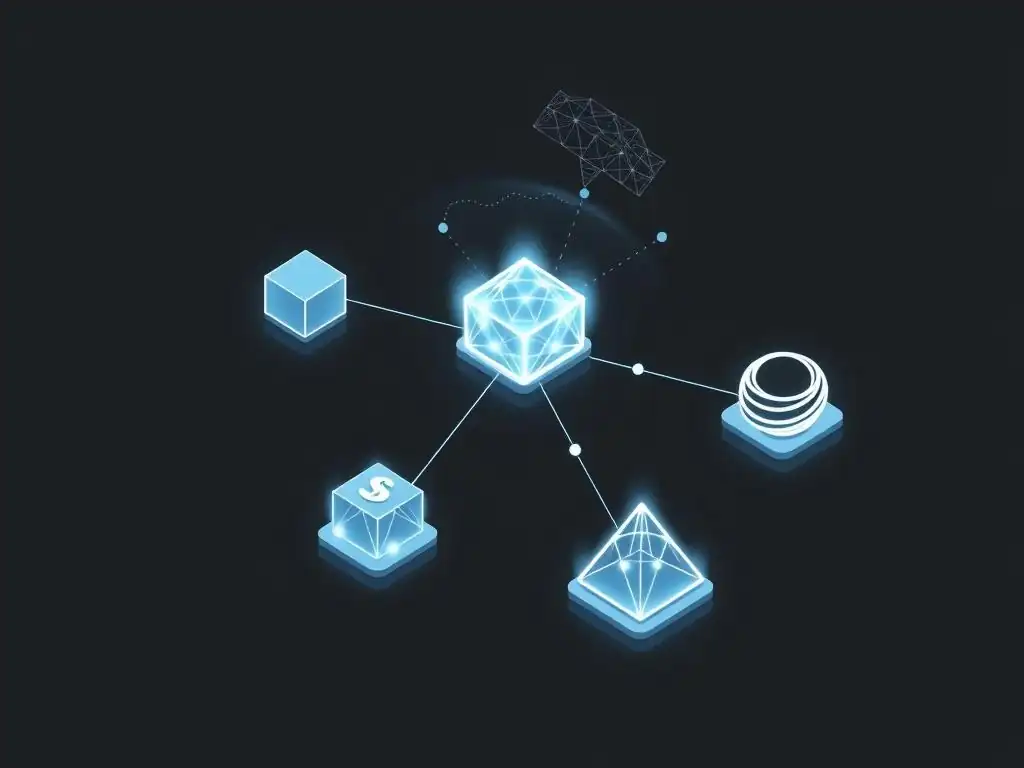
Mitigating Security Risks: Protecting Against Attacks on Cross-Chain Communication
While the benefits of blockchain interoperability are substantial, it also introduces new security risks. Cross-chain communication protocols, particularly bridges, create potential points of vulnerability that attackers can exploit.
These solutions often involve locking assets on one chain and minting equivalent assets on another, or relying on a set of validators to attest to the state of an external chain. If these validators are compromised or the underlying protocol has flaws, it can lead to significant loss of assets, as demonstrated by major bridge hacks resulting in hundreds of millions of dollars in losses (e.g., the Ronin Network bridge hack in March 2022 losing over $600 million, or the Wormhole bridge hack in February 2022 losing over $320 million).
Protecting cross-chain communication requires robust security measures. This includes rigorous auditing of smart contracts and protocols, implementing decentralized validator sets that are difficult to compromise, and employing sophisticated monitoring systems to detect suspicious activity. Some approaches, like ZK-proof-based bridges, aim to minimize trust assumptions by using cryptographic verification instead of relying solely on validators. Businesses adopting interoperability solutions must carefully evaluate the security architecture and track record of the protocols they use and understand the potential risks involved.
Enhancing Scalability: Optimizing Performance for High-Volume Transactions
Achieving interoperability often adds layers of complexity and processing overhead, which can impact the overall scalability of transactions, especially when dealing with high volumes of cross-chain activity. The process of verifying events on one chain and executing corresponding actions on another requires computational resources and can introduce latency.
Ensuring that interoperability solutions can handle the demands of enterprise-scale applications and mass consumer adoption requires significant advancements in scalability. This involves optimizing the efficiency of consensus mechanisms used by interoperability protocols, improving the speed and cost-effectiveness of relaying information between chains, and potentially leveraging layer-2 scaling solutions in conjunction with interoperability layers.
For example, a bridge might need to process thousands of cross-chain transfers per second to support a high-volume payment system. Ongoing research and development in areas like sharding, optimistic rollups, and zero-knowledge rollups are crucial for building a scalable, interconnected blockchain ecosystem capable of supporting widespread business use cases.
Operating across multiple blockchain networks, potentially with different geographical bases and regulatory environments, introduces significant governance and compliance challenges. Each blockchain community may have its own governance model for protocol upgrades or issue resolution, and regulatory requirements for data handling, asset transfers, and financial activities vary widely between jurisdictions.
Interoperability solutions must consider how to manage governance across heterogeneous networks and ensure compliance with applicable laws and regulations. This involves defining clear processes for upgrading interoperability protocols, resolving disputes arising from cross-chain interactions, and implementing mechanisms to comply with requirements like Know Your Customer (KYC) and Anti-Money Laundering (AML) rules when necessary. For businesses, navigating this complex landscape requires careful legal and operational planning. Ensuring interoperable systems can meet diverse regulatory demands is essential for their adoption in regulated industries, presenting a hurdle that needs careful consideration to fully realize how blockchain interoperability benefits businesses operating globally.
Achieving Consensus: Ensuring Agreement Across Heterogeneous Blockchains
Reaching consensus on the state of a cross-chain transaction or the validity of data transferred between networks is inherently more complex than achieving consensus within a single blockchain. Different chains have different finality characteristics – some transactions are considered final almost immediately, while others might require a longer confirmation period.
Interoperability protocols must find reliable ways to bridge these differences in finality and ensure that all participating chains agree on the outcome of a cross-chain event. This often involves waiting for a sufficient number of confirmations on the source chain before acting on the destination chain or relying on the consensus mechanism of the interoperability protocol itself.
Designing robust consensus mechanisms for interoperability layers that are both secure and efficient is an ongoing area of research. The challenge is to minimize the time and resources required to achieve cross-chain consensus without sacrificing security, a critical factor for the performance and reliability of interoperable applications.
The Future of Blockchain Interoperability: Trends and Opportunities
The Growth of Multi-Chain DeFi: Composability and Interconnected Liquidity Pools
Decentralized Finance (DeFi) has largely developed within specific blockchain ecosystems, most notably Ethereum. However, the future of DeFi is increasingly multi-chain, driven by the need for greater scalability, lower transaction costs, and access to diverse user bases. Interoperability is fundamental to this evolution, enabling the composability of DeFi protocols across different networks.
Future trends point towards a highly interconnected DeFi landscape where users can seamlessly move assets and interact with protocols across multiple chains. This will lead to more efficient capital allocation, deeper and more resilient liquidity pools accessible from various networks, and the creation of novel cross-chain financial products. Imagine lending on one chain using collateral held on another, or yield farming across multiple protocols on different networks from a single interface. This multi-chain future, powered by robust interoperability, will expand the reach and sophistication of DeFi, demonstrating significant potential for how blockchain interoperability benefits businesses building financial applications.
Advancements in Interoperability Protocols: Enhanced Security and Efficiency
The field of blockchain interoperability is one of rapid innovation. The security vulnerabilities exposed by early bridge hacks have spurred development into more secure and decentralized approaches. Future protocols are likely to incorporate more advanced cryptographic techniques, such as zero-knowledge proofs, to verify cross-chain transactions without relying on trusted third parties or large validator sets.
Furthermore, research is focused on improving the efficiency and scalability of interoperability solutions. This includes developing more performant relay networks, optimizing the consensus mechanisms of interoperability layers, and exploring novel architectures like app-specific blockchains designed for interoperability (e.g., parachains on Polkadot). These advancements will make cross-chain interactions faster, cheaper, and more reliable, paving the way for broader adoption by enterprises and consumers. The continuous improvement in these underlying protocols is key to realizing the full spectrum of blockchain interoperability benefits businesses seek.
The Impact on Enterprise Adoption: Streamlining Business Processes and Data Sharing
For enterprises, blockchain interoperability is not just about transferring tokens; it's about enabling seamless data flow and process automation across internal systems, partner networks, and public blockchains. As businesses increasingly explore using different blockchain or distributed ledger technologies for various use cases (e.g., supply chain, trade finance, identity management), the need for these systems to interact becomes paramount.
The future will see interoperability protocols become a critical part of enterprise IT infrastructure, acting as middleware that connects disparate blockchain deployments. This will allow businesses to streamline complex processes that involve multiple parties and data sources residing on different ledgers.
For example, a consortium blockchain used for inter-company data sharing could securely interact with a public blockchain used for tokenized payments. This integration will unlock significant efficiencies, reduce operational costs, and enable new business models built on the foundation of a connected decentralized ecosystem, clearly illustrating how the future of blockchain interoperability benefits businesses by enabling true digital transformation.
Measuring Success: Key Performance Indicators for Interoperable Networks
Increased Cross-Chain Transaction Volume: Reflecting Greater Adoption
A primary indicator of the success and impact of blockchain interoperability is the volume of transactions occurring across different networks facilitated by interoperability solutions. This metric directly reflects the level of activity and adoption of cross-chain capabilities. A steady or increasing volume of assets transferred, data exchanged, or smart contracts executed between chains indicates that users and applications are leveraging interoperability to achieve their goals.
Tracking cross-chain transaction volume provides insights into which interoperability solutions are gaining traction and which types of cross-chain interactions are most in demand. For example, a surge in volume for cross-chain swaps might indicate growing demand for multi-chain DeFi strategies, while increased data transfers could point to enterprise adoption for supply chain or identity use cases. Monitoring this KPI helps assess the real-world utility and reach of interoperable networks and confirms that blockchain interoperability benefits businesses and users by enabling practical cross-chain activities.
Reduced Transaction Costs: Demonstrating Efficiency Gains
One of the core promises of blockchain technology is the reduction of transaction costs compared to traditional systems. Interoperability should uphold and ideally enhance this benefit by eliminating the need for expensive intermediaries or complex manual processes when moving assets or data between chains.
Measuring the reduction in transaction costs for cross-chain operations compared to alternative methods (like using centralized exchanges or traditional finance channels) is a key performance indicator. Lower costs for cross-chain swaps, data transfers, or process triggers indicate that interoperability solutions are successfully delivering on their efficiency potential. For example, if transferring a stablecoin across chains using an interoperability protocol costs significantly less than using a centralized exchange for the same transfer, it demonstrates tangible value. This metric is particularly important for businesses, as cost savings are a direct and measurable benefit derived from effective blockchain interoperability.
Improved Transaction Speed: Enhancing User Experience
The speed at which transactions are settled is critical for user experience and business process efficiency. Traditional cross-border transactions can take days, while even within the blockchain space, moving assets between siloed chains via intermediaries can introduce delays.
Interoperability solutions aim to significantly improve the speed of cross-chain transactions, bringing settlement times closer to the speed of native chain transactions. Measuring the average time taken for a cross-chain transfer or data exchange to complete successfully is a vital KPI. Faster transaction speeds enable businesses to operate more dynamically, respond quicker to market changes, and provide a smoother experience for end-users interacting with multi-chain applications.
For instance, reducing the settlement time for a cross-chain payment from hours to minutes or seconds directly enhances the utility and attractiveness of using blockchain for such applications. This focus on speed highlights another critical area where blockchain interoperability benefits businesses by enhancing operational agility and customer satisfaction.
Case Studies: Demonstrating Successful Interoperability Solutions
Cross-Chain DEX Aggregation: Optimizing Token Swaps Across Multiple Exchanges
Decentralized Exchanges (DEXs) operate on various blockchain networks, leading to fragmented liquidity – the availability of assets for trading is spread across different platforms and chains. Finding the best price for a token swap might require checking multiple DEXs on different networks, which is inefficient and time-consuming for users.
Cross-chain DEX aggregators utilize interoperability protocols to scan liquidity pools across multiple blockchain networks and execute token swaps via the most efficient path. For example, a user wanting to swap Token A on Chain X for Token B on Chain Y might use an aggregator that finds the best route, potentially involving a bridge to move assets between the chains or executing legs of the swap on different networks.
While specific transaction volumes are dynamic, platforms leveraging cross-chain capabilities report facilitating swaps worth potentially millions or billions of dollars in aggregate volume across connected networks. This not only provides users with better prices and lower slippage but also aggregates liquidity from disparate sources, showcasing a practical example of how blockchain interoperability benefits businesses in the DeFi space by creating more efficient markets.
Interoperable Data Oracles: Providing Reliable Data Feeds Across Blockchains
Smart contracts often need access to real-world data (like asset prices, weather data, or event outcomes) that exists outside the blockchain. Oracles are services that provide this data to smart contracts. However, if a smart contract on one chain needs data verified on another chain, or data that originates from a source accessible only to a specific oracle network on a different chain, interoperability is required.
Interoperable data oracles are designed to securely and reliably provide data feeds across multiple blockchain networks. Projects like Chainlink, while primarily known for providing data to single chains, are also developing cross-chain capabilities to allow data validated on one chain to be securely consumed by smart contracts on other chains. This ensures that dApps and enterprise solutions operating on different networks can access consistent and trustworthy external data.
For instance, a parametric insurance contract on one chain might need verified weather data from an oracle operating primarily on another chain. Enabling this cross-chain data flow is crucial for building robust and data-rich decentralized applications, demonstrating how blockchain interoperability benefits businesses by providing essential off-chain information wherever it's needed across the decentralized landscape.
Conclusion: Building a Connected and Collaborative Blockchain Ecosystem
Realizing the Full Potential of Interoperable Blockchains
The current state of the blockchain ecosystem, characterized by isolated networks, represents only a fraction of its potential. To move beyond niche applications and achieve widespread adoption, particularly within the enterprise sector, the ability for different blockchains to communicate and interact seamlessly is not just desirable – it is essential.
Achieving true blockchain interoperability benefits businesses by unlocking new levels of efficiency, expanding market reach, fostering innovation, and enabling complex, multi-chain applications that were previously impossible. From streamlining supply chains and cross-border payments to enabling liquid markets for tokenized assets and portable digital identities, the practical advantages are clear and significant.
Encouraging Collaboration and Standardization in the Interoperability Space
Realizing the vision of a truly interconnected blockchain ecosystem requires continued effort and collaboration. The technical challenges of building secure, scalable, and reliable interoperability solutions are considerable, and the landscape of approaches and protocols is still evolving. Encouraging standardization, fostering open development, and promoting collaboration between different blockchain projects and communities are crucial steps.
By working together to develop robust and widely adopted interoperability standards and protocols, the industry can mitigate security risks, improve efficiency, and pave the way for a future where the benefits of blockchain technology are accessible and leveraged across a unified, global network of decentralized systems. This collaborative spirit is vital for building the necessary infrastructure that will allow blockchain interoperability benefits businesses and individuals on a global scale.
Frequently Asked Questions
How does blockchain interoperability benefit businesses?
Blockchain interoperability allows different blockchains to communicate and share data, enabling cross-chain transactions and collaborations. This reduces silos, enhances efficiency, and opens up new business opportunities.
What are some real-world applications of blockchain interoperability?
Examples include supply chain tracking where data from different systems is integrated, cross-border payments facilitating faster and cheaper transactions, and decentralized finance (DeFi) platforms connecting various blockchain networks.
What are the main challenges in achieving seamless blockchain interoperability?
Challenges include differing consensus mechanisms, data formats, and security protocols across different blockchains. Standardization efforts and technological solutions are crucial for overcoming these hurdles.
How does blockchain interoperability impact the future of decentralized systems?
Interoperability is vital for the mass adoption of blockchain technology. It enables the creation of a more interconnected and scalable decentralized ecosystem, fostering innovation and collaboration.
What role does regulation play in the development of blockchain interoperability?
Clear and consistent regulations are needed to foster trust and security in cross-chain transactions. Regulatory frameworks must address issues like data privacy, compliance, and liability across different jurisdictions.
Final Reflection: Bridging the Blockchain Divide
The journey through the landscape of blockchain interoperability reveals that it's no longer a futuristic fantasy but a tangible necessity. The potential for seamless data exchange and asset transfer across disparate blockchain networks is poised to revolutionize business operations, unlocking unprecedented efficiency and innovation. The benefits, as we've explored, extend far beyond mere technological advancement; they represent a fundamental shift in how businesses collaborate and compete in the digital age.
This shift is already subtly reshaping the cultural and social landscape, fostering a more interconnected and collaborative digital economy. Witnessing the nascent stages of this transformation fills me with a sense of both excitement and responsibility. The promise of decentralized trust and transparent data sharing hinges on our ability to overcome the technical and regulatory hurdles that still impede widespread adoption. The future of finance is decentralized, and interoperability is the key to unlocking its full potential.
This quote encapsulates the profound impact blockchain interoperability could have on global commerce and individual empowerment.
Now, as you reflect on the possibilities presented by blockchain interoperability, consider its implications for your own endeavors. How can you leverage these emerging technologies to foster greater collaboration, enhance transparency, and unlock new value streams? The future of business is interconnected, and by embracing the principles of interoperability, you can position yourself at the forefront of this transformative wave. Embrace the challenge, explore the opportunities, and become a catalyst for a more connected and collaborative future.
Okay, I'm ready to create a Call to Action (CTA) based on the article "Blockchain Interoperability: Moving Beyond the Hype to Real-World Impact" for Blockchain Trends (blockchaintrends.org). Here it is:
Unveil the Power of Connected Blockchains!
Thank you for delving into the world of blockchain interoperability! We hope this article has illuminated how interconnected blockchains are driving real-world innovation and moving past the initial hype. Now, it's time to put that knowledge into action.
- Dive deeper: Investigate at least one specific interoperability solution (like Polkadot, Cosmos, or LayerZero) and its potential impact on an industry you're passionate about.
- Start a conversation: Share this article with your network and spark a discussion about the challenges and opportunities of blockchain interoperability. What are its limitations, and what unexpected benefits might arise?
- Contribute to the future: Explore opportunities to get involved in interoperability projects, whether through open-source contributions, community forums, or even suggesting innovative use cases within your own organization.
What concrete step will you take this week to explore the potential of interconnected blockchains? Let us know in the comments!
Leave a Reply