
Web3 and the Potential for Financial Inclusion: Reaching the Unbanked

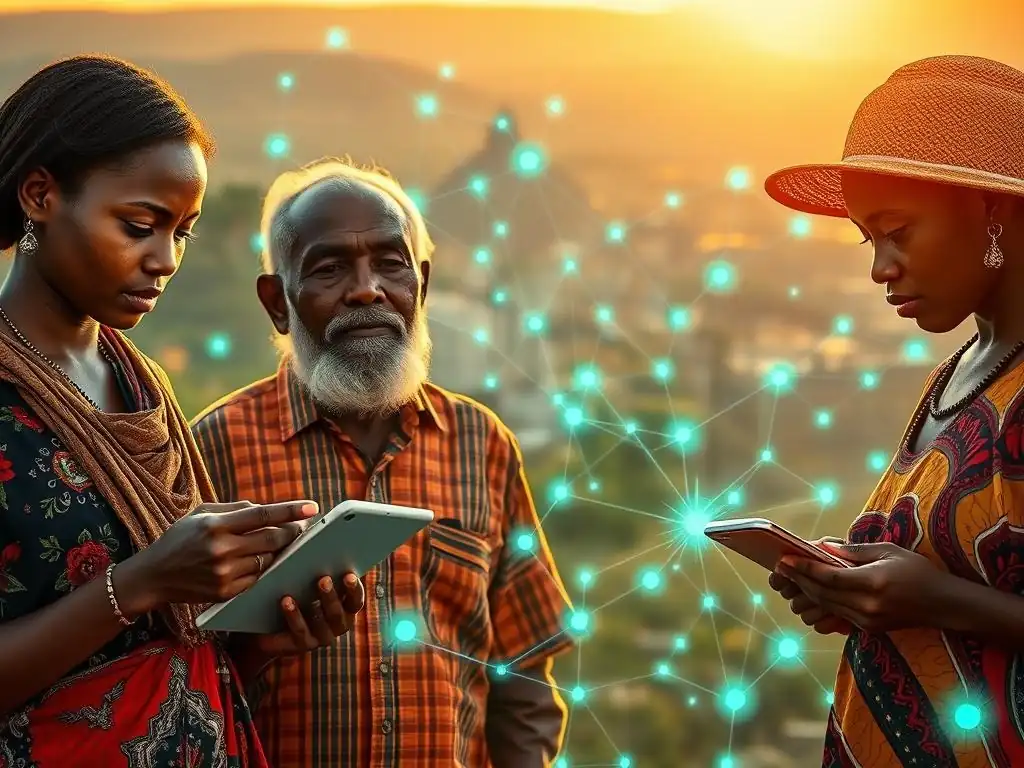
Welcome to Blockchain Trends, your go-to source for understanding the revolutionary impact of blockchain beyond the hype. Delve into a world where decentralized technology transforms industries and empowers individuals. This week, we're exploring the game-changing blockchain financial inclusion opportunities that are emerging. But how can Web3 truly bridge the gap and reach the unbanked? Discover the innovative solutions and challenges ahead as we unlock the potential of a more equitable financial future. Intrigued? Read on to learn more!
Web3 and the Potential for Financial Inclusion: Reaching the Unbanked
- Introduction: Blockchain's Promise for Expanding Financial Access
- The Unbanked Population: A Global Challenge and Missed Opportunity
- Web3: A Decentralized Solution for Financial Inclusion
- Key Web3 Technologies Driving Financial Inclusion
- Real-World Examples of Web3 Impacting Financial Inclusion
- Overcoming the Challenges to Widespread Web3 Adoption for Financial Inclusion
- The Future of Blockchain and Inclusive Finance
- Conclusion: Web3 as a Catalyst for a More Inclusive Financial Future
-
Frequently Asked Questions
- What is meant by financial inclusion in the context of blockchain and Web3?
- How can blockchain technology specifically address the needs of the unbanked?
- What are some examples of Web3 applications that promote financial inclusion?
- What are the potential regulatory challenges associated with using blockchain for financial inclusion?
- What are the future prospects for blockchain in promoting financial inclusion, and what factors will influence its success?
- Final Reflection: Embracing Decentralized Empowerment
Introduction: Blockchain's Promise for Expanding Financial Access
The global financial system, while vast and interconnected, leaves a significant portion of the world's population on the periphery. Access to basic financial services like savings accounts, credit, and insurance is often limited or non-existent for billions, particularly in emerging economies. This financial exclusion perpetuates cycles of poverty and hinders economic development.
However, the advent of blockchain technology and the subsequent evolution into Web3 present a transformative opportunity to dismantle these barriers. By offering decentralized, accessible, and often lower-cost alternatives to traditional financial infrastructure, Web3 is poised to unlock new avenues for financial inclusion, extending essential services to those previously underserved.
Blockchain's inherent properties of transparency, security, and immutability lay the groundwork for trustless systems that can operate outside the confines of traditional intermediaries. This is particularly relevant in regions where institutional trust is low or infrastructure is lacking. Exploring the manifold blockchain financial inclusion opportunities reveals potential solutions across lending, identity verification, payments, and asset management. The promise lies in creating a permissionless financial ecosystem where participation is not dictated by geographic location, income level, or existing credit history, but rather by access to technology and a willingness to engage with decentralized protocols.
The Unbanked Population: A Global Challenge and Missed Opportunity
Understanding the Scope of Financial Exclusion Worldwide
Financial exclusion remains a pressing global issue, impacting a substantial segment of the adult population. According to the World Bank's Global Findex Database 2021, approximately 1.4 billion adults worldwide remain unbanked, meaning they do not have an account at a financial institution or through a mobile money provider. While this figure represents a decrease from previous years, it still highlights a massive segment of humanity unable to fully participate in the formal economy. These individuals are often concentrated in developing countries, facing significant hurdles in accessing credit, saving securely, receiving remittances efficiently, or insuring against risks.
The implications of this exclusion are far-reaching. Without access to formal financial tools, individuals and small businesses struggle to grow, manage unexpected expenses, or invest in their future. They may rely on informal, often expensive, channels for borrowing or saving, making them vulnerable to predatory practices. Addressing this challenge by leveraging blockchain financial inclusion opportunities could unlock immense human potential and drive economic growth in underserved communities globally, providing secure and affordable alternatives where traditional systems fall short.
The Traditional Banking System's Limitations in Serving the Unbanked
Traditional banking systems are often ill-equipped to serve the unbanked population effectively. High operating costs associated with maintaining physical branches and extensive regulatory compliance make it economically unviable for banks to serve low-income individuals or those in remote areas. Minimum balance requirements, account fees, and complex documentation processes further exclude potential customers who may lack stable income, official identification, or reside far from banking infrastructure. Cross-border remittances, a lifeline for many families in developing nations, are frequently burdened by exorbitant fees and slow transaction times through traditional channels.
Furthermore, the reliance on credit history and collateral within traditional lending models systematically disadvantages those without prior formal financial interactions or significant assets. This creates a vicious cycle where the unbanked cannot access credit to build assets or businesses because they lack the initial financial footprint required by banks. These systemic limitations underscore the necessity for alternative models. Web3 technologies, particularly those leveraging blockchain for financial inclusion opportunities, offer a promising pathway by reducing reliance on intermediaries, lowering costs, and enabling new forms of identity and credit scoring.
Web3: A Decentralized Solution for Financial Inclusion
What is Web3 and How Does it Differ from Web2?
Web3 represents the next evolutionary stage of the internet, moving beyond the centralized, platform-controlled landscape of Web2. While Web2 is characterized by user-generated content hosted on centralized servers owned by large corporations (like social media platforms, cloud storage providers), Web3 envisions a decentralized web built on blockchain technology. In Web3, data and applications reside on distributed networks, giving users greater ownership and control over their digital assets and identity. Instead of interacting with single points of control, users engage directly with peer-to-peer networks and smart contracts.
The shift from Web2's centralized architecture to Web3's decentralized framework has profound implications, especially for financial services. In Web2, financial interactions are typically mediated by traditional institutions (banks, payment processors) that act as trusted third parties. Web3, powered by blockchain, allows for peer-to-peer transactions and financial operations without the need for these intermediaries. This fundamental difference enables the creation of permissionless systems that are inherently more open and accessible, presenting significant blockchain financial inclusion opportunities by removing traditional gatekeepers and lowering the barriers to entry for financial participation.
The Core Principles of Web3: Decentralization, Transparency, and Security
Decentralization is the foundational principle of Web3. Unlike centralized systems where power and data are concentrated in the hands of a few entities, Web3 networks are distributed across many participants. This eliminates single points of failure and reduces reliance on intermediaries, making systems more resilient and resistant to censorship or control by any single party. For financial inclusion, this means services can potentially be accessed directly by individuals, bypassing traditional institutions that may have historically excluded them.
Transparency and security are also paramount in Web3, stemming from the use of blockchain technology. Transactions and data on public blockchains are typically transparent and verifiable by anyone on the network, while cryptography ensures the integrity and security of these transactions.
Once recorded, data on a blockchain is immutable, meaning it cannot be altered or deleted, providing a high level of trust and auditability. These principles combine to create a financial environment that is not only more accessible but also potentially more trustworthy and secure than traditional systems for populations that may lack trust in existing institutions, thereby enhancing blockchain financial inclusion opportunities.
Key Web3 Technologies Driving Financial Inclusion
Decentralized Finance (DeFi) and its Role in Accessible Lending and Borrowing
Decentralized Finance, or DeFi, is a major pillar of Web3, aiming to recreate traditional financial services like lending, borrowing, trading, and asset management on blockchain networks, primarily Ethereum and other compatible chains. DeFi protocols operate via smart contracts – self-executing code on the blockchain – removing the need for banks or brokers. This permissionless nature means anyone with an internet connection and a crypto wallet can potentially access these services, regardless of their location, income, or credit score.
DeFi platforms offer significant blockchain financial inclusion opportunities. For instance, users can borrow funds by providing crypto assets as collateral, often with instant processing and without background checks or extensive paperwork required by traditional banks. While over-collateralization is common, newer protocols are exploring under-collateralized loans and reputation-based lending models suitable for individuals in emerging markets. Similarly, earning interest on savings is possible by depositing funds into liquidity pools, often yielding higher rates than traditional savings accounts, providing accessible wealth-building tools.
Blockchain-Based Identity Solutions: Enabling Access for the Unbanked
A significant barrier to financial inclusion is the lack of verifiable identity documents. Many individuals, particularly in developing countries or displaced populations, do not possess government-issued IDs required to open bank accounts or access formal services. Blockchain-based identity solutions, often referred to as Self-Sovereign Identity (SSI), offer a potential remedy. These systems allow individuals to create, own, and control their digital identity, storing verifiable credentials (like proof of address, education, or work history) securely on a blockchain or decentralized storage linked to their decentralized identifier (DID).
With a blockchain-based identity, individuals can selectively share verified information with service providers without revealing unnecessary personal data. This provides a portable, tamper-proof record that can serve as a form of digital passport, enabling access to financial services that previously required traditional identification. For example, a person could use their SSI to prove residency or income history to a DeFi lending protocol or a Web3-based microfinance service, unlocking crucial blockchain financial inclusion opportunities where traditional ID is unavailable.
Stablecoins: Providing a Stable and Accessible Digital Currency Alternative
Volatility in the cryptocurrency market is a major drawback for everyday transactions and savings, especially for low-income individuals who cannot afford significant fluctuations in value. Stablecoins address this by pegging their value to a stable asset, most commonly fiat currencies like the US dollar (e.g., USDT, USDC, DAI). This stability makes stablecoins practical for payments, remittances, and acting as a reliable store of value, particularly in regions experiencing high inflation or currency instability.
Stablecoins facilitate blockchain financial inclusion opportunities by providing a digital currency that combines the benefits of blockchain (fast, cheap, borderless transactions) with the stability of traditional money. An unbanked individual can receive remittances instantly via a mobile wallet holding stablecoins, avoiding the high fees and delays of traditional money transfer services. They can also save value in stablecoins without the risk of volatility associated with assets like Bitcoin, offering a secure digital alternative to holding cash or navigating unstable local currencies.
Mobile Wallets: Democratizing Access to Financial Services
While not exclusive to Web3, the proliferation of mobile phones and the development of user-friendly mobile crypto wallets are critical enablers for blockchain financial inclusion opportunities. Smartphones are increasingly common even in areas lacking traditional banking infrastructure. Mobile wallets provide a gateway for individuals to access Web3 applications, manage their digital assets (including cryptocurrencies and stablecoins), and interact with DeFi protocols directly from their phones.
These wallets function as digital bank accounts, allowing users to send, receive, and store value. Many Web3 wallets are non-custodial, meaning the user retains complete control over their private keys and funds, removing the need to trust a third party with their money. This empowers users and reduces dependency on traditional financial institutions. Coupled with low-cost transaction networks, mobile wallets make it feasible for individuals to engage in micro-transactions, access micro-lending, and participate in the digital economy using Web3 services, significantly expanding the reach of financial services.
Real-World Examples of Web3 Impacting Financial Inclusion

Tala: Providing Financial Services in Emerging Markets
Tala is a mobile-first financial technology company that utilizes alternative data points to provide instant credit and financial services to underserved populations in emerging markets, including countries like Kenya, the Philippines, Mexico, and India. While not purely a decentralized Web3 protocol, Tala leverages aspects of digital technology and data analysis to reach individuals typically excluded by traditional banks due to lack of credit history or formal identification.
Tala's model assesses creditworthiness based on smartphone data, such as transaction history, bill payments, and even social connections (with user permission), rather than relying solely on traditional credit bureaus. This approach has enabled them to disburse millions of dollars in loans to customers who were previously considered "unscoreable." By using technology to create alternative financial identities and access points, Tala demonstrates a hybrid approach that bridges traditional finance and digital innovation, highlighting practical blockchain financial inclusion opportunities through data-driven credit assessment.
Celo: Enabling Access to DeFi for Mobile Users
Celo is a blockchain network designed specifically for mobile users, aiming to bring the benefits of decentralized finance to anyone with a smartphone, regardless of their technical expertise or location. Its design focuses on ease of use, fast transaction speeds, and low costs, making it suitable for everyday payments and financial interactions in regions with limited internet connectivity or expensive data.
Celo supports stablecoins pegged to fiat currencies (like cUSD and cEUR) and aims to make sending money as easy as sending a text message by using phone numbers as public keys. The platform hosts a growing ecosystem of DeFi applications accessible via mobile wallets, offering services like lending, borrowing, and saving. By prioritizing mobile accessibility and stable value, Celo directly tackles key barriers to financial inclusion, showcasing how blockchain financial inclusion opportunities can be delivered through user-friendly mobile interfaces and relevant asset types.
Worldcoin: Aims to create a globally inclusive identity and financial network.
Worldcoin is a project with an ambitious goal: to create a global identity and financial network accessible to everyone. At its core is the concept of World ID, a privacy-preserving digital identity based on proof of personhood, verified by scanning an individual's iris using a specialized device called the Orb. The idea is to provide a unique, verifiable identity for every human, distinguishing them from bots online and enabling participation in decentralized systems.
Linked to the World ID is the Worldcoin cryptocurrency (WLD), which is distributed to verified users. The project posits that by providing a verifiable digital identity and a share of a new digital currency, it can facilitate access to the digital economy and financial services for billions, including the unbanked. While controversial due to privacy concerns and the reliance on biometric scanning, Worldcoin represents a significant, large-scale attempt to leverage a unique form of digital identity verification to unlock widespread blockchain financial inclusion opportunities and potentially establish a baseline for global economic participation.
Overcoming the Challenges to Widespread Web3 Adoption for Financial Inclusion
Regulatory Uncertainty and the Need for Clear Guidelines
A significant hurdle for the widespread adoption of Web3 for financial inclusion is the prevailing regulatory uncertainty in many jurisdictions. Governments and financial regulators worldwide are grappling with how to classify and oversee decentralized technologies, cryptocurrencies, and DeFi protocols. This lack of clear guidelines creates a complex and often prohibitive environment for both users and developers of Web3 financial services. Potential users, especially those new to digital finance, may be hesitant to engage with platforms operating in a legal gray area, fearing potential loss of funds or legal repercussions.
Furthermore, without clear regulatory frameworks, it is difficult for Web3 projects focused on financial inclusion to scale and integrate with existing financial systems where necessary. Banks and traditional institutions are reluctant to partner with or build upon technologies that lack defined legal status. This uncertainty stifles innovation and investment in solutions specifically designed for the unbanked. Establishing clear, proportionate regulations that protect consumers while fostering innovation is crucial to realizing the full potential of blockchain financial inclusion opportunities.
Addressing Scalability and Transaction Fee Concerns
While many newer blockchain networks boast high transaction speeds and low costs, some of the most established networks, like the original Ethereum chain before recent upgrades, have faced significant challenges with scalability and high transaction fees (gas fees), particularly during periods of high network congestion. High fees can make micro-transactions, remittances of small amounts, or frequent interactions with DeFi protocols prohibitively expensive, negating the cost-saving benefits that Web3 aims to offer the unbanked.
Efforts to address this include the development of Layer 2 scaling solutions (e.g., rollups on Ethereum), which process transactions off the main chain before settling them in batches, drastically reducing costs and increasing throughput. Alternative blockchain networks designed for scalability and low fees (like Solana, Polygon, BSC, Celo) are also gaining traction. Overcoming these technical limitations is vital to ensure that Web3 financial services remain affordable and efficient enough for daily use by populations in low-income settings, thereby making blockchain financial inclusion opportunities genuinely accessible.
Bridging the Digital Divide: Improving Access to Technology and Education
Access to Web3 services inherently requires access to technology – primarily smartphones and the internet. The digital divide, the gap between those who have access to modern information and communications technology and those who do not, remains a significant barrier to achieving global financial inclusion through Web3. While mobile penetration is high in many developing regions, consistent, affordable internet access and ownership of suitable devices are not universal.
Beyond infrastructure, digital literacy and education are critical. Understanding how to use a crypto wallet, interact with a DeFi protocol, secure private keys, and navigate the complexities of the decentralized world requires a level of technical understanding that is not yet widespread, particularly among older generations or those in rural areas. Initiatives focused on digital literacy training, providing affordable devices, and developing user-friendly interfaces are essential to ensure that the potential blockchain financial inclusion opportunities offered by Web3 can be accessed and utilized safely and effectively by the target population.
Mitigating Risks Associated with Cryptocurrency
The cryptocurrency space, including aspects of Web3 and DeFi, is not without risks. Market volatility, while somewhat mitigated by stablecoins, still exists for other digital assets. Users are also exposed to risks from smart contract bugs, hacks, phishing attacks, and scams. Unlike traditional banking, where deposits are often insured, users of decentralized protocols bear a higher degree of responsibility for the security of their funds and have limited recourse if something goes wrong.
For vulnerable populations, losing even a small amount of money can be devastating. Therefore, mitigating these risks is paramount for building trust and encouraging adoption for financial inclusion. This involves developing more secure and audited protocols, improving wallet security features, implementing user education programs on security best practices, and potentially exploring decentralized insurance mechanisms. Addressing these risks responsibly is key to ensuring that Web3 technologies serve as a safe and reliable pathway to blockchain financial inclusion opportunities rather than exposing users to new vulnerabilities.
The Future of Blockchain and Inclusive Finance
Predictions for Web3's Expanding Role in Financial Inclusion
Looking ahead, the role of Web3 in expanding financial inclusion is expected to grow significantly. As the technology matures, becomes more user-friendly, and addresses current limitations like scalability and cost, its potential to reach the unbanked will become even more pronounced. We can anticipate the development of more tailored Web3 applications designed specifically for the needs of low-income populations, focusing on micro-lending, accessible savings tools, affordable remittances, and decentralized insurance products covering risks relevant to these communities (e.g., crop failure, health emergencies).
Further integration with mobile money systems and local payment methods will lower the entry barrier, allowing users to seamlessly transition between traditional and decentralized finance. The maturation of self-sovereign identity solutions will empower individuals to leverage their digital footprint to access services, bypassing traditional identity requirements. These advancements suggest that blockchain financial inclusion opportunities will become more concrete and widespread, moving from theoretical potential to practical implementation for millions globally.
The Convergence of Traditional Finance and Decentralized Finance (DeFi)
Rather than a complete replacement of traditional finance, the future likely involves a convergence between TradFi and DeFi. Traditional financial institutions are increasingly exploring blockchain technology and the potential of decentralized protocols. This convergence could manifest in various ways, such as banks using blockchain for more efficient cross-border payments, integrating stablecoins into their offerings, or even partnering with DeFi protocols to extend services to new customer segments.
This hybrid model could leverage the strengths of both worlds: the regulatory compliance, stability, and established infrastructure of traditional finance combined with the accessibility, efficiency, and innovation of DeFi. Such collaboration could significantly accelerate blockchain financial inclusion opportunities by building bridges for the unbanked to access services that are both cutting-edge and instill a degree of familiarity and trust through association with regulated entities, expanding the overall financial ecosystem.
The Importance of Collaboration Between Stakeholders to Achieve Financial Equity
Achieving true financial equity through Web3 requires concerted effort and collaboration among a diverse group of stakeholders. This includes Web3 developers building the underlying protocols and applications, governments and regulators establishing clear and enabling frameworks, non-profit organizations and NGOs focusing on financial literacy and digital education, telecommunications companies improving connectivity, and traditional financial institutions exploring integration points.
No single entity can solve the complex challenge of financial exclusion alone. Open dialogue, shared knowledge, and coordinated strategies are essential to build an inclusive financial ecosystem. By working together, these stakeholders can ensure that Web3 technologies are developed and deployed responsibly, addressing the specific needs and challenges of the unbanked and maximizing the transformative potential of blockchain financial inclusion opportunities for a more equitable global future.
Conclusion: Web3 as a Catalyst for a More Inclusive Financial Future
Web3, powered by blockchain technology, holds immense potential as a catalyst for transforming global financial inclusion. By offering decentralized, transparent, and secure alternatives to traditional financial systems, it provides a pathway to extend essential services to the 1.4 billion unbanked adults worldwide. Technologies like DeFi, blockchain-based identity, stablecoins, and mobile wallets are dismantling historical barriers related to cost, access, and identity, creating unprecedented blockchain financial inclusion opportunities.
While significant challenges remain, including regulatory uncertainty, scalability issues, the digital divide, and mitigating risks, ongoing innovation and collaborative efforts are paving the way for wider adoption. Real-world examples demonstrate the tangible impact Web3-aligned approaches can have. As the technology matures and stakeholders collaborate, Web3 is poised to play a crucial role in building a more equitable and accessible financial future, ensuring that participation in the global economy is a possibility for everyone, everywhere.
Frequently Asked Questions
What is meant by financial inclusion in the context of blockchain and Web3?
Financial inclusion refers to providing access to affordable and usable financial services for individuals and businesses who are currently excluded from the formal financial system. Web3 technologies aim to achieve this through decentralized and transparent platforms.
How can blockchain technology specifically address the needs of the unbanked?
Blockchain offers solutions like permissionless access to digital wallets, decentralized lending platforms, and secure cross-border payments, all without requiring traditional banking infrastructure. This allows the unbanked to participate in the global digital economy.
What are some examples of Web3 applications that promote financial inclusion?
Examples include DeFi lending platforms offering collateralized loans to those without credit scores, blockchain-based microfinance initiatives, and decentralized identity solutions enabling access to financial services. These initiatives aim to provide fair and transparent financial opportunities.
What are the potential regulatory challenges associated with using blockchain for financial inclusion?
Regulatory uncertainty surrounding digital assets and DeFi poses challenges. Clear regulatory frameworks are needed to protect consumers, prevent illicit activities, and foster innovation in the blockchain financial inclusion space.
What are the future prospects for blockchain in promoting financial inclusion, and what factors will influence its success?
The future looks promising, but success depends on addressing scalability issues, enhancing user experience, and fostering collaboration between blockchain developers, financial institutions, and policymakers. Widespread adoption and effective regulation are crucial.
Final Reflection: Embracing Decentralized Empowerment
The promise of blockchain financial inclusion opportunities is no longer a distant dream, but a tangible possibility rapidly unfolding before us. The insights shared throughout this article highlight the transformative potential of Web3 to bridge the gap for the unbanked, offering access to financial services previously out of reach. The momentum is building, and the implications for global economic empowerment are profound.
The journey towards a more equitable financial landscape is far from over, but the decentralized nature of Web3 offers a unique pathway. Witnessing the early successes of blockchain-based solutions in empowering marginalized communities fuels a deep sense of hope and responsibility. Financial inclusion is not just about access to banking services; it's about empowering individuals to participate fully in the economy and improve their lives.
This quote encapsulates the core motivation driving the exploration of blockchain's potential.
As we move forward, let us not lose sight of the human element at the heart of this technological revolution. Consider how you can contribute to fostering a more inclusive and accessible financial future. Explore, learn, and advocate for the responsible development and implementation of Web3 technologies. The power to shape a more equitable world lies within our collective action.
Okay, I'm ready. Please provide the article content so I can craft a compelling call to action for the end. I need to understand the main themes and arguments of the article to create relevant and engaging suggestions. Once you share the content, I'll deliver the complete CTA in the requested format.
Leave a Reply