
Ledger vs Trezor vs KeepKey: The Wallets Behind the Crypto Revolution

Welcome to Blockchain Trends, your go-to source for unraveling the transformative power of blockchain!
Ever wondered how to truly secure your digital assets in this revolutionary landscape? Dive into our latest article, where we dissect the crucial world of blockchain security hardware wallets, pitting Ledger, Trezor, and KeepKey against each other. Discover the wallets that are shaping the future of crypto security and find out which one best safeguards your digital future. Ready to unlock the secrets to protecting your crypto revolution?
- Introduction: The Need for Blockchain Security Hardware Wallets
- Understanding Hardware Wallets: Your First Line of Crypto Security
-
Frequently Asked Questions
- What are Blockchain security hardware wallets, and why are they important?
- How do Ledger, Trezor, and KeepKey differ in their security features?
- Besides security, what other factors should I consider when choosing between Ledger, Trezor, and KeepKey?
- How do these hardware wallets protect against phishing attacks?
- What happens if I lose my Ledger, Trezor, or KeepKey?
- Final Reflection: Securing the Future of Digital Ownership
- Unlock Your Crypto Security: Take Control Now!
Introduction: The Need for Blockchain Security Hardware Wallets
Why Secure Crypto Storage is Paramount
The advent of blockchain technology and cryptocurrencies has ushered in an era of unprecedented financial autonomy, allowing individuals to directly control their digital assets without intermediaries. However, this power comes with significant responsibility, particularly regarding security. Unlike traditional banking where institutions safeguard funds, holding cryptocurrencies often means you are solely responsible for protecting your private keys – the cryptographic codes that prove ownership and authorize transactions.
Losing control of these keys, or having them compromised, can lead to the irreversible loss of your entire digital wealth. The sheer value currently held in cryptocurrencies, often fluctuating into the hundreds of billions or even trillions of dollars globally, underscores the critical need for robust security measures beyond simple software wallets or exchange storage.
The decentralized nature of blockchain, while empowering, also presents unique challenges. Transactions are typically irreversible; once signed and broadcast, there's no central authority to call to reverse a mistaken transfer or recover funds stolen in a hack. This stark reality highlights the necessity of protecting the point of control – the private key – with the highest level of security.
Relying on software wallets, which reside on internet-connected devices susceptible to malware and phishing, or trusting third-party exchanges, which are centralized honeypots for hackers and subject to operational risks (as seen in numerous historical breaches resulting in hundreds of millions of dollars in losses), simply isn't adequate for significant holdings. This is where blockchain security hardware wallets become indispensable, offering a vital layer of protection against the prevalent online threats.
Introducing Ledger, Trezor, and KeepKey in the Crypto Revolution
In the landscape of digital asset management, blockchain security hardware wallets have emerged as a fundamental pillar for safeguarding private keys. Among the most recognized and trusted names in this critical sector are Ledger, Trezor, and KeepKey. These devices represent a paradigm shift from relying on internet-connected software or custodial services, providing individuals with a tangible and secure method to maintain sovereignty over their crypto assets. They are specifically designed with security as the primary focus, isolating the sensitive private keys from vulnerable online environments and potential cyber threats that plague desktop and mobile wallets.
Ledger, Trezor, and KeepKey have collectively played a significant role in enabling wider adoption of cryptocurrency by providing users with the confidence that their investments are protected against common forms of theft. While each brand offers distinct models with varying features, supported cryptocurrencies, and user interfaces, their core function remains the same: to facilitate secure transaction signing offline.
By requiring physical confirmation on the device for transactions, they act as a powerful deterrent against remote hacking attempts. Understanding the technology and features offered by these leading blockchain security hardware wallets is crucial for anyone serious about securing their position in the ongoing crypto revolution.
Understanding Hardware Wallets: Your First Line of Crypto Security
How Hardware Wallets Protect Your Private Keys
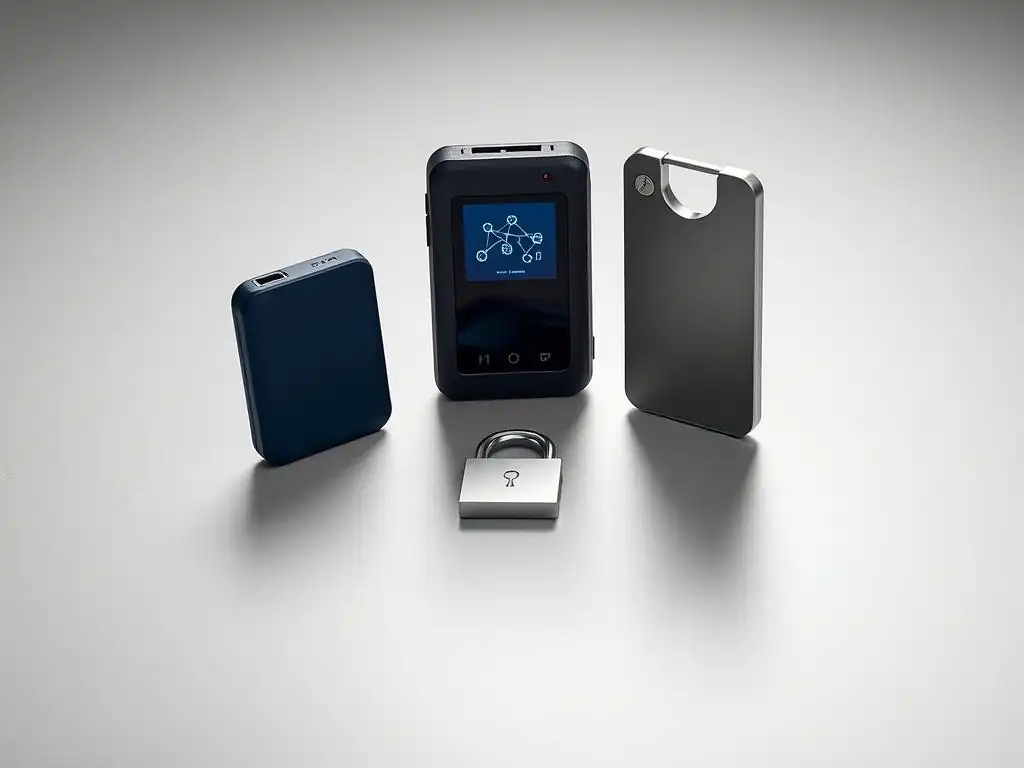
The fundamental principle behind the security of hardware wallets lies in their ability to isolate the private keys from any device connected to the internet. When you initialize a hardware wallet, it generates your private keys (and the corresponding public keys/addresses) offline, often using a cryptographically secure random number generator. These keys are then stored within a secure chip or isolated environment on the device itself.
When you want to send cryptocurrency, you connect the hardware wallet to your computer or smartphone, but the private key never leaves the device. The transaction details are sent to the wallet, which then signs the transaction internally using the private key. Only the signed transaction is sent back to the connected device and broadcast to the blockchain network.
This "air-gapped" signing process is the core security mechanism. Even if the computer or smartphone you connect the hardware wallet to is riddled with malware, the private key remains inaccessible to the malicious software. The malware might see the transaction details being sent to the wallet or the signed transaction coming back, but it cannot extract the private key needed to compromise your funds.
Furthermore, hardware wallets typically require physical confirmation on the device itself (pressing buttons, tapping the screen) to authorize a transaction. This physical requirement prevents remote attackers from initiating and signing transactions without your direct interaction, adding another crucial layer of defense against sophisticated phishing or remote access attacks. Protecting your private keys with a blockchain security hardware wallet effectively removes the most significant attack vector for software-based wallets.
Risks of Software Wallets and Exchanges
While convenient for small amounts or frequent transactions, software wallets (like desktop, mobile, or web wallets) inherently carry higher security risks because the private keys are stored on devices connected to the internet. These devices are susceptible to a wide array of cyber threats, including malware designed to steal private keys (keyloggers, clipboard hijackers), phishing attacks tricking users into revealing their seed phrase or private key, and vulnerabilities within the wallet software itself.
A single piece of malicious software on your computer or phone could potentially compromise all your digital assets held in a software wallet. For instance, reports indicate millions of dollars lost annually to scams and malware targeting users of less secure wallet solutions.
Holding cryptocurrency on exchanges, while convenient for trading, also exposes users to significant counterparty risk. When you leave assets on an exchange, you don't hold the private keys; the exchange does. This means you are trusting the exchange's security infrastructure, which, despite best efforts, can be a target for sophisticated hackers.
Historically, major exchange breaches like Mt. Gox (resulting in the loss of hundreds of millions in Bitcoin value in 2014), Coincheck (approximately $530 million in NEM stolen in 2018), and the Binance hack (around $40 million in Bitcoin stolen in 2019) demonstrate the scale of potential losses when relying on third-party custodians. These examples underscore why storing significant crypto holdings offline with blockchain security hardware wallets is widely considered a best practice for minimizing exposure to online threats and exchange vulnerabilities.
The Role of
Frequently Asked Questions
What are Blockchain security hardware wallets, and why are they important?
Hardware wallets are physical devices that store your private keys offline, making them much more secure than software wallets which are vulnerable to online attacks. They're crucial for protecting your crypto assets from theft.
How do Ledger, Trezor, and KeepKey differ in their security features?
While all offer hardware security, Ledger uses a secure element chip, Trezor relies on open-source security, and KeepKey uses a secure enclave, each with different trade-offs. These approaches mean each has its own advantages and disadvantages to consider.
Besides security, what other factors should I consider when choosing between Ledger, Trezor, and KeepKey?
Consider the user interface, the supported cryptocurrencies, the price point, and the device size and portability. These factors influence ease of use and functionality.
How do these hardware wallets protect against phishing attacks?
Hardware wallets require physical confirmation on the device for transactions, preventing unauthorized transfers even if your computer is compromised by a phishing scam. This adds a vital layer of protection.
What happens if I lose my Ledger, Trezor, or KeepKey?
You can recover your crypto assets using the seed phrase generated when you initially set up the device, assuming you have stored it securely and offline. This phrase is your backup key to your crypto.
Final Reflection: Securing the Future of Digital Ownership
The exploration of Ledger, Trezor, and KeepKey reveals more than just a comparison of hardware wallets; it highlights the critical importance of self-custody in the burgeoning world of cryptocurrency. As digital assets become increasingly integrated into our financial lives, the ability to securely manage and control our private keys is paramount. This isn't just about protecting investments; it's about safeguarding our financial freedom and participating in a decentralized future.
The rise of blockchain security hardware wallets has profoundly impacted the cultural and social landscape, empowering individuals to take ownership of their digital wealth. This shift towards self-sovereignty is a powerful testament to the growing distrust in centralized institutions and the desire for greater control over our financial destinies. Not your keys, not your coins
isn't just a catchy phrase; it's a fundamental principle that underscores the importance of securing your private keys with a hardware wallet.
Now, as you navigate the exciting and sometimes daunting world of cryptocurrency, consider the profound responsibility that comes with digital ownership. Choose wisely, educate yourself, and embrace the power of self-custody. The future of finance is in your hands, and by prioritizing security, you can contribute to a more decentralized, secure, and equitable financial system for all.
Unlock Your Crypto Security: Take Control Now!
Thank you for exploring the critical world of hardware wallets and how they safeguard your digital assets. We hope this comparison of popular wallets has empowered you with the knowledge to make an informed decision. Now, let's put that knowledge into action!
Ready to secure your crypto future? Here's how you can take the next step:
- Choose and Purchase Your Ideal Hardware Wallet: Based on your needs and risk tolerance, select a reputable brand. Order it today and begin taking control of your private keys!
- Explore Advanced Security Practices: Research multi-signature wallets and seed phrase protection methods to further fortify your crypto holdings beyond just the hardware wallet itself.
- Share Your Wallet Journey: Let other readers know which wallet you chose and why in the comments below. Your experience could help others make the right decision too!
What security measure will you implement first to drastically improve the safety of your cryptocurrency? Let's discuss!
Leave a Reply