
The Technology Behind Real Estate Tokenization: Blockchain, Smart Contracts, and Oracles


Welcome to Blockchain Trends, your compass in the rapidly evolving world of decentralized technologies. Beyond the hype of cryptocurrencies, we delve into the real-world applications transforming industries.
Intrigued by the possibilities of fractional ownership and increased liquidity? Today, we unlock the secrets behind blockchain real estate tokenization benefits, exploring how blockchain, smart contracts, and oracles are revolutionizing property investment. Discover the future of real estate, and see how this technology is reshaping the landscape.
- Understanding Blockchain Real Estate Tokenization Benefits: An Introduction to the Technology
- Core Technologies Driving Real Estate Tokenization on Blockchain
- Smart Contracts: Automating Real Estate Transactions and Ownership
- Oracles: Bridging Real-World Data with Blockchain for Real Estate
- Integration of Blockchain, Smart Contracts, and Oracles in Real Estate Tokenization
- Exploring Advanced Blockchain Real Estate Tokenization Benefits
- Future Trends and Innovations in Blockchain Real Estate Tokenization Technology
- Conclusion: Maximizing Blockchain Real Estate Tokenization Benefits Through Technology Innovation.
-
Frequently Asked Questions
- What are the primary benefits of using blockchain technology for real estate tokenization?
- How do smart contracts function within a real estate tokenization platform?
- What role do oracles play in blockchain real estate tokenization?
- Beyond cryptocurrencies, what other enterprise applications can benefit from blockchain technology in the real estate industry?
- How does regulation impact the adoption and growth of blockchain real estate tokenization?
- Final Reflection: Unlocking Real Estate's Future
- Unveil Your Real Estate Future!
Understanding Blockchain Real Estate Tokenization Benefits: An Introduction to the Technology
What Is Blockchain Real Estate Tokenization?
Blockchain real estate tokenization is the process of converting traditional real estate assets, such as buildings or land parcels, into digital tokens on a blockchain network. Each token represents a fractional ownership stake in the underlying property. This process leverages distributed ledger technology to create a digital representation of property rights and interests, making real estate ownership more accessible and liquid. Instead of buying an entire building or a large share requiring significant capital, investors can purchase tokens representing smaller, manageable fractions.
This transformation from illiquid physical assets to divisible digital tokens unlocks significant potential. By issuing tokens on a blockchain, property owners and developers can access a broader pool of investors, potentially reducing the time and cost associated with traditional real estate transactions. For example, a property valued at $50 million could be divided into 50 million tokens, each representing $1 of equity.
This fractionalization democratizes access to real estate investment, allowing individuals to invest with smaller amounts, previously only feasible for institutional investors. The fundamental shift lies in moving ownership records and transaction processes onto a secure, transparent, and immutable digital ledger.
Overview of Benefits and Impact on the Real Estate Market
The implementation of blockchain technology for real estate tokenization offers a multitude of benefits that stand to significantly impact the traditional real estate market. One of the most frequently cited blockchain real estate tokenization benefits is increased liquidity. Historically, real estate has been one of the most illiquid asset classes, with transactions often taking months to complete.
Tokenization allows for 24/7 trading of property shares on digital marketplaces, dramatically reducing transaction times and making it easier for investors to enter and exit positions. This enhanced liquidity can also lead to more efficient price discovery as assets can be traded more frequently.
Beyond liquidity, other compelling blockchain real estate tokenization benefits include enhanced transparency, reduced transaction costs, and greater security. Blockchain's inherent transparency means all transactions are recorded on a public or permissioned ledger, visible to all participants (depending on the blockchain type), reducing information asymmetry. Costs associated with intermediaries like brokers, lawyers, and escrow agents can be significantly reduced or even eliminated through automated processes.
Furthermore, the cryptographic security of blockchain makes fraudulent activities, such as double-selling property shares, extremely difficult. Some estimates suggest that tokenization could reduce transaction costs by as much as 50% compared to traditional methods, while settlement times could shrink from weeks or months to mere days or even hours for certain aspects of the transaction.
Core Technologies Driving Real Estate Tokenization on Blockchain
Blockchain Technology Fundamentals for Real Estate Applications
At its core, blockchain is a decentralized, distributed ledger that records transactions across many computers. For real estate tokenization, this means that property ownership records are not stored in a single, vulnerable database but are spread across a network. Each block in the chain contains a batch of transactions, and once added, it is linked to the previous block using cryptographic hashes, creating an immutable chain. This structure ensures that once a transaction (like transferring tokenized property ownership) is recorded, it cannot be altered or deleted without consensus from the network participants, providing a high level of data integrity.
The application of blockchain fundamentals to real estate offers a robust foundation for tokenization. The decentralized nature mitigates the risk of a single point of failure or control, which is common in traditional centralized land registries. The immutability of the ledger provides a tamper-proof history of ownership transfers, property liens, and other relevant data points associated with the tokenized asset.
Furthermore, the transparency inherent in many blockchain networks allows stakeholders to verify transaction details independently, fostering trust and reducing disputes. This technological shift moves real estate data from fragmented, often manual, and opaque systems to a unified, verifiable digital platform.
Role of Distributed Ledger Technology in Property Tokenization
Distributed Ledger Technology (DLT), which is the underlying technology behind blockchain, plays a crucial role in property tokenization by providing a single, shared source of truth for ownership and transaction data. In the context of real estate, this means that instead of multiple parties (buyers, sellers, banks, lawyers, land registries) each maintaining their own records, all relevant information is recorded and synchronized across the distributed network. This eliminates discrepancies and reduces the potential for errors or fraud that can arise when reconciling disparate databases.
The distributed nature also enhances resilience and availability. If one node in the network goes offline, the ledger remains accessible and operational via other nodes. For property tokenization platforms, DLT facilitates the secure issuance, management, and transfer of digital tokens representing real estate equity. It provides the infrastructure needed to track fractional ownership stakes accurately and transparently. By distributing the ledger, the system becomes inherently more resistant to censorship and manipulation, ensuring that the digital representation of property rights is secure and reliable.
How Blockchain Enhances Transparency and Security in Real Estate
Blockchain's inherent design significantly enhances transparency and security within the real estate sector, delivering key blockchain real estate tokenization benefits. Transparency is improved because transaction details, including ownership history and asset information linked to tokens, are recorded on a public or permissioned ledger accessible to authorized parties. This public record reduces the need for extensive due diligence on historical ownership claims, as the entire chain of title is verifiable on the blockchain. While specific personal data might be permissioned, the transaction flow and ownership trail are clear.
Security is paramount in real estate, and blockchain provides robust cryptographic security measures. Each transaction is cryptographically signed, ensuring its authenticity and integrity. The distributed nature prevents a single point of attack, making it incredibly difficult for malicious actors to alter records.
Furthermore, the consensus mechanisms used by blockchains (like Proof-of-Stake or Proof-of-Work) require agreement among multiple participants before a transaction is added to the ledger, preventing unauthorized changes. This combination of verifiable transaction history and cryptographic security creates a highly secure environment for managing tokenized real estate assets, mitigating risks associated with fraud and title disputes that plague traditional systems.
Smart Contracts: Automating Real Estate Transactions and Ownership
Definition and Functionality of Smart Contracts in Tokenized Real Estate
Smart contracts are self-executing contracts with the terms of the agreement directly written into code. They run on a blockchain and automatically execute predefined actions when specific conditions are met. In the context of tokenized real estate, smart contracts are fundamental to automating various aspects of property ownership and transactions. They can encode the rules governing the tokens, such as dividend distribution (rent), voting rights for property management decisions, or the terms of a sale.
For instance, a smart contract could be programmed to automatically distribute rental income proportionally to all token holders on a specific date, provided the rent payment is received into a designated blockchain address. Another smart contract might handle the transfer of tokens from a seller to a buyer and the simultaneous release of funds from an escrow account when all conditions (like identity verification or regulatory checks) are confirmed by external oracles. These coded agreements remove the need for intermediaries to manually execute these steps, reducing delays and potential human error.
Benefits of Using Smart Contracts for Real Estate Tokenization
The use of smart contracts brings substantial benefits to blockchain real estate tokenization, primarily centered around efficiency, cost reduction, and reliability. By automating processes that traditionally require manual intervention from lawyers, escrow agents, and administrators, smart contracts significantly speed up transactions. A process that might take weeks or months in traditional real estate could potentially be completed in days or even hours through automated smart contracts, provided all necessary external data is available.
Furthermore, smart contracts reduce counterparty risk because their execution is deterministic and based purely on the code and triggered conditions, not on the goodwill or availability of individuals. Once deployed and verified, the contract will execute as intended, removing uncertainty. This automation also leads to considerable cost savings by minimizing or eliminating fees paid to intermediaries. The reliability and transparency of the code (which can often be audited) contribute to building trust among participants in the tokenized real estate ecosystem, enhancing the overall blockchain real estate tokenization benefits.
Examples of Smart Contract Use Cases in Property Management and Sales
Smart contracts have diverse applications in managing and selling tokenized real estate. In property management, they can automate the distribution of rental income to token holders based on their proportional ownership. They can also manage the collection and allocation of funds for maintenance or property tax payments, ensuring that costs are fairly distributed and paid in a timely manner. For properties with multiple owners, smart contracts can facilitate voting on management decisions, such as approving budgets or selecting property managers, with votes weighted according to token holdings.
In the realm of sales and transfers, smart contracts are used to automate the exchange of tokens for payment. A common pattern involves a smart contract holding the tokens in escrow until the buyer's payment is confirmed on the blockchain.
Once the payment is verified, the smart contract automatically releases the tokens to the buyer and the funds to the seller. More complex smart contracts can also handle conditional sales, incorporating external data from oracles to verify compliance with regulatory requirements or the fulfillment of specific contractual obligations before executing the final transfer, demonstrating concrete blockchain real estate tokenization benefits in action.
Oracles: Bridging Real-World Data with Blockchain for Real Estate
What Are Blockchain Oracles and Their Importance in Tokenization?
Blockchain networks, by design, are isolated systems; they cannot directly access data from the outside world. This is where blockchain oracles come in. An oracle is a third-party service that connects smart contracts on a blockchain to external information, such as real-world data feeds, events, or systems. In the context of real estate tokenization, oracles are crucial because many essential aspects of property management and transactions rely on data that originates off-chain.
The importance of oracles in real estate tokenization cannot be overstated. Without them, smart contracts would be unable to react to real-world conditions necessary for their execution. For example, a smart contract distributing rental income needs to know if the rent has been paid into a traditional bank account or if a property's valuation has changed. Oracles provide the necessary link, feeding accurate and reliable off-chain data to the smart contracts, thereby enabling automated processes that reflect real-world conditions and unlocking the full potential of blockchain real estate tokenization benefits.
Types of Oracles Used in Real Estate Tokenization Platforms
Various types of oracles can be employed in real estate tokenization platforms, depending on the specific data requirements. Software oracles retrieve information from online sources, such as property databases, market data APIs for valuation updates, or payment gateways to confirm rent or sale proceeds. Hardware oracles can fetch data from physical devices, although their application in real estate tokenization is less common than software oracles, perhaps relevant for verifying physical property conditions or access in the future.
Inbound oracles bring data from the external world onto the blockchain, which is essential for feeding information like property valuations, rental payment confirmations, or regulatory compliance checks to smart contracts. Outbound oracles allow smart contracts to send information or commands to external systems, though this is less frequently used in basic tokenization but could be relevant for triggering actions in traditional financial systems based on blockchain events.
Furthermore, different oracle models exist, such as centralized oracles (single data source) or decentralized oracles (multiple independent sources aggregated for consensus), with decentralized models generally preferred for increased security and reliability in high-value applications like real estate.
Ensuring Data Accuracy and Reliability Through Oracles
Ensuring the accuracy and reliability of data provided by oracles is critical, as the smart contract's execution depends entirely on this external information. If an oracle provides incorrect or malicious data (known as the "oracle problem"), it can lead to unintended or harmful outcomes for the tokenized asset and its owners. Therefore, robust oracle mechanisms are essential to maintain the integrity of blockchain real estate tokenization.
Strategies to ensure data accuracy include using multiple independent oracle sources and aggregating their data to reach a consensus. Decentralized oracle networks, like Chainlink, employ this approach, utilizing a network of nodes to fetch data from various sources and validate it before feeding it to a smart contract.
Reputation systems for oracles, where their historical accuracy is tracked, and economic incentives or penalties (staking mechanisms) can also be implemented to encourage honest behavior and reliable data provision. Implementing such secure and reliable oracle solutions is paramount to fully realizing the promised blockchain real estate tokenization benefits related to automated processes and trust.
Integration of Blockchain, Smart Contracts, and Oracles in Real Estate Tokenization
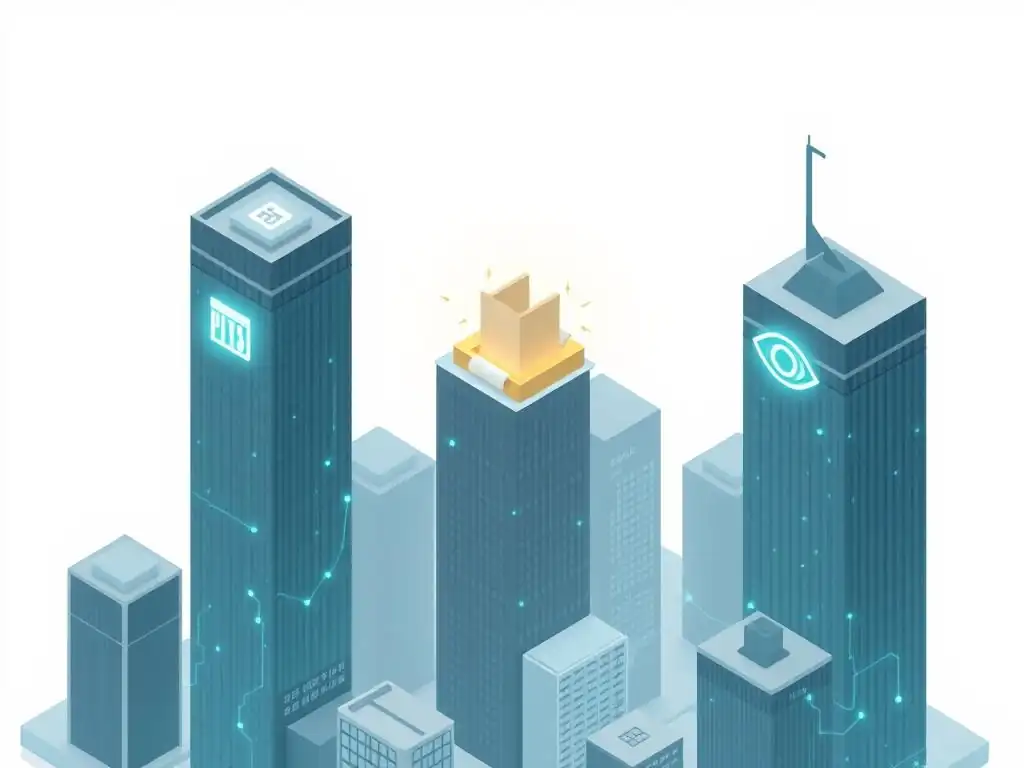
How These Technologies Work Together to Create Efficient Tokenized Assets
The true power of blockchain real estate tokenization emerges from the seamless integration of blockchain technology, smart contracts, and oracles. Blockchain provides the secure, transparent, and immutable ledger for recording ownership of the digital tokens representing property shares. It acts as the foundational layer, ensuring the integrity and history of the tokenized asset.
Smart contracts layer on top of the blockchain, automating the complex logic associated with managing and transferring these tokenized assets. They encode the rules of ownership, distribution of income, voting rights, and the conditions for transactions. However, these smart contracts are often reliant on external data to trigger their execution.
This is where oracles complete the loop, providing the critical link to the real world. Oracles feed necessary information – such as property valuations, rental income confirmation, or the outcome of a legal compliance check – to the smart contracts, enabling them to execute automatically based on real-world conditions. This synergy creates a highly efficient system for managing and trading real estate, automating processes that were previously manual, slow, and costly, thereby maximizing blockchain real estate tokenization benefits.
Overcoming Challenges in Real Estate Tokenization with Combined Technologies
Integrating blockchain, smart contracts, and oracles is key to overcoming several challenges inherent in real estate tokenization. One major hurdle is the need to connect the digital token on the blockchain to the physical, legal ownership of the real-world asset. While blockchain records the token ownership, external legal frameworks and traditional property registries still govern the underlying asset. Oracles can play a role here by providing proof or verification that necessary legal steps or registrations in the traditional system have been completed, signaling to the smart contract that it's safe to proceed with a token transfer or other action.
Another challenge is ensuring that automated processes reflect accurate real-world conditions. For example, distributing rental income relies on knowing the actual income received. Relying on a single, potentially unreliable data source is risky.
Utilizing decentralized oracle networks that aggregate data from multiple trusted sources enhances the reliability of the information fed to smart contracts, reducing the risk of erroneous execution. Furthermore, smart contracts can be designed with built-in safeguards or pause mechanisms that can be triggered if oracle data indicates a potential issue or discrepancy, providing a layer of protection. This combined technological approach addresses complexities and builds a more robust framework for realizing the significant blockchain real estate tokenization benefits.
Exploring Advanced Blockchain Real Estate Tokenization Benefits
Increased Liquidity and Fractional Ownership Enabled by Tokenization
One of the most transformative blockchain real estate tokenization benefits is the dramatic increase in liquidity it offers compared to traditional real estate. By converting illiquid physical assets into divisible digital tokens, tokenization makes it possible to trade ownership stakes more easily and frequently on secondary markets. This contrasts sharply with the lengthy and cumbersome process of selling an entire property or even a large traditional share, which can take months and involve significant transaction costs.
Fractional ownership, facilitated by tokenization, further enhances liquidity and democratizes access to real estate investment. Investors are no longer limited to purchasing entire properties or large minimum investment amounts typically required by traditional real estate funds. They can buy tokens representing small fractions of a property, potentially investing with much smaller capital outlays, perhaps starting from a few hundred or thousand dollars depending on the platform and asset.
This broadens the investor base significantly, bringing more participants into the market, which in turn contributes to greater liquidity and more efficient price discovery for the tokenized assets. The ability to buy and sell smaller pieces of a property is a key driver of the blockchain real estate tokenization benefits related to market accessibility and dynamism.
Enhanced Security and Fraud Reduction Through Blockchain Systems
Blockchain technology inherently provides enhanced security and significantly reduces the potential for fraud in real estate transactions and ownership records, delivering crucial blockchain real estate tokenization benefits. The immutable nature of the blockchain ledger means that once a transaction is recorded and validated, it cannot be altered or deleted. This creates a tamper-proof history of ownership transfers, liens, and other relevant property data associated with the tokens. Unlike traditional paper-based or centralized digital records, which can be susceptible to manipulation or loss, the distributed and cryptographically secured blockchain offers a higher level of integrity.
Fraudulent activities, such as forging deeds or claiming ownership of a property that has already been sold, become extremely difficult. Each token transfer is cryptographically signed and verified by the network, ensuring that only the legitimate owner can initiate a transfer. The transparency of the ledger also allows stakeholders to verify the entire chain of ownership from the initial tokenization event to the present day. This level of verifiable security and transparency builds trust among market participants and significantly mitigates the risks associated with fraudulent activities that have historically plagued the real estate sector.
Streamlined Regulatory Compliance via Automated Smart Contracts and Oracles
While regulatory frameworks for tokenized securities are still evolving globally, the technology itself offers potential pathways for streamlining compliance, contributing to blockchain real estate tokenization benefits. Smart contracts can be programmed to automatically enforce certain compliance rules directly within the code. For example, a smart contract could restrict token transfers to only verified investors who have completed KYC (Know Your Customer) and AML (Anti-Money Laundering) checks, or it could enforce lock-up periods or transfer limits based on regulatory requirements.
Oracles play a vital role by providing smart contracts with the necessary external data to make compliance-related decisions. This could include feeding information from identity verification services, sanctions lists, or even data confirming registration with regulatory bodies in the traditional legal system.
By automating these checks and enforcements through smart contracts triggered by reliable oracle data, platforms can reduce manual compliance burdens and potentially lower the risk of non-compliance. This automated approach does not replace legal and regulatory obligations but provides powerful tools to help ensure that tokenized real estate offerings and secondary trading adhere to applicable laws and regulations more efficiently.
Future Trends and Innovations in Blockchain Real Estate Tokenization Technology
Emerging Technologies Complementing Tokenization in Real Estate
The future of blockchain real estate tokenization will likely see the integration of other emerging technologies to further enhance its capabilities and blockchain real estate tokenization benefits. Artificial Intelligence (AI), for instance, could be used in conjunction with oracles to analyze vast amounts of real estate market data to provide more accurate and dynamic property valuations for tokenized assets. AI could also help identify potential risks or anomalies in property management data fed via oracles.
The Internet of Things (IoT) could provide real-time data about a property's condition, energy usage, or security status directly to smart contracts via oracles. This data could inform automated maintenance schedules, trigger insurance claims based on specific events, or even influence rental income distributions based on property performance metrics.
Furthermore, advancements in Decentralized Finance (DeFi) could allow tokenized real estate to be used more seamlessly as collateral for loans or integrated into other decentralized financial protocols, increasing the utility and liquidity of these digital assets beyond simple trading. The convergence of these technologies promises a more interconnected, efficient, and intelligent real estate ecosystem.
Potential Regulatory Developments Impacting Blockchain Real Estate Tokenization
Regulatory clarity remains a key factor influencing the widespread adoption of blockchain real estate tokenization. As the technology matures, regulators globally are increasingly examining how to classify and oversee tokenized real estate assets, which often represent securities. Future developments will likely involve the creation of specific legal frameworks and guidelines for issuing, trading, and managing tokenized property.
We may see the emergence of regulated platforms specifically designed for tokenized real estate, operating under licenses similar to traditional securities exchanges or brokerage firms. There might also be clearer rules regarding the process of connecting the digital token ownership on the blockchain to the legal ownership in traditional land registries.
Regulatory bodies may also focus on requirements for smart contract audits, oracle reliability standards, and investor protection measures. While navigating the evolving regulatory landscape presents challenges, clearer rules will ultimately provide greater certainty for investors and developers, paving the way for broader acceptance and realizing the full spectrum of blockchain real estate tokenization benefits.
Predictions for the Evolution of Blockchain-Enabled Real Estate Markets
Looking ahead, the evolution of blockchain-enabled real estate markets is poised for significant growth and transformation. It is predicted that tokenization will move beyond simply representing equity in single properties to potentially encompassing larger real estate portfolios, development projects, or even future rental income streams. The market size for tokenized real estate is expected to grow substantially, potentially reaching billions or even trillions of dollars in value in the coming decade as platforms mature and regulatory clarity increases.
We can anticipate increased institutional participation as the technology becomes more robust and regulatory frameworks become clearer. Secondary markets for tokenized real estate are likely to become more sophisticated, offering greater liquidity and potentially enabling new investment strategies. Furthermore, the underlying blockchain technology itself will continue to evolve, with faster, more scalable, and energy-efficient networks potentially reducing transaction costs and improving performance. The long-term vision is a global, interconnected real estate market where assets are easily tradable, transparently managed, and accessible to a wider range of investors, driven by the continued innovation in blockchain real estate tokenization technology.
Conclusion: Maximizing Blockchain Real Estate Tokenization Benefits Through Technology Innovation.
Maximizing the blockchain real estate tokenization benefits hinges significantly on the continued innovation and synergistic application of its core technologies: blockchain, smart contracts, and oracles. Blockchain provides the foundational security and transparency for property records. Smart contracts automate complex transactional and management processes, reducing reliance on intermediaries and increasing efficiency. Oracles bridge the gap between the digital blockchain and the physical real world, enabling smart contracts to react to real-world events and data crucial for property management and compliant transactions.
The integration of these elements creates a powerful framework that addresses long-standing challenges in the real estate sector, such as illiquidity, high transaction costs, and lack of transparency. By enabling fractional ownership and 24/7 trading, tokenization unlocks unprecedented liquidity.
Automated smart contracts fueled by reliable oracle data streamline operations and reduce manual effort, while blockchain's inherent security minimizes fraud risk. As these technologies evolve and regulatory environments adapt, the real estate market is set to become more accessible, efficient, and secure, ultimately delivering on the vast potential of blockchain real estate tokenization benefits for investors, owners, and the market as a whole.
Frequently Asked Questions
What are the primary benefits of using blockchain technology for real estate tokenization?
Tokenization allows for fractional ownership of properties, increasing accessibility for investors. It also streamlines the transaction process, reducing paperwork and costs. Finally, it enhances liquidity in the real estate market.
How do smart contracts function within a real estate tokenization platform?
Smart contracts automate and enforce the terms of the token sale and ownership. They handle transfer of ownership, distribution of rental income, and voting rights, all transparently.
What role do oracles play in blockchain real estate tokenization?
Oracles provide real-world data to the blockchain, such as property values and legal information. This data is crucial for accurate valuation and compliance within smart contracts. They bridge the gap between off-chain and on-chain information.
Beyond cryptocurrencies, what other enterprise applications can benefit from blockchain technology in the real estate industry?
Blockchain can improve property management, supply chain management of construction materials, and land registry systems. This leads to increased transparency and efficiency across the board.
How does regulation impact the adoption and growth of blockchain real estate tokenization?
Clear regulatory frameworks are essential for investor confidence and market stability. Uncertainty can hinder adoption, while well-defined rules promote legitimacy and growth of the tokenization market.
Final Reflection: Unlocking Real Estate's Future
The exploration of blockchain, smart contracts, and oracles in real estate tokenization reveals a powerful convergence of technology and opportunity. This innovative approach promises to democratize real estate investment, enhance liquidity, and streamline traditionally complex processes. The potential to reshape the industry is not just theoretical; it's actively unfolding, offering tangible benefits to investors and developers alike.
The transformative power of blockchain real estate tokenization extends far beyond mere efficiency. It fosters a more inclusive and transparent market, empowering individuals to participate in opportunities previously reserved for institutional investors. This shift has the potential to reshape wealth distribution and create a more equitable financial landscape. The future of real estate is not just about bricks and mortar; it's about access, transparency, and efficiency, all powered by blockchain technology.
As we stand on the cusp of this technological revolution, let us consider the implications of blockchain real estate tokenization for our own financial futures. How can we leverage these advancements to build wealth, support sustainable development, and contribute to a more equitable society? Embrace the potential of this technology, educate yourself on its intricacies, and actively participate in shaping the future of real estate. The opportunity to redefine ownership and investment is here – will you seize it?
Unveil Your Real Estate Future!
Thank you for exploring the world of real estate tokenization and learning about the technologies that make it possible. Now that you have this knowledge, it's time to take action and discover the opportunities ahead.
- Explore further: Look into successful real estate tokenization projects to see how they work and the potential benefits they offer.
- Share this article! Help spread awareness about the transformative power of tokenizing real estate assets and encourage others to join the discussion.
- Thinking of tokenizing your property? Consult with a legal professional experienced in blockchain to understand the regulations and ensure compliance.
What excites you most about the future of real estate tokenization, and how do you plan to use this technology? Share your thoughts in the comments below!
Leave a Reply