
Exploring Layer2 Solutions: The Key to Unlocking Blockchain Scalability


Welcome to Blockchain Trends, where we delve beyond the hype to uncover the real-world applications and future of this revolutionary technology. The promise of blockchain is vast, extending far beyond cryptocurrencies.
But can blockchain truly scale to meet the demands of a global, interconnected world? Dive into our main article, where we explore Layer 2 blockchain scaling solutions – the crucial innovation that's poised to unlock blockchain's full potential. Are these solutions the key to mass adoption, or are there hidden challenges? Discover the answers and more as we unravel the complexities of decentralized systems and their impact on everything from DeFi to enterprise solutions. Read on and join the conversation about the Future of Blockchain!
- Exploring Ethereum Layer 2 Scaling Solutions: Enhancing Throughput and Reducing Costs
- What are Ethereum Layer 2 Scaling Solutions?
- Types of Ethereum Layer 2 Scaling Solutions: A Detailed Comparison
- Comparing Ethereum Layer 2 Scaling Solutions: Trade-offs and Considerations
- Real-World Applications of Ethereum Layer 2 Scaling
- The Future of Ethereum Layer 2 and Blockchain Adoption
- Conclusion: Layer 2 Solutions as a Critical Component of Ethereum's Future
-
Frequently Asked Questions
- ### What exactly are Layer 2 blockchain scaling solutions?
- ### Why is Layer 2 scaling so important for blockchain technology?
- ### What are some common examples of Layer 2 scaling solutions?
- ### How do Layer 2 solutions contribute to the growth of Decentralized Finance (DeFi)?
- ### What challenges or limitations are associated with Layer 2 scaling?
- Final Reflection: Scaling Beyond Limits
- Seize the Future: Build Your Scalable Blockchain Today!
Exploring Ethereum Layer 2 Scaling Solutions: Enhancing Throughput and Reducing Costs
Understanding the Limitations of the Ethereum Mainnet (Layer 1)
The Ethereum blockchain, often referred to as the Layer 1 or base layer, is a decentralized network designed for running smart contracts and facilitating transactions. While groundbreaking in its ability to host a vast ecosystem of decentralized applications (dApps), its architecture faces inherent limitations regarding transaction throughput. The consensus mechanism, particularly before the transition to Proof-of-Stake (PoS), and the fixed block size and time contribute to a bottleneck, limiting the number of transactions that can be processed and confirmed per second. This constraint becomes particularly apparent during periods of high network activity.
During peak demand, the limited capacity of the Ethereum mainnet leads to significant network congestion. Users compete for block space by offering higher transaction fees, known as 'gas fees'. This auction-like mechanism drives up the cost of executing transactions, sometimes making simple operations prohibitively expensive.
For instance, sending an ERC-20 token or interacting with a DeFi protocol could cost tens or even hundreds of dollars in gas fees during congestion peaks, effectively pricing out many users and limiting the network's utility for everyday transactions and smaller operations. The average gas price can fluctuate dramatically, often spiking significantly when popular dApps or NFT mints are active, highlighting the network's struggle to scale with demand.
The Need for Scalable Ethereum Solutions: Enabling Mass Adoption
The high transaction costs and slow processing times on the Ethereum mainnet pose significant barriers to widespread adoption. For decentralized applications to compete with traditional centralized services, they must offer comparable performance and affordability. Use cases like micro-payments, high-frequency trading on decentralized exchanges, or complex interactions within blockchain games become economically unfeasible when each individual transaction incurs a substantial fee and requires minutes to confirm. This lack of scalability hinders the growth potential of the Ethereum ecosystem and prevents it from becoming a global platform for decentralized finance, digital ownership, and beyond.
Achieving true mass adoption requires a significant increase in transaction throughput and a drastic reduction in transaction costs. Estimates suggest that a global financial system would require processing thousands or even tens of thousands of transactions per second, far exceeding the Ethereum mainnet's current capacity, which typically ranges from 15 to 30 TPS.
Without effective scaling solutions, Ethereum risks remaining a niche platform, primarily accessible to users willing to pay premium fees. The development and implementation of robust Layer 2 blockchain scaling techniques are therefore critical to unlock Ethereum's full potential and enable it to support a global user base and diverse range of applications.
What are Ethereum Layer 2 Scaling Solutions?
Defining Layer 2 Protocols: Off-Chain Transaction Processing
Layer 2 protocols are a suite of scaling solutions built on top of the Ethereum mainnet (Layer 1). Their core principle involves executing transactions off-chain, meaning the bulk of the computational work and state changes occur away from the main Ethereum blockchain. Instead of processing every single transaction individually on Layer 1, Layer 2 solutions handle thousands or even millions of transactions off-chain and then periodically submit a summarized or aggregated representation of these transactions back to the Ethereum mainnet for final settlement and security.
This off-chain processing significantly reduces the load on the Ethereum network. By moving transaction execution off-chain, Layer 2 solutions drastically increase the number of operations that can be performed within a given timeframe. The security of Layer 2 solutions is typically derived from the underlying Layer 1 blockchain; they inherit Ethereum's robust security guarantees, either through cryptographic proofs (as in ZK-Rollups) or economic incentives and fraud proofs (as in Optimistic Rollups). This allows them to offer high throughput and low costs without compromising the fundamental security and decentralization principles of Ethereum.
How Layer 2 Solutions Improve Ethereum's Throughput and Reduce Gas Fees
Layer 2 solutions enhance Ethereum's performance by changing where transactions are processed. Instead of competing for limited block space on Layer 1 for every transaction, users interact with a Layer 2 protocol that can handle a much larger volume of transactions off-chain. These off-chain transactions are processed rapidly within the Layer 2 environment at minimal cost. Only essential data, such as compressed transaction batches or validity proofs, is periodically posted to the Ethereum mainnet.
By aggregating many off-chain transactions into a single Layer 1 transaction, Layer 2 solutions amortize the fixed cost of Layer 1 gas fees across numerous individual transactions. For example, a single Layer 1 transaction posting a batch of 1000 off-chain transactions means each individual off-chain transaction effectively pays only 1/1000th of the Layer 1 gas cost for that batch.
This mechanism can lead to dramatic reductions in transaction fees, often making costs negligible compared to transacting directly on Layer 1. Furthermore, processing transactions off-chain allows Layer 2 networks to achieve significantly higher transaction throughput, potentially reaching thousands or even tens of thousands of transactions per second, thus overcoming the scalability limitations of the Ethereum mainnet and enabling more complex and frequent interactions.
Types of Ethereum Layer 2 Scaling Solutions: A Detailed Comparison
State Channels: Fast and Direct Peer-to-Peer Transactions
How State Channels Enable Instantaneous Payments
State channels enable two or more participants to conduct numerous transactions off-chain without involving the main blockchain for each interaction. Participants lock a portion of their funds into a multi-signature contract on the Layer 1 Ethereum network. Once the channel is open, they can transact directly with each other by simply exchanging signed state updates off-chain. These updates represent potential future states of the locked funds. Each new state update invalidates the previous one, and all participants must agree and sign off on the final state.
The key innovation is that only the opening and closing of the channel, or disputes, require interaction with the Layer 1 blockchain. As participants exchange signed state updates off-chain, these transactions are practically instantaneous and incur zero gas fees. If participants agree to close the channel, the final agreed-upon state is submitted to the Layer 1 contract, and funds are distributed accordingly.
If a dispute arises, a participant can submit the latest valid signed state update to the Layer 1 contract to enforce the agreed-upon terms. This mechanism allows for a high volume of rapid, trustless transactions between specific parties once the channel is established.
Use Cases for State Channels: Micro-payments and Gaming
State channels are particularly well-suited for use cases involving repeated interactions and transactions between a limited number of participants. A prime example is micro-payments, where small amounts of value are transferred frequently. Instead of paying Layer 1 gas for each tiny payment, participants can open a channel, conduct thousands of micro-transactions instantly off-chain, and settle the net result on Layer 1 later. This makes state channels ideal for streaming payments or paying per-second for services.
Another compelling use case is interactive gaming applications on the blockchain. In many games, players might make numerous small moves or place bets that involve state changes and potentially small value transfers. Using state channels, these frequent interactions can occur off-chain in real-time without delay or cost. Only the final outcome or withdrawal of funds would need to be recorded on the main chain. Projects like the Raiden Network were early explorers of state channel technology for Ethereum, demonstrating its potential for specific peer-to-peer transaction flows.
Rollups: Batching Transactions for Enhanced Scalability
Rollups are a prominent Layer 2 scaling solution that executes transactions off-chain but posts compressed transaction data or validity proofs to the Ethereum mainnet. They "rollup" hundreds or thousands of off-chain transactions into a single batch that is then submitted to a smart contract on Layer 1. This process significantly reduces the amount of data that needs to be stored and processed on the main chain, thereby increasing throughput and lowering costs. Rollups derive their security from Ethereum, inheriting its censorship resistance and finality.
There are two main types of Rollups: Optimistic Rollups and Zero-Knowledge Rollups (zk-Rollups), differing primarily in how they ensure the validity of the off-chain state transitions. Both types aim to increase the transaction processing capacity of Ethereum by orders of magnitude, potentially reaching thousands of transactions per second compared to the mainnet's tens. This makes them versatile solutions suitable for a wide range of dApps, including DeFi protocols, NFT marketplaces, and general-purpose smart contracts, enabling complex operations that would be too expensive or slow on Layer 1.
Optimistic Rollups: High Scalability with Potential Fraud Proofs
Optimistic Rollups operate under the assumption that transactions processed off-chain are valid by default – hence the name "optimistic." They execute transactions off-chain and batch them, posting the compressed transaction data to the Ethereum mainnet without immediate validity proofs. The security mechanism relies on a "fraud proof" system. After a batch is posted to Layer 1, there is a challenge period (typically several days, e.g., 7 days). During this period, anyone observing the rollup's state can submit a fraud proof to the Layer 1 contract if they detect an invalid state transition.
If a fraud proof is successfully submitted and verified by the Layer 1 contract, the invalid state transition is reverted, and the sequencer (the entity that posted the batch) is penalized. This mechanism ensures that even though transactions are assumed valid initially, invalid ones can be challenged and corrected, ultimately guaranteeing the integrity of the rollup's state rooted in Layer 1.
Prominent examples of Optimistic Rollups include Arbitrum One and Optimism, which have successfully launched and attracted significant activity from DeFi protocols and users seeking lower transaction costs. The main drawback is the withdrawal period, as users must wait for the challenge period to pass before confidently withdrawing funds back to Layer 1, though faster withdrawal services exist using liquidity providers.
Zero-Knowledge Rollups (zk-Rollups): Secure and Efficient Scaling with Validity Proofs
Zero-Knowledge Rollups (zk-Rollups) are another type of Layer 2 blockchain scaling solution that executes transactions off-chain but uses cryptographic validity proofs to ensure the correctness of the state transitions. For every batch of off-chain transactions, a zk-Rollup generates a succinct non-interactive argument of knowledge (SNARK) or a scalable transparent argument of knowledge (STARK) – types of zero-knowledge proofs. This proof verifies that the off-chain state transition is valid without revealing any specific details about the transactions themselves.
The key difference from Optimistic Rollups is that the validity proof is posted to the Layer 1 contract along with the compressed transaction data. The Layer 1 contract can instantly verify the proof, confirming the validity of the entire batch of transactions. This means that once a batch is posted and the proof verified on Layer 1, its finality is immediate, and withdrawals back to Layer 1 can happen much faster than with Optimistic Rollups, often within minutes.
Examples include zkSync Era, Polygon zkEVM, and StarkNet. While generating these proofs is computationally intensive off-chain, the Layer 1 verification is fast and cheap. zk-Rollups are considered highly secure and efficient, though implementing smart contracts on some zk-Rollup architectures can be more complex than on Optimistic Rollups due to compatibility challenges with the Ethereum Virtual Machine (EVM).
Validium: Off-Chain Data Availability for Increased Scalability
Advantages and Disadvantages of Using Validium
Validium is a Layer 2 scaling solution that is structurally similar to zk-Rollups in that it uses zero-knowledge proofs (ZK-SNARKs or ZK-STARKs) to verify the correctness of off-chain state transitions. However, the crucial difference lies in where the transaction data is stored. Unlike zk-Rollups, which post compressed transaction data to the Ethereum mainnet (Layer 1), Validium stores transaction data off-chain, typically managed by a committee or a specific entity.
This off-chain data availability provides Validium with significantly higher transaction throughput compared to zk-Rollups and Optimistic Rollups because it doesn't contend with the data storage limitations of the Ethereum mainnet. Validium networks can potentially process tens of thousands of transactions per second. The advantage is immense scalability and very low transaction costs.
The disadvantage, however, is a different trust assumption regarding data availability. Since data is not on Layer 1, users rely on the data availability committee or operator to make the data available if needed (e.g., to exit the network). If the committee colludes or goes offline, users might be unable to access the data required to prove their state and exit the network, introducing a centralization risk not present in Rollups where data is always available on Layer 1.
Examples of Projects Utilizing Validium for Scaling
Several projects have explored or implemented Validium solutions to achieve massive scale for specific applications. One prominent example is StarkWare's StarkEx, which powers applications like Immutable X (for NFTs) and Sorare (fantasy sports). These platforms handle millions of transactions off-chain using Validium technology, validated by ZK-STARKs, while settling state roots on Ethereum.
Immutable X, for instance, leverages StarkEx Validium to offer users gas-free NFT trading with instant finality, a stark contrast to the high costs and delays often experienced when trading NFTs directly on the Ethereum mainnet. This demonstrates how Validium can unlock specific high-volume use cases that are simply not viable on Layer 1 or even typical Rollups due to data availability costs.
Another example is the decentralized exchange DeversiFi (now Rhino.fi), which previously utilized StarkEx Validium for high-speed, low-cost trading. These implementations highlight Validium's strength in scenarios where maximum transaction volume and minimal cost are paramount, provided users accept the trade-offs concerning off-chain data availability.
Comparing Ethereum Layer 2 Scaling Solutions: Trade-offs and Considerations
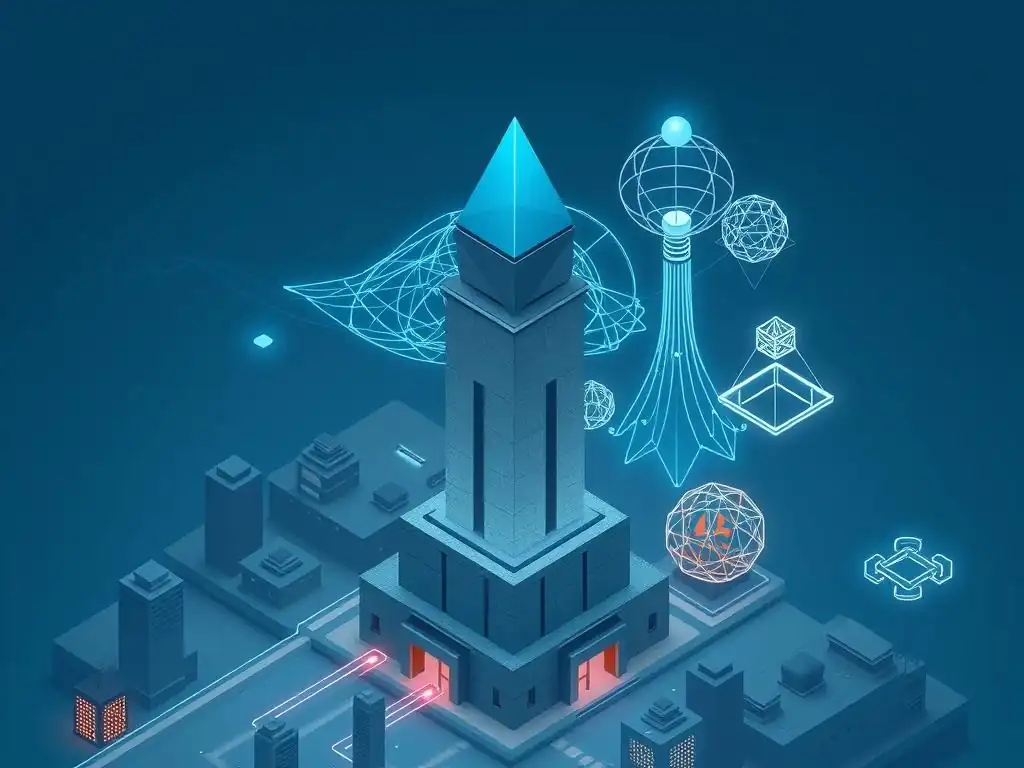
Scalability Metrics: Transactions Per Second (TPS), Latency, and Cost
When evaluating different Layer 2 blockchain scaling solutions, key metrics include Transactions Per Second (TPS), transaction latency, and cost. The theoretical TPS capacity varies significantly between solutions. State Channels offer near-instantaneous transactions between participants once set up, potentially handling thousands of TPS within the channel, but are limited to direct peer-to-peer interactions.
Rollups (both Optimistic and ZK) can increase Ethereum's overall throughput to thousands of TPS by batching, with ZK-Rollups often cited as having higher potential due to more efficient data compression and verification. Validium solutions, by keeping data off-chain, can achieve even higher TPS, potentially reaching tens of thousands, limited more by computational capacity than Layer 1 constraints.
Transaction latency, the time it takes for a transaction to be confirmed, also differs. State Channel transactions are confirmed instantly between parties. Optimistic Rollups offer fast transaction execution on the Layer 2 network but have a significant delay (e.g., 7 days) for withdrawals back to Layer 1 due to the fraud proof window, although Layer 2 transactions within the rollup confirm quickly.
ZK-Rollups provide faster finality on Layer 1 once the proof is verified, allowing quicker withdrawals, often within minutes or hours. Validium also offers quick off-chain transaction finality and relatively fast withdrawals once the proof is verified on Layer 1. Transaction costs are dramatically reduced across all Layer 2 types compared to Layer 1, often by 50x to 1000x or more, with Validium typically offering the lowest costs due to minimal Layer 1 data posting.
Security Considerations for Different Layer 2 Solutions: Data Availability and Fraud Prevention
Security is paramount for any Layer 2 blockchain scaling solution, and different types employ distinct mechanisms to ensure it. Rollups (both Optimistic and ZK) are considered highly secure because they post all necessary transaction data or validity proofs to the Ethereum mainnet.
This ensures that anyone can reconstruct the state of the rollup and verify its integrity, inheriting Ethereum's robust security and censorship resistance. The key difference lies in verification: Optimistic Rollups rely on a challenge period and fraud proofs, meaning security depends on at least one honest participant monitoring the network, while ZK-Rollups use cryptographic validity proofs verified directly by the Layer 1 contract, offering stronger, proof-based security from the outset.
Validium networks, while using ZK proofs for state validity, store transaction data off-chain. This introduces a data availability assumption that is separate from Ethereum's Layer 1. Users rely on a designated entity or committee to make the data available when needed, particularly for exiting the network.
If this data is not available, users might be unable to prove their latest state and recover their funds locked in the Layer 1 contract. This trade-off between scalability and trust in data availability is a critical security consideration for Validium compared to Rollups. State Channels' security relies on participants being able to submit the latest state to Layer 1 in case of a dispute, requiring participants to remain online or have a trusted third party (like a watchtower) monitor the channel.
Decentralization Trade-offs in Layer 2 Implementations: Centralization Risks and Mitigation
While Layer 2 blockchain scaling solutions significantly improve performance, their current implementations sometimes involve trade-offs regarding decentralization compared to the Ethereum mainnet. Many Layer 2 networks utilize a centralized "sequencer" or "operator" to batch and submit transactions to Layer 1.
This entity has significant control over transaction ordering, censorship resistance (at least temporarily before data is posted to Layer 1), and the overall liveness of the Layer 2 network. While funds are generally secured by the Layer 1 contract, a centralized sequencer represents a point of potential failure or control that is less decentralized than the Ethereum mainnet's distributed validator set.
Efforts are underway to mitigate these centralization risks. Many Layer 2 projects have roadmaps towards progressively decentralizing their sequencers, often involving rotating committees, proof-of-stake mechanisms, or decentralized sequencer networks. For example, projects are exploring distributed validator technology or auction mechanisms for sequencer roles.
Furthermore, the ability for users to force transactions or withdraw funds directly via the Layer 1 contract, even if the sequencer is malicious or offline, provides a crucial escape hatch that preserves a degree of censorship resistance inherited from Ethereum. The ongoing evolution of Layer 2 designs aims to balance the need for high performance with the core ethos of decentralization inherent in blockchain technology.
Real-World Applications of Ethereum Layer 2 Scaling
Layer 2 for Decentralized Finance (DeFi): Lowering Costs and Increasing Accessibility
Decentralized Finance (DeFi) has been a primary driver of activity and congestion on the Ethereum mainnet, with complex interactions like swapping tokens, providing liquidity, or managing collateral often incurring substantial gas fees. Layer 2 blockchain scaling solutions are transformative for DeFi by drastically reducing these costs. Moving DeFi protocols and transactions onto Layer 2 networks like Arbitrum One, Optimism, or zkSync Era allows users to perform operations for fractions of a dollar, compared to potentially tens or hundreds on Layer 1.
This cost reduction makes DeFi accessible to a much broader audience and enables new types of financial applications that were previously economically unfeasible. High-frequency trading strategies, frequent rebalancing of portfolios, or participating in smaller-scale lending/borrowing markets become viable. Many major DeFi protocols, including Uniswap, Aave, and Compound, have already deployed versions or instances of their applications on Layer 2 networks, attracting significant total value locked (TVL) and user activity. For instance, Arbitrum and Optimism regularly handle a significant percentage of Ethereum's total transaction count, demonstrating the shift of DeFi activity to Layer 2.
Layer 2 for NFTs and Gaming: Enabling Scalable and Affordable Transactions
The boom in Non-Fungible Tokens (NFTs) and blockchain-based gaming also placed immense strain on the Ethereum mainnet, leading to exorbitant minting and trading fees. Layer 2 solutions provide a crucial pathway for scaling these applications, making the creation, trading, and use of NFTs and in-game assets affordable and fast. Platforms built on Layer 2, such as Immutable X utilizing Validium technology or various NFT marketplaces and games launching on Optimistic and ZK-Rollups, offer users gas-free or near-gas-free transactions.
This scalability is essential for gaming, where frequent, low-value interactions (like earning items, trading collectibles, or performing in-game actions) are common. Players can enjoy a smoother, more responsive experience without the constant friction of high gas fees and slow confirmation times. For NFTs, Layer 2 enables mass minting events, high-volume secondary trading with minimal fees, and opens up possibilities for more dynamic and interactive NFTs. For example, Immutable X has processed millions of NFT transactions with minimal fees, demonstrating the power of Layer 2 blockchain scaling for digital collectibles and gaming assets.
Layer 2 for Payments: Facilitating Microtransactions and Remittances
While often overshadowed by DeFi and NFTs, payments remain a fundamental use case for blockchain technology. However, the high costs and latency of Layer 1 Ethereum make it unsuitable for everyday payments or low-value remittances. Layer 2 blockchain scaling solutions, particularly State Channels and Rollups focused on transfers, can enable fast and affordable peer-to-peer payments and microtransactions.
State channels, as discussed, are specifically designed for repeated, instant payments between parties. Rollups, by batching thousands of transfers, can reduce the cost per transaction to fractions of a cent, making them competitive with or even cheaper than traditional payment processors, especially for cross-border remittances where fees can be high.
While dedicated payment Layer 2 solutions are still evolving, the infrastructure provided by general-purpose Rollups is increasingly being used for value transfer, paving the way for more widespread adoption of crypto for payments. The ability to move value quickly and cheaply globally is a significant benefit that Layer 2 solutions bring to the forefront.
[ ] Describe State Channels
[x] Explain how State Channels enable fast payments
[x] List use cases for State Channels
[ ] Describe Rollups
[x] Explain Optimistic Rollups
[x] Explain ZK-Rollups
[ ] Explain how Rollups improve throughput and reduce fees
[ ] Describe Validium
[x] List advantages and disadvantages of Validium
[x] Provide examples of Validium projects
[ ] Compare L2s on TPS, Latency, Cost
[ ] Compare L2s on Security (Data Availability, Fraud Proofs)
[ ] Discuss Decentralization Trade-offs
[ ] Discuss L2 for DeFi
[ ] Discuss L2 for NFTs/Gaming
[ ] Discuss L2 for Payments
[ ] Discuss L2's role in mainstream adoption
[ ] Discuss challenges/opportunities for L2 development
[ ] Discuss EIP-4844 impact
[ ] Write conclusion
The Future of Ethereum Layer 2 and Blockchain Adoption
The Role of Layer 2 in Enabling Mainstream Ethereum Adoption
Layer 2 blockchain scaling solutions are not merely an incremental upgrade; they are a fundamental necessity for Ethereum to achieve mainstream adoption. By dramatically increasing transaction capacity and reducing costs, Layer 2 networks remove the primary barriers that have hindered the everyday use of decentralized applications. When sending tokens costs pennies instead of dollars, and transactions confirm in seconds rather than minutes, blockchain technology becomes a viable alternative for a vast array of activities, from retail payments and gaming to complex financial interactions and supply chain management.
The proliferation of Layer 2 networks creates a multi-chain ecosystem built on top of Ethereum's secure base layer. This allows the Ethereum ecosystem to scale horizontally, supporting a global user base and millions of daily transactions across various applications without overwhelming the mainnet.
As user experience improves and bridging between Layer 1 and Layer 2, as well as between different Layer 2s, becomes seamless, users may interact primarily with Layer 2 networks without even realizing they are leveraging the power of the underlying Ethereum blockchain. This abstraction is key to onboarding users unfamiliar with the intricacies of blockchain technology, positioning Layer 2 as the gateway to a scalable decentralized future.
Challenges and Opportunities for Layer 2 Development: Interoperability and User Experience
Despite the significant progress in Layer 2 blockchain scaling, several challenges remain. Interoperability between different Layer 2 networks and between Layer 2 and Layer 1 is a key hurdle. Moving assets and data between different rollups or from a rollup back to Layer 1 can still be complex, costly, or time-consuming, particularly the withdrawal periods for Optimistic Rollups. Developing standardized protocols and infrastructure for seamless cross-Layer 2 communication and asset transfer is an ongoing area of research and development. Achieving true composability across the Layer 2 landscape is essential for a fragmented ecosystem to function as a cohesive whole.
Improving the user experience (UX) is another critical opportunity. While Layer 2 reduces transaction costs, managing assets across multiple networks, understanding bridging mechanisms, and dealing with potential withdrawal delays can be confusing for new users. Simplifying wallets, dApp interfaces, and underlying infrastructure to abstract away Layer 2 complexities is vital for broader adoption. Furthermore, educating users about the different security models and trade-offs (e.g., withdrawal times, data availability) of various Layer 2 solutions is important. Continued innovation in prover efficiency for ZK-Rollups and decentralized sequencer designs for Optimistic Rollups also represent significant technical opportunities to enhance performance and decentralization.
The Impact of EIP-4844 (Proto-Danksharding) on Layer 2 Solutions
Ethereum Improvement Proposal 4844, also known as Proto-Danksharding, is a significant planned upgrade for the Ethereum mainnet specifically designed to benefit Layer 2 solutions. EIP-4844 introduces a new transaction type called "blob-carrying transactions." These blobs are large, ephemeral data chunks that can be attached to blocks but are only stored by consensus nodes for a short period (e.g., a few weeks), unlike regular transaction data which is stored permanently.
The primary impact of EIP-4844 is to dramatically reduce the cost for Rollups to post transaction data to Layer 1. Currently, Rollups post data as CALLDATA, which is relatively expensive as it is stored permanently. Blobs are designed to be much cheaper because their storage is temporary, aligning perfectly with the data availability needs of Rollups (where data is needed for a limited time for verifiers or challengers). By making data posting significantly cheaper, EIP-4844 will further lower transaction costs on Layer 2 networks, potentially by another order of magnitude, making Layer 2 blockchain scaling even more effective and affordable. This upgrade is expected to be a major catalyst for the growth and adoption of all data-posting Layer 2 solutions, particularly Rollups.
Conclusion: Layer 2 Solutions as a Critical Component of Ethereum's Future
The scalability challenges of the Ethereum mainnet have been a significant bottleneck preventing widespread adoption of decentralized applications. Layer 2 blockchain scaling solutions, including State Channels, Optimistic Rollups, ZK-Rollups, and Validium, offer diverse approaches to overcome these limitations by processing transactions off-chain while leveraging Ethereum's Layer 1 for security and finality. These technologies have already demonstrated the ability to increase throughput dramatically and reduce transaction costs by orders of magnitude, making DeFi, NFTs, gaming, and potentially payments viable on a large scale.
While challenges such as interoperability and user experience persist, the ongoing development and refinement of Layer 2 solutions, coupled with planned Ethereum mainnet upgrades like EIP-4844, promise a future where Ethereum can support a global ecosystem of dApps accessible to everyone. Layer 2 is not just an add-on but a fundamental layer required for Ethereum's evolution. By abstracting away the complexities and costs of Layer 1, Layer 2 solutions are paving the way for the next wave of blockchain adoption, solidifying their position as a critical component of Ethereum's future and the broader decentralized web.
Frequently Asked Questions
### What exactly are Layer 2 blockchain scaling solutions?
Layer 2 solutions are off-chain protocols that operate on top of a base blockchain (Layer 1) to improve transaction throughput and reduce fees. They aim to alleviate congestion on the main chain.
### Why is Layer 2 scaling so important for blockchain technology?
Without Layer 2, blockchain networks struggle to handle a large volume of transactions, leading to high fees and slow confirmation times. This hinders mass adoption and limits the utility of blockchain applications.
### What are some common examples of Layer 2 scaling solutions?
Examples include Rollups (Optimistic and ZK), State Channels, and Plasma. Each approach offers different trade-offs in terms of security, complexity, and functionality.
### How do Layer 2 solutions contribute to the growth of Decentralized Finance (DeFi)?
Layer 2 scaling makes DeFi applications more affordable and accessible by reducing transaction costs. This enables more frequent trading and complex financial operations.
### What challenges or limitations are associated with Layer 2 scaling?
Challenges include increased complexity, potential security risks if not implemented correctly, and the need for cross-chain interoperability between Layer 1 and Layer 2 solutions.
Final Reflection: Scaling Beyond Limits
The exploration of Layer 2 solutions, as we've seen, isn't just a technical exercise; it's a crucial step towards realizing the true potential of blockchain technology. The limitations of Layer 1 blockchains, particularly in terms of scalability, threaten to stifle innovation and prevent widespread adoption. Addressing this bottleneck is paramount to ensuring blockchain's future relevance and impact.
This journey into Layer 2 solutions has underscored their profound influence on the evolving digital landscape. The ability to process transactions faster and more efficiently, while maintaining security and decentralization, is not merely a technical advantage; it's a catalyst for innovation across industries. The future of blockchain is not about replacing the old, but about augmenting it with new layers of innovation.
This sentiment encapsulates the transformative power of Layer 2 solutions, paving the way for decentralized applications to reach their full potential.
Now, as you consider the implications of Layer 2 blockchain scaling, I invite you to reflect on its potential to reshape your own interactions with technology. How can you leverage these advancements to build more efficient, secure, and decentralized systems? The future of blockchain is being built today, layer by layer, and your understanding and engagement are vital to its success.
Seize the Future: Build Your Scalable Blockchain Today!
Thank you for exploring the world of Layer 2 solutions with us! You've gained valuable insights into how these innovations are shaping the future of blockchain technology. Now is the time to apply this knowledge and contribute to advancing the ecosystem.
Interested in taking the next step? Here's how:
- Experiment with a specific Layer 2 protocol such as Polygon, Optimism, or Arbitrum by developing a small proof-of-concept application. Experience the benefits of increased speed and reduced costs firsthand.
- Share this article with fellow developers or blockchain enthusiasts to spark conversations and help others discover the potential of Layer 2 solutions.
- Investigate the security considerations associated with your chosen Layer 2 technology. Understanding the tradeoffs is essential for building robust and secure applications.
What innovative Layer 2 project will you create to transform the blockchain landscape? Share your ideas in the comments!
Leave a Reply