
Beyond Bitcoin: Exploring the Spectrum of Blockchain Architectures


Welcome to Blockchain Trends, your compass in the rapidly evolving world of decentralized technology!
Beyond the hype, lies a universe of transformative applications powered by blockchain. This week, we delve into the burgeoning landscape of blockchain decentralized finance applications, exploring how they're reshaping traditional finance. But that's just the beginning. From enterprise solutions to regulatory frameworks, and the very future of decentralized systems, prepare to uncover the potential that extends far beyond just cryptocurrencies. Intrigued? Let's explore the spectrum of blockchain architectures and discover what's truly possible.
- Understanding Blockchain Beyond Bitcoin: A Foundation for Decentralized Finance (DeFi) Applications
- Public Blockchains: Permissionless Innovation and Decentralized Finance (DeFi)
-
Private Blockchains: Controlled Access and Enterprise Blockchain Solutions
- Defining Private Blockchains: Permissioned Networks for Specific Use Cases
- Use Cases for Private Blockchains: Supply Chain Management and Data Security
- Advantages of Private Blockchains: Enhanced Security and Regulatory Compliance
- Limitations of Private Blockchains: Centralization and Limited Interoperability with DeFi
-
Consortium Blockchains: Collaborative Blockchain Networks for Decentralized Finance
- The Hybrid Approach: Combining Public and Private Blockchain Elements
- Use Cases for Consortium Blockchains: Financial Institutions and Cross-Border Payments
- Advantages of Consortium Blockchains: Increased Efficiency and Reduced Costs
- Challenges of Consortium Blockchains: Governance and Consensus Mechanisms
- Comparing Blockchain Architectures: Public vs. Private vs. Consortium for DeFi and Beyond
- Decentralized Finance (DeFi) Applications Across Different Blockchain Architectures
- The Future of Blockchain Architectures: Interoperability and Hybrid Solutions
- Choosing the Right Blockchain Architecture for Your Decentralized Application
- Conclusion: Embracing the Diversity of Blockchain Architectures for a Decentralized Future
-
Frequently Asked Questions
- What are some examples of Blockchain decentralized finance applications beyond cryptocurrencies?
- How is blockchain technology transforming traditional finance through Blockchain decentralized finance applications?
- What are the key regulatory challenges facing the widespread adoption of Blockchain decentralized finance applications?
- What are the benefits of using different blockchain architectures (like public, private, or hybrid) for Blockchain decentralized finance applications?
- What does the future hold for Blockchain decentralized finance applications and decentralized systems in general?
- Final Reflection: Embracing the Decentralized Future
- Unleash Your Blockchain Potential!
Understanding Blockchain Beyond Bitcoin: A Foundation for Decentralized Finance (DeFi) Applications
The Evolution of Blockchain Technology: From Cryptocurrency to Enterprise Solutions
Blockchain technology first gained prominence as the underlying infrastructure for Bitcoin, the pioneering cryptocurrency. This initial application demonstrated the feasibility of a distributed, immutable ledger capable of recording transactions securely and transparently without a central authority. The success of Bitcoin sparked widespread interest, leading researchers and developers to explore the potential of this technology for applications far beyond digital currency, laying the groundwork for complex systems like Blockchain decentralized finance applications.
Following Bitcoin's innovation, platforms like Ethereum emerged, introducing the concept of smart contracts. These self-executing contracts with the terms of the agreement directly written into code allowed for the automation of complex processes on the blockchain. This capability was a crucial leap, enabling the development of sophisticated decentralized applications (dApps) and opening the door to a vast ecosystem of enterprise solutions and the burgeoning field of decentralized finance (DeFi), where Blockchain decentralized finance applications are transforming traditional financial services.
Key Characteristics of Blockchain Technology Driving DeFi Innovation
Several core characteristics of blockchain technology make it particularly well-suited for powering Blockchain decentralized finance applications. Immutability is paramount; once data is recorded on the blockchain, altering or deleting it becomes practically impossible, providing a high degree of data integrity and trust. This is essential for financial transactions and records, ensuring transparency and auditability for all participants in a DeFi ecosystem.
Decentralization, another defining feature, removes the need for intermediaries like banks or brokers in financial transactions. This not only reduces costs and increases efficiency but also enhances accessibility, allowing anyone with an internet connection to participate in financial activities. The combination of transparency (data visible to all participants) and security (cryptographic hashing and consensus mechanisms) creates a robust foundation upon which innovative Blockchain decentralized finance applications can be built, offering services like lending, borrowing, and trading without traditional gatekeepers.
Public Blockchains: Permissionless Innovation and Decentralized Finance (DeFi)
Bitcoin and Ethereum: Pioneers of Public, Permissionless Blockchains
Bitcoin stands as the original and most well-known example of a public, permissionless blockchain. It operates as a purely peer-to-peer electronic cash system, where anyone can join the network, participate in transaction validation (mining), and transact without needing permission. While primarily designed for value transfer, Bitcoin demonstrated the power of a globally distributed, censorship-resistant ledger, paving the way for subsequent innovations in blockchain technology and inspiring the development of platforms capable of supporting more complex Blockchain decentralized finance applications.
Ethereum built upon the foundation of Bitcoin by introducing smart contracts, transforming the blockchain from a simple ledger into a decentralized world computer. This programmability allowed developers to create complex decentralized applications, including a wide array of Blockchain decentralized finance applications such as decentralized exchanges, lending protocols, and stablecoins. Ethereum's open and permissionless nature has fostered rapid innovation, making it the leading platform for DeFi development, although it faces challenges related to scalability and transaction costs.
Advantages of Public Blockchains for DeFi: Transparency and Accessibility
Public blockchains offer unparalleled transparency and accessibility, which are critical advantages for Blockchain decentralized finance applications. Every transaction and smart contract interaction is recorded on the public ledger, visible to anyone, allowing for a high degree of auditability and reducing the potential for fraud or manipulation. This transparency fosters trust within the network, as users can independently verify the state of the system.
Furthermore, the permissionless nature means anyone can access and utilize Blockchain decentralized finance applications built on public chains without needing approval from a central authority. This inclusivity democratizes access to financial services, potentially reaching individuals in underserved regions or those excluded from traditional financial systems. The global reach and open participation characteristic of public blockchains are fundamental to the ethos of decentralized finance.
Challenges of Public Blockchains: Scalability and Transaction Costs in DeFi Environments
Despite their advantages, public blockchains, particularly established ones like Ethereum (prior to significant upgrades), face significant challenges regarding scalability. As the number of users and transactions grows, the network can become congested, leading to slow transaction processing times and high transaction fees, often referred to as "gas" costs. This can make using Blockchain decentralized finance applications, especially those involving frequent small transactions, prohibitively expensive for many users.
Efforts are underway to address these scalability issues through various solutions, including layer-2 scaling protocols (like rollups) and network upgrades (such as Ethereum's transition to Proof-of-Stake). However, achieving mass adoption for Blockchain decentralized finance applications requires overcoming these technical hurdles to ensure the network can handle a high volume of transactions efficiently and affordably. The cost and speed limitations remain significant barriers for certain types of DeFi interactions.
Private Blockchains: Controlled Access and Enterprise Blockchain Solutions
Defining Private Blockchains: Permissioned Networks for Specific Use Cases
In contrast to public blockchains, private blockchains are permissioned networks where participation is restricted. An organization or consortium controls who can join the network, read data, and participate in the consensus process. This centralized control means that while the ledger is still distributed among approved participants, it lacks the open accessibility and censorship resistance of public chains. Private blockchains are often used for specific enterprise applications where privacy and control are paramount, distinct from the open nature of Blockchain decentralized finance applications on public networks.
Participants in a private blockchain network are typically known entities with established identities. This allows for greater accountability and the ability to enforce real-world regulations and governance structures. Consensus mechanisms in private blockchains are often simpler and faster than those in public chains, as they only need to coordinate among a limited, trusted set of nodes. These characteristics make them suitable for scenarios requiring high transaction throughput and data confidentiality, though less aligned with the core principles of open Blockchain decentralized finance applications.
Use Cases for Private Blockchains: Supply Chain Management and Data Security
Private blockchains are particularly well-suited for enterprise use cases that require tracking assets, managing data privacy, and ensuring data integrity among a defined group of participants. A prominent example is supply chain management, where a private blockchain can track goods from origin to destination, providing an immutable record visible to all involved parties (suppliers, manufacturers, distributors, retailers). This enhances transparency within the specific supply chain ecosystem and reduces fraud, as demonstrated by pilots conducted by large logistics firms tracking millions of shipments.
Another key use case is secure data sharing and management within an organization or between trusted partners. For instance, in healthcare, a private blockchain could manage patient records, ensuring that only authorized personnel can access specific data while maintaining a verifiable audit trail of all access attempts. While not directly supporting open Blockchain decentralized finance applications, these use cases leverage blockchain's core strengths – immutability and distributed ledger technology – in a controlled environment to solve specific business problems.
Advantages of Private Blockchains: Enhanced Security and Regulatory Compliance
Private blockchains offer enhanced security features tailored for enterprise needs. Because participants are known and verified, it is easier to implement access controls and maintain data confidentiality. The restricted nature of the network reduces the attack surface compared to public chains, where anyone can attempt to interact with the system. This permissioned environment allows for more granular control over data visibility and access rights, which is crucial for businesses handling sensitive information.
Regulatory compliance is another significant advantage. Private blockchains can be designed to incorporate existing regulations and governance frameworks directly into their architecture. Knowing the identity of participants allows for easier adherence to Know Your Customer (KYC) and Anti-Money Laundering (AML) regulations, which are often challenging to implement in the pseudonymous environment of public blockchains. This makes private blockchains a more palatable option for highly regulated industries, although they do not typically host open Blockchain decentralized finance applications as seen on Ethereum or similar networks.
Limitations of Private Blockchains: Centralization and Limited Interoperability with DeFi
A primary limitation of private blockchains is their degree of centralization compared to public networks. Control often rests with a single entity or a small group, which can introduce points of failure and potential for censorship or manipulation, undermining the core decentralized ethos. This lack of true decentralization can be a significant drawback depending on the application's requirements for trust and censorship resistance, making them unsuitable for open, public Blockchain decentralized finance applications.
Furthermore, private blockchains typically operate in silos, with limited interoperability with other networks, including public blockchains hosting major Blockchain decentralized finance applications. Bridging assets or data between a private chain and a public chain is complex, hindering the seamless flow of value and information. This isolation limits the potential for private networks to participate in the broader decentralized ecosystem and leverage the liquidity and innovation present in public DeFi markets.
Consortium Blockchains: Collaborative Blockchain Networks for Decentralized Finance
The Hybrid Approach: Combining Public and Private Blockchain Elements
Consortium blockchains represent a hybrid approach, incorporating elements of both public and private networks. They are permissioned, meaning participation is restricted to a pre-selected group of organizations, similar to a private chain. However, unlike private chains often controlled by a single entity, consortium blockchains are governed by a group of participating organizations, decentralizing control among the members of the consortium. This model aims to balance the control and privacy of private chains with a degree of decentralization and resilience not found in single-entity private networks.
This collaborative structure allows members to agree on rules, access levels, and consensus mechanisms, tailoring the network to their specific needs while sharing the burden and benefits of the infrastructure. While not as open as public chains supporting broad Blockchain decentralized finance applications, consortium chains can facilitate collaboration and trust among a defined group of entities, such as banks, supply chain partners, or healthcare providers, for shared processes and data.
Use Cases for Consortium Blockchains: Financial Institutions and Cross-Border Payments
Consortium blockchains are particularly attractive for industries where multiple organizations need to collaborate and share information securely and efficiently, without relying on a central intermediary. The financial sector is a prime example, with consortiums exploring blockchain for interbank settlements, clearing, and cross-border payments. Projects like R3 Corda, often used in consortium settings, facilitate transactions and smart contracts among financial institutions, aiming to improve efficiency and reduce costs in processes that currently rely on complex correspondent banking networks.
Another significant use case is in trade finance, where multiple parties (exporters, importers, banks, insurers, shipping companies) need to share and verify documentation and track transactions. Consortium blockchains can streamline these complex processes, reducing paper trails and manual checks. While these aren't typically open Blockchain decentralized finance applications accessible to the public, they leverage blockchain technology within a controlled, collaborative environment to achieve similar goals of disintermediation and efficiency for specific business processes.
Advantages of Consortium Blockchains: Increased Efficiency and Reduced Costs
A key advantage of consortium blockchains is their potential to significantly increase efficiency and reduce operational costs for participating organizations. By providing a shared, immutable ledger and automating processes through smart contracts, consortium members can streamline complex workflows that previously involved manual data reconciliation and multiple intermediaries. In financial services, for instance, settling transactions via a consortium chain can potentially reduce settlement times from days to minutes, freeing up capital and lowering transaction fees.
The collaborative nature also allows for shared infrastructure costs and pooled resources for development and maintenance. This can make implementing blockchain technology more economically viable for individual organizations compared to building and maintaining a private chain alone. While not hosting open Blockchain decentralized finance applications, the efficiency gains within the consortium can indirectly benefit the wider financial ecosystem.
Challenges of Consortium Blockchains: Governance and Consensus Mechanisms
Despite their benefits, consortium blockchains face challenges, particularly concerning governance and the design of effective consensus mechanisms. Establishing and maintaining a fair and efficient governance framework among multiple independent organizations can be complex. Decisions about network upgrades, rule changes, or dispute resolution require agreement among members, which can be a slow or contentious process if interests are not perfectly aligned.
Choosing and implementing a consensus mechanism that is both efficient for a permissioned network and acceptable to all consortium members is also critical. While they don't require energy-intensive Proof-of-Work like Bitcoin, finding a mechanism that ensures fairness, security, and performance while satisfying the needs of diverse participants requires careful consideration and ongoing management. These governance and consensus challenges can impact the network's agility and ability to evolve, distinct from the more fluid, albeit sometimes chaotic, governance seen in some public Blockchain decentralized finance applications.
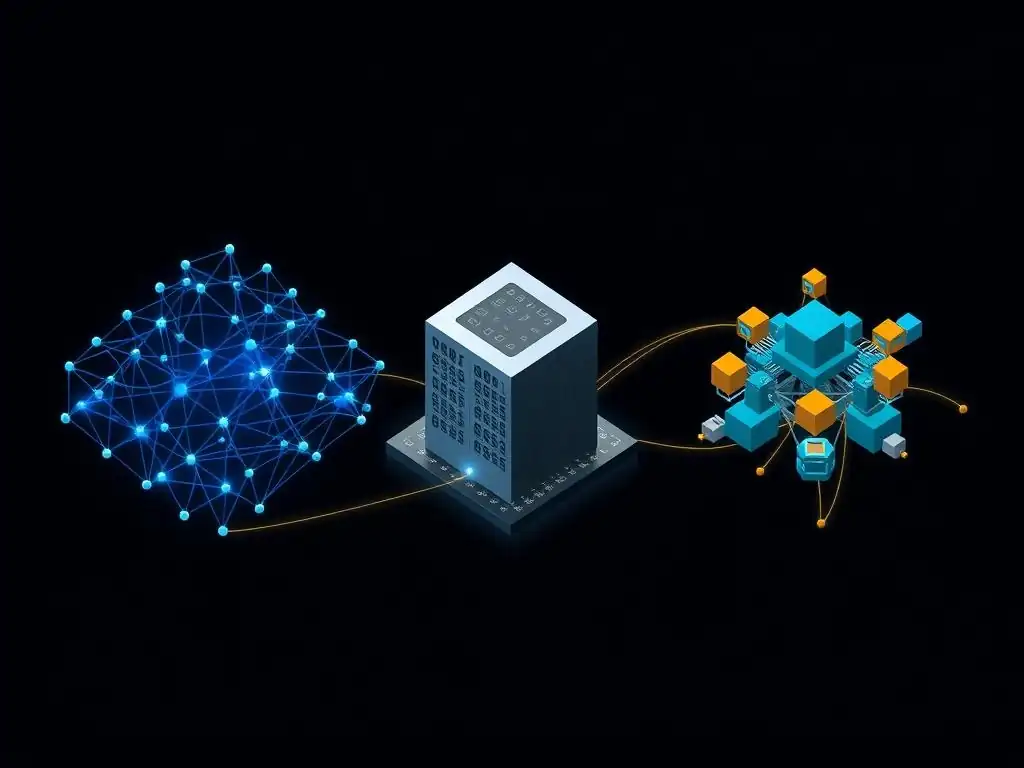
Comparing Blockchain Architectures: Public vs. Private vs. Consortium for DeFi and Beyond
Security Considerations Across Different Blockchain Types
Security is a paramount concern across all blockchain architectures, but the nature of security risks and mitigation strategies differs significantly. Public blockchains, like Bitcoin and Ethereum, rely on the vast computational power of a large, decentralized network and robust consensus mechanisms (like Proof-of-Work or Proof-of-Stake) to achieve security against attacks. The sheer scale of participation makes it economically infeasible for any single entity to gain control and manipulate the ledger, providing a high degree of censorship resistance crucial for open Blockchain decentralized finance applications.
Private and consortium blockchains, while not relying on public-scale decentralization, achieve security through permissioned access and identity verification. Since participants are known and trusted (within the network's context), security focuses on access control, data privacy within the shared ledger, and securing the communication channels between nodes. While less resistant to collusion among participants compared to public chains, they can offer better data confidentiality and compliance with regulations, important for enterprise use cases, though different from the security model required for permissionless Blockchain decentralized finance applications.
Scalability Solutions for Public, Private, and Consortium Blockchains
Scalability is a major hurdle for blockchain technology, affecting all architectures differently. Public blockchains, especially those designed for broad use like Ethereum, struggle with processing high volumes of transactions quickly and cheaply due to their decentralized nature and consensus mechanisms. Solutions like sharding, layer-2 protocols (e.g., optimistic rollups, zero-knowledge rollups), and alternative consensus mechanisms are being developed and implemented to increase transaction throughput and reduce costs for Blockchain decentralized finance applications.
Private and consortium blockchains generally offer higher transaction speeds and throughput out-of-the-box compared to public chains. Their permissioned nature allows for simpler, faster consensus mechanisms and fewer nodes to coordinate. However, their scalability is still limited by the infrastructure of the participating organizations and the specific design of the network. While they can handle thousands of transactions per second in specific tests, scaling them to handle the volume of a major public network is a different challenge, less relevant to open Blockchain decentralized finance applications but critical for enterprise adoption.
Transaction Costs Analysis for Decentralized Financial Applications
Transaction costs, often referred to as gas fees on platforms like Ethereum, vary dramatically between blockchain architectures and can significantly impact the viability of Blockchain decentralized finance applications. On public blockchains like Ethereum, transaction costs are determined by network congestion and the computational complexity of the transaction (e.g., interacting with a smart contract). During peak times, these costs can surge, making small transactions or frequent interactions with DeFi protocols expensive, posing a barrier for users.
In contrast, private and consortium blockchains typically have very low or negligible transaction costs for participants. Since the network is permissioned and controlled by the participating entities, there is no public market for transaction validation (like mining fees). Costs are primarily related to network infrastructure maintenance and operational expenses, shared among members. This cost efficiency makes them attractive for inter-organizational processes and enterprise solutions, though this model doesn't apply to the open fee market driving Blockchain decentralized finance applications on public chains.
Decentralized Finance (DeFi) Applications Across Different Blockchain Architectures
DeFi on Public Blockchains: Lending, Borrowing, and Decentralized Exchanges (DEXs)
Public blockchains, particularly Ethereum, are the primary home for the vast majority of current Blockchain decentralized finance applications. The permissionless nature allows anyone to build, deploy, and interact with these protocols without needing approval. Key applications include decentralized lending and borrowing platforms (like Aave or Compound), where users can earn interest on deposited crypto assets or borrow by collateralizing their holdings, all governed by smart contracts.
Decentralized exchanges (DEXs) are another cornerstone of DeFi on public chains, enabling peer-to-peer trading of cryptocurrencies and tokens without a central order book or intermediary. Platforms like Uniswap and SushiSwap use automated market maker (AMM) models to facilitate trading, relying on liquidity pools provided by users. These examples showcase the power of public blockchains to create open, accessible, and transparent financial markets, fundamentally changing how individuals interact with financial services through Blockchain decentralized finance applications.
DeFi on Private Blockchains: Permissioned Lending and Institutional DeFi
While the core of open DeFi resides on public chains, the concept of decentralized finance is being explored within permissioned environments, often referred to as "Institutional DeFi" or "Permissioned DeFi." On private blockchains, this might involve controlled lending or borrowing between known entities within a specific organization or trusted group. For example, a large corporation might use a private blockchain to manage internal credit lines between subsidiaries or facilitate inter-company asset transfers.
These applications leverage the efficiency and immutability of blockchain but within a highly controlled and regulated framework. They are not open to the public and focus on specific business needs rather than creating broad, accessible financial markets. While they share some characteristics with public Blockchain decentralized finance applications (like using smart contracts for automation), their permissioned nature fundamentally differentiates them in terms of accessibility and trust models.
DeFi on Consortium Blockchains: Cross-Border Payments and Trade Finance
Consortium blockchains are also being utilized for applications that share characteristics with DeFi, particularly in areas like cross-border payments and trade finance. Initiatives involving groups of banks are exploring how consortium chains can facilitate faster, cheaper, and more transparent international money transfers compared to traditional SWIFT systems. While not open to the public like DeFi on Ethereum, these networks use distributed ledgers and smart contracts to automate and settle transactions between consortium members.
In trade finance, consortiums are building platforms to digitize and streamline the complex processes involved in international trade, from issuing letters of credit to financing invoices. These platforms use blockchain to create a shared, immutable record visible to all parties involved (banks, corporates, insurers), automating steps via smart contracts. These applications demonstrate how blockchain can bring DeFi-like efficiencies (disintermediation, automation) to specific, permissioned business networks, distinct from open Blockchain decentralized finance applications but equally transformative for the participants.
The Future of Blockchain Architectures: Interoperability and Hybrid Solutions
Blockchain Interoperability: Bridging the Gap Between Different Networks
A significant challenge facing the blockchain ecosystem is the lack of seamless interoperability between different networks, both public and private. Assets and data are often siloed within their native chains, making it difficult to transfer value or information across different blockchain architectures. The future of blockchain, including the evolution of Blockchain decentralized finance applications, hinges on developing robust interoperability solutions.
Projects are actively working on cross-chain bridges, atomic swaps, and interoperability protocols (like Polkadot or Cosmos) designed to connect disparate blockchains. These technologies aim to allow users to move assets and data between different networks securely and efficiently, unlocking greater liquidity and enabling more complex Blockchain decentralized finance applications that can leverage the unique strengths of multiple chains. Achieving true interoperability is crucial for the widespread adoption of blockchain technology.
Hybrid Blockchain Solutions: Combining the Best of Public and Private Blockchains for DeFi
Emerging hybrid blockchain solutions aim to combine the benefits of public and private networks. These models might use a private or consortium chain for sensitive data storage or high-frequency transactions within a trusted group, while anchoring hashes or summary data onto a public chain for transparency and immutability guarantees. This allows organizations to maintain control and privacy for specific operations while leveraging the trust and security of a public ledger for verification.
For Blockchain decentralized finance applications, this could mean using a permissioned layer for user identity verification or specific institutional interactions, while executing core financial logic and asset management on a public, transparent layer. Hybrid approaches could potentially offer solutions that meet regulatory requirements and enterprise needs while still participating in or connecting to the broader, open DeFi ecosystem, fostering new types of Blockchain decentralized finance applications that bridge the institutional and retail worlds.
The Role of Blockchain Architecture in the Evolution of Decentralized Finance
The choice of blockchain architecture is fundamental to the design, functionality, and accessibility of Blockchain decentralized finance applications. Public chains have been instrumental in bootstrapping the initial wave of open, permissionless DeFi, prioritizing transparency and accessibility. Their evolution, particularly concerning scalability and cost, will heavily influence the future growth and mass adoption of these applications.
As the technology matures, private and consortium chains, potentially integrated through hybrid models and interoperability solutions, may play a role in bringing DeFi principles to institutional settings or specific industry use cases. The ongoing development and refinement of different blockchain architectures, along with efforts to connect them, will shape the landscape of decentralized finance, expanding its reach and potential impact across various sectors. The interplay between architectural choices and application design is key to the continued innovation in Blockchain decentralized finance applications.
Choosing the Right Blockchain Architecture for Your Decentralized Application
Factors to Consider: Security, Scalability, and Regulatory Compliance
Selecting the appropriate blockchain architecture for a decentralized application (dApp) or enterprise solution requires careful consideration of several critical factors. Security needs are paramount – does the application require the highest level of censorship resistance and public verifiability, or is controlled access and data privacy within a trusted group more important? This directly impacts whether a public, private, or consortium chain is suitable.
Scalability requirements are also crucial; applications needing to process millions of transactions per second might require different architectural considerations or layer-2 solutions compared to those with lower throughput needs. Finally, regulatory compliance is a significant factor, especially for applications in regulated industries like finance or healthcare. Permissioned networks often provide clearer paths to meeting KYC/AML and data privacy regulations than purely public chains, influencing the choice for specific Blockchain decentralized finance applications or enterprise systems.
Selecting a Blockchain for a Decentralized Identity Management System
Consider the requirements for a decentralized identity management system. If the goal is a globally accessible, censorship-resistant identity protocol where individuals control their data and can prove attributes without relying on a central authority, a public blockchain architecture would likely be the most appropriate foundation. This aligns with the principles of self-sovereign identity and leverages the public chain's immutability and transparency to anchor identity claims and verify credentials openly.
Conversely, if the system is intended for managing employee identities within a large corporation or facilitating secure identity verification among a specific set of trusted partners (e.g., a consortium of banks verifying customer identities for shared services), a private or consortium blockchain might be more suitable. These permissioned networks allow for greater control over data access, easier integration with existing enterprise systems, and compliance with internal policies or specific regulations, distinct from the requirements for public Blockchain decentralized finance applications or identity systems.
Choosing a Blockchain for Secure Healthcare Data Sharing
Securely sharing healthcare data presents unique challenges related to privacy regulations (like HIPAA in the US or GDPR in Europe) and the need for strict access controls. For an application allowing patients to control who accesses their medical records among a network of trusted providers (doctors, hospitals, labs), a consortium blockchain involving these healthcare organizations could be an effective solution. This allows data to be shared and updated on a distributed, immutable ledger accessible only to authorized participants, with consent mechanisms managed via smart contracts.
While a public blockchain could potentially store hashes of medical records for integrity checks, storing the sensitive data itself directly on a fully public ledger would violate privacy norms. A private blockchain within a single large hospital system could manage internal data sharing. However, for sharing data across multiple independent healthcare providers, a consortium chain provides the necessary balance of shared infrastructure, controlled access, and regulatory compliance, differing from the open requirements of public Blockchain decentralized finance applications.
Conclusion: Embracing the Diversity of Blockchain Architectures for a Decentralized Future
The world of blockchain technology extends far beyond its origins in cryptocurrency. The evolution from Bitcoin's simple ledger to smart contract platforms and specialized enterprise solutions highlights the versatility of this foundational technology. Understanding the spectrum of blockchain architectures – public, private, and consortium – is crucial for appreciating their respective strengths, limitations, and potential applications, including the diverse landscape of Blockchain decentralized finance applications and enterprise solutions.
Public blockchains have been the engine of innovation for open, permissionless systems like DeFi, prioritizing transparency and accessibility. Private and consortium chains, conversely, offer controlled environments suitable for enterprise use cases requiring privacy, performance, and regulatory compliance.
As the technology matures, the focus is increasingly shifting towards interoperability and hybrid models that can potentially combine the benefits of different architectures, paving the way for more sophisticated and integrated Blockchain decentralized finance applications and a truly decentralized future across various industries. The choice of architecture is not a one-size-fits-all decision but depends entirely on the specific requirements of the application being built.
Frequently Asked Questions
What are some examples of Blockchain decentralized finance applications beyond cryptocurrencies?
Examples include decentralized lending platforms, automated market makers (AMMs) for trading various assets, and stablecoin ecosystems that offer price stability. These leverage blockchain for transparency and efficiency.
How is blockchain technology transforming traditional finance through Blockchain decentralized finance applications?
Blockchain enables permissionless access to financial services, reduces intermediary costs, and increases transparency in financial transactions. This disrupts traditional banking models.
What are the key regulatory challenges facing the widespread adoption of Blockchain decentralized finance applications?
Regulatory uncertainties around compliance with securities laws, anti-money laundering (AML) regulations, and consumer protection are significant hurdles. Governments are working to create appropriate frameworks.
What are the benefits of using different blockchain architectures (like public, private, or hybrid) for Blockchain decentralized finance applications?
Different architectures offer varying levels of security, scalability, and control. Public blockchains are more transparent but less scalable, while private blockchains offer more control but less transparency.
What does the future hold for Blockchain decentralized finance applications and decentralized systems in general?
The future likely involves increased interoperability between different blockchain networks, greater institutional adoption of DeFi, and the development of more sophisticated financial instruments on-chain.
Final Reflection: Embracing the Decentralized Future
The journey through the diverse landscape of blockchain architectures, as explored in this article, reveals that decentralized finance (DeFi) is not a monolithic entity, but a vibrant ecosystem built upon a spectrum of possibilities. The choices made in blockchain design directly impact the accessibility, security, and scalability of DeFi applications, shaping the future of finance itself. Understanding these nuances is crucial for anyone seeking to navigate or contribute to this rapidly evolving space.
The impact of blockchain technology and its decentralized finance applications extends far beyond mere technological innovation. It represents a fundamental shift in how we perceive and interact with financial systems, promising greater transparency, inclusivity, and control for individuals. This potential to democratize finance is what truly resonates with me, and it's a vision worth pursuing. The future of finance is decentralized, and blockchain is the key to unlocking it.
This quote encapsulates the transformative power of this technology and its potential to reshape our world.
As we stand at the cusp of this decentralized revolution, I invite you to reflect on your own role in shaping its future. Consider how you can leverage the power of blockchain and DeFi to create a more equitable and accessible financial landscape for all. Explore the possibilities, embrace the challenges, and contribute to building a future where financial power is distributed, not concentrated. The future of finance is being written now, and your voice matters.
Unleash Your Blockchain Potential!
Thanks for exploring the fascinating world of blockchain architectures! You've gained a broader understanding of the possibilities beyond Bitcoin. Now, it's time to apply that knowledge and help shape the future of decentralized technology.
Here are a few ways you can take action right now:
- Learn more: Think of a real-world problem that could benefit from a permissioned or hybrid blockchain. How might such an application work in practice? **
- Share this article with your network to encourage discussions about innovative blockchain solutions.
- Explore case studies showcasing different blockchain architectures in action. Consider contributing your insights to our community forum!
What is one innovative blockchain architecture you're eager to see adopted in the near future, and why? Share your thoughts below!
Leave a Reply