
Blockchain Explorers for Research: Academic & Professional Chain Data Analysis


Welcome to Blockchain Trends, your compass in the evolving world of decentralized technologies!
Are you ready to unlock the power of the blockchain, beyond the hype and into practical application? We delve into the transformative potential of blockchain, from DeFi innovations to enterprise solutions and the crucial regulatory landscape shaping its future. This month, we're diving deep into the essential toolkit for understanding blockchain's intricacies: Blockchain data analysis research tools. Uncover the secrets hidden within the chain and equip yourself with the knowledge to navigate this revolutionary technology. Curious to learn more about how these tools can revolutionize your blockchain research? Let's explore!
Blockchain Explorers for Research: Academic & Professional Chain Data Analysis
- Introduction to Blockchain Data Analysis Research Tools
- Top Blockchain Data Analysis Research Tools
- 1. Etherscan: The Go-To Tool for Ethereum Data Analysis
- 2. Blockchair: A Multi-Chain Blockchain Explorer
- 3. Blockchain.com Explorer: User-Friendly Interface for Data Insights
- 4. BTCscan: Specialized Explorer for Bitcoin Data Research
- 5. TokenAnalyst: Deep Insights into DeFi and Token Movement
- Comparative Analysis of Blockchain Explorers
- Conclusion: Choosing the Right Blockchain Data Analysis Research Tool
-
Frequently Asked Questions
- What are blockchain explorers and why are they useful for blockchain data analysis research?
- How can blockchain explorers aid in academic research concerning DeFi (Decentralized Finance)?
- Are there specific blockchain explorers designed for enterprise-level blockchain data analysis?
- What regulatory insights can be gleaned from using blockchain explorers in relation to blockchain data analysis research?
- What is the future of blockchain explorers and how will they evolve to support advanced blockchain data analysis research tools?
- Final Reflection: Unveiling the Future with Blockchain Data
- Unleash the Power of Blockchain Insights!
Introduction to Blockchain Data Analysis Research Tools
Understanding Blockchain Technology and Its Applications
Blockchain technology, at its core, is a revolutionary distributed ledger system that records transactions across many computers so that the record cannot be altered retroactively without the alteration of all subsequent blocks. This inherent characteristic of immutability, coupled with transparency and decentralization, has propelled blockchain beyond its initial application in cryptocurrencies, permeating various sectors. Imagine a digital record book shared across a network, where every new entry is verified and permanently linked to the previous ones. This structure ensures data integrity and trust, making it ideal for applications requiring secure and transparent record-keeping.
Beyond cryptocurrencies like Bitcoin and Ethereum, blockchain technology is being implemented across diverse fields. In supply chain management, for instance, companies like Walmart and IBM are utilizing blockchain to track food origins and enhance transparency, leading to faster recall processes and improved consumer trust. In healthcare, blockchain is being explored to securely manage patient records, improving data sharing and reducing administrative overhead.
Furthermore, industries like finance are leveraging blockchain for secure and efficient cross-border payments and trade finance solutions. Even voting systems are being examined for blockchain integration to enhance security and transparency, potentially increasing voter turnout and reducing fraud. These varied applications highlight blockchain's versatility and transformative potential across numerous domains.
The Importance of Data Analysis in Blockchain Research
The transparent and immutable nature of blockchain makes it a goldmine of data, offering unprecedented opportunities for research across various disciplines. Blockchain data analysis is crucial for understanding the dynamics of decentralized systems, identifying trends, and gaining insights into user behavior and network activity. Unlike traditional databases, blockchain's public ledger allows researchers to examine every transaction, smart contract execution, and network state change, providing a granular view of system operations. This level of transparency is invaluable for academic and professional inquiry.
For researchers, blockchain data analysis tools are essential for navigating the vast amount of information available. Economists can analyze transaction patterns to understand market behavior and financial flows within decentralized finance (DeFi) ecosystems. Computer scientists can study network traffic and smart contract interactions to improve protocol efficiency and security. Social scientists can investigate governance mechanisms and community dynamics within blockchain-based organizations.
Moreover, businesses can utilize blockchain data analysis for competitive intelligence, market research, and risk assessment. For example, analyzing transaction volumes and user addresses can provide insights into the adoption rate of a new blockchain application, or identifying patterns in fraudulent transactions can enhance security protocols. The ability to analyze blockchain data empowers researchers and professionals to unlock valuable insights and make data-driven decisions within this rapidly evolving technological landscape.
Top Blockchain Data Analysis Research Tools
Overview of Blockchain Explorers
Blockchain explorers are essentially search engines and data visualization platforms for blockchains. They provide a user-friendly interface to access and interpret the vast amount of data stored on a blockchain network. Think of them as public record viewers for the blockchain, allowing anyone to inspect transactions, blocks, addresses, and smart contracts in a structured and understandable format. These tools are indispensable for anyone seeking to understand on-chain activity, from individual users tracking transactions to researchers conducting in-depth blockchain data analysis.
The core functionality of blockchain explorers revolves around indexing and presenting blockchain data in an accessible manner. Typically, explorers allow users to search for specific transactions using transaction hashes, addresses, or block numbers. They display detailed information about each transaction, including sender and receiver addresses, transaction value, timestamps, and transaction status (confirmed or pending).
Explorers also provide block-level information, showing the transactions included in a block, the block's miner, timestamp, and other relevant metadata. Furthermore, many explorers offer aggregated statistics and charts visualizing network activity, such as transaction volume, average transaction fees, and address growth. These features collectively empower users to navigate and analyze the complex world of blockchain data efficiently.
How Blockchain Explorers Facilitate Chain Data Analysis
Blockchain explorers are not merely data viewers; they are powerful tools that facilitate in-depth chain data analysis, crucial for both academic and professional research. They provide the raw data and the interface necessary to extract meaningful insights from the blockchain's transparent ledger. By offering structured access to on-chain information, explorers significantly reduce the technical barriers to blockchain data analysis, making it accessible to a broader audience beyond those with deep programming skills.
For advanced data analysis, many blockchain explorers offer APIs (Application Programming Interfaces) that allow researchers to programmatically retrieve large datasets. These APIs are essential for automating data collection and integrating blockchain data into analytical tools and models. Researchers can use these APIs to build custom dashboards, conduct statistical analysis, and develop sophisticated algorithms for pattern recognition and anomaly detection.
Moreover, some explorers offer data export functionalities, allowing users to download raw blockchain data in formats like CSV or JSON for offline analysis using tools like Python, R, or SQL databases. The combination of user-friendly interfaces, APIs, and data export options makes blockchain explorers indispensable resources for anyone undertaking serious blockchain data analysis research.
1. Etherscan: The Go-To Tool for Ethereum Data Analysis
Features and Benefits of Etherscan
Etherscan stands out as the preeminent blockchain explorer for the Ethereum network, widely recognized for its comprehensive features, reliable data, and user-friendly interface. Launched in 2015, Etherscan has become the de facto standard for accessing and analyzing Ethereum blockchain data. Its extensive feature set caters to a wide range of users, from casual observers to sophisticated researchers and developers. Etherscan provides detailed information on transactions, blocks, addresses, tokens (ERC-20, ERC-721, ERC-1155), smart contracts, and network statistics, all presented in a clear and organized manner.
One of Etherscan's key benefits is its robust smart contract verification service. This feature allows users to verify the source code of smart contracts deployed on the Ethereum blockchain, enhancing transparency and trust. Researchers can use verified contract code to understand the logic and functionality of decentralized applications (dApps) and conduct security audits.
Etherscan also offers a "Gas Tracker" that provides real-time data on Ethereum gas prices, crucial for understanding transaction costs and network congestion. Furthermore, Etherscan integrates with various DeFi platforms and tools, offering specialized dashboards for tracking DeFi activity, such as token prices, liquidity pool data, and yield farming opportunities. These features, combined with its reliable uptime and fast data updates, make Etherscan an indispensable tool for Ethereum data analysis.
Use Cases for Academic Research with Etherscan
Etherscan's rich feature set and readily accessible data make it an invaluable resource for academic research across various disciplines. Researchers in economics and finance utilize Etherscan to study DeFi market dynamics, analyze tokenomics, and track capital flows within the Ethereum ecosystem. For instance, a 2021 study published in Economics Letters used Etherscan data to analyze the impact of gas fees on decentralized exchange (DEX) trading volume, demonstrating the platform's utility in empirical economic research.
Computer science researchers leverage Etherscan for smart contract analysis, security audits, and protocol performance evaluation. Researchers can examine verified smart contract code to identify vulnerabilities and analyze the behavior of dApps. In a 2022 paper presented at the IEEE Symposium on Security and Privacy, researchers used Etherscan to analyze the transaction history of several DeFi protocols, uncovering patterns related to flash loan attacks.
Furthermore, social scientists can use Etherscan to study on-chain governance, community participation in DAOs (Decentralized Autonomous Organizations), and the social impact of blockchain technologies. For example, researchers might analyze transaction data to understand voting behavior in DAO governance proposals. The breadth and depth of data available through Etherscan empower academic researchers to explore a wide range of research questions related to blockchain and decentralized systems.
Pricing and Access Options
Etherscan primarily operates on a freemium model, offering a wealth of data and features accessible to all users without charge. The standard web interface, including transaction lookups, address information, block details, and token data, is freely available. This open access policy is crucial for fostering widespread adoption and enabling researchers with limited budgets to utilize the platform effectively. For most academic research purposes, the free tier of Etherscan provides sufficient data access and functionality.
However, for users requiring programmatic access to large volumes of data or more advanced features, Etherscan offers paid API plans. These API plans provide access to endpoints that allow developers and researchers to retrieve raw blockchain data, historical data, and real-time updates programmatically. While specific pricing details are subject to change and depend on usage volume, Etherscan's API pricing is generally tiered based on request limits and data access frequency.
For large-scale academic research projects or commercial applications requiring continuous data streams, investing in an Etherscan API plan can be a worthwhile consideration, providing enhanced data access and integration capabilities. Researchers should consult Etherscan's website for the most up-to-date pricing and API documentation to determine the best access option for their specific needs.
2. Blockchair: A Multi-Chain Blockchain Explorer
Unique Features of Blockchair for Comprehensive Analysis
Blockchair distinguishes itself in the blockchain explorer landscape by offering comprehensive multi-chain support and powerful analytical features. Unlike explorers focused on a single blockchain, Blockchair indexes and provides data for a wide array of blockchains, including Bitcoin, Ethereum, Bitcoin Cash, Litecoin, and Dogecoin, among others. This multi-chain capability makes it a valuable tool for researchers interested in cross-chain analysis and comparative studies across different blockchain ecosystems. Launched in 2016, Blockchair has steadily built a reputation for its robust search functionality and commitment to data privacy.
One of Blockchair's standout features is its advanced search engine, which goes beyond basic transaction and address lookups. Blockchair allows full-text search across blockchain data, enabling users to search for specific keywords or phrases within transaction metadata, smart contract code, or even block comments (where available). This powerful search capability is particularly useful for researchers investigating specific topics or events within blockchain history.
Furthermore, Blockchair emphasizes user privacy, offering features like IP address anonymization and a commitment to not tracking user activity. The combination of multi-chain support, advanced search, and privacy focus makes Blockchair a unique and valuable resource for comprehensive blockchain data analysis.
Academic Applications of Blockchair in Research
Blockchair's unique features open up diverse avenues for academic research, particularly in areas requiring cross-chain analysis and privacy-focused investigations. Researchers studying the evolution of blockchain technology can utilize Blockchair's multi-chain data to compare trends and adoption rates across different blockchains. For example, researchers could analyze transaction volume growth rates for Bitcoin and Ethereum over time to understand the shifting landscape of cryptocurrency adoption, or compare the prevalence of different smart contract types on various EVM-compatible chains.
The advanced search capabilities of Blockchair are particularly beneficial for qualitative research and historical analysis. Researchers investigating specific events, such as major hacks or protocol upgrades, can use Blockchair's full-text search to identify relevant transactions, discussions, or announcements embedded within blockchain data. For researchers concerned with data privacy, Blockchair's privacy-focused approach offers a valuable alternative to explorers with less transparent data handling practices.
For example, a study on privacy in cryptocurrency transactions could utilize Blockchair to analyze transaction patterns while minimizing the risk of user data being tracked. The multi-chain data and advanced search functionalities of Blockchair empower researchers to conduct comparative and in-depth analyses across the broader blockchain ecosystem.
Pricing Plans and Monetization Opportunities
Blockchair, similar to Etherscan, offers a free tier that provides access to its core explorer functionalities, including multi-chain data access, basic search, and visualization tools. This free access makes it readily available for academic researchers and individual users. The free tier is generally sufficient for exploratory research and basic data retrieval.
For users requiring more advanced features, higher data limits, or programmatic access, Blockchair offers paid API plans and enterprise solutions. Blockchair's API provides access to raw blockchain data across multiple chains, historical data, and real-time updates. Pricing for API access is typically tiered based on usage volume and data access frequency. Blockchair also offers enterprise-level solutions tailored to businesses and institutions requiring large-scale data access, custom data integrations, or on-premise deployments.
While specific pricing details are available on Blockchair's website, it's important to note that Blockchair also offers monetization opportunities for developers and businesses. Through its API program and partnership options, Blockchair allows developers to integrate its data into their applications and services, potentially generating revenue based on data usage or service offerings. Researchers should evaluate their data needs and budget to determine whether the free tier or a paid plan best suits their research requirements.
3. Blockchain.com Explorer: User-Friendly Interface for Data Insights
Key Features of Blockchain.com Explorer
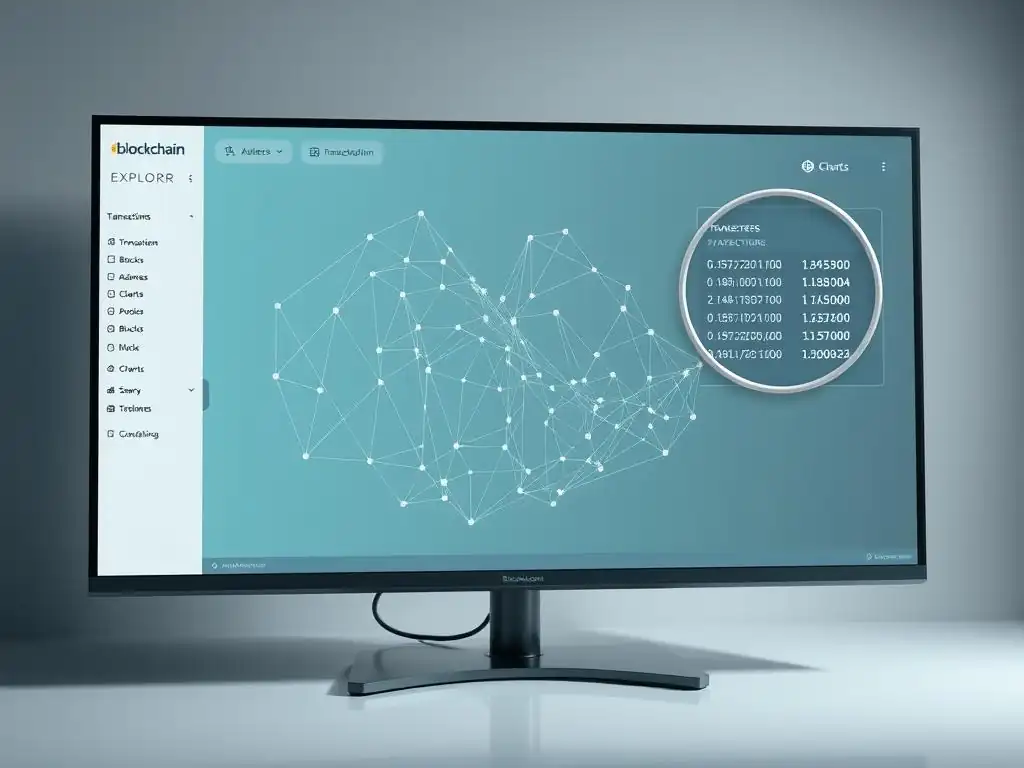
Blockchain.com Explorer, associated with the popular Blockchain.com cryptocurrency wallet and exchange platform, is characterized by its user-friendly interface and focus on providing accessible data insights. While perhaps not as feature-rich as Etherscan or Blockchair in terms of advanced analytical tools, Blockchain.com Explorer excels in its simplicity and ease of use, making it particularly suitable for beginners and users seeking quick overviews of blockchain data. Launched as part of the broader Blockchain.com ecosystem, the explorer is primarily focused on Bitcoin, Ethereum, and Bitcoin Cash blockchains.
Key features of Blockchain.com Explorer include a clean and intuitive interface, making it easy to navigate and find basic blockchain information. Users can readily search for transactions, addresses, and blocks, and view essential details such as transaction value, timestamps, and confirmation status.
The explorer also provides basic charts and statistics visualizing network activity, such as transaction volume and average transaction fees. While it may lack the in-depth analytical tools of specialized explorers, Blockchain.com Explorer prioritizes accessibility and clear data presentation, making it a good starting point for those new to blockchain data analysis or seeking a straightforward way to track transactions and monitor network activity.
Professional Use Cases in Blockchain Data Research
Despite its simplified interface, Blockchain.com Explorer can be valuable for certain professional use cases in blockchain data research, particularly those requiring high-level market monitoring and basic transaction tracking. Financial analysts and market researchers can utilize Blockchain.com Explorer to get a quick overview of cryptocurrency market trends, monitor transaction volumes, and track the flow of funds between exchanges and wallets. The explorer's charts and statistics provide a snapshot of network activity, which can be useful for identifying market trends and volatility.
For businesses involved in cryptocurrency transactions, Blockchain.com Explorer offers a convenient way to track payment confirmations and verify transaction status. Customer support teams can use the explorer to quickly check if a customer's transaction has been processed and confirmed on the blockchain.
Furthermore, educators and journalists can leverage Blockchain.com Explorer as a tool for demonstrating blockchain concepts and visualizing transaction flows for a broader audience. While it may not be suitable for in-depth academic research requiring advanced analytical tools, Blockchain.com Explorer's user-friendliness and accessibility make it a useful resource for professional applications needing quick and easy access to basic blockchain data insights.
Cost Analysis and Accessibility
Blockchain.com Explorer is primarily offered as a free service, readily accessible to anyone with an internet connection. The core explorer functionalities, including transaction lookups, address information, and basic charts, are available without any registration or subscription fees. This free and open access model aligns with Blockchain.com's broader mission of promoting cryptocurrency adoption and accessibility. The explorer's user-friendly interface further enhances its accessibility, making it easy for individuals with varying levels of technical expertise to utilize the platform.
While Blockchain.com offers other paid services, such as its cryptocurrency wallet and exchange platform, the explorer itself remains largely free to use. This makes it a highly cost-effective option for researchers, professionals, and individuals seeking basic blockchain data insights without incurring any financial burden. However, it's important to note that Blockchain.com Explorer may not offer the same level of advanced features, API access, or data depth as paid explorers like Etherscan or Blockchair.
For users requiring more sophisticated analytical tools or programmatic data access, alternative explorers with paid options might be more suitable. However, for basic blockchain data exploration and quick insights, Blockchain.com Explorer provides a highly accessible and cost-free solution.
4. BTCscan: Specialized Explorer for Bitcoin Data Research
Advantages of Using BTCscan for Bitcoin Analysis
BTCscan distinguishes itself by focusing exclusively on the Bitcoin blockchain, offering specialized features and data tailored specifically for Bitcoin data analysis research. While general-purpose explorers like Blockchair support multiple blockchains, BTCscan's singular focus on Bitcoin allows it to provide more in-depth and Bitcoin-specific functionalities. Launched as a dedicated Bitcoin explorer, BTCscan aims to be the go-to tool for researchers, developers, and enthusiasts deeply engaged with the Bitcoin network.
One key advantage of BTCscan is its potential to offer more granular Bitcoin-specific data and metrics compared to multi-chain explorers. This could include detailed mempool analysis, advanced transaction filtering options tailored to Bitcoin transaction types (e.g., SegWit, Taproot), and specialized charts visualizing Bitcoin network-specific metrics like UTXO (Unspent Transaction Output) distribution or Bitcoin mining pool activity.
While specific features may vary and evolve, the core advantage lies in BTCscan's specialization, potentially providing a more nuanced and Bitcoin-centric data analysis experience compared to broader explorers. For researchers exclusively focused on Bitcoin, BTCscan offers a potentially more tailored and insightful data exploration environment.
Case Studies: Research Projects Utilizing BTCscan
While publicly documented case studies specifically citing "BTCscan" in academic publications might be limited due to the explorer's potential niche focus or relatively newer status compared to established giants like Etherscan, we can envision realistic hypothetical research projects where a specialized Bitcoin explorer like BTCscan would be highly advantageous. Consider a research project focused on analyzing the impact of Bitcoin protocol upgrades, such as Taproot, on transaction privacy and efficiency.
Researchers could utilize BTCscan to filter and analyze transactions before and after the Taproot activation, examining changes in transaction sizes, transaction fees, and the adoption rate of Taproot features. A specialized Bitcoin explorer might offer advanced filtering options to isolate Taproot transactions more effectively than a general explorer.
Another potential research area could be Bitcoin mining pool analysis. Researchers studying the decentralization and security of the Bitcoin network might use BTCscan to track the distribution of mining power across different pools, analyze mining pool payouts, and investigate the impact of mining pool dynamics on Bitcoin's consensus mechanism. A dedicated Bitcoin explorer might provide specialized data and visualizations related to mining pool activity, offering deeper insights into this critical aspect of the Bitcoin ecosystem.
Furthermore, researchers investigating Bitcoin transaction fee markets could utilize BTCscan to analyze historical transaction fee data, model fee estimation algorithms, and study the impact of fee volatility on Bitcoin adoption. These hypothetical scenarios illustrate the potential value of a specialized Bitcoin explorer like BTCscan for focused Bitcoin data analysis research.
Free vs. Paid Features of BTCscan
The pricing model of BTCscan, like many blockchain explorers, likely involves a freemium approach, offering a core set of features for free while providing more advanced functionalities or API access through paid plans. The free tier of BTCscan would likely include basic transaction and address lookups, block exploration, and essential Bitcoin network statistics, making it accessible for general users and introductory research.
To monetize its services and cater to more demanding users, BTCscan might offer paid features such as enhanced API access for programmatic data retrieval, historical data export capabilities, advanced filtering and analytical tools, or priority support. API access is particularly crucial for researchers needing to collect large datasets for statistical analysis or build custom data analysis applications. Paid plans could offer higher API request limits, access to more granular data endpoints, or dedicated infrastructure for enterprise users.
While specific pricing details and feature breakdowns would be available on BTCscan's official website, the general model likely revolves around providing a valuable free service while offering premium features and enhanced data access through paid subscriptions to cater to professional and research-oriented users. Researchers should consult BTCscan's website to understand the specific features and pricing options available to determine the best access level for their Bitcoin data analysis needs.
5. TokenAnalyst: Deep Insights into DeFi and Token Movement
Why TokenAnalyst Stands Out for Decentralized Finance Research
TokenAnalyst carves a unique niche in the blockchain explorer landscape by specializing in providing deep insights into Decentralized Finance (DeFi) and token movements, particularly within the Ethereum ecosystem and other EVM-compatible chains. While general-purpose explorers offer broad blockchain data, TokenAnalyst focuses on delivering granular data and analytical tools tailored specifically for understanding the complex dynamics of DeFi protocols and token flows. Launched with a clear focus on the burgeoning DeFi space, TokenAnalyst aims to be the premier data intelligence platform for DeFi researchers, analysts, and investors.
TokenAnalyst's specialization in DeFi manifests in several key features. It provides detailed tracking of token movements across various DeFi protocols, including decentralized exchanges (DEXs), lending platforms, and yield aggregators. Researchers can use TokenAnalyst to analyze token flows into and out of specific DeFi protocols, track liquidity pool activity, and monitor yield farming strategies.
Furthermore, TokenAnalyst offers advanced analytics and visualizations specifically designed for DeFi data, such as dashboards displaying DeFi protocol TVL (Total Value Locked), token distribution across protocols, and historical performance metrics. The platform also focuses on ERC-20 and other token standards prevalent in DeFi, providing comprehensive data on token transfers, token holders, and token contract interactions. This DeFi-centric approach makes TokenAnalyst an invaluable resource for researchers deeply immersed in the decentralized finance space.
Academic Use Cases and Insights from TokenAnalyst
TokenAnalyst's specialized DeFi data and analytical tools unlock significant opportunities for academic research focused on decentralized finance and tokenomics. Researchers in finance and economics can leverage TokenAnalyst to study the efficiency and stability of DeFi markets, analyze the risks and rewards associated with different DeFi protocols, and investigate the impact of tokenomics on protocol adoption and user behavior.
For example, a research project could use TokenAnalyst data to analyze the correlation between token price volatility and liquidity pool depth in decentralized exchanges, or to study the effectiveness of different token incentive mechanisms in attracting and retaining users in DeFi lending platforms.
Computer science researchers can utilize TokenAnalyst to analyze the smart contract interactions within DeFi protocols, conduct security audits of DeFi smart contracts, and study the scalability and performance of decentralized applications under real-world DeFi usage. Researchers could use TokenAnalyst to analyze the transaction patterns of DeFi protocols to identify potential bottlenecks or vulnerabilities, or to compare the gas efficiency of different DeFi smart contract implementations.
Furthermore, social scientists can investigate governance mechanisms in DeFi protocols, study community participation in DAO governance within DeFi, and analyze the social and economic impact of decentralized finance on financial inclusion and access to financial services. The specialized DeFi data and analytical capabilities of TokenAnalyst empower academic researchers to gain deep insights into the rapidly evolving world of decentralized finance.
Subscription Plans and Value Proposition
TokenAnalyst operates primarily on a subscription-based model, offering tiered plans that provide access to varying levels of data, features, and API access. Unlike some explorers with prominent free tiers, TokenAnalyst's focus on specialized DeFi data and advanced analytics necessitates a subscription model to sustain its data infrastructure and development efforts. The subscription plans typically vary based on factors such as data volume, API request limits, access to historical data, and the availability of advanced analytical tools.
The value proposition of TokenAnalyst lies in its specialized focus on DeFi and token movements, providing researchers and professionals with data and insights that are often difficult or time-consuming to obtain from general-purpose explorers. For researchers deeply engaged in DeFi research, the subscription cost can be justified by the time saved in data collection and processing, as well as the access to specialized DeFi-centric analytical tools and visualizations.
The subscription plans are typically designed to cater to different user needs, ranging from individual researchers and analysts to institutional investors and DeFi protocol developers. While specific pricing details are available on TokenAnalyst's website, researchers should evaluate their data requirements, analytical needs, and budget to determine the most suitable subscription plan that unlocks the value of TokenAnalyst's specialized DeFi data intelligence.
Comparative Analysis of Blockchain Explorers
Feature Comparison: Etherscan vs. Blockchair vs. Blockchain.com
To facilitate a clearer understanding of the strengths and weaknesses of different blockchain explorers for research, a feature comparison is essential. Etherscan, Blockchair, and Blockchain.com Explorer, while all serving as blockchain data access points, offer distinct feature sets catering to different user needs and research focuses.
| Feature | Etherscan | Blockchair | Blockchain.com Explorer |
|---|---|---|---|
| Chains Supported | Primarily Ethereum & EVM-compatible chains | Multi-chain (Bitcoin, Ethereum, etc.) | Bitcoin, Ethereum, Bitcoin Cash |
| User Interface | User-friendly, feature-rich | User-friendly, advanced search capabilities | Very user-friendly, simple, basic features |
| Smart Contract Verification | Yes | No | No |
| Advanced Search | Basic search | Full-text search across blockchain data | Basic search |
| API Access | Yes, paid plans | Yes, paid plans | Limited or No API access (primarily UI) |
| Data Depth | Very Deep, Ethereum-focused | Deep, Multi-chain | Basic, High-level overview |
| DeFi Focus | Strong DeFi integration | Limited DeFi focus | Limited DeFi focus |
| Privacy Focus | Standard | Strong privacy focus | Standard |
| Data Export | Available via API | Available via API and UI (for paid plans) | Limited or No Data Export |
| Cost | Freemium (Free UI, Paid API) | Freemium (Free UI, Paid API/Enterprise) | Primarily Free |
This table highlights the trade-offs between different explorers. Etherscan excels in Ethereum-specific data depth and DeFi integration. Blockchair offers broader multi-chain support and powerful search capabilities. Blockchain.com Explorer prioritizes user-friendliness and simplicity for basic data access.
Pricing Comparison and Value for Researchers
Pricing models vary across blockchain explorers, influencing their accessibility and value proposition for researchers with different budgets. Blockchain.com Explorer stands out as primarily free, making it highly accessible for researchers with limited funding. However, its feature set and data depth are also relatively basic. Etherscan and Blockchair both operate on freemium models, offering free access to their user interfaces but charging for API access. Etherscan's API pricing is tiered based on usage, providing flexibility for researchers with varying data needs. Blockchair also offers tiered API plans and enterprise solutions, with pricing likely depending on data volume and features.
The value for researchers needs to be assessed in terms of cost versus functionality. For researchers requiring basic blockchain data for limited projects or exploratory analysis, the free tiers of Etherscan, Blockchair, or Blockchain.com Explorer might suffice.
However, for in-depth research requiring large datasets, programmatic data access, or specialized features like DeFi analytics or full-text search, investing in a paid API plan from Etherscan or Blockchair (or a subscription to TokenAnalyst for DeFi research) becomes necessary. Researchers should carefully evaluate their data needs, budget constraints, and the specific features offered by each explorer to determine the most cost-effective and valuable option for their research projects.
Recommendations Based on Research Needs
Choosing the right blockchain data analysis research tool depends heavily on the specific research needs and focus. For researchers primarily working with Ethereum data, especially in the DeFi space, Etherscan is the clear frontrunner due to its comprehensive Ethereum support, DeFi integrations, and robust feature set. For researchers requiring multi-chain data analysis or advanced search capabilities, Blockchair emerges as a strong contender with its broad blockchain coverage and powerful search engine. For researchers seeking a user-friendly and free tool for basic blockchain data exploration, particularly on Bitcoin, Ethereum, and Bitcoin Cash, Blockchain.com Explorer offers a highly accessible option.
For researchers exclusively focused on Bitcoin data analysis, BTCscan, as a specialized Bitcoin explorer, may offer a more tailored and in-depth data experience, although its features and data depth need to be evaluated against more established multi-chain explorers. Finally, for researchers deeply immersed in DeFi research and requiring specialized DeFi data and analytics, TokenAnalyst, despite its subscription-based model, provides unparalleled value with its DeFi-centric features and granular data insights. Ultimately, researchers should carefully consider their research questions, blockchain focus, data needs, budget, and technical expertise when selecting the most appropriate blockchain explorer for their academic or professional endeavors.
Conclusion: Choosing the Right Blockchain Data Analysis Research Tool
Final Thoughts on Selecting Explorers for Academic and Professional Use
Selecting the optimal blockchain data analysis research tool is a critical decision that significantly impacts the efficiency, depth, and accuracy of research outcomes. As highlighted throughout this article, no single explorer universally fits all research needs. The "best" tool is highly context-dependent, contingent upon the specific blockchain of interest, the research questions being addressed, the required data granularity, budget constraints, and the researcher's technical proficiency. For Ethereum-centric research, Etherscan's dominance is undeniable.
For multi-chain investigations, Blockchair's breadth is invaluable. For basic accessibility and cost-effectiveness, Blockchain.com Explorer serves well. For Bitcoin specialization, BTCscan offers focused tools, and for deep DeFi dives, TokenAnalyst is essential.
Researchers should adopt a strategic approach to tool selection, starting by clearly defining their research objectives and data requirements. Evaluating the feature sets, pricing models, and data coverage of different explorers against these needs is crucial. Leveraging free tiers for initial exploration and testing before committing to paid subscriptions or API access is a prudent strategy.
Furthermore, considering the long-term research goals and potential scalability needs is important when choosing an explorer for sustained academic or professional use. The blockchain explorer landscape is continuously evolving, with new tools and features emerging regularly. Staying informed about these developments and periodically re-evaluating tool choices ensures researchers maintain access to the most effective resources for their blockchain data analysis endeavors.
Future Trends in Blockchain Data Analysis Tools
The field of blockchain data analysis tools is poised for continued innovation and evolution, driven by the rapid growth of the blockchain ecosystem and the increasing demand for sophisticated data insights. Several key trends are likely to shape the future of blockchain explorers and data analysis platforms. One prominent trend is the integration of Artificial Intelligence (AI) and Machine Learning (ML) into blockchain data analysis tools. AI-powered explorers could automate anomaly detection, identify complex transaction patterns, and provide predictive analytics based on blockchain data, significantly enhancing research capabilities.
Another trend is the increasing focus on cross-chain data aggregation and analysis. As interoperability between blockchains becomes more critical, explorers capable of seamlessly integrating and analyzing data across multiple chains will become increasingly valuable for researchers studying the interconnected blockchain ecosystem. Furthermore, we can expect to see advancements in user-friendly data visualization and interactive dashboards within blockchain explorers, making complex on-chain data more accessible and understandable to a wider audience, including researchers from non-technical backgrounds.
Finally, the growing emphasis on data privacy and security will likely lead to the development of blockchain analysis tools that incorporate privacy-preserving techniques and prioritize user data protection. These future trends promise to make blockchain data analysis more powerful, accessible, and insightful, further accelerating both academic and professional research within this transformative technological domain.
Frequently Asked Questions
What are blockchain explorers and why are they useful for blockchain data analysis research?
Blockchain explorers are web-based tools that allow users to browse data on a blockchain. They are crucial for researchers as they provide accessible on-chain information, enabling the analysis of transactions, blocks, and addresses.
How can blockchain explorers aid in academic research concerning DeFi (Decentralized Finance)?
Researchers can use explorers to track the flow of funds through DeFi protocols, analyze user behavior within decentralized applications (dApps), and investigate the security vulnerabilities of smart contracts.
Are there specific blockchain explorers designed for enterprise-level blockchain data analysis?
While many explorers offer general functionality, some provide enhanced APIs and analytical features catering to enterprise needs. These features might include customizable dashboards and more sophisticated data filtering capabilities.
What regulatory insights can be gleaned from using blockchain explorers in relation to blockchain data analysis research?
Explorers can help track transaction origins and destinations, crucial for identifying potential illegal activities and complying with anti-money laundering (AML) regulations. They enable regulators to monitor blockchain networks for suspicious patterns.
What is the future of blockchain explorers and how will they evolve to support advanced blockchain data analysis research tools?
Future explorers will likely integrate with machine learning models for automated pattern recognition and anomaly detection. They will also offer more sophisticated data visualization tools and APIs for seamless integration with other research platforms.
Final Reflection: Unveiling the Future with Blockchain Data
The exploration of blockchain data, as highlighted throughout this article, is no longer a niche pursuit but a critical necessity for understanding the evolving digital landscape. The tools and methodologies discussed are not just academic exercises; they are the keys to unlocking insights that will shape industries, inform policy, and ultimately, redefine our understanding of trust and transparency in a digital world.
The power of blockchain data analysis extends far beyond mere technological curiosity. It influences the very fabric of our society, impacting everything from financial systems to supply chain management. My own fascination with this field stems from the belief that democratizing access to this data empowers individuals and organizations to make more informed decisions. Data is the new oil; it's valuable, but if unrefined it cannot really be used.
- Clive Humby's quote perfectly encapsulates the role of blockchain explorers in refining raw blockchain data into actionable intelligence.
As we stand at the cusp of a data-driven revolution, the ability to analyze blockchain data will become an increasingly vital skill. Therefore, I invite you to reflect on how you can leverage these tools and insights to contribute to a more transparent, efficient, and equitable future. Embrace the power of blockchain data analysis, and become a pioneer in shaping the next generation of digital innovation.
Unleash the Power of Blockchain Insights!
Thank you for exploring the world of blockchain explorers and their potential for research. Now that you’re equipped with the knowledge to navigate on-chain data, it’s time to put that understanding into action.
Here’s how you can further explore the possibilities:
- Start your exploration today! Choose a blockchain explorer and analyze a specific transaction or smart contract related to your research interests. Share your findings in the comments!
- Dive deeper into our resources and compare various blockchain explorer tools to understand their unique features and capabilities.
- Become a contributor to Blockchain Trends! If you’ve uncovered fascinating insights using blockchain explorers, consider writing a guest post to share your expertise with our community.
What unexpected discovery will you make by harnessing the power of blockchain exploration? Share your initial research questions below!
Leave a Reply