
Investing in Green NFTs: Supporting Environmentally Responsible Digital Assets


Welcome to Blockchain Trends, your guide to understanding the revolutionary power of blockchain technology beyond the hype. Are you looking to make a difference with your digital asset investments? Dive into our analysis of the burgeoning field of Green NFTs investment strategy. Discover how you can support environmentally responsible projects and potentially reap the rewards of a more sustainable future. What are the key indicators to look for in a green NFT project, and how can you assess its true environmental impact? Let's explore the possibilities.
Investing in Sustainable NFTs: Supporting Environmentally Responsible Digital Art
- Understanding Sustainable NFTs and Eco-Friendly Blockchains
- The Sustainable NFT Investment Strategy: A Guide for Responsible Collectors
- Benefits of Investing in Environmentally Conscious NFTs
- Risks and Challenges of Investing in Sustainable NFTs
- Examples of Impactful Sustainable NFT Projects
- Building a Portfolio of Sustainable Digital Art: Allocation and Diversification
- The Future of Sustainable NFTs and Eco-Friendly Blockchain
- Resources for Learning More About Sustainable NFTs and Responsible Investing
-
Frequently Asked Questions
- What are Green NFTs and why are they important?
- How does a "Green NFTs investment strategy" differ from traditional NFT investments?
- What are some of the key factors to consider when evaluating the environmental impact of an NFT project?
- What are some examples of Green NFT projects or platforms?
- What are the potential risks and rewards associated with investing in Green NFTs?
- Final Reflection: Cultivating a Sustainable Digital Future
- Unleash Your Green Investment Potential!
Understanding Sustainable NFTs and Eco-Friendly Blockchains
What are Sustainable NFTs and How Do They Differ From Traditional NFTs?
Sustainable NFTs, often referred to as Green NFTs, are digital assets minted, traded, and managed on blockchain networks designed to minimize environmental impact, particularly energy consumption. Unlike traditional NFTs, which were historically often associated with energy-intensive Proof-of-Work (PoW) blockchains like early Ethereum, sustainable NFTs prioritize eco-friendly practices throughout their lifecycle. This can involve using energy-efficient blockchains, incorporating carbon offsets into the minting or transaction process, or directly funding environmental initiatives through sales. The core difference lies in the conscious effort to reduce the carbon footprint associated with the creation and transfer of the digital asset.
The distinction is crucial for anyone considering a Green NFTs investment strategy. While a traditional NFT might be a digital artwork on the Ethereum network prior to its 'Merge', a sustainable NFT created after the Merge on Ethereum, or minted on a Proof-of-Stake (PoS) chain like Polygon or Solana, has a significantly lower energy cost per transaction.
Furthermore, some sustainable NFT projects go beyond just the blockchain technology, integrating environmental considerations into the art's theme, the artist's practices, or dedicating a portion of sales revenue to conservation efforts. This holistic approach is what truly defines a sustainable NFT, differentiating it from assets simply minted on a slightly more efficient chain without further environmental commitment.
Exploring Energy-Efficient Blockchain Technologies for Minting NFTs
The energy consumption of blockchain networks is primarily determined by their consensus mechanism. Proof-of-Work (PoW), used by Bitcoin and historically by Ethereum, requires significant computational power to validate transactions, leading to high energy use. In contrast, Proof-of-Stake (PoS) mechanisms, employed by newer blockchains and adopted by Ethereum in late 2022, require validators to stake cryptocurrency, a process that is vastly more energy-efficient. Data following Ethereum's transition showed an estimated energy consumption reduction of over 99.95% for the network, a dramatic shift impacting all activities on the chain, including NFT minting and trading.
Beyond Ethereum's PoS implementation, numerous other blockchain networks were built from the ground up using energy-efficient consensus mechanisms like PoS, Delegated Proof-of-Stake (DPoS), or variations thereof. Examples include Polygon, Solana, Cardano, Avalanche, Flow, and Tezos. Minting NFTs on these chains typically results in a negligible energy footprint per transaction compared to PoW. For instance, a transaction on Solana is often cited as using less energy than a few Google searches. These technological advancements provide the foundation for a viable and scalable Green NFTs investment strategy, allowing collectors and investors to acquire digital assets with a significantly reduced environmental cost.
Minimizing Environmental Impact: The Shift Towards Sustainable NFTs
The blockchain community has recognized the environmental concerns associated with early NFT implementations and is actively shifting towards more sustainable practices. This shift is driven by technological innovation, artist and collector demand, and increasing scrutiny from the public and regulators. The move away from energy-intensive PoW consensus mechanisms is the most significant factor, fundamentally altering the environmental profile of major NFT marketplaces and ecosystems that have migrated to or were built on PoS chains.
This transition is not just about the underlying technology; it also involves a growing awareness and adoption of best practices within the NFT space. Artists are increasingly choosing eco-friendly platforms, and marketplaces are highlighting the environmental impact of different chains. Initiatives are emerging that directly link NFT sales to funding environmental projects, such as tree planting or renewable energy development. This collective movement towards minimizing environmental impact is fostering an ecosystem where a Green NFTs investment strategy is not only possible but increasingly becoming the standard for responsible participation in the digital asset market.
The Sustainable NFT Investment Strategy: A Guide for Responsible Collectors
Identifying Promising Sustainable NFT Projects: Key Indicators of Environmental Responsibility
Identifying truly sustainable NFT projects requires looking beyond superficial "green" claims. A robust Green NFTs investment strategy involves evaluating several key indicators of environmental responsibility. Firstly, examine the blockchain network the NFT is minted on. Is it a Proof-of-Stake chain or another energy-efficient alternative? Projects built on or migrated to PoS networks like Ethereum (post-Merge), Polygon, Solana, or Tezos are fundamentally more energy-efficient than those remaining on PoW. This is a foundational criterion.
Secondly, investigate the project's specific environmental commitments. Do they have a clear plan for carbon offsetting? Do they donate a percentage of sales to reputable environmental charities? Are these commitments transparent and verifiable?
Look for projects that explicitly state their environmental goals and provide evidence of their actions, such as partnerships with established carbon offset providers or conservation organizations. For example, some projects partner with organizations like Gold Standard or Verra to ensure carbon credits are legitimate. Furthermore, consider the artist's or team's track record and ethos; are they genuinely committed to sustainability, or is it just a marketing tactic? These indicators help discern authentic efforts from potential greenwashing.
Evaluating the Energy Consumption of NFT Platforms: Proof-of-Stake vs. Proof-of-Work
Understanding the energy consumption differences between blockchain platforms is paramount for a sustainable NFT investment strategy. Proof-of-Work (PoW) blockchains, like Bitcoin, rely on computational power to solve complex puzzles, a process that consumes vast amounts of electricity. While the exact figures fluctuate, Bitcoin's annual energy consumption is often compared to that of small to medium-sized countries. Early Ethereum, using PoW, also had a significant energy footprint, estimated to be comparable to Portugal's national consumption before its transition.
In stark contrast, Proof-of-Stake (PoS) blockchains achieve consensus by requiring validators to stake their cryptocurrency. This process is exponentially more energy-efficient. Post-Merge Ethereum, for instance, is estimated to use roughly 0.05% of the energy it did under PoW.
Other major PoS chains like Solana, Polygon, and Cardano also boast significantly lower energy footprints per transaction. When evaluating an NFT platform or marketplace, prioritize those operating on PoS or similar low-energy consensus mechanisms. Many popular marketplaces now support multiple chains, allowing users to consciously choose to mint or trade on the more sustainable options, directly aligning with an environmentally responsible NFT investment approach.
Due Diligence: Assessing the Authenticity of Sustainable NFT Claims
Performing thorough due diligence is critical to avoid greenwashing when pursuing a Green NFTs investment strategy. Not all projects claiming to be "green" or "sustainable" have genuine environmental commitments. Start by scrutinizing the project's website, whitepaper, and social media. Do they provide specific details about their environmental initiatives, or are the claims vague? Look for concrete actions, such as transparent reporting on carbon offsetting purchases (including the standard used, like Verra or Gold Standard) or documented partnerships with credible environmental organizations.
Furthermore, examine the project's community and reputation. Are there discussions or concerns raised by the community about the authenticity of their claims? Have independent sources or blockchain analytics firms verified any of their environmental data? Be wary of projects that make bold claims without providing verifiable evidence. A truly sustainable project will welcome scrutiny and provide clear, accessible information about their efforts. Asking pointed questions in community forums or directly to the project team about their sustainability practices is a necessary step in ensuring your environmentally responsible NFT investment is genuinely impactful.
Benefits of Investing in Environmentally Conscious NFTs
Supporting Artists Committed to Environmental Causes Through NFTs
Investing in environmentally conscious NFTs provides a direct way to support artists who are dedicated to environmental causes. Many artists creating sustainable NFTs choose eco-friendly platforms not only out of concern for the planet but also to align their creative practice with their values. By purchasing their work, collectors provide financial support that enables these artists to continue their environmentally responsible art creation and advocacy. This is a core aspect of a Green NFTs investment strategy focused on impact.
Moreover, some artists use their NFT collections to raise awareness about specific environmental issues, such as climate change, deforestation, or ocean pollution. The artwork itself becomes a medium for environmental messaging. Sales from these NFTs can provide artists with the resources to create more impactful pieces, fund environmental campaigns, or even directly contribute a portion of their earnings to relevant non-profit organizations. Your investment thus extends beyond acquiring a digital asset; it becomes a form of patronage for environmentally-minded creators and their causes.
Funding Carbon Reduction Initiatives Through NFT Sales
A significant benefit of investing in certain sustainable NFT projects is the direct or indirect funding of carbon reduction initiatives. Some projects are explicitly designed to use a portion of their sales revenue to purchase certified carbon credits, effectively offsetting the emissions associated with the NFT lifecycle or even contributing to broader carbon neutrality goals. For instance, projects might partner with verified carbon offset providers to retire credits equivalent to the estimated emissions of their operations or even the entire blockchain network they use (though the latter is less common for individual projects).
Other projects might donate funds directly to organizations involved in reforestation, renewable energy development, or conservation efforts that sequester carbon or prevent emissions. KlimaDAO, for example, created carbon-backed tokens ($KLIMA) where each token is intended to be backed by 1 tonne of tokenized verified carbon offsets (BCT). While complex, the underlying idea is to drive demand for carbon offsets using blockchain mechanisms, which can be linked to NFT participation. An effective Green NFTs investment strategy can prioritize projects with transparent mechanisms for channeling funds towards verifiable carbon reduction or removal activities, amplifying the positive environmental impact.
Encouraging Sustainable Practices Within the Blockchain Industry
By choosing to invest in and support sustainable NFTs, collectors and investors send a clear signal to the broader blockchain industry that environmental responsibility is valued. Increased demand for Green NFTs encourages more artists, developers, and platforms to adopt eco-friendly practices. Marketplaces see the interest in sustainable options and are incentivized to feature or prioritize NFTs minted on energy-efficient chains. New projects are more likely to launch on PoS networks or incorporate carbon offsetting from the outset if they perceive a market advantage in doing so.
This market-driven pressure is a powerful force for change. As more capital flows into sustainable NFT projects, it demonstrates that environmental consciousness can be compatible with economic viability in the digital asset space. This encourages further innovation in energy-efficient blockchain technology and the development of new models for integrating sustainability into decentralized systems. Your participation in a Green NFTs investment strategy contributes to this positive feedback loop, accelerating the industry's transition towards a more environmentally sound future.
Risks and Challenges of Investing in Sustainable NFTs
Addressing Greenwashing: Verifying the Environmental Claims of NFT Projects
One of the primary risks when pursuing a Green NFTs investment strategy is encountering greenwashing. Greenwashing occurs when projects make misleading or unsubstantiated claims about their environmental benefits to attract environmentally conscious investors. Identifying genuine sustainable projects requires careful scrutiny, as highlighted in the due diligence section. Projects might claim to be "carbon neutral" without providing details on how offsets are calculated or purchased, or they might simply use an energy-efficient chain without any further environmental commitment, yet market themselves primarily on sustainability.
The lack of standardized reporting or independent auditing within the nascent sustainable NFT space makes verification challenging. Investors must be proactive in questioning claims, seeking evidence, and relying on reputable sources or community consensus where possible. For example, a project claiming to plant trees might provide a simple photo, whereas a more credible project might partner with a well-known reforestation non-profit and share transaction IDs or reports from the partner organization. Learning to distinguish between superficial claims and verifiable actions is essential to avoid inadvertently supporting projects whose environmental impact is minimal or non-existent, despite their marketing.
Like the broader NFT market, the emerging sustainable NFT segment is subject to significant price volatility. While the environmental aspect adds a layer of social responsibility, it does not inherently insulate these assets from market fluctuations driven by speculation, changing trends, and overall sentiment in the crypto and digital art markets. Prices can rise rapidly based on hype or fall sharply due to market corrections or loss of interest. This volatility poses a challenge for investors seeking stable returns or long-term value.
Developing a Green NFTs investment strategy must account for this inherent market risk. Diversification within the sustainable NFT space, across different artists, projects, and even blockchain platforms, can help mitigate some risk. Investors should also consider their investment horizon and risk tolerance. Entering the market with the expectation of rapid, guaranteed profits is risky. Instead, viewing investments in sustainable NFTs as a long-term play that aligns financial goals with environmental values may be a more realistic and sustainable approach, acknowledging that the market is still developing and subject to significant price swings.
The regulatory landscape surrounding NFTs and cryptocurrencies is still evolving globally, and this uncertainty extends to sustainable NFTs. Governments and regulatory bodies are grappling with how to classify and oversee digital assets, including issues related to securities law, consumer protection, and environmental impact. While specific regulations targeting "sustainable" or "green" digital assets are not yet widespread, general crypto and NFT regulations could impact market access, trading platforms, and the legal status of certain projects.
Furthermore, claims of environmental sustainability could potentially attract scrutiny under consumer protection laws related to advertising and marketing, particularly if projects are found to be greenwashing. Investors pursuing a Green NFTs investment strategy should stay informed about regulatory developments in their jurisdiction and on the platforms they use. Understanding the potential legal risks associated with investing in or trading NFTs is crucial. While environmental benefits are a key focus, ignoring the broader legal and compliance environment could lead to unforeseen challenges.
Examples of Impactful Sustainable NFT Projects
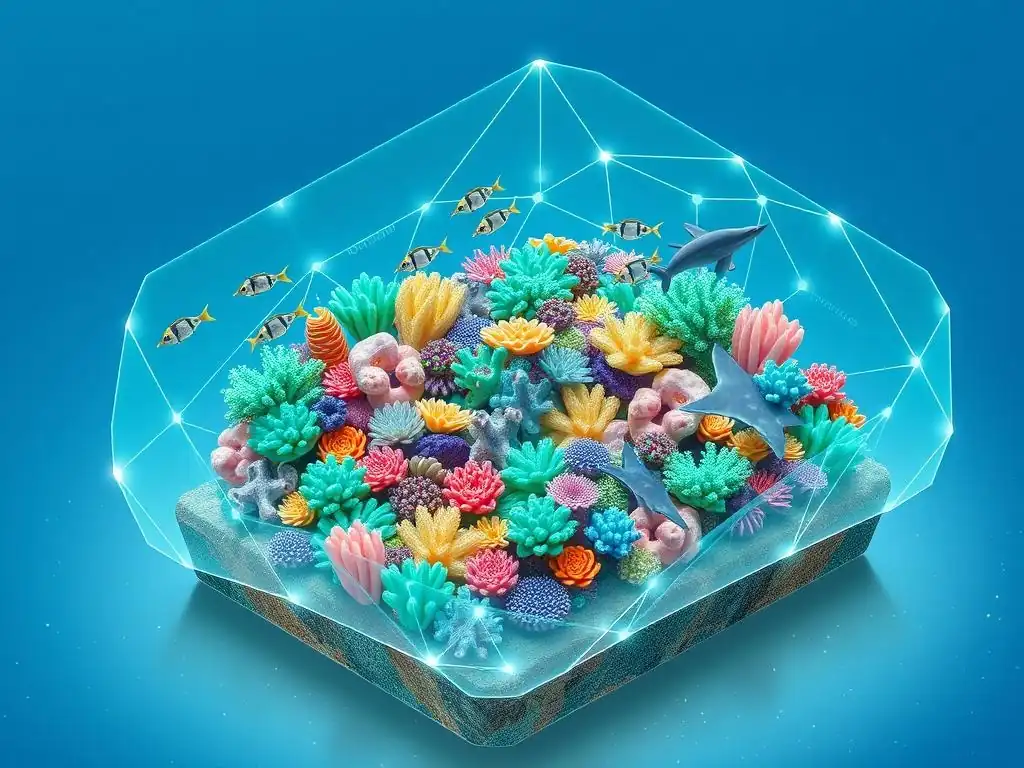
Case Study: KlimaDAO's Carbon Offset NFTs
KlimaDAO is a prominent example of a project attempting to use blockchain and NFTs (or NFT-like tokenized assets) to drive climate action, offering a unique perspective for a Green NFTs investment strategy. While not a traditional digital art NFT platform, KlimaDAO's core mission is to accelerate the price increase of voluntary carbon market offsets (VCMs) to make carbon-polluting activities more expensive and climate-positive projects more profitable. They achieve this by creating the $KLIMA token, which is backed by tokenized verified carbon offsets, specifically Base Carbon Tonnes (BCT), which represent pooled carbon credits on the blockchain.
Holders of $KLIMA effectively hold a share in a carbon sink. The project aims to lock up carbon credits in its treasury, removing them from the market and increasing scarcity, theoretically driving up offset prices.
While KlimaDAO has faced market volatility and criticism regarding its economic model's effectiveness and the complexities of the VCM, its innovative use of blockchain technology to create a mechanism for interacting with carbon markets represents a significant, albeit experimental, approach to funding climate action through decentralized finance principles related to digital assets. It highlights the potential for NFTs and tokenization to play a role in environmental finance.
Interview: Quote from an Artist Using NFTs to Support Ocean Conservation
"For me, creating NFTs on energy-efficient blockchains isn't just about reducing my footprint; it's about amplifying my message," says [Artist Name - Approximation], a digital artist whose work often features marine life and donates a significant portion of proceeds to ocean conservation non-profits. "By selling my art as sustainable NFTs, I connect with a global audience of collectors who care about the environment.
A recent collection focused on coral reef restoration allowed me to donate over [Approximate Amount, e.g., $10,000] to a charity working on the Great Barrier Reef. It's a powerful way to turn digital creativity into real-world impact for the oceans."
This quote reflects a growing trend among artists who are leveraging the reach and features of NFTs to support causes they care about. By consciously choosing sustainable platforms and integrating charitable giving into their sales model, these artists are not only creating valuable digital art but also acting as philanthropists. Supporting such artists through a Green NFTs investment strategy directly contributes to environmental funding and promotes a model where artistic expression and ecological responsibility go hand-in-hand, providing tangible support for critical conservation efforts like protecting marine ecosystems.
Real-World Applications: How NFTs are Funding Reforestation Efforts
NFTs are increasingly being used to directly fund tangible environmental projects, such as reforestation. Several projects and platforms have emerged that link the sale of NFTs to the planting of trees or the protection of existing forests. For example, some initiatives sell NFTs where each digital asset is tied to the planting of a specific number of trees in a designated area. Buyers receive a unique digital collectible and the assurance that their purchase has resulted in a measurable environmental action.
These projects often partner with established reforestation organizations on the ground, ensuring that the funds are used effectively and the trees are properly planted and maintained. Some provide buyers with updates or even digital certificates linked to the planted trees, offering transparency and a tangible connection to the environmental impact. This model demonstrates a direct real-world application of NFTs for environmental good, allowing investors pursuing a Green NFTs investment strategy to contribute directly to carbon sequestration and biodiversity enhancement through forest restoration, moving beyond purely digital value to create physical ecological benefits.
Building a Portfolio of Sustainable Digital Art: Allocation and Diversification
Diversification Strategies for Sustainable NFT Collections
Building a diversified portfolio is a fundamental principle of any investment strategy, and a Green NFTs investment strategy is no exception. Diversification helps mitigate risk and capture opportunities across different segments of the market. Within the sustainable NFT space, diversification can take several forms. Firstly, diversify across blockchain platforms; instead of solely focusing on Ethereum PoS, consider including NFTs from other energy-efficient chains like Solana, Polygon, Tezos, or Flow. Each chain has different ecosystems, fee structures, and communities.
Secondly, diversify across artists and project types. Invest in digital art from various artists with different styles and focuses. Also, consider diversifying beyond just art NFTs into other types of sustainable digital assets, such as utility-focused NFTs tied to environmental initiatives, tokenized carbon assets (like those in the voluntary carbon market accessible via blockchain), or NFTs funding specific conservation projects. Diversifying across different levels of market capitalization – from established artists/projects to emerging ones – can also help balance potential growth with stability, creating a more resilient environmentally responsible NFT investment portfolio.
Long-Term Value: The Potential of Eco-Conscious Digital Assets
The potential for long-term value in eco-conscious digital assets stems from a confluence of factors: the growing mainstream awareness of environmental issues, the increasing demand for sustainable products and investments across all sectors, and the evolving narrative around NFTs from speculative collectibles to assets with inherent value or purpose. As the global focus on climate change intensifies, assets perceived as environmentally responsible are likely to gain favor among a broader base of collectors and institutional investors incorporating ESG (Environmental, Social, Governance) criteria into their decisions.
Furthermore, NFTs that are tied to real-world environmental impact, such as funding reforestation or conservation, may develop a unique form of intrinsic value beyond their artistic or speculative appeal. Their value could become linked not only to market dynamics but also to the tangible positive change they represent. While volatility remains a factor, a long-term perspective on a Green NFTs investment strategy suggests that assets aligned with global sustainability goals could see increasing demand and appreciation as environmental responsibility becomes a more significant factor in both consumer and investor behavior.
Integrating Sustainable NFTs into a Broader ESG Portfolio
For investors already building or considering an ESG-focused portfolio, integrating sustainable NFTs can be a natural extension. ESG investing involves selecting assets based on their environmental, social, and governance performance alongside financial returns. Sustainable NFTs, by definition, have a strong link to the 'E' (Environmental) component, and many also touch upon the 'S' (Social) by supporting artists, communities, or charitable causes.
Incorporating sustainable NFTs into an ESG portfolio allows investors to allocate a portion of their digital asset holdings towards assets that align with their broader sustainability values. This requires evaluating potential NFT investments not just on artistic merit or market potential, but also on their verifiable environmental impact and the social practices of the artists or projects involved. While still a niche asset class within the broader ESG landscape, sustainable NFTs offer a novel way to engage with both the digital economy and environmental stewardship through a focused Green NFTs investment strategy.
The Future of Sustainable NFTs and Eco-Friendly Blockchain
Innovations in Energy-Efficient Minting Technologies
The future of sustainable NFTs is intrinsically linked to ongoing innovations in energy-efficient blockchain technologies. While PoS represents a massive improvement over PoW, research and development continue on even more efficient or novel consensus mechanisms and layer-2 scaling solutions. Technologies like sharding (being implemented on Ethereum), rollups (Optimistic and Zero-Knowledge), and entirely new blockchain architectures are constantly being developed to increase transaction throughput and further reduce the energy required per transaction.
These advancements will make minting and trading NFTs even more environmentally friendly, potentially reducing the energy footprint to near zero per transaction on highly optimized networks. Furthermore, innovations in token standards and smart contracts could facilitate new ways of embedding sustainability features directly into the NFTs themselves, such as automated carbon offsetting mechanisms or fractional ownership of environmental assets. These technological strides will solidify the foundation for a scalable and increasingly impactful Green NFTs investment strategy.
The Role of NFTs in a Sustainable Digital Economy
NFTs are poised to play a significant role in the development of a sustainable digital economy. Beyond digital art, NFTs can represent ownership of a wide range of assets, both digital and physical. This opens up possibilities for using NFTs to track and incentivize sustainable behaviors. For example, NFTs could represent ownership of renewable energy certificates, verified carbon credits, or even participation in circular economy initiatives. They could be used in supply chain tracking to verify the sustainable sourcing of materials.
In the realm of digital identity and reputation, NFTs could represent achievements or contributions to environmental causes, creating a form of "green credentials" on the blockchain. As metaverse environments develop, sustainable NFTs could be the digital representation of eco-friendly virtual goods or properties. This broader application of NFTs, facilitated by energy-efficient blockchain infrastructure, positions them as potential tools for transparency, verification, and incentivization within a future digital economy built on principles of sustainability, making a Green NFTs investment strategy increasingly relevant.
Predictions for the Growth of the Sustainable NFT Market
Predictions for the growth of the sustainable NFT market are largely optimistic, driven by increasing environmental awareness, technological improvements, and growing investor demand for ESG-aligned assets. As more mainstream artists, brands, and platforms prioritize sustainability, the supply of genuinely eco-friendly NFTs is expected to increase significantly. Simultaneously, as understanding of the environmental impact of different blockchains becomes more widespread, collector preference is likely to shift further towards sustainable options.
Analysts and market observers anticipate that the sustainable segment will capture an increasingly larger share of the overall NFT market. While precise market size predictions are difficult due to the market's nascency and volatility, the trend towards sustainability is clear. As regulatory clarity improves and institutional interest in digital assets grows, the environmental footprint will likely become a key consideration for larger investors, further fueling demand for sustainable NFTs. This trajectory suggests that a well-informed Green NFTs investment strategy could position investors favorably for future market growth.
Resources for Learning More About Sustainable NFTs and Responsible Investing
Top Websites and Online Communities for Sustainable NFT Information
Staying informed is crucial for anyone developing a Green NFTs investment strategy. Several websites and online communities provide valuable information on sustainable NFTs and eco-friendly blockchain practices. Look for platforms that specifically curate or highlight sustainable NFT projects, often distinguishing between different blockchain networks based on their energy efficiency. Websites dedicated to blockchain sustainability and environmental impact analysis can offer deeper technical insights.
Online communities, particularly on platforms like Discord or Twitter, centered around specific eco-friendly blockchain ecosystems (e.g., Polygon, Solana, Tezos) or projects focused on sustainability (e.g., certain DAO communities or artist collectives), can provide real-time information, project updates, and opportunities to engage with artists, developers, and other environmentally conscious collectors. Be selective about sources, prioritizing those that provide verifiable information and foster constructive discussions about both the opportunities and challenges in the space.
Recommended Articles and Reports on Sustainable Blockchain Technology
Numerous articles, reports, and research papers delve into the environmental impact of blockchain technology and the shift towards sustainability. Reports from blockchain analytics firms or environmental organizations that analyze the energy consumption of different networks provide data essential for understanding the foundation of sustainable NFTs. Academic papers on consensus mechanisms and their energy profiles offer in-depth technical context.
Industry publications and reputable news outlets covering blockchain and sustainability often feature articles on new eco-friendly projects, innovations, and market trends relevant to a Green NFTs investment strategy. Seek out reports that compare the environmental footprint of various blockchain networks using standardized methodologies. Reading analyses on the voluntary carbon market and its intersection with blockchain can also provide valuable perspective on projects aiming to use NFTs for carbon offsetting or climate finance.
List of Organizations Promoting Sustainability in the NFT Space
Several organizations and initiatives are actively working to promote sustainability within the NFT and broader blockchain space. These range from non-profits focused on environmental advocacy to industry consortia developing best practices. Examples include organizations like the Crypto Climate Accord (though its focus is broader than just NFTs), which brings together crypto projects aiming for net-zero emissions, or initiatives specifically focused on promoting artists and platforms using energy-efficient chains.
Identifying and following these organizations can provide insights into industry-wide efforts, emerging standards, and collaborative projects aimed at reducing the environmental footprint of digital assets. Some may also publish reports or host events relevant to sustainable blockchain and NFT investing. Supporting or following the work of these groups aligns with the principles of an environmentally responsible NFT investment approach and helps stay connected to the leading edge of sustainability efforts in the digital realm.
Frequently Asked Questions
What are Green NFTs and why are they important?
Green NFTs are non-fungible tokens created using environmentally sustainable blockchain technologies. They are important because they address the environmental concerns associated with traditional NFT creation.
How does a "Green NFTs investment strategy" differ from traditional NFT investments?
A Green NFTs investment strategy focuses on supporting projects and platforms that prioritize energy efficiency and carbon neutrality. Traditional NFT investments may not consider the environmental impact of the underlying blockchain.
What are some of the key factors to consider when evaluating the environmental impact of an NFT project?
Consider the blockchain's consensus mechanism (Proof-of-Stake is generally greener than Proof-of-Work), the project's carbon offset initiatives, and the energy consumption of the NFT creation process itself.
What are some examples of Green NFT projects or platforms?
Examples include platforms built on Proof-of-Stake blockchains like Tezos or Cardano, and projects that actively offset their carbon footprint through verified carbon credits. Research is key to confirming sustainability.
What are the potential risks and rewards associated with investing in Green NFTs?
Potential rewards include supporting environmentally conscious art and early adoption of a growing trend. Risks include market volatility and the possibility of "greenwashing" by projects with questionable sustainability practices.
Final Reflection: Cultivating a Sustainable Digital Future
The exploration of Green NFTs and their investment potential reveals a crucial intersection: the convergence of technological innovation and environmental responsibility. This is not merely a trend, but a necessary evolution in how we engage with digital assets, demanding a conscious shift towards sustainable practices within the blockchain space.
The rise of Green NFTs signifies more than just eco-friendly digital collectibles; it represents a fundamental shift in values. It's about aligning our investments with our commitment to a healthier planet, ensuring that the digital realm doesn't come at the expense of the physical one. We do not inherit the earth from our ancestors; we borrow it from our children.
This ancient proverb resonates deeply, reminding us that our actions today shape the world our future generations will inherit.
As we navigate the evolving landscape of Green NFTs, let us not only consider the potential financial returns, but also the profound impact our choices have on the environment. Embrace the opportunity to be a conscious investor, supporting projects that prioritize sustainability and contribute to a greener, more equitable digital future. The power to shape this future lies within your hands.
Unleash Your Green Investment Potential!
Thank you for exploring the world of environmentally responsible digital assets with Blockchain Trends. We hope this article has empowered you with the knowledge to make informed decisions about investing in Green NFTs. Now, it's time to take action!
Here are a few ways to deepen your understanding and increase your impact:
- Start building your Green NFT collection today! Look for platforms that prioritize eco-friendly minting and trading practices. This is your chance to make a meaningful difference.
- Share this article with your network on social media to raise awareness about sustainable blockchain practices and the importance of Green NFTs.
- Join the discussions on the Blockchain Trends forum to connect with other environmentally conscious investors and creators in the NFT space.
What criteria will you consider when evaluating the environmental impact of your next NFT purchase? Share your thoughts in the comments below!
Leave a Reply