
The Power of DIDs: Exploring Decentralized Identifiers and Their Potential

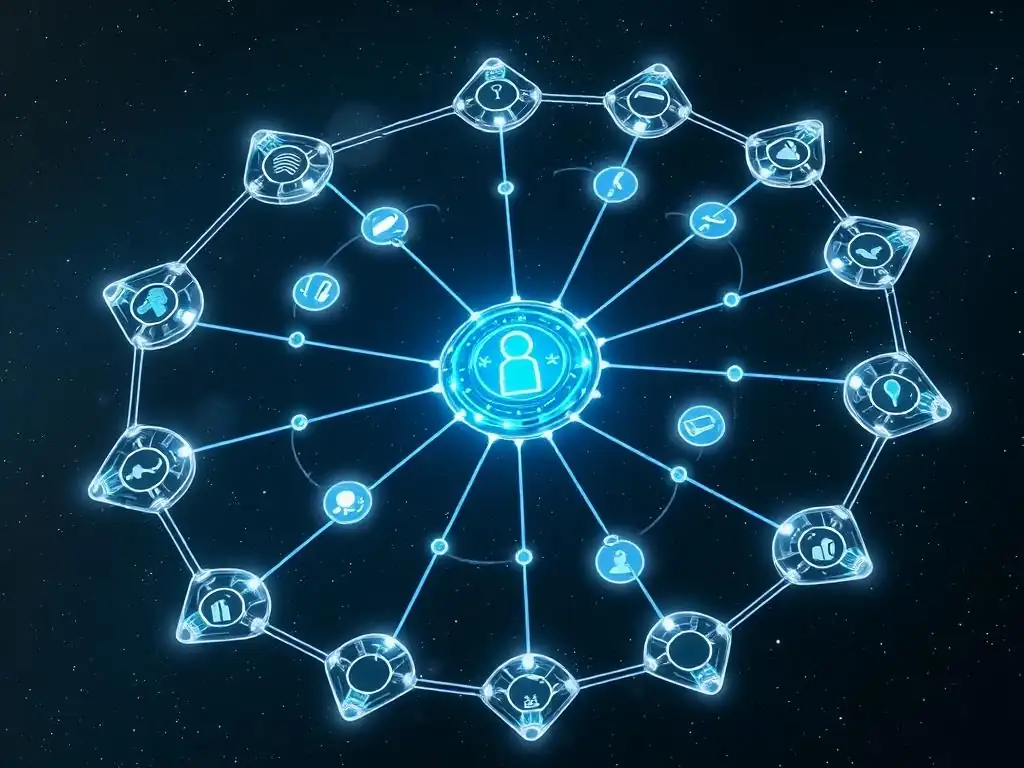
Welcome to Blockchain Trends, your guide to understanding the real-world impact of blockchain technology. Beyond the buzz of cryptocurrencies, a revolution is quietly unfolding, transforming industries and redefining trust. Ready to unlock the potential? Dive into our latest article and discover the profound Decentralized Identifiers Benefits Future, exploring how DIDs are poised to reshape digital identity and unlock a future of secure, verifiable, and truly decentralized control. Curious to learn more? The journey starts here...
Decentralized Identifiers: Revolutionizing Digital Identity
- Introduction to Decentralized Identifiers (DIDs)
- Core Concepts of DIDs
- Benefits of Decentralized Identifiers
- Technical Architecture of DIDs
-
Real-World Applications of Decentralized Identifiers
- DIDs in Supply Chain Management: Verifying Product Provenance
- DIDs in Healthcare: Securely Managing Patient Records and Consent
- DIDs in Voting Systems: Enhancing Election Integrity and Transparency
- DIDs in Education: Verifying Credentials and Academic Achievements
- DIDs in Finance: Streamlining KYC/AML Processes
- The Future of DIDs: Trends and Predictions
- Challenges and Limitations of Decentralized Identifiers
- Implementing DIDs: A Practical Guide
- Conclusion: The Future of Identity with Decentralized Identifiers
-
Frequently Asked Questions
- What are Decentralized Identifiers (DIDs), and how do they differ from traditional identifiers?
- What are the primary benefits of using Decentralized Identifiers (DIDs)?
- How can Decentralized Identifiers (DIDs) be used in the future, especially beyond individual identity management?
- What are the current challenges hindering the widespread adoption of Decentralized Identifiers (DIDs)?
- How do Decentralized Identifiers (DIDs) contribute to the future of decentralized systems mentioned in the article?
- Final Reflection: Embracing the Decentralized Identity Revolution
- Unleash Your Identity: Dive Deeper into the DID Revolution!
Introduction to Decentralized Identifiers (DIDs)
Decentralized Identifiers (DIDs): An Overview
Decentralized Identifiers (DIDs) represent a groundbreaking shift in how identities are managed in the digital realm. Unlike traditional systems where identity is tied to centralized authorities like governments or corporations, DIDs empower individuals, organizations, and even things to create and control their own unique identifiers. These identifiers are designed to be globally unique, persistent, and cryptographically verifiable, offering a level of autonomy previously unavailable.
The core concept is to decouple the identifier from centralized identity providers, enabling users to interact online without relying on intermediaries to assert their identity. This foundational technology is poised to unlock significant decentralized identifiers benefits future applications across various sectors.
This decentralized approach to identity management relies on underlying decentralized systems, often blockchains or distributed ledgers, to provide a secure and tamper-evident record of the DID and its associated metadata. Each DID resolves to a DID Document, which contains public keys and service endpoints necessary for interacting with the entity identified by the DID.
The control over the private keys associated with the DID rests solely with the owner, granting them unprecedented control over how their identity is used and shared. This model fundamentally changes the power dynamic from institutions holding identity data to individuals owning and managing their digital presence.
The Need for Decentralized Identity Management in the Digital Age
The current digital identity landscape is characterized by fragmentation, security vulnerabilities, and a lack of user control. Individuals are forced to create numerous accounts and profiles across different services, each requiring personal information, often stored in centralized databases that are prime targets for cyberattacks. Data breaches are increasingly common, with billions of records compromised annually, leading to identity theft, financial fraud, and erosion of trust. Furthermore, users have limited visibility or control over how their data is collected, shared, and used by third parties, raising significant privacy concerns.
This reliance on centralized systems also creates silos of identity data, hindering interoperability and making it difficult for users to seamlessly transition between services while maintaining control over their verified credentials. The need for a more secure, private, and user-centric identity model is paramount as digital interactions become more pervasive. Decentralized identity management systems, anchored by technologies like DIDs, offer a compelling alternative by putting the user back in control of their data and interactions, mitigating risks associated with centralized honeypots of personal information and paving the way for a more trustworthy digital future.
Relevance of DIDs to Web3 and Blockchain Technology
Decentralized Identifiers are intrinsically linked to the vision of Web3 and the capabilities offered by blockchain technology. Web3 aims to build a decentralized internet where users have ownership and control over their data and digital assets, moving away from the platform-centric model of Web2. Identity is a fundamental layer for such a decentralized future.
Blockchain provides the perfect infrastructure for DID systems due to its immutable, distributed, and transparent nature. The ledger can serve as a reliable and persistent registry for DIDs and their associated public keys, ensuring that identifiers are globally resolvable and verifiable without a single point of failure.
Moreover, blockchain's cryptographic primitives are essential for the security and integrity of DIDs. The use of public-key cryptography allows DID owners to cryptographically sign transactions and assertions, proving control over the identifier without revealing sensitive information. This synergy between DIDs and blockchain enables the creation of self-sovereign identity systems where users truly own and manage their digital credentials and interactions. The inherent trust and security properties of blockchain are crucial for realizing the full decentralized identifiers benefits future applications envision, from decentralized finance (DeFi) to supply chain traceability and beyond.
Core Concepts of DIDs
Key Characteristics of DIDs: Control, Independence, and Portability
At the heart of Decentralized Identifiers are three defining characteristics: user control, independence, and portability. User control means that the individual or entity owning the DID holds the private keys necessary to manage and update their DID Document and to cryptographically sign statements using their identifier. This eliminates reliance on external parties to manage the identifier itself, empowering users to decide when and how they share aspects of their identity.
For instance, a user can prove their age (e.g., over 18) without revealing their exact date of birth, using verifiable credentials signed by a trusted issuer and linked to their DID. This fine-grained control over personal data is a significant step towards enhanced privacy.
Independence refers to the fact that DIDs are not tied to any specific organization, platform, or government. They are registered on decentralized networks, ensuring that the identifier remains valid and accessible regardless of the operational status or policies of any single entity. This contrasts sharply with traditional identifiers like email addresses or social media handles, which are controlled by the platforms providing them and can be revoked or suspended.
This independence ensures the long-term persistence and censorship resistance of the identifier, crucial for building robust and resilient digital identities. The decentralized identifiers benefits future digital ecosystems by providing a stable and reliable anchor for identity that transcends platform boundaries.
Portability, in the context of DIDs, means that the identifier and the credentials associated with it can be used across different applications, services, and platforms without needing to recreate or re-verify identity information. Once a user has a DID and verifiable credentials linked to it (e.g., a verified degree, professional license, or government ID), they can present these credentials to any relying party that supports the DID standard, regardless of where the credential was issued or where the relying party operates.
This seamless portability reduces friction, improves user experience, and fosters competition among service providers, as users are no longer locked into specific identity ecosystems. This interoperability is key to unlocking the full potential of decentralized identity solutions.
DIDs vs. Traditional Identity Systems: A Comparative Analysis
Traditional identity systems, such as those based on usernames/passwords, social logins (like 'Login with Google' or 'Login with Facebook'), or centralized identity providers (like government ID databases), operate on a federated or siloed model. In federated systems, a central authority verifies identity and issues tokens for use across affiliated services. While convenient, this grants significant power to the central authority and creates a single point of failure and control.
Siloed systems require users to manage separate identities for every service, leading to password fatigue and fragmented digital footprints. Both models inherently limit user control and expose users to significant privacy and security risks due to centralized data storage.
Decentralized Identifiers, in contrast, operate on a self-sovereign identity model. The identifier is owned and controlled by the user, not a third party. Verification happens through cryptographic proofs and interactions with distributed ledgers, rather than relying on a central authority to assert identity.
For example, instead of a website asking for your name and email to log in (which they then store), they might ask for a signed proof from your DID that you meet certain criteria (e.g., "are over 21," "are a verified customer"). This proof is validated against your DID on a decentralized network. This shift significantly enhances privacy, reduces the risk of large-scale data breaches affecting users, and empowers individuals to manage their digital personas.
| Feature | Traditional Identity Systems | Decentralized Identifiers (DIDs) |
|---|---|---|
| Control | Centralized (Platform, Govt., etc.) | Decentralized (User owns private keys) |
| Data Storage | Centralized databases, Siloed | User-controlled wallets, Decentralized ledgers |
| Privacy | Limited; Data shared broadly | Enhanced; Selective disclosure |
| Security Risk | High (Centralized honeypots) | Lower (Distributed risk, cryptographic proof) |
| Portability | Limited; Tied to specific platforms/systems | High; Interoperable across DID-compatible systems |
| Persistence | Dependent on platform/authority longevity | High; Resides on decentralized networks |
| Verification | Based on trust in central authority | Cryptographic proof via distributed ledger |
This table highlights the fundamental differences, showcasing the profound potential of DIDs to address the shortcomings of existing identity paradigms and deliver significant decentralized identifiers benefits future digital interactions.
The W3C DID Standard and its Ongoing Development
The development and adoption of Decentralized Identifiers are significantly guided by the World Wide Web Consortium (W3C) DID specification. This standard provides a framework for creating, resolving, and updating DIDs, ensuring interoperability across different implementations and underlying decentralized networks.
The W3C DID Core specification reached Candidate Recommendation status in 2021 and became a W3C Recommendation in July 2022, marking a major milestone in standardizing decentralized identity technology. This standard defines the structure of a DID, the methods for resolving a DID to its DID Document, and the requirements for DID methods (the specific mechanisms used to implement DIDs on different ledgers or systems).
The W3C standard is crucial because it prevents vendor lock-in and fragmentation within the decentralized identity space. By adhering to a common framework, developers and organizations can build applications and services that work seamlessly with DIDs implemented using various underlying technologies (different blockchains, distributed file systems, etc.).
The standard is not static; it continues to evolve through community groups and working groups within the W3C, addressing new use cases, technical challenges, and regulatory considerations. This ongoing development ensures that the DID standard remains robust, flexible, and capable of supporting the diverse and evolving needs of the digital world, further solidifying the decentralized identifiers benefits future digital ecosystems.
Beyond the core specification, the W3C community is also developing related standards, such as Verifiable Credentials (VCs). VCs are tamper-evident digital assertions about an entity (e.g., "Person X has degree Y from University Z"). DIDs are often used as the subject of a VC and as the identifier of the issuer and holder of the credential.
The combination of DIDs and VCs forms the basis of many self-sovereign identity solutions, enabling users to collect, store, and present verified information about themselves in a secure and privacy-preserving manner. The synergy between these standards is accelerating the deployment of decentralized identity solutions across industries.
Benefits of Decentralized Identifiers
Enhanced User Control and Privacy Through DIDs
One of the most significant decentralized identifiers benefits future digital interactions is the dramatic enhancement of user control and privacy. With traditional systems, users often surrender control of their identity data to third-party service providers, leading to potential misuse, unwanted tracking, and spam. DIDs reverse this dynamic by placing the user in sole control of the private keys associated with their identifier.
This means users decide what information to share, with whom, and when. For example, using DIDs and Verifiable Credentials, a user applying for a loan might only need to prove they meet the income threshold and credit score requirements without revealing their exact salary or full credit history.
This fine-grained control is facilitated by selective disclosure, a capability inherent in systems built around DIDs and VCs. Instead of presenting an entire document (like a driver's license containing name, address, date of birth, etc. ), a user can present a cryptographic proof derived from a VC that only attests to a specific attribute (e.g., being over 21).
This minimizes the amount of personal data shared, drastically reducing the attack surface and enhancing privacy. A report by Deloitte in 2020 highlighted that self-sovereign identity (SSI) systems, often built on DIDs, could give users control over 80% of their digital identity attributes, a stark contrast to the minimal control offered by traditional systems.
Improved Security and Data Ownership with DIDs
Decentralized Identifiers significantly improve security by eliminating the central honey pots of personal data that characterize traditional identity systems. When millions or billions of user records are stored in a single database, a successful breach can have catastrophic consequences, as seen in numerous high-profile incidents (e.g., the Equifax breach impacting an estimated 147 million consumers). With DIDs, sensitive personal data is not stored centrally alongside the identifier itself. Instead, it typically resides encrypted in the user's secure digital wallet or is managed through distributed systems, making it a far less attractive target for attackers.
Furthermore, the security of DIDs relies on strong cryptography. The ownership and control of a DID are proven by possessing the associated private key, which is stored securely by the user. Interactions and assertions made using a DID are cryptographically signed, making them tamper-evident and verifiable on the underlying decentralized network.
This cryptographic security model is inherently more robust against many types of attacks that plague password-based systems or centralized databases. The shift towards user-controlled, cryptographically secured identity is a cornerstone of the decentralized identifiers benefits future of secure online interactions. Data ownership is also fundamentally changed; users own their identifier and the credentials linked to it, rather than a service provider owning their account information.
Increased Interoperability and Portability of Digital Identity
A major hurdle in the current digital landscape is the lack of interoperability between different identity systems. Users are often required to create separate accounts and undergo verification processes for each new service they use, leading to fragmentation and a poor user experience. DIDs, built on open standards like the W3C DID specification, are designed for global interoperability. A DID created on one network using a specific DID method can, theoretically, be resolved by any system that understands the W3C standard and the specific method, regardless of the underlying technology or the organization that issued a related credential.
This inherent portability means that a user's digital identity and verified credentials can travel with them across different platforms and services. For example, a university degree verified and issued as a Verifiable Credential linked to a student's DID can be used to apply for a job, enroll in further education, or access alumni services, without needing the university to re-verify or issue a new credential for each interaction.
This seamless portability reduces friction, saves time and resources for both users and service providers, and fosters a more connected and efficient digital ecosystem. This capability is a key component of the decentralized identifiers benefits future of seamless online experiences.
Reducing Identity Fraud and Enhancing Trust Using DIDs
Identity fraud is a pervasive and costly problem globally. The Federal Trade Commission (FTC) reported over 1.4 million instances of identity theft reported in the US in 2021, resulting in billions of dollars in losses. Traditional systems are vulnerable because they rely on static, easily compromised information (like social security numbers or passwords) and centralized databases that can be breached. DIDs offer a powerful mechanism to combat identity fraud by making identifiers more secure, verifiable, and resistant to impersonation.
Because control of a DID is tied to possession of a private key and verification happens cryptographically on a distributed ledger, it is significantly harder for malicious actors to impersonate a DID owner compared to stealing a password or a physical ID. Verifiable Credentials linked to DIDs provide cryptographically secure proofs of attributes, making it difficult to forge credentials.
For instance, a government could issue a VC proving a person's identity linked to their DID. When a service provider needs to verify identity, they can request this VC and cryptographically verify its authenticity against the issuer's public key and the user's DID on the distributed ledger, a far more robust process than simply checking a scanned document.
This enhanced verifiability and security directly contribute to reducing identity fraud and building a more trustworthy digital environment. The decentralized identifiers benefits future of secure transactions and interactions by providing a foundation of verifiable trust.
Technical Architecture of DIDs
DID Methods: Exploring Different Implementation Approaches
Decentralized Identifiers are designed to be independent of any specific blockchain or distributed ledger technology. Instead, the W3C DID specification defines the concept of "DID Methods." A DID method is a specific set of rules and procedures for creating, resolving, updating, and deactivating DIDs and DID Documents on a particular decentralized system. This allows for flexibility and innovation, enabling DIDs to be implemented on various platforms, each with its own characteristics regarding scalability, cost, and governance. Currently, dozens of DID methods have been proposed or are under development, each identified by a unique method name following the did:<method-name>:<method-specific-identifier> format.
Examples of different DID methods include did:ion (built on Bitcoin's Sidetree protocol), did:ethr (using Ethereum addresses and smart contracts), did:sov (implemented on the Hyperledger Indy/Sovrin network), did:web (using standard web servers and DNS for simpler use cases), and did:key (for ephemeral or self-signed DIDs not anchored to a ledger). Each method has its own trade-offs. For instance, did:ion leverages the security of the Bitcoin network but might have higher latency for updates compared to a private permissioned ledger method like did:sov. The choice of DID method depends on the specific requirements of the application, such as the need for public verifiability, transaction throughput, cost, and the desired level of decentralization. The diversity of DID methods is crucial for ensuring that DIDs can be adopted across a wide range of use cases and technical environments.
The Role of DID Registries and Resolvers in Identity Verification
Central to the functioning of a DID system are DID registries and DID resolvers. A DID registry is the decentralized system (often a blockchain or distributed ledger) where the core information linking a DID to its DID Document is anchored. When a DID is created or updated, a record is typically written to this registry.
This record contains cryptographic proof of the DID's existence and control, and crucially, a pointer or direct inclusion of the DID Document or its hash. The integrity and immutability of the underlying distributed ledger ensure that the information in the registry is reliable and tamper-evident, providing the necessary trust anchor for the system.
A DID resolver is the software component responsible for taking a DID as input and returning the corresponding DID Document. Resolvers interact with the specific DID method's underlying network or registry to retrieve the necessary information. For example, a resolver for did:ethr would query the Ethereum blockchain to find the smart contract or transaction associated with the DID's address. A universal resolver is a service designed to resolve DIDs from multiple different DID methods, providing a single interface for applications to look up any DID regardless of its underlying implementation. This separation of concerns – registration on a decentralized network and resolution via software – allows for flexibility and ensures that applications can easily retrieve the necessary public information (like public keys and service endpoints) to interact securely with the DID owner.
Understanding DID Documents and their Structure
Every Decentralized Identifier is associated with a DID Document. The DID Document is a JSON document containing information necessary to use and interact with the entity identified by the DID. It serves as the public endpoint for a DID, providing cryptographic material and service endpoints that allow others to verify credentials, establish secure communication channels, or discover other ways to interact with the DID subject. The structure of a DID Document is standardized by the W3C.
A typical DID Document includes several key sections:
@context: Specifies the JSON-LD context, linking terms to definitions for semantic interoperability.id: The DID itself, which uniquely identifies the DID Document's subject.verificationMethod: Contains public keys (and their associated types and controllers) that can be used to cryptographically verify signatures made by the DID subject or to encrypt messages for the subject. A DID Document can contain multiple verification methods, each suitable for different purposes (e.g., authentication, assertion, encryption).authentication: An array of references to verification methods that can be used to authenticate the DID subject (e.g., for logging into a service).assertionMethod: An array of references to verification methods that can be used by the DID subject to assert claims or issue verifiable credentials.keyAgreement: An array of references to verification methods containing public keys suitable for establishing secure communication channels using key agreement protocols.service: An array of service endpoints. These are URLs or other identifiers that specify how to interact with the DID subject or related resources (e.g., an endpoint for a messaging service, a profile page, or a credential repository).
{
  "@context": [
    "https://www.w3.org/ns/did/v1",
    "https://w3id.org/security/suites/ed25519-2020/v1"
  ],
  "id": "did:example:123456789abcdefghi",
  "verificationMethod": [
    {
      "id": "did:example:123456789abcdefghi#keys-1",
      "type": "Ed25519VerificationKey2020",
      "controller": "did:example:123456789abcdefghi",
      "publicKeyMultibase": "zH3C2AVvLMv6gmMNam3uVAjZpfkcCqFGldgBfDGzrs9z"
    }
  ],
  "authentication": [
    "#keys-1"
  ],
  "assertionMethod": [
    "#keys-1"
  ],
  "keyAgreement": [
    {
      "id": "did:example:123456789abcdefghi#keys-2",
      "type": "X25519KeyAgreementKey2020",
      "controller": "did:example:123456789abcdefghi",
      "publicKeyMultibase": "zHukwuP63dPNi1bm"
    }
  ],
  "service": [
    {
      "id": "did:example:123456789abcdefghi#messages",
      "type": "MessagingService",
      "serviceEndpoint": "https://example.com/messages/123"
    }
  ]
}
This structure provides a flexible and extensible way to define how a DID can be used for various interactions, from verifying signed data to establishing encrypted communication channels, further enabling the decentralized identifiers benefits future applications will rely upon.
Real-World Applications of Decentralized Identifiers
DIDs in Supply Chain Management: Verifying Product Provenance
Supply chain management is an area ripe for disruption by Decentralized Identifiers. Proving the origin and journey of goods from source to consumer is crucial for ensuring authenticity, safety, and ethical sourcing. Counterfeit goods cost the global economy hundreds of billions of dollars annually; the OECD estimated trade in counterfeit and pirated goods at $509 billion in 2016. Traditional tracking systems are often centralized, prone to data silos, and vulnerable to tampering at various points in the chain.
DIDs can be assigned to individual products, batches, or even components, as well as to the organizations and individuals involved in the supply chain (farmers, manufacturers, distributors, retailers). As a product moves through the chain, each participant can cryptographically sign transactions or assertions (as Verifiable Credentials) using their organization's or individual's DID, attesting to handling the product at a specific time and location. This creates an immutable, verifiable audit trail linked to the product's DID on a distributed ledger.
Consumers could potentially scan a QR code on a product, resolve its DID, and view a history of its journey, verifying its authenticity and provenance directly from the source. For example, a pilot project tracked olive oil from farm to table using DIDs and verifiable credentials, allowing consumers to scan a bottle and see the farmer, harvest date, and bottling location, building trust and transparency.
DIDs in Healthcare: Securely Managing Patient Records and Consent
Healthcare is another critical sector where DIDs offer significant advantages, particularly concerning the secure management of sensitive patient data and obtaining verifiable consent. Patient records are often fragmented across different providers, making it difficult for patients to access their complete health history or share it seamlessly when needed. Furthermore, managing patient consent for data sharing and research is complex and often relies on cumbersome paper-based or siloed digital processes.
Using DIDs, each patient could have a DID that serves as their universal, privacy-preserving identifier across different healthcare providers. Healthcare providers, laboratories, and pharmacies could issue Verifiable Credentials linked to the patient's DID for specific health events (e.g., lab results, vaccinations, prescriptions, diagnoses).
The patient, holding the private keys to their DID, would control access to these credentials, granting specific providers permission to view certain records for a limited time. For example, a patient visiting a new specialist could use their DID to present only the relevant past test results or treatment history needed for that consultation, without sharing their entire medical file.
Companies like MedBlock have piloted systems using DIDs to manage patient consent for data sharing in research studies, demonstrating how patients can grant and revoke permissions granularly and verifiably on a blockchain. This approach enhances patient privacy, improves data interoperability between healthcare systems, and streamlines consent management, addressing key challenges in the industry.
DIDs in Voting Systems: Enhancing Election Integrity and Transparency
Ensuring the integrity and transparency of voting systems is fundamental to democratic processes. Concerns about voter registration accuracy, ballot tampering, and the difficulty of auditing results plague traditional systems. DIDs offer a potential pathway to significantly enhance the security and verifiability of digital voting.
In a DID-based voting system, each eligible voter could be issued a unique DID. A government or trusted authority could issue a Verifiable Credential linked to the voter's DID, confirming their eligibility to vote without revealing their identity directly to the voting platform (e.g., proving "is a registered voter in District X"). When casting a ballot, the voter would use their DID to submit a cryptographically signed ballot.
The signature proves the ballot came from an eligible voter (identified by their DID), while technologies like zero-knowledge proofs could be used to ensure voter anonymity is preserved. The signed ballots could be recorded on a distributed ledger associated with the voting system's DID, creating a transparent and auditable record of all votes cast.
Researchers at institutions like MIT have explored blockchain-based voting systems leveraging DIDs for identity verification and ballot integrity, demonstrating the technical feasibility of this approach. While large-scale implementation faces significant regulatory and social hurdles, the potential to reduce fraud and increase trust in election outcomes is a compelling aspect of the decentralized identifiers benefits future of civic participation.
DIDs in Education: Verifying Credentials and Academic Achievements

Verifying educational credentials like degrees, diplomas, and certificates is often a time-consuming and manual process prone to fraud. Employers and institutions frequently need to contact issuing bodies directly to confirm the authenticity of qualifications presented by individuals. The use of fake academic credentials is a known problem globally.
DIDs provide a robust solution for issuing and verifying academic achievements. Educational institutions can issue Verifiable Credentials linked to a student's DID upon completion of a program or course. These credentials contain specific details about the achievement (e.g., degree obtained, date of graduation, major) and are cryptographically signed by the issuing institution's DID.
The student, as the holder of their DID, stores these credentials securely in their digital wallet. When applying for a job or further education, the student can present the relevant VC to the relying party. The relying party can instantly and cryptographically verify the authenticity of the credential by checking the issuer's signature against their public key (found in the institution's DID Document) and verifying the credential's status against the ledger.
This process is significantly faster, more secure, and less prone to fraud than traditional paper-based or centralized digital verification methods. Projects like Blockcerts have demonstrated the feasibility of issuing blockchain-anchored academic credentials using DIDs, with institutions like MIT and the University of Nicosia participating in pilots.
DIDs in Finance: Streamlining KYC/AML Processes
Financial institutions face significant regulatory burdens related to Know Your Customer (KYC) and Anti-Money Laundering (AML) regulations. These processes are often redundant; customers must provide the same identity documents and information to multiple institutions. This is costly for institutions and creates a poor user experience.
Decentralized Identifiers and Verifiable Credentials offer a way to streamline KYC/AML checks while enhancing privacy. A customer could undergo a KYC verification process once with a trusted identity verification service or financial institution. This service would issue a Verifiable Credential linked to the customer's DID, attesting that they have completed KYC requirements to a certain standard (e.g., "KYC Level 2 verified").
The customer holds this credential. When opening an account with another financial institution, they can present this VC via their DID. The new institution can cryptographically verify the VC's authenticity and rely on the assertion made by the trusted issuer, potentially reducing the need for the customer to resubmit all their identity documents.
This 'reusable KYC' model saves time and money, improves the customer onboarding experience, and reduces the amount of sensitive data shared. Estimates suggest that using decentralized identity solutions could reduce KYC/AML costs for financial institutions by 10-20%. This efficiency gain is a significant part of the decentralized identifiers benefits future financial services anticipate.
The Future of DIDs: Trends and Predictions
The Convergence of DIDs and Self-Sovereign Identity (SSI)
The terms DIDs and Self-Sovereign Identity (SSI) are often used interchangeably, but DIDs are a foundational technical component that enables SSI. SSI is the overarching concept and movement advocating for individuals to have complete ownership and control over their digital identity. The future of DIDs is inextricably linked to the broader adoption of SSI principles. As the W3C DID and Verifiable Credentials standards mature and gain wider recognition, the technical infrastructure for SSI becomes more robust and interoperable.
Looking ahead, we can expect tighter integration between DID methods and SSI wallets – the user-controlled applications where DIDs and VCs are stored and managed. These wallets will become the central hub for an individual's digital life, allowing them to receive, store, manage consent for, and present verifiable credentials across various domains. The convergence will also drive innovation in user-friendly interfaces and secure key management solutions, making SSI accessible to a broader audience.
The goal is to move from a world where identity is rented from platforms to one where it is owned and controlled by the individual, with DIDs providing the essential technical backbone. This convergence is crucial for realizing the full decentralized identifiers benefits future digital interactions promise.
DIDs and the Metaverse: Managing Identity in Virtual Environments
The emerging concept of the Metaverse envisions persistent, interconnected virtual worlds where users interact, socialize, work, and transact. Identity will be a critical component of the Metaverse, allowing users to maintain a consistent presence, own digital assets, and establish reputation across different virtual spaces. Traditional username/password systems or platform-specific avatars are insufficient for this complex, interoperable environment.
Decentralized Identifiers offer a compelling solution for identity management in the Metaverse. A user could have a DID that serves as their persistent identity across different virtual worlds, regardless of which platform hosts them. Verifiable Credentials linked to this DID could represent digital assets owned (e.g., virtual land, avatars, digital fashion), achievements earned (e.g., completing a quest in one game), or reputation scores built in various virtual communities.
This would allow users to bring their identity, assets, and reputation with them as they move between different Metaverse experiences. For instance, a rare digital item verified by a VC linked to a user's DID could be displayed or used in multiple compatible virtual worlds.
DIDs enable a future where identity in the Metaverse is not tied to a single platform but is a portable, user-owned asset, fostering true interoperability and empowering users in virtual economies. This application highlights a significant aspect of the decentralized identifiers benefits future of immersive digital experiences.
As Decentralized Identifiers move from theoretical concepts and pilot projects to mainstream adoption, navigating the complex regulatory landscape becomes paramount. DIDs and SSI systems touch upon various legal domains, including data protection (like GDPR and CCPA), anti-money laundering (AML), know-your-customer (KYC), and electronic signatures. Regulators are grappling with how to apply existing laws to decentralized technologies and what new frameworks might be needed.
Key considerations include establishing legal recognition for DIDs and Verifiable Credentials as valid forms of identification or proof, defining the roles and responsibilities of issuers, holders, and verifiers in an SSI ecosystem, and ensuring compliance with data minimization and privacy-by-design principles. Regulatory clarity is essential for fostering trust and encouraging widespread adoption by enterprises and governments. Organizations like the Decentralized Identity Foundation (DIF) and the Trust Over IP Foundation are actively engaging with regulators and policymakers to help shape appropriate frameworks.
The future success of DIDs will depend significantly on finding a balance between fostering innovation and ensuring legal compliance and consumer protection. Achieving this balance is crucial for unlocking the full decentralized identifiers benefits future societies can gain from this technology.
The Potential of DIDs for Interoperable Digital Wallets
The proliferation of digital wallets is increasing, but many are siloed, designed for specific purposes (e.g., cryptocurrency wallets, loyalty card apps, mobile payment apps). DIDs offer a pathway towards truly interoperable digital wallets capable of managing a wide range of digital assets and credentials, including cryptocurrencies, verifiable credentials (like proofs of identity, education, employment), digital keys, and more.
In the future, a DID-compatible digital wallet could serve as a user's central hub for all their digital interactions. Users could store their DIDs and associated private keys securely within the wallet, along with Verifiable Credentials issued by various trusted sources (governments, universities, employers, healthcare providers). This wallet would enable users to selectively present credentials to relying parties using cryptographic proofs linked to their DID, without revealing unnecessary underlying data.
For example, a user could prove their age to access age-restricted content, their professional license to a client, or their vaccination status to enter a venue, all from a single, secure wallet. This interoperability and comprehensive management capability represent a significant part of the decentralized identifiers benefits future digital ecosystems will leverage for seamless and secure user experiences.
Challenges and Limitations of Decentralized Identifiers
Scalability Challenges and Potential Solutions for Widespread Adoption
One of the significant challenges facing the widespread adoption of Decentralized Identifiers, particularly those anchored on public blockchains, is scalability. Public blockchains like Bitcoin or Ethereum, while highly secure and decentralized, can face limitations in transaction throughput and incur costs (gas fees) for writing data to the ledger. Creating or updating a DID Document might require a transaction on the underlying network, and if this process is slow or expensive, it can hinder mass adoption, especially for applications requiring frequent updates or supporting millions or billions of DIDs.
DID methods are exploring various solutions to address scalability. Some methods utilize layer 2 scaling solutions built on top of public blockchains (e.g., Sidetree protocol used by did:ion). Others leverage permissioned ledgers or distributed file systems that can handle higher transaction volumes at lower costs ( did:sov or did:web). Another approach involves using 'pairwise DIDs' for specific relationships, reducing the need to anchor every interaction on a global ledger. Research and development in this area are ongoing, focusing on creating DID methods that can support the performance requirements of global-scale applications while maintaining sufficient decentralization and security. Overcoming these technical hurdles is critical for realizing the full decentralized identifiers benefits future digital economies depend on.
User Adoption and Education: Bridging the Knowledge Gap
The concept of self-sovereign identity and the technical underpinnings of DIDs are complex compared to familiar username/password systems. A significant challenge is educating end-users about the benefits of DIDs, how they work, and the responsibilities that come with controlling their own identity (e.g., secure key management). Users are accustomed to relying on intermediaries to recover lost passwords or manage their accounts; the idea of being solely responsible for their private keys can be daunting and requires a shift in mindset.
Bridging this knowledge gap requires intuitive user interfaces for digital wallets, clear explanations of how DIDs enhance privacy and security, and accessible support systems. The technology needs to be abstracted away for the average user, making the experience of using a DID and verifiable credentials as simple, if not simpler, than current identity methods. Pilot programs and real-world use cases demonstrating tangible benefits (like faster onboarding or enhanced privacy) will be crucial in driving adoption. Widespread user education campaigns by industry consortia, governments, and early adopters will be necessary to build trust and familiarity with decentralized identity technologies.
Addressing Technical Complexity and Improving User Experience
Beyond end-user education, there is also a challenge in reducing the technical complexity for developers and organizations integrating DIDs into their applications and services. Implementing DID methods, interacting with DID resolvers, and issuing/verifying Verifiable Credentials requires specialized knowledge and tools. The ecosystem of developer tools, SDKs, and infrastructure services for DIDs is still maturing compared to established web technologies.
Improving the developer experience is crucial for accelerating the adoption of DIDs. This includes developing user-friendly APIs, providing comprehensive documentation and tutorials, and building robust, scalable infrastructure services that abstract away the complexities of interacting directly with decentralized ledgers or DID registries. Standards like the W3C DID and VC specifications provide a necessary foundation, but practical implementations need to be easy to integrate into existing software architectures.
Focusing on developer tooling and modular, easy-to-use components will lower the barrier to entry for organizations wanting to leverage the decentralized identifiers benefits future applications can offer. Initiatives like the creation of universal resolvers and open-source SDKs are steps in this direction, aiming to make DID integration more accessible.
Implementing DIDs: A Practical Guide
Selecting a DID Provider or Developing a Custom Solution
For organizations looking to implement Decentralized Identifiers, one of the initial decisions is whether to utilize an existing DID provider or develop a custom DID method and infrastructure. A DID provider typically offers a service layer that abstracts away the complexity of interacting directly with a distributed ledger or network. They might offer APIs for creating and managing DIDs, issuing and verifying verifiable credentials, and managing user wallets.
This can be a faster and less resource-intensive approach for organizations without deep expertise in blockchain or decentralized systems. Various companies and open-source projects offer DID provider services, often supporting specific DID methods.
Alternatively, an organization might choose to develop its own custom DID method, particularly if they require specific performance characteristics, governance models, or wish to anchor DIDs on a private or consortium ledger tailored to their industry. Developing a custom method involves defining the rules for DID creation, resolution, updates, and deactivation, implementing the necessary smart contracts or ledger logic, and building the associated resolver software.
This approach offers maximum control and customization but requires significant technical expertise and development effort. The choice depends on the organization's technical capabilities, budget, specific use case requirements, and desired level of control over the underlying identity infrastructure.
Integrating DIDs into Existing Applications and Platforms
Integrating Decentralized Identifiers into existing applications and platforms involves several steps, depending on the application's architecture and purpose (e.g., is it an identity issuer, a relying party needing to verify identity, or a wallet application?). For applications acting as relying parties (e.g., a website where users log in or a service requiring identity verification), integration involves adding support for DID authentication and Verifiable Credential presentation. This typically requires incorporating DID resolver libraries and VC verification logic.
For applications that issue verifiable credentials (e.g., a university issuing degrees or a government issuing IDs), integration involves adding functionality to create VCs linked to a user's DID and cryptographically sign them using the issuer's DID. Wallet applications, on the other hand, need to implement secure storage for DIDs and private keys, provide interfaces for users to manage their identity and credentials, and enable the presentation of VCs based on user consent.
Many open-source libraries and SDKs are available for various programming languages (e.g., JavaScript, Python, Java) to facilitate these integrations, providing building blocks for creating, resolving, and interacting with DIDs and VCs. A typical integration might involve:
- [ ] Adding a DID resolver library to the application backend.
- [ ] Implementing a "Login with DID" flow for user authentication.
- [ ] Adding logic to request and verify specific Verifiable Credentials from a user's wallet.
- [ ] If acting as an issuer, adding functionality to mint and sign Verifiable Credentials using the organization's DID.
- [ ] Updating user databases to link internal user IDs to DIDs where appropriate, without storing sensitive personal data centrally.
Best Practices for Secure DID Management and Key Rotation
Securely managing the private keys associated with a DID is paramount, as control of these keys signifies control of the identity. Best practices for DID management closely mirror those for managing cryptographic keys in other contexts, such as cryptocurrency wallets. Users must be educated on the importance of backing up their private keys or seed phrases and storing them securely, preferably offline or using hardware security modules. Loss of private keys can lead to loss of control over the DID and associated credentials.
Key rotation is another important security practice. Over time, it may be necessary to replace the public/private key pairs associated with a DID's verification methods. This can be done by updating the DID Document on the underlying decentralized network, adding new keys and potentially revoking old ones. Regular key rotation can mitigate risks associated with potential key compromises or advances in cryptanalysis.
Additionally, organizations acting as DID issuers or verifiers must implement robust security measures to protect their own private keys and infrastructure. Utilizing multi-signature schemes, hardware security modules (HSMs), and secure key management systems are essential for maintaining the integrity and trustworthiness of the decentralized identity ecosystem. Adhering to these security practices is vital to ensure that the decentralized identifiers benefits future applications are built upon are realized securely.
Conclusion: The Future of Identity with Decentralized Identifiers
Recap of Key Benefits and Use Cases of DIDs
Decentralized Identifiers represent a fundamental paradigm shift in digital identity, moving from centralized, vulnerable systems to a user-centric, secure, and interoperable model. We've explored the core concepts of DIDs, their technical architecture, and a range of compelling real-world applications. The key decentralized identifiers benefits future digital interactions include enhanced user control over personal data, significantly improved privacy through selective disclosure, stronger security against data breaches and identity theft due to cryptographic verification and decentralized storage, and increased interoperability and portability of identity across different platforms and services.
From revolutionizing supply chains by providing verifiable product provenance to streamlining healthcare data management and consent, enhancing the integrity of voting systems, simplifying the verification of academic credentials, and streamlining financial KYC/AML processes, DIDs are poised to impact numerous sectors. They provide the technical foundation for Self-Sovereign Identity, empowering individuals and organizations to own and manage their digital presence securely and privately. While challenges related to scalability, user education, and technical complexity remain, ongoing development and increasing adoption in pilot programs demonstrate the tangible potential of this technology.
The Long-Term Vision for Decentralized Identity and Data Ownership
The long-term vision for Decentralized Identity, powered by DIDs and Verifiable Credentials, is a digital world where individuals are sovereign over their identity and data. This future envisions a global network of interoperable identity systems where users can seamlessly and securely interact with services, prove attributes about themselves, and manage their digital assets without relying on centralized intermediaries. It's a future where identity theft is significantly reduced, data breaches are less catastrophic for individuals, and privacy is a default setting, not an afterthought.
In this vision, the user's digital wallet becomes the secure custodian of their DIDs and credentials, acting as a portable passport and credential holder for the digital realm, including emerging spaces like the Metaverse. Organizations shift from being custodians of user data to relying parties that request and verify user-controlled credentials. This shift promises to unlock new levels of trust, efficiency, and innovation across the digital economy. Realizing this vision requires continued collaboration between technologists, policymakers, businesses, and individuals to build the necessary infrastructure, standards, and user-friendly applications.
Embracing DIDs: Empowering Individuals in the Digital Age
Embracing Decentralized Identifiers is about more than just adopting a new technology; it's about fundamentally changing the relationship between individuals and their digital identity. It is about empowering individuals to take control of their personal information, reclaim their privacy, and engage in the digital world on their own terms. As our lives become increasingly intertwined with digital platforms and services, having a secure, private, and portable digital identity is no longer a luxury but a necessity.
The journey towards a decentralized identity future is ongoing, but the foundation laid by DIDs and related standards offers a clear path forward. By understanding and adopting these technologies, individuals, organizations, and governments can contribute to building a more secure, private, and trustworthy digital ecosystem for everyone. The decentralized identifiers benefits future societies are profound, promising a more equitable and empowering digital age.
Frequently Asked Questions
What are Decentralized Identifiers (DIDs), and how do they differ from traditional identifiers?
DIDs are a new type of digital identity that are not controlled by a central authority. Unlike traditional identifiers, they are self-sovereign and allow individuals or organizations to control their own identity data.
What are the primary benefits of using Decentralized Identifiers (DIDs)?
The key benefits include enhanced privacy, increased security through cryptographic verification, and the ability to control your own data. This contrasts sharply with current systems where identity is often controlled by third parties.
How can Decentralized Identifiers (DIDs) be used in the future, especially beyond individual identity management?
DIDs can revolutionize supply chain management, healthcare data security, and voting systems. Their verifiable credentials enable trusted data exchange across various sectors, facilitating greater transparency and efficiency.
What are the current challenges hindering the widespread adoption of Decentralized Identifiers (DIDs)?
Challenges include the lack of standardized regulations, the need for user-friendly interfaces, and the overall complexity of implementing blockchain-based solutions. Overcoming these hurdles is crucial for mainstream adoption.
How do Decentralized Identifiers (DIDs) contribute to the future of decentralized systems mentioned in the article?
DIDs are a crucial building block for a truly decentralized web (Web3). They provide a secure and privacy-preserving mechanism for identity management, empowering users and fostering trust in decentralized applications.
Final Reflection: Embracing the Decentralized Identity Revolution
The exploration of Decentralized Identifiers (DIDs) reveals a profound shift in how we conceive of identity in the digital age, and its relevance today is undeniable. The promise of self-sovereign identity, free from centralized control, is no longer a futuristic fantasy, but a tangible possibility shaping the very fabric of online interactions. This article has merely scratched the surface of the transformative potential DIDs hold, but even this glimpse underscores their importance in a world increasingly reliant on digital trust.
The ongoing influence of DIDs extends far beyond mere technological innovation; it represents a fundamental reimagining of power dynamics online. This shift towards user-centric control over personal data resonates deeply with the growing desire for privacy and autonomy in an increasingly surveilled world. Identity is not just what you own, it's what you control.
This quote encapsulates the essence of the DID revolution, highlighting the importance of empowering individuals to manage their digital selves.
As we stand on the cusp of a decentralized future, I invite you to consider the implications of DIDs in your own life. How can you leverage this technology to reclaim control over your digital identity? How can you contribute to building a more equitable and secure online world? The future of identity is being written now, and your participation is essential in shaping a future where digital trust and individual empowerment reign supreme.
Unleash Your Identity: Dive Deeper into the DID Revolution!
Thank you for exploring the world of Decentralized Identifiers with us. We hope you now have a clearer understanding of how they can transform digital identity and empower individuals. Are you ready to take the next step?
Here are some ways you can get involved and continue your journey with DIDs:
- Research different DID providers to find one that best matches your needs and values. This is the most impactful step you can take!
- Join the conversation by sharing this article with your network and sparking discussions about the future of digital identity on social media using the hashtag #DIDRevolution.
- Explore the official DID specifications to deepen your technical understanding of how DIDs function.
What immediate benefits do you see DIDs bringing to your online interactions, and what challenges must be addressed to enable broader adoption?
Leave a Reply