
The Future of Retail Payments: Will Digital Currencies Replace Credit Cards and Cash?

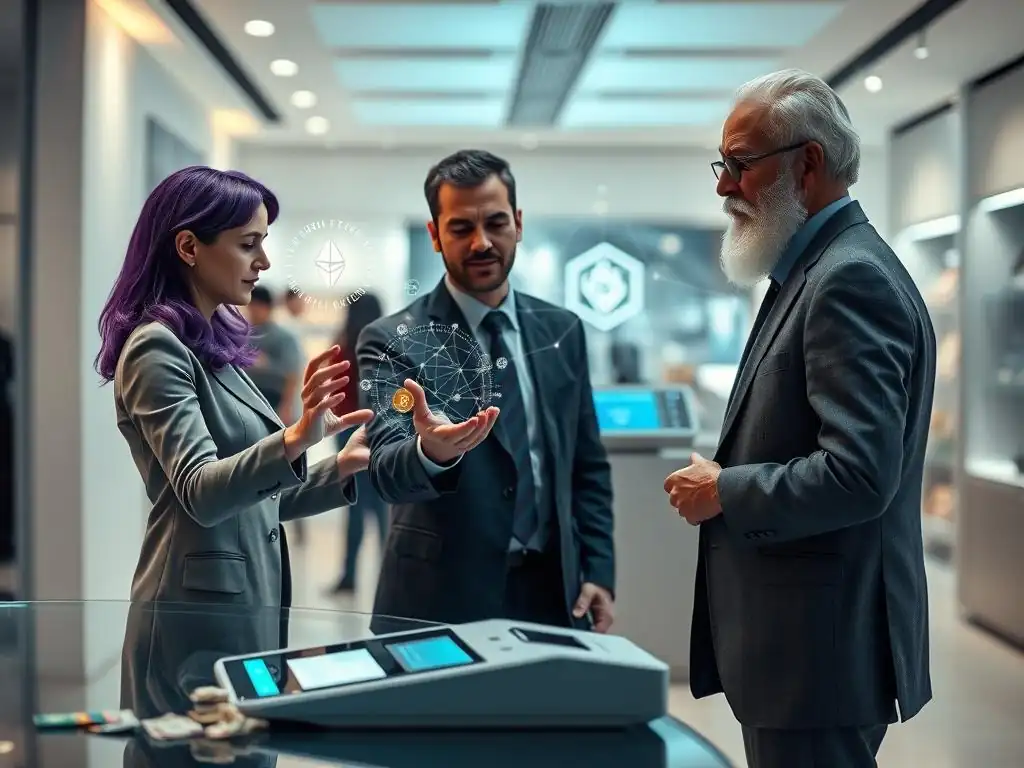
Welcome to Blockchain Trends, your guide to navigating the evolving world of decentralized technologies. Curious about how blockchain is reshaping industries beyond just cryptocurrency? Dive in! This week, we're unraveling the potential of the blockchain retail payments future, exploring whether digital currencies are poised to replace traditional payment methods. Discover the innovations, challenges, and game-changing possibilities that lie ahead – read on to unlock the future of commerce!
The Future of Retail Payments: Will Digital Currencies Replace Credit Cards and Cash?
- Introduction: The Evolving Landscape of Retail Payments and Blockchain Technology
- Blockchain's Role in Revolutionizing Retail Payments
- The Potential of Digital Currencies in Retail
- Comparing Digital Currencies, Credit Cards, and Cash
- Challenges and Obstacles to Digital Currency Adoption in Retail
- Blockchain Retail Payments Future: Predictions and Expert Opinions
- The Impact on Businesses: Preparing for the Future of Retail Payments
- Conclusion: The Transformation of Retail Payments with Blockchain and Digital Currencies
-
Frequently Asked Questions
- What is driving the growing interest in blockchain for retail payments?
- How could blockchain-based retail payments impact the existing credit card industry?
- Besides cryptocurrencies, what other forms of digital currencies are being explored for retail payments?
- What are the main regulatory challenges facing the widespread adoption of blockchain retail payments?
- What is the expected timeline for blockchain-based retail payments to become a significant part of the retail landscape?
- Final Reflection: Embracing the Blockchain Retail Payments Future
- Unlock Your Future in Retail Payment Innovation!
Introduction: The Evolving Landscape of Retail Payments and Blockchain Technology
The way we pay for goods and services is undergoing a profound transformation. For centuries, cash reigned supreme, followed by the advent of credit cards in the 20th century, which revolutionized commerce with their convenience and global reach. Now, in the 21st century, we are witnessing the rapid emergence of digital currencies, fueled by the innovative power of blockchain technology.
This shift is not merely incremental; it represents a fundamental rethinking of how value is exchanged in retail, promising to reshape the landscape of consumer transactions and business operations alike. As we stand at this pivotal juncture, it is crucial to analyze the potential of these new technologies to determine if they will indeed supplant traditional payment methods or coexist in a hybrid future.
This article delves into the transformative potential of blockchain technology and digital currencies in the retail payments sector. We will explore the current state of retail payments, examine the rise of digital currencies, and analyze how blockchain technology underpins their functionality and security. Furthermore, we will compare digital currencies with existing payment methods like credit cards and cash, considering their respective advantages, disadvantages, and associated costs.
We will also address the challenges and obstacles that digital currencies face in achieving widespread adoption in retail, including regulatory hurdles, scalability concerns, and consumer acceptance. Finally, we will look towards the future, exploring expert opinions and predictions on the trajectory of retail payments and the role of blockchain in shaping this evolution, particularly considering the future of blockchain retail payments.
A Shift Towards Digital: Analyzing Current Retail Payment Methods
Current retail payment methods are diverse and cater to a wide range of consumer preferences and technological capabilities. Credit cards and debit cards dominate the landscape for medium to large transactions, offering convenience, security features like fraud protection, and rewards programs. According to a report by the Federal Reserve, noncash payments, which are predominantly card-based, accounted for 74% of all consumer payments in the US in 2022.
These systems rely on established financial infrastructure, involving banks, payment processors like Visa and Mastercard, and point-of-sale (POS) systems at retail locations. This well-established ecosystem has provided a stable and relatively efficient payment mechanism for decades.
However, alongside card payments, digital wallets and mobile payment platforms like PayPal, Apple Pay, and Google Pay have experienced significant growth in recent years. These platforms leverage near-field communication (NFC) or QR codes to facilitate contactless payments, offering increased speed and hygiene, especially highlighted during the recent pandemic.
Data from Statista projects that mobile POS payments will reach \$4.7 trillion globally in 2024, indicating a significant and growing preference for these digital alternatives. While still largely reliant on the existing card payment rails for funding sources, these platforms represent a crucial step towards a more digitized payment environment, demonstrating consumer appetite for alternatives to physical cards and cash and paving the way for further innovation in blockchain retail payments future.
The Rise of Digital Currencies: A New Paradigm in Financial Transactions
Digital currencies represent a fundamentally different approach to financial transactions compared to traditional methods. Unlike credit cards that are essentially lines of credit or debit cards that are linked to bank accounts, digital currencies are designed to be digital representations of value that can be transferred peer-to-peer without intermediaries. The most well-known example is Bitcoin, launched in 2009, which pioneered the concept of a decentralized digital currency.
Since then, thousands of cryptocurrencies have emerged, each with varying functionalities and underlying technologies. Beyond cryptocurrencies, central banks worldwide are also exploring Central Bank Digital Currencies (CBDCs), which are digital forms of fiat currency issued and backed by the central bank.
The core appeal of digital currencies lies in their potential to offer faster, cheaper, and more transparent transactions, particularly for cross-border payments. Traditional international money transfers can be slow and expensive, often involving multiple intermediaries and currency exchange fees. Digital currencies, leveraging blockchain technology, can potentially bypass these intermediaries, reducing both time and costs.
Furthermore, the transparency inherent in many blockchain systems can enhance accountability and reduce fraud. This emerging paradigm of digital currencies is not just about replicating existing payment methods digitally; it's about reimagining the financial system itself, and its impact on blockchain retail payments future is significant.
Blockchain's Role in Revolutionizing Retail Payments
Understanding Blockchain Technology: A Foundation for Secure and Transparent Transactions
Blockchain technology is the foundational innovation that underpins the functionality and security of many digital currencies. At its core, a blockchain is a distributed, immutable ledger that records transactions in blocks that are cryptographically linked together. "Distributed" means that the ledger is not stored in a single location but is replicated across a network of computers, making it resistant to single points of failure and tampering.
"Immutable" signifies that once a transaction is recorded in a block and added to the chain, it cannot be altered or deleted, ensuring data integrity and transparency. "Cryptographically linked" refers to the use of complex mathematical algorithms to secure and verify transactions, making the system highly resistant to fraud and hacking.
The process begins with a transaction being initiated, for example, a purchase made using a digital currency. This transaction is then grouped with other transactions into a block. This block is broadcast to the network of computers (nodes) that participate in validating transactions.
These nodes use consensus mechanisms, such as Proof-of-Work or Proof-of-Stake, to verify the legitimacy of the transactions within the block. Once consensus is reached, the block is added to the existing chain, creating a permanent and auditable record. This process, repeated for every block of transactions, forms the blockchain, a secure and transparent infrastructure that can revolutionize various industries, including retail payments and shape the blockchain retail payments future.
How Blockchain Can Transform Retail Payment Systems: Enhanced Security, Speed, and Efficiency
Blockchain technology offers several key advantages that can transform retail payment systems, making them more secure, faster, and efficient compared to traditional methods. Firstly, enhanced security is a primary benefit. The cryptographic nature of blockchain and its distributed ledger make it extremely difficult for malicious actors to tamper with transaction records or commit fraud.
Unlike centralized systems that are vulnerable to single points of attack, blockchain's decentralized nature distributes risk across the network, making it more resilient to cyberattacks. This inherent security is crucial for building trust in digital payment systems and protecting both consumers and retailers from financial losses.
Secondly, blockchain can significantly improve the speed and efficiency of retail payments, especially cross-border transactions. Traditional payment systems often involve multiple intermediaries, leading to delays and increased costs. Blockchain can streamline this process by enabling direct peer-to-peer transactions, eliminating the need for intermediaries like banks and payment processors in certain scenarios.
This can result in faster settlement times, potentially reducing transaction times from days to minutes or even seconds. Furthermore, the reduced reliance on intermediaries can lead to lower transaction fees, benefiting both retailers and consumers. These improvements in security, speed, and efficiency are central to the promise of blockchain retail payments future.
Use Cases: Blockchain Retail Payments in Action
While widespread adoption is still developing, there are already real-world examples of blockchain technology being used in retail payments, demonstrating its practical applications and potential. One notable example is the use of cryptocurrencies for online purchases. Companies like Overstock and Shopify have integrated cryptocurrency payment options, allowing customers to pay for goods and services using Bitcoin, Ethereum, and other cryptocurrencies. While transaction volumes are still relatively low compared to traditional methods, this demonstrates a growing acceptance of digital currencies in e-commerce.
Beyond direct cryptocurrency payments, blockchain is also being explored for supply chain management and loyalty programs in retail, which indirectly impact payments and efficiency. For instance, blockchain can track products from origin to consumer, enhancing transparency and combating counterfeiting. Walmart has used blockchain to track the provenance of food products like mangoes and pork, improving food safety and supply chain efficiency.
In loyalty programs, blockchain can create more transparent and secure reward systems, allowing customers to earn and redeem rewards more efficiently and securely. These diverse use cases, from direct payments to supply chain optimization, highlight the versatility of blockchain in transforming the retail landscape and shaping the blockchain retail payments future beyond just currency replacement.
The Potential of Digital Currencies in Retail
Central Bank Digital Currencies (CBDCs) and Retail: A National Approach to Digital Money
Central Bank Digital Currencies (CBDCs) represent a significant development in the realm of digital currencies, particularly for retail payments. Unlike decentralized cryptocurrencies, CBDCs are digital forms of fiat currency issued and backed by a nation's central bank, such as the Federal Reserve in the US or the European Central Bank in Europe. This central backing provides CBDCs with the stability and trust associated with traditional fiat currencies, addressing a key concern with volatile cryptocurrencies.
Several countries are actively exploring or piloting CBDCs, including China with its digital yuan (e-CNY), which is already being tested in various retail scenarios. The Bahamas has already launched its CBDC, the Sand Dollar, for nationwide use.
The potential impact of CBDCs on retail payments is substantial. They could offer a more efficient and secure alternative to cash and potentially reduce reliance on commercial banks for payments processing. CBDCs could also promote financial inclusion by providing access to digital payment systems for unbanked populations.
For retailers, accepting CBDCs could mean lower transaction fees compared to credit card processing and faster settlement times. However, the design and implementation of CBDCs are still under development, and considerations around privacy, cybersecurity, and monetary policy implications are being carefully evaluated. The emergence of CBDCs signals a potential future where digital currencies, backed by national authorities, play a central role in retail payments and significantly influence the blockchain retail payments future.
Stablecoins as a Medium of Exchange: Bridging the Gap Between Crypto and Traditional Finance
Stablecoins are another type of digital currency that holds significant potential for retail payments. Unlike volatile cryptocurrencies like Bitcoin, stablecoins are designed to maintain a stable value, typically pegged to a fiat currency like the US dollar or another asset. This stability makes them more suitable for everyday transactions in retail, as merchants and consumers can be more confident in the value of the currency. Examples of popular stablecoins include Tether (USDT) and USD Coin (USDC), which are widely used in the cryptocurrency ecosystem and increasingly being explored for broader payment applications.
Stablecoins aim to bridge the gap between the volatility of cryptocurrencies and the stability of traditional fiat currencies. They offer the benefits of digital currencies, such as faster and cheaper transactions, particularly for cross-border payments, while mitigating the risk of price fluctuations. For retail businesses, accepting stablecoins could provide access to a growing segment of crypto-savvy consumers and potentially reduce transaction fees compared to credit cards.
However, stablecoins also face regulatory scrutiny regarding their reserves, stability mechanisms, and potential for illicit activities. Despite these challenges, stablecoins represent a promising avenue for integrating digital currencies into retail payments and shaping the near-term evolution of blockchain retail payments future.
Decentralized Cryptocurrencies: The Future of Peer-to-Peer Retail Transactions?
Decentralized cryptocurrencies, like Bitcoin and Ethereum, represent the original vision of digital currencies as peer-to-peer electronic cash systems, and they still hold potential for shaping the future of retail transactions. Their decentralized nature means they are not controlled by any single entity, offering a degree of censorship resistance and autonomy. While their price volatility has been a barrier to widespread retail adoption, advancements in technology, such as layer-2 scaling solutions and improved user interfaces, are making them more practical for everyday use.
For retail, decentralized cryptocurrencies offer the potential for truly peer-to-peer transactions, eliminating intermediaries and associated fees. This could be particularly attractive for small businesses and merchants in developing countries where traditional banking infrastructure is less accessible or expensive. Furthermore, the transparency and security of blockchain technology can enhance trust and reduce fraud in retail transactions.
However, the volatility of these cryptocurrencies remains a significant challenge, and consumer education and ease of use are crucial factors for broader adoption in retail. Despite these hurdles, decentralized cryptocurrencies remain a vital part of the digital currency landscape and their role in blockchain retail payments future should not be discounted, particularly if volatility can be effectively managed.
Comparing Digital Currencies, Credit Cards, and Cash
Digital Currencies vs. Credit Cards: A Feature-by-Feature Comparison
Comparing digital currencies and credit cards reveals distinct advantages and disadvantages for each payment method in the context of retail. Credit cards offer established infrastructure, widespread acceptance, and consumer protections like fraud liability limits and rewards programs. They provide convenience and deferred payment options, appealing to many consumers. However, credit card transactions involve intermediaries, leading to transaction fees for merchants, typically ranging from 1.5% to 3.5% per transaction. Cross-border transactions can also incur additional fees and processing delays.
Digital currencies, on the other hand, often boast lower transaction fees, especially for cross-border payments, due to the potential elimination of intermediaries. Settlement times can be faster, and blockchain technology offers enhanced security and transparency. However, digital currencies currently have limited acceptance compared to credit cards, and price volatility, particularly for decentralized cryptocurrencies, can be a concern.
Consumer protection mechanisms are also less established, and regulatory frameworks are still evolving. Furthermore, the user experience for digital currencies can be more complex than using a credit card, requiring digital wallets and understanding of blockchain concepts. The choice between digital currencies and credit cards in retail will depend on factors like merchant adoption, consumer preference, regulatory clarity, and the specific type of digital currency being considered, all shaping the blockchain retail payments future.
Digital Currencies vs. Cash: Advantages and Disadvantages for Retail Consumers
Cash, despite the rise of digital payments, remains a significant payment method, particularly for small transactions and in certain demographics. Cash offers anonymity, immediate settlement, and no transaction fees for consumers. It is universally accepted and requires no technological infrastructure for basic transactions. However, cash is inconvenient for large transactions, susceptible to theft and loss, and lacks traceability, making it less efficient for businesses to manage and reconcile.
Digital currencies, in contrast to cash, offer the convenience of digital transactions, enabling online and mobile payments. They can be more secure than carrying large amounts of cash and offer greater traceability, which can be beneficial for preventing illicit activities.
Depending on the type of digital currency, transaction fees can be lower than those associated with credit cards, although some digital currency transactions may incur network fees. However, digital currencies currently lack the universal acceptance of cash and require technological infrastructure, such as smartphones or computers and internet access, which can be a barrier for some consumers.
Furthermore, the perceived complexity of digital currencies and concerns about volatility can deter some consumers from adopting them over familiar cash transactions. The future interplay between digital currencies and cash in retail will be influenced by factors like technological accessibility, consumer education, and the development of user-friendly digital currency solutions, impacting the blockchain retail payments future.
The Costs Associated with Each Payment Method: Analyzing Transaction Fees and Infrastructure
Analyzing the costs associated with different payment methods reveals significant variations that impact both retailers and consumers. Credit card transactions incur merchant fees, typically a percentage of the transaction value plus a fixed fee per transaction. These fees cover the costs of payment processing infrastructure, fraud prevention, and rewards programs. Cash transactions, while seemingly free for consumers at the point of sale, incur costs related to cash handling, security, transportation, and bank deposits for businesses. These hidden costs can be substantial, particularly for cash-intensive businesses.
Digital currencies, especially blockchain-based cryptocurrencies, have the potential to significantly reduce transaction fees compared to credit cards. In many cases, cryptocurrency transaction fees are significantly lower and can be almost negligible, particularly for larger transactions. However, some blockchain networks may experience fluctuating transaction fees depending on network congestion. CBDCs, being government-backed, may also offer very low transaction fees, potentially even zero in some implementations.
The infrastructure costs for digital currencies are different; they involve the development and maintenance of blockchain networks, digital wallets, and payment gateways. While these costs exist, the decentralized nature of many blockchain systems can potentially distribute these costs more efficiently compared to the centralized infrastructure of traditional payment networks. The relative cost-effectiveness of each payment method, considering both direct transaction fees and indirect infrastructure costs, will be a key factor in shaping the adoption of digital currencies and influencing the blockchain retail payments future.
Challenges and Obstacles to Digital Currency Adoption in Retail

Regulatory uncertainty is a significant obstacle to the widespread adoption of digital currencies in retail. The legal landscape surrounding digital currencies is still evolving globally, with varying approaches across different jurisdictions. Some countries have taken a more proactive and supportive stance, developing regulatory frameworks to accommodate digital currencies, while others have adopted a more cautious or even restrictive approach. This lack of consistent global regulation creates uncertainty for businesses considering accepting digital currencies, as compliance requirements can vary significantly across different regions.
For retailers, navigating this regulatory patchwork can be complex and costly. Issues such as taxation, anti-money laundering (AML) compliance, and consumer protection are still being defined in many jurisdictions. The lack of clear regulatory guidelines can hinder investment and innovation in blockchain retail payments future, as businesses are hesitant to adopt technologies with unclear legal standing.
Furthermore, inconsistent regulations can create arbitrage opportunities and potentially fragment the global digital currency market. Addressing regulatory uncertainty through international cooperation and the development of clear and consistent legal frameworks is crucial for fostering the responsible growth and adoption of digital currencies in retail and realizing the full potential of blockchain retail payments future.
Scalability Issues: Ensuring Transaction Capacity for Mass Adoption
Scalability is a critical technical challenge that needs to be addressed for digital currencies to handle the transaction volumes required for mass retail adoption. Some early blockchain networks, like Bitcoin's original design, have faced limitations in transaction throughput, leading to slower processing times and higher transaction fees during periods of high demand. This can be a significant bottleneck for retail environments where fast and efficient payment processing is essential, particularly during peak shopping periods. Imagine long queues at checkout counters due to slow digital currency transaction confirmations.
However, significant progress is being made in addressing scalability issues. Layer-2 scaling solutions, such as the Lightning Network for Bitcoin and sidechains, are being developed to increase transaction throughput without fundamentally altering the base blockchain layer. These solutions enable faster and cheaper transactions by processing them off-chain and then settling them on the main blockchain periodically.
Furthermore, newer blockchain platforms are being designed with scalability in mind from the outset, utilizing different consensus mechanisms and architectural approaches to achieve higher transaction capacities. Continued innovation in blockchain technology and scaling solutions is crucial for ensuring that digital currencies can handle the demands of mass retail adoption and pave the way for a scalable blockchain retail payments future.
Security Concerns: Addressing the Risks of Cyberattacks and Fraud
While blockchain technology itself is inherently secure, security concerns remain a significant obstacle to the widespread adoption of digital currencies in retail. These concerns primarily revolve around the security of digital wallets, exchanges, and related infrastructure, rather than the blockchain itself. Individual users can be vulnerable to phishing attacks, malware, and social engineering schemes that can lead to the theft of their digital currency holdings. Cryptocurrency exchanges, which act as intermediaries for buying, selling, and storing digital currencies, have also been targets of large-scale hacks, resulting in significant losses for users.
For retail businesses accepting digital currencies, ensuring the security of their payment systems and customer funds is paramount. Implementing robust security measures, such as secure wallet management, multi-factor authentication, and regular security audits, is essential. Consumer education about safe practices for using and storing digital currencies is also crucial to mitigate risks.
Furthermore, advancements in security technologies, such as hardware wallets and more secure custodial solutions, are continuously being developed to enhance the overall security of the digital currency ecosystem. Addressing these security concerns through technological advancements, robust security practices, and consumer education is vital for building trust and fostering broader adoption of digital currencies in retail and securing the blockchain retail payments future.
Consumer Adoption and Education: Overcoming Resistance to New Technologies
Consumer adoption and education are crucial for the successful integration of digital currencies into retail payments. Many consumers are still unfamiliar with digital currencies and blockchain technology, and there can be resistance to adopting new payment methods, especially if they are perceived as complex or risky. Concerns about price volatility, security risks, and the learning curve associated with using digital wallets can deter some consumers from embracing digital currencies for everyday retail transactions.
Overcoming this resistance requires focused efforts on consumer education and simplifying the user experience. Clear and accessible information about the benefits of digital currencies, how to use them safely, and how they compare to traditional payment methods is essential. Developing user-friendly digital wallets and payment applications that are intuitive and easy to navigate is also critical.
Retailers can play a role in promoting adoption by offering incentives for using digital currencies, providing clear instructions at the point of sale, and training staff to assist customers with digital currency payments. Building trust and familiarity with digital currencies through education and user-friendly design is key to driving consumer adoption and realizing the potential of blockchain retail payments future.
Blockchain Retail Payments Future: Predictions and Expert Opinions
The Future of Retail Payments: A Hybrid Approach?
The future of retail payments is unlikely to be a complete replacement of existing systems with digital currencies, at least in the near to medium term. Instead, a hybrid approach, where digital currencies coexist with traditional payment methods like credit cards and cash, is more probable. Credit cards offer established infrastructure, rewards programs, and consumer protections that are deeply ingrained in the current financial ecosystem. Cash still serves important functions, particularly for small transactions and in certain demographics.
Digital currencies are likely to carve out specific niches within the retail payments landscape where their advantages are most pronounced. Cross-border payments, microtransactions, and payments in emerging markets with less developed banking infrastructure are areas where digital currencies could gain significant traction. CBDCs, if widely adopted, could become a mainstream digital payment option alongside existing electronic payment methods.
Stablecoins could bridge the gap for consumers seeking the stability of fiat currencies with the benefits of digital transactions. Decentralized cryptocurrencies may find niche adoption among tech-savvy consumers and those prioritizing decentralization and censorship resistance. The ultimate mix of payment methods in retail will likely be determined by factors like regulatory developments, technological advancements, consumer preferences, and the evolving economic landscape, shaping a diverse and dynamic blockchain retail payments future.
Expert Perspectives: The Impact of Blockchain on the Retail Industry
Experts across various fields, from finance and technology to retail and economics, offer diverse perspectives on the impact of blockchain on the retail industry and the future of blockchain retail payments. Many experts emphasize the potential of blockchain to enhance efficiency and reduce costs in retail supply chains and payment systems. Reduced transaction fees, faster settlement times, and improved transparency are frequently cited benefits. Some experts predict that blockchain will enable new business models and revenue streams for retailers, such as tokenized loyalty programs and direct-to-consumer sales facilitated by decentralized platforms.
However, experts also acknowledge the challenges and uncertainties associated with blockchain adoption in retail. Regulatory hurdles, scalability issues, security concerns, and consumer adoption barriers are consistently highlighted as obstacles that need to be overcome. Some experts believe that CBDCs will play a more significant role in shaping the future of retail payments than decentralized cryptocurrencies due to their stability and government backing.
Others emphasize the importance of interoperability and standardization to ensure seamless integration of blockchain-based payment systems with existing retail infrastructure. Overall, expert opinions suggest that blockchain has the potential to be transformative for the retail industry, but realizing this potential will require addressing the existing challenges and fostering collaboration between technology providers, retailers, regulators, and consumers to shape a successful blockchain retail payments future.
The Role of Fintech Companies in Driving Innovation in Retail Payments
Fintech companies are playing a crucial role in driving innovation in retail payments, particularly in the integration of blockchain and digital currencies. These companies are developing new payment solutions, digital wallets, and infrastructure that make it easier for retailers to accept digital currencies and for consumers to use them for everyday transactions. Companies like Block (formerly Square), PayPal, and Coinbase are actively involved in integrating cryptocurrency payments into their platforms and services, expanding the reach and accessibility of digital currencies in retail.
Fintech startups are also emerging with innovative solutions focused specifically on blockchain-based retail payments. These companies are developing point-of-sale systems that accept cryptocurrencies, stablecoins, and CBDCs, as well as tools for managing digital currency transactions and ensuring compliance with evolving regulations. Furthermore, fintech companies are working on improving the user experience for digital currency payments, making them more user-friendly and accessible to a wider audience. The agility and innovative spirit of fintech companies are essential for overcoming the challenges and unlocking the opportunities presented by blockchain and digital currencies in retail, driving the evolution of blockchain retail payments future.
The Impact on Businesses: Preparing for the Future of Retail Payments
Accepting Digital Currencies: Implementing New Payment Systems
For retail businesses, preparing for the future of payments involves considering the implementation of systems to accept digital currencies. The process of accepting digital currencies varies depending on the type of digital currency and the chosen payment solution. For cryptocurrencies, retailers can integrate payment gateways that process cryptocurrency transactions, converting them to fiat currency if desired, or holding them as cryptocurrency. These gateways often provide tools for managing cryptocurrency payments, tracking transactions, and ensuring security.
For CBDCs and stablecoins, the implementation process may be different, potentially involving direct integration with central bank infrastructure or stablecoin issuers. Retailers need to choose payment solutions that are compatible with their existing point-of-sale systems or implement new POS systems that support digital currency payments. Training staff to handle digital currency transactions and address customer inquiries is also crucial.
Furthermore, businesses need to consider the accounting and tax implications of accepting digital currencies and ensure compliance with relevant regulations. Careful planning and strategic implementation are essential for retailers to successfully integrate digital currency payments and adapt to the evolving blockchain retail payments future.
The Benefits for Retailers: Reduced Transaction Fees and Increased Customer Base
Accepting digital currencies can offer several potential benefits for retailers. One of the primary advantages is reduced transaction fees. Compared to credit card processing fees, digital currency transactions, particularly those using cryptocurrencies and potentially CBDCs, can be significantly cheaper, increasing profit margins for retailers. For cross-border transactions, the cost savings can be even more substantial, eliminating foreign exchange fees and reducing processing times.
Furthermore, accepting digital currencies can attract a new and growing customer base. Crypto-savvy consumers are increasingly looking for merchants that accept digital currencies, and offering this payment option can differentiate a business from competitors and enhance its brand image as innovative and forward-thinking. Expanding payment options to include digital currencies can also improve customer convenience and cater to diverse payment preferences. In a competitive retail landscape, offering digital currency payments can be a strategic advantage, contributing to increased sales and customer loyalty as blockchain retail payments future unfolds.
Adapting to the Changing Payment Landscape: Strategies for Success
Adapting to the changing payment landscape requires retailers to be proactive and strategic in their approach. Staying informed about the latest developments in digital currencies, blockchain technology, and regulatory frameworks is crucial. Retailers should monitor industry trends, attend relevant conferences, and engage with fintech companies and experts to understand the evolving landscape of blockchain retail payments future.
Conducting pilot programs to test digital currency payments in a controlled environment can provide valuable insights and help retailers assess the feasibility and benefits for their specific business. Investing in employee training to ensure staff are knowledgeable about digital currencies and can effectively handle customer inquiries is essential for a smooth transition.
Building partnerships with fintech companies specializing in digital currency payment solutions can provide access to expertise and technology. Finally, retailers should be prepared to adapt their strategies as the regulatory landscape and consumer adoption of digital currencies evolve, embracing a flexible and forward-thinking approach to thrive in the changing world of retail payments and capitalize on the blockchain retail payments future.
Conclusion: The Transformation of Retail Payments with Blockchain and Digital Currencies
Key Takeaways: The Future of Commerce is Digital, Secure, and Transparent
The retail payments landscape is undergoing a significant transformation driven by the rise of digital currencies and blockchain technology. While credit cards and cash have dominated for decades, digital currencies offer the potential for faster, cheaper, and more secure transactions, particularly in a globalized and increasingly digital world. Blockchain technology provides the underlying infrastructure for many digital currencies, ensuring transparency, security, and decentralization. While challenges remain, including regulatory uncertainty, scalability issues, and consumer adoption barriers, the momentum towards digital payments is undeniable.
The future of commerce is increasingly digital, and digital currencies are poised to play a significant role in this evolution. The potential benefits for both retailers and consumers, including reduced transaction fees, increased efficiency, and enhanced security, are compelling. While a complete replacement of traditional payment methods is unlikely in the near term, a hybrid approach, where digital currencies coexist with credit cards and cash, is the most probable scenario. Embracing innovation and adapting to the changing payment landscape is essential for businesses to thrive in the evolving world of retail and capitalize on the blockchain retail payments future.
The Path Forward: Embracing Innovation and Collaboration in the Retail Payment Ecosystem
The path forward for the successful integration of digital currencies into retail payments requires a collaborative effort from all stakeholders. Governments and regulators need to develop clear and consistent regulatory frameworks that foster innovation while addressing risks and protecting consumers. Technology providers need to continue developing scalable, secure, and user-friendly digital currency solutions. Retailers need to proactively explore and implement digital currency payment options, educating their staff and customers about the benefits. Consumers need to be open to learning about and adopting new payment technologies.
Embracing innovation, fostering collaboration, and addressing the existing challenges will be crucial for realizing the full potential of digital currencies and blockchain technology in retail payments. By working together, stakeholders can create a more efficient, secure, and inclusive retail payment ecosystem that benefits businesses, consumers, and the global economy, shaping a vibrant and innovative blockchain retail payments future.
Frequently Asked Questions
What is driving the growing interest in blockchain for retail payments?
The increased interest stems from the potential for lower transaction fees, faster settlement times, and enhanced security compared to traditional methods like credit cards. This offers tangible benefits to both merchants and consumers.
How could blockchain-based retail payments impact the existing credit card industry?
Blockchain solutions could disrupt the credit card industry by offering a decentralized and more efficient alternative, potentially reducing or eliminating the need for intermediaries and associated fees. However, adoption rates will dictate the actual impact.
Besides cryptocurrencies, what other forms of digital currencies are being explored for retail payments?
Central Bank Digital Currencies (CBDCs) are increasingly being considered. These are digital versions of fiat currencies issued and regulated by central banks, offering a more stable alternative to cryptocurrencies. Stablecoins are also a popular choice.
What are the main regulatory challenges facing the widespread adoption of blockchain retail payments?
Regulatory uncertainty surrounding digital asset classifications, consumer protection, and money laundering prevention remain significant hurdles to mainstream adoption. Clear and consistent regulations are needed.
What is the expected timeline for blockchain-based retail payments to become a significant part of the retail landscape?
While predicting the future is difficult, widespread adoption will likely take several years. This depends on factors like technological advancements, regulatory clarity, and consumer acceptance of new payment methods.
Final Reflection: Embracing the Blockchain Retail Payments Future
The exploration of digital currencies and their potential to reshape retail payments is not merely a futuristic thought experiment; it's a critical examination of the evolving financial landscape. The transition from traditional methods to blockchain-based systems is already underway, promising increased efficiency, security, and accessibility in how we transact. This shift demands our attention and understanding, as it will inevitably impact every consumer and business.
The rise of blockchain retail payments is more than just a technological advancement; it represents a fundamental shift in power dynamics and financial inclusion. The potential for decentralized, transparent, and secure transactions resonates deeply with the desire for greater control over our financial lives. The future of money is digital. It's just a question of when and how.
This quote encapsulates the inevitability of this transformation, urging us to consider the ethical and societal implications of a world where blockchain underpins our daily transactions.
As we stand on the cusp of this new era, I invite you to reflect on the role you will play in shaping the future of retail payments. Consider the benefits and challenges that digital currencies present, and explore how you can contribute to a more inclusive and equitable financial system. The future is not predetermined; it is a collective creation. Let us embrace the potential of blockchain to build a more transparent, efficient, and accessible world for all.
Unlock Your Future in Retail Payment Innovation!
Thanks for diving into the future of retail payments with us! We hope this article has given you a clear vision of the potential impact of digital currencies. Now, it’s time to take your understanding a step further and shape the future yourself!
Here are a few ways to get started:
- Boldly embrace the future: Begin exploring opportunities to integrate digital currencies into your business or personal transactions. Start small, but start now!
- Share your newfound knowledge: Discuss this article with your colleagues, friends, and family to ignite conversations about the future of retail payments.
- Explore the blockchain landscape: Delve into the technical aspects of digital currencies by researching different blockchain technologies and their potential applications.
What immediate step will you take to prepare for the rise of digital currencies in retail? We'd love to hear your plans in the comments below!
Leave a Reply