
Cosmos vs. Polkadot: Choosing the Right Interoperability Framework for Your Project


Welcome to Blockchain Trends, your guide to the evolving world of decentralized technologies.
Are you ready to unlock the true potential of blockchain beyond simple transactions? Dive into the transformative applications reshaping industries, from decentralized finance (DeFi) to enterprise solutions. But with so many options, how do you navigate the landscape? This week, we're tackling a critical decision: Blockchain interoperability framework selection. Specifically, we're pitting Cosmos against Polkadot, two giants in the field. Choosing the right framework can make or break your project. Intrigued? Keep reading to discover which platform aligns best with your vision and goals, and learn how to navigate the nuances of each. Let's explore!
- Cosmos vs. Polkadot: A Deep Dive into Blockchain Interoperability Framework Selection
-
Cosmos: The Internet of Blockchains - Architecture and Features
- Cosmos Hub and Zones: Understanding the Core Components
- Tendermint BFT Consensus: Securing the Cosmos Network
- Inter-Blockchain Communication Protocol (IBC): Enabling Seamless Asset Transfers
- Cosmos SDK: Building Custom Blockchains with Ease
- Advantages of Choosing Cosmos for Blockchain Interoperability
-
Polkadot: A Heterogeneous Multi-Chain Architecture
- The Relay Chain, Parachains, and Parathreads: Polkadot's Core Structure
- GRANDPA and BABE: Polkadot's Consensus Mechanisms
- Cross-Chain Messaging (XCMP): Facilitating Communication Between Parachains
- Substrate Framework: Building Customizable Parachains
- Benefits of Selecting Polkadot for Interoperable Blockchain Solutions
-
Cosmos vs. Polkadot: A Detailed Comparison of Interoperability Frameworks
- Architecture and Design Philosophies: Cosmos' Sovereign Chains vs. Polkadot's Shared Security
- Consensus Mechanisms: Tendermint BFT vs. GRANDPA and BABE
- Development and Customization: Cosmos SDK vs. Substrate
- Governance Models: On-Chain Governance in Cosmos vs. Polkadot
- Scalability and Throughput: Comparing Performance Capabilities
- Security Models: Independent Security vs. Shared Security
- Community and Ecosystem: Assessing Developer Support and Network Effects
-
Selecting the Right Blockchain Interoperability Framework: Key Considerations
- Project Requirements: Identifying Specific Interoperability Needs
- Technical Expertise: Assessing Development Skills and Resources
- Security Considerations: Evaluating Risk Tolerance and Security Requirements
- Governance Preferences: Aligning with Preferred Governance Models
- Long-Term Vision: Considering Future Scalability and Interoperability Requirements
- Cost Analysis: Evaluating Development and Operational Costs
- Use Cases: Cosmos and Polkadot in Action - Real-World Examples
- The Future of Blockchain Interoperability: Trends and Predictions
-
Frequently Asked Questions
- How do Cosmos and Polkadot facilitate blockchain interoperability?
- What are the key differences in the security models of Cosmos and Polkadot?
- Which framework, Cosmos or Polkadot, offers more flexibility in blockchain design?
- How does the governance structure differ between Cosmos and Polkadot?
- What factors should I consider when selecting an interoperability framework for my project?
- Final Reflection: Bridging the Blockchain Divide
- Empower Your Blockchain Vision: Choose Your Interoperability Path!
Cosmos vs. Polkadot: A Deep Dive into Blockchain Interoperability Framework Selection
The Challenge of Isolated Blockchains and the Rise of Interoperability
The initial vision of blockchain technology, while revolutionary, often resulted in the creation of isolated ecosystems. Each blockchain, designed for specific purposes or communities, operated independently, creating data silos and limiting the overall potential of the technology. This fragmentation presented a significant hurdle to widespread blockchain adoption.
Imagine a world where different internet providers couldn't communicate – the internet as we know it would be severely limited. Similarly, for blockchain to reach its full transformative capacity, these isolated networks need to communicate and interact seamlessly. This is where the concept of blockchain interoperability emerges as a critical solution, aiming to connect these disparate chains and unlock a new era of collaboration and innovation.
The need for interoperability stems from the inherent limitations of these "walled gardens." Value and information locked within one blockchain are difficult, if not impossible, to access or utilize from another. This creates inefficiencies, restricts the flow of assets and data, and hinders the development of complex, cross-chain applications. As the blockchain space matured, it became increasingly clear that overcoming these limitations was essential. The rise of blockchain interoperability frameworks is a direct response to this challenge, providing the tools and infrastructure necessary to break down these silos and foster a more connected and collaborative blockchain ecosystem.
Why Interoperability Matters for Blockchain Adoption and Scalability
Blockchain interoperability is not just a technical nicety; it is a fundamental requirement for the widespread adoption and scalability of blockchain technology. Without interoperability, the potential of blockchain remains fragmented and underutilized. Imagine the current financial system without SWIFT or ACH – international and even domestic transactions would be incredibly cumbersome and inefficient. Interoperability acts as the SWIFT of blockchain, allowing for the seamless transfer of value and data between different networks, creating a more fluid and efficient global digital economy. This enhanced connectivity is crucial for attracting mainstream businesses and users who expect seamless experiences and integrated systems.
Furthermore, interoperability is paramount for achieving true blockchain scalability. Instead of relying on monolithic blockchains to handle ever-increasing transaction volumes, interoperability allows for the distribution of workloads across multiple specialized chains. Each blockchain can be optimized for specific tasks, such as DeFi applications, supply chain management, or identity verification, and then interconnected with other chains to create a comprehensive and scalable ecosystem.
This modular approach not only enhances performance but also fosters innovation by allowing developers to leverage the unique strengths of different blockchain platforms and create more sophisticated and interconnected applications. Therefore, the development and adoption of robust blockchain interoperability frameworks are essential for realizing the full potential of blockchain technology to revolutionize various industries.
Key Concepts in Blockchain Interoperability: Bridges, Relays, and Consensus
Understanding blockchain interoperability requires familiarity with key concepts that underpin cross-chain communication. Bridges are perhaps the most commonly discussed mechanism. In essence, a blockchain bridge acts as a connection that allows the transfer of assets and data between two distinct blockchains. These bridges can vary significantly in design and security, ranging from centralized, custodian-based solutions to more decentralized and trustless approaches utilizing smart contracts and cryptographic proofs. Effectively, a bridge "locks" assets on one chain and "mints" or releases corresponding representations on another, facilitating cross-chain asset movement.
Relays are another critical component in many interoperability frameworks, particularly those like Cosmos and Polkadot. Relays are responsible for observing the state of different blockchains and transmitting information between them. They act as messengers, verifying transactions and blocks on one chain and relaying this information to another, allowing for cross-chain communication and state verification. The security and reliability of relays are paramount for the overall security of the interoperability framework.
Finally, consensus mechanisms play a crucial role in ensuring the integrity and security of cross-chain interactions. Different interoperability solutions employ various consensus approaches to validate cross-chain transactions and prevent double-spending or other malicious activities. Understanding these core concepts – bridges, relays, and consensus – is fundamental to grasping the nuances of blockchain interoperability and the different approaches taken by frameworks like Cosmos and Polkadot in addressing the challenge of cross-chain communication.
Cosmos: The Internet of Blockchains - Architecture and Features
Cosmos Hub and Zones: Understanding the Core Components
Cosmos, often referred to as the "Internet of Blockchains," is built upon a modular and interconnected architecture designed to facilitate blockchain interoperability. At its heart lies the Cosmos Hub, a central blockchain that acts as an intermediary and router for the entire network. The Hub itself is secured by the Tendermint Byzantine Fault Tolerant (BFT) consensus algorithm and serves as the first blockchain within the Cosmos ecosystem.
Its primary function is to facilitate the Inter-Blockchain Communication Protocol (IBC) and manage the staking and governance of the Cosmos network. Think of the Cosmos Hub as the central exchange point in a network, directing traffic and ensuring smooth communication.
Connected to the Cosmos Hub are independent blockchains called Zones. These Zones are sovereign blockchains, meaning they maintain their own security and governance. They are built using the Cosmos SDK and are designed to be application-specific, allowing developers to tailor them precisely to their needs. Zones connect to the Hub via IBC, enabling them to send and receive tokens and data with other Zones through the Hub.
This "hub-and-spoke" model allows for a scalable and customizable interoperability solution. Each Zone can operate independently and optimize its performance and features, while still being able to seamlessly interact with other blockchains within the Cosmos ecosystem through the central Hub. This design philosophy emphasizes blockchain sovereignty while enabling robust interoperability.
Tendermint BFT Consensus: Securing the Cosmos Network
Security and reliability are paramount for any blockchain interoperability framework, and Cosmos leverages the robust Tendermint BFT consensus algorithm to secure its network. Tendermint BFT is a practical Byzantine Fault Tolerance consensus engine that is known for its speed, security, and fault tolerance. It allows a distributed network of validators to securely agree on the next block of transactions, even in the presence of up to one-third Byzantine (malicious or faulty) validators. This high level of fault tolerance is crucial for ensuring the continued operation and security of the Cosmos network, even under adverse conditions.
The Tendermint BFT consensus mechanism operates through a process of proposing, pre-voting, and pre-committing blocks. Validators participate in these rounds of voting, and once a supermajority (more than two-thirds) of validators agree on a block, it is committed to the blockchain. This process ensures fast finality, meaning that once a transaction is included in a block, it is considered irreversible and secure.
Furthermore, Tendermint BFT is designed to be relatively energy-efficient compared to Proof-of-Work consensus mechanisms, making it a more sustainable option for securing blockchain networks. The selection of Tendermint BFT as the consensus engine for Cosmos underscores the project's commitment to security and performance as foundational elements of its interoperability framework.
Inter-Blockchain Communication Protocol (IBC): Enabling Seamless Asset Transfers
The Inter-Blockchain Communication Protocol (IBC) is the core technology that enables seamless asset and data transfer between blockchains within the Cosmos ecosystem. IBC is a standardized protocol that allows independent blockchains (Zones) to communicate with each other in a secure and trust-minimized manner. It is designed to be general-purpose, meaning it can be used to transfer not only tokens but also any type of data between connected blockchains. This versatility is crucial for building complex cross-chain applications that require more than just simple asset transfers.
IBC works by establishing secure channels between blockchains. When a Zone wants to send tokens or data to another Zone, it uses IBC to relay packets through the Cosmos Hub. The protocol utilizes light clients on each chain to verify the authenticity and validity of cross-chain transactions without needing to trust a central intermediary.
This trust-minimized approach is a key advantage of IBC, as it reduces the reliance on third parties and enhances the overall security of cross-chain communication. The implementation of IBC is a significant step towards realizing the vision of an "Internet of Blockchains," allowing for the fluid movement of assets and information across a diverse and interconnected ecosystem of blockchains.
Cosmos SDK: Building Custom Blockchains with Ease
The Cosmos SDK (Software Development Kit) is a powerful and modular framework that simplifies the process of building custom blockchains tailored for specific applications. It provides developers with a comprehensive set of tools and libraries, allowing them to focus on the unique logic of their blockchain application rather than spending time on the underlying infrastructure. The Cosmos SDK is built with modularity in mind, allowing developers to select and combine pre-built modules for common blockchain functionalities, such as staking, governance, and token management. This modularity significantly accelerates development time and reduces complexity.
Using the Cosmos SDK, developers can create sovereign blockchains (Zones) that are interoperable with the Cosmos Hub and other Zones via IBC. The SDK supports various programming languages, including Go, making it accessible to a wide range of developers. Furthermore, the Cosmos SDK encourages best practices in blockchain development and promotes a standardized approach to building interconnected blockchains.
This ease of development and customization is a major draw for projects looking to build application-specific blockchains within an interoperable ecosystem. The Cosmos SDK empowers developers to create innovative blockchain solutions while benefiting from the interoperability and security provided by the Cosmos network.
Advantages of Choosing Cosmos for Blockchain Interoperability
Selecting Cosmos as a blockchain interoperability framework offers several distinct advantages. Firstly, its emphasis on blockchain sovereignty allows projects to maintain full control over their own blockchains, including governance, security, and customization. This is a crucial factor for applications that require specific functionalities or regulatory compliance that might be compromised in a shared security model. Secondly, the modularity and ease of use of the Cosmos SDK significantly reduce development time and complexity, enabling faster time-to-market for new blockchain applications. The SDK's pre-built modules and comprehensive tooling streamline the development process.
Thirdly, the robust Tendermint BFT consensus mechanism provides a high level of security and performance for Cosmos-based blockchains. Its fast finality and fault tolerance ensure the reliability and resilience of the network. Fourthly, the Inter-Blockchain Communication Protocol (IBC) enables secure and trust-minimized cross-chain communication, facilitating seamless asset and data transfer between connected blockchains. Finally, the growing Cosmos ecosystem and active developer community provide ample support and resources for projects building on the framework. These combined advantages make Cosmos a compelling choice for projects seeking a flexible, secure, and customizable blockchain interoperability framework for their specific needs.
Polkadot: A Heterogeneous Multi-Chain Architecture
The Relay Chain, Parachains, and Parathreads: Polkadot's Core Structure
Polkadot presents a different approach to blockchain interoperability with its heterogeneous multi-chain architecture. At the core of Polkadot is the Relay Chain, a central blockchain that provides shared security, consensus, and interoperability for the entire network. The Relay Chain itself is intentionally minimal in functionality, focusing primarily on coordinating the network and securing the connected parachains. It acts as the foundation upon which the entire Polkadot ecosystem is built, providing a secure and interoperable base layer.
Connected to the Relay Chain are Parachains, which are independent, customizable blockchains that benefit from the shared security and interoperability provided by the Relay Chain. Parachains can be optimized for specific use cases and can have their own governance and tokenomics. They "lease" slots on the Relay Chain through auctions, securing their connection and access to Polkadot's interoperability features. Parathreads offer a pay-as-you-go alternative to parachains.
They are similar to parachains but do not require leasing a dedicated slot. Instead, they can participate in Polkadot's shared security and interoperability on a block-by-block basis. This tiered structure of Relay Chain, Parachains, and Parathreads provides flexibility and scalability within the Polkadot ecosystem.
GRANDPA and BABE: Polkadot's Consensus Mechanisms
Polkadot employs a sophisticated and hybrid consensus system composed of two primary mechanisms: GRANDPA and BABE. GRANDPA (GHOST-based Recursive Ancestor Deriving Prefix Agreement) is Polkadot's finality gadget. It is responsible for ensuring the finality of blocks on the Relay Chain and parachains. GRANDPA allows for fast and efficient finalization of large numbers of blocks at once, enhancing the overall performance and security of the network. It operates separately from block production and focuses solely on achieving consensus on the chain's history.
BABE (Block Authoring with BABE) is Polkadot's block production mechanism. It is a slot-based block production algorithm that determines which validator gets to produce the next block on the Relay Chain and parachains. BABE is designed to be probabilistic, offering a fair and unpredictable block production process. The combination of BABE for block production and GRANDPA for finality provides a robust and efficient consensus system for Polkadot. BABE ensures timely block production, while GRANDPA guarantees the finality and immutability of the chain, contributing to the overall security and reliability of Polkadot as a blockchain interoperability framework.
Cross-Chain Messaging (XCMP): Facilitating Communication Between Parachains
Cross-Chain Messaging (XCMP) is Polkadot's protocol for enabling secure and efficient communication between parachains connected to the Relay Chain. XCMP allows parachains to send messages and data to each other without needing to go through the Relay Chain for every interaction. This direct parachain-to-parachain communication enhances scalability and reduces latency, making it suitable for complex cross-chain applications. XCMP is designed to be asynchronous, meaning that parachains do not need to be online simultaneously to exchange messages.
XCMP utilizes validators on the Relay Chain to facilitate and verify cross-chain messages. When a parachain sends a message to another parachain, it is included in a block on the sending parachain and then relayed to the receiving parachain by validators. The validators ensure the integrity and validity of the cross-chain messages, providing a secure and trust-minimized communication channel. XCMP is a crucial component of Polkadot's interoperability strategy, allowing for seamless interaction and data exchange between parachains within the Polkadot ecosystem, and enhancing the overall functionality of Polkadot as a blockchain interoperability framework selection.
Substrate Framework: Building Customizable Parachains
Substrate is Polkadot's modular framework for building customizable blockchains, including parachains and parathreads. Similar to Cosmos SDK, Substrate provides developers with a comprehensive toolkit and libraries to streamline blockchain development. It is designed to be highly flexible and extensible, allowing developers to build blockchains tailored to specific needs and use cases. Substrate offers a wide range of pre-built modules (pallets) for common blockchain functionalities, such as consensus, networking, and governance, which can be easily integrated into custom blockchains.
Using Substrate, developers can build parachains that are seamlessly interoperable with the Polkadot Relay Chain and other parachains. Substrate supports various programming languages, including Rust, and provides a robust and well-documented development environment. Its modular architecture and extensive tooling significantly accelerate the development process and reduce the complexity of building parachains. The Substrate framework is a key enabler for the growth of the Polkadot ecosystem, empowering developers to create innovative and interoperable blockchain solutions within the Polkadot network.
Benefits of Selecting Polkadot for Interoperable Blockchain Solutions
Choosing Polkadot as an interoperable blockchain solution offers several key benefits. Firstly, Polkadot provides shared security through its Relay Chain, meaning that parachains benefit from the pooled security of the entire network. This shared security model simplifies security considerations for individual parachains and enhances the overall robustness of the ecosystem. Secondly, Polkadot offers seamless interoperability through XCMP, enabling efficient and secure communication between parachains. This cross-chain communication is crucial for building complex, interconnected applications.
Thirdly, the Substrate framework provides a powerful and flexible platform for building customizable parachains, accelerating development and reducing complexity. Its modular architecture and extensive tooling empower developers to create tailored blockchain solutions. Fourthly, Polkadot's sophisticated consensus mechanisms, GRANDPA and BABE, provide high levels of security and performance. Finally, the growing Polkadot ecosystem and strong community offer ample support and resources for projects building on the platform. These advantages make Polkadot a strong contender for projects seeking a secure, scalable, and interoperable blockchain framework, especially when considering blockchain interoperability framework selection.
Cosmos vs. Polkadot: A Detailed Comparison of Interoperability Frameworks
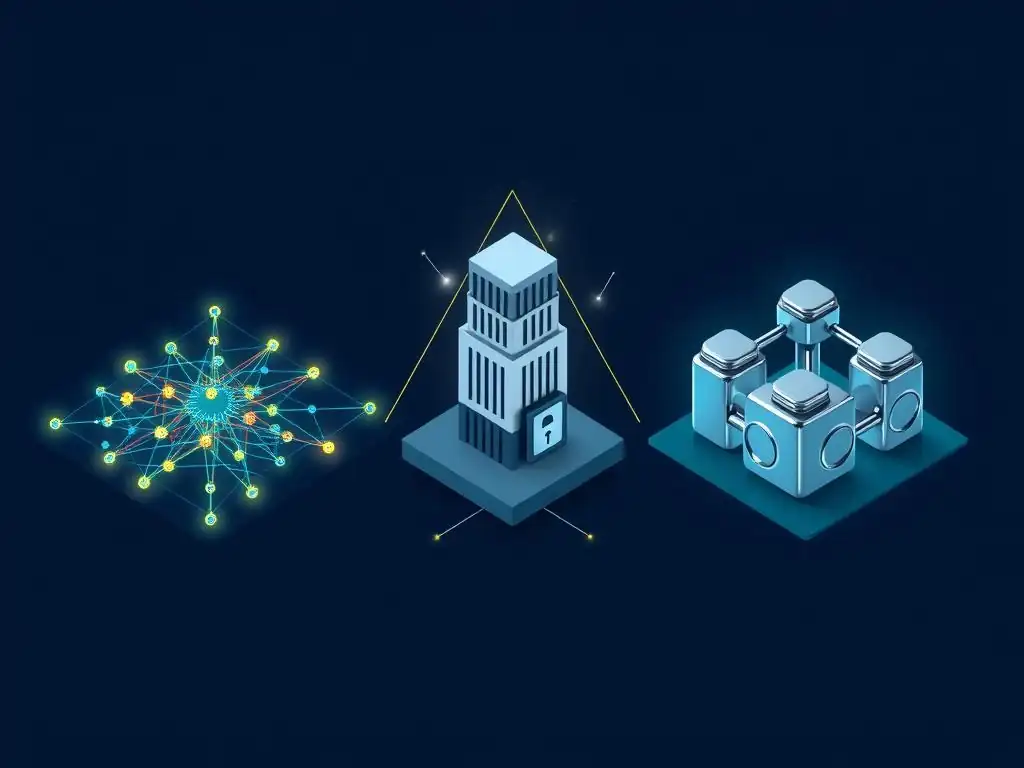
Cosmos and Polkadot, while both aiming to solve blockchain interoperability, diverge significantly in their architectural design and underlying philosophies. Cosmos champions the concept of sovereign blockchains. Each Zone in Cosmos is an independent blockchain responsible for its own security and governance. This "Internet of Blockchains" vision emphasizes the autonomy and customization capabilities of individual chains while providing a framework for them to interoperate. Cosmos aims to connect these sovereign entities without imposing a shared security model. This approach gives projects maximum flexibility and control over their blockchain's design and operation.
Polkadot, in contrast, is built upon a shared security model. Parachains in Polkadot derive their security from the Relay Chain, which provides pooled security for all connected parachains. This "heterogeneous multi-chain" architecture prioritizes security and interoperability as core network features.
Polkadot's design philosophy favors a more integrated and cohesive ecosystem where parachains benefit from the collective security and governance of the Relay Chain. This shared security model simplifies security considerations for individual parachains but may come with less sovereignty compared to Cosmos. The choice between these architectures depends heavily on a project's priorities – sovereignty and customization versus shared security and ease of deployment.
Consensus Mechanisms: Tendermint BFT vs. GRANDPA and BABE
The consensus mechanisms employed by Cosmos and Polkadot reflect their different architectural philosophies. Cosmos relies on Tendermint BFT, a well-established and robust consensus algorithm known for its fast finality and Byzantine Fault Tolerance. Tendermint BFT is used by the Cosmos Hub and is also the recommended consensus engine for Zones built with the Cosmos SDK. Its synchronous nature and proven track record make it a reliable choice for securing individual blockchains within the Cosmos ecosystem.
Polkadot utilizes a more complex and hybrid consensus system with GRANDPA and BABE. GRANDPA handles finality, ensuring the immutability of the chain's history, while BABE is responsible for block production. This separation of concerns allows for optimization of both finality and block production.
Polkadot's consensus is asynchronous and designed to support a large number of parachains sharing security. While both Tendermint BFT and GRANDPA/BABE are robust consensus mechanisms, they differ in their approach and are suited to the respective architectures of Cosmos and Polkadot. Tendermint BFT is simpler and proven for individual chains, while GRANDPA/BABE is optimized for shared security and scalability across a multi-chain network.
Development and Customization: Cosmos SDK vs. Substrate
Both Cosmos and Polkadot offer powerful SDKs for blockchain development, but they cater to slightly different needs and preferences. The Cosmos SDK excels in its modularity and ease of use, particularly for building application-specific blockchains with sovereign control. Its Go-based framework and pre-built modules simplify the development process and accelerate time-to-market. The Cosmos SDK is well-suited for projects that want to build independent blockchains tailored to their specific requirements while benefiting from interoperability through IBC.
Substrate, Polkadot's framework, is known for its flexibility and extensibility, particularly for building parachains with shared security. Built in Rust, Substrate offers a high degree of customization and control over blockchain design. Its modular pallets and extensive tooling allow for the creation of highly specialized parachains that integrate seamlessly into the Polkadot ecosystem. Substrate is often favored by projects that prioritize shared security and tight integration within a multi-chain environment. Choosing between Cosmos SDK and Substrate depends on a project's development priorities – ease of use and sovereignty with Cosmos SDK versus flexibility and shared security with Substrate.
Governance Models: On-Chain Governance in Cosmos vs. Polkadot
Governance models are crucial for the long-term sustainability and evolution of blockchain networks, and Cosmos and Polkadot approach governance with distinct philosophies. Cosmos emphasizes on-chain governance for individual Zones. Each Zone can implement its own governance mechanisms, allowing for decentralized decision-making within each sovereign blockchain. The Cosmos Hub itself also has on-chain governance, allowing ATOM token holders to participate in network upgrades and parameter adjustments. This decentralized governance model empowers individual Zones and the Cosmos Hub community to shape their respective networks.
Polkadot also features on-chain governance, but it is more centralized around the Relay Chain and its governance mechanisms. Polkadot's governance is complex and involves various stakeholders, including the Polkadot Council, Technical Committee, and DOT token holders. Proposals are voted on by the community, and the Council and Technical Committee play roles in proposal curation and technical review.
While Polkadot aims for decentralized governance, the Relay Chain governance has a more centralized influence compared to the sovereign governance model of Cosmos Zones. The governance models reflect the overall architectures – Cosmos with decentralized sovereignty and Polkadot with shared security and more centralized coordination at the Relay Chain level.
Scalability and Throughput: Comparing Performance Capabilities
Scalability and throughput are critical considerations when selecting a blockchain interoperability framework. Cosmos achieves scalability through its horizontal scaling approach. By allowing for the creation of numerous independent Zones, Cosmos can distribute transaction load across multiple blockchains, enhancing overall network capacity. Each Zone can process transactions independently, and IBC facilitates communication and value transfer between them. Cosmos' scalability is primarily achieved by adding more Zones to the network.
Polkadot aims for scalability through its parachain architecture and sharding-like approach. Parachains process transactions in parallel, and the Relay Chain coordinates and secures these parallel chains. Polkadot's scalability is achieved by increasing the number of parachains connected to the Relay Chain. While both frameworks offer scalability solutions, the specific throughput and performance will depend on the configuration and design of individual Zones or parachains, as well as the overall network load. Both Cosmos and Polkadot are designed to be significantly more scalable than older, monolithic blockchains, but real-world performance can vary based on specific implementations and network conditions.
Security is a paramount concern in blockchain interoperability, and Cosmos and Polkadot adopt contrasting security models. Cosmos employs an independent security model. Each Zone is responsible for its own security, typically relying on its own set of validators and consensus mechanism (often Tendermint BFT). This model offers greater sovereignty and flexibility for individual Zones, but it also means that each Zone must independently bootstrap and maintain its security. The security of a Cosmos Zone is only as strong as its own validator set and consensus mechanism.
Polkadot, as previously discussed, utilizes a shared security model. Parachains benefit from the security of the Relay Chain and its validator set. This shared security simplifies security considerations for individual parachains, as they do not need to bootstrap their own validator networks.
The Relay Chain provides a strong and pooled security foundation for all connected parachains. However, this shared security model also means that parachains are dependent on the security of the Relay Chain, and a vulnerability in the Relay Chain could potentially affect all parachains. Choosing between independent and shared security depends on a project's risk tolerance and security requirements.
Community and Ecosystem: Assessing Developer Support and Network Effects
The strength of the community and ecosystem surrounding a blockchain interoperability framework is a crucial factor for its long-term success and adoption. Cosmos boasts a large and active community, with a significant number of projects and developers building on the Cosmos SDK and contributing to the ecosystem. The Cosmos ecosystem is diverse and includes a wide range of applications, from DeFi platforms to enterprise solutions. The active developer community and extensive documentation make it relatively easy for new projects to get started with Cosmos.
Polkadot also has a rapidly growing and vibrant community, attracting a significant number of developers and projects. The Polkadot ecosystem is known for its focus on innovation and cutting-edge blockchain technology. The Substrate framework and Polkadot's advanced features have attracted a strong and technically skilled developer community. Both Cosmos and Polkadot have strong communities and ecosystems, but they cater to slightly different developer profiles and project types. The choice may depend on the specific type of project and the desired community and ecosystem to be a part of when considering blockchain interoperability framework selection.
Selecting the Right Blockchain Interoperability Framework: Key Considerations
Project Requirements: Identifying Specific Interoperability Needs
The first step in selecting the right blockchain interoperability framework is to clearly define your project's specific needs and requirements. What type of interoperability is required? Is it primarily for asset transfers, data sharing, or cross-chain smart contract calls? What are the throughput and latency requirements for cross-chain interactions?
Understanding these fundamental needs will help narrow down the options and determine whether Cosmos, Polkadot, or another framework is a better fit. For example, if your project primarily requires sovereign control over a blockchain with limited cross-chain asset transfers, Cosmos might be a suitable choice. Conversely, if your project needs seamless communication and shared security with multiple interconnected chains, Polkadot could be more appropriate.
Consider the complexity of your project and the level of interoperability required. Do you need to interact with a wide variety of existing blockchains, or is interoperability primarily within a specific ecosystem? Are there specific compliance or regulatory requirements that influence your choice of framework? A thorough analysis of your project's interoperability needs is crucial for making an informed decision and selecting the framework that best aligns with your technical and business objectives. This detailed assessment will guide your blockchain interoperability framework selection process effectively.
Technical Expertise: Assessing Development Skills and Resources
Another critical factor in choosing between Cosmos and Polkadot is assessing your team's technical expertise and available resources. Cosmos SDK, while powerful, requires proficiency in Go and a good understanding of blockchain architecture. If your team has experience with Go and is comfortable with building sovereign blockchains, Cosmos SDK might be a relatively straightforward choice. The modularity of the SDK and the availability of pre-built modules can accelerate development, but a solid understanding of the underlying concepts is still necessary.
Substrate, Polkadot's framework, requires expertise in Rust, a more complex and lower-level programming language. Building parachains on Substrate demands a deeper understanding of blockchain technology and potentially a steeper learning curve for teams unfamiliar with Rust. However, Substrate's flexibility and powerful features can be advantageous for projects requiring highly customized and optimized parachains. Evaluate your team's skills, available resources, and willingness to learn new technologies when making your blockchain interoperability framework selection. Consider whether your team has the necessary expertise or can acquire it within your project timeline and budget.
Security Considerations: Evaluating Risk Tolerance and Security Requirements
Security is paramount in blockchain development, and the choice between Cosmos and Polkadot involves considering different security models and their implications. If your project prioritizes maximum sovereignty and control over security, and you are comfortable with independently bootstrapping and maintaining your blockchain's security, Cosmos' independent security model might be preferred. However, this also means that your project bears the full responsibility for securing its Zone, and any vulnerabilities could be exploited.
If your project prioritizes shared security and wants to benefit from the pooled security of a larger network, Polkadot's shared security model could be more attractive. Parachains on Polkadot benefit from the security of the Relay Chain, reducing the burden of individual security bootstrapping. However, this shared security model also introduces a dependency on the Relay Chain's security, and any issues with the Relay Chain could potentially impact all parachains.
Evaluate your project's risk tolerance, security requirements, and the level of security assurance needed when making your blockchain interoperability framework selection. Consider the trade-offs between independent control and shared security.
Governance Preferences: Aligning with Preferred Governance Models
Governance preferences should also play a role in your blockchain interoperability framework selection. If your project values decentralized and sovereign governance for its blockchain, Cosmos' model of independent Zone governance might be more aligned with your preferences. Each Zone can implement its own governance mechanisms, empowering its community to shape its evolution. The Cosmos Hub also has its own on-chain governance, providing a degree of decentralized control over the central hub.
If your project is comfortable with a more centralized governance structure at the core interoperability layer, Polkadot's Relay Chain governance model might be acceptable. While Polkadot aims for decentralized governance, the Relay Chain governance has a more centralized influence compared to Cosmos Zones. Understand the governance models of both frameworks and consider which model aligns better with your project's values and long-term governance vision. Factor in the level of community involvement and control you desire for your blockchain when making your choice.
Long-Term Vision: Considering Future Scalability and Interoperability Requirements
Think about your project's long-term vision and future scalability and interoperability requirements when choosing between Cosmos and Polkadot. If you anticipate significant growth and need to scale your blockchain to handle increasing transaction volumes, both Cosmos and Polkadot offer scalability solutions. Cosmos' horizontal scaling through Zones and Polkadot's parachain architecture are designed to address scalability challenges. Consider which scalability approach aligns better with your project's anticipated growth trajectory and future needs.
Also, consider your long-term interoperability requirements. Do you anticipate needing to interoperate with a wide range of blockchains beyond the Cosmos or Polkadot ecosystems? While both frameworks focus on interoperability within their respective ecosystems, the broader blockchain landscape is constantly evolving. Evaluate the long-term interoperability roadmap of each framework and assess which one is better positioned to adapt to future interoperability needs and connect with a wider range of blockchain networks. Your long-term vision for scalability and interoperability should inform your blockchain interoperability framework selection.
Cost Analysis: Evaluating Development and Operational Costs
Finally, conduct a thorough cost analysis to evaluate the development and operational costs associated with choosing Cosmos or Polkadot. Development costs will depend on factors such as the complexity of your project, the chosen framework (Cosmos SDK or Substrate), and the availability of skilled developers. Substrate development, requiring Rust expertise, might potentially be more expensive due to the relative scarcity of Rust developers compared to Go developers. Consider the cost of hiring or training developers proficient in the required programming languages.
Operational costs will include infrastructure costs, security audits, and ongoing maintenance. For Cosmos, each Zone is responsible for its own operational costs. For Polkadot, parachains share some operational costs with the Relay Chain but also incur costs for leasing parachain slots. Conduct a detailed cost-benefit analysis, considering both development and operational expenses, to determine the most cost-effective blockchain interoperability framework for your project. Factor in both upfront development costs and long-term operational expenses when making your final decision.
Use Cases: Cosmos and Polkadot in Action - Real-World Examples
Cosmos Use Cases: Terra (LUNA) Stablecoin, Osmosis DEX
Cosmos has powered several prominent projects, demonstrating its versatility and effectiveness as a blockchain interoperability framework. One notable example was Terra (LUNA), a stablecoin ecosystem that utilized the Cosmos SDK. Terra aimed to create algorithmic stablecoins pegged to various fiat currencies, leveraging the Cosmos network for its blockchain infrastructure. While the original Terra (LUNA) project collapsed, the underlying Cosmos technology and the concept of algorithmic stablecoins continue to be relevant, and lessons learned from Terra are informing future stablecoin designs.
Osmosis DEX is another successful example within the Cosmos ecosystem. Osmosis is a decentralized exchange (DEX) built as a Cosmos Zone, specifically designed for interchain assets. It leverages IBC to enable seamless trading of tokens from different Cosmos Zones, creating a truly interchain DEX experience. Osmosis showcases the power of Cosmos and IBC for building interoperable DeFi applications. It demonstrates how Cosmos can facilitate the creation of decentralized exchanges that can access liquidity and assets across multiple independent blockchains, enhancing capital efficiency and user experience within the Cosmos ecosystem.
Polkadot Use Cases: Acala DeFi Hub, Moonbeam Ethereum-Compatible Parachain
Polkadot also boasts a growing ecosystem of successful projects that showcase its capabilities as a blockchain interoperability framework. Acala is a DeFi hub built as a Polkadot parachain, focused on providing a suite of DeFi services, including stablecoins, staking, and decentralized exchange functionalities. Acala leverages Polkadot's shared security and interoperability to create a secure and interconnected DeFi platform. It aims to become a central DeFi hub within the Polkadot ecosystem, facilitating cross-chain DeFi interactions and asset management.
Moonbeam is another prominent parachain on Polkadot. Moonbeam is an Ethereum-compatible parachain, designed to allow Ethereum-based projects to easily deploy on Polkadot and leverage Polkadot's interoperability and scalability. Moonbeam provides a familiar Ethereum-like environment, including support for Solidity smart contracts and Web3 tooling, making it easy for Ethereum developers to port their applications to Polkadot. Moonbeam demonstrates Polkadot's ability to bridge different blockchain ecosystems and attract developers from existing platforms, expanding the reach and utility of the Polkadot network.
The Future of Blockchain Interoperability: Trends and Predictions
The Evolution of Cross-Chain Communication Protocols
The field of blockchain interoperability is constantly evolving, with ongoing research and development focused on improving cross-chain communication protocols. Current protocols like IBC and XCMP are already enabling significant progress in interoperability, but future protocols are likely to be even more efficient, secure, and versatile. Researchers are exploring new cryptographic techniques, consensus mechanisms, and architectural designs to enhance cross-chain communication and address existing limitations. We can expect to see advancements in areas such as trust-minimized bridges, more generalized messaging protocols, and improved scalability for cross-chain interactions.
The evolution of cross-chain communication protocols will be driven by the need for greater interoperability between a wider range of blockchain networks, including both public and private chains. Standardization efforts are also likely to play a crucial role, with initiatives aimed at establishing common standards for cross-chain communication to improve compatibility and reduce fragmentation. As the blockchain space matures, we can anticipate further innovation and refinement in cross-chain communication protocols, leading to more seamless and efficient interoperability solutions.
The Impact of Interoperability on DeFi and Enterprise Applications
Blockchain interoperability is poised to have a transformative impact on both DeFi and enterprise applications. In DeFi, interoperability unlocks the potential for truly cross-chain DeFi protocols that can access liquidity and assets across multiple blockchains. This will lead to more efficient and liquid DeFi markets, as well as the creation of new and innovative DeFi products and services that leverage the strengths of different blockchain platforms. Cross-chain DEXs, lending platforms, and yield aggregators are just a few examples of how interoperability can revolutionize the DeFi landscape.
For enterprise applications, interoperability enables the integration of blockchain technology into existing business processes and systems. Enterprises often operate across multiple platforms and systems, and interoperability is essential for connecting blockchain solutions with these existing infrastructures. Supply chain management, data sharing, and cross-organizational workflows are some of the enterprise use cases that will benefit significantly from improved blockchain interoperability. As interoperability matures, we can expect to see wider adoption of blockchain technology in enterprise settings, driving efficiency, transparency, and collaboration across industries.
The Role of Interoperability in a Multi-Chain Future
The future of blockchain is increasingly envisioned as a multi-chain future, where different blockchains coexist and specialize in various use cases. Interoperability is the linchpin of this multi-chain vision, enabling these diverse blockchains to communicate and interact seamlessly. Instead of a single "blockchain to rule them all," we are likely to see a network of interconnected blockchains, each optimized for specific purposes and collaborating to create a more robust and versatile blockchain ecosystem. Interoperability frameworks like Cosmos and Polkadot are at the forefront of building this multi-chain future.
In this multi-chain future, users and applications will be able to seamlessly move between different blockchains, leveraging the unique strengths of each platform without being confined to a single ecosystem. This interconnected blockchain landscape will foster greater innovation, competition, and user choice.
Blockchain interoperability is not just a technical challenge; it is a fundamental building block for realizing the full potential of blockchain technology and creating a more open, connected, and decentralized digital world. The continued development and adoption of robust blockchain interoperability frameworks will be essential for shaping this multi-chain future and unlocking the transformative power of blockchain technology across various sectors.
Frequently Asked Questions
How do Cosmos and Polkadot facilitate blockchain interoperability?
Cosmos uses the Inter-Blockchain Communication (IBC) protocol to enable independent blockchains (Zones) to communicate. Polkadot uses a central Relay Chain to facilitate communication between parachains, offering shared security and interoperability.
What are the key differences in the security models of Cosmos and Polkadot?
Cosmos emphasizes sovereign blockchains responsible for their own security. Polkadot provides shared security through its Relay Chain, offering a unified security framework for all parachains.
Which framework, Cosmos or Polkadot, offers more flexibility in blockchain design?
Cosmos allows for greater flexibility as developers can design blockchains with custom consensus mechanisms. Polkadot requires parachains to adhere to the Relay Chain's specifications, limiting design freedom.
How does the governance structure differ between Cosmos and Polkadot?
Cosmos has a decentralized governance model where each Zone manages its own governance. Polkadot employs a complex on-chain governance system involving stakeholders in the Relay Chain.
What factors should I consider when selecting an interoperability framework for my project?
Consider your project's security needs, desired level of design flexibility, and the importance of shared vs. independent governance when choosing between Cosmos and Polkadot.
Final Reflection: Bridging the Blockchain Divide
The exploration of Cosmos and Polkadot highlights the critical need for seamless blockchain interoperability in today's fragmented digital landscape. As we've seen, both frameworks offer unique approaches to connecting disparate blockchains, each with its own strengths and weaknesses. The choice between them is not a simple one, but rather a strategic decision that hinges on the specific requirements and vision of a given project. The urgency for effective interoperability solutions only intensifies as the blockchain ecosystem continues to grow and diversify.
The ongoing quest for blockchain interoperability has profoundly shaped the evolution of decentralized technologies. It's a testament to our collective desire to break down silos and build a more interconnected and collaborative future. This pursuit resonates deeply with the core principles of decentralization, fostering a more open and accessible ecosystem for all. As Gavin Wood, the founder of Polkadot, aptly stated: The future is multi-chain; the future is interoperable.
This vision underscores the fundamental importance of frameworks like Cosmos and Polkadot in realizing the full potential of blockchain technology.
Now, as you consider the landscape of blockchain interoperability, I encourage you to reflect on your own role in shaping this future. How can you leverage these frameworks, or contribute to their evolution, to build more connected and impactful decentralized applications? The power to bridge the blockchain divide lies within each of us. Embrace the challenge, explore the possibilities, and contribute to a more interconnected and collaborative blockchain future.
Empower Your Blockchain Vision: Choose Your Interoperability Path!
Thank you for exploring the Cosmos and Polkadot ecosystems with us. We hope this article has clarified the strengths and nuances of each framework, helping you make an informed decision for your project's future. Now, it's time to turn that knowledge into action!
Take your blockchain interoperability journey to the next level by:
- Clearly defining your project's core interoperability needs—specify what features or functionalities are essential for your network.
- Engaging with developer communities for both Cosmos and Polkadot. Participate in discussions, ask questions, and contribute to their ecosystems.
- Prototyping your solution on testnets for both frameworks to gain practical experience of the development process and identify any challenges.
What is the most important factor influencing your choice between Cosmos and Polkadot for your next project? Share your insights below!
Leave a Reply