
Demystifying Green Blockchain: Understanding the Technology and its Environmental Promise


Welcome to Blockchain Trends, your compass in the rapidly evolving world of decentralized technology. Beyond the headlines of cryptocurrencies, lies a universe of transformative potential. Are you ready to delve into the innovative applications shaping our future? In this article, we embark on a crucial exploration: demystifying the concept of Sustainable blockchain environmental benefits. Can blockchain truly be a force for good in the fight against climate change? Join us as we uncover the technology, examine its promise, and explore the real-world impact of green blockchain solutions.
Demystifying Green Blockchain: Understanding the Technology and its Environmental Promise
- Introduction to Sustainable Blockchain and Environmental Responsibility
- What is Green Blockchain? Defining Sustainable Blockchain Technologies
- Key Technologies Powering Sustainable Blockchain Environmental Benefits
- The Promise of Green Blockchain: Real-World Applications and Sustainable Solutions
- Comparing Green Blockchains: Evaluating Different Approaches
- Overcoming Challenges and Future Directions for Sustainable Blockchain
- The Future of Green Blockchain Tech: A Sustainable Vision
-
Frequently Asked Questions
- What exactly are the sustainable blockchain environmental benefits touted in the context of "Green Blockchain"?
- How does "Green Blockchain" differ from traditional blockchain systems like Bitcoin in terms of energy consumption?
- Besides lower energy consumption, what other environmental benefits can blockchain technology offer?
- What are some real-world applications of "Green Blockchain" that demonstrate its environmental promise?
- What regulatory challenges and future trends are associated with the development and adoption of "Green Blockchain"?
- Final Reflection: Embracing Sustainable Blockchain Futures
- Unlock Your Eco-Friendly Blockchain Journey!
Introduction to Sustainable Blockchain and Environmental Responsibility
The Growing Need for Eco-Friendly Blockchain Solutions
The rapid expansion of blockchain technology across various sectors, from finance to supply chain management, has brought its environmental footprint into sharp focus. Early blockchain implementations, particularly those based on Proof-of-Work (PoW) consensus, require immense computational power, leading to significant energy consumption and carbon emissions. This has spurred a critical need for the development and adoption of eco-friendly blockchain solutions. Addressing the environmental impact is no longer a niche concern but a fundamental requirement for the long-term viability and public acceptance of decentralized technologies.
The demand for sustainable blockchain environmental benefits is driven by increasing global awareness of climate change and corporate social responsibility initiatives. Investors, consumers, and regulators are scrutinizing the energy usage of digital technologies. Reports highlighting blockchain's energy demands, such as the Cambridge Bitcoin Electricity Consumption Index (CBECI) estimating Bitcoin's annual energy consumption comparable to entire countries, underscore the urgency. This pressure is accelerating research and development into alternative consensus mechanisms and architectural designs that can deliver the power of blockchain without the heavy environmental cost, paving the way for truly green blockchain applications.
Understanding the Environmental Impact of Traditional Blockchain
Traditional blockchain networks, predominantly those utilizing the Proof-of-Work (PoW) consensus mechanism, consume substantial amounts of energy. In PoW, participants (miners) compete to solve complex mathematical problems to validate transactions and add new blocks to the chain. This competition requires vast arrays of specialized hardware running continuously, consuming significant electricity. The primary environmental concern stems from the source of this electricity; if it comes from fossil fuels, it contributes directly to greenhouse gas emissions.
Beyond energy consumption, the electronic waste generated by outdated mining hardware is another environmental challenge associated with traditional blockchain. The specialized Application-Specific Integrated Circuit (ASIC) miners become obsolete relatively quickly as newer, more efficient models are developed. Disposing of this hardware responsibly presents a logistical and environmental hurdle. While efforts are being made to utilize renewable energy sources for mining operations, the sheer scale of energy demand in major PoW networks remains a significant barrier to achieving widespread sustainable blockchain environmental benefits.
What is Green Blockchain? Defining Sustainable Blockchain Technologies
Exploring Energy-Efficient Consensus Mechanisms in Green Blockchain
Green blockchain refers to blockchain networks designed or adapted to minimize their environmental footprint, primarily by reducing energy consumption. The cornerstone of most green blockchain initiatives lies in adopting energy-efficient consensus mechanisms that replace or significantly modify the energy-intensive Proof-of-Work (PoW). These alternative mechanisms validate transactions and secure the network through methods that do not require competitive computational races.
The shift towards energy-efficient consensus mechanisms is vital for unlocking the sustainable blockchain environmental benefits. Mechanisms like Proof-of-Stake (PoS), Delegated Proof-of-Stake (DPoS), and Proof-of-Authority (PoA) drastically lower the energy required per transaction compared to PoW. For example, a single Bitcoin (PoW) transaction has been estimated to consume energy equivalent to tens of thousands of Visa transactions, whereas a transaction on a PoS network like Ethereum 2.0 is expected to use orders of magnitude less energy, potentially reducing consumption by over 99%. This fundamental change in how blocks are validated is the core technical innovation driving the green blockchain movement.
Alternatives to Proof-of-Work: Addressing Energy Consumption Issues
The high energy consumption of Proof-of-Work networks is their most significant environmental drawback. Alternatives directly address this by changing the criteria for validating transactions and securing the network. Instead of relying on computational power, these mechanisms typically rely on factors like the amount of cryptocurrency a validator "stakes" (holds) in the network, the reputation of known validators, or a combination of factors.
Proof-of-Stake (PoS) is perhaps the most prominent alternative, used by networks like Cardano, Solana, and soon, a major upgrade to Ethereum. In PoS, validators are chosen to create new blocks based on the amount of stake they hold and are willing to "lock up" as collateral.
This process requires significantly less computational power than PoW mining. Other mechanisms, such as Delegated Proof-of-Stake (DPoS), where token holders elect a smaller set of delegates to validate transactions, and Proof-of-Authority (PoA), which relies on a set of pre-approved, trusted validators, also offer substantial energy savings, contributing directly to the sustainable blockchain environmental benefits sought by developers and users.
Key Technologies Powering Sustainable Blockchain Environmental Benefits
Proof-of-Stake (PoS): A Low-Energy Alternative
Proof-of-Stake (PoS) is a consensus mechanism that significantly reduces the energy consumption associated with blockchain technology compared to Proof-of-Work (PoW). In PoS systems, validators are selected to propose and validate new blocks based on the amount of cryptocurrency they hold and are willing to "stake" as collateral. This staked capital acts as a disincentive for malicious behavior, as validators risk losing their stake if they act dishonestly. The computational power required for PoS is minimal, involving primarily network communication and basic computation, rather than the intensive competitive hashing required by PoW.
The energy efficiency of PoS is its primary advantage in the context of sustainable blockchain environmental benefits. Estimates suggest that PoS networks can be thousands of times more energy-efficient than PoW networks. For instance, following its transition from PoW to PoS, Ethereum's energy consumption is projected to decrease by over 99.9%. This dramatic reduction in energy usage makes PoS a cornerstone technology for building truly green blockchain applications and infrastructure capable of scaling without imposing an unsustainable environmental burden.
Delegated Proof-of-Stake (DPoS) and its Environmental Impact
Delegated Proof-of-Stake (DPoS) is a variation of PoS that further optimizes efficiency and scalability. In DPoS, token holders vote for a limited number of delegates (often called witnesses or block producers) who are responsible for validating transactions and producing blocks. This system creates a representative democracy model within the blockchain, where a smaller, fixed set of validators manage the network's operations. The reduced number of active validators means less communication and coordination overhead compared to a system where any staker can potentially be a validator.
From an environmental perspective, DPoS offers similar, if not greater, energy efficiency compared to standard PoS due to its streamlined consensus process. With fewer nodes actively participating in block production at any given time, the overall computational and networking demands are lower. Networks like EOS, TRON, and Lisk utilize DPoS, demonstrating its viability for creating high-throughput, low-latency blockchain environments that contribute positively to achieving sustainable blockchain environmental benefits by minimizing energy use per transaction.
Proof-of-Authority (PoA) is another consensus mechanism focused on efficiency, often used in private or consortium blockchains. In PoA, block validators are a set of pre-approved, trusted accounts or entities. These validators are typically known identities with established reputations, and their authority to validate blocks is granted based on their trustworthiness rather than staking capital or computational power. This model sacrifices decentralization to some extent in favor of speed, scalability, and predictable performance.
PoA networks are inherently energy-efficient because block validation does not involve competitive solving or energy-intensive staking. The energy consumption is limited to the operational costs of the relatively small number of validator nodes. Consortium blockchains, which often employ PoA or similar permissioned mechanisms, are frequently used by businesses and organizations for specific applications like supply chain management or interbank settlements. Their controlled nature and efficient consensus contribute to sustainable blockchain environmental benefits within specific industry contexts by providing a low-energy platform for enterprise-level decentralized applications.
Scalability is a key challenge for many blockchain networks, and inefficient scaling can indirectly impact energy consumption. As networks grow, processing more transactions can require more resources. Technologies like sharding aim to improve scalability by dividing the blockchain network into smaller, more manageable segments called "shards." Each shard can process transactions and smart contracts independently and in parallel, dramatically increasing the network's overall throughput.
While not a consensus mechanism itself, sharding contributes to sustainable blockchain environmental benefits by making networks more efficient at handling transaction volume without proportionally increasing energy demands. By processing more transactions per unit of energy, sharding reduces the effective energy cost per transaction. Other scalability solutions, such as Layer 2 scaling protocols (like rollups on Ethereum) and directed acyclic graph (DAG) based structures (like IOTA), also aim to process transactions off the main chain or in a more parallelized manner, further contributing to the goal of creating high-performance, energy-efficient blockchain ecosystems.
The Promise of Green Blockchain: Real-World Applications and Sustainable Solutions
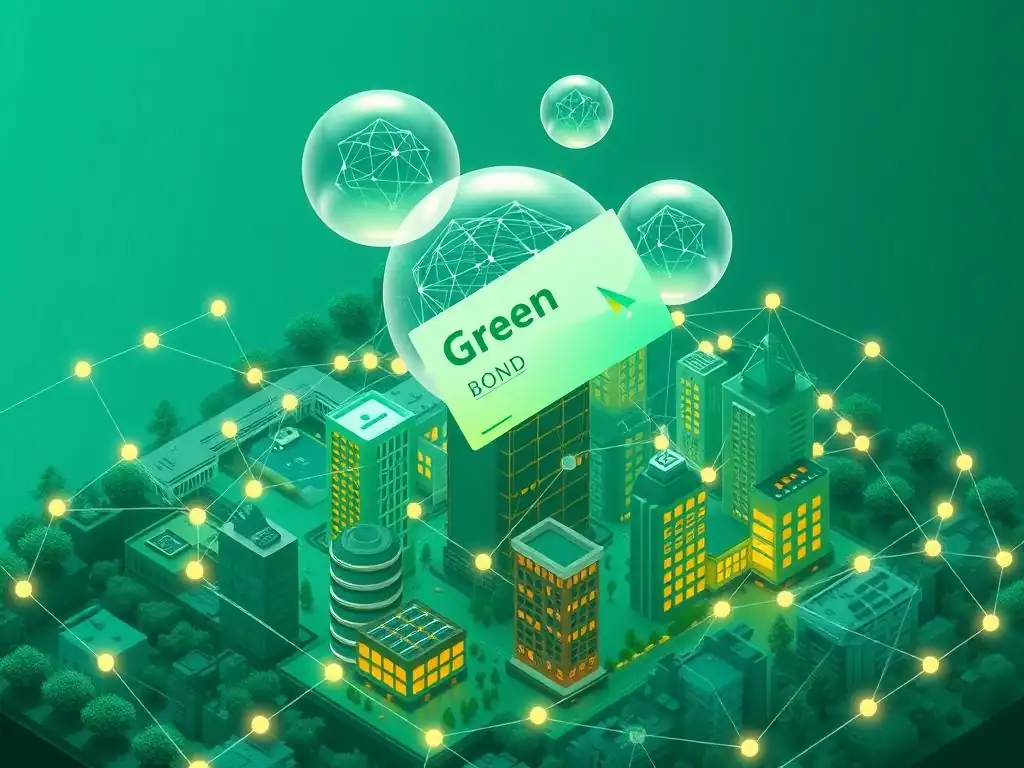
Carbon Credit Trading and Green Blockchain Platforms
One of the most direct applications of green blockchain technology for environmental benefit is in the realm of carbon credit trading. Blockchain can provide a transparent, immutable, and efficient platform for issuing, trading, and retiring carbon credits. Traditional carbon markets can be complex, opaque, and prone to double-counting or fraud. Using a green blockchain, each carbon credit can be tokenized as a unique digital asset, ensuring its authenticity and preventing it from being spent more than once.
Platforms built on energy-efficient blockchains, such as those using PoS or DPoS, enable the creation of liquid and accessible carbon markets. Projects like Toucan Protocol allow real-world carbon credits (like Verified Carbon Units or VCUs) to be brought onto the blockchain as BCT (Base Carbon Tonne) tokens, facilitating their use in decentralized finance (DeFi) or trading on decentralized exchanges. This application leverages the transparency and security of blockchain to create a more effective mechanism for incentivizing emissions reduction, showcasing tangible sustainable blockchain environmental benefits.
Supply Chain Transparency for Sustainable Products using Blockchain
Ensuring the sustainability of products often requires tracing their origin and journey through complex supply chains. Green blockchain technology offers a powerful tool for enhancing transparency and accountability in supply chains, enabling consumers and businesses to verify claims about sustainable sourcing, ethical labor practices, or reduced environmental impact. By recording each step of a product's lifecycle on an immutable ledger, blockchain creates a verifiable history that is resistant to tampering.
Companies are beginning to implement blockchain solutions to track goods from their source to the consumer. For example, initiatives are using blockchain to trace conflict-free minerals, sustainably harvested timber, or ethically sourced coffee. A green blockchain ensures that this tracking is achieved without the heavy energy cost associated with older blockchain models. This application directly supports sustainable blockchain environmental benefits by providing the data necessary to make informed choices about sustainable consumption and production, holding companies accountable for their environmental and social claims.
Renewable Energy Tracking and Management with Decentralized Ledgers
Blockchain technology can play a significant role in managing and tracking renewable energy generation and consumption. Decentralized energy platforms use blockchain to create transparent and secure markets for peer-to-peer energy trading, where individuals or businesses with rooftop solar panels, for example, can sell excess energy directly to neighbors. Blockchain ensures that these transactions are recorded accurately and securely, facilitating a more decentralized and potentially more efficient energy grid.
Furthermore, blockchain can be used to track Renewable Energy Certificates (RECs) or similar instruments, ensuring that the energy generated from renewable sources is properly accounted for and credited. Platforms like Powerledger utilize blockchain to track energy transactions and manage renewable energy assets. By providing a reliable system for verifying the source and flow of renewable energy, green blockchain technology helps to accelerate the transition to a more sustainable energy infrastructure, offering clear sustainable blockchain environmental benefits in the energy sector.
Veridium Labs: Tokenizing Environmental Assets
Veridium Labs is an example of an organization that has explored the use of blockchain, specifically the Stellar network (which uses a form of federated Byzantine agreement, energy-efficient like PoS), for tokenizing environmental assets. Their focus has been on creating digital assets representing environmental value, such as carbon credits, water rights, or biodiversity offsets. The goal is to make these assets more accessible, liquid, and tradable, thereby creating stronger economic incentives for environmental conservation and restoration.
By tokenizing environmental assets on an energy-efficient blockchain, Veridium aimed to overcome the limitations of traditional, often illiquid, environmental markets. Tokenization allows for fractional ownership, easier transfer, and increased transparency regarding the ownership and retirement of these assets. While specific project outcomes and scale can vary, the concept demonstrates how green blockchain infrastructure can be directly applied to create financial mechanisms that support environmental goals, contributing to overall sustainable blockchain environmental benefits by leveraging market forces for conservation.
Comparing Green Blockchains: Evaluating Different Approaches
Comparison Table: PoS vs. DPoS vs. PoA - Energy Consumption, Security, Scalability
| Feature | Proof-of-Stake (PoS) | Delegated Proof-of-Stake (DPoS) | Proof-of-Authority (PoA) |
|---|---|---|---|
| Energy Consumption | Very Low (orders of magnitude less than PoW) | Very Low (potentially slightly lower than PoS) | Very Low (minimal node operation cost) |
| Decentralization | High (open participation based on stake) | Moderate (delegates elected by stakers) | Low (validators are pre-approved) |
| Security | High (economic security via staking) | Moderate (relies on delegate honesty & reputation) | Moderate to High (relies on validator trust) |
| Scalability | Moderate to High (depends on implementation) | High (fewer validators, faster consensus) | High (centralized control allows optimization) |
| Use Case | Public blockchains (e.g., Ethereum 2.0, Cardano) | Public blockchains needing high throughput (e.g., EOS, TRON) | Private/Consortium blockchains (e.g., Hyperledger Besu, enterprise chains) |
This comparison highlights the trade-offs involved in choosing a green blockchain consensus mechanism. While all three offer significant sustainable blockchain environmental benefits compared to PoW, they differ in their approach to decentralization, security, and performance. PoS offers a balance, DPoS prioritizes speed and scalability via delegation, and PoA optimizes for performance and control in permissioned environments.
Analyzing the Trade-offs: Security vs. Sustainability in Green Blockchain Design
Designing a green blockchain involves navigating complex trade-offs, particularly between security and sustainability, and often involving decentralization and scalability as well. Proof-of-Work, despite its energy intensity, is widely considered one of the most robust consensus mechanisms in terms of security against certain types of attacks (like 51% attacks) in open, permissionless networks. Its security relies on the immense cost of acquiring enough computational power to overpower the network.
Proof-of-Stake and other energy-efficient mechanisms achieve sustainable blockchain environmental benefits by reducing energy use, but they rely on different security assumptions. PoS relies on economic security through staking; a malicious actor would need to acquire a significant portion of the network's total staked value, which is intended to be prohibitively expensive. However, these mechanisms introduce new potential vulnerabilities or require different monitoring and governance structures. Developers must carefully design the economic incentives and validation rules within these systems to maintain a high level of security while achieving energy efficiency, ensuring the long-term viability and trustworthiness of green blockchain solutions.
Overcoming Challenges and Future Directions for Sustainable Blockchain
Addressing Scalability Limitations in Green Blockchain Networks
While energy-efficient consensus mechanisms like PoS are crucial for sustainable blockchain environmental benefits, scalability remains a significant challenge for many networks, green or otherwise. As the number of users and transactions grows, the underlying infrastructure must be able to handle the increased load without becoming slow or prohibitively expensive. Inefficient scaling can lead to higher transaction fees and slower processing times, hindering widespread adoption.
Efforts to address scalability in green blockchain networks involve various approaches. Layer 2 scaling solutions, such as state channels, plasma, and various forms of rollups (optimistic and zero-knowledge), allow transactions to be processed off the main blockchain and then batched and settled on the main chain. Sharding, as mentioned earlier, divides the network's state and processing. These technologies enable green blockchains to handle potentially thousands or tens of thousands of transactions per second, dramatically increasing throughput while maintaining the low energy consumption of the underlying consensus mechanism, thereby enhancing the sustainable blockchain environmental benefits at scale.
Enhancing Security and Trust in Decentralized Sustainable Systems
Ensuring robust security and fostering trust are paramount for the widespread adoption of any blockchain technology, including green blockchains. While PoS and other energy-efficient mechanisms offer significant sustainable blockchain environmental benefits, they also introduce new security considerations compared to PoW. For instance, potential issues like "nothing-at-stake" (where validators have no cost in supporting multiple chain histories) or challenges in achieving true decentralization in delegated systems need careful design and mitigation.
Ongoing research and development are focused on enhancing the security models of energy-efficient consensus mechanisms. This includes refining slashing conditions (penalties for malicious validator behavior), improving decentralized governance models, and developing more sophisticated cryptographic techniques. Building trust also involves increasing transparency in network operations, clearly communicating how consensus is reached, and ensuring the accessibility of information about network participants and their behavior. The future of green blockchain depends on its ability to not only be environmentally friendly but also to be demonstrably secure and trustworthy for critical applications.
The Role of Regulation and Standards in Promoting Green Blockchain Adoption
Regulatory frameworks and industry standards play a vital role in shaping the future of green blockchain adoption and ensuring sustainable blockchain environmental benefits. Clear regulations can provide legal certainty for businesses and individuals looking to use blockchain for environmental purposes, such as carbon trading or supply chain transparency. Lack of regulatory clarity can be a significant barrier to innovation and investment.
Furthermore, establishing industry standards for assessing the environmental impact of different blockchain technologies is crucial. This could involve standardized methodologies for calculating energy consumption per transaction or per year for various networks. Such standards would allow for meaningful comparisons between different blockchain platforms and help users choose the most energy-efficient options for their needs. Governments and international bodies are beginning to examine the environmental impact of digital technologies, and proactive engagement from the blockchain industry in developing green standards can help promote responsible innovation and accelerate the adoption of sustainable blockchain solutions.
The Future of Green Blockchain Tech: A Sustainable Vision
The Potential for Green Blockchain to Drive Environmental Change
The potential for green blockchain technology to drive significant positive environmental change is substantial. By providing transparent, immutable, and efficient systems, green blockchains can underpin solutions for some of the most pressing environmental challenges. From enabling more effective carbon markets and promoting renewable energy adoption to enhancing the traceability of sustainable products and supporting environmental asset tokenization, the applications are diverse and impactful.
The shift away from energy-intensive Proof-of-Work is fundamentally changing the narrative around blockchain's environmental footprint. As more applications migrate to or are built on energy-efficient networks, the focus can shift from the technology's energy problem to its potential as an environmental solution. The inherent properties of blockchain – decentralization, transparency, and immutability – when combined with energy efficiency, create powerful tools for environmental monitoring, reporting, and verification, amplifying the potential for sustainable blockchain environmental benefits globally.
Predictions for the Growth of Green Blockchain Applications
Predictions suggest a significant growth in green blockchain applications across various sectors in the coming years. As major networks like Ethereum complete their transition to Proof-of-Stake and newer, energy-efficient platforms mature, the infrastructure for building sustainable decentralized applications becomes more robust and accessible. This will likely lead to an increase in enterprise adoption for supply chain visibility, carbon accounting, and resource management.
We can anticipate seeing more initiatives using green blockchain for tokenizing real-world environmental assets, making investments in conservation and sustainability more liquid and appealing. The intersection of blockchain with IoT (Internet of Things) devices could enable real-time environmental monitoring and automated carbon offsetting based on verified data, all powered by energy-efficient ledgers. The increasing focus on ESG (Environmental, Social, and Governance) factors in business and investment will further fuel the demand for technologies that can prove and track sustainability efforts, positioning green blockchain for significant expansion and delivering increasingly impactful sustainable blockchain environmental benefits.
Conclusion: Embracing Sustainable Blockchain for a Greener Future
The journey towards truly sustainable blockchain environmental benefits is well underway, marked by significant technological advancements in consensus mechanisms and a growing recognition of the need for eco-friendly decentralized systems. The transition away from energy-intensive Proof-of-Work towards efficient alternatives like Proof-of-Stake, Delegated Proof-of-Stake, and Proof-of-Authority is fundamentally reshaping the industry's relationship with the environment. These green blockchain technologies are not just theoretical concepts; they are powering real-world applications that address critical environmental challenges, from facilitating transparent carbon markets to enabling verifiable sustainable supply chains.
While challenges related to scalability, security, and regulatory clarity persist, ongoing innovation and collaboration across the industry are paving the way for overcoming these hurdles. The future of blockchain is increasingly green, offering the potential to leverage the power of decentralization and transparency to drive positive environmental change.
Embracing sustainable blockchain is essential not only for the long-term viability and public acceptance of the technology itself but also for contributing to a greener, more sustainable future for the planet. The promise of green blockchain lies in its ability to combine technological innovation with environmental responsibility, proving that decentralized systems can indeed be a force for good.
Frequently Asked Questions
What exactly are the sustainable blockchain environmental benefits touted in the context of "Green Blockchain"?
Green blockchain aims to reduce the environmental impact of blockchain technology, primarily by utilizing energy-efficient consensus mechanisms and promoting sustainable practices. This goes beyond just lower energy consumption.
How does "Green Blockchain" differ from traditional blockchain systems like Bitcoin in terms of energy consumption?
Traditional blockchains, like Bitcoin, often use Proof-of-Work (PoW), which is energy-intensive. Green blockchain initiatives often utilize Proof-of-Stake (PoS) or other consensus mechanisms that require significantly less energy.
Besides lower energy consumption, what other environmental benefits can blockchain technology offer?
Blockchain can enhance supply chain transparency, allowing for better tracking of products and ensuring sustainable sourcing. It can also be used to create incentive programs for environmental conservation efforts.
What are some real-world applications of "Green Blockchain" that demonstrate its environmental promise?
Examples include platforms for carbon credit trading, systems for tracking and verifying renewable energy certificates, and solutions for improving waste management and recycling processes.
What regulatory challenges and future trends are associated with the development and adoption of "Green Blockchain"?
Regulation needs to catch up to ensure responsible development and prevent "greenwashing." Future trends include a focus on interoperability and the integration of blockchain with other sustainability technologies.
Final Reflection: Embracing Sustainable Blockchain Futures
The journey through demystifying green blockchain reveals that technology and environmental responsibility are not mutually exclusive. The potential for sustainable blockchain solutions to revolutionize industries while minimizing ecological impact is not just a theoretical concept; it's a tangible opportunity that demands our attention and action today.
The promise of sustainable blockchain extends far beyond mere technological advancement; it represents a fundamental shift in how we approach innovation and resource management. This shift is crucial, not just for the planet, but for fostering a more equitable and responsible future for all. We are the first generation to feel the effect of climate change and the last generation who can do something about it.
- Barack Obama. This quote resonates deeply with the urgency and the potential that green blockchain offers in mitigating environmental damage.
Now, consider how you can contribute to this sustainable revolution. Reflect on the ways you can support and advocate for the adoption of green blockchain technologies in your own life and within your sphere of influence. The future of our planet depends on our collective commitment to embracing innovation that prioritizes both progress and preservation. Let's work together to build a world where technology empowers a truly sustainable future.
Unlock Your Eco-Friendly Blockchain Journey!
Thank you for exploring the world of green blockchain with us! We hope you've gained valuable insights into how this technology is shaping a more sustainable future. Now, it's time to take action and become part of this exciting movement.
Here’s how you can contribute to a greener blockchain:
- Start by researching and supporting blockchain projects that prioritize energy efficiency and environmental sustainability. Your support can make a meaningful difference.
- Explore alternative consensus mechanisms, such as Proof-of-Stake, and consider their potential for reducing energy consumption in blockchain networks. Learn how they work and their benefits.
- Share this article with your network to spark conversations about sustainable blockchain practices! Let’s spread the message and encourage wider adoption.
What small, impactful change will you make today to help create a greener blockchain future? Share your thoughts in the comments below!
Leave a Reply