
The Metaverse and Supply Chains: Blockchain for Transparency and Efficiency in Virtual Commerce

Welcome to Blockchain Trends, your source for in-depth analysis of blockchain's evolution. Ever wondered how blockchain can revolutionize more than just finance? This week, we delve into the burgeoning intersection of the Metaverse and supply chains, exploring how this powerful technology unlocks unprecedented blockchain supply chain transparency benefits in virtual commerce. Discover how these innovations are reshaping industries and creating new opportunities, and uncover the secrets to staying ahead in this rapidly evolving landscape. Read on to explore the possibilities!
- The Metaverse and Supply Chains: Blockchain for Transparency and Efficiency in Virtual Commerce
- The Role of Blockchain in Revolutionizing Metaverse Supply Chains
- Enhancing Transparency in Metaverse Commerce with Blockchain
- Improving Efficiency in Metaverse Supply Chains Through Blockchain
- Key Blockchain Supply Chain Transparency Benefits in the Metaverse
- Real-World Applications and Case Studies of Blockchain in Metaverse Supply Chains
- Overcoming Challenges and Barriers to Blockchain Adoption in Metaverse Supply Chains
- The Future of Blockchain and Supply Chain Integration in the Metaverse
- Conclusion: Leveraging Blockchain for a More Transparent and Efficient Metaverse Economy
-
Frequently Asked Questions
- What role does blockchain play in enhancing transparency within metaverse supply chains?
- How can blockchain improve the efficiency of metaverse supply chains?
- What are some real-world examples of blockchain being used to improve supply chain transparency benefits in virtual commerce?
- What are the main regulatory challenges surrounding the use of blockchain in metaverse supply chains?
- How does the use of blockchain in metaverse supply chains contribute to the future of decentralized systems?
- Final Reflection: Embracing Transparency in the Digital Frontier
- Embark on Your Metaverse Supply Chain Journey!
The Metaverse and Supply Chains: Blockchain for Transparency and Efficiency in Virtual Commerce
Introduction: The Convergence of Metaverse and Supply Chain Management
The metaverse, a persistent, shared, 3D virtual world, is rapidly evolving from a futuristic concept to a tangible reality. As users increasingly spend time and money in these digital realms, a robust and efficient infrastructure for virtual commerce is becoming paramount. Just as physical supply chains underpin the traditional economy, metaverse supply chains are emerging to manage the creation, distribution, and exchange of digital assets, virtual goods, and experiences within these immersive environments. This nascent digital economy demands innovative solutions to ensure transparency, security, and efficiency, and blockchain technology is uniquely positioned to address these critical needs.
The convergence of metaverse and supply chain management represents a paradigm shift in how we conceptualize commerce and ownership in the digital age. Traditional supply chain models, designed for physical goods, are ill-equipped to handle the complexities of virtual economies where assets are entirely digital and transactions occur at lightning speed across global networks. Blockchain, with its inherent properties of decentralization, immutability, and transparency, offers a compelling framework for building metaverse supply chains that are not only efficient but also foster trust and accountability among participants in this burgeoning virtual marketplace.
Understanding the Challenges of Traditional Supply Chains in the Digital Age
Traditional supply chains, even in their digitized forms, face significant challenges when applied to the metaverse. These systems are often characterized by opacity, fragmentation, and centralized control, making them vulnerable to inefficiencies, fraud, and lack of trust. Consider the complexities of tracking digital ownership and provenance within a metaverse environment using conventional databases. Data silos, lack of interoperability between platforms, and the potential for manipulation within centralized systems create significant hurdles to establishing transparent and reliable virtual commerce.
Furthermore, the speed and scale of metaverse transactions far exceed the capabilities of many legacy supply chain systems. Imagine a virtual fashion item changing hands multiple times within minutes across different metaverse platforms. Traditional methods of tracking ownership and verifying authenticity would struggle to keep pace with this dynamic environment.
The need for real-time visibility, secure record-keeping, and automated processes is critical to ensure the smooth functioning of metaverse economies and to build user confidence in the integrity of virtual assets. These limitations of traditional systems highlight the urgent need for innovative solutions like blockchain to build robust and trustworthy metaverse supply chains.
The Role of Blockchain in Revolutionizing Metaverse Supply Chains
What is Blockchain Technology and How Does it Work?
Blockchain technology is fundamentally a decentralized, distributed, and immutable ledger that records transactions across many computers. Instead of relying on a central authority, blockchain operates on a network of nodes, each holding a copy of the ledger. New transactions are grouped into "blocks," which are cryptographically linked to the previous block, forming a "chain." This chain is secured through consensus mechanisms, such as Proof-of-Work or Proof-of-Stake, which require network participants to validate transactions before they are added to the blockchain. This distributed and consensus-based approach makes blockchain incredibly resistant to tampering and single points of failure.
The core functionalities of blockchain – decentralization, transparency, and immutability – are crucial for revolutionizing metaverse supply chains. Decentralization removes the need for intermediaries and central points of control, fostering greater trust and efficiency. Transparency is inherent in the public nature of many blockchains, allowing participants to verify the history and provenance of assets. Immutability ensures that once a transaction is recorded on the blockchain, it cannot be altered or deleted, providing a permanent and auditable record. These characteristics make blockchain an ideal foundation for building secure, transparent, and efficient supply chains in the metaverse.
Benefits of Blockchain for Supply Chain Visibility and Trust
One of the most significant advantages of blockchain for metaverse supply chains is enhanced visibility. By recording each step of an asset's lifecycle on the blockchain, from creation to transfer of ownership, a complete and transparent audit trail is created. This allows participants to track the provenance of virtual goods, verify their authenticity, and gain a clear understanding of the entire supply chain process. For example, in the context of virtual fashion, blockchain can track a digital garment from its design and creation by a virtual designer, through its sale to a metaverse avatar, and any subsequent resales.
This enhanced visibility directly translates into increased trust among participants. In traditional supply chains, lack of transparency can lead to disputes, inefficiencies, and even fraud. Blockchain's immutable and transparent ledger eliminates many of these concerns. Buyers can verify the authenticity and origin of virtual assets, creators can protect their intellectual property, and marketplaces can ensure the integrity of transactions. This trust is paramount in the metaverse, where virtual economies are built on digital scarcity and verifiable ownership. The ability to provide blockchain supply chain transparency benefits is therefore a key driver for its adoption in virtual commerce.
Enhancing Transparency in Metaverse Commerce with Blockchain
Tracking Virtual Assets and Digital Goods on the Blockchain
Blockchain's inherent transparency makes it exceptionally well-suited for tracking virtual assets and digital goods in the metaverse. Each digital asset, whether it's a virtual land parcel, a digital collectible, or an in-game item, can be represented as a unique token on the blockchain, often using Non-Fungible Tokens (NFTs). This tokenization allows for the creation of a permanent and auditable record of ownership and transaction history. Every transfer of ownership, from initial creation to subsequent sales, is recorded on the blockchain, creating an immutable lineage for each digital asset.
This granular tracking capability offers unparalleled transparency compared to traditional centralized databases. Imagine a scenario where a user purchases a virtual artwork within a metaverse gallery. Using blockchain, the user can easily verify the artwork's provenance, tracing it back to the original creator and confirming every previous owner. This level of detail is crucial for establishing trust and value in virtual assets, ensuring that users can confidently buy, sell, and trade digital goods knowing their ownership is verifiable and secure. This enhanced tracking mechanism is a core component of blockchain supply chain transparency benefits in the metaverse.
Verifying Authenticity and Ownership in the Metaverse
Authenticity and ownership are fundamental concerns in the metaverse, particularly as virtual economies grow in scale and value. Blockchain provides robust mechanisms for verifying both. By tokenizing virtual assets as NFTs on a blockchain, a unique digital certificate of authenticity is created for each item. This NFT acts as proof of ownership and can be cryptographically verified, ensuring that the asset is genuine and not a counterfeit. Furthermore, the immutable nature of the blockchain ledger guarantees the permanence of ownership records.
Consider the market for virtual fashion in the metaverse. Luxury brands are increasingly entering this space, offering digital versions of their physical clothing and accessories. Blockchain-based NFTs can be used to authenticate these virtual fashion items, preventing counterfeiting and protecting brand integrity.
When a user purchases a virtual designer handbag as an NFT, they receive verifiable proof of ownership and authenticity directly from the brand, eliminating the risk of purchasing fake or unauthorized digital goods. This verification process is a critical aspect of building trust and security in metaverse commerce, directly addressing the need for blockchain supply chain transparency benefits.
Reducing Counterfeiting and Fraud in Virtual Supply Chains
Counterfeiting and fraud are significant challenges in both physical and digital marketplaces. In the metaverse, where digital assets can be easily copied and replicated, the risk of counterfeiting is particularly acute. Blockchain technology offers powerful tools to combat these issues by providing verifiable authenticity and transparent provenance for virtual goods. By registering digital assets as NFTs on a blockchain, creators and brands can establish a clear and immutable record of ownership and origin, making it significantly harder for counterfeiters to operate.
The transparent nature of blockchain also aids in fraud detection and prevention. Every transaction is recorded on the public ledger, making it easier to identify suspicious activities or unauthorized transfers of virtual assets. For example, if a user attempts to sell a virtual item that they do not legitimately own, the blockchain record will immediately reveal the discrepancy.
This inherent transparency and traceability significantly reduce the opportunities for fraud and create a more secure and trustworthy environment for virtual commerce. Reducing counterfeiting and fraud is a direct and impactful blockchain supply chain transparency benefit in the metaverse, fostering greater confidence and participation in virtual economies.
Improving Efficiency in Metaverse Supply Chains Through Blockchain
Streamlining Logistics and Inventory Management in Virtual Worlds
While traditional supply chains deal with the physical movement of goods, metaverse supply chains manage the distribution and access to virtual assets. Blockchain can significantly streamline logistics and inventory management in these virtual worlds. For example, in a metaverse marketplace selling digital collectibles, blockchain can automate the process of distributing purchased NFTs to buyers' wallets and updating inventory records in real-time. Smart contracts, self-executing agreements coded on the blockchain, can automate these processes, reducing manual intervention and minimizing errors.
Furthermore, blockchain can enhance interoperability between different metaverse platforms and virtual marketplaces. Currently, digital assets are often siloed within specific platforms, limiting their portability and liquidity. Blockchain-based solutions can facilitate the seamless transfer and management of virtual assets across different metaverse environments, creating a more interconnected and efficient virtual ecosystem. This interoperability and automated inventory management contribute to a more efficient and seamless user experience within the metaverse, showcasing another facet of blockchain supply chain efficiency benefits.
Automating Smart Contracts for Seamless Transactions
Smart contracts are a key component of blockchain's efficiency in metaverse supply chains. These self-executing contracts automatically enforce the terms of an agreement when predefined conditions are met. In the context of virtual commerce, smart contracts can automate various processes, such as royalty payments to creators, distribution of digital assets upon purchase, and automated escrow services for secure transactions. This automation eliminates the need for intermediaries, reduces transaction times, and minimizes the risk of disputes.
Imagine a metaverse platform where artists sell virtual artwork as NFTs. Using smart contracts, royalty payments can be automatically distributed to the original artist every time their artwork is resold on the secondary market. This ensures fair compensation for creators and incentivizes the creation of high-quality virtual content. Smart contracts also streamline transactions by automating the transfer of ownership and payment simultaneously, creating a seamless and efficient buying and selling experience in the metaverse. This automation through smart contracts is a significant driver of efficiency gains in blockchain-powered metaverse supply chains.
Reducing Costs and Delays in Metaverse Supply Chains
By streamlining processes, automating transactions, and eliminating intermediaries, blockchain can significantly reduce costs and delays in metaverse supply chains. Traditional supply chains often involve multiple intermediaries, each adding costs and potential delays. Blockchain's decentralized nature removes the need for many of these intermediaries, leading to more direct and cost-effective transactions. For example, in a blockchain-based metaverse marketplace, creators can sell their digital assets directly to consumers, bypassing traditional distribution channels and associated fees.
Furthermore, the speed of blockchain transactions is significantly faster than many traditional payment and settlement systems. Transactions can be processed and verified within minutes, if not seconds, depending on the blockchain network. This speed and efficiency are particularly advantageous in the fast-paced environment of the metaverse, where users expect instant gratification and seamless experiences. Reducing costs and delays through blockchain directly enhances the user experience and makes virtual commerce more accessible and efficient, highlighting the economic benefits of blockchain in metaverse supply chains.
Key Blockchain Supply Chain Transparency Benefits in the Metaverse
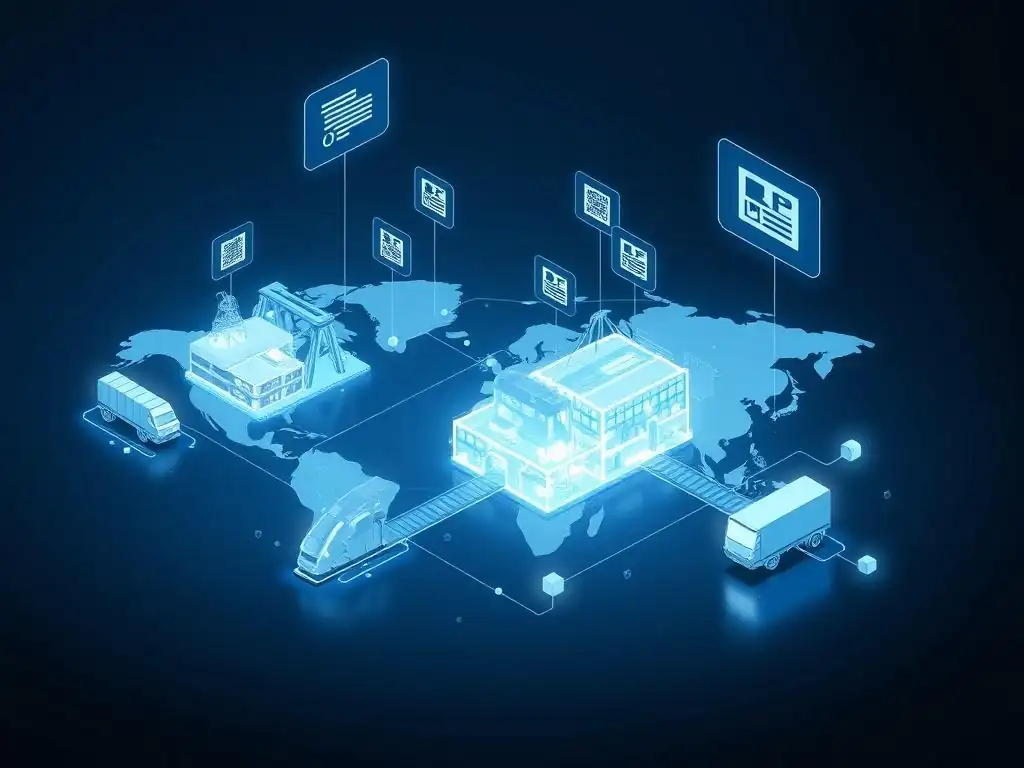
Increased Trust and Accountability Among Participants
The inherent transparency of blockchain fosters increased trust and accountability among all participants in metaverse supply chains. Because every transaction is recorded on a public and immutable ledger, there is a clear and verifiable audit trail for all activities. This transparency reduces information asymmetry and eliminates the "black box" nature of traditional supply chains, where information is often siloed and opaque. Participants can confidently interact with each other knowing that their actions and transactions are recorded and verifiable.
This increased trust is particularly crucial in the metaverse, where interactions often occur between anonymous or pseudonymous users across global networks. Blockchain provides a foundation of trust that is not reliant on personal relationships or centralized authorities. For example, in a decentralized metaverse marketplace, users can trust that the platform is operating fairly and transparently because the underlying transactions are recorded on a public blockchain. This trust and accountability are essential for building thriving and sustainable virtual economies, and are core blockchain supply chain transparency benefits.
Enhanced Data Security and Integrity
Blockchain's cryptographic security and decentralized architecture provide enhanced data security and integrity for metaverse supply chains. The cryptographic hashing and consensus mechanisms inherent in blockchain make it extremely difficult to tamper with or alter recorded data. Once a transaction is added to the blockchain, it is virtually immutable, ensuring the integrity of the data over time. This is in stark contrast to centralized databases, which are vulnerable to hacking, data breaches, and manipulation.
Moreover, the decentralized nature of blockchain distributes data across multiple nodes, eliminating single points of failure and reducing the risk of data loss or corruption. Even if some nodes are compromised, the integrity of the blockchain is maintained by the majority of the network. This robust security is paramount for protecting sensitive data related to virtual assets, ownership records, and transaction histories in the metaverse. Enhanced data security and integrity are critical blockchain supply chain transparency benefits, ensuring the long-term reliability and trustworthiness of virtual commerce.
Improved Traceability and Auditability of Virtual Assets
Blockchain significantly improves the traceability and auditability of virtual assets throughout their lifecycle in the metaverse. Every transaction and ownership transfer is permanently recorded on the blockchain, creating a complete and auditable history for each digital asset. This traceability is invaluable for verifying provenance, tracking ownership changes, and resolving disputes related to virtual assets. In traditional systems, tracing the history of digital goods can be complex and unreliable, often relying on fragmented records and centralized databases.
With blockchain, auditors and regulators can easily access and verify the entire transaction history of a virtual asset, ensuring compliance and accountability. This improved auditability is particularly important as metaverse economies grow and become subject to regulatory scrutiny. For example, in the context of virtual real estate, blockchain can provide a transparent and auditable record of land ownership, facilitating property rights management and dispute resolution. Improved traceability and auditability are key blockchain supply chain transparency benefits, fostering greater accountability and regulatory compliance in the metaverse.
Real-World Applications and Case Studies of Blockchain in Metaverse Supply Chains
Nike's RTFKT Studios: Authenticating Virtual Sneakers
Nike's acquisition of RTFKT Studios, a leading creator of virtual sneakers and collectibles, exemplifies the real-world application of blockchain in metaverse supply chains. RTFKT uses NFTs on the Ethereum blockchain to authenticate its virtual sneakers, ensuring scarcity and verifiable ownership. Each virtual sneaker is represented by a unique NFT, which serves as a certificate of authenticity and proof of ownership. This allows Nike and RTFKT to create limited-edition virtual sneakers that can be collected, traded, and worn by avatars in various metaverse environments.
By leveraging blockchain, Nike is building a transparent and secure supply chain for its virtual products. Consumers can confidently purchase RTFKT virtual sneakers knowing that they are authentic and that their ownership is securely recorded on the blockchain. This case study demonstrates how blockchain can be used to authenticate digital fashion items, combat counterfeiting, and build trust in the virtual goods market. Nike's foray into blockchain-based virtual sneakers highlights the practical blockchain supply chain transparency benefits for major brands entering the metaverse.
Decentraland: Managing Land Ownership and Virtual Real Estate
Decentraland, a decentralized virtual world, is a prime example of blockchain's application in managing land ownership and virtual real estate within the metaverse. Land parcels in Decentraland are represented as NFTs on the Ethereum blockchain, providing verifiable ownership and scarcity. Users can purchase, sell, and develop virtual land parcels, creating a thriving virtual real estate market. All land transactions are recorded on the blockchain, ensuring transparency and immutability of ownership records.
Decentraland's use of blockchain for land management demonstrates the power of decentralized systems in establishing property rights and facilitating virtual economies. The transparent and auditable nature of blockchain eliminates the need for centralized land registries and intermediaries, fostering a more efficient and trustless system for virtual real estate transactions. Decentraland's success highlights the practical application of blockchain supply chain transparency benefits in managing virtual assets and infrastructure within the metaverse.
Animoca Brands: Governing In-Game Asset Ownership
Animoca Brands, a leading blockchain gaming and metaverse company, utilizes blockchain extensively to govern in-game asset ownership and facilitate player-owned economies. Many of Animoca Brands' games, such as The Sandbox, incorporate NFTs for in-game items, virtual land, and characters. This allows players to truly own their in-game assets and trade them freely on open marketplaces, creating player-driven economies within these virtual worlds. Blockchain ensures the scarcity, authenticity, and verifiable ownership of these in-game assets.
Animoca Brands' approach demonstrates how blockchain can empower players and create more engaging and rewarding gaming experiences in the metaverse. By giving players ownership of their in-game assets through NFTs, Animoca Brands is fostering a new paradigm of gaming where players can earn, trade, and truly own their virtual possessions. This case study showcases the application of blockchain supply chain transparency benefits in creating more equitable and player-centric metaverse economies within the gaming industry.
Overcoming Challenges and Barriers to Blockchain Adoption in Metaverse Supply Chains
Scalability and Interoperability Issues
Scalability and interoperability remain significant challenges to widespread blockchain adoption in metaverse supply chains. Many current blockchain networks face limitations in transaction throughput and processing speed, which could become bottlenecks as metaverse economies scale and transaction volumes increase. For instance, Ethereum, while widely used for NFTs and metaverse applications, has faced scalability challenges during periods of high network activity, resulting in increased transaction fees and slower processing times.
Interoperability is another critical hurdle. The metaverse is envisioned as a network of interconnected virtual worlds, but currently, many blockchain platforms and metaverse environments operate in silos. Lack of interoperability makes it difficult to seamlessly transfer virtual assets and data between different platforms, hindering the development of a truly open and unified metaverse. Addressing scalability and interoperability through Layer-2 solutions, cross-chain bridges, and standardization efforts is crucial for unlocking the full potential of blockchain in metaverse supply chains.
Regulatory Uncertainty and Compliance Concerns
Regulatory uncertainty and compliance concerns pose significant barriers to the broader adoption of blockchain in metaverse supply chains. The legal and regulatory landscape surrounding blockchain technology and virtual assets is still evolving globally. Issues such as the legal status of NFTs, taxation of virtual asset transactions, and regulatory compliance for decentralized platforms remain unclear in many jurisdictions. This uncertainty can create hesitancy among businesses to fully embrace blockchain solutions for metaverse supply chains.
Compliance with existing regulations, such as KYC/AML (Know Your Customer/Anti-Money Laundering) requirements, is also a concern for blockchain-based metaverse platforms. Balancing decentralization and user privacy with regulatory compliance is a complex challenge that requires careful consideration and innovative solutions. Clearer regulatory frameworks and industry standards are needed to provide businesses with the legal certainty required to confidently invest in and deploy blockchain technologies for metaverse supply chains.
Data Privacy and Security Risks
While blockchain offers enhanced security, data privacy and security risks still need to be carefully addressed in the context of metaverse supply chains. While blockchain transactions are transparent, the data recorded on the blockchain may contain sensitive information about users and virtual assets. Ensuring data privacy in a transparent and immutable ledger requires careful design and implementation of privacy-enhancing technologies, such as zero-knowledge proofs and homomorphic encryption.
Security risks, such as smart contract vulnerabilities and potential attacks on blockchain networks, also need to be mitigated. Thorough security audits of smart contracts and robust security measures for blockchain infrastructure are essential to protect metaverse supply chains from potential exploits. Addressing data privacy and security concerns proactively is crucial for building trust and ensuring the long-term viability of blockchain-based metaverse supply chains.
The Future of Blockchain and Supply Chain Integration in the Metaverse
Emerging Trends and Innovations
Several emerging trends and innovations are shaping the future of blockchain and supply chain integration in the metaverse. Layer-2 scaling solutions, such as Polygon and Optimism, are addressing scalability limitations by enabling faster and cheaper transactions on top of existing blockchains like Ethereum. Interoperability solutions, such as cross-chain bridges and protocols like Polkadot and Cosmos, are facilitating the seamless transfer of assets and data between different blockchain networks, paving the way for a more interconnected metaverse.
Decentralized Autonomous Organizations (DAOs) are emerging as a governance model for metaverse platforms and supply chains, enabling community-driven decision-making and transparency. Metaverse platforms are also increasingly incorporating decentralized identity solutions, leveraging blockchain to give users greater control over their digital identities and data. These emerging trends and innovations are driving the evolution of blockchain-powered metaverse supply chains towards greater scalability, interoperability, decentralization, and user empowerment.
Potential Impact on Businesses and Consumers
The integration of blockchain and supply chain management in the metaverse has the potential to significantly impact both businesses and consumers. For businesses, blockchain offers opportunities to enhance transparency, improve efficiency, reduce costs, and build stronger brand trust in the virtual marketplace. Brands can leverage blockchain to authenticate virtual products, protect intellectual property, and create more engaging and immersive experiences for consumers in the metaverse.
For consumers, blockchain promises greater transparency, security, and control over their virtual assets and data. Consumers can benefit from verifiable ownership of virtual goods, reduced counterfeiting, and more seamless and efficient virtual commerce experiences. Blockchain-powered metaverse supply chains can empower consumers with greater agency and ownership in the digital realm, fostering a more equitable and user-centric metaverse economy. The potential impact of blockchain supply chain transparency benefits extends to both businesses and consumers, creating a more robust and trustworthy virtual ecosystem.
Predictions for the Metaverse Supply Chain Landscape
Predictions for the metaverse supply chain landscape point towards a future where blockchain plays a central role in underpinning virtual commerce and digital asset management. As the metaverse continues to evolve and mature, blockchain is expected to become the foundational technology for ensuring transparency, security, and efficiency in virtual supply chains. NFTs will likely become the standard for representing ownership of virtual assets, enabling interoperability and portability across different metaverse platforms.
Decentralized metaverse marketplaces and platforms are expected to gain traction, offering users greater control and autonomy compared to centralized platforms. Smart contracts will automate various processes within metaverse supply chains, from royalty payments to automated escrow services. The metaverse supply chain landscape is predicted to become increasingly decentralized, transparent, and efficient, driven by the transformative power of blockchain technology.
Conclusion: Leveraging Blockchain for a More Transparent and Efficient Metaverse Economy
The Transformative Power of Blockchain for Supply Chain Management in Virtual Worlds
Blockchain technology holds transformative power for supply chain management in virtual worlds. Its inherent properties of decentralization, transparency, and immutability address the critical challenges of building trustworthy and efficient metaverse economies. By providing verifiable authenticity, transparent provenance, and automated processes, blockchain empowers creators, businesses, and consumers alike in the metaverse. The ability to deliver blockchain supply chain transparency benefits is paramount to unlocking the full potential of virtual commerce.
From authenticating virtual fashion items to managing virtual real estate and governing in-game asset ownership, blockchain is already demonstrating its practical applications in metaverse supply chains. While challenges such as scalability, interoperability, and regulatory uncertainty remain, ongoing innovation and industry collaboration are paving the way for wider adoption. The transformative power of blockchain lies in its ability to build a more transparent, secure, and efficient foundation for the burgeoning metaverse economy.
Embracing Blockchain to Unlock the Full Potential of the Metaverse
Embracing blockchain is crucial to unlocking the full potential of the metaverse. As virtual worlds become increasingly integrated into our lives, the need for robust and trustworthy infrastructure for virtual commerce becomes ever more pressing. Blockchain provides the essential building blocks for creating metaverse supply chains that are not only efficient but also equitable, transparent, and secure.
By leveraging blockchain, we can build a metaverse economy that fosters trust, empowers users, and unlocks new opportunities for creativity, commerce, and connection in the digital age. The future of the metaverse and its supply chains is inextricably linked to the continued development and adoption of blockchain technology.
Frequently Asked Questions
What role does blockchain play in enhancing transparency within metaverse supply chains?
Blockchain enables immutable tracking of goods and services throughout the metaverse. This enhanced traceability builds trust and reduces counterfeiting, offering significant supply chain transparency benefits.
How can blockchain improve the efficiency of metaverse supply chains?
By automating processes like smart contracts for payments and inventory management. This reduces delays and administrative overhead, ultimately streamlining operations.
What are some real-world examples of blockchain being used to improve supply chain transparency benefits in virtual commerce?
While early, examples include tracking digital asset ownership, verifying authenticity of virtual goods, and managing licensing rights within metaverse platforms.
What are the main regulatory challenges surrounding the use of blockchain in metaverse supply chains?
Key issues include data privacy concerns, jurisdictional ambiguities regarding ownership of virtual assets, and ensuring compliance with existing regulations like GDPR.
How does the use of blockchain in metaverse supply chains contribute to the future of decentralized systems?
It fosters a more decentralized and trustless environment for virtual commerce. This pushes innovation in governance models and shifts power away from centralized authorities.
Final Reflection: Embracing Transparency in the Digital Frontier
The exploration of the Metaverse's intersection with supply chains, powered by blockchain technology, reveals a profound shift in how we perceive commerce and traceability. The promise of enhanced transparency and efficiency, driven by blockchain, is no longer a futuristic fantasy but a tangible opportunity to revolutionize virtual commerce. This article has illuminated the potential for blockchain to not only streamline supply chains within the Metaverse but also to foster trust and accountability in a space often perceived as nebulous and unregulated.
The impact of this technology extends far beyond mere logistical improvements. It touches upon the very fabric of our digital interactions, influencing how we value digital assets and how we perceive the authenticity of virtual experiences. The ability to trace the provenance of virtual goods, verify ownership, and ensure ethical sourcing within the Metaverse has the potential to reshape consumer behavior and create a more responsible digital economy. As digital and physical worlds increasingly converge, the principles of transparency and accountability become paramount. Trust is the new currency,
and blockchain offers a powerful mechanism to build and maintain that trust in the evolving landscape of the Metaverse.
As we stand on the cusp of this digital revolution, let us not shy away from embracing the transformative power of blockchain. Let us actively seek ways to integrate these technologies into our own digital endeavors, fostering a culture of transparency and accountability. Consider how you can contribute to building a more ethical and sustainable Metaverse, one where trust is not just a buzzword, but a foundational principle. The future of virtual commerce is being written now, and your actions will shape its narrative.
Embark on Your Metaverse Supply Chain Journey!
Thank you for exploring how blockchain can transform supply chains within the Metaverse. We hope this article has inspired you to consider the exciting possibilities of virtual commerce and its future. Now, it's time to turn this knowledge into action!
Here's how you can get started:
- Research a specific Metaverse platform's supply chain processes and look for opportunities to incorporate blockchain technology. Practical exploration will help you gain valuable insights.
- Join the Conversation: Share your thoughts and experiences on our forum about the challenges and opportunities of using blockchain for supply chains in the Metaverse.
- Expand Your Network: Connect with other professionals interested in blockchain and the Metaverse on LinkedIn. Discuss real-world applications and learn from their experiences.
Are you ready to lead the way in the Metaverse supply chain revolution and share your discoveries with our community?
Leave a Reply