
Blockchain Investment Risk Assessment Tools: Resources for Informed DecisionMaking


Welcome to Blockchain Trends, your go-to source for understanding the revolutionary impact of blockchain technology beyond the hype. Are you navigating the complex world of blockchain investments? The stakes are high, and informed decisions are crucial. Dive into our latest article where we explore essential Blockchain Investment Risk Assessment Tools, uncovering resources to help you confidently navigate the landscape and mitigate potential pitfalls. Curious how to separate promising ventures from risky propositions? Let's unlock the secrets together!
- Blockchain Investment Risk Assessment Tools: Resources for Informed Decision-Making
- Top Blockchain Investment Risk Assessment Tools Available
- Building Your Own Blockchain Investment Risk Assessment Framework
- Best Practices for Using Blockchain Investment Risk Assessment Tools
- The Future of Blockchain Investment Risk Assessment
-
Frequently Asked Questions
- What are Blockchain investment risk assessment tools and why are they important?
- What kind of data do Blockchain investment risk assessment tools typically analyze?
- How do Blockchain investment risk assessment tools help mitigate risk?
- Are Blockchain investment risk assessment tools only for institutional investors?
- Can Blockchain investment risk assessment tools guarantee investment success?
- Final Reflection: Navigating the Blockchain Frontier
- Unlock Your Blockchain Investment Confidence!
Blockchain Investment Risk Assessment Tools: Resources for Informed Decision-Making
Understanding the Landscape of Blockchain Investment Risks
Investing in the blockchain space, while offering potential for high rewards, is inherently complex and fraught with unique risks that differ significantly from traditional asset classes. These risks stem from the nascent nature of the technology, the rapid pace of innovation, and the largely unregulated environment in many jurisdictions.
Investors face challenges ranging from extreme market volatility, driven by speculation and market sentiment, to technical risks like smart contract vulnerabilities and protocol-level bugs. The decentralized nature of many blockchain projects also introduces governance risks, where decisions by a core team or token holders can drastically impact a project's future and value.
Furthermore, external factors like regulatory uncertainty pose a significant threat. Governments worldwide are still grappling with how to classify and regulate blockchain assets and activities, leading to unpredictable policy changes that can impact market access, operational viability, and investor confidence. For instance, a sudden ban on certain activities or assets in a major market could trigger a sharp price decline.
Operational risks, such as exchange hacks or custodian failures, also represent tangible threats that can lead to loss of capital. Navigating this multifaceted risk landscape requires a robust approach, highlighting the critical need for effective blockchain investment risk assessment tools.
The Need for Risk Assessment Tools in Blockchain Investments
Given the diverse and often interconnected risks present in the blockchain market, relying solely on intuition or anecdotal evidence is insufficient for making informed investment decisions. The sheer volume and speed of information flow, coupled with the technical intricacies of blockchain technology, necessitate systematic methods for evaluating potential investments. Blockchain investment risk assessment tools provide frameworks and data-driven insights to help investors quantify, understand, and mitigate these risks. They move beyond simple price charts to offer deeper analysis of a project's fundamentals, underlying technology, and market dynamics.
These specialized blockchain investment risk assessment tools are crucial for identifying red flags early in the investment process. They can help uncover issues like questionable tokenomics that might lead to future supply shocks, identify projects with weak security practices prone to exploits, or highlight regulatory risks based on a project's operational model and target markets. Without such tools, investors are essentially making blind decisions in a highly speculative environment, increasing the likelihood of significant losses. Implementing a rigorous risk assessment process using appropriate tools is not just advisable; it's a fundamental requirement for long-term sustainability in blockchain investing.
Key Features to Look for in Blockchain Risk Assessment Tools
When selecting blockchain investment risk assessment tools, investors should prioritize platforms that offer a comprehensive suite of features tailored to the unique characteristics of the blockchain market. A crucial feature is access to reliable, real-time and historical market data, including price, volume, and liquidity across various exchanges.
Beyond basic market data, robust tools should provide in-depth fundamental analysis capabilities, allowing users to evaluate whitepapers, tokenomics models, team backgrounds, and community engagement levels. For example, a tool might track developer activity on GitHub, showing committed code lines or frequency of updates, which can be a proxy for project progress and health.
Another vital feature is the integration of on-chain analytics. These tools analyze data directly from blockchain ledgers – such as transaction counts, active addresses, mining difficulty, staking participation rates, and fee revenues – to provide insights into network usage, adoption, and security. For instance, a tool might show a significant decrease in active users on a specific protocol, suggesting declining adoption or potential issues.
Furthermore, effective blockchain investment risk assessment tools often include sentiment analysis features, scraping social media and news outlets to gauge overall market mood towards specific assets or the market as a whole. Risk scoring mechanisms, customizable portfolio tracking with risk metrics, and alerting features for significant events (like large token movements or protocol upgrades) are also highly valuable for proactive risk management.
Top Blockchain Investment Risk Assessment Tools Available
Fundamental Analysis Tools for Blockchain Assets
Fundamental analysis in blockchain investing involves evaluating the intrinsic value of a project or asset based on its technology, use case, team, market potential, and tokenomics. Unlike traditional company analysis focusing on revenue or profit, blockchain fundamental analysis delves into aspects like network effects, protocol design, and decentralization levels. Several platforms offer tools specifically designed to facilitate this type of analysis, providing structured data and reports on various projects. These tools help investors look beyond price speculation to understand the underlying viability and potential risks of a blockchain venture.
Platforms offering fundamental analysis tools often provide curated data points and research reports on a wide range of blockchain projects. They consolidate information that might otherwise be scattered across whitepapers, websites, GitHub repositories, and community forums. This includes details on the project's mission, technology stack, competitive landscape, funding rounds, and partnerships. By presenting this information in an organized manner, these tools enable investors to conduct a more systematic evaluation of a project's long-term prospects and identify potential fundamental risks, such as an unproven business model or intense competition.
Analyzing Whitepapers and Project Roadmaps
Whitepapers and project roadmaps serve as foundational documents outlining a blockchain project's vision, technology, tokenomics, and future plans. Analyzing them is a critical step in fundamental risk assessment. Blockchain investment risk assessment tools can assist by providing access to these documents and sometimes offering summaries or analyses. Investors should scrutinize the whitepaper for clarity, technical feasibility, and originality, looking for poorly defined concepts or overly ambitious claims that might indicate a higher risk profile. For example, a whitepaper lacking detailed technical specifications or a clear plan for achieving decentralization could be a red flag.
Roadmaps detail the project's development milestones and timelines. Evaluating the roadmap involves assessing whether the goals are realistic, whether past milestones have been met, and if there's a clear path to achieving the project's stated objectives. A roadmap with consistently missed deadlines or vague future plans suggests potential execution risks. Some risk assessment tools might even track a project's progress against its stated roadmap, providing a historical perspective on its ability to deliver. A project that frequently delays key feature releases, for instance, might face challenges in adoption and competition.
Evaluating Team Expertise and Community Engagement
The team behind a blockchain project is a significant factor in its potential success and a key area for risk assessment. Investors should evaluate the team's relevant experience in technology, business, and cryptography. Blockchain investment risk assessment tools often provide team member profiles, including their professional backgrounds and previous project involvement.
A team with a proven track record in building and scaling technology products or deep expertise in the specific domain the project addresses (e.g., supply chain, finance) typically presents a lower execution risk than a team of newcomers. Conversely, anonymous teams or teams with limited relevant experience can introduce higher uncertainty.
Community engagement is another vital metric. A vibrant and active community indicates strong interest and potential network effects, while a disengaged or toxic community can signal underlying problems. Tools may track community size, activity levels on forums like Reddit or Discord, and sentiment expressed on social media. High levels of genuine community interaction, constructive feedback, and active participation in governance (if applicable) are positive signs. Conversely, communities rife with spam, excessive hype without substance, or significant internal conflict can point to risks regarding adoption, governance, and long-term support.
Assessing Tokenomics and Supply Dynamics
Tokenomics refers to the economic model of a blockchain token, including its distribution, supply schedule, utility, and incentive mechanisms. Flawed tokenomics can introduce significant risks, regardless of the underlying technology. Blockchain investment risk assessment tools provide data on token distribution (e.g., allocation to team, advisors, private sale, public sale), vesting schedules, total supply, circulating supply, and inflation/deflation mechanisms. Analyzing this data helps identify potential risks such as excessive team/advisor allocations that could lead to large sell-offs when tokens unlock, or inflationary models that dilute the value for holders without sufficient corresponding demand.
Understanding the supply dynamics involves looking at how and when new tokens enter the market. A project with a significant portion of its supply held by a few large wallets (whale concentration) or with large token unlocks scheduled in the near future may face higher price volatility risks. Tools can help visualize these distributions and vesting schedules. Furthermore, evaluating the token's utility within its ecosystem – whether it's used for governance, staking, payments, or accessing services – is crucial. Tokens with limited or artificial utility carry higher risk as their value is primarily speculative, lacking fundamental demand drivers.
Technical Analysis Tools for Cryptocurrency Investment Risk
Technical analysis in blockchain investing focuses on studying historical price and volume data to predict future price movements. While fundamental analysis looks at a project's intrinsic value, technical analysis attempts to gauge market sentiment, identify trends, and predict potential price levels based on chart patterns and indicators. These tools are essential for assessing market-related risks, such as potential price crashes or liquidity issues, and for timing entry and exit points.
Various platforms offer sophisticated charting capabilities and technical indicators specifically adapted for the volatile crypto markets. These tools allow investors to analyze price trends, identify support and resistance levels, measure momentum, and assess volatility. While technical analysis doesn't guarantee profits, it provides a structured way to analyze market behavior and manage risk by setting stop-loss orders or identifying potential price reversal points based on historical patterns.
Charting Platforms and Technical Indicators for Blockchain Analysis
Charting platforms like TradingView (which supports numerous crypto exchanges) or integrated charting tools within exchange platforms are fundamental blockchain investment risk assessment tools for technical analysis. They provide candlestick charts, line charts, and other visualizations of price and volume data over time. Investors use these charts to identify trends (e.g., bullish, bearish, sideways) and patterns (e.g., head and shoulders, triangles) that may signal potential price movements.
Technical indicators, such as Moving Averages (MA), Relative Strength Index (RSI), MACD (Moving Average Convergence Divergence), and Bollinger Bands, are overlaid on charts to provide additional insights. For example, the RSI can indicate if an asset is overbought or oversold, potentially signaling a price reversal. Bollinger Bands measure volatility and can help identify potential price breakouts or contractions. While no single indicator is foolproof, using a combination of indicators can help investors assess market momentum, identify potential entry/exit points, and manage risk by anticipating potential price swings.
On-Chain Analytics for Tracking Blockchain Activity
On-chain analytics tools provide a unique perspective on blockchain activity by analyzing data recorded on public ledgers. This data offers insights into network health, user behavior, and potential market movements that are not available through traditional market data alone. Metrics tracked include the number of active addresses, transaction volume, transfer value, miner revenue, staking participation, and exchange flows. These metrics can serve as valuable blockchain investment risk assessment tools by providing a clearer picture of real-world usage and demand.
For instance, a significant increase in the number of active addresses or transaction volume on a network might indicate growing adoption and fundamental demand, potentially reducing the risk of a price collapse driven purely by speculation. Conversely, a decline in these metrics could signal waning interest or issues with the protocol. Tracking exchange net flows (tokens moving onto or off exchanges) can also offer clues about potential selling or buying pressure. Large inflows to exchanges might suggest investors are preparing to sell, increasing downward price pressure risk.
Sentiment Analysis Tools for Gauging Market Perception
Market sentiment plays a disproportionately large role in the volatile blockchain space, often driving price movements based on fear or greed. Sentiment analysis tools monitor various sources, including social media platforms (Twitter, Reddit), news articles, and developer forums, to gauge the prevailing mood towards specific assets or the overall market. These tools use natural language processing (NLP) to analyze text and classify sentiment as positive, negative, or neutral.
Integrating sentiment analysis as part of your blockchain investment risk assessment tools can help you understand the emotional temperature of the market. A overwhelmingly positive sentiment, often characterized by excessive hype, might signal a market peak and increased risk of a correction ("irrational exuberance"). Conversely, extremely negative sentiment might indicate a potential market bottom or simply reflect widespread panic. While sentiment alone should not dictate investment decisions, understanding it provides valuable context for market volatility and potential behavioral risks. Tools might present this data as a sentiment score or index for a given asset.
Risk Scoring and Portfolio Management Platforms for Crypto Assets
Beyond individual analysis tools, integrated platforms offer risk scoring and portfolio management features specifically designed for crypto assets. These platforms often combine various data points – fundamental, technical, and on-chain – to provide a holistic risk assessment for individual assets and the user's overall portfolio. They aim to simplify the complex task of managing risk across multiple diverse blockchain investments.
These platforms allow users to track their holdings across different exchanges and wallets, visualize portfolio allocation, and monitor performance. Crucially, they also incorporate risk metrics and often assign risk scores to individual assets based on predefined criteria or customizable parameters. This helps investors understand the risk profile of their portfolio, identify potential concentration risks, and make adjustments to align with their risk tolerance.
Messari: Features and Benefits
Messari is a prominent platform offering comprehensive data, research, and screening tools relevant to blockchain investment risk assessment. It provides in-depth profiles for hundreds of crypto assets, including detailed tokenomics, historical performance, team information, and links to whitepapers and official resources. Messari's screener allows users to filter assets based on various criteria, including market capitalization, sector (DeFi, NFTs, etc. ), and specific metrics.
A key benefit of Messari is its focus on providing transparent and verifiable information, aiming to combat misinformation in the crypto space. Their research reports offer valuable qualitative analysis on market trends and specific projects. While it may not provide a single, simple risk score for every asset, its detailed data points and research capabilities empower investors to conduct their own thorough fundamental analysis, a critical component of risk assessment. Access to detailed token supply schedules and distribution data is particularly useful for assessing tokenomic risk.
CoinGecko Portfolio Tracker: Features and Benefits
CoinGecko is widely known for providing comprehensive market data on cryptocurrencies, including price, volume, and market capitalization across thousands of assets. Beyond basic market tracking, CoinGecko offers a free portfolio tracker that allows users to manually enter their holdings. While not a dedicated risk scoring platform in the same vein as some others, its portfolio tracker is a valuable, accessible blockchain investment risk assessment tool for basic portfolio monitoring and risk awareness.
The CoinGecko portfolio tracker helps investors visualize their asset allocation, track the performance of their holdings over time, and see the overall value of their portfolio. While it doesn't automatically calculate complex risk metrics, simply seeing the percentage allocation across different assets helps identify concentration risk – holding a disproportionately large percentage in a single volatile asset. This basic visualization is a first step in understanding and managing portfolio-level risk. It also provides access to market data needed for manual risk calculations or analysis.
Comparing Risk Scoring Methodologies
Different blockchain investment risk assessment tools and platforms employ varying methodologies for calculating risk scores. Some might focus heavily on technical factors like price volatility and liquidity, assigning higher risk scores to assets with extreme price swings or low trading volume. Others might integrate fundamental factors, penalizing projects with unclear tokenomics, inexperienced teams, or significant regulatory uncertainty. On-chain data, such as network security (e.g., hashrate for proof-of-work chains) or concentration of token holdings, can also be factored in.
It's important for investors to understand the methodology behind a platform's risk score rather than accepting it blindly. A platform might assign a low risk score based purely on low historical volatility, while overlooking significant fundamental risks like a pending regulatory decision or a critical smart contract vulnerability. Comparing methodologies across different tools, if possible, or at least understanding the factors considered, is crucial for interpreting the scores accurately and ensuring they align with your own assessment framework. Some platforms allow customization of risk parameters to better suit individual investor preferences.
Building Your Own Blockchain Investment Risk Assessment Framework
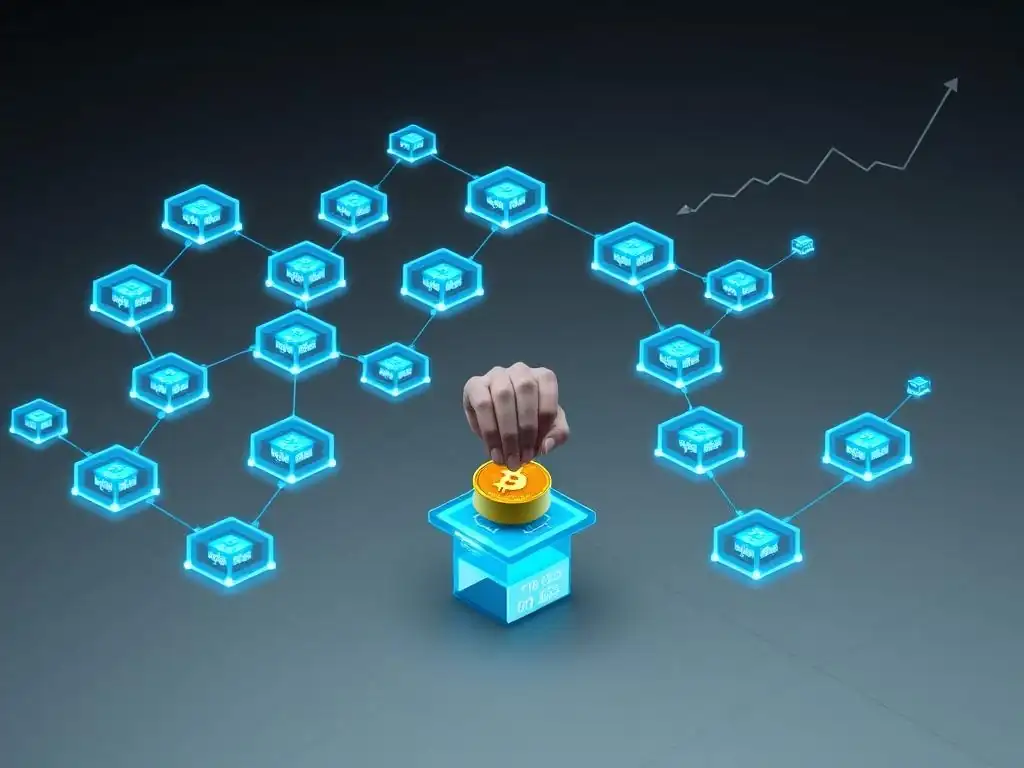
While blockchain investment risk assessment tools provide valuable data and insights, building your own comprehensive framework is essential for truly informed decision-making. This involves combining the information from various tools with your own research, understanding of the market, and personal risk tolerance. A personalized framework ensures that your investment decisions are based on a holistic view of the risks involved, tailored to your specific investment goals and comfort level with potential losses.
Developing this framework requires a systematic approach to identifying, analyzing, and mitigating risks across different dimensions – project-specific, market-wide, and personal. It's an ongoing process that needs to be revisited and updated as the market evolves and new information becomes available. Relying solely on a third-party tool's score without understanding the underlying factors and how they apply to your situation is insufficient for robust risk management.
Identifying Potential Risks in Specific Blockchain Projects
A key component of building your own framework is developing the ability to identify specific, project-level risks. This goes beyond generic market risks and involves deep dives into individual projects using the data provided by blockchain investment risk assessment tools and further independent research. Specific risks can arise from the project's technology, execution, governance, or legal standing.
For example, a project relying heavily on a novel, unproven cryptographic primitive carries higher technical risk than one using established technology. Projects with centralized governance models face greater risk of malicious or incompetent control compared to decentralized autonomous organizations (DAOs). Identifying these nuances requires detailed analysis of whitepapers, code repositories, team history, and legal disclaimers.
Smart Contract Vulnerabilities and Security Audits
Smart contracts are self-executing code on a blockchain, and their security is paramount. Vulnerabilities in smart contract code can lead to catastrophic losses, as seen in numerous past exploits where millions of dollars worth of crypto assets were stolen due to bugs like reentrancy attacks or integer overflows. Assessing the risk of smart contract vulnerabilities is a critical part of project-specific analysis.
Investors should look for evidence that a project's smart contracts have undergone rigorous security audits by reputable third-party firms. Audit reports typically highlight identified vulnerabilities, their severity, and whether they have been remediated. While audits don't guarantee complete security, a project that invests in multiple audits and publicly addresses findings demonstrates a commitment to security, lowering this specific risk compared to projects with unaudited or poorly audited code. Blockchain investment risk assessment tools might flag projects with known past exploits or lack of recent audits.
Regulatory Uncertainty and Legal Risks
The regulatory landscape for blockchain and cryptocurrencies is constantly evolving, creating significant legal risks for projects and investors alike. Regulations can impact how a token is classified (e.g., as a security), whether certain activities (like staking or DeFi lending) are permissible, and how exchanges and custodians must operate. A project operating in a legal grey area or one whose model is directly challenged by new regulations faces substantial risk.
Assessing this risk involves researching the project's jurisdiction, its operational model, and the relevant laws in the markets it serves. For instance, a project issuing tokens that might be deemed unregistered securities in major markets like the US faces significant legal challenges and potential enforcement actions. Blockchain investment risk assessment tools or research platforms might provide insights into a project's legal structure, jurisdiction, and any public statements or actions regarding regulatory compliance. Keeping abreast of global regulatory developments is also crucial.
Market Volatility and Liquidity Concerns
While market volatility is a general characteristic of the blockchain space, specific assets can have significantly different volatility and liquidity profiles. Highly volatile assets offer potential for quick gains but also carry a much higher risk of rapid, substantial losses. Liquidity refers to how easily an asset can be bought or sold without significantly affecting its price; illiquid assets are harder to trade, increasing the risk of being unable to exit a position at a desired price.
Analyzing an asset's historical price volatility and trading volume across different exchanges using charting and market data tools is essential. Assets with low trading volume or concentrated trading on a single small exchange are typically less liquid and carry higher execution risk. Blockchain investment risk assessment tools often provide metrics like average daily volume, market depth, and volatility indices (e.g., historical volatility) that help quantify these risks. Investing large amounts in illiquid assets is particularly risky as it can be difficult to unload positions without causing price crashes.
Developing a Personalized Risk Tolerance Profile
Understanding your own risk tolerance is perhaps the most fundamental step in building a personalized risk assessment framework. Risk tolerance is your willingness and ability to withstand potential losses on your investments. It's influenced by factors such as your financial situation (income, savings, debt), investment goals (short-term vs. long-term), time horizon, and psychological disposition towards risk. Someone nearing retirement with limited savings will likely have a much lower risk tolerance than a young professional with a stable income and a long investment horizon.
Developing your profile involves honestly assessing how much of your invested capital you can afford to lose without significantly impacting your financial well-being. It also involves understanding your emotional reaction to market downturns; can you weather a 50% portfolio drop without panic selling?
Your risk tolerance should guide which blockchain assets you consider investing in (e.g., focusing on larger, more established assets vs. smaller, highly speculative ones) and how much capital you allocate to this high-risk asset class overall. No blockchain investment risk assessment tools can tell you your personal risk tolerance, but they can help you quantify the risk of the asset so you can compare it to your profile.
Combining Quantitative and Qualitative Analysis for Comprehensive Assessment
Effective blockchain investment risk assessment requires combining both quantitative and qualitative analysis. Quantitative analysis involves crunching numbers – looking at market data, on-chain metrics, token distribution figures, and volatility indices provided by various blockchain investment risk assessment tools. This provides objective data points that can be measured and compared. For example, comparing the daily transaction volume of two different layer-1 protocols provides a quantitative measure of their relative usage.
Qualitative analysis, on the other hand, involves evaluating factors that are harder to quantify but equally important, such as the quality of the team, the strength of the community, the clarity of the whitepaper, the competitive landscape, and the potential impact of future regulations. This requires critical thinking, research, and judgment.
A project might look good quantitatively (e.g., high trading volume) but have significant qualitative risks (e.g., an unproven team or a questionable business model). A comprehensive risk assessment framework integrates insights from both types of analysis, using quantitative data from tools to inform qualitative judgments and vice versa, leading to a more nuanced and complete picture of potential risks.
Best Practices for Using Blockchain Investment Risk Assessment Tools
Merely having access to blockchain investment risk assessment tools is not enough; knowing how to use them effectively is key to deriving value. Best practices involve integrating these tools into a consistent investment process, using the data responsibly, and combining tool-based insights with broader market understanding and personal strategy. It's about leveraging the data and analysis provided by these resources to inform decisions, not dictate them blindly.
Effective use also means recognizing the limitations of any tool. No single tool can predict the future or account for every possible Black Swan event. They provide data and analysis based on historical information and current trends. Therefore, tools should be used as aids to decision-making, part of a larger, well-defined investment strategy that includes diversification, continuous learning, and regular review.
Diversification Strategies for Mitigating Crypto Investment Risk
Diversification is a fundamental risk management strategy, and it's particularly crucial in the volatile blockchain space. Instead of putting all capital into a single asset or project, diversification involves spreading investments across different assets, sectors (e.g., DeFi, NFTs, infrastructure, gaming), and even different blockchain networks. This reduces the impact that a poor performance or failure of any single investment can have on the overall portfolio.
Blockchain investment risk assessment tools can support diversification by helping investors identify assets in different categories and assessing their individual risk profiles. A portfolio tracker can visualize asset allocation, showing concentration levels and helping investors identify areas where they might be overexposed to a specific risk factor (e.g., holding too many assets in a single, experimental DeFi protocol).
While diversification doesn't eliminate risk entirely, it helps smooth out returns and protect against catastrophic losses from a single point of failure. A common approach is to diversify across different layers of the blockchain stack (Layer 1 protocols, Layer 2 solutions, decentralized applications).
Staying Informed About Emerging Threats and Opportunities
The blockchain space is incredibly dynamic, with new technologies, projects, regulations, and threats emerging constantly. Staying informed is a critical, ongoing aspect of risk management that complements the use of blockchain investment risk assessment tools. Market conditions can change rapidly, new types of security vulnerabilities are discovered, and regulatory stances can shift with little warning.
This involves regularly reading industry news, following reputable analysts and researchers, monitoring official project channels, and keeping up-to-date with regulatory announcements from relevant authorities. Subscribing to newsletters from research platforms like Messari or following security experts on social media can provide timely alerts about potential risks or opportunities.
Tools can help highlight current risks based on available data, but staying informed about emerging threats requires proactive research beyond just looking at tool dashboards. For example, a new type of phishing scam targeting specific wallets wouldn't show up on a charting tool, but staying informed through news sources could protect you.
Regularly Reviewing and Adjusting Your Investment Strategy
The blockchain market is not static, and neither should your investment strategy or risk assessment. Best practice dictates regularly reviewing your portfolio, the performance and risk profiles of your holdings, and your overall investment strategy. This review should ideally happen periodically (e.g., quarterly or annually) and also after significant market events or personal circumstances changes.
Using blockchain investment risk assessment tools as part of this review process allows you to reassess the current risk score of your assets, check for any changes in fundamental data (like team changes or tokenomics updates), and see how your portfolio allocation has shifted due to market movements. Based on this review, you might decide to rebalance your portfolio, reduce exposure to assets whose risk profile has increased, or allocate more to promising opportunities. This iterative process of assessment, action, and review is key to navigating the long-term risks of blockchain investing.
The Future of Blockchain Investment Risk Assessment
As the blockchain ecosystem matures and attracts a wider range of investors, the tools and methodologies for assessing investment risk are also evolving. The future promises more sophisticated, integrated, and potentially automated approaches to risk assessment, leveraging advancements in data science and artificial intelligence. The goal is to provide investors with even more precise, timely, and actionable insights to navigate the complexities of the decentralized world.
The increasing availability of high-quality, structured data from blockchains and related sources provides a rich dataset for advanced analysis. Future blockchain investment risk assessment tools will likely offer deeper predictive capabilities and more granular risk breakdowns.
The Role of AI and Machine Learning in Risk Prediction
Artificial Intelligence (AI) and Machine Learning (ML) are poised to play a significant role in the future of blockchain investment risk assessment tools. AI/ML algorithms can process vast amounts of data – including market data, on-chain transactions, social media sentiment, news articles, and even smart contract code – to identify complex patterns and correlations that are not easily discernible to humans. These algorithms can potentially predict market movements with greater accuracy, identify anomalies indicative of potential exploits or market manipulation, and assess the risk profile of new projects based on features learned from analyzing thousands of existing ones.
For instance, ML models could be trained to identify patterns in transaction flows that precede significant price drops or to detect unusual activity within a smart contract that suggests an ongoing attack. They could also analyze codebases for common vulnerability patterns or predict the likelihood of a project failing based on factors like team dynamics and community health. While AI/ML won't eliminate risk, they have the potential to significantly enhance predictive capabilities within blockchain investment risk assessment tools, offering more proactive alerts and nuanced risk scores.
The Development of Standardized Risk Metrics
Currently, risk assessment in the blockchain space can feel somewhat fragmented, with different platforms and analysts using varying metrics and methodologies. The future may see the development and adoption of more standardized risk metrics and frameworks across the industry. This would make it easier for investors to compare the risk profiles of different assets and projects using consistent benchmarks.
Standardized metrics could include things like a universally accepted smart contract security score based on audit rigor and code complexity, a regulatory risk index based on a project's operations and target markets, or a liquidity risk score calculated using a common formula across exchanges. Industry bodies or collaborations between data providers could drive this standardization. The availability of widely recognized and understood risk metrics within blockchain investment risk assessment tools would lower the barrier to entry for new investors and improve overall market efficiency and safety by providing clearer signals about potential dangers.
Empowering Investors with Transparent and Reliable Information
Ultimately, the future of blockchain investment risk assessment tools is about empowering investors by providing them with more transparent, reliable, and accessible information. As the technology matures and the market grows, the need for tools that cut through the noise and provide clear insights into potential risks becomes even more critical. Future tools will likely focus on presenting complex data in user-friendly ways, making sophisticated analysis accessible to a broader audience.
This includes providing clear explanations of how risk scores are calculated, offering drill-down capabilities to understand the underlying data points, and integrating educational resources within the platforms. The goal is not just to give investors a number but to help them understand why an investment carries a certain level of risk. By increasing transparency and reliability, these tools can help investors make more informed decisions, fostering a healthier and more sustainable blockchain investment ecosystem, moving away from purely speculative gambling towards calculated risk-taking based on solid data and analysis.
Frequently Asked Questions
What are Blockchain investment risk assessment tools and why are they important?
They are resources that help investors evaluate the potential risks associated with blockchain projects and assets. They are crucial for making informed investment decisions and minimizing financial losses in this volatile market.
What kind of data do Blockchain investment risk assessment tools typically analyze?
These tools often analyze on-chain data, market data, team expertise, project roadmap, and tokenomics to assess the viability and risks of a blockchain investment. The quality of the data directly affects the accuracy of the assessment.
How do Blockchain investment risk assessment tools help mitigate risk?
By providing insights into potential vulnerabilities, fraud risks, and market volatility, these tools enable investors to diversify their portfolios, set realistic expectations, and develop risk management strategies.
Are Blockchain investment risk assessment tools only for institutional investors?
No, while some tools are geared towards institutions, there are also user-friendly options available for retail investors. However, it's important to understand the methodologies used and interpret the results carefully.
Can Blockchain investment risk assessment tools guarantee investment success?
No, these tools are not a guarantee of profit. They are designed to provide data-driven insights to aid decision-making, but market conditions and unforeseen events can still impact investment outcomes.
The exploration of blockchain investment risk assessment tools underscores a critical need in today's rapidly evolving financial landscape. While the promise of decentralized finance and innovative applications is undeniable, the inherent complexities and volatility demand a cautious and informed approach. The tools discussed are not just technological advancements; they are essential compasses guiding investors through the uncharted waters of the blockchain frontier.
The impact of blockchain technology extends far beyond mere financial transactions. It's reshaping industries, challenging traditional power structures, and fostering new forms of digital ownership. This ongoing revolution necessitates a deeper understanding of the associated risks, not just for investors, but for society as a whole. Risk comes from not knowing what you're doing.
- Warren Buffett. This quote resonates deeply, highlighting the importance of due diligence and informed decision-making in the face of uncertainty, particularly within the dynamic blockchain space.
As you navigate the world of blockchain investments, remember that knowledge is your most powerful asset. Embrace the available risk assessment tools, cultivate a critical mindset, and never underestimate the importance of continuous learning. Let the insights gained from this exploration empower you to make informed decisions, mitigate potential pitfalls, and ultimately, participate responsibly in shaping the future of this transformative technology.
Okay, I will craft a Call to Action (CTA) based on the article "Blockchain Investment Risk Assessment Tools: Resources for Informed Decision-Making" for the website "Blockchain Trends" (blockchaintrends.org), following all the instructions.
Unlock Your Blockchain Investment Confidence!
Thank you for diving into the world of blockchain investment risk assessment! We hope this article equipped you with valuable insights to navigate the exciting, yet complex, landscape of crypto assets. Now, let's translate knowledge into action!
- Immediately explore a risk assessment tool mentioned in the article and analyze your portfolio! This hands-on experience will solidify your understanding and provide personalized insights.
- Dig deeper: research the methodologies used by your preferred tool, comparing its approach with others on the market. Understanding the "why" behind the analysis is crucial.
- Share this article with fellow investors who could benefit from these resources – let's build a community of informed and responsible blockchain participants.
What specific risk assessment tool are you most eager to explore, and why? Share your thoughts in the comments below!
Leave a Reply