
Decentralized Identity Systems: A Deep Dive into the Architecture and Technology


Welcome to Blockchain Trends, your compass in the rapidly evolving world of decentralized technology! Delve into the transformative power of blockchain, far beyond the hype.
Ever wondered how blockchain can revolutionize the way we manage our identities? This article explores the exciting potential of blockchain identity management solutions benefits, offering a deep dive into the architecture and technology shaping the future of secure and user-centric digital identities. Prepare to uncover the key advantages and real-world applications that are poised to redefine trust in the digital age.
Decentralized Identity Systems: A Deep Dive into the Architecture and Technology
- Introduction to Decentralized Identity (DID) Systems
- Understanding the Architecture of Decentralized Identity
- Exploring the Technology Behind DIDs
- Benefits of Blockchain Identity Management Solutions: A Detailed Analysis
- Use Cases of Decentralized Identity Systems
- Challenges and Future of Decentralized Identity
-
Frequently Asked Questions
- What are the primary benefits of using blockchain-based identity management solutions?
- How does a decentralized identity system (DID) differ from traditional identity management systems?
- What role does blockchain technology play in securing decentralized identity?
- What are some potential enterprise applications for blockchain identity management solutions?
- What are some of the regulatory challenges surrounding the adoption of blockchain identity solutions?
- Final Reflection: Embracing the Future of Identity
- Unlock Your Decentralized Future!
Introduction to Decentralized Identity (DID) Systems
The Evolution of Digital Identity and its Challenges
For decades, digital identity has primarily relied on centralized models. Think of the ubiquitous username and password systems, federated identity providers like Google or Facebook logins, or even government-issued digital IDs managed by single authorities. While these systems facilitated the growth of online services, they came with significant drawbacks.
Centralized databases holding millions, sometimes hundreds of millions, of user identities and sensitive data have become prime targets for cyberattacks. The 2017 Equifax breach, for instance, exposed the personal data of approximately 147 million people, highlighting the inherent risk of storing vast amounts of sensitive information in one place. Users also have limited control over their data, often forced to share excessive personal information for simple online interactions.
This traditional paradigm creates data silos, where identity information is fragmented across numerous service providers, making it difficult for users to manage and leading to inconsistent digital personas. Furthermore, verifying identities often involves cumbersome, repetitive processes for both users and businesses. For example, completing Know Your Customer (KYC) procedures for multiple financial services means submitting the same documents repeatedly. This inefficiency adds costs and friction, while the underlying centralized structure remains vulnerable to single points of failure, censorship, and surveillance. The need for a more secure, user-centric, and resilient approach to digital identity became increasingly apparent.
Why Decentralized Identity Matters for Blockchain Enthusiasts
Decentralized Identity (DID) systems align perfectly with the core ethos of blockchain technology: decentralization, transparency (where appropriate), immutability, and user sovereignty. For those interested in the transformative potential of blockchain beyond cryptocurrencies, DID represents a critical layer for building truly decentralized applications (dApps) and ecosystems. Traditional identity models are fundamentally incompatible with the trustless, peer-to-peer nature of many blockchain initiatives, introducing centralized points of control and vulnerability.
Integrating decentralized identity allows blockchain applications to interact with real-world identities and attributes without compromising user privacy or relying on centralized third parties. This is crucial for everything from decentralized finance (DeFi) needing identity verification for regulatory compliance without holding user data, to supply chains requiring verifiable identities for participants and products. The benefits of blockchain identity management solutions are particularly compelling for developers and users seeking to escape the limitations of legacy systems and embrace a future where individuals have sovereign control over their digital selves, enabling more secure, efficient, and equitable online interactions built on decentralized principles.
Understanding the Architecture of Decentralized Identity
Core Components of a DID System: A Technical Overview
A decentralized identity system is a complex interplay of several key components working together to enable verifiable, self-sovereign digital identities. These components are defined by standards, most notably the W3C DID Core specification, which provides a framework for creating and managing DIDs and associated data. At its heart, a DID system revolves around decentralized identifiers, verifiable credentials, and distributed registries that link them together.
Understanding these foundational elements is crucial for appreciating how decentralized identity functions and the unique capabilities it offers compared to traditional identity management. The architecture is designed to shift control from centralized authorities to the individual user, leveraging cryptographic proofs and distributed ledger technology to ensure trust and security.
Decentralized Identifiers (DIDs): Structure and Functionality
Decentralized Identifiers (DIDs) are a new type of identifier designed to enable verifiable, decentralized digital identity. Unlike traditional identifiers (like email addresses or social security numbers) that are tied to a centralized registry or provider, DIDs are globally unique identifiers that do not require a centralized registration authority. A DID is essentially a URI (Uniform Resource Identifier) with a specific structure: did:method:specific-identifier. The did scheme indicates it's a decentralized identifier. The method specifies the particular DID method being used (e.g., ion, sov, web), which dictates how the DID is created, resolved, and updated. The specific-identifier is a unique string determined by the chosen method.
Each DID is associated with a DID Document. The DID Document is a JSON-LD document that contains information about the DID, including public keys, service endpoints, and other metadata. These public keys are used to cryptographically verify interactions involving the DID, such as verifying signatures on Verifiable Credentials.
Service endpoints might point to locations where more information about the DID holder can be found or services related to the identity are hosted. The DID Document is typically stored in a location discoverable via the DID method, often a distributed ledger or a decentralized storage system, ensuring its availability and integrity.
Verifiable Credentials (VCs): A Secure Data Exchange Mechanism
Verifiable Credentials (VCs) are tamper-evident digital assertions about a subject. They represent claims made by an issuer about a holder, which can then be verified by a third party (a verifier). A VC is structured data, often in JSON-LD format, that includes:
- An issuer: The entity making the claim (e.g., a university, a government agency, an employer).
- A holder: The entity the claim is about (the individual or organization whose identity is being asserted).
- A subject: The entity the claim refers to (often the same as the holder, but could be a product or object).
- One or more claims: The specific assertions being made (e.g., "has a Bachelor's degree from X University," "is over 18 years old," "is an employee of Y Corp").
- Metadata: Information about the credential itself (e.g., issuance date, expiration date).
- A proof: A cryptographic signature from the issuer, typically using a key linked to the issuer's DID, which allows any verifier to confirm that the credential was genuinely issued by that specific entity and has not been tampered with since issuance.
VCs enable a shift from the current model where users grant third parties access to their data residing in centralized databases, to one where users hold their own verified data (the VCs) and selectively present it to verifiers. This empowers the user, giving them control over what information is shared, when, and with whom. The cryptographic proof ensures that the verifier can trust the data's origin and integrity without needing to trust the holder or the issuer directly in the traditional sense.
DID Registries: Ensuring Identity Resolution and Discoverability
DID Registries are the mechanisms that allow a DID to be resolved into its corresponding DID Document. Depending on the specific DID method used, this registry can take various forms. Many DID methods leverage distributed ledgers or blockchains as their registry layer. In this model, the DID and a pointer to or hash of the DID Document (or even the document itself, though less common for large documents) are anchored on the ledger. This provides an immutable, tamper-proof, and globally accessible record that links the DID to its associated public keys and service endpoints.
Other DID methods might use different types of decentralized data stores or peer-to-peer networks as their registry. Regardless of the underlying technology, the primary function of the DID registry is to ensure that any party (a resolver) can take a DID and reliably retrieve the current, authoritative version of its DID Document.
This resolution process is fundamental to the operation of a DID system, as it allows verifiers to retrieve the necessary public keys to validate signatures on Verifiable Credentials presented by a DID holder. The choice of registry technology significantly impacts the performance, cost, and decentralization properties of a specific DID method.
The Role of Blockchain Technology in DID Architecture
Blockchain technology plays a pivotal role in many decentralized identity architectures, primarily by providing a secure, immutable, and distributed layer for anchoring identity information. While not all DID methods must use a blockchain, many of the most robust and widely discussed methods do, leveraging the unique properties of distributed ledgers to enhance trust and reliability in the identity system.
The blockchain acts as a foundational layer of trust, enabling verifiable interactions without relying on a single, centralized authority. This is a key differentiator and a significant contributor to the benefits of blockchain identity management solutions.
Blockchain as a Trust Anchor for Identity Verification
In a blockchain-based DID system, the blockchain serves as a public, append-only ledger that records changes to DID Documents or, more commonly, pointers to where the current DID Document can be found. When an entity (an individual, organization, or device) creates a DID using a blockchain-based method, the initial DID Document or a reference to it is cryptographically linked to a transaction on the blockchain. Subsequent updates to the DID Document (e.g., rotating keys, adding service endpoints) are also recorded on the ledger.
This anchoring process leverages the blockchain's immutability. Once a transaction is confirmed and added to a block, it is practically impossible to alter or delete. This means the historical record of changes to a DID Document is transparent and verifiable by anyone.
When a verifier needs to resolve a DID to retrieve the public key necessary to validate a Verifiable Credential, they query the blockchain (or a service built on top of it) to find the correct, current DID Document associated with that DID. The blockchain ensures that the link between the DID and its public key is trustworthy, as it's secured by the distributed consensus mechanism of the network rather than relying on a single, potentially compromised database.
Immutability and Security Advantages of Blockchain-Based DIDs
The immutability inherent in blockchain technology provides significant security advantages for decentralized identity. Because the record of DID creation and updates is permanently stored on a distributed ledger, it is highly resistant to tampering and censorship. Unlike centralized identity databases, which are attractive targets for hackers due to their large size and single point of entry, a blockchain-based registry distributes the data across many nodes. To alter an identity record would require compromising a majority of the network's participants, which is computationally infeasible for public, large-scale blockchains like Bitcoin or Ethereum.
This distributed nature eliminates single points of failure. If one node goes offline, the identity system remains operational as other nodes hold copies of the ledger. Furthermore, the cryptographic linking of transactions ensures data integrity. Any attempt to alter a past record would break the cryptographic chain, making the manipulation immediately obvious to anyone verifying the ledger. These security properties contribute significantly to the overall reliability and trustworthiness of blockchain identity management solutions.
Different Blockchain Implementations for Decentralized Identity
Various blockchain platforms and distributed ledger technologies (DLTs) are being used or explored for implementing DID methods, each offering different trade-offs in terms of performance, cost, and governance.
- Public Permissionless Blockchains: Platforms like Bitcoin (via layers like ION) and Ethereum can serve as anchors, leveraging their high security and decentralization. However, storing entire DID Documents directly on these chains can be expensive and slow due to transaction fees and throughput limitations. Methods like ION (Identity Overlay Network) address this by anchoring hashes or small pointers on Bitcoin, with the full DID Document stored off-chain in a decentralized network like IPFS.
- Permissioned or Consortium Blockchains: Ledgers like Hyperledger Indy (used by the Sovrin Network) are specifically designed for identity purposes. These networks are typically run by a consortium of trusted organizations. They offer higher transaction throughput and lower costs compared to public chains, making them suitable for handling a large volume of identity-related transactions. However, they are less decentralized than public chains.
- Layer 2 Solutions and Sidechains: Solutions built on top of existing blockchains (like rollups or sidechains) are also being explored to provide the security benefits of the base layer while offering increased scalability and reduced costs for identity operations.
The choice of blockchain implementation depends on the specific requirements of the DID method and its intended use case, balancing factors like decentralization, scalability, cost, and transaction speed.
Exploring the Technology Behind DIDs
Cryptographic Foundations of Decentralized Identity
Cryptography is the bedrock upon which decentralized identity systems are built. It provides the fundamental tools for creating unique identifiers, verifying ownership, securing data, and enabling privacy-preserving interactions. While traditional digital identity also relies on cryptography, DID systems employ advanced techniques to achieve greater decentralization, security, and user control.
Understanding the cryptographic principles is essential for appreciating how DID systems enable trust in a decentralized environment without relying on central authorities.
Public Key Infrastructure (PKI) and its Limitations
Traditional digital identity systems often rely heavily on Public Key Infrastructure (PKI). In a PKI, Certificate Authorities (CAs) are trusted third parties that issue digital certificates, cryptographically binding a public key to an identity (like a person or a website). When you visit a secure website (HTTPS), your browser uses PKI to verify the website's certificate was issued by a trusted CA, ensuring you are communicating with the legitimate site. While effective for certain use cases like securing web traffic, PKI has limitations when applied to personal identity.
PKI is inherently centralized; trust is placed entirely in the CAs. If a CA is compromised or acts maliciously, it can issue fraudulent certificates, undermining the entire system. Managing certificates can be complex, and the model doesn't easily support the granular control over data sharing required for self-sovereign identity. DIDs, while also using public/private key pairs, shift the trust anchor from a centralized CA to a decentralized registry (often a blockchain), allowing individuals to manage their own identity keys and relationships more directly.
Advanced Cryptography for Enhanced Privacy: Zero-Knowledge Proofs
One of the significant benefits of blockchain identity management solutions is the potential for enhanced privacy, and Zero-Knowledge Proofs (ZKPs) are a key cryptographic technology enabling this. A ZKP is a method by which one party (the prover) can prove to another party (the verifier) that they know a value x, or that a statement about x is true, without revealing any information about x itself.
In the context of decentralized identity and Verifiable Credentials, ZKPs allow a holder to prove they meet certain criteria specified in a VC without revealing the underlying data. For example, a user could hold a VC stating their date of birth. Using a ZKP, they could prove to a verifier (like an online store selling age-restricted goods) that they are over 18, without revealing their actual birth date.
This minimizes the amount of sensitive data shared, significantly improving user privacy compared to traditional methods that require disclosing the full credential or underlying information. Projects like Polygon ID are actively implementing ZKPs for identity verification.
Secure Enclaves and Hardware Security Modules (HSMs)
Protecting the private keys associated with DIDs is paramount, as compromise could lead to identity theft. Secure enclaves (isolated processing environments within a CPU, like Intel SGX or ARM TrustZone) and Hardware Security Modules (HSMs) are cryptographic hardware devices designed to protect sensitive keys and perform cryptographic operations within a tamper-resistant environment.
These hardware-based security measures can be used to store and manage the private keys used to control DIDs and sign Verifiable Credentials. By keeping private keys within a secure enclave or HSM, they are protected from software attacks, malware, and physical tampering. This adds an extra layer of security, ensuring that only the legitimate holder can use their identity keys. Integrating such hardware security is a crucial aspect of building robust and trustworthy decentralized identity systems, enhancing the overall security benefits of blockchain identity management solutions.
Implementing DID Methods: A Comparison
The W3C DID Core specification defines the abstract model for DIDs and DID Documents but allows for different "DID Methods" to specify exactly how DIDs are created, resolved, updated, and deactivated. There are numerous DID methods being developed, each with different underlying technologies and design choices, leading to variations in performance, scalability, and reliance on specific ledgers or networks.
Choosing the right DID method depends heavily on the specific use case requirements, including the desired level of decentralization, transaction volume, cost constraints, and reliance on existing infrastructure.
DID Method Specifications: W3C Standards and Beyond
The World Wide Web Consortium (W3C) plays a crucial role in standardizing decentralized identity technologies. The W3C DID Core specification defines the fundamental concepts of DIDs and DID Documents. Building upon this, the W3C also standardizes Verifiable Credentials. These standards provide a common language and framework, promoting interoperability between different DID implementations and applications. However, the specific implementation details are left to individual DID method specifications.
A DID method specification outlines the rules for a particular type of DID. It defines:
- How a DID is generated.
- How a DID is resolved to retrieve its DID Document.
- How the DID Document can be updated or deactivated.
- The underlying network or ledger used (if any).
- Specific data structures and protocols.
There are hundreds of proposed DID methods listed in the DID Method Registry, demonstrating the diversity of approaches being explored to meet various needs. Adherence to W3C standards is key for ensuring that DIDs and VCs issued using different methods can still be understood and verified across different platforms and applications, which is a significant aspect of the benefits of blockchain identity management solutions for interoperability.
Popular DID Methods: SpruceID, Cheqd, and Ceramic
Several notable DID methods illustrate different approaches to implementing decentralized identity:
- did:ion: Built on top of the Bitcoin blockchain using the Sidetree protocol, ION (Identity Overlay Network) anchors DID state transitions on Bitcoin, providing a high level of decentralization and immutability. It uses a distributed hash table (DHT) like IPFS to store the full DID Documents off-chain, making it scalable and cost-effective compared to storing data directly on Bitcoin.
- did:sov: Used by the Sovrin Network (built on Hyperledger Indy),
did:sovis an early and influential DID method designed specifically for identity. It operates on a permissioned ledger managed by a decentralized network of trusted organizations. This offers high performance and predictability but is less decentralized than public blockchain methods. - did:pkh: This method links a DID directly to a blockchain account's public key (e.g., an Ethereum or Bitcoin address). The DID Document is implicitly derived from the blockchain address. This is a simple method useful for proving control over a specific blockchain account but less comprehensive for representing complex real-world identity attributes.
- did:cheqd: This method is built on its own dedicated blockchain (Cheqd Network, based on Cosmos SDK) optimized for digital credentialing and payments related to identity data. It aims to provide a network specifically for issuing, holding, and verifying VCs, potentially incorporating tokenomics around identity data.
- did:key: A transient DID method where the DID is derived directly from a public key. It doesn't require a ledger or network for resolution but is primarily useful for ephemeral or offline interactions.
These examples show the variety in underlying technology (public vs. permissioned blockchain, off-chain storage) and design goals, reflecting the diverse landscape of decentralized identity implementation.
Choosing the Right DID Method for Specific Applications
Selecting the appropriate DID method is a critical decision when designing a decentralized identity solution. The choice impacts the system's scalability, cost, security model, level of decentralization, and ease of integration. Factors to consider include:
- Decentralization Requirements: Does the application require the highest level of decentralization offered by public blockchain anchors, or is a permissioned network acceptable?
- Performance and Cost: How many identity operations (creation, updates, resolution) are expected? What are the acceptable latency and transaction costs? Methods anchoring directly on busy public chains might be more expensive than off-chain or permissioned alternatives.
- Security and Trust Model: What are the security assumptions of the underlying network? How is key management handled?
- Ecosystem and Interoperability: Is the chosen method supported by existing wallets, libraries, and identity platforms? How well does it integrate with other systems?
- Specific Features: Does the use case require specific features like support for certain types of VCs, privacy-preserving technologies (like ZKPs, which might be method-agnostic but depend on the overall stack), or identity-specific tokenomics?
For instance, a global supply chain traceability system might prioritize performance and predictable costs, potentially opting for a permissioned ledger method, while a social media platform focused on user sovereignty might prefer a method anchored on a public, censorship-resistant blockchain. The diverse landscape of DID methods allows developers to select the best fit for their particular needs, contributing to the flexibility and broad applicability of blockchain identity management solutions.
Benefits of Blockchain Identity Management Solutions: A Detailed Analysis
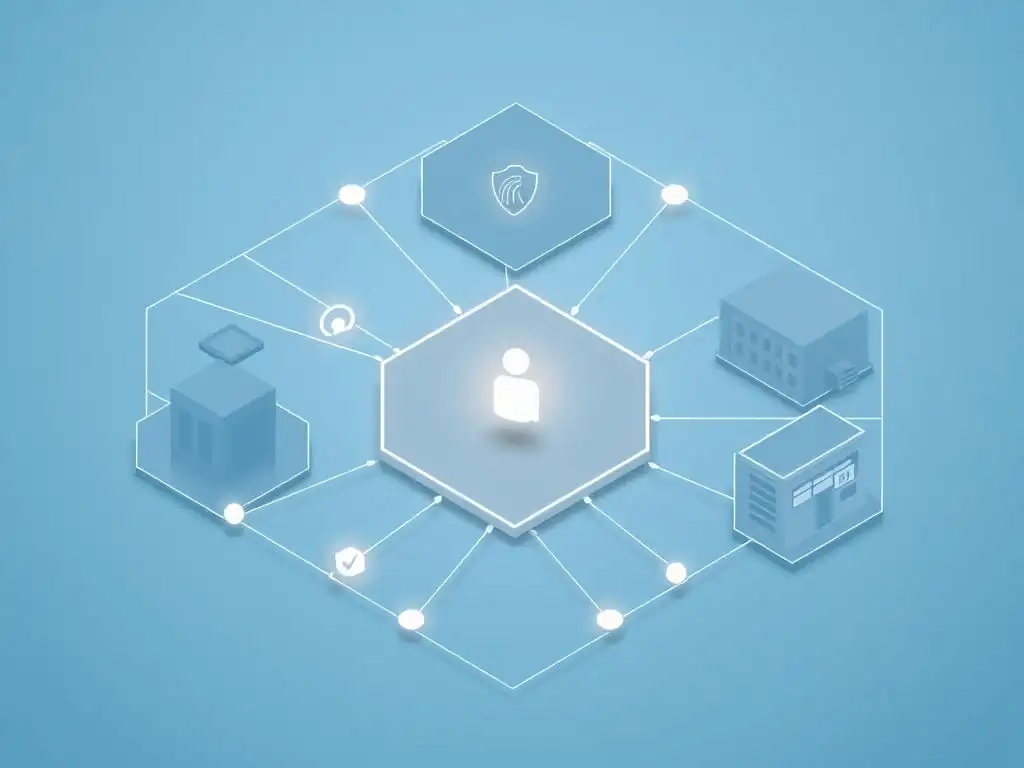
The shift from centralized to decentralized identity, powered by blockchain and related technologies, offers a compelling array of advantages for individuals, organizations, and the digital ecosystem as a whole. These blockchain identity management solutions address many of the fundamental flaws of traditional identity systems, leading to enhanced security, improved privacy, greater efficiency, and increased user empowerment.
Examining these benefits in detail reveals why decentralized identity is considered a critical component for the future of digital interactions, particularly in the context of building trust in decentralized networks and applications.
Enhanced Security and Privacy with Decentralized Identity
One of the most significant benefits of blockchain identity management solutions is the profound improvement in both security and privacy compared to legacy systems. By removing the reliance on centralized honey pots of data and giving users control, DID systems fundamentally change the risk landscape.
Mitigating Identity Theft and Data Breaches
Centralized identity databases are attractive targets for cybercriminals, leading to massive data breaches that expose sensitive personal information. Decentralized identity architecture mitigates this risk by distributing identity data and shifting control to the user. Instead of organizations storing copies of user documents or identity attributes, they verify Verifiable Credentials presented by the user. The sensitive data remains primarily with the user (or in secure wallets/storage they control), not in a large, centralized database managed by a service provider.
This distributed model drastically reduces the incentive and potential impact of a single breach on a large scale. While a user's personal wallet could still be targeted, a successful attack would typically only compromise one individual's identity information, not millions or billions. Furthermore, the immutability of the blockchain anchor for DIDs ensures that the foundational identity link (DID to public key) cannot be tampered with undetected, making it harder for attackers to impersonate individuals by altering their identity records.
User-Controlled Data and Consent Management
A core principle of decentralized identity is self-sovereign identity (SSI), which puts the individual in control of their digital identity. Users hold their Verifiable Credentials in secure digital wallets and choose which specific credentials or pieces of information to share with whom, and when. This is a radical departure from current models where service providers dictate what information is collected and how it is used.
With DID systems, users can grant granular access to their data. For example, instead of providing a full driver's license scan to prove age, they could present a VC that only asserts "over 21." This minimizes data exposure and enhances privacy. The system facilitates explicit consent mechanisms, as users must actively decide to present a credential to a verifier. This empowers individuals, giving them agency over their digital presence and data, moving away from passive acceptance of data collection policies.
Reducing Reliance on Centralized Identity Providers
Traditional digital interactions often require users to rely on large, centralized identity providers (like social media giants or government agencies) to authenticate or verify aspects of their identity. This creates dependencies, potential for censorship, and concerns about how these providers handle user data.
Decentralized identity reduces this reliance by allowing users to establish and manage their identity independently of any single entity. A DID is not issued by a central authority; it is created by the user using a DID method. While issuers (like universities or employers) are still needed to issue Verifiable Credentials attesting to specific attributes, the identity itself and the control over presenting credentials reside with the user. This reduces vendor lock-in and fosters a more open, interoperable digital environment, highlighting key benefits of blockchain identity management solutions for fostering a decentralized web.
Cost Efficiency and Scalability of Blockchain-Based Identity
Beyond security and privacy, blockchain identity management solutions offer compelling benefits in terms of cost reduction and scalability for both individuals and organizations. Streamlining identity-related processes can lead to significant operational savings.
Lowering Identity Verification Costs
Organizations across various sectors, particularly finance, healthcare, and e-commerce, incur substantial costs for identity verification and KYC/AML compliance. These processes often involve manual checks, third-party verification services, and maintaining extensive databases of customer identity documents. Estimates for KYC compliance costs per customer can range from a few dollars to hundreds, depending on the industry and level of scrutiny required.
Decentralized identity can drastically lower these costs. Instead of performing full identity verification from scratch for each new service, organizations can rely on Verifiable Credentials issued by trusted, known issuers. For example, a bank could accept a government-issued VC proving identity or a university-issued VC proving educational qualifications. The verifier only needs to cryptographically check the VC's validity and the issuer's reputation, a process that is significantly faster and cheaper than traditional methods. One report estimated that implementing SSI could reduce identity-related business costs by up to 50% in some sectors.
Streamlining Onboarding Processes
The process of onboarding new customers or users often involves significant friction related to identity verification. Users may need to fill out lengthy forms, upload documents, and wait for manual review. This leads to frustration, drop-offs, and delayed access to services.
Blockchain-based identity management solutions streamline onboarding by enabling instant, verifiable presentation of necessary credentials. A user applying for a service could simply share the required VCs from their digital wallet (e.g., proof of age, proof of address, proof of qualification). The service provider can verify these credentials almost instantly using the associated DIDs and their anchors on the ledger. This reduces the time and effort required for both the user and the service provider, improving the user experience and operational efficiency. This efficiency is one of the most tangible benefits of blockchain identity management solutions for businesses.
Supporting a Global and Interoperable Identity Ecosystem
Traditional identity systems are often fragmented along national or organizational lines, making cross-border interactions and identity verification challenging. A driver's license from one country is not easily verifiable in another, and identity verification for a service in one industry doesn't transfer to another.
Decentralized identity, built on open standards like W3C DID and VC specifications, is inherently designed for global interoperability. A DID created using a standard method can be resolved globally, and a VC issued by any trusted issuer can be verified by any verifier using compatible software, regardless of geographical location or organizational boundaries. This fosters a truly global identity layer, enabling seamless interactions across different services, industries, and countries without requiring complex bilateral agreements or centralized identity hubs. This global portability is a key benefit of blockchain identity management solutions for enabling a more connected digital world.
Improved Interoperability and Portability of Digital Identities
The lack of interoperability is a major pain point in current digital identity systems. Users are often locked into specific platforms or identity providers, and their identity data is fragmented across various services. Decentralized identity directly addresses this by promoting open standards and user control, leading to greater portability and seamless integration.
Cross-Platform Compatibility for Seamless Integration
Decentralized identity systems, by adhering to open, non-proprietary standards like W3C DID Core and Verifiable Credentials, enable identity components to work across different platforms, applications, and organizations. A DID created using one wallet or service can be used with any other compliant wallet or service. Similarly, a Verifiable Credential issued by one entity can be verified by any other entity that supports the VC standard.
This contrasts sharply with proprietary identity systems that create vendor lock-in. For example, a login credential for one service is useless on another, and verified status on one platform doesn't carry over.
With DIDs and VCs, a user could prove their age to an online retailer, then use the same VC (or a derived ZKP) to prove their age to a ride-sharing app, and then use a different VC from their employer to access a corporate network, all using the same underlying identity framework and wallet. This level of cross-platform compatibility is a significant benefit, removing friction and enabling a more integrated digital experience.
Facilitating Secure Data Sharing Across Organizations
Secure and controlled data sharing between organizations is often complex and fraught with privacy and security risks. Centralized models typically involve organizations requesting data directly from each other or relying on data brokers, leading to privacy concerns and potential data misuse.
Decentralized identity facilitates secure data sharing by putting the user in the middle as the controller of their data. Instead of two organizations exchanging data about a user, the user receives a Verifiable Credential from one organization (the issuer) and then presents it to the other organization (the verifier). The verifier can cryptographically verify the credential's authenticity and integrity.
This "user-mediated data sharing" model ensures that data is only shared with the explicit consent of the individual and that the data's origin is verifiable. This model enhances privacy and security while enabling necessary data flows, showcasing the advantages of blockchain identity management solutions for building trust in data exchange.
Enabling Self-Sovereign Identity (SSI) Principles
At its core, decentralized identity is about enabling Self-Sovereign Identity (SSI). SSI is a movement and framework that asserts individuals should have complete control over their digital identities. Key principles of SSI include:
- Existence: Individuals must have an independent existence in the digital realm.
- Control: Individuals must control their identity.
- Access: Individuals must have access to their own data.
- Transparency: Systems must be transparent in how identifiers and data are used.
- Persistence: Identity should be persistent over time.
- Portability: Identity information should be portable.
- Interoperability: Identity systems should be interoperable.
- Consent: Individuals must provide explicit consent for data sharing.
Blockchain identity management solutions, by providing a decentralized, immutable, and user-controlled layer for DIDs and VCs, are instrumental in realizing these SSI principles. They provide the technical foundation for users to own and manage their digital identities, break free from centralized silos, and interact in the digital world on their own terms. This empowerment of the individual is arguably the most transformative benefit of decentralized identity.
Use Cases of Decentralized Identity Systems
Decentralized identity is not just a theoretical concept; it has practical applications across numerous industries, offering solutions to long-standing problems related to trust, privacy, and efficiency. Its ability to provide verifiable, user-controlled identity makes it suitable for scenarios where secure and private identity verification is crucial.
Exploring specific use cases demonstrates the versatility and potential impact of decentralized identity systems powered by blockchain technology.
Decentralized Identity in Finance (DeFi)
Decentralized Finance (DeFi) aims to recreate traditional financial services on blockchain without intermediaries. However, interacting with the real world often requires identity, particularly for regulatory compliance and creditworthiness. DID provides a way to bridge this gap while maintaining the privacy-preserving nature of DeFi.
KYC/AML Compliance with Enhanced Privacy
Regulatory requirements like Know Your Customer (KYC) and Anti-Money Laundering (AML) are significant hurdles for DeFi platforms seeking broader adoption and compliance. Traditionally, this involves collecting and storing sensitive personal documents. Decentralized identity offers a privacy-preserving alternative. Users can obtain Verifiable Credentials from accredited identity verification services or financial institutions attesting that they have completed KYC/AML checks.
A DeFi platform can then verify these credentials cryptographically using the issuer's DID anchored on a ledger, without needing to see or store the user's underlying personal documents. Using ZKPs, a user could even prove they meet the necessary regulatory criteria (e.g., are not on a sanctions list) without revealing which identity they used for verification. This allows DeFi protocols to comply with regulations while minimizing the collection of sensitive user data, enhancing user privacy – a key benefit of blockchain identity management solutions in a regulated space.
Streamlining Cross-Border Payments
Cross-border payments are often slow and expensive due to complex identity verification requirements for senders and receivers across different jurisdictions and financial institutions. Each intermediary in the traditional system may need to perform its own identity checks.
Decentralized identity can streamline this process. Individuals and businesses could use their DIDs and associated Verifiable Credentials (e.g., proof of identity, proof of address, business registration) that are globally verifiable. A payment service provider in one country could instantly verify the identity credentials of a recipient in another country, provided the credentials were issued by a trusted source and anchored using an interoperable DID method. This reduces the need for redundant checks and accelerates transaction flows, making cross-border payments more efficient and less costly.
Decentralized Credit Scoring and Lending
Traditional credit scoring relies on centralized credit bureaus that aggregate vast amounts of personal financial data. This model is opaque, prone to errors, and excludes many individuals globally who lack traditional credit history. Decentralized identity enables alternative models for credit scoring and lending.
Users could aggregate their financial history and reputation data (e.g., repayment history on decentralized lending protocols, verified income streams, utility payment records) as Verifiable Credentials from various issuers. They could then selectively present these VCs to decentralized lending platforms to demonstrate creditworthiness, potentially using ZKPs to prove criteria without revealing sensitive details. This allows for more inclusive and transparent credit scoring, enabling individuals in previously underserved markets to access lending based on verifiable on-chain and off-chain credentials, leveraging the benefits of blockchain identity management solutions for financial inclusion.
Decentralized Identity in Supply Chain Management
Supply chains involve numerous participants and transactions across different organizations and often geographies. Verifying the identity of participants and the authenticity of goods is critical for ensuring trust, transparency, and combating fraud.
Verifying Product Authenticity and Provenance
Counterfeiting and lack of transparency are major issues in supply chains. Decentralized identity can be used to create a unique, verifiable identity for each product or batch using a DID. As the product moves through the supply chain, each participant (manufacturer, transporter, distributor) can issue Verifiable Credentials associated with the product's DID, attesting to handling events, quality checks, or ownership transfers.
Consumers or businesses can then scan a QR code linked to the product's DID and trace its journey back to its origin, verifying the identity of every entity that handled it and the authenticity of the steps taken, based on the signed VCs. This provides an immutable, transparent record of provenance, making it significantly harder to introduce counterfeit goods or falsify records.
Improving Transparency and Traceability
Beyond product authenticity, decentralized identity enhances overall supply chain transparency. Every entity involved in the supply chain can have a verifiable DID, from the farmer or raw material supplier to the end retailer. Verifiable Credentials can record interactions between these entities, such as contracts, shipments, and inspections.
This creates a detailed, trustworthy digital twin of the physical supply chain. Stakeholders can query the ledger to verify the identity and credentials of their partners and trace the history of goods with high confidence. This transparency is invaluable for audits, recalls, and ensuring ethical sourcing, leveraging the traceability benefits of blockchain identity management solutions.
Reducing Counterfeiting and Fraud
By enabling verifiable product provenance and participant identity, decentralized identity systems directly combat counterfeiting and fraud within supply chains. Fraudsters cannot easily create fake products with convincing identities or insert themselves into the supply chain without verifiable credentials.
The immutable record on the ledger, combined with the cryptographic proof of VCs, makes it extremely difficult to forge product histories or impersonate legitimate participants. Any attempt to introduce false data or entities would be detectable by verifying the DIDs and VCs against the trusted ledger. This significantly reduces financial losses due to fraud and protects brand reputation.
Decentralized Identity in Healthcare
Healthcare involves highly sensitive personal data and complex interactions between patients, providers, insurers, and regulators. Decentralized identity offers a way to improve data security, patient control, and streamline administrative processes while maintaining privacy.
Secure and Patient-Controlled Medical Records
Current healthcare systems often suffer from fragmented medical records spread across different hospitals, clinics, and specialists. Sharing these records is cumbersome and raises significant privacy concerns due to centralized storage and limited patient control. Decentralized identity can empower patients to control their medical data.
A patient could have a DID linked to their health records. Healthcare providers could issue Verifiable Credentials attesting to diagnoses, treatments, test results, and prescriptions. These VCs would be held by the patient in a secure wallet. The patient can then grant specific providers or specialists access to view relevant parts of their medical history by presenting selected VCs, potentially using ZKPs to reveal only necessary information (e.g., confirming a diagnosis for a specialist without revealing the full medical history). This puts the patient in control, enhances privacy, and facilitates seamless sharing of records between providers with explicit consent.
Streamlining Insurance Claims Processing
Processing healthcare insurance claims is notoriously inefficient, involving manual verification of patient identity, treatment details, and eligibility across multiple parties (patient, provider, insurer). This leads to delays, errors, and administrative overhead.
Decentralized identity can streamline this process. Patients could present VCs proving their insurance coverage and identity. Healthcare providers could issue VCs detailing the services rendered. The insurer could then verify these credentials cryptographically against the relevant DIDs and issuers anchored on a ledger. This automates much of the verification process, reduces manual checks, minimizes fraud through verifiable credentials, and accelerates claim resolution – a clear efficiency benefit of blockchain identity management solutions in healthcare administration.
Facilitating Telemedicine and Remote Monitoring
The rise of telemedicine and remote patient monitoring requires secure and reliable identity verification for both patients and healthcare providers interacting remotely. Ensuring that the patient is who they claim to be and that the provider is a licensed professional is critical.
Decentralized identity provides a robust framework for this. Patients can use their DID to authenticate securely for a telemedicine session, proving their identity and potentially presenting VCs related to their condition or history. Healthcare providers can use VCs issued by licensing boards to prove their professional credentials to the patient. This builds trust in remote interactions and ensures that sensitive health data is shared only between verified parties, enhancing the security and reliability of remote healthcare services.
Challenges and Future of Decentralized Identity
Despite the significant potential and numerous benefits of blockchain identity management solutions, the widespread adoption of decentralized identity systems faces several technical, regulatory, and social challenges. Overcoming these hurdles is crucial for DID to move from niche applications to becoming a mainstream component of digital life.
Addressing these challenges requires continued innovation, collaboration between technologists, policymakers, and user education initiatives.
Scalability and Performance Limitations of Blockchain
While blockchain provides a strong trust anchor, some blockchain platforms, particularly public permissionless ones, can face scalability and performance limitations. Transaction throughput might be limited, and transaction costs (gas fees) can fluctuate, potentially making frequent updates or resolutions of DIDs expensive or slow, depending on the specific DID method used. Storing large DID Documents or Verifiable Credentials directly on-chain is generally not feasible due to storage costs and network congestion.
DID methods using off-chain storage solutions (like IPFS) or permissioned ledgers mitigate some of these issues, but scalability remains a key area of development. Solutions like Layer 2 protocols, specialized identity blockchains, and optimized DID methods are continuously being explored to ensure that DID systems can handle the volume and speed required for mass adoption, supporting billions of identities and trillions of credentials.
Regulatory and Legal Considerations for DIDs
The legal and regulatory landscape surrounding decentralized identity is still evolving. Existing laws and regulations often assume centralized identity providers and traditional forms of identification. Recognizing DIDs and Verifiable Credentials as legally valid forms of identification or proof of attributes requires significant engagement with governments and regulatory bodies worldwide.
Issues such as legal liability for issuers, verifiers, and wallet providers in case of errors or misuse, data protection regulations (like GDPR) applied to decentralized systems, and the definition of legal personhood in the context of DIDs need clarification. Establishing clear legal frameworks that support and integrate decentralized identity is essential for fostering trust and enabling its use in regulated sectors like finance and healthcare. Initiatives involving international standards bodies and cross-border regulatory dialogues are underway to address these complex legal questions.
User Adoption and Education: Bridging the Knowledge Gap
Perhaps the biggest challenge for decentralized identity is user adoption. The concepts of DIDs, Verifiable Credentials, and self-sovereign identity are complex and represent a significant shift from familiar username/password logins or social logins. Users need to understand the benefits (privacy, security, control) and how to manage their digital wallets, keys, and credentials securely.
Educating individuals about why decentralized identity is better and how to use it safely is paramount. This requires intuitive user interfaces for identity wallets, clear explanations of concepts, and building trust in the underlying technology. Without widespread user understanding and confidence, adoption will be slow. Efforts to simplify the user experience and provide accessible educational resources are critical for bridging the knowledge gap and unlocking the full benefits of blockchain identity management solutions for everyone.
The Future of Decentralized Identity: Towards a Self-Sovereign World
Despite the challenges, the future of decentralized identity looks promising. As the technology matures, standards solidify, and regulatory clarity emerges, DID systems are poised to become a fundamental layer of the digital infrastructure. The trend is moving towards a world where individuals have greater control over their digital lives, choosing what data to share and with whom, free from the constraints and risks of centralized identity silos.
The continued development of privacy-enhancing technologies like ZKPs, the increasing focus on user experience in decentralized applications, and growing awareness of data privacy issues are all tailwinds for DID adoption. Decentralized identity is not just about replacing passwords; it's about enabling a more equitable, secure, and trustworthy digital world where identity is sovereign and portable, paving the way for truly decentralized societies and economies built on the robust benefits of blockchain identity management solutions.
Frequently Asked Questions
What are the primary benefits of using blockchain-based identity management solutions?
Blockchain identity management solutions offer several key advantages, including enhanced security through cryptographic techniques, increased user control over their data, and improved data privacy by minimizing reliance on centralized authorities.
How does a decentralized identity system (DID) differ from traditional identity management systems?
Traditional systems rely on centralized authorities to verify and manage identities, whereas DIDs empower individuals with self-sovereign identity, giving them direct control over their personal data and credentials stored on a blockchain.
What role does blockchain technology play in securing decentralized identity?
Blockchain provides a tamper-proof ledger for storing and verifying identity credentials, ensuring the integrity and authenticity of the data. This distributed and immutable nature significantly reduces the risk of fraud and identity theft.
What are some potential enterprise applications for blockchain identity management solutions?
Enterprises can leverage blockchain for streamlined onboarding processes, secure access control to sensitive data, and improved compliance with data privacy regulations like GDPR by empowering users to manage their own identities.
What are some of the regulatory challenges surrounding the adoption of blockchain identity solutions?
Regulatory uncertainty regarding data privacy laws and the legal recognition of decentralized identities poses a significant challenge. Establishing clear legal frameworks is crucial for fostering wider adoption and ensuring compliance.
Final Reflection: Embracing the Future of Identity
The exploration of decentralized identity systems, as we've seen, isn't just a theoretical exercise; it's a crucial step towards reclaiming control over our digital lives. The promise of enhanced security, privacy, and user autonomy offered by blockchain identity management solutions benefits us all, especially in an era where data breaches and identity theft are rampant. This technology represents a paradigm shift, moving away from centralized authorities and towards a more equitable and secure digital landscape.
The impact of decentralized identity extends far beyond technological advancements. It touches upon fundamental questions of trust, ownership, and individual rights in the digital age. Witnessing the evolution of this technology has reinforced my belief in the power of individual agency and the importance of building systems that empower, rather than control, users. Identity is not just data; it's the essence of who we are, and we must protect it.
This quote encapsulates the profound responsibility we have to develop and deploy identity solutions that prioritize human dignity and autonomy.
As we stand on the cusp of a new era of digital identity, I invite you to reflect on the role you can play in shaping its future. Consider how you can advocate for solutions that prioritize privacy, security, and user control. Explore the possibilities of decentralized identity in your own life and work. The future of identity is not predetermined; it is being built by each of us, one decision, one line of code, one conversation at a time. Let's build a future where identity empowers, rather than constrains.
Unlock Your Decentralized Future!
Thank you for exploring the world of Decentralized Identity Systems with us! We hope you've gained valuable insights into the architecture and technology driving this transformative space. Now, it's time to put that knowledge into action and become a part of the decentralized revolution.
Here are a few ways to get started:
- Dive deeper by experimenting with a self-sovereign identity wallet! This is the most direct way to understand the power of decentralized identity firsthand.
- Explore existing decentralized identity frameworks like DIDComm and verifiable credentials and identify potential use cases in your own projects or industry.
- Share this article with your network and start a discussion on the benefits and challenges of decentralized identity on your favorite social media platform using #DecentralizedIdentity and #BlockchainTrends.
What's one small step you can take today to integrate the principles of decentralized identity into your digital life?
Leave a Reply