
From Farm to Fork: Tracing Food Origins with Blockchain for Enhanced Safety and Trust

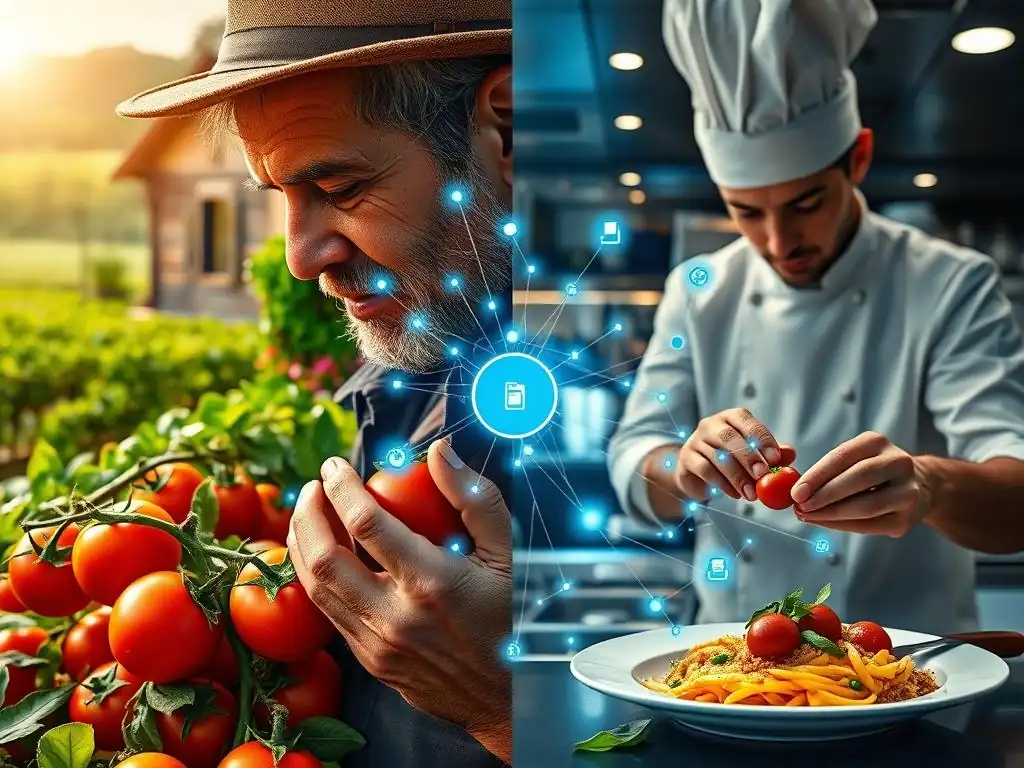
Welcome to Blockchain Trends, your compass in the rapidly evolving world of decentralized technology!
Ever wondered how blockchain is revolutionizing industries beyond cryptocurrency? Dive in to discover its transformative power across diverse sectors, from DeFi to enterprise solutions. This week, we unravel the intricacies of blockchain food traceability solutions, exploring how this technology is reshaping the journey from farm to fork and fostering unprecedented levels of safety and trust. Intrigued? The story of how blockchain is building a more transparent and secure food supply chain starts here.
- From Farm to Fork: Blockchain Food Traceability Solutions for Enhanced Safety and Trust
- Blockchain Technology: A Game Changer for Food Traceability
- Implementing Blockchain Food Traceability Solutions: A Step-by-Step Guide
- Benefits of Blockchain-Based Food Traceability
- Real-World Examples of Blockchain in Food Supply Chains
- Overcoming Challenges in Blockchain Food Traceability Adoption
- The Future of Food Traceability: Blockchain and Beyond
- Conclusion: Building a Safer and More Transparent Food System with Blockchain
-
Frequently Asked Questions
- How does blockchain enhance food traceability?
- What are the key benefits of using blockchain for food traceability?
- Can blockchain help reduce foodborne illnesses?
- What challenges exist in implementing blockchain food traceability solutions?
- What is the future outlook for blockchain in food traceability?
- Final Reflection: Cultivating Trust Through Transparency
- Unveil a More Transparent Food Future Today!
From Farm to Fork: Blockchain Food Traceability Solutions for Enhanced Safety and Trust
Challenges in Traditional Food Traceability Systems
Traditional food traceability systems often rely on fragmented, manual processes, leading to significant challenges. Information about a food product's journey—from the farm where it was grown to the processing plant, distributor, retailer, and ultimately the consumer's table—is frequently stored in disparate databases or even paper records. This lack of a centralized, immutable record makes it incredibly difficult and time-consuming to track the origin of contaminated food during a safety incident, potentially allowing outbreaks to spread further before the source is identified.
Furthermore, data silos between different participants in the supply chain hinder effective communication and data sharing. Each entity might use different systems or formats, creating compatibility issues and delays. This opacity makes it challenging to verify claims about a product's origin, organic status, or ethical sourcing, eroding trust among consumers and making the entire supply chain vulnerable to fraud or error. The complexity only increases with global supply chains involving multiple borders and regulations.
Why Consumers Demand Greater Food Safety and Transparency
Today's consumers are more informed and concerned about the provenance and safety of their food than ever before. High-profile foodborne illness outbreaks, such as the 2018 E. coli outbreak linked to romaine lettuce which affected hundreds of people across multiple states, highlight the critical need for rapid and accurate traceback capabilities. Consumers want assurance that the food they are purchasing is safe and that its journey from farm to fork is fully documented.
Beyond safety, there's a growing demand for transparency regarding ethical sourcing, environmental impact, and fair labor practices. Consumers often seek out products with specific certifications or origin stories, but verifying these claims through traditional methods is difficult. They expect brands and retailers to provide detailed, trustworthy information about where their food comes from, how it was produced, and who handled it along the way, driving the need for more robust blockchain food traceability solutions.
Blockchain Technology: A Game Changer for Food Traceability
Understanding Blockchain's Role in Supply Chain Management
Blockchain technology, at its core, is a distributed, immutable ledger that records transactions across multiple computers. In the context of supply chains, this means every step a product takes—from harvesting to processing, packaging, shipping, and sale—can be recorded as a transaction on the blockchain. Once a transaction is added to the ledger, it is cryptographically linked to the previous transaction (forming a 'block' in a 'chain'), making it virtually impossible to alter or delete past records without the consensus of the network participants.
This inherent structure provides an unprecedented level of transparency and security compared to traditional centralized databases. Each participant in the supply chain who is part of the blockchain network can access the shared ledger (depending on permissions in a private or consortium blockchain), seeing the same verified history of the product. This eliminates data silos and creates a single, shared source of truth about the product's journey, significantly improving efficiency and trust among stakeholders. Blockchain food traceability solutions leverage these fundamental properties.
How Blockchain Ensures Immutability and Transparency in Food Origins
The immutability of blockchain is crucial for verifying food origins and safety data. Because each block is cryptographically secured and linked to the previous one, any attempt to tamper with a record would break the chain and be immediately visible to the network. This makes it highly resistant to fraud, ensuring that the data recorded about a food item's origin, handling, and safety checks is accurate and hasn't been altered downstream.
Transparency is achieved through the distributed nature of the ledger. While not all data needs to be public (especially in enterprise or consortium blockchains used for supply chains), authorized participants can view the entire history of a specific food item or batch. This allows for quick verification of provenance, handling conditions (like temperature logs), and inspection data. In the event of a recall, tracing the affected products back to their source takes minutes, not days or weeks, significantly limiting the scope and impact of a food safety crisis.
Implementing Blockchain Food Traceability Solutions: A Step-by-Step Guide
Step 1: Identifying Key Data Points in the Food Supply Chain
The first critical step in deploying blockchain food traceability solutions is meticulously mapping the entire supply chain and identifying every piece of data that needs to be recorded. This includes information from the point of origin, such as farm location, harvest date, farmer ID, and inputs used (fertilizers, pesticides). As the product moves through processing, data points like processing plant ID, production date, batch number, ingredients added, and quality control results must be captured.
Further along the chain, transportation details (carrier ID, shipping date, temperature logs), distribution center information, and retail store data become essential. The goal is to create a comprehensive digital trail for each product or batch. This requires close collaboration with all supply chain partners to agree on the data points and the format in which they will be captured and recorded on the blockchain.
Step 2: Selecting the Right Blockchain Platform for Food Tracking
Choosing the appropriate blockchain platform is vital, as different platforms offer varying features, consensus mechanisms, and suitability for enterprise use cases. For food traceability, private or consortium blockchains are often preferred over public ones like Bitcoin or Ethereum due to the need for controlled access, higher transaction throughput, and data privacy for sensitive business information. Platforms like Hyperledger Fabric, R3 Corda, or specialized food traceability platforms built on blockchain technology are popular choices.
The selection process should consider factors such as scalability (can the platform handle the volume of transactions from the entire supply chain? ), security, cost of operation, ease of integration with existing systems, and the level of privacy required for different data types. A proof-of-concept phase can help evaluate a platform's performance and suitability before a full-scale deployment of blockchain food traceability solutions.
Step 3: Integrating Blockchain with Existing Supply Chain Systems
Integrating the chosen blockchain platform with existing legacy systems used by supply chain partners (such as ERP systems, warehouse management systems, and transportation management systems) is a significant technical challenge. Data needs to flow seamlessly from these operational systems onto the blockchain ledger in a standardized format. This often requires developing APIs (Application Programming Interfaces) or middleware to connect disparate systems to the blockchain network.
Successful integration ensures that data is captured accurately and in near real-time as products move through the supply chain. It minimizes manual data entry, reducing errors and improving efficiency. This step necessitates close collaboration between IT teams across the supply chain partners to ensure interoperability and smooth data flow into the blockchain food traceability solutions.
Step 4: Ensuring Data Security and Compliance with Regulations
Maintaining robust data security is paramount when implementing blockchain food traceability solutions. While the blockchain itself is secure due to its cryptographic nature, the points where data enters the system (oracles, input devices, user interfaces) are potential vulnerabilities. Measures must be put in place to ensure the integrity and security of data before it is recorded on the ledger, including secure data capture devices and access controls.
Furthermore, food supply chains are subject to numerous regulations regarding safety, labeling, and data privacy (like GDPR or CCPA). The blockchain solution must be designed to comply with these regulations. This might involve careful consideration of what data is stored on-chain versus off-chain, managing access permissions, and ensuring audit trails meet regulatory requirements. Compliance is a continuous process that needs to be built into the design and operation of the blockchain system.
Benefits of Blockchain-Based Food Traceability
Enhanced Food Safety and Reduced Risk of Contamination
One of the most significant benefits of blockchain food traceability solutions is the dramatic improvement in food safety. In the event of a foodborne illness outbreak or a product recall, the immutable and shared ledger allows for near-instantaneous tracing of affected products back to their source. This capability drastically reduces the time it takes to identify the origin of contamination, enabling authorities and companies to issue targeted recalls quickly.
By pinpointing the exact batch and source, potentially contaminated food can be removed from shelves much faster, limiting exposure to consumers and preventing further illnesses. This rapid response contrasts sharply with traditional methods that could take days or weeks to trace a product through complex supply chains, during which time more people could fall ill.
Improved Supply Chain Efficiency and Reduced Food Waste
Blockchain technology streamlines communication and data sharing among supply chain participants, leading to improved overall efficiency. Real-time visibility into inventory levels, shipping status, and quality control checks allows for better planning and coordination. This can help optimize logistics, reduce delays, and ensure products reach their destinations fresh and on time.
Moreover, improved traceability can help reduce food waste. By accurately tracking product expiration dates, handling conditions, and location, companies can better manage inventory and minimize spoilage. In a recall scenario, the ability to trace precisely which products are affected prevents the need for broad, overly cautious recalls that result in discarding perfectly safe food, thus contributing to sustainability efforts.
Increased Consumer Trust and Brand Reputation
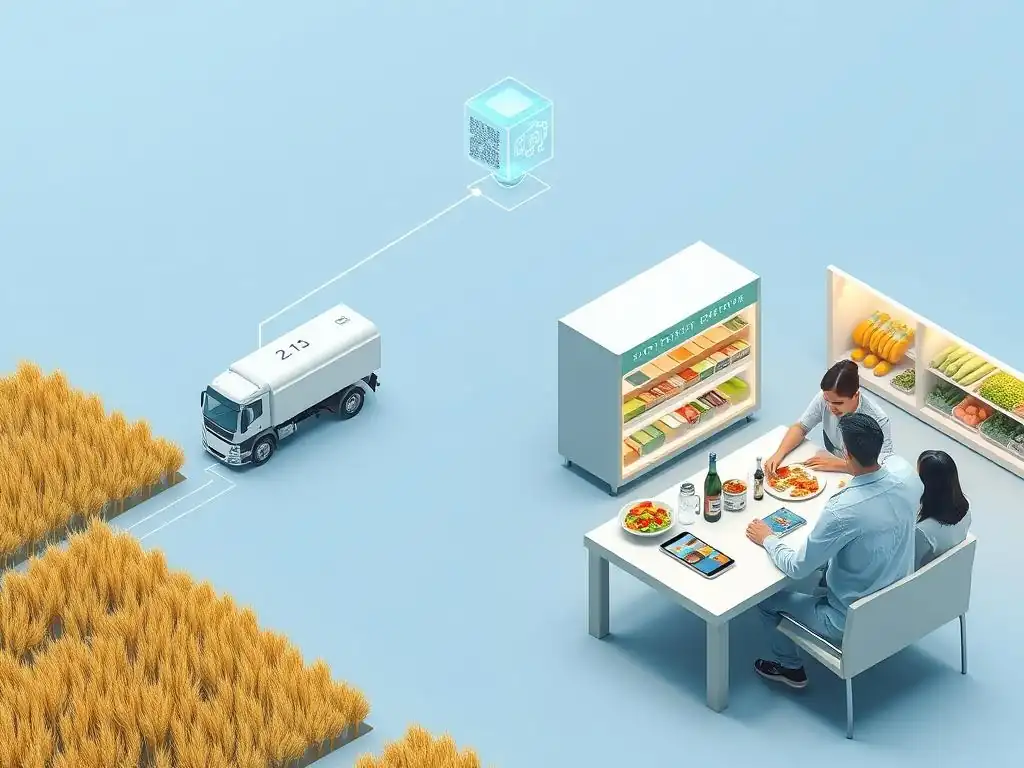
Transparency built into blockchain food traceability solutions directly translates to increased consumer trust. When consumers can easily access verified information about the origin, journey, and safety of their food—perhaps by scanning a QR code on the packaging that links to the blockchain data—they feel more confident in their purchasing decisions. This level of transparency builds stronger relationships between brands and their customers.
Companies that adopt blockchain traceability demonstrate a commitment to safety, quality, and ethical practices. This enhances their brand reputation and differentiates them in a competitive market. In an age where consumers value authenticity and accountability, providing verifiable proof of provenance through blockchain can be a powerful marketing tool.
Streamlined Regulatory Compliance and Auditing
Blockchain's immutable ledger provides a comprehensive and tamper-proof record of all transactions and data points related to a food product's journey. This significantly simplifies the process of complying with regulatory requirements and undergoing audits. Regulators and auditors can access a single, reliable source of information to verify compliance with safety standards, labeling laws, and other regulations.
The ability to quickly and accurately pull up detailed records reduces the time and effort required for audits, potentially lowering compliance costs. Furthermore, the transparency of the system makes it easier for companies to identify and address potential compliance issues proactively, ensuring adherence to food safety standards and legal mandates across the supply chain.
Real-World Examples of Blockchain in Food Supply Chains
Case Study 1: Walmart and Their Blockchain Implementation for Mango Traceability
Walmart, one of the world's largest retailers, pioneered the use of blockchain food traceability solutions to enhance food safety. Following an E. coli outbreak in 2018, they mandated their leafy green suppliers to implement blockchain tracking. Prior to this, tracing a package of sliced mangoes back to the farm could take Walmart over a week using traditional methods, involving numerous phone calls, faxes, and emails between various intermediaries.
By implementing a blockchain solution (built on Hyperledger Fabric), Walmart dramatically reduced this traceback time. During tests, they demonstrated the ability to trace a package of mangoes from the store back to the farm in just 2.2 seconds. This capability is critical for quickly identifying the source of contamination during an outbreak, allowing for rapid, targeted recalls and significantly mitigating potential harm to consumers and the brand.
Case Study 2: Carrefour's Blockchain Traceability of Chicken Products
Carrefour, a major European retailer, has also been a leader in adopting blockchain food traceability solutions. They launched their "Act For Food" program which includes using blockchain to provide consumers with detailed information about selected products. One of their early implementations involved tracking free-range chickens from their farms in the Auvergne region of France.
By scanning a QR code on the chicken packaging, consumers can access information recorded on the blockchain about the chicken's birth date, where it was raised, what it was fed, details about the farmer, the slaughterhouse, and the date it arrived in the store. This initiative not only provides unprecedented transparency to consumers but also strengthens the connection between the customer and the producers, reinforcing trust in the Carrefour brand and the quality of their products.
Overcoming Challenges in Blockchain Food Traceability Adoption
Addressing Scalability Issues in Food Supply Chain Networks
One significant challenge for blockchain food traceability solutions is ensuring the platform can scale to handle the immense volume of transactions generated by a large, complex food supply chain. Millions of individual items or batches move daily, and each movement or status change ideally needs to be recorded. Public blockchains can face throughput limitations and high transaction costs (gas fees), making them unsuitable for high-volume enterprise applications.
Private or consortium blockchains offer better scalability and lower costs, but designing and managing these networks still requires careful planning. Solutions involve optimizing data structures, using efficient consensus mechanisms, and potentially employing off-chain storage for large data files while keeping hashes on-chain for verification. Ongoing technological advancements are continuously improving the scalability of enterprise blockchain platforms.
The Importance of Collaboration and Data Sharing
Implementing blockchain food traceability solutions requires unprecedented levels of collaboration and data sharing among all participants in the supply chain, from farmers and processors to distributors and retailers. Getting every entity on board, agreeing on data standards, and ensuring consistent data input is a complex organizational challenge. Smaller players, like individual farmers, may lack the resources or technical expertise to participate effectively.
Building trust and demonstrating the value proposition of the blockchain system to all stakeholders is crucial. This involves clearly communicating the benefits—such as reduced liability during recalls, improved efficiency, and enhanced brand reputation—to incentivize participation and ensure data is entered accurately and consistently across the network.
Cost Considerations and ROI of Blockchain Implementation
The initial investment required to implement blockchain food traceability solutions can be substantial. Costs include platform setup, integration with existing systems, training personnel, and ongoing network maintenance. For smaller businesses within the supply chain, these costs can be a barrier to adoption.
However, the return on investment (ROI) can be significant over time. Benefits like faster recalls, reduced waste, improved efficiency, and enhanced brand value can lead to cost savings and increased revenue. Quantifying these benefits upfront can help justify the initial investment. Pilot programs and phased rollouts can also help manage costs and demonstrate value before a full-scale deployment across the entire supply chain.
The Future of Food Traceability: Blockchain and Beyond
Integrating IoT and AI for Enhanced Food Tracking
The future of blockchain food traceability solutions lies in seamless integration with other cutting-edge technologies like the Internet of Things (IoT) and Artificial Intelligence (AI). IoT devices, such as sensors placed in shipping containers or storage facilities, can automatically record real-time data like temperature, humidity, and location directly onto the blockchain. This eliminates manual data entry errors and provides a more accurate, continuous record of a product's condition during transit and storage.
AI can analyze the vast amount of data collected by IoT devices and stored on the blockchain to identify patterns, predict potential issues (like spoilage based on temperature fluctuations), optimize logistics, and even verify the authenticity of products by analyzing data signatures. This integration creates a powerful, intelligent, and automated traceability system.
Blockchain's Role in Sustainable and Ethical Food Sourcing
Blockchain food traceability solutions are poised to play a crucial role in verifying sustainable and ethical sourcing claims. By creating an immutable record of a product's journey and the practices used at each stage, blockchain can provide verifiable proof of certifications like organic, fair trade, or sustainable fishing. This goes beyond simple origin tracking to encompass the entire lifecycle and impact of food production.
Consumers increasingly prioritize sustainability and ethical considerations. Blockchain provides the transparency needed for brands to credibly communicate their efforts in these areas, building deeper trust and enabling consumers to make informed choices based on validated information about how their food was produced and transported.
Increased Focus on Interoperability and Standardization in Blockchain Food Systems
As more companies and consortiums develop blockchain food traceability solutions, the need for interoperability between different blockchain networks becomes critical. A single food product might pass through supply chains using different blockchain platforms. For true end-to-end traceability, these systems need to be able to communicate and share relevant data securely.
Future developments will likely focus on establishing industry-wide standards for data formats, protocols, and cross-chain communication. This standardization will facilitate seamless data exchange between disparate blockchain systems, creating a more connected and efficient global food supply chain network and maximizing the potential of blockchain technology for food traceability.
Conclusion: Building a Safer and More Transparent Food System with Blockchain
Frequently Asked Questions
How does blockchain enhance food traceability?
Blockchain provides an immutable and transparent ledger that tracks food products from their origin to the consumer. This allows for enhanced visibility and verifiable data at each stage of the supply chain.
What are the key benefits of using blockchain for food traceability?
The main benefits include improved food safety, reduced risk of fraud, and increased consumer trust. It also facilitates faster recall processes in case of contamination.
Can blockchain help reduce foodborne illnesses?
Yes, by enabling rapid identification of the source of contamination, blockchain can significantly reduce the spread and impact of foodborne illnesses, leading to better public health outcomes.
What challenges exist in implementing blockchain food traceability solutions?
Challenges include the cost of implementation, the need for industry-wide collaboration, and ensuring data accuracy across all participants in the supply chain.
What is the future outlook for blockchain in food traceability?
The future looks promising, with increasing adoption by food companies and retailers. Expect to see more sophisticated solutions that integrate with other technologies like IoT and AI for even greater efficiency and transparency.
Final Reflection: Cultivating Trust Through Transparency
The journey of food, from its humble beginnings in the soil to its place on our tables, is often shrouded in mystery. Blockchain food traceability solutions offer a powerful antidote to this opacity, promising a future where consumers can confidently trace the origins and safety of their meals. This isn't just about technology; it's about rebuilding trust in a system that has, at times, felt distant and impersonal.
The impact of enhanced food traceability extends far beyond simply knowing where our food comes from. It fosters a deeper connection to the land, the farmers, and the processes that sustain us. This shift towards transparency is crucial in an era where consumers are increasingly demanding accountability and ethical sourcing. The future of food is traceability. Consumers want to know where their food comes from, how it was produced, and that it's safe.
- Cathy Burns, CEO of the Produce Marketing Association. This quote encapsulates the growing demand for information and the power of blockchain to deliver it.
As we stand at the cusp of this technological revolution in food systems, let us embrace the potential of blockchain to cultivate a more transparent, safe, and trustworthy food future. Consider the power of your choices as a consumer. Demand information. Support companies that prioritize traceability. By doing so, you contribute to a system where every bite is a testament to integrity and a step towards a healthier, more sustainable world.
Unveil a More Transparent Food Future Today!
Thank you for delving into the journey of food traceability and the power of blockchain to enhance safety and build trust! Now that you're equipped with this knowledge, let's put it into action:
- Demand transparency: Next time you're at the grocery store, ask your local vendors about their food sourcing and traceability practices. Let them know you care about knowing where your food comes from! This is the primary action.
- Explore blockchain-backed food projects: Discover innovative initiatives in your region that are using blockchain to track food origins. Share these inspiring stories with friends and family.
- Start a conversation: Discuss the benefits of blockchain transparency with local farmers or food producers. Could a collaborative blockchain initiative benefit your community?
What small step can you take this week to support a more transparent and trustworthy food system? Share your ideas in the comments below!
Leave a Reply