
Trusted Execution Environments (TEEs) and Blockchain: Secure Enclaves for Smart Contracts


Welcome to Blockchain Trends, your compass navigating the ever-evolving landscape of decentralized technologies!
Dive into the transformative power of blockchain beyond the buzz of cryptocurrencies, and discover its impact on everything from DeFi to enterprise solutions. Are you ready to unlock the secrets to secure blockchain smart contract execution? In this insightful exploration, we'll unravel how Trusted Execution Environments (TEEs) are revolutionizing smart contract security. Explore the potential, understand the challenges, and discover how these secure enclaves are shaping the future of blockchain. What if we could eliminate the vulnerabilities that plague smart contracts? Let's find out!
- Introduction to Secure Smart Contract Execution on Blockchain
- What are Trusted Execution Environments (TEEs)?
- Secure Enclaves: A Deep Dive into TEE Architectures
- TEEs and Blockchain: Enhancing Smart Contract Security
- Benefits of Using TEEs for Blockchain Smart Contracts
- Use Cases of TEEs in Blockchain Applications
- Challenges and Limitations of TEE Integration with Blockchain
- The Future of TEEs in Blockchain Development
- Conclusion: TEEs as a Catalyst for Secure Blockchain Smart Contracts
-
Frequently Asked Questions
- How do Trusted Execution Environments (TEEs) enhance the security of blockchain smart contracts?
- What are the main benefits of using TEEs for "Secure blockchain smart contract execution"?
- How does the use of TEEs address the potential for smart contract vulnerabilities?
- Are there any limitations or challenges associated with implementing TEEs in blockchain systems?
- What is the future outlook for TEEs in the context of "Secure blockchain smart contract execution"?
- Final Reflection: Securing the Future of Smart Contracts
- Unlock the Power of Secure Smart Contracts Now!
Introduction to Secure Smart Contract Execution on Blockchain
Understanding the Need for Secure and Reliable Smart Contracts
Smart contracts are the backbone of many decentralized applications (dApps) and blockchain-based systems. They automate agreements and transactions without intermediaries, offering transparency and efficiency. However, the very nature of smart contracts, designed to handle valuable assets and sensitive data, necessitates robust security.
Consider a Decentralized Finance (DeFi) platform managing billions of dollars in user funds through smart contracts. A vulnerability in these contracts could lead to catastrophic financial losses, erode user trust, and severely damage the credibility of the entire blockchain ecosystem. Therefore, ensuring the security and reliability of smart contracts is not just a technical concern, but a fundamental requirement for the sustainable growth and adoption of blockchain technology.
The demand for secure smart contract execution is further amplified by the increasing complexity and scope of blockchain applications. From managing digital identities and securing supply chains to enabling confidential data sharing in healthcare, smart contracts are being deployed in increasingly sensitive and critical domains. In these scenarios, security breaches can have far-reaching consequences, impacting individuals, businesses, and even national infrastructure.
For instance, in supply chain management, a compromised smart contract could disrupt the flow of goods, leading to significant economic losses and potentially impacting the availability of essential products. Thus, the need for secure and reliable smart contracts transcends mere financial protection, encompassing broader societal and economic stability.
Exploring the Limitations of Traditional Blockchain Smart Contract Execution
Traditional blockchain smart contract execution, while offering transparency and immutability, faces inherent security limitations, particularly concerning confidentiality and data protection. Smart contracts on public blockchains like Ethereum are executed in a replicated environment, meaning every node in the network processes the same contract code and data. This open and transparent nature, while beneficial for auditability, exposes all contract logic and data to every participant in the network. This inherent transparency poses a significant challenge when dealing with sensitive information or when confidentiality is a requirement.
Consider a scenario where a company wants to use a blockchain-based platform to manage its proprietary algorithms or sensitive business data within a smart contract. In a traditional blockchain environment, deploying such a smart contract would mean exposing this confidential information to the entire network, making it vulnerable to unauthorized access and potential exploitation by competitors.
This lack of confidentiality significantly restricts the applicability of traditional blockchain for use cases requiring data privacy. Furthermore, while blockchains provide tamper-proof execution history, the execution environment itself, often relying on virtual machines, can be susceptible to certain types of attacks, especially when dealing with complex smart contract logic and large datasets, potentially impacting the overall security of secure blockchain smart contract execution.
What are Trusted Execution Environments (TEEs)?
Defining Trusted Execution Environments (TEEs)
Trusted Execution Environments (TEEs) are secure and isolated processing environments within a main processor, designed to protect sensitive data and code during execution. Think of a TEE as a secure enclave within your computer's central processing unit (CPU), operating in parallel with the regular operating system but providing a significantly higher level of security. This isolated environment ensures that code and data running inside the TEE are protected from unauthorized access, modification, or observation, even from privileged software like the operating system or hypervisor.
TEEs are not a new concept; they have been utilized in various applications for years, particularly in mobile devices for secure payment processing, digital rights management, and fingerprint authentication. However, their application in blockchain technology, especially for enhancing secure blockchain smart contract execution, is a more recent and rapidly evolving development. The core idea behind TEEs is to create a hardware-backed secure space where sensitive computations can be performed with a high degree of confidence in their integrity and confidentiality, regardless of the security posture of the surrounding system.
Key Features of TEEs: Isolation, Integrity, and Confidentiality
TEEs are characterized by three fundamental security features: isolation, integrity, and confidentiality. Isolation is paramount; it ensures that the code and data running within the TEE are completely separated from the untrusted operating system and other applications. This isolation is typically enforced at the hardware level, preventing any external process from directly accessing or interfering with the TEE's execution environment. Integrity guarantees that the code and data within the TEE have not been tampered with or modified since their initialization. This is often achieved through cryptographic mechanisms that verify the authenticity and integrity of the loaded code and data.
Confidentiality ensures that sensitive data processed within the TEE remains protected from unauthorized disclosure. Data within the TEE is typically encrypted in memory and during processing, preventing unauthorized access even if the system is compromised at the operating system level.
These three features, working in concert, provide a robust security foundation for executing sensitive computations, making TEEs a valuable tool for enhancing the security and privacy of blockchain applications, particularly for enabling secure blockchain smart contract execution in scenarios where traditional blockchain approaches fall short. For example, a study by researchers at MIT showed that using TEEs can reduce the attack surface of smart contracts by orders of magnitude compared to purely software-based solutions.
How TEEs Differ from Traditional Execution Environments
Traditional execution environments, such as operating systems running on standard processors, are designed for general-purpose computing and prioritize flexibility and performance over stringent security guarantees. In these environments, applications and the operating system share the same memory space and resources, creating a large attack surface. While operating systems implement access control mechanisms and security features, they are still vulnerable to software-based attacks, such as malware, buffer overflows, and privilege escalation exploits. A compromised operating system can potentially compromise all applications and data running on it.
In contrast, TEEs offer a hardware-based security boundary that is fundamentally different from software-based security mechanisms. TEEs are designed from the ground up to provide a higher level of assurance by isolating sensitive computations within a protected hardware enclave. This hardware-backed isolation significantly reduces the attack surface and limits the potential impact of software vulnerabilities in the operating system or other applications.
Furthermore, TEEs often incorporate hardware-based cryptographic key management and attestation mechanisms, providing stronger guarantees of code integrity and data confidentiality compared to traditional software-based approaches. This distinction is crucial for applications requiring secure blockchain smart contract execution, where the value at stake demands a higher degree of trust and security than traditional environments can offer.
Secure Enclaves: A Deep Dive into TEE Architectures
Understanding Secure Enclave Technology
Secure enclaves are a specific type of TEE architecture that provides a highly isolated and protected execution environment within a processor. They are essentially hardware-protected containers within the CPU that can execute code and process data in complete isolation from the rest of the system, including the operating system, hypervisor, and other applications. The core principle behind secure enclaves is to create a "fortress" within the processor, fortified by hardware-enforced security mechanisms, where sensitive computations can be performed with a high degree of confidence.
Secure enclaves typically rely on hardware-based memory encryption, access control, and attestation mechanisms to ensure isolation, integrity, and confidentiality. Memory encryption ensures that data within the enclave is encrypted even when stored in DRAM, protecting it from physical attacks and memory snooping. Access control mechanisms strictly limit access to the enclave's memory and resources, preventing unauthorized access from external entities.
Attestation mechanisms allow remote parties to verify the authenticity and integrity of the code running within the enclave, providing cryptographic proof that the enclave is running the expected software in a trusted environment. These features combined make secure enclaves a powerful technology for enabling secure blockchain smart contract execution.
Intel SGX: A Prominent Example of Secure Enclave Implementation
Intel Software Guard Extensions (SGX) is a widely recognized and commercially available implementation of secure enclave technology. Introduced in 2015 with Intel's Skylake processors, SGX provides a set of instructions and architectural features that allow developers to create secure enclaves within standard Intel CPUs. SGX enables the creation of "enclaves" – protected regions of memory within the processor – where sensitive code and data can be shielded from even the most privileged software running on the system, including the operating system and BIOS.
SGX enclaves offer memory encryption, integrity protection, and remote attestation capabilities. Applications can create enclaves and load sensitive code and data into them. The CPU hardware then enforces strict isolation and access control, ensuring that only code running within the enclave can access the enclave's memory.
Intel SGX has been adopted in various applications, including secure key management, digital rights management, and, increasingly, blockchain applications requiring secure blockchain smart contract execution. For instance, companies like Oasis Labs have leveraged Intel SGX to build privacy-preserving blockchain platforms, demonstrating the practical applicability of SGX in enhancing blockchain security and confidentiality. However, it's important to note that SGX has also faced scrutiny regarding vulnerabilities, highlighting the ongoing need for rigorous security analysis and mitigation strategies.
AMD SEV: Another Approach to Secure Virtualization
AMD Secure Encrypted Virtualization (SEV) is another prominent example of TEE technology, focusing on securing virtualized environments. Unlike Intel SGX, which creates enclaves within a single operating system, AMD SEV is designed to protect virtual machines (VMs) from a potentially malicious hypervisor. In cloud computing environments, where multiple VMs share the same physical hardware, the hypervisor plays a crucial role in managing and isolating VMs. However, a compromised hypervisor could potentially access the memory and data of all VMs running on it.
AMD SEV addresses this vulnerability by encrypting the memory of each VM with a unique key managed by the AMD Secure Processor, a dedicated security processor within the AMD CPU. This memory encryption ensures that even if the hypervisor is compromised, it cannot access the decrypted memory contents of the VMs. AMD SEV also provides attestation capabilities, allowing VM owners to verify that their VMs are running on genuine AMD hardware with SEV enabled.
While primarily focused on VM security, AMD SEV's secure virtualization approach has relevance for blockchain applications deployed in cloud environments, contributing to secure blockchain smart contract execution within virtualized infrastructure. AMD SEV-SNP (Secure Nested Paging) further enhances security by adding integrity protection to VM memory, mitigating certain types of attacks that SEV alone might not prevent.
TEEs and Blockchain: Enhancing Smart Contract Security
Leveraging TEEs for Confidential Smart Contract Execution
TEEs offer a powerful mechanism to address the confidentiality limitations of traditional blockchain smart contract execution. By executing smart contract code and processing sensitive data within a TEE, blockchain platforms can achieve confidential smart contracts – contracts where the code and data remain private and protected from unauthorized access, even from blockchain network participants. This capability opens up new possibilities for blockchain applications in industries where data privacy is paramount, such as healthcare, finance, and supply chain management.
In a TEE-enabled blockchain system, smart contract code and relevant data are loaded into a secure enclave for execution. The TEE ensures that the computation is performed in isolation, with data encrypted in memory and protected from external observation. Only the results of the computation, if intended to be public, are released to the blockchain.
This approach allows for secure blockchain smart contract execution that preserves data confidentiality while still leveraging the transparency and immutability of blockchain technology for transaction recording and verification. For example, in a supply chain application, a smart contract could use a TEE to confidentially calculate pricing based on sensitive supplier data without revealing the data itself to competitors or unauthorized parties on the blockchain network.
Protecting Sensitive Data within Smart Contracts Using Secure Enclaves
Secure enclaves within TEEs are particularly effective in protecting sensitive data processed by smart contracts. Traditional blockchains, by design, make all transaction data and smart contract state publicly visible. This transparency is a core feature for auditability and trust but becomes a major obstacle when dealing with confidential information such as personal data, trade secrets, or proprietary algorithms. Secure enclaves provide a solution by allowing smart contracts to process sensitive data within the protected environment of the enclave.
Data can be encrypted before being sent to the smart contract and decrypted only within the secure enclave. The enclave ensures that the decrypted data is never exposed outside the protected memory region, preventing unauthorized access or leakage. Computations on the sensitive data are performed within the enclave, and only the necessary results are released to the blockchain, often in an anonymized or aggregated form if needed.
This approach significantly enhances data privacy and enables secure blockchain smart contract execution for use cases involving Personally Identifiable Information (PII) or commercially sensitive data. For instance, in healthcare, patient medical records could be processed by smart contracts within secure enclaves to facilitate secure data sharing and analysis while maintaining patient privacy and complying with regulations like HIPAA.
Ensuring Data Integrity and Verifiability with TEEs
While TEEs primarily address confidentiality, they also contribute to data integrity and verifiability in secure blockchain smart contract execution. The integrity features of TEEs ensure that the smart contract code executed within the enclave is authentic and has not been tampered with. Remote attestation mechanisms provided by TEEs allow external parties to verify the integrity of the enclave environment and the code running within it. This attestation process provides cryptographic proof that the smart contract execution occurred in a trusted and secure environment.
Furthermore, TEEs can be used to generate cryptographic proofs of correct execution. By performing computations within a TEE, smart contracts can produce verifiable results that can be submitted to the blockchain. These proofs, often based on cryptographic signatures or zero-knowledge proofs, can demonstrate that the computation was performed correctly within the secure enclave, without revealing the sensitive data or the detailed computation steps.
This combination of secure execution and verifiable results enhances the overall trust and reliability of smart contracts, making TEEs a valuable tool for building robust and secure blockchain smart contract execution platforms. For example, in voting systems, TEEs can be used to securely tally votes and generate verifiable proofs of the election outcome, enhancing transparency and auditability while protecting voter privacy.
Benefits of Using TEEs for Blockchain Smart Contracts
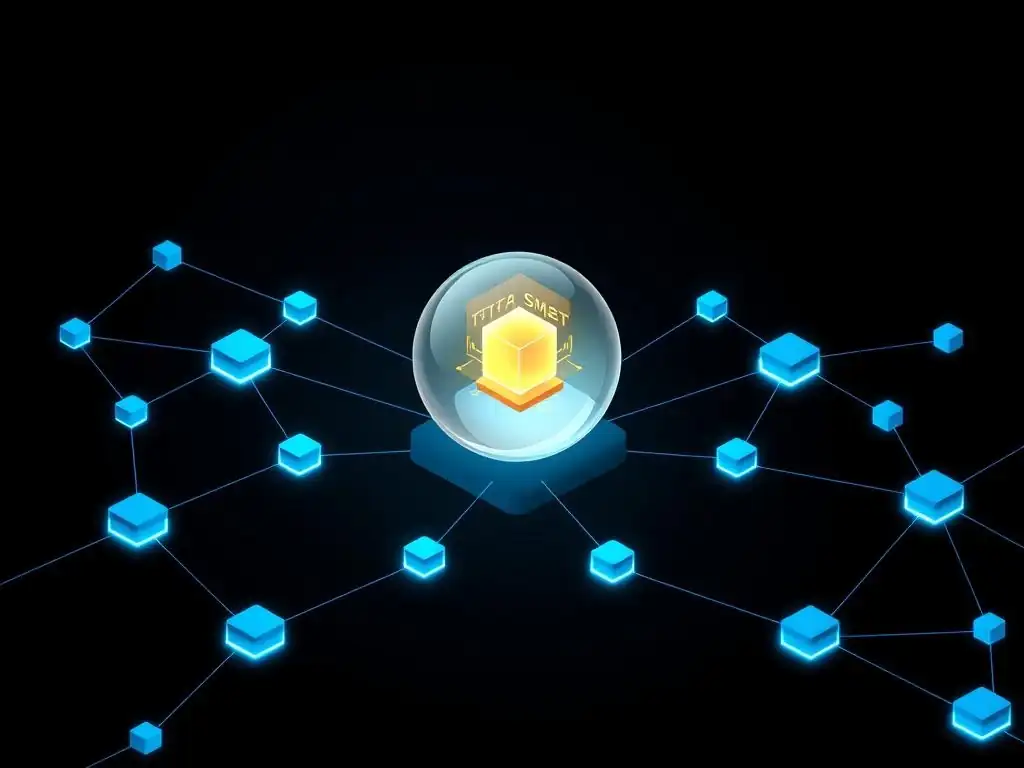
Enhanced Security for Smart Contract Execution
The most significant benefit of using TEEs for blockchain smart contracts is the enhanced security they provide for smart contract execution. TEEs mitigate several critical security risks inherent in traditional blockchain environments. They protect against attacks targeting smart contract vulnerabilities by isolating execution and preventing unauthorized access to sensitive code and data. By executing critical smart contract logic within a secure enclave, the attack surface is drastically reduced, making it significantly harder for malicious actors to compromise the contract's functionality or steal valuable assets.
TEEs also address side-channel attacks, which exploit information leakage through hardware characteristics like timing or power consumption. By running sensitive computations within a TEE, the risk of side-channel attacks is minimized due to the hardware-level security measures implemented by TEEs. This enhanced security is crucial for high-value smart contracts that manage significant financial assets or process highly sensitive data, enabling more robust and secure blockchain smart contract execution. Studies have shown that TEE-based smart contract platforms can offer orders of magnitude improvement in security compared to purely software-based solutions, making them attractive for mission-critical blockchain applications.
Improved Scalability and Performance of Blockchain Applications
While blockchains are inherently distributed and secure, they often face scalability and performance limitations due to the need for consensus and replication across the network. Executing complex smart contracts on-chain can be computationally intensive and time-consuming, leading to transaction bottlenecks and increased gas costs. TEEs offer a potential solution to improve the scalability and performance of blockchain applications, particularly for computationally demanding smart contracts.
By offloading computationally intensive parts of smart contract execution to TEEs, blockchain platforms can reduce the computational burden on the main blockchain network. TEEs can perform complex calculations and data processing in parallel and with greater efficiency than traditional blockchain execution environments. Only the essential results or transaction outputs need to be recorded on the blockchain, significantly reducing transaction latency and improving throughput.
This approach can lead to more scalable and performant blockchain applications, especially for use cases involving complex smart contract logic or large datasets requiring secure blockchain smart contract execution. For example, using TEEs for verifiable computation can enable complex analytical tasks to be performed off-chain and then verifiably recorded on the blockchain, improving overall platform scalability.
Increased Privacy and Confidentiality for Users
TEEs are instrumental in enhancing user privacy and confidentiality in blockchain applications. Traditional blockchains, with their transparent and public nature, often raise privacy concerns, especially for users who wish to keep their transactions and data private. TEEs enable the development of privacy-preserving blockchain applications where user data and transaction details can be kept confidential from unauthorized parties, including other network participants and even blockchain operators.
By utilizing TEEs for confidential smart contract execution, users can interact with blockchain applications without revealing sensitive information on the public ledger. Transactions can be processed within secure enclaves, ensuring that user data remains protected and private.
This increased privacy and confidentiality can broaden the appeal of blockchain technology to users who are concerned about data protection and regulatory compliance, fostering wider adoption of secure blockchain smart contract execution for privacy-sensitive applications. For instance, in decentralized identity management systems, TEEs can be used to securely store and verify user credentials without exposing sensitive personal information on the blockchain, enhancing user privacy and control over their digital identities.
Use Cases of TEEs in Blockchain Applications
Decentralized Finance (DeFi) Applications Leveraging TEEs
Decentralized Finance (DeFi) applications are rapidly evolving, and TEEs are emerging as a crucial technology to address some of the key challenges in DeFi, particularly concerning privacy and security. In DeFi lending and borrowing platforms, TEEs can be used to confidentially assess credit risk based on sensitive user financial data without revealing this data to the platform or other users. This enables more private and secure lending and borrowing services, enhancing user trust and attracting a wider range of participants to DeFi.
In decentralized exchanges (DEXs), TEEs can be used to implement confidential trading strategies and protect against front-running attacks. By executing trading algorithms within secure enclaves, traders can keep their strategies private and prevent malicious actors from exploiting their trading intentions. Furthermore, TEEs can facilitate the development of privacy-preserving stablecoins and other DeFi instruments, enhancing user privacy and fostering the growth of a more secure blockchain smart contract execution ecosystem within DeFi. Projects like Oasis Network are actively exploring and implementing TEEs to build privacy-focused DeFi solutions, showcasing the practical applicability of TEEs in this domain.
Supply Chain Management: Securely Tracking Assets
Supply chain management is another area where TEEs can bring significant benefits to blockchain applications. Tracking assets across complex supply chains often involves sensitive information, such as pricing, supplier details, and inventory levels, which businesses may want to keep confidential. TEEs enable secure blockchain smart contract execution for supply chain applications by allowing for confidential data processing and secure data sharing among authorized participants.
Smart contracts running within TEEs can securely manage and track asset movements, verify product authenticity, and ensure compliance with regulations without exposing sensitive supply chain data to unauthorized parties. For example, a pharmaceutical company could use a TEE-based blockchain platform to track the provenance and temperature of temperature-sensitive drugs throughout the supply chain, ensuring product quality and preventing counterfeiting while keeping sensitive supply chain data confidential. This enhances transparency and efficiency in supply chains while protecting commercially sensitive information, making blockchain a more attractive solution for supply chain management.
Healthcare: Protecting Patient Data on the Blockchain
Healthcare is a highly regulated and privacy-sensitive industry, making TEEs a particularly valuable technology for blockchain applications in healthcare. Protecting patient data is paramount, and TEEs can enable secure blockchain smart contract execution for healthcare applications that require confidential data processing and secure data sharing. Blockchain can be used to securely manage and share patient medical records, facilitate clinical trials, and track pharmaceutical supply chains. However, to comply with regulations like HIPAA and GDPR, patient data must be protected from unauthorized access.
TEEs can be used to process patient data within secure enclaves, ensuring that sensitive medical information remains confidential and protected. Smart contracts running within TEEs can facilitate secure data sharing among healthcare providers, researchers, and patients while maintaining patient privacy and complying with regulatory requirements. For instance, a blockchain-based platform for clinical trials could use TEEs to securely manage patient data, ensure data integrity, and facilitate data analysis while protecting patient privacy and enabling secure blockchain smart contract execution in a highly sensitive domain.
Identity Management: Securely Storing and Verifying User Identities
Decentralized Identity Management (DID) systems aim to give users greater control over their digital identities. However, securely storing and verifying user identities on a blockchain requires robust security and privacy mechanisms. TEEs can play a crucial role in enhancing the security and privacy of DID systems by enabling secure blockchain smart contract execution for identity-related operations.
TEEs can be used to securely store users' private keys and credentials, ensuring that only authorized users can access and control their digital identities. Smart contracts running within TEEs can perform secure identity verification and authentication without exposing sensitive user data on the public blockchain.
This enhances user privacy and security in DID systems, making them more robust and trustworthy. For example, a TEE-based DID system could allow users to securely store their digital credentials on their mobile devices and selectively share verified attributes with service providers without revealing their entire identity, enhancing user privacy and control over their personal information in the digital world.
Challenges and Limitations of TEE Integration with Blockchain
Hardware Dependency and Trust Assumptions
One of the primary challenges of TEE integration with blockchain is the hardware dependency. TEEs are hardware-based security features, and their availability and security depend on the underlying hardware platform. Not all devices and systems are equipped with TEEs, limiting the portability and accessibility of TEE-based blockchain solutions. Furthermore, the security of TEEs relies on the trustworthiness of the hardware manufacturer and the TEE implementation itself.
Users and developers must trust that the hardware vendor has designed and implemented the TEE correctly and that there are no backdoors or vulnerabilities in the hardware or firmware. This introduces a new trust assumption into the blockchain system, shifting some trust from purely cryptographic protocols to hardware providers.
While hardware-based security can offer stronger guarantees than software-based security, it also introduces new complexities and dependencies that need to be carefully considered when implementing secure blockchain smart contract execution with TEEs. Ongoing research and development are focused on mitigating these hardware dependencies and enhancing the transparency and auditability of TEE implementations.
Potential Attack Vectors and Mitigation Strategies
Despite the enhanced security offered by TEEs, they are not invulnerable to attacks. Researchers have identified various potential attack vectors targeting TEEs, including side-channel attacks, fault injection attacks, and software-based attacks exploiting vulnerabilities in the TEE software or APIs. While TEEs significantly reduce the attack surface compared to traditional execution environments, they do not eliminate all security risks.
Mitigation strategies for TEE attacks involve a multi-layered approach, including robust TEE design and implementation, secure software development practices, and continuous security monitoring and updates. Hardware vendors and software developers need to proactively address potential vulnerabilities and implement countermeasures to mitigate known attack vectors. Furthermore, blockchain platforms using TEEs should incorporate security audits and formal verification techniques to ensure the robustness and security of their TEE-based solutions for secure blockchain smart contract execution. Regular security assessments and penetration testing are crucial to identify and address potential weaknesses in TEE implementations and ensure ongoing security.
Regulatory and Compliance Considerations
The use of TEEs in blockchain applications also raises regulatory and compliance considerations, particularly in industries subject to strict data privacy regulations like GDPR and HIPAA. While TEEs enhance data privacy and security, regulators may require assurance that TEE-based systems meet specific security and privacy standards. Demonstrating compliance with these regulations can be complex and may require independent audits and certifications of TEE implementations and blockchain platforms.
Furthermore, the legal implications of using TEEs for smart contracts are still evolving. Questions may arise regarding liability and accountability in case of security breaches or malfunctions in TEE-based smart contracts. Clear legal frameworks and regulatory guidelines are needed to address these issues and provide legal certainty for businesses and individuals using TEE-based blockchain solutions for secure blockchain smart contract execution. Engaging with regulators and legal experts is crucial to ensure that TEE-based blockchain applications comply with applicable laws and regulations and to address any potential legal or compliance challenges.
The Future of TEEs in Blockchain Development
Ongoing Research and Development in Secure Enclave Technology
Research and development in secure enclave technology are actively ongoing, focusing on improving the security, performance, and usability of TEEs. Researchers are exploring new hardware architectures and security mechanisms to enhance TEE security and resilience against emerging attack vectors. Efforts are also underway to improve the performance of TEEs and reduce the overhead associated with secure enclave execution, making them more efficient and practical for wider adoption in blockchain applications.
Furthermore, research is focused on enhancing the programmability and developer experience of TEEs. Developing applications for TEEs can be complex and require specialized expertise. Researchers are working on developing more user-friendly development tools, frameworks, and programming languages to simplify TEE application development and make TEEs more accessible to blockchain developers. These ongoing advancements in secure enclave technology will pave the way for more robust, efficient, and developer-friendly TEE-based solutions for secure blockchain smart contract execution.
Integration of TEEs with Emerging Blockchain Platforms
TEEs are increasingly being integrated into emerging blockchain platforms and frameworks, reflecting the growing recognition of their importance for enhancing blockchain security and privacy. Several blockchain projects are actively incorporating TEEs into their architectures to enable confidential smart contracts and privacy-preserving applications. These integrations range from building dedicated TEE-based blockchain platforms to incorporating TEE support into existing blockchain frameworks.
The integration of TEEs with blockchain platforms is expected to accelerate the adoption of TEEs in the blockchain ecosystem and drive the development of a wider range of secure blockchain smart contract execution applications. As more blockchain platforms incorporate TEE support, developers will have greater access to TEE technology and can leverage its benefits to build more secure, private, and scalable blockchain solutions. This trend towards TEE integration signifies the growing maturity of TEE technology and its increasing relevance for the future of blockchain development.
The Role of TEEs in Advancing Secure and Scalable Blockchain Solutions
TEEs are poised to play a significant role in advancing the development of secure and scalable blockchain solutions. As blockchain technology matures and its adoption expands to more sensitive and critical applications, the need for enhanced security and privacy becomes paramount. TEEs offer a crucial technology to address these requirements, enabling the development of blockchain platforms that are both secure and privacy-preserving.
By enabling confidential smart contracts, TEEs unlock new possibilities for blockchain applications in industries where data privacy is essential. Furthermore, TEEs can improve the scalability and performance of blockchain applications by offloading computationally intensive tasks to secure enclaves.
The combination of enhanced security, privacy, and scalability makes TEEs a key enabler for the widespread adoption of blockchain technology and for realizing the full potential of secure blockchain smart contract execution in various industries and use cases. As TEE technology continues to evolve and integrate with blockchain platforms, its role in shaping the future of blockchain development will become increasingly significant.
Conclusion: TEEs as a Catalyst for Secure Blockchain Smart Contracts
Recap of the Benefits of TEEs for Blockchain Security
Trusted Execution Environments (TEEs) offer substantial benefits for enhancing the security and privacy of blockchain smart contracts. TEEs provide a hardware-backed secure environment for executing smart contract code and processing sensitive data, mitigating key security risks associated with traditional blockchain execution. They enable confidential smart contracts, protecting sensitive data from unauthorized access and ensuring data privacy. TEEs also improve the integrity and verifiability of smart contract execution through remote attestation and verifiable computation capabilities.
Furthermore, TEEs contribute to improved scalability and performance of blockchain applications by offloading computationally intensive tasks from the main blockchain network. The enhanced security, privacy, and scalability offered by TEEs make them a valuable technology for building robust and secure blockchain smart contract execution platforms. While challenges and limitations remain, ongoing research and development are addressing these issues and paving the way for wider adoption of TEEs in the blockchain ecosystem.
The Potential for TEEs to Drive Widespread Blockchain Adoption
TEEs have the potential to be a catalyst for widespread blockchain adoption, particularly in industries and use cases that require strong security and data privacy. By addressing the confidentiality limitations of traditional blockchain technology, TEEs unlock new possibilities for blockchain applications in sensitive domains such as finance, healthcare, supply chain management, and identity management. The ability to execute confidential smart contracts and protect sensitive data on the blockchain significantly broadens the applicability of blockchain technology and makes it more attractive to businesses and individuals who are concerned about data privacy and security.
As TEE technology matures and becomes more widely integrated into blockchain platforms, its role in driving blockchain adoption is expected to grow. The enhanced security and privacy offered by TEEs can build trust in blockchain technology and foster its acceptance across various sectors, paving the way for a future where secure blockchain smart contract execution becomes a standard and widely utilized paradigm. TEEs are not just a technological advancement; they represent a crucial step towards realizing the full potential of blockchain technology to transform industries and empower individuals in a secure and privacy-preserving manner.
Frequently Asked Questions
How do Trusted Execution Environments (TEEs) enhance the security of blockchain smart contracts?
TEEs, or secure enclaves, provide an isolated and protected environment for smart contract execution. This isolates the contract from the rest of the system, preventing malicious access and tampering.
What are the main benefits of using TEEs for "Secure blockchain smart contract execution"?
The primary benefits include enhanced confidentiality and integrity of smart contract data and logic. It also allows for verifiable execution of contracts, even on untrusted nodes.
How does the use of TEEs address the potential for smart contract vulnerabilities?
TEEs reduce the attack surface by isolating the smart contract execution environment. This makes it much harder for attackers to exploit common vulnerabilities and compromise the contract's integrity.
Are there any limitations or challenges associated with implementing TEEs in blockchain systems?
Yes, TEEs introduce complexity in terms of integration and attestation. There are also concerns about potential hardware vulnerabilities and the need for trusted hardware vendors.
What is the future outlook for TEEs in the context of "Secure blockchain smart contract execution"?
The future looks promising, with ongoing research and development aimed at improving the security and scalability of TEE-based blockchain solutions. This includes exploring new hardware architectures and attestation mechanisms.
Final Reflection: Securing the Future of Smart Contracts
The exploration of Trusted Execution Environments (TEEs) and their integration with blockchain technology underscores a critical need in today's digital landscape: secure and reliable execution of smart contracts. As decentralized applications become increasingly prevalent, the vulnerabilities inherent in traditional smart contract execution environments pose a significant risk. The potential for TEEs to mitigate these risks, ensuring confidentiality and integrity, is not just a technological advancement, but a fundamental requirement for the widespread adoption and trust in blockchain technology.
The impact of secure blockchain smart contract execution extends far beyond the realm of cryptography and computer science. It touches upon the very foundation of trust in decentralized systems, influencing how we conduct business, manage digital assets, and interact with each other online. The ability to execute smart contracts with verifiable security and privacy is paramount to unlocking the full potential of blockchain technology. Security is not a product, but a process.
This quote reminds us that achieving truly secure smart contract execution is an ongoing journey, requiring constant vigilance and innovation.
As we look to the future, let us not underestimate the power of secure smart contracts to reshape our world. Consider how you can contribute to this evolution, whether through research, development, or simply by advocating for the adoption of secure practices. The future of blockchain, and indeed the future of trust in the digital age, depends on our collective commitment to building a more secure and reliable foundation for smart contract execution.
Unlock the Power of Secure Smart Contracts Now!
Thanks for diving into the world of Trusted Execution Environments and how they're revolutionizing blockchain security! We hope you've gained a solid understanding of how TEEs are making smart contracts more robust and reliable. Ready to put this knowledge to use? Here's how you can take the next step:
- Dive deep by exploring existing blockchain projects leveraging TEEs. Research and identify at least three projects, analyzing their specific use cases and the security benefits they gain. This will help you understand the practical implications of TEE integration.
- Share your insights! Write a short LinkedIn post or Tweet summarizing your biggest takeaway from this article and tag us @BlockchainTrends. Let's start a conversation!
- Consider contributing to open-source TEE projects within the blockchain space. Even small contributions can make a big difference!
What innovative use case for TEEs in blockchain do you envision, and what steps are you going to take to bring it to life?
Leave a Reply