
The Internet of Things (IoT) and Verifiable Credentials: Securing Connected Devices


Welcome to Blockchain Trends, your go-to source for understanding the revolutionary impact of blockchain technology beyond the hype.
Ever wondered how blockchain can secure the vast and vulnerable world of connected devices? Dive into our latest article, "The Internet of Things (IoT) and Verifiable Credentials: Securing Connected Devices," to uncover the IoT verifiable credentials security benefits and explore how blockchain-based digital identity is transforming the landscape of IoT. Discover how this powerful combination can enhance security, privacy, and trust in the age of interconnected things. Ready to unlock the potential?
The Internet of Things (IoT) and Verifiable Credentials: Securing Connected Devices
- Introduction: The Convergence of IoT and Blockchain-Based Identity
- Understanding the Vulnerabilities of Traditional IoT Security
- Verifiable Credentials: A Blockchain-Based Solution for IoT Security
- IoT Verifiable Credentials Security Benefits: A Detailed Look
- Implementing Verifiable Credentials in IoT Systems: Challenges and Considerations
- Real-World Applications of IoT Security with Verifiable Credentials
- The Future of IoT Security: The Role of Verifiable Credentials
-
Frequently Asked Questions
- How can Verifiable Credentials enhance the security of IoT devices?
- What are the key security benefits of using Verifiable Credentials in IoT ecosystems?
- Can Verifiable Credentials help address the scalability challenges of IoT security?
- How do Verifiable Credentials contribute to data privacy in IoT applications?
- What role does blockchain play in enabling secure IoT verifiable credentials?
- Final Reflection: Embracing Trust in a Connected World
- Unleash the Power of Secure IoT: Your Next Steps Await!
Introduction: The Convergence of IoT and Blockchain-Based Identity
Blockchain Trends focuses on the transformative potential of blockchain technology beyond its initial association with cryptocurrencies. Within this scope, the intersection of Digital Identity and Verifiable Credentials & Blockchain is particularly relevant. As the world becomes increasingly interconnected through the Internet of Things (IoT), securing the identities of countless devices and the data they handle is paramount.
Traditional security models often struggle to scale and provide the necessary trust and privacy guarantees for vast, distributed IoT ecosystems. This is where blockchain-based solutions, specifically verifiable credentials, offer a compelling alternative, promising a more robust and decentralized approach to managing IoT device identities and interactions.
The sheer volume and diversity of IoT devices, ranging from simple sensors to complex industrial machinery, present unique security challenges. Each device represents a potential entry point into a network if not properly secured. Leveraging blockchain technology, particularly through the implementation of verifiable credentials, provides a framework for establishing trust and verifying the authenticity of these devices and their communications in a way that is tamper-evident and privacy-preserving. This convergence is essential for building resilient and trustworthy IoT deployments across various sectors, aligning perfectly with the focus of Blockchain Trends on real-world blockchain applications.
Understanding the Vulnerabilities of Traditional IoT Security
Common IoT Security Weaknesses
Traditional IoT security often relies on centralized models and legacy protocols that were not designed for the scale, heterogeneity, and low-power constraints of modern connected devices. A prevalent vulnerability is the use of weak or default credentials. Many devices ship with easily guessable passwords or hardcoded credentials, making them prime targets for botnets and unauthorized access. For instance, the Mirai botnet, notorious for its large-scale distributed denial-of-service (DDoS) attacks, primarily exploited IoT devices with default passwords. Reports indicated that millions of devices were vulnerable due to this single, basic security failure.
Furthermore, the lack of regular security updates and patching is a significant issue. Many IoT devices have limited processing power or lack user interfaces, making updates difficult or impossible for the average consumer or even enterprise administrator. This leaves devices exposed to known vulnerabilities for extended periods. Supply chain compromises, where malicious code or components are introduced during manufacturing or distribution, also pose a substantial risk. Without strong identity verification throughout the device lifecycle, it's challenging to ensure the integrity and authenticity of a device from its origin to its deployment, leaving it susceptible to manipulation or impersonation.
The Need for Enhanced Security in IoT Ecosystems
The implications of compromised IoT security extend far beyond individual device breaches. In critical infrastructure, a security failure could lead to operational disruptions, physical damage, or even loss of life. For example, a compromised sensor in an industrial control system could provide false readings, leading to equipment malfunction or dangerous conditions.
In smart cities, vulnerabilities in traffic management systems or public surveillance networks could be exploited for malicious purposes, impacting public safety and privacy. The increasing sophistication of cyberattacks, coupled with the expanding attack surface presented by billions of connected devices, necessitates a fundamental shift towards more resilient and proactive security measures.
The current security landscape often involves complex certificate management systems or centralized identity providers, which can become single points of failure or administrative burdens at scale. As IoT deployments grow exponentially – projections suggest tens of billions of connected devices globally within a few years – managing security for each device individually using traditional methods becomes unfeasible.
There is an urgent need for a decentralized, scalable, and privacy-respecting security framework that can authenticate devices, secure their communications, and manage their lifecycle identities effectively. This highlights the critical need for exploring alternative security paradigms like those offered by blockchain and verifiable credentials.
Verifiable Credentials: A Blockchain-Based Solution for IoT Security
What are Verifiable Credentials?
Verifiable Credentials (VCs) are a tamper-evident and privacy-preserving way to express claims about a subject (like a person, organization, or device). Defined by the W3C, a VC is a data structure that contains claims issued by an issuer, held by a holder, and presented to a verifier.
For example, a university issues a degree (the claim) to a student (the holder), who can then present it to an employer (the verifier). The key innovation is that the issuance and verification process leverages decentralized identifiers (DIDs) and cryptographic proofs, often anchored on a decentralized ledger like a blockchain, to ensure trust and prevent tampering without relying on a central authority.
Each component plays a distinct role: the issuer creates and cryptographically signs the credential; the holder receives and stores the credential, potentially in a digital wallet; and the verifier receives the credential from the holder and checks its validity using the issuer's public key and potentially information anchored on a ledger. This decentralized model shifts control over identity information from central entities to the holder, enhancing privacy and security. For IoT, the "subject" is the device itself, holding credentials issued by its manufacturer, owner, or a service provider, proving attributes like its identity, ownership, firmware version, or operational status.
How Verifiable Credentials Enhance IoT Device Security
Verifiable credentials enhance IoT device security by providing a robust, decentralized framework for device identity and authentication. Instead of relying on shared secrets, passwords, or centrally managed certificates that can be stolen or compromised, a device can hold VCs issued by trusted entities. For instance, a manufacturer could issue a VC attesting to the device's identity and hardware specifications.
An owner could issue a VC proving ownership. A service provider could issue a VC authorizing the device to access specific network resources or perform certain actions. When a device needs to authenticate itself or authorize an action, it presents the relevant VC to a verifier (e.g., a network gateway, a cloud service, or another device), which can cryptographically verify its authenticity and validity without needing to query a central database.
This VC-based approach significantly reduces the attack surface associated with traditional credential management. There are no passwords to guess or default credentials to exploit. The cryptographic proofs ensure that credentials cannot be tampered with.
Furthermore, the use of DIDs provides a persistent, decentralized identifier for the device that is not tied to a specific organization or service, improving interoperability and reducing vendor lock-in. The holder (the device or its controlling entity) has more control over which credentials are shared and with whom, improving privacy. This shifts the security paradigm from protecting access points to verifying the integrity and authorization of the identity presenting itself, offering significant IoT verifiable credentials security benefits.
IoT Verifiable Credentials Security Benefits: A Detailed Look
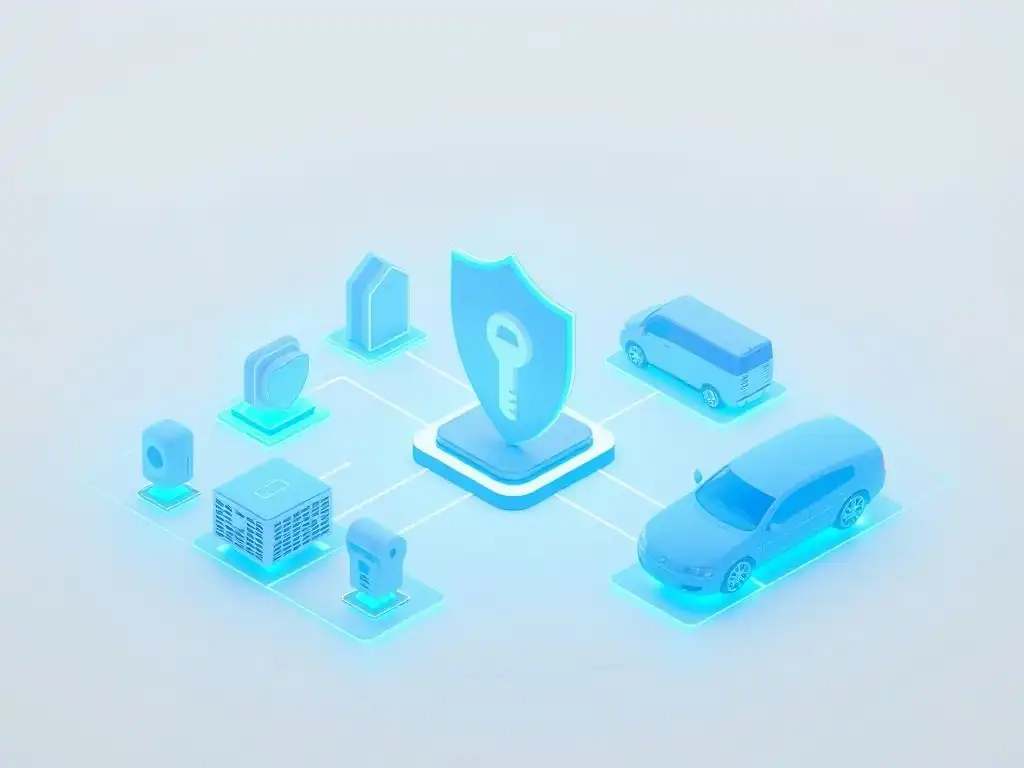
Enhanced Device Authentication and Identity Management
One of the primary IoT verifiable credentials security benefits is the significant enhancement of device authentication and identity management. Traditional methods often rely on pre-shared keys, static passwords, or centralized PKI systems, all of which have limitations in scalability, security, and flexibility for dynamic IoT environments. With VCs, each device can possess a unique Decentralized Identifier (DID) and hold cryptographically verifiable credentials attesting to its identity, origin, and authorized attributes.
When a device connects to a network or interacts with another system, it presents a proof derived from its VC. The verifier can check this proof against information anchored on a distributed ledger, confirming the device's authenticity and authorization without needing a direct connection to the original issuer every time.
This model drastically reduces the risk of device impersonation and unauthorized access. Unlike passwords that can be brute-forced or stolen, VCs rely on strong cryptography and decentralized trust anchors. Managing the lifecycle of device identities – from manufacturing and deployment to ownership transfer and decommissioning – becomes more secure and transparent.
For example, a VC can include claims about the device's manufacturing date, firmware version, and maintenance history. This allows verifiers to ensure that only authorized, up-to-date devices are permitted to join a network or access critical resources, directly contributing to the robust IoT verifiable credentials security benefits. This decentralized approach also mitigates the risk associated with centralized identity repositories being compromised.
Secure Data Exchange and Interoperability
Another crucial aspect of IoT verifiable credentials security benefits lies in enabling secure data exchange and fostering interoperability between disparate systems. IoT devices generate vast amounts of data, often sensitive, which needs to be transmitted, processed, and shared securely. VCs can be used to authenticate the source of data originating from a device, providing irrefutable proof that the data came from a specific, authorized sensor or device.
This is critical in applications like industrial monitoring, supply chain tracking, or healthcare, where the integrity and provenance of data are paramount. A sensor could issue a signed data reading as a credential, allowing any recipient to verify that the data originated from that specific, identified sensor at a particular time.
Furthermore, VCs facilitate secure and controlled data sharing between different IoT platforms or organizations. Instead of granting broad access permissions, a device owner or data controller can issue specific credentials authorizing other parties to access certain types of data under defined conditions. This fine-grained access control, backed by cryptographic proof and decentralized trust, enhances data privacy and security.
It also promotes interoperability by providing a standardized, verifiable method for devices and platforms to establish trust and exchange information securely, regardless of the underlying network or vendor. The ability to prove the authenticity and authorization of data streams is a significant component of the overall IoT verifiable credentials security benefits.
Improved Privacy and Data Ownership
Enhanced privacy and clearer data ownership are also significant IoT verifiable credentials security benefits. In traditional IoT models, devices often have limited control over their identity and the data they generate, with identity management and data access often controlled by centralized service providers. VCs shift this paradigm by placing the "holder" (the device or its authorized controller) in a position of greater control.
A device can selectively present only the specific credentials required for a given interaction, minimizing the disclosure of unnecessary personal or device information. For example, a smart meter might only need to prove it's an authorized meter owned by a specific utility to transmit readings, without revealing the homeowner's personal identity to the meter network operator.
Moreover, VCs can include claims about data ownership or usage rights. A device could hold a credential specifying who owns the data it collects and under what conditions that data can be accessed or shared. This cryptographic enforcement of data policies, linked to the device's decentralized identity, provides a stronger foundation for complying with data protection regulations like GDPR or CCPA.
Users and organizations gain more granular control over their device data, improving privacy and enabling new models of data sharing and monetization where consent and provenance are cryptographically verifiable. This empowers individuals and organizations, ensuring that the collection and use of data from their connected devices are conducted with transparency and control, contributing substantially to the IoT verifiable credentials security benefits.
Implementing Verifiable Credentials in IoT Systems: Challenges and Considerations
Technical Challenges
Implementing verifiable credentials in diverse IoT ecosystems presents several technical challenges. One significant hurdle is the resource constraints of many edge devices. Low-power microcontrollers commonly found in sensors or simple actuators may lack the processing power, memory, and network bandwidth required for cryptographic operations like signing and verifying credentials, especially complex ones. Integrating DID and VC libraries, which can be computationally intensive, into constrained environments necessitates lightweight implementations and optimized protocols. Developers must consider how to manage private keys securely on devices that may not have secure enclaves or sufficient storage.
Another challenge is ensuring reliable connectivity for devices to interact with the decentralized ledger (if required for verification or DID resolution) and credential issuers/verifiers. Intermittent connectivity or low bandwidth can impact the ability to issue, hold, or verify credentials in real-time. Furthermore, the heterogeneity of IoT hardware and software platforms requires the development of standardized interfaces and protocols for VC issuance and verification that can operate across different architectures and operating systems. Secure over-the-air (OTA) updates for VC-related software and keys also need careful design to maintain the integrity of the system.
Standardization and Interoperability
The success of verifiable credentials in IoT heavily relies on robust standardization and seamless interoperability between different vendors, platforms, and industries. While the W3C Verifiable Credentials Data Model provides a foundational standard, there's a need for more specific profiles and best practices tailored to the unique requirements of IoT, such as data models for device attributes, proof formats suitable for constrained environments, and discovery mechanisms for DID methods relevant to IoT devices. Lack of agreement on these specifics can lead to fragmentation, hindering the widespread adoption and the full realization of IoT verifiable credentials security benefits.
Achieving interoperability means ensuring that a credential issued by one party (e.g., a device manufacturer) can be held by a device managed on one platform and verified by a system operated by a completely different entity (e.g., a smart city infrastructure provider). This requires common agreement on DID methods for devices, credential schemas for common device claims (like identity, capabilities, location), and protocols for presenting and verifying proofs. Industry-specific alliances and working groups are crucial in developing these profiles and testing interoperability to build confidence and facilitate the deployment of VC-based IoT security solutions at scale.
Regulatory and Compliance Considerations
Navigating the complex landscape of regulations and compliance is another critical consideration for implementing verifiable credentials in IoT systems, particularly in sectors like healthcare (e.g., HIPAA), critical infrastructure, or where data privacy laws (e.g., GDPR, CCPA) apply. While VCs offer enhanced privacy features by enabling selective disclosure, ensuring that the underlying data models, issuance policies, and verification processes comply with specific legal requirements is essential. For example, credentials containing personal or sensitive data must adhere to rules around consent, data minimization, and the right to be forgotten, which can be challenging in a decentralized, immutable ledger context.
Deployment in regulated industries often requires demonstrating compliance with specific security standards (e.g., NIST frameworks, ISO 27001). Proving that a VC-based security solution meets these requirements necessitates careful documentation, auditing, and potentially certification processes. Furthermore, the legal status of decentralized identifiers and verifiable credentials as proof of identity or authorization in various jurisdictions is still evolving. Organizations deploying VC solutions in IoT need to understand the legal implications and ensure their implementation aligns with current and anticipated regulatory frameworks, adding a layer of complexity to realizing the full IoT verifiable credentials security benefits.
Real-World Applications of IoT Security with Verifiable Credentials
Supply Chain Management
Verifiable credentials offer significant potential for enhancing security and transparency in IoT-enabled supply chains. Devices like smart sensors and trackers attached to goods or containers can use VCs to prove their identity and the integrity of the data they record (e.g., temperature, location, shock). A manufacturer could issue a VC for a temperature sensor, attesting to its calibration and accuracy.
As the sensor travels with a shipment, it could issue signed data points (perhaps as VCs themselves or referenced by a VC), proving the temperature profile throughout the journey. Retailers or regulatory bodies could then verify these credentials and data points cryptographically, ensuring that goods like pharmaceuticals or sensitive foods have been kept within required conditions.
This system drastically reduces the risk of data tampering or fraudulent claims about handling conditions. Each entity in the supply chain – from the producer and logistics provider to customs and the end recipient – can issue or verify credentials related to the product or its movement. For example, a customs agency could issue a VC granting temporary passage rights to a specific container based on its verified contents and origin credentials.
This creates a secure, verifiable audit trail for every step, improving accountability and trust. The use of VC-based identities for devices and shipments is a tangible example of leveraging IoT verifiable credentials security benefits in a complex, multi-party environment.
Smart Cities
In smart city deployments, where vast networks of diverse IoT devices manage critical services like transportation, energy, and public safety, security is paramount. Verifiable credentials can play a vital role in securing these complex ecosystems. Traffic sensors, smart streetlights, environmental monitors, and public Wi-Fi access points can all use VCs to establish their authentic identity and authorized operational parameters.
For instance, a city authority could issue a VC to a traffic camera, proving it is an official device authorized to collect data from a specific intersection. This prevents rogue devices from being introduced into the network to feed false information or compromise security.
Furthermore, VCs can manage access control for maintenance personnel or service providers interacting with city infrastructure. A technician could present a credential proving their identity, employer, and authorization to access and service specific types of streetlights at a particular location and time.
This eliminates the need for shared keys or complex access control lists spread across different systems. The ability to cryptographically verify the identity and authorization of every device and individual interacting with the smart city infrastructure significantly enhances its resilience against cyber and physical threats, showcasing the broad applicability of IoT verifiable credentials security benefits in public sector applications.
Healthcare
The healthcare sector is increasingly adopting IoT devices, from remote patient monitoring equipment to hospital asset trackers. Securing these devices and the sensitive patient data they handle is a critical concern due to stringent privacy regulations (like HIPAA in the US) and the high impact of security breaches. Verifiable credentials offer a promising approach to enhance the security and privacy of healthcare IoT.
Medical devices can use VCs to prove their authenticity, calibration status, and regulatory approval, ensuring that only trusted equipment is used for patient care. A hospital could issue a VC to a blood pressure monitor, verifying it has been recently calibrated and is authorized for use in a specific ward.
Patient data collected by these devices can be linked to the patient's decentralized identity, with VCs managing consent and access rights. A patient could hold credentials authorizing specific healthcare providers or family members to access data from their wearable health monitor under defined conditions.
The medical device itself could issue signed data readings (potentially as VCs or referenced by VCs), providing a verifiable audit trail of patient data provenance for electronic health records. This decentralized, privacy-preserving approach to identity and data access control is vital for building trust in connected healthcare systems and represents a powerful demonstration of the IoT verifiable credentials security benefits in a highly sensitive domain.
The Future of IoT Security: The Role of Verifiable Credentials
Emerging Trends and Technologies
The future of IoT security is increasingly intertwined with decentralized identity and verifiable credentials. Several emerging trends point towards this convergence. Lightweight cryptographic techniques and specialized hardware are being developed to enable VC issuance and verification on even the most constrained IoT devices.
Research into minimal disclosure proofs, such as Zero-Knowledge Proofs (ZKPs), is enabling devices to prove they meet certain criteria (e.g., running a specific, uncompromised firmware version) without revealing sensitive underlying information, further enhancing privacy and security. The development of more efficient and scalable decentralized ledger technologies is also making the anchoring and resolution of DIDs and VCs more feasible for massive IoT deployments.
Integration with other decentralized technologies is also on the horizon. Combining VCs with decentralized autonomous organizations (DAOs) could enable automated, rule-based interactions and resource sharing between trusted devices based on their verified credentials. The concept of "self-sovereign identity" for devices, where devices have greater autonomy in managing their identities and interactions based on VCs, is gaining traction.
As the complexity and scale of IoT ecosystems grow, traditional centralized security models will become increasingly unsustainable. The inherent scalability, resilience, and privacy features of verifiable credentials make them a foundational technology for building the secure, trustworthy, and interoperable IoT of the future.
Conclusion: Embracing Verifiable Credentials for a More Secure IoT.
The proliferation of IoT devices has brought unprecedented convenience and efficiency but also presents significant security challenges. Traditional security approaches are often inadequate to protect against the evolving threats targeting connected devices. Verifiable credentials, powered by blockchain and decentralized identity principles, offer a transformative solution.
By providing a robust, scalable, and privacy-preserving framework for device authentication, identity management, and secure data exchange, VCs address many of the fundamental vulnerabilities in current IoT ecosystems. The IoT verifiable credentials security benefits, including enhanced authentication, improved data integrity, and greater privacy, are critical for building trust in smart homes, cities, industries, and healthcare systems.
While technical, standardization, and regulatory hurdles remain, the potential advantages of adopting verifiable credentials for IoT security are clear and compelling. Real-world applications in supply chain, smart cities, and healthcare are already demonstrating the feasibility and value of this approach. Embracing verifiable credentials is not just about adopting a new technology; it's about fundamentally rethinking how we establish trust and manage identities in a hyper-connected world.
As the IoT continues to expand, the role of verifiable credentials will be increasingly vital in securing these networks, protecting sensitive data, and enabling the full potential of decentralized, connected ecosystems. The future of IoT security lies in verifiable trust, and verifiable credentials are the key.
Frequently Asked Questions
How can Verifiable Credentials enhance the security of IoT devices?
Verifiable Credentials provide a secure and tamper-proof method for authenticating IoT devices and verifying their identity. This helps prevent unauthorized access and data breaches.
What are the key security benefits of using Verifiable Credentials in IoT ecosystems?
The primary benefits include enhanced device authentication, improved data integrity, and increased trust within the entire IoT network. This leads to a more secure and reliable system.
Can Verifiable Credentials help address the scalability challenges of IoT security?
Yes, Verifiable Credentials offer a decentralized and scalable approach to managing device identities and permissions. This reduces reliance on centralized servers, improving efficiency.
How do Verifiable Credentials contribute to data privacy in IoT applications?
By enabling selective disclosure of information, Verifiable Credentials allow IoT devices to share only the necessary data. This protects sensitive user information and complies with privacy regulations.
What role does blockchain play in enabling secure IoT verifiable credentials?
Blockchain provides the immutable and transparent infrastructure needed to issue, verify, and manage Verifiable Credentials for IoT devices. This ensures data authenticity and prevents tampering.
Final Reflection: Embracing Trust in a Connected World
The exploration of IoT verifiable credentials security benefits reveals more than just technical advantages; it highlights a fundamental shift in how we approach trust and security in an increasingly interconnected world. The potential for verifiable credentials to fortify the IoT ecosystem against vulnerabilities is not merely a theoretical exercise, but a pressing need as our reliance on connected devices continues to expand exponentially.
The integration of verifiable credentials into the IoT landscape has profoundly influenced, and will continue to shape, the cultural and social landscape by fostering greater confidence in the data generated and exchanged by these devices. This shift towards verifiable trust is particularly important as we entrust more critical functions to IoT devices, from healthcare monitoring to infrastructure management. Trust is the glue of life. It's the most essential ingredient in effective communication. It's the foundational principle that holds all relationships together.
- Stephen Covey. This quote underscores the necessity of building trust into the very fabric of the IoT, and verifiable credentials offer a powerful tool to achieve this.
As you consider the implications of IoT verifiable credentials security benefits, I invite you to reflect on your own role in shaping a more secure and trustworthy digital future. How can you advocate for the adoption of these technologies in your own sphere of influence? By embracing the principles of verifiable trust, we can collectively build an IoT ecosystem that is not only innovative and efficient, but also resilient and secure for generations to come.
Unleash the Power of Secure IoT: Your Next Steps Await!
Thank you for exploring the world of IoT security with Verifiable Credentials. We hope you’ve gained valuable insights into how blockchain technology can transform the way we safeguard our connected devices. Now, it’s time to take action.
Ready to shape the future of secure IoT? Here’s what you can do:
- Implement Verifiable Credentials in your upcoming IoT projects to strengthen security and trust.
- Investigate current pilot initiatives and open-source solutions that utilize Verifiable Credentials for IoT, and consider contributing or customizing their offerings.
- Share this article with your network on social media and start a conversation about the importance of securing IoT devices in our increasingly connected world.
What specific IoT security challenge are you most eager to address with Verifiable Credentials? Share your thoughts in the comments below!
Leave a Reply