
Understanding DeFi Composability Risks: Interconnected Protocol Vulnerabilities


Welcome to Blockchain Trends, your guide to navigating the evolving landscape of decentralized technologies!
Delve into the revolutionary potential of blockchain, moving beyond the hype to uncover its real-world applications in finance, business, and beyond. In this article, we pull back the curtain on a crucial, and often overlooked, aspect of decentralized finance: DeFi protocol vulnerability risks. Are the interconnected protocols that power DeFi inadvertently creating a breeding ground for systemic failures? Read on to understand the potential pitfalls and safeguard your investments in the rapidly expanding world of decentralized finance.
Understanding DeFi Composability Risks: Interconnected Protocol Vulnerabilities
- Introduction to DeFi Composability and Its Potential Risks
- Exploring the Landscape of DeFi Vulnerabilities
- The Interconnected Nature of DeFi Composability Risks
- Analyzing Specific DeFi Vulnerability Risks in Composability
- Risk Mitigation Strategies for DeFi Composability
- Best Practices for Developers to Minimize Protocol Vulnerability Risks
- The Future of DeFi Security and Composability
- Conclusion: Navigating the Complexities of DeFi Composability Risks
-
Frequently Asked Questions
- What are the main risks associated with DeFi protocol composability?
- How can DeFi protocol developers mitigate composability risks?
- Why is understanding DeFi composability important for investors?
- What role does regulation play in addressing DeFi composability risks?
- How does the future of decentralized systems depend on addressing DeFi composability risks?
- Final Reflection: Navigating the Interwoven Web of DeFi
- Uncover Your DeFi Shield: Master Composability Risks
Introduction to DeFi Composability and Its Potential Risks
Defining DeFi Composability: The Building Blocks of Decentralized Finance
DeFi composability refers to the ability of decentralized finance protocols to seamlessly interact and integrate with each other, creating a synergistic ecosystem. This characteristic is akin to "money legos," where different DeFi services can be combined and stacked to build more complex and sophisticated financial instruments. At its core, composability relies on the open-source nature of blockchain technology and smart contracts, allowing developers to leverage existing protocols as building blocks for new applications. This interconnectedness fosters innovation and efficiency, as projects can focus on unique functionalities rather than reinventing basic financial primitives.
The foundation of DeFi composability lies in the standardized interfaces and protocols that govern how smart contracts communicate on a blockchain. For instance, token standards like ERC-20 provide a common framework for tokenized assets, enabling them to be easily transferred and utilized across various DeFi platforms. Similarly, protocols that provide liquidity, lending, or decentralized exchange functionalities offer programmable interfaces that other protocols can call upon. This modularity and interoperability are defining features of the DeFi space, allowing for the rapid development of novel financial products and strategies.
The Benefits and Drawbacks of Highly Composable DeFi Protocols
The benefits of highly composable DeFi protocols are numerous, primarily driving innovation and capital efficiency. Composability enables the creation of complex financial products that would be difficult or impossible to build in traditional finance. Examples include yield aggregators that automatically allocate funds across multiple lending platforms to maximize returns, or sophisticated trading strategies that leverage flash loans across different decentralized exchanges for arbitrage opportunities. This interconnectedness also fosters network effects, where the value of each individual protocol is enhanced by the overall growth and interconnectedness of the DeFi ecosystem.
However, the very nature of composability that fuels innovation also introduces significant risks. The interconnectedness of DeFi protocols means that vulnerabilities in one protocol can potentially cascade and impact others. This creates a systemic risk where the failure of a single component can have widespread consequences across the entire DeFi ecosystem. Furthermore, the complexity arising from these interdependencies can make it harder to analyze and predict the behavior of the system as a whole, increasing the potential for unforeseen vulnerabilities and exploits. This necessitates a robust understanding of DeFi protocol vulnerability risks to navigate this innovative yet complex landscape.
Overview of Smart Contract and Economic Risks in DeFi
DeFi protocols, being built upon smart contracts, are inherently exposed to both smart contract risks and economic risks. Smart contract risks stem from vulnerabilities in the code itself. These can range from coding errors like reentrancy bugs and integer overflows/underflows to logical flaws in the protocol's design. A single vulnerability in a smart contract can be exploited to drain funds, manipulate protocol behavior, or disrupt its intended functionality. The immutability of smart contracts once deployed on the blockchain means that fixing these vulnerabilities can be challenging, often requiring complex and risky upgrade mechanisms.
Economic risks in DeFi arise from the financial incentives and mechanisms embedded within protocols. These risks are often related to market volatility, oracle manipulation, and governance vulnerabilities. For example, DeFi protocols that rely on external price feeds (oracles) are vulnerable to manipulation if the oracle data is compromised or delayed.
Similarly, governance mechanisms, while intended to decentralize control, can be exploited through governance attacks, where malicious actors gain control of the protocol's decision-making process. Understanding both smart contract vulnerabilities and economic exploit vectors is crucial for mitigating DeFi protocol vulnerability risks and ensuring the security and stability of the ecosystem.
Exploring the Landscape of DeFi Vulnerabilities
Common Types of Smart Contract Vulnerabilities: Reentrancy, Overflow/Underflow
Reentrancy vulnerabilities are a classic example of smart contract weaknesses that can be particularly damaging in composable DeFi environments. A reentrancy attack occurs when a function in a smart contract calls an external contract before completing its own internal state updates. This external call can then trigger a callback to the original contract, re-entering the function before the initial execution is finished.
In DeFi, this can be exploited to repeatedly withdraw funds from a contract before balances are correctly updated, leading to significant financial losses. The infamous DAO hack in 2016, which resulted in the theft of millions of dollars worth of Ether, was a prominent example of a reentrancy vulnerability exploitation.
Overflow and underflow vulnerabilities arise from the limitations of integer data types in programming languages. Integer overflow occurs when an arithmetic operation produces a result that is larger than the maximum value that can be stored in the integer data type, causing the value to wrap around to a small negative number or zero. Conversely, integer underflow happens when an operation produces a result smaller than the minimum representable value, wrapping around to a large positive number.
In smart contracts, these vulnerabilities can be exploited to manipulate token balances or other critical numerical values, potentially allowing attackers to steal funds or disrupt protocol operations. While modern Solidity versions include safeguards against these vulnerabilities, older contracts and improperly implemented arithmetic operations can still be susceptible, contributing to DeFi protocol vulnerability risks.
Understanding Economic Exploits in DeFi: Oracle Manipulation, Front-Running
Oracle manipulation represents a significant economic exploit vector in DeFi protocols that rely on external data feeds to determine asset prices or trigger protocol actions. DeFi oracles are services that bridge the gap between the on-chain smart contracts and off-chain real-world data. If an attacker can manipulate the data provided by an oracle, they can potentially influence the protocol's behavior to their advantage.
For example, manipulating the price of an asset fed by an oracle could allow an attacker to borrow more assets than they are entitled to, liquidate user positions unfairly, or drain liquidity pools. In 2021, the price of Cream Finance's COMP token was manipulated via a flash loan attack targeting its Chainlink price feed, resulting in a significant loss of funds.
Front-running, another form of economic exploit, takes advantage of the transparent and often predictable nature of blockchain transactions before they are finalized on the blockchain. In DeFi, front-running typically involves observing pending transactions in the mempool – a waiting area for transactions before they are included in a block – and then submitting a transaction with a higher gas fee to be included in the block first.
This allows the front-runner to profit from the original transaction, especially in decentralized exchanges (DEXs). For instance, if a large buy order for a token is detected in the mempool, a front-runner can quickly submit their own buy order with a slightly higher gas price to get their order executed first, driving up the price and selling the token to the original trader at a profit.
This practice, while often considered unethical, highlights another facet of DeFi protocol vulnerability risks related to market manipulation.
Identifying Governance Attack Vectors in DeFi Protocols
Governance attack vectors in DeFi protocols exploit vulnerabilities in the decentralized governance mechanisms designed to manage and upgrade these systems. Many DeFi protocols aim for decentralization by distributing governance tokens to users, allowing them to vote on proposals that affect the protocol's parameters, upgrades, and future direction. However, these governance systems are not immune to manipulation. A common attack vector is governance token accumulation, where a malicious actor amasses a significant portion of the governance tokens, either by purchasing them on the open market or through other means, to gain disproportionate voting power.
With sufficient governance token control, an attacker can propose and pass malicious proposals that benefit themselves at the expense of the protocol and its users. These malicious proposals could include changes to the protocol's fee structure, the transfer of funds to attacker-controlled addresses, or even the complete shutdown of the protocol.
Another governance attack vector involves exploiting vulnerabilities in the voting process itself, such as manipulating vote counting mechanisms or exploiting flaws in the proposal submission process. The "Yearn Finance governance attack" scare in 2021, where a proposal was maliciously crafted to drain funds, although ultimately unsuccessful due to community intervention, serves as a stark reminder of the real DeFi protocol vulnerability risks associated with governance.
The Interconnected Nature of DeFi Composability Risks
How Composability Amplifies Vulnerabilities: Increased Attack Surface
Composability, while beneficial for innovation, inherently amplifies DeFi protocol vulnerability risks by significantly increasing the attack surface. When protocols are interconnected, a vulnerability in one protocol can be exploited not only within that protocol but also across the entire network of interconnected protocols. This is because attackers can leverage the composable nature of DeFi to chain together exploits across multiple protocols, creating more complex and potentially more damaging attacks. The attack surface is no longer limited to the individual vulnerabilities within each protocol but expands to encompass the interaction points and dependencies between them.
This amplification effect arises because vulnerabilities can propagate through the composability layer. For example, if Protocol A relies on Protocol B for a specific functionality, and Protocol B has a vulnerability, then Protocol A becomes indirectly vulnerable as well. An attacker might exploit the vulnerability in Protocol B to compromise Protocol A, even if Protocol A itself is seemingly secure. This interconnectedness creates a web of dependencies where the security of the entire DeFi ecosystem becomes as strong as its weakest link, making it crucial to consider DeFi protocol vulnerability risks from a systemic perspective.
The Domino Effect: Cascade Failures in Interconnected Protocols
The interconnected nature of DeFi composability creates a "domino effect" where a failure in one protocol can trigger a cascade of failures in other interconnected protocols. This cascading effect is analogous to systemic risk in traditional financial systems, but potentially more rapid and impactful in DeFi due to the automated and programmatic nature of smart contracts. If a critical protocol experiences a security breach or economic exploit, it can disrupt the functioning of other protocols that depend on it, leading to a chain reaction of failures.
For instance, if a major lending protocol is exploited and a significant amount of collateral is lost, it can trigger liquidations across other protocols that used that lending protocol as a source of yield or leverage. This can lead to a rapid devaluation of assets, strain on liquidity, and potentially even the collapse of multiple protocols within a short timeframe. The potential for such cascade failures underscores the importance of robust risk management and security practices across the entire DeFi ecosystem to mitigate DeFi protocol vulnerability risks and maintain system stability.
Illustrative Examples: Case Studies of Composability Exploits
Several real-world examples illustrate the dangers of composability exploits in DeFi. The 2021 exploit of Alpha Finance's Alpha Homora protocol is a prime case study. Alpha Homora, a yield aggregator, leveraged the composability of DeFi by integrating with Cream Finance, a lending protocol. An attacker exploited a reentrancy vulnerability in Cream Finance's smart contracts, which, due to the composable nature of Alpha Homora's integration, allowed them to drain funds from Alpha Homora as well. This cross-protocol exploit highlighted how a vulnerability in one protocol could be leveraged to attack another protocol through composability.
Another example is the series of attacks targeting the Yearn Finance ecosystem. While Yearn Finance itself has strong security measures, its vaults and strategies often interact with numerous other DeFi protocols. Attackers have repeatedly targeted these integrations, exploiting vulnerabilities in the external protocols to drain funds from Yearn vaults.
These incidents demonstrate that even protocols with strong internal security are not immune to DeFi protocol vulnerability risks arising from the composable environment and the security weaknesses of their interconnected counterparts. These case studies underscore the need for a holistic approach to security in DeFi, considering not only individual protocol security but also the security of the entire composable ecosystem.
Analyzing Specific DeFi Vulnerability Risks in Composability
Flash Loan Attacks and Their Impact on Protocol Stability
Flash loan attacks are a specific type of exploit that leverages the composability of DeFi protocols and the unique feature of flash loans – uncollateralized loans that must be repaid within the same transaction block. Due to composability, attackers can use flash loans to borrow massive amounts of assets from one protocol, manipulate another protocol within the same transaction, and then repay the loan, all in a single atomic transaction. This allows for exploits that would be impossible with traditional financial instruments that require collateral and time for execution.
The impact of flash loan attacks on protocol stability can be severe. Attackers can use flash loans to manipulate prices on decentralized exchanges, exploit arbitrage opportunities in a way that drains liquidity pools, or even manipulate governance mechanisms in a single transaction. The rapid and large-scale nature of flash loan attacks makes them particularly challenging to defend against.
Protocols vulnerable to flash loan attacks can experience significant financial losses, erosion of user trust, and even systemic instability within the DeFi ecosystem. Understanding and mitigating DeFi protocol vulnerability risks related to flash loans is therefore crucial for maintaining the integrity of DeFi.
Reentrancy Attacks in Composable Environments: Cross-Protocol Exploitation
Reentrancy attacks, as previously discussed, become even more potent in composable DeFi environments due to the potential for cross-protocol exploitation. In a composable setting, a reentrancy vulnerability in one protocol can be leveraged to attack other protocols that interact with it. This cross-protocol reentrancy exploitation can lead to more complex and damaging attacks than traditional reentrancy attacks within a single protocol. Attackers can chain reentrancy calls across multiple protocols, amplifying the impact of the vulnerability and potentially draining funds from several protocols simultaneously.
For example, imagine Protocol A relies on Protocol B for lending functionalities, and Protocol B has a reentrancy vulnerability. An attacker could exploit the reentrancy in Protocol B, and because Protocol A interacts with Protocol B in a composable manner, the attacker could leverage this reentrancy to also drain funds from Protocol A. This cross-protocol exploitation highlights the interconnectedness of DeFi protocol vulnerability risks and the need for developers to be mindful of the security implications of composability when designing and building DeFi applications.
Governance Vulnerabilities and Their Exploitation: Proposal Manipulation
Governance vulnerabilities, when combined with composability, can lead to sophisticated attacks that manipulate protocol parameters or even seize control of interconnected protocols. In a composable DeFi ecosystem, protocols often interact with each other's governance systems, for example, by participating in governance voting or relying on governance decisions of other protocols. This interconnectedness creates opportunities for attackers to exploit governance vulnerabilities across multiple protocols in a coordinated manner.
For instance, an attacker might acquire governance tokens in Protocol A and Protocol B, and then use their combined voting power to pass malicious proposals in both protocols that mutually benefit each other at the expense of the broader ecosystem. This could involve manipulating parameters in Protocol A to favor Protocol B, or vice versa, creating an unfair advantage or even draining funds.
Furthermore, attackers could use flash loans to temporarily acquire large amounts of governance tokens to sway voting outcomes and then repay the loan after the malicious proposal is passed. Addressing DeFi protocol vulnerability risks related to governance manipulation in composable environments requires robust governance design, vigilant community monitoring, and proactive security measures.
Risk Mitigation Strategies for DeFi Composability
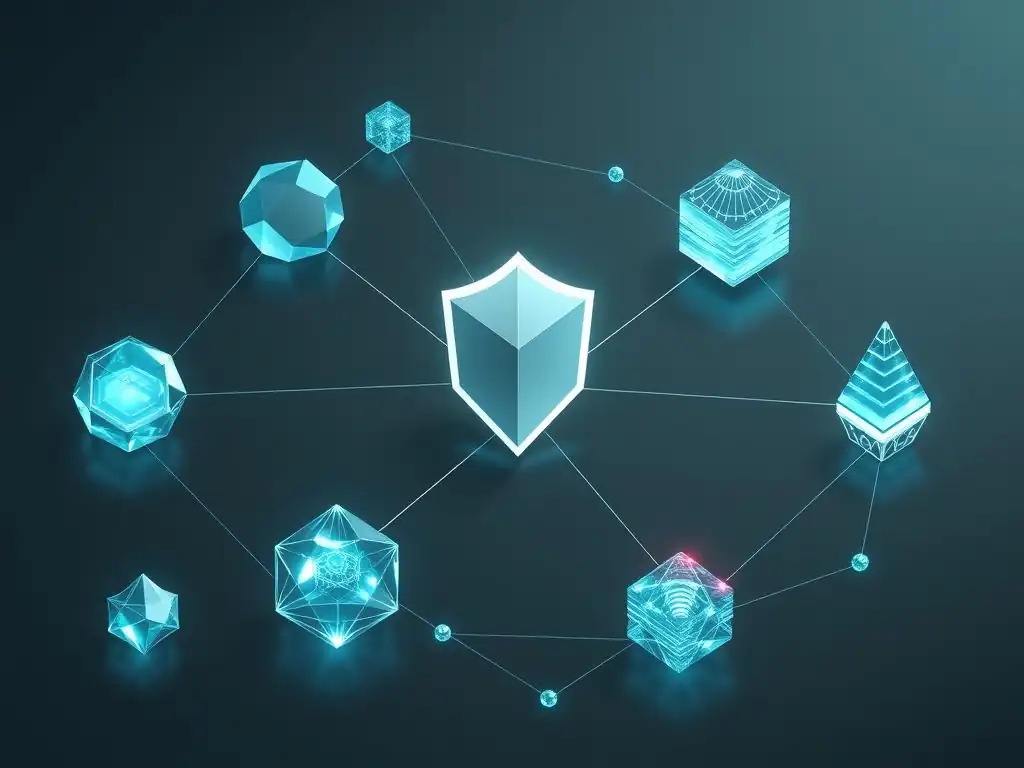
Smart Contract Audits and Formal Verification: Identifying Vulnerabilities
Smart contract audits are a crucial first line of defense in mitigating DeFi protocol vulnerability risks. Audits involve independent security experts reviewing the smart contract code to identify potential vulnerabilities, security flaws, and areas for improvement. Reputable audit firms employ a variety of techniques, including manual code review, automated static analysis tools, and penetration testing, to thoroughly assess the security posture of smart contracts. Audits can help identify common vulnerabilities like reentrancy, overflow/underflow, access control issues, and logical flaws in the protocol's design.
Formal verification is a more rigorous and mathematically based approach to ensuring smart contract correctness. It involves using formal methods and mathematical proofs to verify that the smart contract code behaves as intended and meets its specifications. While more computationally intensive and complex than traditional audits, formal verification can provide a higher level of assurance about the security and correctness of critical smart contracts. Combining smart contract audits with formal verification techniques can significantly enhance the identification and mitigation of DeFi protocol vulnerability risks, especially in complex and composable environments.
Implementing Risk Management Frameworks: Parameterization, Circuit Breakers
Implementing robust risk management frameworks is essential for mitigating DeFi protocol vulnerability risks in composable environments. Parameterization involves designing protocols with adjustable parameters that can be modified in response to changing market conditions or emerging threats. For example, risk parameters like collateralization ratios, interest rates, and liquidation thresholds can be adjusted to manage risk exposure and maintain protocol stability. Governance mechanisms can be used to control these parameters, allowing for community-driven risk management.
Circuit breakers are another important risk mitigation tool. They are mechanisms that can automatically halt or limit protocol operations in response to anomalous activity or predefined risk thresholds. Circuit breakers can be triggered by events like sudden price drops, large transaction volumes, or detection of potential exploits. By temporarily pausing or limiting protocol functionality, circuit breakers can provide time for investigation, mitigation, and prevent further damage in case of a security incident. Combining parameterization with circuit breakers within a comprehensive risk management framework can enhance the resilience of DeFi protocols against DeFi protocol vulnerability risks.
Decentralized Insurance and Security Solutions: Coverage for Exploits
Decentralized insurance and security solutions are emerging as crucial components of the DeFi ecosystem, providing coverage for users against potential exploits and DeFi protocol vulnerability risks. Decentralized insurance protocols offer smart contract-based insurance policies that compensate users in the event of hacks, exploits, or smart contract failures. These insurance solutions help to mitigate the financial impact of DeFi protocol vulnerability risks and provide users with a safety net in a nascent and rapidly evolving space.
In addition to insurance, various security solutions are being developed to enhance the overall security of DeFi protocols. These include on-chain monitoring systems that detect anomalous transactions and potential exploits in real-time, automated vulnerability scanning tools, and decentralized security bounty programs that incentivize ethical hackers to identify and report vulnerabilities. The growth of decentralized insurance and security solutions is a positive trend, contributing to a more resilient and secure DeFi ecosystem and helping to address DeFi protocol vulnerability risks.
Best Practices for Developers to Minimize Protocol Vulnerability Risks
Secure Coding Practices: Input Validation, Access Control
Secure coding practices are paramount for developers to minimize DeFi protocol vulnerability risks. Input validation is a fundamental security principle that involves rigorously checking and sanitizing all user inputs to prevent malicious data from being processed by the smart contract. This includes validating data types, ranges, and formats to ensure that inputs are within expected boundaries and do not contain malicious code. Proper input validation can prevent vulnerabilities like injection attacks and buffer overflows.
Access control is another critical aspect of secure coding in DeFi. Smart contracts should implement robust access control mechanisms to restrict access to sensitive functions and data to authorized users or contracts only. This can be achieved through techniques like using modifiers to enforce access restrictions based on user roles or contract addresses. Proper access control prevents unauthorized users from manipulating protocol state or executing privileged functions, minimizing DeFi protocol vulnerability risks related to unauthorized access and control.
Thorough Testing and Simulation: Fuzzing, Static Analysis
Thorough testing and simulation are essential steps in the development lifecycle to identify and mitigate DeFi protocol vulnerability risks before deployment. Fuzzing is a dynamic testing technique that involves automatically feeding a smart contract with a large volume of random or malformed inputs to identify unexpected behavior or crashes. Fuzzing can help uncover vulnerabilities that might be missed by manual code review or traditional testing methods.
Static analysis is a technique that involves analyzing the smart contract code without actually executing it. Static analysis tools can automatically detect potential vulnerabilities, coding errors, and deviations from security best practices. These tools can identify common vulnerability patterns and highlight areas of code that require further scrutiny. Combining fuzzing and static analysis with comprehensive unit and integration testing provides a multi-layered approach to identify and address DeFi protocol vulnerability risks before smart contracts are deployed to the blockchain.
Continuous Monitoring and Incident Response: Anomaly Detection, Emergency Procedures
Continuous monitoring and incident response capabilities are crucial for maintaining the security of deployed DeFi protocols and mitigating ongoing DeFi protocol vulnerability risks. Real-time monitoring systems can track key protocol metrics, transaction patterns, and on-chain events to detect anomalous activity that might indicate an ongoing exploit or security breach. Anomaly detection algorithms can be used to automatically flag suspicious behavior for further investigation.
Having well-defined incident response procedures in place is essential to effectively handle security incidents when they occur. Incident response plans should outline clear steps for identifying, containing, and mitigating exploits, including procedures for pausing protocol functionality, notifying users, and implementing emergency fixes or upgrades. Regular security audits, penetration testing, and proactive threat intelligence gathering are also important components of a robust continuous monitoring and incident response strategy to minimize DeFi protocol vulnerability risks and maintain protocol security over time.
The Future of DeFi Security and Composability
Emerging Technologies: Formal Verification, AI-Powered Security Tools
The future of DeFi security and composability is likely to be shaped by emerging technologies like formal verification and AI-powered security tools. Formal verification, as previously discussed, provides a rigorous approach to ensuring smart contract correctness and can play an increasingly important role in securing critical DeFi infrastructure. Advancements in formal verification techniques and tooling are making it more accessible and practical for wider adoption in DeFi development.
AI-powered security tools are also showing promise in enhancing DeFi security. Machine learning algorithms can be trained to detect anomalous transaction patterns, identify potential vulnerabilities in smart contract code, and automate security analysis tasks. AI can augment human security expertise and improve the efficiency and effectiveness of vulnerability detection and mitigation efforts, contributing to a more secure DeFi ecosystem and addressing DeFi protocol vulnerability risks.
The Role of Regulation: KYC/AML, Protocol Audits
Regulation will inevitably play a growing role in shaping the future of DeFi security and composability. Regulatory frameworks are being developed to address concerns related to KYC/AML compliance, investor protection, and systemic risk in the DeFi space. Regulations may mandate stricter security standards for DeFi protocols, including requirements for regular security audits, formal verification, and incident response plans.
While the specific regulatory landscape for DeFi is still evolving, it is likely that increased regulatory scrutiny will drive greater adoption of security best practices and contribute to a more mature and secure DeFi ecosystem. Regulation can also foster greater user trust and institutional adoption of DeFi by providing a clearer legal and regulatory framework for the industry, while also addressing DeFi protocol vulnerability risks from a systemic perspective.
Building a More Resilient and Secure Ecosystem: Community Collaboration
Building a more resilient and secure DeFi ecosystem requires strong community collaboration and knowledge sharing. The open-source nature of DeFi fosters collaboration among developers, security researchers, and community members in identifying and addressing DeFi protocol vulnerability risks. Open security audits, public vulnerability disclosures, and collaborative bug bounty programs are examples of community-driven security initiatives that contribute to a more robust and secure DeFi ecosystem.
Sharing security best practices, threat intelligence, and incident response learnings across the DeFi community is crucial for raising the overall security bar and preventing the recurrence of similar exploits. Community-driven initiatives like security working groups, knowledge sharing platforms, and collaborative security tooling development can further strengthen the collective security posture of the DeFi ecosystem and mitigate DeFi protocol vulnerability risks through collective action.
Key Takeaways: Awareness, Mitigation, and Continuous Improvement
Navigating the complexities of DeFi composability risks requires a multifaceted approach centered on awareness, mitigation, and continuous improvement. Awareness of the inherent risks associated with composability, including amplified attack surfaces and cascade failure potential, is the first crucial step. Understanding common DeFi protocol vulnerability risks, such as reentrancy, oracle manipulation, and governance attacks, is essential for developers, users, and the broader DeFi community.
Mitigation strategies, including robust smart contract audits, formal verification, risk management frameworks, and decentralized security solutions, are vital for reducing the likelihood and impact of exploits. Implementing secure coding practices, thorough testing, and continuous monitoring are also critical components of a comprehensive risk mitigation approach. However, security in DeFi is not a static state but rather a continuous process of adaptation and improvement.
The Importance of Vigilance and Proactive Security Measures
Vigilance and proactive security measures are paramount in the ever-evolving landscape of DeFi and its inherent composability risks. The rapid pace of innovation in DeFi means that new vulnerabilities and attack vectors are constantly emerging. Developers and users must remain vigilant in monitoring for security threats, staying informed about emerging risks, and proactively adapting security practices to address new challenges.
Proactive security measures, such as regular security audits, penetration testing, and threat intelligence gathering, are crucial for staying ahead of potential attackers and minimizing DeFi protocol vulnerability risks. A proactive security mindset, coupled with continuous learning and adaptation, is essential for navigating the complexities of DeFi security and building a more resilient and secure ecosystem.
Further Resources and Community Engagement
For those seeking to deepen their understanding of DeFi composability risks and contribute to a more secure ecosystem, numerous resources and community engagement opportunities are available. Organizations like Trail of Bits, OpenZeppelin, and ConsenSys Diligence provide valuable resources and insights on smart contract security and DeFi protocol vulnerability risks. Following security researchers and DeFi security experts on platforms like Twitter and participating in DeFi security forums and communities can provide access to the latest information and discussions on DeFi security best practices.
Engaging with DeFi projects directly, participating in bug bounty programs, and contributing to open-source security tooling are also valuable ways to contribute to the security of the DeFi ecosystem. By actively engaging with the DeFi security community and continuously learning and adapting, individuals and organizations can play a vital role in mitigating DeFi protocol vulnerability risks and fostering a more secure and robust decentralized financial future.
Frequently Asked Questions
What are the main risks associated with DeFi protocol composability?
Composability risks arise from the interconnected nature of DeFi protocols. A vulnerability in one protocol can quickly cascade and impact others, creating a systemic risk within the DeFi ecosystem. This interconnectedness introduces unforeseen consequences and amplifies potential losses.
How can DeFi protocol developers mitigate composability risks?
Developers should prioritize robust security audits and rigorous testing of their protocols, especially when integrating with other DeFi platforms. Implementing circuit breakers and risk management systems can help limit the impact of potential exploits and vulnerabilities.
Why is understanding DeFi composability important for investors?
Understanding composability is crucial for investors to assess the overall risk profile of their DeFi investments. They need to be aware that a single protocol's vulnerability could impact their entire portfolio due to the interconnectedness of DeFi ecosystems. Conducting thorough due diligence is essential.
What role does regulation play in addressing DeFi composability risks?
Regulation can help establish industry standards and best practices for DeFi protocol development and security. Clear regulatory frameworks can encourage developers to prioritize security and promote greater transparency within the DeFi space. This can help reduce systemic risks.
How does the future of decentralized systems depend on addressing DeFi composability risks?
The long-term viability and adoption of decentralized systems hinge on building secure and resilient infrastructure. Addressing composability risks is essential to foster trust and confidence in DeFi, paving the way for broader adoption and innovation in decentralized finance. This is critical for long-term success.
The exploration of DeFi composability risks, as outlined in this article, is not merely an academic exercise; it is a critical imperative for the future of decentralized finance. The interconnected nature of DeFi protocols, while offering unprecedented innovation and efficiency, simultaneously creates a complex web of vulnerabilities that, if left unaddressed, could undermine the entire ecosystem. Understanding these risks is paramount to ensuring the long-term stability and security of DeFi.
The pervasive influence of composability on the DeFi landscape is undeniable, shaping both its potential and its perils. My own journey into understanding these interconnected risks has highlighted the urgent need for robust security audits, proactive risk management, and a collaborative approach to mitigating potential exploits. The beauty of DeFi lies in its composability, but its Achilles' heel is the potential for cascading failures.
This quote encapsulates the delicate balance we must strive to maintain as we continue to build and innovate within this rapidly evolving space.
Now, I invite you to reflect on the implications of these interconnected vulnerabilities. Consider how you can contribute to a more secure and resilient DeFi ecosystem, whether through rigorous code reviews, advocating for improved security standards, or simply educating yourself and others about the inherent risks. The future of DeFi depends on our collective commitment to understanding and mitigating these challenges. Let us work together to build a decentralized financial system that is not only innovative but also safe and sustainable for all.
Uncover Your DeFi Shield: Master Composability Risks
Thank you for exploring the complexities of DeFi composability and understanding its inherent vulnerabilities. With this knowledge, you can take proactive steps to protect your assets and help build a safer DeFi ecosystem. Here’s how to begin:
- Review the protocols you interact with and check for any documented risks related to their composability. Understanding how protocols connect and where potential vulnerabilities lie is your first line of defense.
- Consider contributing to open-source security audits of DeFi protocols. Even small efforts can greatly improve the overall security landscape.
- Share this article with fellow DeFi enthusiasts to raise awareness and promote community-driven security practices. Together, our collective knowledge strengthens the ecosystem.
What specific composability concern worries you most, and what steps are you taking to mitigate it? Share your thoughts below!
Leave a Reply