
The Potential of SSI for CrossBorder Transactions and Global Identity Management


Welcome to Blockchain Trends, your guide to navigating the evolving landscape of blockchain technology. Dive into the transformative applications extending far beyond cryptocurrencies, as we explore DeFi, enterprise solutions, and the regulatory environment shaping the future.
Are you ready to unlock the potential of a truly decentralized world? Today, we delve into a critical component of that future: Self-Sovereign Identity (SSI) and its groundbreaking applications in Cross-Border transactions. Discover how SSI can revolutionize global identity management and streamline international interactions. Curious to learn how? Let's explore!
The Potential of SSI for Cross-Border Transactions and Global Identity Management
- Introduction: Revolutionizing Cross-Border Transactions with Self-Sovereign Identity
- Understanding Self-Sovereign Identity (SSI)
- The Challenges of Traditional Cross-Border Transactions
- SSI for Streamlining Cross-Border Transactions: A Deep Dive
- SSI and Global Identity Management: A Synergistic Relationship
- Use Cases of SSI in Cross-Border Scenarios
- Implementing SSI for Cross-Border Solutions: Key Considerations
- The Future of Cross-Border Transactions and Global Identity with SSI
- Conclusion: Embracing SSI for a More Secure and Efficient Global Future
-
Frequently Asked Questions
- What is Self-Sovereign Identity (SSI) and how does it relate to cross-border transactions?
- How can SSI improve efficiency and reduce costs in cross-border transactions?
- What are the key benefits of using SSI for global identity management?
- What are some potential challenges in implementing SSI for cross-border transactions?
- How is the Blockchain Trends website exploring the future of Self-Sovereign Identity (SSI) in cross-border scenarios?
- Final Reflection: Embracing Borderless Identity
- Unlock Your Global Identity: Embrace the SSI Revolution!
Introduction: Revolutionizing Cross-Border Transactions with Self-Sovereign Identity
The Growing Need for Secure and Efficient Cross-Border Solutions
In an increasingly interconnected global economy, the volume and complexity of cross-border transactions are soaring. From international trade finance and cross-border payments to global supply chains and personal remittances, the need for seamless, secure, and efficient mechanisms is paramount. Traditional systems often rely on disparate, centralized databases and manual processes, leading to delays, high costs, and increased risk of errors and fraud.
For instance, international wire transfers can take several business days to clear and often involve multiple intermediary banks, each adding fees. Remittance fees, while decreasing, still averaged around 6% globally in early 2023 according to World Bank data, significantly impacting the funds received by beneficiaries in developing countries.
Furthermore, managing identities across borders for these transactions presents significant hurdles. Verifying the identity of individuals or entities involved in international transactions typically requires cumbersome procedures involving multiple documents and third-party intermediaries, such as banks or notaries. This process is not only time-consuming but also costly and prone to inconsistencies due to varying national identity standards and regulations. The lack of a universally recognized, secure, and privacy-preserving digital identity system exacerbates these challenges, hindering smooth and efficient global economic activity and impacting everything from opening international bank accounts to verifying credentials for cross-border employment.
Introducing Self-Sovereign Identity (SSI) and its Relevance to Global Transactions
Self-Sovereign Identity (SSI) emerges as a transformative paradigm holding immense potential to address the inefficiencies and security concerns inherent in traditional cross-border systems. At its core, SSI puts individuals and organizations in control of their digital identities, allowing them to store, manage, and share verifiable credentials securely and privately, often underpinned by blockchain technology for trust and immutability. This decentralized approach contrasts sharply with current models where identity data is fragmented across numerous centralized silos managed by governments, corporations, or service providers.
The relevance of SSI to global transactions is profound because it provides a standardized yet flexible framework for digital identity verification that can transcend national boundaries. Instead of relying on intermediaries to vouch for identity or needing to present physical documents repeatedly, users of Self-Sovereign Identity Cross Border solutions can present cryptographically secured digital credentials directly to relying parties.
This capability can drastically simplify processes like Know Your Customer (KYC) and Anti-Money Laundering (AML) checks for international financial transactions, streamline logistics in global trade, and even facilitate secure international travel by digitizing and verifying travel documents. The promise of SSI is a future where identity verification in a global context is faster, cheaper, more secure, and respects user privacy.
Understanding Self-Sovereign Identity (SSI)
What is Self-Sovereign Identity? Core Principles Explained
Self-Sovereign Identity is an identity management model where the individual or organization is the central authority for their digital identity. Instead of identities being managed by external entities (like governments issuing passports or companies managing user accounts), the subject of the identity controls their own identifiers and the data associated with them. This model is built upon a set of core principles emphasizing user control, privacy, and portability. Key principles include persistence (the identity endures), portability (it can be moved between contexts), decentralization (no single point of control), and consent (users control how their data is shared).
A common technical architecture for SSI involves three main parties: the holder (the individual or organization controlling the identity), the issuer (an entity like a university, government agency, or bank that issues verifiable credentials), and the verifier (a party that needs to check a credential, like an airline or a financial institution). These interactions often leverage decentralized identifiers (DIDs) and verifiable credentials (VCs), standards developed by the W3C.
DIDs are persistent, globally unique identifiers that do not require a centralized registration authority, while VCs are tamper-evident digital attestations about a subject, signed by an issuer and verifiable by a verifier, often using a decentralized ledger or blockchain to anchor trust.
How SSI Differs from Traditional Identity Management Systems
Traditional identity management systems typically fall into two categories: centralized and federated. Centralized systems, like government ID databases or corporate directories, store identity data in one primary location, making them vulnerable to breaches and giving the controlling entity significant power over the identity.
Federated systems, such as single sign-on (SSO) services (e.g., "Login with Google"), allow users to use one set of credentials across multiple services, but still rely on a central identity provider (like Google) which holds significant data and control. Both models inherently create data silos and potential privacy risks, as users often have little control over how their data is stored, shared, or used by the managing entity.
In contrast, SSI is fundamentally decentralized and user-centric. The user holds their identity data and credentials, typically in a secure digital wallet on their device. When a verifier needs to confirm an attribute (e.g., age, nationality, professional license), the user presents a specific verifiable credential directly from their wallet.
The verifier can then cryptographically verify the credential's authenticity against the issuer's public key, often anchored on a distributed ledger. This eliminates the need for the verifier to query a centralized database or rely on the identity provider, drastically reducing data exposure, enhancing privacy through selective disclosure (sharing only necessary information), and empowering the user with control over their identity interactions. This shift is particularly powerful for Self-Sovereign Identity Cross Border applications where trust between parties in different jurisdictions is critical but difficult to establish via traditional means.
Key Benefits of SSI: Security, Privacy, and User Control
The primary benefits of SSI revolve around enhanced security, robust privacy protection, and empowered user control. Security is improved because identity data is not stored in large, attractive honeypots for hackers; instead, credentials reside on the user's device, and verification relies on cryptography. Verifiable credentials are tamper-evident, meaning any alteration invalidates them, significantly reducing the risk of identity fraud compared to easily forgeable physical documents or hackable databases. For example, a bank verifying a customer's identity for an international transfer receives a signed digital credential rather than relying on potentially outdated or falsified scanned documents.
Privacy is significantly enhanced because SSI enables minimal data disclosure. A user can prove they meet a requirement (e.g., are over 18) without revealing their exact birth date. This selective disclosure is crucial for privacy-sensitive applications, especially in cross-border contexts where data protection regulations (like GDPR) are stringent.
Furthermore, users have explicit control over what information they share, who they share it with, and when. This level of transparency and consent is a fundamental departure from traditional systems where users often implicitly agree to broad data usage policies. This combination of security, privacy, and control makes Self-Sovereign Identity Cross Border solutions a compelling alternative for managing identities in a globalized digital world.
The Challenges of Traditional Cross-Border Transactions
Inefficiencies and Costs Associated with Existing Systems
Traditional methods for conducting cross-border transactions, whether financial or identity-related, are plagued by significant inefficiencies and high costs. International payments often involve a complex network of correspondent banks, each acting as an intermediary. This chain of intermediaries adds layers of fees, known as correspondent banking fees, which can be substantial and unpredictable for both individuals and businesses.
For instance, sending a moderate sum like $500 internationally via traditional bank transfer might incur fees totaling $25-$50 or more, representing 5-10% of the transaction value. The process is also slow; while some transfers are faster, many still take 1-5 business days to complete, hindering just-in-time logistics and urgent payments.
Beyond financial transactions, the cost and inefficiency extend to identity verification. For businesses operating internationally, verifying the identity of customers, partners, or employees across different jurisdictions is a manual, paper-intensive, and expensive process. Each country may have unique identification requirements, necessitating translation, notarization, and lengthy validation periods. A company onboarding an international client might spend hundreds or even thousands of dollars per client on manual KYC checks, taking weeks to complete. This friction significantly increases the cost of doing business globally and slows down economic activity.
Security Risks and Fraud in International Transactions
Traditional cross-border systems are inherently vulnerable to various security risks and types of fraud. Centralized databases holding sensitive personal or financial information are prime targets for cyberattacks. A single breach can expose millions of records, leading to identity theft and financial loss on a massive scale. The complexity of international transaction chains also creates opportunities for malicious actors. Phishing attacks targeting businesses involved in international trade finance, for example, can lead to millions of dollars in losses if fraudulent payment instructions are followed.
Furthermore, the reliance on physical documents or easily replicable digital copies in identity verification processes makes them susceptible to forgery and manipulation. Counterfeit passports, fake utility bills, and doctored digital documents are persistent problems in international identity verification. Without a robust, universally verifiable digital identity layer, validating the authenticity of parties involved in cross-border interactions remains challenging. This makes it difficult to combat money laundering, terrorist financing, and other illicit activities that exploit the relative anonymity and complexity of existing international systems.
The Need for Interoperability and Standardization
A major impediment to smooth cross-border operations is the lack of global interoperability and standardization across identity and transaction systems. Different countries have different identity documents, different legal frameworks for digital signatures, and different technical standards for data exchange. Financial institutions use various messaging standards and protocols (like SWIFT), which, while widely adopted, can still be complex and costly to integrate with. This fragmentation means that systems designed within one national or regional context often cannot easily communicate or exchange data with systems in another.
The absence of common standards for digital identity is particularly acute for Self-Sovereign Identity Cross Border applications. While initiatives like the W3C's DID and VC specifications provide a foundation, widespread adoption and agreement on specific implementation profiles are still evolving. Without agreed-upon standards, a verifiable credential issued in one country using a specific technical profile might not be easily recognized or verified by a relying party in another country using a different profile. Achieving true interoperability is crucial for SSI to fulfill its potential as a seamless global identity layer.
SSI for Streamlining Cross-Border Transactions: A Deep Dive
Enhanced Security and Reduced Fraud with SSI-Based Verification
Self-Sovereign Identity significantly enhances security and reduces fraud in cross-border transactions by shifting from vulnerable centralized data storage to cryptographic verification. Instead of storing identity data in a central database that can be breached, SSI allows users to hold verifiable credentials securely on their device. When a transaction requires identity verification, the user selectively presents the necessary credential. The verifier then cryptographically verifies the issuer's signature on the credential against a public key, often anchored on a distributed ledger, ensuring the credential's authenticity and integrity without needing to access sensitive personal data directly.
This approach drastically reduces the attack surface compared to traditional systems. There is no large database of personal information for hackers to target. Furthermore, verifiable credentials are cryptographically bound to the holder and the issuer, making them virtually impossible to forge or alter without detection.
For example, in a cross-border payment scenario, a financial institution could verify a customer's proof of address or source of funds via a tamper-evident verifiable credential issued by a trusted third party (like a utility company or employer) in a different country, rather than relying on potentially fraudulent scanned documents. This method provides a higher assurance of identity validity, mitigating risks associated with identity theft and fraudulent transactions that cost businesses and individuals billions annually.
Faster and More Efficient Transaction Processing Using Decentralized Identity
The ability of SSI to provide instant, cryptographically verifiable identity information can dramatically speed up cross-border transaction processing. Traditional processes often involve manual checks, paper documentation, and communication delays between different institutions in different time zones. With SSI, the identity verification step, a critical component of many international transactions (especially in finance and trade), can be completed in seconds. A relying party can instantly verify the validity of a credential presented by a user, provided the issuer's public key information is accessible, which can be facilitated by a decentralized network.
Consider the process of onboarding an international client for a financial service. Traditionally, this could take weeks due to the time required to collect, submit, and verify various documents across borders.
With a Self-Sovereign Identity Cross Border solution, the client could securely share pre-verified credentials (e.g., proof of identity, proof of address, professional license) issued by trusted entities in their home country directly from their digital wallet. The financial institution could verify these credentials almost instantly, potentially reducing onboarding time from weeks to hours or even minutes, thereby significantly streamlining the entire transaction process and enabling faster access to services.
Lower Transaction Costs Through Automation and Disintermediation
By automating identity verification and potentially disintermediating certain identity-related processes, SSI can lead to significant cost reductions in cross-border transactions. Manual identity verification processes are expensive, requiring significant staff time for document handling, validation, and compliance checks. By enabling instant, automated verification of verifiable credentials, SSI can drastically lower these operational costs. Estimates vary, but some reports suggest that digitizing and automating identity verification processes could reduce costs by 50% or more per transaction or onboarding event.
Furthermore, SSI can reduce reliance on costly third-party identity verification services or correspondent banking layers specifically for identity checks. While financial transaction fees might still apply, the cost component related to establishing trust and verifying identity can be substantially reduced or eliminated. This is particularly impactful for low-value, high-frequency cross-border transactions like remittances, where traditional fees represent a large percentage of the transferred amount. By making identity verification cheaper and faster, Self-Sovereign Identity Cross Border applications can contribute to lowering overall transaction costs, making global interactions more accessible and affordable for individuals and small businesses.
SSI and Global Identity Management: A Synergistic Relationship
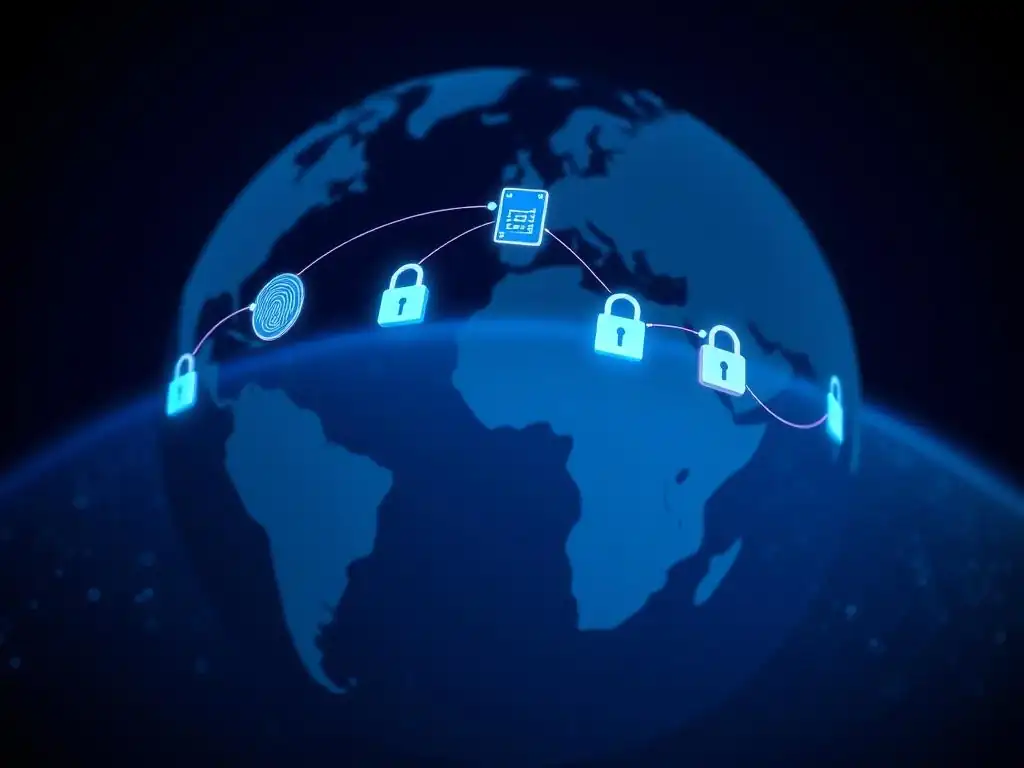
Establishing a Universal Digital Identity for Cross-Border Use
Self-Sovereign Identity offers the foundational elements for establishing a truly universal digital identity that is portable and usable across borders, without being controlled by any single nation-state or corporation. Unlike national ID cards or proprietary digital identities tied to specific platforms, an SSI-based identity is centered around the individual holder.
Using globally recognized standards like DIDs and VCs, a user can create a persistent digital identifier and accumulate verifiable credentials from various trusted issuers worldwide – a diploma from a university in Europe, a professional license from an authority in Asia, a bank statement from a financial institution in North America.
This collection of credentials constitutes a rich, user-controlled digital identity profile that is not confined to geographical boundaries or specific service providers. When engaging in a cross-border activity – applying for a job in a different country, enrolling in an international online course, or conducting business with a foreign partner – the user can present relevant, verifiable credentials from their digital wallet.
This eliminates the need to navigate complex and often inconsistent foreign identity systems or rely on cumbersome physical documentation, paving the way for a more seamless and globally recognized digital presence powered by Self-Sovereign Identity Cross Border principles.
Enabling Secure and Private Data Sharing Across Borders
Secure and private data sharing is a critical challenge in cross-border interactions due to varying data protection laws and concerns about data sovereignty. SSI is designed with privacy at its core, enabling users to share only the minimum necessary information to satisfy a requirement, a concept known as "selective disclosure." Instead of providing a full document containing much more data than needed (e.g., sharing a passport to prove age), a user can share a specific verifiable credential that simply attests to their age, signed by a trusted issuer.
This capability is invaluable for Self-Sovereign Identity Cross Border scenarios. For example, a company hiring an employee from another country needs to verify their qualifications. With SSI, the employee can share a verifiable credential of their degree issued by their university, without revealing other personal details on the transcript.
Similarly, a financial institution performing due diligence on an international client can verify their source of funds via a specific credential without needing access to their full bank account transaction history. This fine-grained control over data sharing not only enhances user privacy but also helps organizations comply with strict cross-border data protection regulations by minimizing the amount of sensitive data that needs to be exchanged or stored.
Facilitating Compliance with International Regulations and KYC/AML Requirements
Compliance with international regulations, particularly Know Your Customer (KYC) and Anti-Money Laundering (AML) rules, is a major hurdle for businesses operating across borders. These regulations require robust identity verification and ongoing monitoring, which are complex and costly to implement consistently across different jurisdictions with varying legal requirements. SSI can significantly facilitate compliance by providing a standardized, verifiable, and privacy-preserving method for identity verification that can satisfy regulatory requirements globally.
Financial institutions and other regulated entities can leverage Self-Sovereign Identity Cross Border solutions to verify customer identities using verifiable credentials issued by government agencies, trusted data providers, or other regulated entities. For instance, a bank in one country can verify a customer's identity using a government-issued digital ID credential from another country, provided the issuer is trusted and verifiable on a decentralized network.
SSI's ability to provide cryptographically secured proof of identity and attributes streamlines the initial verification process. Furthermore, the potential for ongoing credential updates (e.g., a credential indicating a change in risk status) could potentially aid in ongoing monitoring requirements, making compliance more efficient and reliable.
Use Cases of SSI in Cross-Border Scenarios
Cross-Border Payments and Remittances with SSI-Enabled Wallets
Self-Sovereign Identity can significantly enhance cross-border payments and remittances by providing a secure and streamlined way to verify sender and receiver identities. Today, sending money internationally often requires users to provide extensive personal information to payment providers, and verification processes can be slow, especially for first-time users or larger amounts. With SSI, users can prove their identity and eligibility (e.g., residency in a specific country, verified bank account ownership) by sharing verifiable credentials from their digital wallet.
An SSI-enabled remittance service could allow users to instantly verify their identity using a government-issued digital ID credential, speeding up the onboarding process from hours or days to minutes. Similarly, the recipient's identity could be verified using an SSI credential, ensuring funds go to the correct, verified individual. This reduces the risk of fraud and errors while potentially lowering compliance costs for remittance providers, which could translate into lower fees for users. Several pilot projects are exploring the use of decentralized identity for faster and cheaper cross-border value transfer, aiming to improve financial inclusion for populations reliant on remittances.
Streamlining International Trade Finance with Secure Identity Verification
International trade finance involves complex transactions between multiple parties across different countries, including importers, exporters, banks, insurers, and logistics providers. Verifying the identity and legitimacy of each party, as well as the authenticity of associated documents (like bills of lading or certificates of origin), is crucial but often manual and prone to fraud. SSI can streamline this by providing a secure, verifiable layer for identifying all participants and validating key trade documents as verifiable credentials.
Imagine an importer in one country needing to verify the legitimacy of an exporter in another. The exporter could share verifiable credentials proving their business registration, tax compliance, and even past performance ratings, all issued by trusted entities in their home country and verifiable via SSI. Banks involved in issuing letters of credit could instantly verify the identities of the businesses involved.
Furthermore, documents like certificates of origin could be issued as VCs by chambers of commerce, making them instantly verifiable by customs authorities and other parties. This use of Self-Sovereign Identity Cross Border in trade finance could reduce fraud, accelerate transaction flows, and lower operational costs, potentially by billions globally in reduced paperwork and increased trust.
Secure and Efficient Travel Documentation Using SSI Credentials
International travel currently relies heavily on physical passports and visas, processes that can be slow, cumbersome, and susceptible to forgery. SSI offers a path towards secure and efficient digital travel credentials. A government could issue a digital passport credential to its citizens, stored securely in their SSI wallet. This credential could contain verifiable attributes necessary for travel, such as nationality, name, photo, and validity period, cryptographically signed by the issuing government.
At border control, the traveler could present a specific subset of this credential (e.g., proof of nationality and validity) from their wallet. The border agent's system could instantly verify the credential's authenticity against the issuing government's public key, potentially anchored on a distributed ledger.
This could significantly speed up processing times, reduce the need for manual checks, and enhance security by using tamper-evident digital proofs. Several countries and international bodies, including the International Air Transport Association (IATA) and the European Union, are actively exploring concepts like digital travel credentials and digital identity wallets that align closely with SSI principles to modernize cross-border travel.
The European Blockchain Services Infrastructure (EBSI) for Cross-Border Education Credentials
The European Blockchain Services Infrastructure (EBSI) is a real-world example demonstrating the potential of decentralized identity, specifically for cross-border use cases like verifying educational credentials. EBSI is a joint initiative by the European Commission and the European Member States to build a network of distributed ledger technology nodes across Europe. One of its initial flagship use cases is the verification of diplomas and academic credentials.
Through EBSI, universities can issue verifiable credentials for diplomas to students, who can then store them in their digital wallets. When a student applies for a job or further education in another EU country, they can share this verifiable credential directly from their wallet.
The employer or institution can then instantly and reliably verify the authenticity of the diploma against the issuer (the university) via the EBSI network. This system facilitates the recognition of qualifications across borders, reduces administrative burden, combats diploma fraud, and showcases the practical application of Self-Sovereign Identity Cross Border principles in enabling seamless international interactions within a specific domain.
Implementing SSI for Cross-Border Solutions: Key Considerations
Interoperability and Standards for Seamless Integration
Achieving true interoperability is perhaps the most critical consideration for implementing Self-Sovereign Identity Cross Border solutions. For SSI to be effective globally, different SSI ecosystems, wallets, issuers, and verifiers must be able to interact seamlessly. This requires widespread adoption of common technical standards, such as W3C Decentralized Identifiers (DIDs) and Verifiable Credentials (VCs), but also agreement on specific implementation profiles, trust frameworks, and governance models that work across jurisdictions.
Efforts are underway by various standards bodies and consortia to define these frameworks, but reaching global consensus and ensuring consistent implementation is challenging. A lack of interoperability could lead to fragmented SSI systems where a credential issued in one region is not recognized in another, undermining the goal of a universal digital identity. Therefore, ongoing collaboration between governments, industry, and standards organizations is essential to build a globally interoperable SSI infrastructure.
Regulatory Compliance and Data Privacy Considerations
Implementing SSI in cross-border contexts must carefully navigate complex and often conflicting national and international regulations, particularly concerning data privacy and protection (like GDPR, CCPA, etc.) and sector-specific rules (e.g., financial regulations like KYC/AML). While SSI is designed with privacy in mind, the specific implementation details, such as how DIDs are resolved or where ledger data is stored, can have regulatory implications.
Ensuring that Self-Sovereign Identity Cross Border solutions comply with diverse legal frameworks is paramount. This involves designing systems that respect data minimization principles, provide mechanisms for data access and deletion rights where applicable, and align with jurisdictional requirements for trusted identity providers and verification processes. Collaboration with legal and regulatory bodies is necessary to develop compliant SSI frameworks that can operate effectively across different legal environments.
User Adoption and Education for Widespread Implementation
The success of SSI for cross-border use cases heavily relies on user adoption, which requires significant education and trust-building. Individuals and organizations need to understand what SSI is, how it benefits them (in terms of security, privacy, and control), and how to use SSI wallets and manage their credentials. The concept of managing one's own digital identity is a significant shift from relying on third parties.
Efforts are needed to develop user-friendly SSI wallet interfaces and applications, provide clear educational materials, and build trust in the underlying technology and the entities issuing verifiable credentials. Without broad user adoption, even the most technically sophisticated Self-Sovereign Identity Cross Border solution will fail to achieve its potential in streamlining global interactions. Pilots and phased rollouts focusing on specific high-value use cases can help demonstrate the benefits and drive initial adoption.
Technical Infrastructure and Scalability Requirements
The technical infrastructure supporting SSI, particularly the decentralized ledger technology often used to anchor DIDs and verify credential status, must be robust, scalable, and performant to handle the volume of cross-border transactions and identity verifications. While blockchain and DLT have advanced significantly, challenges remain regarding scalability, transaction costs (in some public blockchain models), and energy consumption.
Choosing the right underlying technology, designing efficient credential issuance and verification flows, and ensuring the availability and reliability of decentralized network infrastructure are critical technical considerations. The infrastructure must be able to support potentially millions or billions of cross-border identity interactions daily. Ongoing research and development in blockchain and decentralized technologies are necessary to meet the scalability and performance requirements for widespread Self-Sovereign Identity Cross Border adoption.
The Future of Cross-Border Transactions and Global Identity with SSI
Potential for Widespread Adoption and Transformation
The potential for widespread adoption of Self-Sovereign Identity Cross Border solutions is significant, driven by the clear benefits they offer over traditional systems. As digital interactions become increasingly global, the demand for secure, efficient, and privacy-preserving methods for managing identity and conducting transactions across borders will only grow. SSI provides a foundational technology that can meet this demand, promising to transform various sectors from finance and trade to travel and education.
While challenges related to interoperability, regulation, and adoption remain, the increasing number of pilot projects, industry consortia, and governmental initiatives exploring or implementing SSI indicates a strong momentum towards its adoption. As standards mature and user-friendly applications become more prevalent, SSI could become the de facto standard for digital identity in cross-border contexts within the next decade, fundamentally changing how individuals and businesses interact globally.
The Role of Blockchain in Supporting SSI for Global Transactions
Blockchain and other distributed ledger technologies play a crucial role in supporting Self-Sovereign Identity for global transactions. While SSI is not exclusively reliant on blockchain, DLTs provide a decentralized, immutable, and tamper-evident layer that is ideal for anchoring DIDs and managing the revocation status of verifiable credentials. This decentralized anchor point enhances trust and reduces reliance on centralized authorities, which is particularly important for cross-border applications where trust needs to be established between parties in different jurisdictions.
Blockchain's inherent characteristics of transparency (for public ledgers, regarding DID resolution and credential status) and security (through cryptography and distributed consensus) make it a powerful enabler for SSI. It can provide a globally accessible, reliable source of truth for verifying the authenticity of identity components without storing sensitive personal data on the ledger itself. This technical synergy between SSI principles and blockchain technology is key to building a robust and trustworthy infrastructure for Self-Sovereign Identity Cross Border solutions.
Overcoming Challenges and Realizing the Full Potential of SSI
Realizing the full potential of SSI for cross-border transactions and global identity management requires a concerted effort to overcome the existing challenges. This involves continued work on developing and promoting global technical standards for interoperability, fostering international collaboration to harmonize regulatory approaches to digital identity and data privacy, and investing in user education and the development of intuitive SSI applications.
Industry players, governments, and international organizations must collaborate to build trust frameworks and governance models that can support cross-border SSI use cases. Addressing technical scalability concerns and ensuring the sustainability of underlying DLT infrastructure are also critical. By systematically tackling these challenges, the vision of a seamless, secure, and user-controlled Self-Sovereign Identity Cross Border system can move from concept to widespread reality, unlocking significant efficiencies and fostering greater trust in global digital interactions.
Conclusion: Embracing SSI for a More Secure and Efficient Global Future
Summarizing the Benefits of SSI for Cross-Border Transactions and Identity
Self-Sovereign Identity offers compelling advantages for transforming cross-border transactions and global identity management. It provides a decentralized, user-centric model that significantly enhances security and privacy compared to traditional systems. By enabling instant, cryptographically verifiable identity proofs and selective data disclosure, SSI can drastically reduce fraud and improve compliance while empowering individuals and organizations with control over their digital selves.
The application of Self-Sovereign Identity Cross Border principles promises to streamline processes, reduce costs, and accelerate interactions across various international use cases, from payments and trade finance to travel and education. The shift towards a universal, portable digital identity based on verifiable credentials holds the key to unlocking new levels of efficiency and trust in the global digital economy.
Call to Action: Exploring and Implementing SSI Solutions for Global Impact
Given the transformative potential of Self-Sovereign Identity Cross Border solutions, it is imperative for businesses, governments, and individuals involved in cross-border activities to explore and understand this technology. Organizations should investigate how SSI can be integrated into existing workflows to improve security, reduce costs, and enhance customer experience. Governments should continue to support the development of open standards and pilot programs like EBSI to facilitate interoperability and regulatory clarity.
Embracing SSI is not just a technological upgrade; it is a fundamental shift towards a more secure, private, and efficient way of managing identity and conducting transactions in an increasingly interconnected world. By actively participating in the development and implementation of SSI frameworks, stakeholders can contribute to building a more trustworthy and seamless global digital future.
Frequently Asked Questions
What is Self-Sovereign Identity (SSI) and how does it relate to cross-border transactions?
SSI empowers individuals to control their own digital identities, eliminating reliance on centralized authorities. This is crucial for cross-border transactions as it allows for verified identity sharing across different jurisdictions without cumbersome processes.
How can SSI improve efficiency and reduce costs in cross-border transactions?
SSI streamlines verification processes by allowing individuals to present verifiable credentials directly to relying parties. This reduces the need for intermediaries and manual verification, lowering costs and accelerating transactions.
What are the key benefits of using SSI for global identity management?
SSI offers enhanced privacy, security, and control over personal data. It simplifies identity verification processes across borders and promotes trust and interoperability in global interactions.
What are some potential challenges in implementing SSI for cross-border transactions?
Challenges include the need for standardized protocols, interoperability between different SSI systems, and addressing regulatory uncertainties surrounding digital identities across various jurisdictions.
How is the Blockchain Trends website exploring the future of Self-Sovereign Identity (SSI) in cross-border scenarios?
Blockchain Trends examines the potential of SSI to revolutionize cross-border transactions and global identity management, focusing on DeFi, enterprise applications, regulation, and the future of decentralized systems. We aim to provide insights into the transformative potential of this technology.
Okay, here's a final reflection designed for your article "The Potential of SSI for CrossBorder Transactions and Global Identity Management," optimized for the keyword "Self-Sovereign Identity Cross Border" and following the requested structure:
Final Reflection: Embracing Borderless Identity
The exploration of Self-Sovereign Identity (SSI) in cross-border transactions and global identity management reveals a profound shift in how we perceive and interact with digital identity. The potential for SSI to streamline international commerce, enhance security, and empower individuals with control over their data is not just a theoretical possibility; it's a rapidly approaching reality with the power to reshape global interactions.
The impact of SSI extends far beyond mere efficiency; it touches upon fundamental questions of autonomy and trust in an increasingly interconnected world. This journey into the realm of decentralized identity has underscored the critical need for solutions that prioritize individual agency and data sovereignty. Identity is not just what you possess, but what you control.
This sentiment encapsulates the core promise of SSI: to empower individuals to own and manage their digital selves, transcending geographical boundaries and bureaucratic hurdles.
As we stand on the cusp of this transformative era, let us embrace the potential of Self-Sovereign Identity to build a more equitable and secure global landscape. Consider how you can advocate for and participate in the development of SSI solutions that prioritize individual empowerment and foster trust across borders. The future of global interaction hinges on our collective commitment to building a world where identity is truly self-sovereign.
Unlock Your Global Identity: Embrace the SSI Revolution!
Thank you for exploring the transformative potential of Self-Sovereign Identity (SSI) and its impact on cross-border transactions. Now that you understand the possibilities, it's time to take the next step and become a part of the future of identity!
Here are a few ways you can get involved:
- Dive Deeper: Research SSI Implementations in Cross-Border Payments.: Discover real-world examples and analyze their effectiveness to gain a clearer understanding of practical applications. This is your primary action to continue learning.
- Share This Vision: Advocate for the Adoption of SSI Standards with your Network.: Promote a better understanding of blockchain technologies and the transformative power of SSI, and start discussions on establishing industry standards.
- Beyond the Transaction: Explore How SSI Can Revolutionize Digital Art Ownership.: Consider how SSI can be used to ensure provenance and authenticity in digital artwork, offering a novel application of the technology.
Ready to champion the SSI revolution and explore its applications beyond finance? What specific cross-border use case are you most excited to see SSI address?
Leave a Reply